A few winters ago, a friend of mine casually mentioned something while we were sitting at a café.
She said, almost embarrassed, “My heels hurt when I walk now.”
Not sore-from-running hurt.
More like paper-cut-in-your-skin hurt.
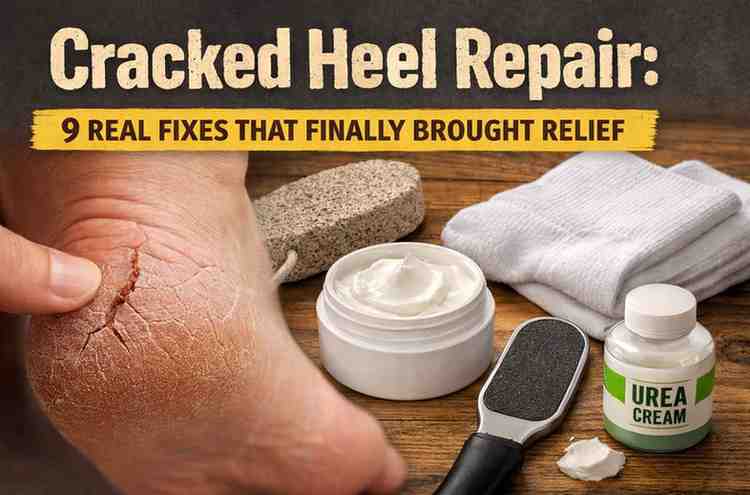
When she showed me her heel, it honestly surprised me. Deep cracks. Dry white edges. A few spots that looked like they might start bleeding if she walked another mile.
And the weird part?
She had already tried three different “cracked heel repair” creams she found online.
None of them worked.
Since then I've seen this play out over and over again — coworkers, relatives, gym friends, even people messaging me after I helped someone else figure it out.
Same story almost every time:
-
Dry heels appear
-
Cracks start forming
-
People panic and buy random creams
-
Nothing changes for weeks
-
They assume their skin is just “bad”
But after watching dozens of people deal with this, certain patterns became painfully obvious.
Most cracked heel repair attempts fail for predictable reasons.
Not because the problem is impossible.
But because people misunderstand what's actually happening to their skin.
And once that clicked… the fixes started making a lot more sense.
Why People End Up Needing Cracked Heel Repair in the First Place
Most people assume cracked heels are just about dry skin.
That’s only part of the story.
From what I’ve seen → again and again, cracked heels usually happen when three things stack up together.
1. Pressure + Thick Skin Buildup
The heel takes a lot of weight every day.
Over time the skin responds by getting thicker.
Normally that's protective.
But when that thick skin gets too rigid… it loses flexibility.
Then small splits form.
Eventually those splits become cracks.
2. Moisture Loss
Dry environments make it worse.
I've seen this a lot with people who:
-
Take very hot showers
-
Use harsh soaps
-
Walk barefoot on hard floors
-
Wear open sandals constantly
The heel slowly loses moisture.
The skin becomes stiff.
Then pressure does the rest.
3. Neglect (Honestly the biggest one)
Almost nobody pays attention to their heels until the cracks start hurting.
And by that point the skin has usually been dry and thick for months.
I didn't expect this to be such a common issue.
But once you start noticing it… you see it everywhere.
What Most People Get Completely Wrong About Cracked Heel Repair
Almost everyone I’ve watched struggle with this makes the same early mistakes.
Not because they’re careless.
Because the advice online is weirdly incomplete.
Here are the big ones.
Mistake #1: Only Using Moisturizer
This is the classic.
Someone buys a thick foot cream.
Applies it every night.
Waits.
Nothing changes.
Here’s why.
When heel skin becomes thick and hardened, moisture can't penetrate properly anymore.
It’s like trying to water soil that has turned into dry clay.
The moisture sits on top.
Doesn’t absorb.
So the cracks stay.
Mistake #2: Aggressive Scrubbing
The opposite mistake.
Some people panic and start attacking their heels with:
-
pumice stones
-
metal foot files
-
electric grinders
Every day.
Sometimes twice a day.
What happens?
Skin gets irritated.
The body responds by making even thicker skin.
Which makes cracks worse.
I’ve seen this loop happen more than once.
Mistake #3: Fixing the Crack But Not the Cause
People focus on the visible crack.
But ignore the pressure pattern causing it.
Things like:
-
flat shoes with zero cushioning
-
constant standing
-
hard tile floors at home
So even if the crack closes…
The heel keeps splitting again.
That cycle frustrates people → more than anything.
The Cracked Heel Repair Routine That Actually Works for Most People
After watching enough people experiment, a pattern started showing up.
Not a miracle solution.
But a simple routine that consistently moves things in the right direction.
It usually takes 2–4 weeks to see real improvement.
Sometimes faster if cracks are mild.
Here’s the routine that tends to work.
Step 1: Gentle Softening (Not Soaking Forever)
A short warm water soak helps.
But keep it simple.
About 10 minutes.
No harsh soaps.
Just warm water.
What this does:
-
softens hardened skin
-
prepares it for removal
Long soaking actually makes skin weaker.
Most people overdo this part.
Step 2: Light Exfoliation (2–3 Times a Week)
This is where many people get it wrong.
You don't want to grind your heel down.
Just remove loose dead skin.
A simple pumice stone works.
Light circular motion.
Maybe 2–3 minutes.
Stop when skin feels smoother.
Not when it looks perfectly pink.
Trying to make heels look perfect in one session usually backfires.
Step 3: The Right Moisture (This Matters)
Not all creams work the same.
From what I’ve seen, cracked heel repair works better with ingredients like:
-
urea
-
lactic acid
-
salicylic acid (low strength)
These do two things:
-
soften thick skin
-
help moisture penetrate
Regular lotion alone rarely fixes deep heel cracks.
Step 4: Seal the Moisture
This step surprised a lot of people I helped.
After applying the cream…
Put on cotton socks overnight.
Why?
It traps moisture.
Prevents evaporation.
Helps the skin actually absorb treatment.
I've watched people skip this step and see slow results.
Then add socks… and improvement speeds up.
Step 5: Reduce Pressure
This is the boring but critical step.
If someone keeps walking barefoot on tile floors all day…
Cracks reopen.
Simple changes help:
-
cushioned slippers indoors
-
supportive shoes outside
-
silicone heel cups (for severe cracks)
This is the part most people resist.
But it matters.
What Results Usually Look Like Week by Week
People often expect cracked heel repair to work overnight.
That rarely happens.
Here’s what I typically see.
Week 1
-
skin softens
-
cracks still visible
-
pain slightly reduced
Week 2
-
cracks become shallower
-
edges less dry
-
walking feels better
Week 3–4
-
cracks begin closing
-
skin becomes flexible again
Deep cracks can take longer.
But progress usually shows early.
Common Questions People Ask When Trying Cracked Heel Repair
How long does cracked heel repair usually take?
For mild cracks, 2 weeks can show noticeable improvement.
Moderate cracks often take 3–4 weeks.
Severe splits can take longer.
Consistency matters more than products.
Do cracked heels mean a health problem?
Usually no.
But sometimes they’re linked to:
-
diabetes
-
eczema
-
thyroid issues
If cracks bleed often or don’t heal at all, a doctor should check them.
Are expensive foot creams better?
Not necessarily.
What matters more is active ingredients.
A basic urea-based cream often works better than fancy scented lotions.
Should you cut dead skin off?
No.
That often leads to deeper damage.
Gentle exfoliation works better.
Objections I Hear All the Time
After helping people through this, certain doubts come up repeatedly.
Let’s talk about them honestly.
“I tried everything already.”
Most people tried one piece of the routine.
Cream only.
Scrubbing only.
Soaking only.
Cracked heel repair works better when the steps combine.
Softening + exfoliation + moisture + pressure relief.
Skipping one part slows everything.
“My heels always come back to this.”
That usually means maintenance stopped.
Once skin heals, people abandon the routine.
Then dryness builds again.
A simple once-weekly maintenance routine usually prevents relapse.
“It’s just cosmetic.”
Sometimes.
But deep heel cracks can become painful.
I've seen people change the way they walk to avoid pressure.
Which creates knee and back discomfort later.
So yeah… worth fixing early.
Reality Check: When Cracked Heel Repair Is Slower
There are cases where improvement takes longer.
Especially if someone has:
-
diabetes
-
circulation issues
-
severe calluses
-
infections in the cracks
In those situations, medical treatment may be needed.
This guide helps most people.
But it isn’t universal.
Practical Takeaways (If You’re Dealing With This Right Now)
If I had to simplify everything I’ve watched work:
Do this:
-
Warm soak (10 minutes)
-
Light exfoliation a few times per week
-
Urea-based cream daily
-
Wear socks overnight
-
Reduce pressure on heels
Avoid this:
-
aggressive scrubbing
-
cutting skin
-
random moisturizers with no active ingredients
-
ignoring footwear
Emotionally, expect this:
Week one feels slow.
Week two gives hope.
Week three is usually where people finally feel relief →.
Patience is part of the process.
Honestly, cracked heels frustrate people more than they admit.
It’s a weirdly stubborn problem.
Small.
But annoying every single day.
Still… I’ve watched enough people finally get past it once they understood what was actually happening with their skin.
Not magic.
Not overnight.
Just consistent care that slowly brings the skin → back to normal.
And sometimes that shift — finally seeing improvement after weeks of trying random things — feels like the real relief →.