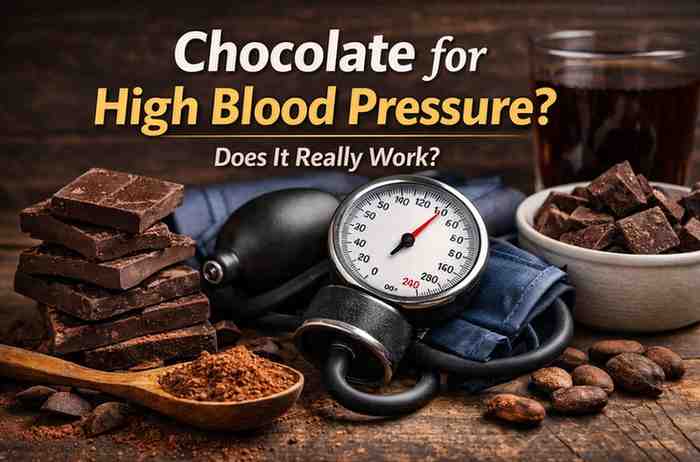
Honestly, the first time someone asked me if chocolate could help high blood pressure, I assumed they were joking.
It was during a casual conversation with a friend who had just been told by his doctor that his blood pressure was creeping up. Nothing dramatic yet. But enough to worry him.
He looked at me and said, “I read somewhere that dark chocolate helps. Is that real… or internet nonsense?”
At the time I didn’t have a confident answer.
But that question kept coming back.
Over the next couple of years I watched multiple people experiment with it. Friends. Family members. A few people in wellness groups I’ve been part of. Some of them were trying to avoid medication. Others were already on medication and just wanted anything natural that might support their numbers.
And what surprised me wasn’t that chocolate sometimes helped.
What surprised me was how often people sabotaged the whole idea without realizing it.
Because the truth is… chocolate can support blood pressure in certain situations.
But most people do it completely wrong.
Why People Even Try Chocolate for High Blood Pressure
If you look at patterns across people dealing with high blood pressure, the emotional cycle is almost identical.
It usually starts like this:
-
Doctor mentions elevated blood pressure
-
Medication becomes a possibility
-
Panic Googling begins
Then somewhere along that rabbit hole… they see the headline:
“Dark chocolate lowers blood pressure.”
And suddenly hope appears.
I’ve seen this moment dozens of times.
Because the idea feels… comforting.
Chocolate isn’t a punishment.
It isn’t another strict diet rule.
It feels human.
But here’s the important part most people miss.
The benefit isn’t really about chocolate.
It’s about a compound inside certain kinds of chocolate called flavanols.
And that tiny detail changes everything.
The Part Most People Get Completely Wrong
Almost everyone I’ve seen try this makes the same mistake.
They buy regular chocolate.
Milk chocolate.
Chocolate bars.
Dessert chocolate.
And technically… yes… those products contain cocoa.
But the amount of flavanols is usually very low.
Processing destroys a lot of the compounds that help blood vessels relax.
Which means the chocolate people are eating for “health” often behaves more like dessert than support.
From what I’ve seen, the difference between success and disappointment usually comes down to one factor:
How dark the chocolate actually is.
The people who notice changes almost always choose:
• 70% cocoa or higher
• preferably 85% or higher
• small portions consistently
Everyone else?
They quietly give up after a few weeks because nothing changes.
What Actually Happens in the Body
Here’s the simplified version I usually explain when someone asks.
The flavanols in dark chocolate help the body produce nitric oxide.
Nitric oxide helps blood vessels relax and widen.
When that happens:
• blood flows more easily
• pressure inside the arteries drops slightly
• the cardiovascular system works less aggressively
It's subtle.
Not dramatic.
But small reductions in blood pressure can matter a lot over time.
What I’ve noticed though… is that people expect this to work like medication.
It doesn’t.
And that expectation causes frustration.
How Long Does Chocolate Take to Affect Blood Pressure?
This is one of the most common questions I hear.
From what I’ve seen across different people trying it:
Short term:
Some people notice slightly lower readings within 2–4 weeks.
More common timeline:
Around 6–8 weeks of consistent intake.
But here’s the reality that often surprises people.
Sometimes the change is only:
• 3–5 mmHg reduction
That might sound small.
But cardiologists actually consider that meaningful improvement.
Especially when combined with other habits.
Still… expectations matter here.
Chocolate alone rarely fixes blood pressure problems.
It’s more like a supportive piece of the puzzle.
The Routine That Actually Seems to Work (From What I’ve Seen)
After watching people experiment with this over time, a pattern shows up.
The ones who report improvements usually follow something close to this:
Daily routine examples:
Morning or afternoon:
• 1 small square of 85% dark chocolate
• eaten slowly
• usually after a meal
Some people combine it with:
• green tea
• walnuts
• berries
Not because it's trendy.
But because they were already trying to support heart health overall.
Interestingly, the people who treated chocolate like a daily ritual instead of a snack seemed more consistent.
Which probably matters more than the chocolate itself.
What Usually Fails (I Didn’t Expect This Pattern)
I didn’t expect this to show up so consistently.
But it does.
Almost everyone I’ve seen struggle with this ends up doing one of these things:
1. They eat too much
Thinking more chocolate equals more benefit.
But large portions mean:
• more sugar
• more calories
• weight gain risk
Which can actually raise blood pressure long term.
2. They choose sweet chocolate
Milk chocolate.
Dessert chocolate.
Chocolate spreads.
These barely contain the compounds needed.
3. They expect fast results
If numbers don’t change within two weeks… they assume the idea was fake.
But cardiovascular changes usually take time and consistency.
What Honestly Surprised Me After Watching So Many People Try This
I expected chocolate itself to be the main factor.
But after seeing people test it over months… something else became obvious.
The people who benefit from chocolate are usually the same people who also started:
• walking more
• reducing ultra-processed foods
• sleeping better
• managing stress
Which makes the chocolate effect hard to isolate.
But that’s also the real world.
Lifestyle habits tend to stack together.
And chocolate sometimes becomes the gateway habit.
A small enjoyable change that leads to bigger ones.
Who This Approach Is Probably NOT For
I try to be honest when people ask about this.
Because it isn’t universal.
Chocolate for high blood pressure might not be a good idea if someone:
• struggles with sugar control
• has severe hypertension
• needs medication urgently
• tends to overeat sweets
Also important:
Chocolate contains calories and caffeine-like compounds.
For some people that creates:
• sleep disruption
• headaches
• digestive issues
So it isn’t automatically harmless.
Common Questions People Ask
Can chocolate replace blood pressure medication?
No.
I’ve never seen that happen safely.
At best, chocolate might support other lifestyle changes that help reduce numbers slightly.
Medication decisions should always involve a doctor.
What type of chocolate is best?
The patterns I’ve seen suggest:
• 70–90% dark chocolate
• minimal added sugar
• small daily portions
Anything sweeter tends to lose the potential benefit.
How much chocolate should someone eat?
Most people who experiment with this use about:
10–20 grams per day
Which is usually one small square of dark chocolate.
More than that tends to backfire.
Does cocoa powder work better?
Sometimes yes.
Unsweetened cocoa powder can contain higher flavanol levels.
People often add it to:
• oatmeal
• smoothies
• yogurt
But again… consistency matters more than format.
Objections I Hear All the Time
“This sounds too good to be real.”
Honestly… that reaction is fair.
Chocolate has a long reputation as a treat.
But when you isolate the cocoa compounds, the science behind blood vessel relaxation is real.
The confusion happens because most commercial chocolate doesn’t contain enough of those compounds.
“My blood pressure didn’t change.”
Also common.
And usually explained by one of three things:
• chocolate type was too sweet
• portion was inconsistent
• other lifestyle factors were unchanged
Even then… it doesn’t work for everyone.
And that’s important to accept.
“Is it worth trying?”
From what I’ve seen…
If someone already enjoys dark chocolate and keeps portions small?
It’s usually a harmless experiment.
But it shouldn’t replace the bigger habits that matter more.
The Reality Check Most Articles Skip
This is the part I wish more people heard early.
Chocolate might lower blood pressure a little.
But high blood pressure usually develops from multiple overlapping factors:
• chronic stress
• poor sleep
• weight gain
• high sodium diets
• inactivity
Chocolate can’t solve those.
And expecting it to often leads to disappointment.
Still… small supportive habits can add up.
And sometimes people need an easy starting point.
Chocolate ends up being that for some.
Practical Takeaways (What I Usually Tell Friends)
If someone is curious about chocolate for high blood pressure, here’s the realistic playbook I’ve seen work best:
1. Choose very dark chocolate
70–90% cocoa.
Not dessert chocolate.
2. Keep portions small
About one square daily.
More is not better.
3. Be consistent
Daily habits matter more than occasional snacks.
4. Combine it with other heart-supportive habits
Walking
sleep improvement
whole foods
This is where most of the real benefit happens →.
5. Track blood pressure calmly
Weekly readings.
Not obsessive daily checking.
Blood pressure naturally fluctuates.
Sometimes the biggest shift I’ve seen isn’t the blood pressure number itself.
It’s the moment someone stops feeling completely powerless about their health.
Because high blood pressure can feel frustrating.
Numbers creep up slowly.
Doctors mention medication.
Lifestyle advice feels overwhelming.
And then someone finds one small habit they can actually stick to.
So no… chocolate isn’t magic.
But I’ve watched enough people use it as a small anchor habit that leads to bigger changes.
And honestly, sometimes that’s the real win. ????