

Not gonna lie… I used to think weight gain “just happened to me.”
Like my body woke up one day and decided to be difficult.
I was doing the “right” things. Sort of.
Eating “pretty healthy.” Walking sometimes. Skipping dessert most days.
And yet my jeans kept getting tighter. Slowly at first. Then all at once.
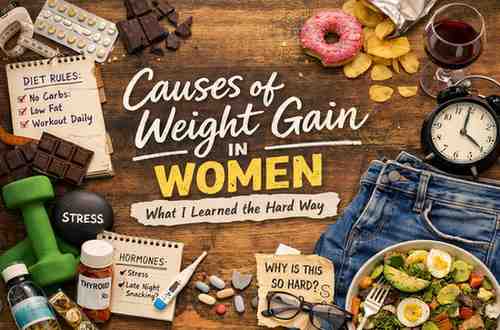
The causes of weight gain in women felt mysterious and personal at the same time.
Everyone around me had a theory. Hormones. Stress. Metabolism. “You’re just getting older.”
Cool. Helpful. ????
What actually helped was getting brutally honest about what was really going on in my body and my life. Some of it surprised me. Some of it annoyed me. A lot of it forced me to drop excuses I didn’t even realize I was using.
This is messy. This is real. This is what I learned the hard way.
1. Hormones aren’t an excuse — but they’re not fake either
I used to roll my eyes when people → blamed hormones.
Then my cycle went sideways.
Then my energy crashed.
Then my cravings went feral.
From what I’ve seen → (and lived), hormonal shifts don’t magically “cause” weight gain.
They quietly change the rules of the game.
Things that hit me:
-
PMS weeks = ravenous hunger
-
Stress hormones = belly weight that didn’t budge
-
Sleep changes = sugar cravings on autopilot
-
Birth control adjustments = appetite + water retention chaos
-
Perimenopause (for some women) = fat storage shifts
What I misunderstood at first:
I thought hormones meant I had zero control.
What actually helped:
Adjusting expectations during hormonal swings instead of pretending they didn’t exist.
Example:
Instead of “Why am I failing this week?”
I started thinking:
“Oh. This is a high-craving week. I need more protein and less decision fatigue.”
That tiny mindset shift stopped a lot of guilt spirals.
2. Stress weight is real, and it’s sneaky
I didn’t feel “that stressed.”
I wasn’t crying on the floor.
I was just… tired. Wired. Always behind.
Turns out chronic stress changes how your body handles calories.
And not in a cute way.
What stress did to me:
-
I ate faster without noticing
-
I reached for carbs when overwhelmed
-
I slept lighter and shorter
-
My body held onto fat like it was preparing for winter
This honestly surprised me.
I thought stress just meant bad moods.
Nope. It quietly messed with my hunger signals and fat storage.
What worked (slowly):
-
Walking after meals
-
Not stacking caffeine on exhaustion
-
Letting one thing be “good enough” each day
-
Short, boring routines I could actually stick to
Not glamorous. But effective.
3. I was under-eating… then overeating later
This one messed with my head.
I thought eating less during the day was discipline.
Turns out I was just delaying the binge.
My pattern:
-
Light lunch
-
“Be good” all day
-
Lose control at night
-
Feel gross
-
Repeat
That cycle alone explained a chunk of my weight gain.
What changed things:
-
Front-loading protein earlier
-
Eating actual meals, not snacky nonsense
-
Stopping the moral language around food
-
Accepting that hunger always collects interest
If you starve yourself mentally, it comes back with penalties.
4. Sleep deprivation made me hungrier than hunger ever did
No one warned me how much sleep affects weight.
Or maybe they did and I ignored it.
Bad sleep =
-
More cravings
-
Less impulse control
-
More comfort eating
-
More inflammation
-
Less energy to move
I didn’t expect that at all.
I thought sleep was just about mood.
Turns out it messes with hunger hormones directly.
What helped:
-
A dumb bedtime alarm
-
Not scrolling in bed
-
Accepting that some nights suck and still going to bed
-
Protecting sleep like it was part of my “diet plan”
Because it is.
5. “Healthy” food can still cause weight gain
This one stung.
I was eating smoothies, granola, nut butter, avocado toast.
All the wellness girlie foods.
Still gaining weight.
Why?
Portions.
Liquid calories.
Hidden sugars.
Mindless “healthy” snacking.
Healthy food still counts.
Your body doesn’t care about branding.
What worked better for me:
-
Eating meals I had to chew
-
Watching portions of calorie-dense foods
-
Adding protein to “healthy” meals
-
Not drinking my calories unless I truly wanted to
This wasn’t about restriction.
It was about awareness.
6. Movement patterns changed (and I didn’t notice)
I didn’t suddenly become lazy.
My life just got smaller.
More sitting.
More screens.
Less walking without purpose.
Fewer “accidental” steps.
That slow drop in daily movement added up.
Not workouts.
Life movement.
What helped:
-
Parking farther
-
Walking calls
-
Ten-minute walks after meals
-
Choosing stairs sometimes
-
Not romanticizing all-or-nothing workouts
Consistency beat intensity here.
By a lot.
7. Emotional eating wasn’t dramatic — it was quiet
I wasn’t sobbing into ice cream.
I was just… soothing myself.
Bored? Snack.
Lonely? Snack.
Overstimulated? Snack.
Rewarded? Snack.
The food wasn’t the problem.
The automatic coping was.
What helped (awkward at first):
-
Pausing for 60 seconds before eating
-
Asking, “Am I hungry or overwhelmed?”
-
Letting myself eat anyway sometimes
-
Finding one non-food comfort per day
This wasn’t about perfection.
It was about noticing patterns.
8. Medications and health conditions matter more than people admit
This part doesn’t get enough honesty.
Some meds change appetite.
Some change metabolism.
Some cause water retention.
Some mess with energy.
Same with conditions like:
-
Thyroid issues
-
PCOS
-
Insulin resistance
-
Depression
This is where the causes of weight gain in women get unfair.
Not everyone is starting from the same baseline.
What helped:
-
Tracking patterns, not just calories
-
Talking to a doctor when weight gain felt “off”
-
Not gaslighting myself when effort didn’t match results
-
Adjusting strategies instead of quitting
This is slow work.
But it’s real work.
9. Age changes how forgiving your body is
This annoyed me.
But yeah.
What used to “work” stopped working.
Late nights.
Random workouts.
Crash diets.
My body became less tolerant of chaos.
What worked better:
-
Routine
-
Protein at every meal
-
Strength training
-
Fewer extreme swings
-
More boring consistency
Not exciting.
Effective.
10. Diet culture noise made me overcorrect
I tried:
-
Cutting carbs
-
Cutting fats
-
Fasting too aggressively
-
“Reset” cleanses
-
7-day challenges
Most of it backfired.
Why?
I’d go too extreme.
Then rebound.
Then feel broken.
What actually stuck:
-
Small changes I could repeat
-
Eating foods I didn’t hate
-
Letting progress be slow
-
Dropping the urgency
Urgency made me reckless.
Patience made me steady.
11. Comparison wrecked my expectations
Watching other women “bounce back” messed with me.
Different bodies.
Different hormones.
Different lives.
Different stress loads.
Comparing my progress to theirs only made me:
-
Rush
-
Overcorrect
-
Quit early
Once I stopped using other people’s timelines as my measuring stick, I could finally see my own progress.
Quick FAQ (the stuff people actually Google)
How long does it take to see changes?
From what I’ve seen, real changes show up in 4–8 weeks. Mental relief comes sooner. Physical changes lag.
Is weight gain in women always hormonal?
No. Hormones influence things, but habits, stress, sleep, and food patterns still matter.
Can you gain weight even if you eat “healthy”?
Yep. Portions, liquid calories, and mindless eating still count.
Do I need to work out hard to reverse this?
Honestly? No. Consistent daily movement + basic strength training did more for me than intense bursts.
Is it worth trying to change this, or should I just accept it?
Both can be true. Acceptance doesn’t mean giving up. It means not hating yourself while you adjust.
Common objections I had (and what I learned)
“My metabolism is broken.”
It’s usually slowed or stressed, not broken.
“I eat less than my friends.”
Different bodies. Different needs. Comparison lies.
“Nothing works for me.”
Something probably works a little. It just wasn’t dramatic.
“I don’t have time.”
Same. That’s why boring habits beat perfect plans.
“I’ll start when life calms down.”
Life didn’t calm down. I had to start anyway.
Reality check (the part no one sells you)
This isn’t linear.
Some weeks you’ll do everything “right” and the scale won’t move.
Sometimes it’ll go up.
Sometimes your body changes before your weight does.
What can go wrong:
-
Over-restricting
-
Obsessing over numbers
-
Burning out on routines
-
Expecting fast results
-
Quitting after small setbacks
Who this is NOT for:
-
People chasing rapid transformation
-
Anyone needing a perfect plan
-
Folks unwilling to change routines
-
Anyone wanting guarantees
Progress is quiet.
It’s boring.
It’s emotionally annoying.
Still… it adds up.
Practical takeaways (the stuff I wish I did sooner)
What to do:
-
Sleep like it matters (because it does)
-
Walk more than you think you need to
-
Strength train 2–3x/week if possible
-
Notice stress, don’t ignore it
-
Track patterns, not perfection
What to avoid:
-
Extreme restrictions
-
Comparing timelines
-
All-or-nothing plans
-
Waiting for motivation
-
Moralizing food
What to expect emotionally:
-
Frustration
-
Impatience
-
Doubt
-
Long boring stretches
-
Random pride when jeans fit again
What patience looks like:
-
Showing up on low-energy days
-
Not quitting after plateaus
-
Adjusting instead of abandoning
-
Letting progress be unsexy
No guarantees.
No miracle timeline.
Just direction.
I won’t pretend I’ve “figured it all out.”
Some weeks still feel heavy.
Some habits still wobble.
But understanding the real causes of weight → gain in women stopped me from treating my body like a problem to punish.
It became something to listen to instead.
So no — this isn’t magic.
But for me? It stopped feeling impossible.
And that was enough to keep going.