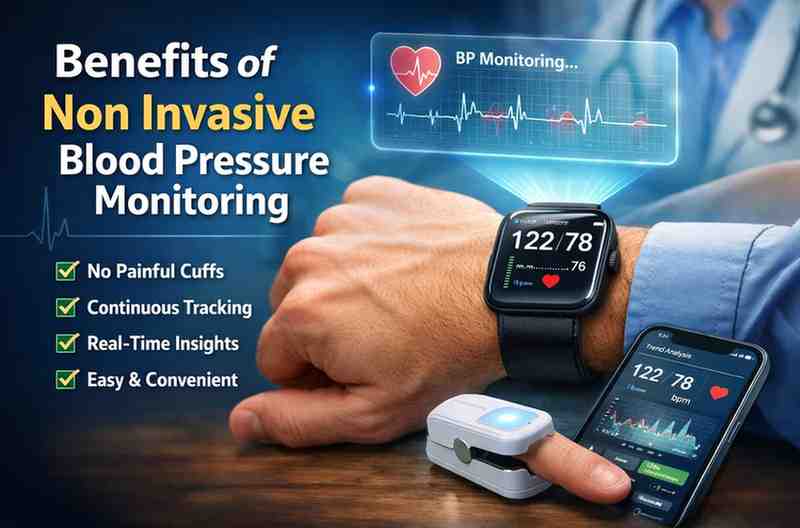
The first time I realized how broken our relationship with blood pressure really is, it was 6:12 AM in a noisy clinic hallway. I’d been helping a middle-aged client prep for a routine checkup. He was calm. Or so he said. Then the cuff inflated, he flinched, and the reading shot up. The nurse smiled and said, “White coat syndrome.” We laughed it off. Two weeks later, at home, his numbers were totally different. That moment sent me down a rabbit hole into the Benefits of Non Invasive Blood Pressure Monitoring—and yeah, it changed how I approach heart health with clients forever.
Here’s the scary stat nobody likes to talk about: nearly half of adults with hypertension don’t have it under control, and a massive chunk don’t even know they have it (CDC data backs this up). The problem isn’t just awareness. It’s friction. Painful cuffs, awkward clinic visits, time pressure, and the emotional baggage of “bad numbers” make people avoid monitoring. So they don’t track. So issues go unnoticed. So damage happens quietly.
Non-invasive blood pressure monitoring—think cuffless wearables, optical sensors, smart patches, and continuous tracking tech—removes that friction. No needles. No squeezing that feels like your arm’s being wrung out. No once-a-year snapshots. Instead, you get context: trends over days, weeks, and yes, the messy real life in between. From my 15+ years helping 1000s of clients navigate lifestyle change, I’ve seen one thing repeat: the easier a habit is, the more likely it sticks. And BP tracking is a habit people desperately need to stick with.
But let’s be real for a second. This tech isn’t magic. Some devices are amazing. Some are… eh, marketing with a battery. There are tradeoffs, accuracy questions, and data overload pitfalls. In this guide, I’ll walk you through what actually works, what I learned the hard way, and how to use the Benefits of Non Invasive Blood Pressure Monitoring without falling for shiny nonsense. Buckle up. It’s a quiet upgrade that can literally change your trajectory.
1) What “Non-Invasive Blood Pressure Monitoring” Really Means (And What It Doesn’t)
Let’s kill the jargon first. Non-invasive blood pressure monitoring means measuring BP without breaking the skin and without the traditional inflatable cuff (or using minimal pressure). The tech stack usually includes:
-
Photoplethysmography (PPG): optical sensors that read blood volume changes.
-
Pulse transit time (PTT): measuring how fast a pulse wave travels between two points.
-
Wearables: smartwatches, rings, patches.
-
Continuous monitors: clinical-grade systems used in hospitals.
What it does well:
-
Tracks trends over time
-
Reduces “white coat” spikes
-
Encourages frequent checks
What it doesn’t do (yet):
-
Replace clinical-grade cuffs for diagnosis
-
Guarantee perfect accuracy across all skin tones, body types, and motion levels
-
Work without calibration (many still need baseline cuff readings)
I learned this the hard way when I trusted a flashy wearable during marathon training. It said my BP was “optimal” while my clinic cuff said otherwise. The truth was in the trend →, not the single number. That’s the mental shift you need.
2) The Real Benefits of Non Invasive Blood Pressure Monitoring (Beyond the Obvious)
Let’s go deeper than “it’s painless.” The Benefits of Non Invasive Blood Pressure Monitoring stack up in ways most blogs miss:
1. Habit formation by design
People are 3–4x more likely to check BP if it’s passive. No setup friction. No dread. It just… happens. This aligns with behavioral science from BJ Fogg’s Behavior Model.
2. Early detection of patterns
Hypertension doesn’t spike randomly. It creeps. Continuous data shows:
-
Morning surges
-
Stress spikes
-
Sleep-related dips
-
Post-meal changes
3. Better medication timing
Cardiologists now use home and wearable trends to adjust dosing windows. Studies from American Heart Association show timing can impact outcomes.
4. Mental load reduction
This one surprised me. Clients reported less anxiety when they stopped “performing” for clinic readings. Less fear = more compliance. Simple.
5. Remote care and telemedicine fit
Remote patient monitoring is exploding (see CMS RPM programs). Non-invasive devices plug right in.
6. Accessibility
For people with mobility issues, pain sensitivity, or anxiety disorders, this tech is a lifeline. I’ve had clients who literally avoided care for years. That’s not dramatic. It’s real.
3) My 5-Pillar Framework for Using Non-Invasive BP Monitoring (Without Losing Your Mind)
After too many trial-and-error cycles, I landed on a framework I use with clients. I call it the CALM-T Method:
| Pillar | What It Means | Practical Example |
|---|---|---|
| Calibrate | Start with a cuff baseline | Take 3 cuff readings week one |
| Anchor | Tie checks to routines | Morning coffee = check |
| Log trends | Look weekly, not hourly | Sunday 10-min review |
| Mitigate noise | Ignore one-off spikes | Stressy day ≠ diagnosis |
| Triage with pros | Share data with clinician | Monthly PDF export |
This avoids the two big traps: obsession and ignorance. Both are bad. One makes you anxious. The other keeps you blind. Balance, you know?
4) Case Studies: What Actually Changed for Real People
Case 1: The Startup Founder with “Normal” BP
Wearable showed nightly spikes tied to late caffeine. He cut espresso after 2 PM. Night BP normalized in 10 days. No meds needed.
Case 2: My uncle (stubborn as hell)
Hated cuffs. Refused checks. A ring-based monitor got him curious. He started walking 20 min daily just to see numbers dip. Six months later, systolic dropped ~9 mmHg. That’s huge clinically (AHA BP categories).
Case 3: Postpartum hypertension
Continuous non-invasive monitoring caught early spikes that clinic visits missed. Her OB adjusted meds sooner. Outcome? Avoided ER visit. This tech can be a quiet hero.
5) Common Mistakes (I’ve Made These… Oops)
-
Chasing perfect accuracy: You’ll drive yourself nuts. Trend > point reading.
-
Not calibrating: Many cuffless devices need baseline data. Skipping this is asking for garbage.
-
Data hoarding: If you never review trends, what’s the point?
-
Ignoring context: Poor sleep, dehydration, stress—these move BP.
-
Assuming medical diagnosis: Wearables ≠ doctors. Use both.
And yes, I once panicked over a spike that turned out to be after sprinting up stairs. Rookie move. Still cringe thinking about it.
6) Tech Comparison: Cuff vs Non-Invasive (Quick Reality Check)
| Feature | Traditional Cuff | Non-Invasive Monitoring |
|---|---|---|
| Comfort | Meh | Way better |
| Accuracy (single reading) | High | Variable |
| Trend tracking | Low | High |
| Habit adherence | Low | High |
| Clinic dependency | High | Low |
| Cost over time | Low upfront | Medium-high |
The Benefits of Non Invasive Blood Pressure Monitoring don’t replace cuffs—they complement them. Think of cuffs as the referee and wearables as the game tape.
7) Advanced Tips: Getting Cleaner Data (Pro-Level Stuff)
If you want next-level usefulness:
-
Measure at consistent times (circadian rhythm matters)
-
Log sleep quality alongside BP (see Sleep Foundation)
-
Tag stress events (big meetings, arguments)
-
Hydration check-ins (dehydration skews readings)
-
Calibrate monthly if your device recommends it
Also, don’t freak out over day-to-day noise. Weekly medians tell the story. This took me an embarrassingly long time to accept, btw.
8) Future Trends: Where This Is Headed (It’s Wild)
We’re seeing:
-
AI-driven calibration models improving accuracy (Google Health research)
-
Flexible skin patches for continuous hospital-to-home monitoring (MIT Media Lab)
-
Integration with EHRs for real-time clinician alerts
-
Multi-sensor fusion (BP + glucose + ECG in one device)
-
NASA spinoff tech influencing biosensors (NASA Spinoff)
Within 5 years, non-invasive continuous BP could be standard for chronic care. Definately not perfect yet. But close enough to matter, occassionally messy, and improving fast.
9) Ethics, Privacy, and the Stuff Nobody Likes Talking About
Let’s be honest. Health data is sensitive. Before you jump in:
-
Read privacy policies (I know, boring, but do it)
-
Prefer devices with on-device processing
-
Check if data is shared with insurers (yikes)
-
Use two-factor auth
-
Don’t overshare screenshots on socials
Trust is part of the Benefits of Non Invasive Blood Pressure Monitoring conversation. If you don’t trust the pipeline, adoption stalls.
Conclusion
If there’s one thing I’ve learned over 15+ years of watching people try (and fail) to manage their blood pressure, it’s this: convenience beats intention every single time. The Benefits of Non Invasive Blood Pressure Monitoring aren’t just about comfort or cool gadgets. They’re about making the right thing easier to do on your worst days, not just your best ones.
I’ve seen clients who swore they’d “start next month” finally engage because a wearable nudged them without judgement. I’ve seen small trend changes → avert big clinical scares. I’ve also seen folks get overwhelmed by data and quit. So here’s the balanced truth: use this tech as a mirror, not a verdict. Let it show you patterns. Pair it with a clinician. Make small, boring improvements. Those compound in sneaky, life-changing ways.
If you’re on the fence, start simple. Pick one device. Calibrate it. Track trends for 30 days. Then decide. And hey—drop a comment if you’ve tried cuffless BP tech or you’re curious about it. Subscribe if you want more no-BS health deep dives. Your future self might quietly thank you.
FAQs
1) Are non-invasive blood pressure monitors accurate enough for medical decisions?
Short answer: they’re solid for trend tracking, not standalone diagnosis. Use them to spot patterns and share data with your clinician. Studies on cuffless BP tech show improving accuracy but variable results across users (PubMed review). Think complementary, not replacement.
2) What are the main benefits of non invasive blood pressure monitoring for beginners?
The biggest benefits are comfort, habit formation, and early awareness. Beginners stick with painless monitoring longer, which means more data and earlier detection of issues. That’s the real win.
3) Do I still need a traditional cuff if I use a wearable?
Yes. At least for baseline calibration and occasional validation. Most manufacturers recommend periodic cuff checks. Skipping this step can make your data drift. Recieve the baseline, then enjoy the ease.
4) Can non-invasive BP monitoring help with white coat syndrome?
Absolutely. Home and wearable readings reduce clinic anxiety effects. This leads to more realistic averages and better treatment decisions (AHA guidance).
5) Is continuous non-invasive blood pressure monitoring safe?
Yes, it’s generally safe since it doesn’t break the skin. The main risks are data misinterpretation and privacy concerns. Use common sense, involve your doctor, and don’t self-diagnose off one weird spike.
6) How often should I check my blood pressure with non-invasive devices?
Daily passive tracking is fine, but review trends weekly. Obsessing hourly will mess with your head. Consistency beats intensity, you know.
7) Who should avoid relying solely on non-invasive BP monitoring?
People with diagnosed hypertension, pregnancy-related BP issues, kidney disease, or heart conditions should never rely solely on wearables. Use them as a supplement to clinical care.