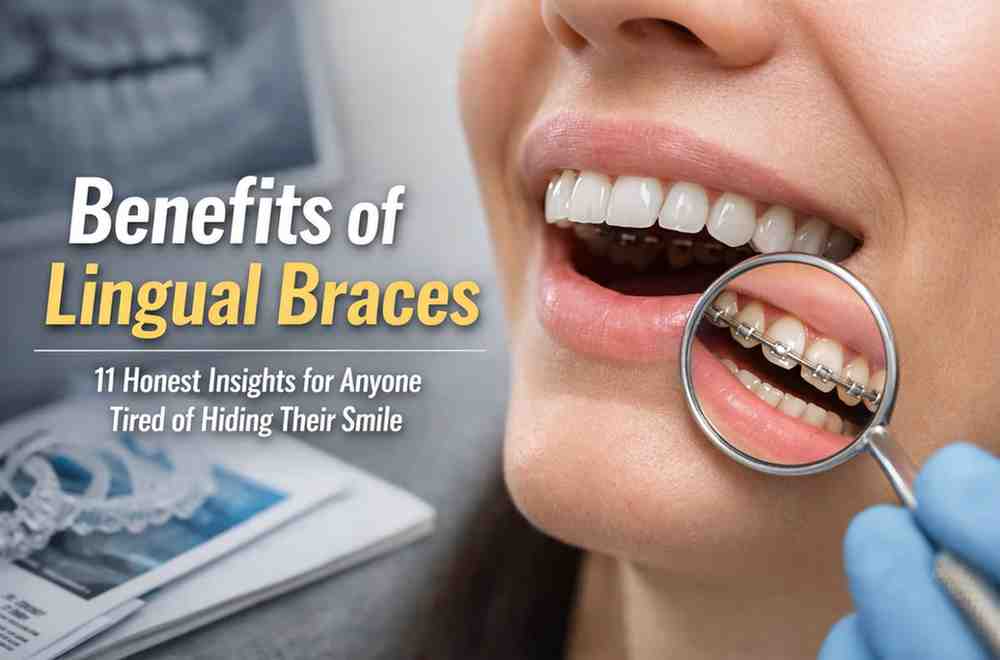
Most people don’t start asking about the Benefits of Lingual Braces because they’re excited about orthodontics.
They start because they’re tired.
Tired of smiling with their lips closed in photos.
Tired of feeling “too old” for metal braces.
Tired of putting off something they’ve quietly wanted to fix for years.
I’ve watched this play out more times than I expected. Adults in their late 20s, 30s, 40s — even 50s — finally deciding to straighten their teeth… and then panicking when they realize traditional braces will be visible in every meeting, every Zoom call, every wedding photo.
And that’s usually when lingual braces enter the conversation.
From what I’ve seen — through friends, clients, coworkers, and long late-night “should I do this?” texts — lingual braces aren’t just about straight teeth.
They’re about control. Privacy. Confidence during the process, not just after.
But they’re also not for everyone.
Let’s talk about what actually happens.
Why People Start Looking at Lingual Braces in the First Place
The pattern is almost predictable.
Someone wants straight teeth but:
-
They work in a client-facing role.
-
They’re in leadership.
-
They’re on camera often.
-
They just don’t want visible braces at 34.
Clear aligners come up first. Then someone realizes their case might be too complex. Or they’ve already tried aligners and weren’t consistent. Or they need more torque control than trays can deliver.
That’s when orthodontists suggest braces placed behind the teeth.
And the room usually goes quiet.
“Wait. That’s a thing?”
Yes. It is.
Lingual braces attach to the back (tongue side) of your teeth. From the front, they’re essentially invisible.
That’s the headline benefit. But that’s not the full story.
1. The Biggest Benefit: They’re Truly Hidden
Let’s just say it clearly.
Lingual braces are the most discreet fixed orthodontic option available.
From the front:
-
No brackets visible.
-
No wires showing.
-
No “brace face” moments in photos.
This honestly surprised me after watching so many adults hesitate over visible braces. The psychological relief alone was huge.
One executive I know said, “I forgot I even had braces during meetings.”
That matters more than people admit.
Who this matters most for:
-
Attorneys
-
Sales professionals
-
Executives
-
Public speakers
-
Brides-to-be
-
Anyone self-conscious about adult braces
But here’s the nuance.
Hidden doesn’t mean effortless.
2. They Work Like Traditional Braces (Which Is a Good Thing)
From a mechanical standpoint, lingual braces function similarly to traditional braces.
Which means:
-
They can treat complex bite issues.
-
They can rotate teeth precisely.
-
They allow detailed tooth movement.
That’s where they often beat clear aligners in tougher cases.
From what I’ve seen, people who need:
-
Severe crowding correction
-
Significant bite adjustments
-
Rotations that trays struggled with
…often get more predictable results with braces — lingual included.
So one of the underrated Benefits of Lingual Braces is this:
You get the power of traditional braces without the visible hardware.
That combination is rare.
3. Confidence During Treatment (Not Just After)
Almost everyone I’ve seen struggle with adult orthodontics underestimates this part.
They focus on the end result.
They don’t think about the 12–24 months in between.
Lingual braces allow people to:
-
Show up confidently at work.
-
Date without explaining braces.
-
Take photos without editing out metal.
And that emotional ease keeps people committed.
I’ve watched people quit aligners because they felt awkward taking trays out at dinner.
Lingual braces? They stay in. No social choreography required.
4. No Compliance Anxiety
This is a big one.
Clear aligners require discipline.
22 hours a day.
Consistent wear.
Cleaning.
Tracking trays.
Most people I’ve worked with mess this up at first.
Not because they’re lazy. Because life is chaotic.
Lingual braces remove that mental load.
They’re fixed.
They’re working 24/7.
No forgetting them on your bathroom sink.
That consistency alone often speeds up real-world progress compared to inconsistent aligner wear.
5. They Can Be Custom-Made for Precision
Modern lingual braces are often customized to the shape of your teeth.
This improves:
-
Fit
-
Comfort over time
-
Accuracy of movement
I didn’t expect customization to be such a big deal until I saw cases where poor fit caused irritation.
With precision systems, adjustment visits are often smoother. Not painless — but smoother.
What People Consistently Get Wrong About Lingual Braces
Let’s ground this.
They are not invisible to you.
Your tongue will know they’re there.
Common early complaints I’ve witnessed:
-
Speech changes (temporary lisping)
-
Tongue irritation
-
Difficulty eating certain foods
-
Slower initial comfort compared to front braces
Almost everyone I’ve seen struggle with this does one thing wrong:
They expect immediate comfort.
The adjustment period is real.
Usually:
-
1–2 weeks for speech adaptation
-
2–4 weeks for tongue sensitivity to calm down
Most people adapt. Some take longer.
If you talk for a living — podcaster, teacher, attorney — this deserves serious consideration.
How Long Does Treatment With Lingual Braces Take?
Short answer:
Typically 12 to 24 months.
Longer for complex bite issues.
From what I’ve observed:
-
Minor crowding: ~12–15 months
-
Moderate corrections: 18–24 months
-
Significant bite changes: 24+ months
But here’s what actually slows people down:
-
Missed appointments
-
Broken brackets
-
Poor oral hygiene
-
Unrealistic expectations
And yes, breakage can happen.
They’re behind the teeth. Food gets trapped differently.
Which brings us to…
Oral Hygiene Is Harder Than People Expect
I didn’t expect this to be such a common issue.
Cleaning behind-the-teeth brackets requires:
-
Interdental brushes
-
Water flossers
-
Patience
People who already struggle with flossing? This will test them.
Who this is NOT for:
-
Anyone unwilling to commit to detailed oral hygiene
-
Anyone with active gum disease
-
Anyone looking for “low effort” orthodontics
Still — for disciplined adults, it’s manageable.
Are Lingual Braces Worth It?
This is the question I hear the most.
Let’s break it down honestly.
They may be worth it if:
-
You need serious correction.
-
You refuse visible braces.
-
You want fixed treatment (no trays).
-
You value discretion highly.
-
You’re okay with higher cost.
They may NOT be worth it if:
-
Your case is mild and aligners would work fine.
-
You’re on a tight budget.
-
You can’t tolerate tongue discomfort.
-
You need perfect speech clarity immediately.
Cost in the U.S. typically runs higher than traditional braces.
From what I’ve seen, people justify it when:
-
Career visibility matters.
-
Image impacts income.
-
They’ve delayed treatment for years due to appearance concerns.
Common Mistakes That Slow Results
Almost everyone I’ve seen struggle with this does one of these:
-
Skips hygiene tools
-
Ignores small irritation until it becomes ulcers
-
Breaks food rules early
-
Expects zero discomfort
The people who succeed tend to:
-
Follow food guidelines strictly
-
Invest in water flossers
-
Keep adjustment appointments
-
Accept the learning curve
Simple. Not glamorous.
Quick FAQ (Real-World Answers)
Do lingual braces hurt more?
Initially, yes — mainly tongue irritation. It fades for most.
Do they cause a lisp?
Often at first. Usually temporary.
Are they better than Invisalign?
Depends on the case. For complex movements, often yes. For mild cases, maybe unnecessary.
Can people see them at all?
From the front? Almost never.
Are they safe?
Yes — when placed by an experienced orthodontist.
Objections I Hear All the Time
“I don’t want to spend that much.”
That’s fair. They are expensive.
But compare that to:
-
Delaying treatment 10 more years.
-
Avoiding photos.
-
Feeling self-conscious at work.
It becomes a long-term value decision.
“I’m scared of the discomfort.”
That’s real. The first few weeks aren’t glamorous.
Still — most people adapt faster than they expect.
“I’m too old for this.”
Honestly? The majority of lingual brace patients I’ve seen are adults.
Age isn’t the barrier. Avoidance is.
The Reality Check Nobody Talks About
Lingual braces demand:
-
Emotional patience
-
Financial investment
-
Hygiene discipline
-
Adjustment to speech changes
They are not “invisible magic.”
They are a serious orthodontic commitment — just hidden from public view.
Some people love them.
Some switch out early.
And both reactions are valid.
Practical Takeaways If You’re Considering Them
If you’re serious:
-
Get a consultation with an orthodontist experienced in lingual systems.
-
Ask specifically about speech adaptation.
-
Invest in hygiene tools before placement.
-
Budget realistically.
-
Accept the first month will feel weird.
What patience actually looks like:
-
Talking slower for a few weeks.
-
Rinsing more often.
-
Adjusting diet.
-
Not obsessing over minor discomfort.
Small wins matter.
The first time you smile in a group photo and realize no one knows you’re in treatment?
That hits differently ????
So no — lingual braces aren’t magic.
But I’ve watched enough adults finally move forward with orthodontics because they felt safe doing it discreetly.
And sometimes that’s the real benefit.
Not just straighter teeth.
But finally not feeling stuck between “I want this” and “I can’t be seen with braces.”
If that tension sounds familiar, you’re not alone.
Just go in clear-eyed.
Hidden doesn’t mean easy.
It means private.
And for a lot of people, that’s enough.