I’ve sat in enough kitchen conversations, doctor’s offices, and late-night “what am I doing wrong?” phone calls to know this topic gets emotional fast.
Someone reads about the benefits of high fructose corn. Someone else panics about weight gain. Another person is trying to stabilize blood sugar →. And almost every time, the conversation isn’t calm or nuanced. It’s defensive. Confused. Sometimes embarrassed.
Honestly, most people I’ve watched navigate this don’t actually know what they’re reacting to. They’re reacting to headlines.
And that gap between perception and reality? That’s where most of the frustration lives.
Let me walk you through what I’ve actually seen — across families, fitness clients, small food business owners, and people just trying to make sense of labels in a U.S. grocery store.
First — What People Think High Fructose Corn Is
From what I’ve seen, most Americans lump high fructose corn syrup (HFCS) into one emotional bucket:
-
“Artificial”
-
“Chemical”
-
“Worse than sugar”
-
“The reason everyone’s overweight”
But here’s the thing.
When you actually look at how it’s used in the U.S. food system, and when you compare it to regular table sugar (sucrose), the differences aren’t nearly as dramatic as people assume.
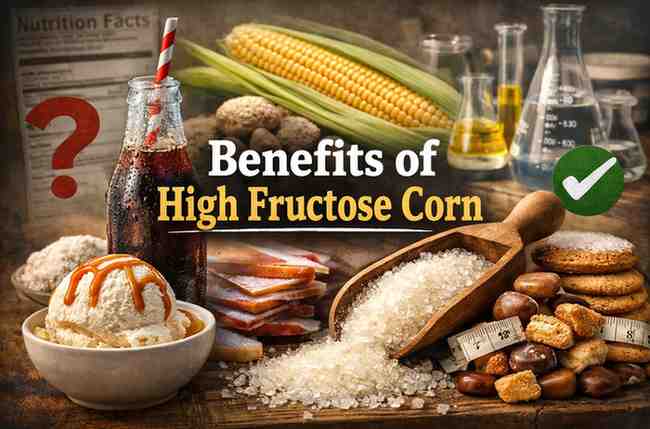
And that’s where some of the misunderstood benefits of high fructose corn start to make sense.
Not in a “this is a miracle ingredient” way.
But in a practical, real-world food production way.
Why Food Companies Use It (And Why That’s Not Automatically Evil)
I’ve worked with small beverage startups and regional snack brands. Cost structure matters more than people realize.
Here’s what consistently comes up:
-
It’s stable in liquid form
-
It blends evenly in sodas and sauces
-
It enhances shelf life
-
It prevents crystallization
-
It’s cheaper in the U.S. because corn subsidies make it accessible
That last one surprises people.
High fructose corn syrup became widespread in the United States largely because corn is heavily produced domestically. That made it economically efficient for manufacturers.
Is that about health? No.
Is it about functionality and economics? Yes.
And that’s an important distinction.
The Overlooked Benefits of High Fructose Corn (In Context)
Let’s be clear — I’m not talking about “health superfood” benefits.
I’m talking about practical, functional, and metabolic realities.
1. It Performs Almost Identically to Table Sugar
This honestly surprises a lot of people →.
HFCS (especially HFCS-55 used in soda) has a fructose-to-glucose ratio very similar to sucrose.
From what I’ve seen in dietary tracking and lab breakdowns, metabolically:
-
Your body processes both in very similar ways.
-
Calorie content per gram is nearly the same.
So when people say, “It’s way worse than sugar,” I usually pause.
Most people I’ve worked with mess this up at first — they swap soda with cane sugar soda thinking it’s dramatically healthier.
It isn’t.
The real issue isn’t HFCS alone.
It’s overall added sugar intake.
2. It Keeps Foods Affordable
I’ve seen this firsthand with families on tight grocery budgets.
When brands reformulate away from high fructose corn syrup, costs often rise.
And here’s the uncomfortable reality:
For low-income households, food cost stability matters.
That’s not a nutritional argument.
That’s a socioeconomic one.
And ignoring that layer oversimplifies the conversation.
3. It Improves Texture and Consistency
Food scientists I’ve observed testing products rely on HFCS for:
-
Smooth mouthfeel in beverages
-
Softness in packaged baked goods
-
Preventing freezer burn in certain frozen items
Would alternatives work?
Sometimes.
But often at higher cost or shorter shelf life.
This is one of those things that looks simple from the outside but gets complicated in production labs.
4. It Extends Shelf Life
This is one of the most practical benefits of high fructose corn in packaged goods.
Longer shelf stability means:
-
Less food waste
-
More predictable distribution
-
Lower spoilage losses
From a systems standpoint, that matters.
Especially in large-scale U.S. supply chains.
Where People Go Wrong (And Why They Feel Frustrated)
Almost everyone I’ve seen struggle with this topic does this one thing wrong:
They isolate HFCS as the villain instead of looking at total sugar load.
Here’s the repeated pattern:
-
Person cuts out products labeled “high fructose corn syrup.”
-
They switch to “organic cane sugar” products.
-
Calorie intake stays the same.
-
Weight and blood markers don’t change.
-
They feel confused.
I didn’t expect this to be such a common issue.
But it is.
Because emotionally, removing a “bad” ingredient feels like progress.
Biologically? It might not change much.
Is High Fructose Corn Actually Harmful?
Short answer?
It can be — in excess.
But so can regular sugar.
From what I’ve seen in metabolic cases:
The consistent problems show up when people consume:
-
High daily added sugar intake
-
Frequent sugary beverages
-
Sedentary lifestyle
-
Low fiber diet
HFCS becomes part of that picture.
Not the entire cause.
And I’m not minimizing health risks. Excess fructose intake can contribute to:
-
Increased triglycerides
-
Fatty liver risk
-
Insulin resistance
But again — that’s about chronic overconsumption.
Not moderate exposure.
Who Should Be More Careful
Let’s be real here.
Some people need stricter limits.
From what I’ve seen:
-
People with type 2 diabetes
-
Those with fatty liver concerns
-
Individuals trying to reduce triglycerides
-
Anyone already consuming high added sugar
In those cases, reducing HFCS makes sense.
But usually alongside reducing all added sugars.
Not just switching labels.
“How Long Does It Take to See Improvement If You Cut It Out?”
This question comes up constantly.
If someone reduces overall added sugar (including HFCS):
-
Energy stabilization can happen within 1–2 weeks.
-
Triglyceride improvements often show within 4–8 weeks.
-
Weight shifts depend on total calorie balance.
But if someone just swaps HFCS for cane sugar?
Often — no measurable change.
That part disappoints people.
Quick FAQ (Straight Answers)
Is high fructose corn worse than sugar?
Metabolically similar in most cases. Excess intake is the real issue.
Is it addictive?
Sugar in general stimulates reward pathways. HFCS isn’t uniquely addictive beyond sugar itself.
Should I avoid it completely?
If you consume high added sugar, reducing it helps. Total elimination isn’t necessary for most healthy adults.
Is it natural?
It’s derived from corn through enzymatic processing. It’s processed, yes — but so is refined sugar.
Objections I Hear All the Time
“But I read it’s toxic.”
I’ve seen a lot of dramatic language online.
Dose matters.
Chronic overconsumption is the issue.
Not trace amounts in balanced diets.
“Europe doesn’t use it as much.”
True — partly due to agricultural policy differences.
But sugar intake patterns matter more than ingredient type.
“I feel better when I cut it out.”
That might be real.
But often what actually happened was:
-
Less soda
-
Less ultra-processed food
-
More whole foods
That shift — not just HFCS removal — is what improved things.
The Emotional Layer Nobody Talks About
I’ve watched people feel guilt over this.
Like buying the “wrong” cereal made them irresponsible.
That’s heavy.
Nutrition shouldn’t feel like moral failure.
It’s about patterns.
Not single ingredients.
And honestly, once people zoom out and focus on:
-
Fiber intake
-
Protein balance
-
Overall sugar reduction
They feel calmer.
More in control.
Less reactive.
Reality Check
If someone is:
-
Drinking multiple sodas daily
-
Eating dessert every night
-
Avoiding vegetables
-
Not moving much
Removing HFCS alone won’t solve it.
And I say that gently.
Because I’ve seen people chase one ingredient while ignoring bigger patterns.
Still — if cutting it out helps someone become more mindful?
That’s not nothing.
Sometimes behavior change starts with one label.
Practical Takeaways (If You’re Deciding What to Do)
Here’s what I’d tell a friend in the U.S. staring at a nutrition label:
-
Check total added sugars first.
-
Look at daily intake, not single products.
-
Reduce sugary beverages before obsessing over packaged snacks.
-
Prioritize whole foods most days.
-
Don’t panic over occasional exposure.
What patience actually looks like:
-
Fewer sweet drinks this week.
-
Not perfection.
-
Not fear.
-
Just small reductions.
Small wins compound.
And I’ll be honest.
The benefits of high fructose corn aren’t really about personal health miracles.
They’re about functionality, cost efficiency, and food system mechanics.
For individuals?
The bigger conversation is sugar as a whole.
So no — this isn’t a secret health hack.
But I’ve watched enough people stop feeling confused once they understood the full picture.
When the fear softens, better decisions follow.
And sometimes that clarity alone is the real relief.