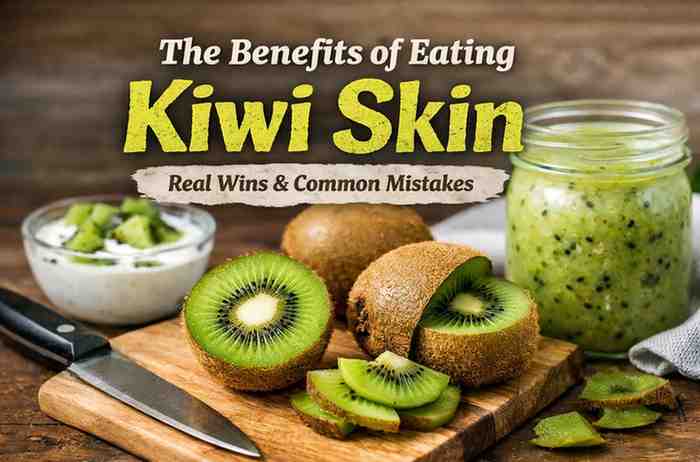
Honestly, most people I’ve watched try this hesitate at the exact same moment.
They’re holding the kiwi.
They’ve sliced it a hundred times before.
Then someone tells them, “You know you can eat the skin, right?”
And suddenly they’re staring at that fuzzy brown surface like it’s a dare.
I’ve seen → this conversation play out in kitchens, nutrition coaching sessions, group chats, even during weight-loss resets. The idea of eating kiwi skin feels slightly wrong at first. Like you’re breaking an unspoken fruit rule.
But the benefits of eating kiwi skin keep → coming up in real conversations — especially from people who are tired of doing “healthy” in complicated ways.
From what I’ve seen, this isn’t about being extreme. It’s about squeezing more out of something simple. And most people mess it up in the beginning — either by overthinking it or by doing it once and deciding they hate it forever.
Let’s talk about what actually happens.
Why People Even Start Eating Kiwi Skin
Nobody wakes up craving fuzzy fruit peel.
Most people I’ve worked with fall into one of these categories:
-
They’re trying to increase fiber without adding another supplement.
-
They’re cutting calories but want more fullness.
-
They’re frustrated with slow digestion.
-
They heard somewhere that “that’s where the nutrients are.”
And usually? It starts as an experiment.
“I’ll try it once.”
That’s how almost all of them begin.
And here’s what consistently surprises people →: the skin changes the experience of the fruit more than they expect. Texture. Satiety. Even blood sugar response feels steadier for some.
But let’s break down what actually makes this worth discussing.
1. You Get Significantly More Fiber (And That Changes Things)
This is the big one.
Eating the skin increases the fiber content by roughly 50% compared to eating the flesh alone.
Now — that sounds like a nutrition label brag. But here’s what I’ve actually seen:
-
People who struggle with mid-morning hunger feel fuller longer.
-
Those dealing with mild constipation often notice improvement within a week.
-
Cravings between meals soften slightly.
Almost everyone I’ve seen struggle with digestion does this one thing wrong: they add fiber supplements but ignore whole-food fiber.
Kiwi skin provides insoluble fiber — the kind that adds bulk and keeps things moving.
And here’s the honest part:
The first few days? Some people feel bloated.
That doesn’t mean it’s “bad.” It usually means their gut isn’t used to that much fiber. The adjustment period is real.
From what I’ve seen:
-
3–5 days = mild adjustment
-
1–2 weeks = noticeable digestive rhythm shift
But only if they stay consistent.
2. The Antioxidant Boost Is Real (But Not Magical)
A lot of articles hype antioxidants like they’re invisible superpowers.
Let’s calm that down.
Kiwi skin contains higher concentrations of certain antioxidants than the flesh alone. That’s true. The skin acts as protection for the fruit — so it’s nutrient-dense.
But here’s the pattern I’ve noticed:
People expecting dramatic “I feel amazing overnight” results get disappointed.
Antioxidants work quietly. Over time. As part of a larger pattern.
What I’ve seen instead:
-
Slightly improved skin clarity in people already hydrating well
-
Less inflammation flare-up in people reducing processed foods
-
Small but steady improvements when combined with other habits
It’s never the kiwi skin alone. It’s the stacking effect.
And honestly, that’s where most frustration happens — people isolate one change and expect a transformation.
3. Blood Sugar Stability (Subtle But Noticeable)
This one surprised me after watching so many people try it.
When someone eats kiwi without the skin, it digests quickly. It’s still low glycemic, yes — but the fiber barrier is reduced.
When they eat it whole?
The digestion slows slightly.
From what I’ve observed:
-
Energy feels steadier.
-
The “quick spike then crash” feeling is less common.
-
People report fewer afternoon snack impulses.
Is this dramatic? No.
But it’s consistent.
Especially in people already working on insulin sensitivity or metabolic health.
4. It Saves Time (And Reduces Food Waste)
This sounds small.
It’s not.
Almost everyone I’ve seen who is trying to “eat healthier” complains about prep time.
Peeling kiwi is annoying. The spoon-scooping method? Messy.
When people switch to rinsing and slicing whole:
-
They eat kiwi more often.
-
They waste less.
-
They stop seeing fruit as a chore.
And habits that are easier tend to stick.
That matters more than people admit.
What Most People Get Wrong at First
Let me say this clearly.
Most people I’ve worked with mess this up at first by:
-
Not washing the kiwi thoroughly
-
Trying it with overly fuzzy varieties first
-
Eating it plain when they already dislike the texture
-
Quitting after one bad bite
Texture is the main barrier.
Some varieties (like gold kiwi) have smoother skin and are much easier for beginners.
What consistently works better:
-
Slice thinly so the skin feels less noticeable
-
Add to yogurt or smoothies first
-
Choose ripe fruit (unripe skin feels harsher)
I didn’t expect texture resistance to be such a common issue. But it is.
Who Should Avoid Eating Kiwi Skin?
Let’s be realistic.
This isn’t for everyone.
You may want to avoid or be cautious if:
-
You have a known kiwi allergy
-
You have oral allergy syndrome
-
You’re prone to kidney stones (kiwi contains oxalates)
-
You have severe IBS and react strongly to insoluble fiber
I’ve seen people push through discomfort thinking “healthy equals necessary.”
No.
If your body reacts poorly after multiple tries, that’s data. Not weakness.
How Long Does It Take to Notice Benefits?
Short answer:
Digestive changes – 3 to 14 days
Satiety shifts – often immediate
Metabolic impact – gradual, cumulative
But only if it’s consistent.
One kiwi with skin won’t change your life →.
Most people I’ve seen who benefit eat 1–2 whole kiwis daily for several weeks.
FAQ (Quick Answers for Real Questions)
Is kiwi skin safe to eat?
Yes, for most people — if washed thoroughly. Organic helps, but washing matters more than the label.
Does it taste bad?
It’s slightly tart and fuzzy. Texture bothers more people than flavor.
Can you blend kiwi with skin?
Yes. In smoothies, most people barely notice it.
Does it help with weight loss?
Indirectly. Higher fiber can increase fullness. But it’s not a fat-loss hack.
Is it better than supplements?
From what I’ve seen, whole-food fiber works more consistently than fiber powders for mild digestive issues.
Objections I Hear All the Time
“It’s gross.”
Totally fair. Texture sensitivity is real. Start with thin slices.
“If it was meant to be eaten, everyone would do it.”
Cultural habits shape food norms more than biology.
“It’s probably overhyped.”
It is — if someone promises dramatic results. It’s underhyped as a small upgrade.
“I tried it once and didn’t notice anything.”
One try doesn’t reveal patterns. Consistency does.
Reality Check: What This Will NOT Do
It won’t:
-
Detox your body
-
Melt belly fat
-
Replace a bad diet
-
Fix chronic digestive disorders overnight
What it might do:
-
Improve bowel regularity
-
Increase fullness
-
Add nutritional density easily
-
Reduce prep friction
Small levers. That’s what this is.
Practical Takeaways (If You’re Considering It)
If I were guiding someone starting this tomorrow, here’s what I’d suggest:
Start Here
-
Buy ripe, firm kiwi (gold variety if possible).
-
Wash thoroughly under running water.
-
Slice thin.
Try It For
-
7 days minimum.
-
1 kiwi daily.
-
Observe digestion and energy.
Expect
-
Slight texture resistance at first.
-
Mild digestive adjustment.
-
No fireworks.
Avoid
-
Pairing it with other new fiber changes immediately.
-
Expecting dramatic results.
-
Forcing it if you feel real discomfort.
Patience looks like this:
Trying it consistently without obsessing over outcomes.
From what I’ve seen, the benefits of eating kiwi skin aren’t flashy. They’re quiet. Practical. Slightly inconvenient at first.
But I’ve watched enough people roll their eyes, try it reluctantly, then admit a week later that their digestion feels… easier.
Not revolutionary. Just easier.
And sometimes that’s enough.
So no — this isn’t magic. It won’t change your life in a headline-worthy way.
But if you’re already eating kiwi and skipping the skin out of habit, it might be one of the simplest upgrades you’ve been ignoring.
And honestly?
Most of the real health wins I’ve seen over the years look exactly like that.