I can’t tell you how many times I’ve watched someone clean up their diet for two weeks, feel worse, and quietly assume they’re failing.
They swap obvious junk. Buy the “healthy” cereal. Switch to low-calorie snacks. Then they message me confused.
“I’m eating better. Why do I still feel bloated?”
Almost every time, when we slow down and actually look at labels, we land on the same thing:
Artificial food ingredients.
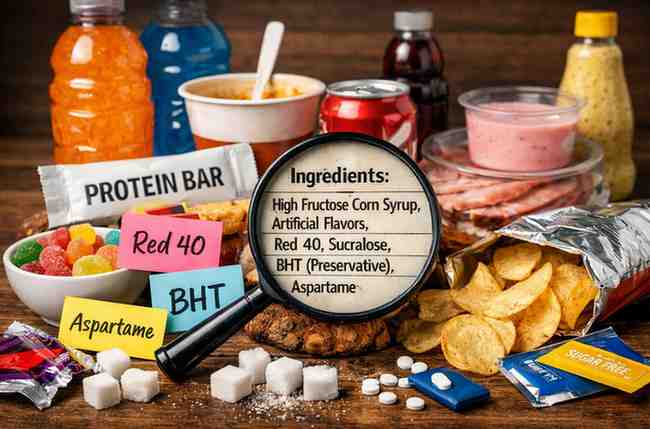
Not just food coloring or preservatives — but the quiet additives tucked into protein bars, flavored yogurt, “zero sugar” drinks, deli meat, frozen meals. Stuff that sounds scientific enough that most people skip over it.
From what I’ve seen guiding friends, family, and clients through label audits and trial phases, artificial food ingredients are rarely the sole villain. But they’re often the background noise that keeps people stuck.
And that’s the frustrating part. You don’t even know they’re there.
Let’s unpack this the way I’ve learned it — not academically. Just patterns. Mistakes. Outcomes.
Why People Start Paying Attention to Artificial Food Ingredients
It usually begins with symptoms.
-
Brain fog that won’t lift
-
Random headaches
-
Bloating that makes no sense
-
Energy crashes after “healthy” snacks
-
Kids acting wired after birthday parties
I didn’t expect how often the turning point was emotional, not medical.
One mom I worked with wasn’t trying to “eat clean.” She just wanted her son to stop melting down every afternoon. A dad was just tired of feeling inflamed all the time. A college student was desperate to stop crashing mid-lecture.
Almost none of them started with, “I need to remove artificial food ingredients.”
They started with: “Something feels off.”
That’s usually how it begins.
What Artificial Food Ingredients Actually Are (Without the Textbook Definition)
In real-world terms, artificial food ingredients are substances added to food that don’t naturally occur in that form in whole ingredients.
Common categories I see repeatedly:
-
Artificial colors (like Red 40, Yellow 5)
-
Artificial flavors
-
Artificial sweeteners (aspartame, sucralose, saccharin)
-
Preservatives (BHA, BHT, sodium benzoate)
-
Flavor enhancers (like MSG)
-
Texture stabilizers and emulsifiers
And here’s the thing.
Most people assume:
“If it’s approved, it must be fine.”
But “approved” doesn’t mean optimal. It means legally allowed within certain thresholds.
That nuance matters.
What Most People Get Wrong About Artificial Food Ingredients
I’ve seen three consistent misunderstandings.
1. They think it’s all-or-nothing
Almost everyone I’ve seen struggle with this does this one thing wrong:
They try to eliminate everything overnight.
They panic-throw away half their pantry.
Buy expensive replacements.
Feel overwhelmed.
Burn out in 10 days.
Then go right back.
The people who actually sustain change do something slower. They pick categories.
-
First: sugary drinks.
-
Then: flavored yogurt.
-
Then: packaged snacks.
Layered changes work better than food purges.
2. They only check obvious junk food
This one honestly surprised me after watching so many people try it.
The biggest artificial ingredient exposure often comes from:
-
Low-calorie “diet” products
-
Fat-free dressings
-
Meal replacement bars
-
Packaged whole wheat bread
People clean up fast food… but keep drinking artificially sweetened energy drinks daily.
The body doesn’t care that it’s labeled “zero.”
3. They assume all reactions are dramatic
Most reactions aren’t dramatic.
They’re subtle.
-
Slight digestive discomfort
-
Mood shifts
-
Mild headaches
-
Skin flare-ups
-
Sleep disruptions
Which makes people dismiss them.
But when we run informal elimination phases — 2–4 weeks removing key artificial food ingredients — patterns show up.
Not for everyone.
But often enough that I can’t ignore it.
What I’ve Seen Consistently Improve (When People Reduce Artificial Ingredients)
Not overnight miracles.
But patterns.
Digestive Stability
Less bloating. Fewer random cramps. More predictable bowel movements.
Especially after reducing artificial sweeteners and emulsifiers.
Energy Stability
Fewer mid-afternoon crashes. Less “wired then tired.”
Artificial sweeteners seem to mess with appetite cues more than people expect.
Fewer Cravings
This is a big one.
When hyper-flavored foods disappear, taste buds recalibrate.
Fruit tastes sweeter.
Whole foods feel more satisfying.
It takes about 10–14 days for most people.
And those first 5 days? Rough.
How Long Does It Take to Notice a Difference?
From what I’ve seen across dozens of cases:
-
3–5 days: Initial withdrawal cravings, especially from artificial sweeteners
-
10–14 days: Taste sensitivity shifts
-
2–4 weeks: Digestive and energy patterns stabilize
-
6+ weeks: Deeper changes in appetite regulation
Still — some people feel nothing.
That’s important.
Not everyone is sensitive.
But the ones who are? They usually realize it in hindsight.
“I didn’t know I felt that bad until I stopped.”
I hear that line constantly.
Common Artificial Food Ingredients That Trigger Issues Most Often
If someone asks me where to start, I usually suggest examining:
-
Aspartame
-
Sucralose
-
High-intensity artificial sweeteners
-
Red 40
-
Yellow 5
-
Sodium benzoate
-
BHA and BHT
Not because they’re “poison.”
But because they show up frequently in symptom patterns.
Correlation doesn’t mean universal causation.
But repeated observation matters.
What Repeatedly Fails
I’ve seen this fail when:
-
Someone keeps ultra-processed foods but swaps one additive
-
They replace sugar with heavy artificial sweeteners
-
They expect weight loss as the primary outcome
-
They rely on “natural flavored” processed foods
Artificial food ingredients are often part of a larger ultra-processing issue.
You can’t out-hack hyper-palatable design with one tweak.
Is It Worth It?
This depends.
If you:
-
Feel chronically inflamed
-
Experience unexplained digestive issues
-
Struggle with intense cravings
-
Notice mood swings after certain foods
Then yes. It’s worth testing.
If you:
-
Eat mostly whole foods already
-
Have zero symptoms
-
Aren’t stressed about food
Then maybe it’s not your priority.
Not everyone needs to obsess over ingredient labels.
But most Americans consume more artificial food ingredients than they realize.
That’s just the environment here.
Who Should Be Careful About Going Too Extreme
This approach is not for:
-
People with a history of restrictive eating
-
Anyone prone to orthorexia
-
People who spiral into food anxiety
I’ve seen label awareness turn into label paranoia.
That’s not health.
Balance matters.
Objections I Hear All the Time
“The FDA approved it. So it’s safe.”
Safe at population thresholds.
Not necessarily optimal for everyone.
Different bodies. Different sensitivities.
“Natural sugar is worse.”
Sometimes. Quantity matters.
But replacing 6 sodas with 6 diet sodas doesn’t solve the root issue.
It shifts it.
“It’s impossible to avoid artificial food ingredients in America.”
Completely avoid? Probably unrealistic.
Reduce significantly? Absolutely doable.
Especially when focusing on:
-
Whole produce
-
Plain proteins
-
Simple ingredient lists
-
Cooking more at home
It’s not glamorous. It’s effective.
Quick FAQ (People Also Ask Style)
Are artificial food ingredients bad for you?
Not universally. Some people tolerate them fine. Others show clear symptom patterns when intake is high.
Do artificial sweeteners cause weight gain?
Mixed evidence. From what I’ve seen, they often increase cravings in certain individuals, which indirectly affects weight.
How can I reduce artificial food ingredients without overhauling everything?
Start with beverages. Then snack foods. Then flavored packaged items.
Layer the change.
Are artificial colors harmful?
Some children show behavioral sensitivity. Adults less so — but it varies.
A Reality Check Most Blogs Won’t Say
Reducing artificial food ingredients won’t:
-
Automatically fix your metabolism
-
Cure chronic disease
-
Make you lose 20 pounds
-
Solve emotional eating
I’ve watched people expect dramatic transformation.
Sometimes the win is quieter:
-
Fewer headaches
-
Slightly better sleep
-
More stable mood
-
Less bloating
Small improvements compound.
Practical Takeaways (If You’re Actually Going to Try This)
If I were guiding someone today, I’d say:
-
Don’t overhaul everything.
-
Audit beverages first.
-
Read the first 5 ingredients — not the entire list.
-
Give it 3 weeks before judging results.
-
Track symptoms casually. No obsession.
-
Notice cravings. They tell you something.
And emotionally?
Expect:
-
Irritation in week one
-
Doubt in week two
-
Subtle wins in week three
Patience here looks boring.
It’s grocery trips that feel repetitive.
Cooking that feels inconvenient.
Saying no to convenience sometimes.
Still.
I’ve watched enough people stabilize their energy and digestion this way that I can’t dismiss it.
You don’t have to fear artificial food ingredients.
But ignoring them completely? That hasn’t worked well for most people I’ve seen.
So no — this isn’t magic.
But I’ve watched enough people stop feeling confused about their bodies once they reduced the noise in their food.
Sometimes that clarity alone is relief.
And honestly, relief is underrated.