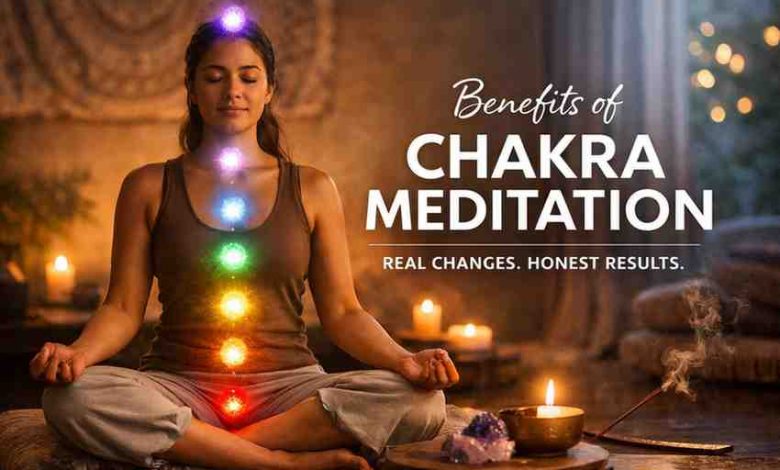
Honestly, most people I’ve watched try chakra meditation don’t quit because it “doesn’t work.”
They quit because they expect fireworks.
They sit down once or twice, close their eyes, visualize colors for seven minutes, and then quietly think, “I guess I’m just bad at this.”
I’ve seen that exact reaction more times than I can count.
Over the years — through friends, clients, and people who circled back after trying everything else — I’ve gotten a close look at the real benefits of chakra meditation. Not the Instagram version. Not the mystical sales pitch.
The grounded version.
And what surprised me most? The benefits show up in subtle ways first. Almost boring ways. But the people who stick with it long enough… they shift. Noticeably.
Let me walk you through what I’ve actually seen.
Why People Turn to Chakra Meditation in the First Place
From what I’ve seen, people don’t start here because life is going great.
They start because:
-
They feel emotionally clogged.
-
Anxiety keeps looping.
-
They overthink everything.
-
Their body feels tense for no clear reason.
-
They’re exhausted but wired.
-
Or they’ve tried regular meditation and felt… nothing.
Chakra meditation attracts people who want structure. Something to focus on. A map.
And honestly, that structure is one of its hidden strengths.
What Most People Get Wrong at First
Almost everyone I’ve seen struggle with this does one thing wrong:
They treat chakras like a concept to understand instead of an experience to observe.
They memorize:
-
Root = red
-
Heart = green
-
Crown = purple
But they don’t actually notice what’s happening in their body.
And then they get frustrated because they’re not “feeling energy.”
From what I’ve seen, the people who benefit most:
-
Stop trying to feel something dramatic.
-
Start noticing subtle sensations.
-
Stay curious instead of judgmental.
That shift alone changes everything.
The 9 Real Benefits of Chakra Meditation (Based on Repeated Patterns I’ve Seen)
These aren’t theoretical. These are patterns I’ve watched unfold across dozens of people.
1. Emotional Regulation Gets Easier (Not Instant, But Noticeable)
This one honestly surprised me after watching so many people try it.
Around week 2–3, something small happens.
They don’t react as fast.
The argument still happens. The stress still shows up.
But there’s a pause.
That pause is huge.
Especially when focusing on the heart chakra or solar plexus consistently.
Cause → effect pattern I’ve seen:
-
Focused attention on emotional centers
-
Increased body awareness
-
Earlier detection of emotional spikes
-
Better regulation
It’s subtle. But it compounds.
2. Reduced Background Anxiety
Not panic attacks disappearing overnight. Let’s be clear.
But the “constant hum” of anxiety softens.
Most people I’ve worked with mess this up at first because they:
-
Try to eliminate anxiety entirely.
-
Get discouraged when it doesn’t vanish.
What actually happens:
-
Nervous system settles gradually.
-
Breath slows more naturally.
-
Sleep improves slightly.
-
Overthinking reduces 10–15%.
It’s incremental.
But real.
3. Stronger Body Awareness
This is one of the most consistent benefits of chakra meditation.
People start noticing:
-
Tight jaw
-
Heavy chest
-
Gut tension
-
Shallow breathing
And once you notice tension earlier, you interrupt it earlier.
That’s not mystical. That’s neurological.
4. Improved Decision Clarity
I didn’t expect this to be such a common issue.
But people who focus regularly on the solar plexus and throat chakras often report:
-
Less second-guessing
-
Clearer boundaries
-
Faster decisions
Not because chakras magically decide for them.
Because they’re less emotionally flooded.
Less noise → clearer thinking.
5. Better Sleep (If Practiced at Night)
This one works best when:
-
Done 10–15 minutes before bed
-
Focused on root + heart
-
Combined with slow breathing
Almost everyone I’ve seen struggle with sleep improvement was doing it in the morning and expecting nighttime benefits.
Timing matters.
6. Emotional Releases (Sometimes Unexpected)
Let’s talk about this honestly.
Sometimes people cry.
Sometimes they feel anger.
Sometimes old memories surface.
This is where people think it’s “not working.”
But from what I’ve seen, this is often the beginning of progress.
Energy work — or simply focused emotional awareness — stirs things up before it settles them.
This isn’t for people who want immediate calm.
It’s for people willing to process.
7. Increased Self-Trust
Around week 4–6, I often hear:
“I just feel more… steady.”
That word shows up a lot. Steady.
Less chasing external validation.
More internal referencing.
And no, it’s not ego inflation.
It’s internal alignment.
8. Clearer Communication
This shows up especially when people consistently focus on the throat chakra.
What I’ve noticed:
-
Less over-explaining.
-
Less apologizing unnecessarily.
-
More direct speech.
-
Fewer passive-aggressive moments.
That one alone changes relationships.
9. Subtle Confidence Boost
Not loud confidence.
Quiet confidence.
The kind where someone:
-
Says no without spiraling.
-
Speaks up in a meeting.
-
Stops over-texting.
-
Trusts their gut.
Small behaviors. Big impact.
How Long Does It Take to See Benefits?
Short answer (from what I’ve seen):
-
Week 1: Restlessness, doubt.
-
Week 2–3: Slight emotional awareness shifts.
-
Week 4+: Noticeable internal steadiness.
-
2–3 months: Compounded behavioral change.
If someone expects transformation in 3 days, they’ll quit.
If someone commits to 30 days consistently, something usually shifts.
Common Mistakes That Slow Results
Almost everyone I’ve seen struggle does one of these:
-
Jumping between techniques daily.
-
Listening to random YouTube audios without consistency.
-
Forcing visualization instead of observing sensation.
-
Expecting intense “energy” experiences.
-
Practicing only when stressed.
Consistency beats intensity.
Every time.
Objections I Hear All the Time
“Is this even real, or just placebo?”
Honestly?
Even if someone believes it’s placebo — the nervous system response is real.
Focused breath + attention = physiological shift.
Whether you frame it energetically or neurologically, outcomes still show up.
“What if I don’t feel anything?”
Normal.
Most people don’t feel dramatic sensations.
Benefits come from repetition, not fireworks.
“Is it worth trying if regular meditation didn’t work for me?”
From what I’ve seen, yes.
Chakra meditation gives the mind something to anchor to.
People who struggle with open-awareness meditation often do better with structured focus.
Who This Is NOT For
Let me be clear.
This approach probably isn’t for:
-
People who want immediate results.
-
People uncomfortable sitting with emotions.
-
People who need constant stimulation.
-
Anyone expecting supernatural experiences.
It requires patience.
And boredom tolerance.
Reality Check: What Can Go Wrong
Here’s where expectations usually break:
-
You might feel more emotional at first.
-
You might question whether you’re “doing it right.”
-
You might get impatient around week 2.
That dip is normal.
Most people quit there.
The ones who don’t? They’re the ones who see the real benefits of chakra meditation.
Simple Routine That Actually Works (What I’ve Seen Succeed Repeatedly)
If I had to simplify what works best across people:
10–15 minutes. Same time daily.
-
2 minutes slow breathing.
-
Focus on one chakra only.
-
Notice sensation (don’t force).
-
Stay with it even if nothing happens.
-
Journal one sentence after.
That’s it.
Not seven chakras at once.
Not 45 minutes.
Not mystical chanting marathons.
Simple. Repeated.
Practical Takeaways
If you’re considering trying this:
Do:
-
Commit to 30 days.
-
Focus on consistency over intensity.
-
Track emotional shifts weekly.
-
Start with root or heart.
Avoid:
-
Chasing dramatic experiences.
-
Comparing your process to others.
-
Quitting before week 3.
-
Overcomplicating it.
Expect emotionally:
-
Doubt early.
-
Subtle shifts first.
-
Clarity later.
-
Confidence gradually.
Patience here doesn’t mean passive waiting.
It means showing up even when it feels uneventful.
I won’t tell you chakra meditation is magic.
It’s not.
But I’ve watched enough people soften their anxiety, steady their emotions, and finally stop feeling like they’re fighting themselves.
And almost every one of them said some version of:
“I didn’t think it was working… until I realized I was reacting differently.”
Sometimes the biggest benefits of chakra meditation aren’t dramatic.
They’re quieter.
But quieter doesn’t mean small.
If you approach it grounded, consistent, and realistic — it might not change your life overnight.
But it might change how you move through it.
And honestly, that’s usually what people were looking for all along. 🌿