Honestly, I didn’t think this would work →. I was already on my third tissue box of the morning, nose raw, eyes watery, brain foggy from bad sleep. I’d tried steam. I’d tried antihistamines. I’d tried that “just drink more water” advice people love to throw out like it fixes → everything. Nothing stuck.
Out of pure annoyance (and maybe a little desperation), I started poking around with acupressure points for sneezing and runny nose relief. Not because I believed in it. Because I was tired of feeling like a leaky faucet with a face.
Not gonna lie… I expected placebo vibes at best. I also expected to mess it up. Which I did. A few times. But something weird happened over the next couple of days. The sneezing fits got shorter. The constant drip slowed down. Not gone. But manageable. And honestly? That was enough to keep me trying.
Why I Even Tried Acupressure (and What I Got Wrong at First)
Here’s the unglamorous truth: I tried this because I didn’t want to keep taking meds every single day. They help. I’m not anti-meds. I just hate the dry mouth, the jittery feeling, the way my head goes cottony. Plus, my symptoms come in waves—sometimes allergies, sometimes a random cold, sometimes “my nose hates me for no reason.”
What I misunderstood at first:
-
I thought one quick press would magically stop a sneeze attack.
-
I pressed way too lightly. Like I was scared of my own face.
-
I did it once, felt nothing, and almost wrote the whole thing off.
The first night I tried, I pressed around randomly for maybe 30 seconds and went, “Yep, this is nonsense.” Then I sneezed five more times and went to bed mad.
The next day, I slowed down. Looked up the actual points. Gave it more than a half-hearted try. That’s when things started to shift.
The Points That Actually Did Something (From What I’ve Seen, at Least)
I’m not here to dump a textbook on you. I’m telling you the few spots that made a noticeable difference for my sneezing and runny nose. I’ll also tell you what they felt like when I pressed them—because that mattered more than I expected.
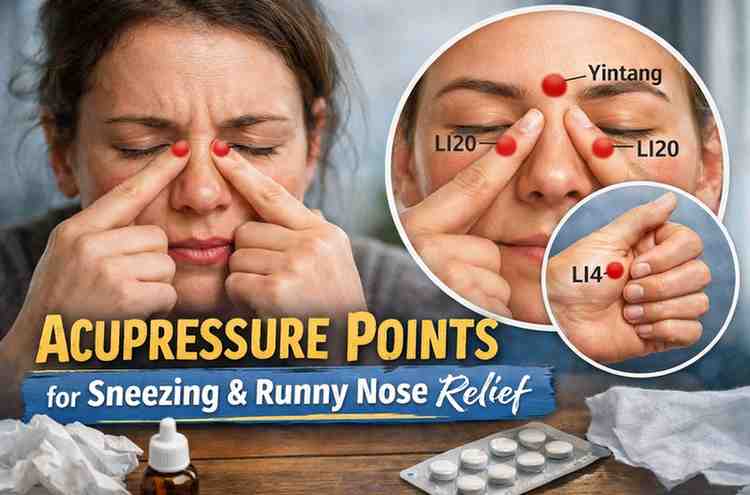
1. LI20 – The “Stop the Drip” Spot (Sides of the Nose)
This one is right next to your nostrils, in the little grooves where your nose meets your face.
What it felt like:
Tender. Like, “oh wow, that’s sore” tender. Which surprised me.
How I did it (after messing it up first):
-
Two fingers.
-
Press inward and slightly up.
-
Hold for 60–90 seconds.
-
Slow breaths.
What changed:
This didn’t instantly stop sneezing. But it calmed the constant dripping. Within 10 minutes, I wasn’t reaching for tissues every 30 seconds.
Mistake I made:
I pressed too hard at first and just irritated my skin. You want firm, not aggressive.
2. Yintang – The “Why Am I So Congested” Dot Between the Brows
Dead center between your eyebrows.
This honestly surprised me. I didn’t expect a point on my forehead to do anything for my nose. But when my head felt heavy and my sinuses were stuffed, this helped ease that pressure.
How I used it:
-
One finger.
-
Gentle circular motion.
-
1–2 minutes while breathing slow.
What changed:
It didn’t stop sneezing on its own. But when I combined this with the nose points, my head felt clearer. Less pressure = fewer sneeze spirals, at least for me.
3. LI4 – The Hand Point Everyone Talks About (and Yeah, It’s Legit)
Between your thumb and index finger. The fleshy part.
I rolled my eyes at this one because everyone online talks about it for everything. Headaches. Stress. Sinuses. The whole menu.
But… yeah. It helped. Not dramatically. But consistently.
How I used it:
-
Pinch and hold until it feels achy.
-
60 seconds each hand.
-
Repeat 2–3 rounds.
What changed:
Sneezing fits didn’t feel as explosive. That’s the best way I can explain it. The urge came down a notch.
Small warning:
Don’t go wild with pressure. If your hand goes numb, you’re doing too much. Ask me how I know. ????
4. Bitong – The “I Didn’t Know This Was a Thing” Spot
This one is just a little above the LI20 points, slightly higher along the side of the nose.
I didn’t expect that at all. I found it by accident while pressing around the area.
What it felt like:
A weird tender spot that made my eyes water when I hit it right.
What changed:
After about a minute on each side, my nose felt… open. Not cured. But less blocked. Less itchy inside. That itchy feeling is usually what triggers my sneeze storms.
My Actual Routine (Because Random Pressing Didn’t Work)
What finally worked wasn’t just hitting one point and hoping. It was doing a short routine, especially when I felt a sneeze attack building.
Here’s what I settled into:
-
LI20 (sides of nose): 1–2 minutes
-
Bitong (upper nose sides): 1 minute
-
Yintang (between brows): 1 minute
-
LI4 (hand): 1 minute each side
Total time: about 5 minutes.
I did this:
-
Once in the morning
-
Once before bed
-
And once mid-day if symptoms flared
How long did it take to notice a difference?
-
Day 1: mild relief, mostly less pressure
-
Day 2: sneezing fits shorter
-
Day 4–5: runny nose not constant
-
After a week: symptoms still there, but not running my life
So no, it wasn’t instant. That part annoyed me. I wanted a quick fix. This wasn’t that. But it did stack over time.
Stuff That Didn’t Work (So You Don’t Waste Time Like I Did)
Not everything helped. Some things felt like busywork.
-
Pressing for 10 seconds and expecting results
-
Doing it once a day and forgetting about it
-
Pressing random spots because “they hurt so maybe that’s good”
-
Trying it when I was already in a full-blown sneeze meltdown (harder to calm things once it’s in full swing)
This worked better as prevention or early intervention, not as a miracle stop-button mid-attack.
Common Mistakes I Made (Don’t Repeat These)
-
Being impatient. I almost quit after one day.
-
Pressing too lightly. It should feel like “oh, that’s tender” but not painful.
-
Doing it while doom-scrolling. Sounds silly, but breathing slow actually mattered.
-
Expecting it to replace everything else. I still used tissues. I still used saline spray. This wasn’t an either/or thing.
Is This Worth Trying or Just Another Internet Fix?
Short answer?
If your sneezing and runny nose are driving you a little nuts and you want something low-risk to layer on top of what you’re already doing… yeah, it’s worth trying.
Longer, more honest answer:
This is not magic.
This will not cure allergies.
This will not stop a cold in its tracks.
But from what I’ve seen, at least in my body, it can:
-
Take the edge off
-
Shorten sneezing episodes
-
Reduce that constant drip feeling
-
Help you feel less helpless about your symptoms
If you’re expecting instant relief in 30 seconds, you’ll probably be disappointed. If you’re okay with small improvements stacking over a few days, this might surprise you.
Quick FAQ (Real Questions I Had)
How long does it take to work?
For me, small relief showed up within a day. Noticeable change took about 3–5 days of consistent use.
What if it doesn’t work at all?
Then it doesn’t. Bodies are annoying like that. If you try it for a week and feel zero difference, it’s fair to drop it.
Can I do this with allergy meds?
Yeah. I did. No issues. It felt complementary, not conflicting.
How often is too often?
I stuck to 2–3 times a day. More than that just irritated my skin.
Objections I Had (and My Honest Take Now)
“This sounds placebo.”
Maybe. I don’t fully care anymore. The relief felt real → in my body. Placebo or not, I’ll take less sneezing.
“I don’t have time for this.”
Five minutes is annoying when you’re busy. But so is blowing your nose 40 times an hour.
“What if I’m doing it wrong?”
You probably will at first. I did. It still helped once I got closer to the right spots.
Reality Check (Because I Don’t Want to Oversell This)
This is not for:
-
People with severe, chronic sinus infections
-
Anyone with unexplained nosebleeds
-
Anyone who needs urgent medical care
-
People expecting one-and-done results
Also:
-
It can irritate sensitive skin if you go too hard.
-
It can feel awkward at first.
-
Results can be slow and uneven. Some days it helped more than others.
There were days I did everything “right” and still sneezed like a cartoon character. That’s just… bodies.
Practical Takeaways (What I’d Tell a Friend)
-
Try it for a week, not one day.
-
Use firm, steady pressure—not poking.
-
Pair it with slow breathing. It weirdly matters.
-
Don’t ditch what already helps you. Layer this on.
-
Expect small wins, not miracles.
-
If it annoys you or does nothing after a week, drop it guilt-free.
Emotionally, expect:
-
Mild hope
-
Mild disappointment
-
Then, if you’re lucky, a quiet “huh… this helps a little” moment
That was the turning point for me. Not fireworks. Just relief enough to breathe without rage.
I’m not going to pretend acupressure fixed my nose forever. It didn’t. I still have allergy days. I still get random sniffles.
But it gave me a small sense of control when everything felt stuck. And honestly? That mattered more than I expected.
So no — this isn’t magic.
But for me? It stopped feeling impossible.
And that was enough to keep going.