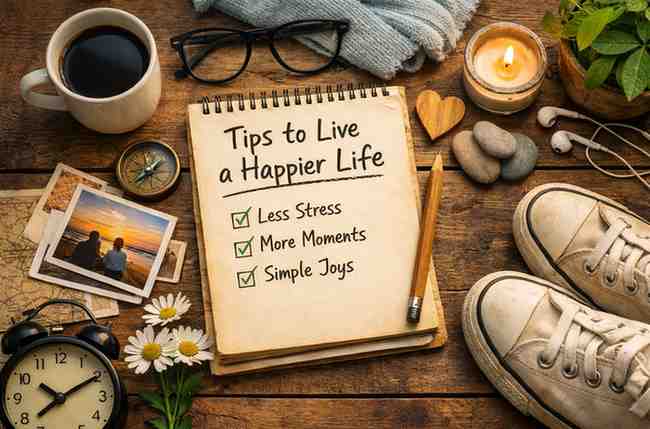
Honestly, most people I’ve watched search for tips to live a happier life don’t come to it because they’re curious.
They come to it because something feels off.
I’ve seen it in late-night texts. In quiet conversations after work. In people who technically “have everything” but feel weirdly flat. They try productivity systems. They try morning routines. They try gratitude apps.
Two weeks later? Frustration.
They assume happiness must be for people wired differently.
From what I’ve seen, that assumption is the first mistake.
Happiness isn’t a personality trait. It’s usually a pattern problem.
And patterns can be adjusted.
Not instantly. Not dramatically. But consistently.
Let me walk you through what I’ve seen work — and what almost everyone gets wrong at first.
Why Most People Start Looking for Tips to Live a Happier Life
It’s rarely because life is terrible.
It’s usually because:
-
Success feels empty.
-
Relationships feel strained.
-
Work feels like survival.
-
Comparison is constant.
-
Rest doesn’t feel restful.
-
There’s this low-grade irritation that won’t go away.
Most people I’ve worked with didn’t want a “new life.”
They wanted relief.
Relief from:
-
Constant pressure.
-
Quiet self-criticism.
-
Feeling behind.
-
Feeling invisible.
-
Feeling like something is missing but not knowing what.
That’s the real search intent behind this topic.
Not “how do I become euphoric?”
More like:
“How do I stop feeling slightly disappointed in my own life?”
What People Consistently Get Wrong at First
This honestly surprised me after watching so many people try it.
They treat happiness like an achievement.
Checklist mentality:
-
Lose weight → happy.
-
Earn more → happy.
-
Fix relationship → happy.
-
Move cities → happy.
The problem?
They build conditional happiness.
And conditional happiness is fragile.
From what I’ve seen, the people who stabilize their mood long-term shift from:
“I’ll be happy when…”
to
“What small shifts make today lighter?”
Subtle difference. Massive impact.
21 Tips to Live a Happier Life (Observed, Not Theorized)
These aren’t motivational quotes.
These are patterns I’ve seen across dozens of real people trying to improve their lives.
1. Stop Treating Every Bad Day Like a Diagnosis
Almost everyone I’ve seen struggle with this does this one thing wrong:
They over-interpret emotions.
Bad mood → “Something is wrong with me.”
Tired → “I’m failing.”
Unmotivated → “I’ve lost my spark.”
Sometimes you’re just tired.
Learning not to panic over emotional dips is huge.
2. Reduce One Hidden Drain Before Adding One New Habit
Most people stack habits.
Morning routine.
Cold showers.
Meditation.
Journaling.
Gym.
Meal prep.
Then they burn out.
What works better:
Remove one thing that quietly drains you.
-
Doom scrolling at night.
-
That one toxic group chat.
-
Saying yes automatically.
-
Comparing income constantly.
Relief before expansion.
I didn’t expect this to be such a common issue, but once someone reduces friction, happiness rises without “doing more.”
3. Lower the Daily Standard Slightly
This one makes high-achievers uncomfortable.
But from what I’ve seen, people who expect “great” days feel miserable more often.
People who aim for:
-
One meaningful moment.
-
One decent conversation.
-
One task done properly.
They report higher satisfaction.
Expectation recalibration is underrated.
4. Strengthen One Relationship on Purpose
The happiest people I’ve observed aren’t the most successful.
They’re the most connected.
Not socially busy.
Connected.
That means:
-
Regular check-ins.
-
Honest conversations.
-
Less performance.
-
More presence.
Happiness spikes when someone feels seen.
5. Stop Trying to Be Interesting. Be Interested.
This sounds small.
It isn’t.
People who listen deeply tend to:
-
Feel more grounded.
-
Build stronger bonds.
-
Feel less socially anxious.
And connection is one of the strongest predictors of sustained well-being.
6. Audit Your Comparison Triggers
Almost everyone I’ve seen struggle with happiness underestimates how much comparison distorts perception.
Triggers I see repeatedly:
-
LinkedIn promotions.
-
Fitness influencers.
-
Income threads.
-
Marriage announcements.
-
Startup success stories.
Unfollow strategically.
Not out of insecurity.
Out of mental hygiene.
7. Redefine “Productive”
Many people tie happiness to productivity.
But the happiest weeks I’ve seen reported often included:
-
Walks.
-
Long meals.
-
Laughter.
-
Unstructured time.
Productivity ≠ worth.
Internalizing that takes time. But it’s transformative.
8. Make Boredom Safe Again
Most people can’t sit without stimulation.
Phone.
TV.
Music.
Scrolling.
When someone practices just sitting — even 10 minutes — their nervous system settles.
It feels uncomfortable at first.
Then freeing.
9. Set Fewer Goals. Finish More of Them.
Completion builds confidence.
Constant starting builds stress.
I’ve watched people become happier simply by:
-
Picking 2 goals.
-
Ignoring everything else.
-
Finishing them fully.
Small wins compound emotionally.
10. Stop Self-Improving in Secret Shame
This is subtle.
People often pursue happiness because they secretly believe they’re broken.
That mindset sabotages progress.
Growth works better when it’s curious, not corrective.
11. Move Your Body for Mood, Not Image
When exercise shifts from appearance to regulation, consistency increases.
The people who stick with it long-term say:
“I just feel better after.”
That’s enough.
12. Create Micro Anticipation
Happiness often spikes before events.
So build small anticipations:
-
Friday coffee ritual.
-
Weekly movie night.
-
Sunday reset routine.
-
Monthly dinner out.
Tiny rituals create rhythm.
13. Accept That Happiness Is Uneven
This might be the most important.
The happiest people I’ve seen don’t expect constant happiness.
They expect waves.
Acceptance reduces resistance.
Resistance reduces suffering.
How Long Does It Take to Feel Happier?
From what I’ve observed:
-
Mood shifts: 1–2 weeks after small behavioral changes.
-
Perspective shifts: 1–3 months.
-
Deep emotional stability: 6+ months of consistent pattern change.
Most people quit at week three.
Right before things start stabilizing.
Patience is usually the missing ingredient.
Common Mistakes That Slow Results
Here’s what I see repeatedly:
-
Trying to change everything at once.
-
Expecting visible results fast.
-
Not tracking emotional patterns.
-
Ignoring sleep.
-
Staying in draining environments.
-
Waiting to “feel motivated.”
Happiness often follows behavior, not inspiration.
Objections I Hear All the Time
“This sounds too simple.”
Simple works.
Complicated impresses.
I’ve seen simple outperform sophisticated every time.
“I’ve tried this before.”
Most people try it for 10 days.
Then stop.
Consistency matters more than intensity.
“What if nothing changes?”
Then we reassess patterns.
Happiness isn’t one-size-fits-all.
But some version of relief is accessible for most people with environmental or behavioral shifts.
Reality Check: Who This Is NOT For
This approach may frustrate you if:
-
You want dramatic transformation quickly.
-
You expect constant high emotion.
-
You refuse to change environments.
-
You’re committed to proving life is unfair.
Also — if someone is dealing with clinical depression, therapy and medical guidance matter. Behavior tweaks alone aren’t enough.
Important to say that.
Is It Worth It?
From what I’ve seen?
Yes.
Not because life becomes magical.
But because:
-
Reactivity decreases.
-
Comparisons soften.
-
Small joys feel visible again.
-
Self-criticism quiets slightly.
That subtle relief is powerful.
Quick FAQ (Straight Answers)
What is the fastest way to feel happier?
Reduce one major stressor immediately. Sleep more. Limit comparison exposure.
Do tips to live a happier life actually work?
When applied consistently and realistically, yes. But they’re gradual, not instant.
Why do I feel unhappy even when things are good?
Often expectation inflation, comparison, nervous system overload, or emotional suppression.
Can happiness be learned?
From what I’ve seen — yes. It’s pattern-based.
Practical Takeaways
If I had to narrow everything down:
-
Remove one drain.
-
Protect sleep.
-
Strengthen one relationship.
-
Lower expectations slightly.
-
Create one weekly ritual.
-
Move daily.
-
Stop over-analyzing every bad mood.
Emotionally, expect:
-
Doubt early on.
-
Mild discomfort.
-
Gradual stabilization.
-
Random dips.
-
Quiet improvement.
Patience looks boring.
But boring works.
Still.
Let me say this gently.
You are not broken for wanting to feel lighter.
Most people I’ve watched improve their lives didn’t have some dramatic breakthrough.
They just stopped fighting small adjustments.
They stopped demanding fireworks.
They accepted steady.
So no — these tips to live a happier life aren’t magic.
But I’ve seen enough people soften, breathe easier, and stop feeling constantly behind once they approached it this way.
Sometimes that quiet shift?
That’s the real win ????