
I didn’t think this would become my life, honestly.
I used to roll my eyes at supplement aisles. Big bottles. Bigger promises. All felt kinda… scammy.
Then my mom slipped on ice outside a grocery store in Ontario and broke her wrist. Clean snap. No drama. No car accident. Just ice, gravity, and bone that didn’t hold up.
That moment cracked something open in me.
A few weeks later, after scans and a quiet doctor visit, osteoporosis entered our vocabulary. Not as a “maybe later” thing. As a now thing.
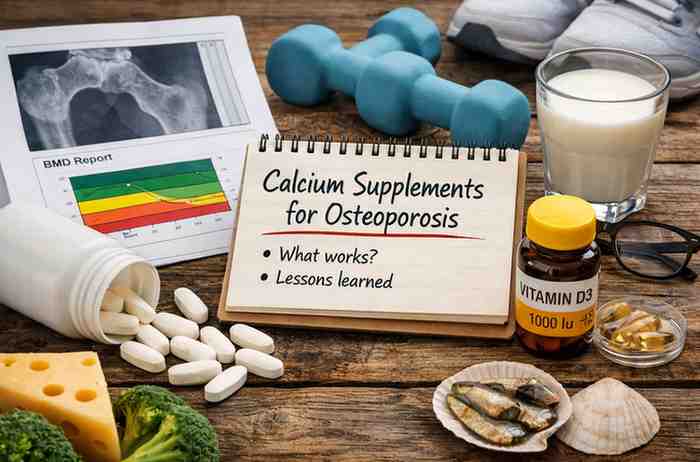
And somehow, I became the person researching calcium supplements for osteoporosis at 1 a.m., half scared, half annoyed, wondering how we got here.
I didn’t do everything right. I still don’t. But I learned a lot—mostly by screwing up first.
This is that story.
Not a sales pitch. Not medical advice. Just what actually happened.
What pushed me into supplements (and why food alone wasn’t cutting it)
The doctor started with the usual advice. “Calcium from food is best.”
Which, yeah. Makes sense.
So we tried.
Hard.
Milk. Yogurt. Cheese. Leafy greens. Sardines (that one didn’t go over well). Fortified stuff. Meal plans taped to the fridge.
Here’s the thing nobody warned me about:
Consistency is brutal when appetite, digestion, and habits change with age.
Some days she ate fine. Some days… toast and tea. That’s it.
Tracking intake showed the gap. Big one.
That’s when supplements stopped sounding optional.
Not exciting. Just necessary.
My first big mistake: thinking “more calcium = stronger bones”
I wish I could say I was smarter than this.
I wasn’t.
At first, I assumed more is better. Bought a high-dose bottle. Felt proud. Done, right?
Wrong.
Within weeks:
-
Constipation
-
Bloating
-
Mild stomach pain
-
And zero improvement in how she felt
Turns out, your body doesn’t just absorb calcium because you swallow it. It’s picky. Rude, even.
This was my first “oh… crap” moment.
What I misunderstood about absorption (this part matters)
Nobody at the store explains this. The labels barely help.
Here’s what I learned the hard way:
-
Calcium carbonate needs stomach acid
-
Calcium citrate doesn’t
-
Taking it with or without food actually matters
-
Vitamin D isn’t optional
-
Magnesium plays referee
-
Timing matters more than dose size
We were doing almost all of this wrong.
Splitting doses helped. Switching forms helped more.
The symptoms eased. Slowly.
That’s when I realized this isn’t about finding the best product. It’s about finding the one your body accepts.
The supplement aisle is lying to you (kind of)
Walk into any US or Canadian pharmacy and it’s chaos.
Claims like:
-
“Maximum strength”
-
“Clinically proven”
-
“Bone builder”
Most of it is marketing fog.
Here’s how I learned to read labels without losing my mind:
What I actually look for now
-
Form: citrate over carbonate (personal experience, not gospel)
-
Elemental calcium amount: ignore the big number on the front
-
Vitamin D3 included: at least some
-
Third-party testing: USP or NSF if possible
-
Tablet size: yes, really—huge pills don’t get taken
Simple. Boring. Effective.
“Don’t make my mistake” moment #2: ignoring timing
This one surprised me.
Taking calcium at the same time as:
-
Iron
-
Certain thyroid meds
-
Some antibiotics
…can mess with absorption.
We didn’t know. Nobody told us.
Spacing doses changed everything. Less discomfort. Better labs later.
If you take meds, this part is huge. Ask. Double-check. Write it down.
How long did it take to notice anything?
This is where people get frustrated →.
Bone doesn’t rebuild overnight. Or over weeks.
For us:
-
3 months: digestion stabilized
-
6 months: lab markers improved
-
1 year: bone density slowed its decline
Not reversed. Slowed.
And honestly? That felt like a win.
This isn’t magic. It’s damage control.
The emotional side nobody talks about
Supplements aren’t just pills.
They’re reminders.
Every dose was a small grief moment. A reminder that things change. That bodies age. That strength isn’t permanent.
Some days she resisted. Some days I pushed. We argued. We skipped. We forgot.
And that’s real life.
Perfection isn’t the goal. Consistency over time is.
Would I do supplements again?
Yes. But differently.
I’d skip the mega-dose nonsense.
I’d start slower.
I’d focus on tolerance first.
I’d track reactions, not just numbers.
And I’d remind myself sooner that calcium supplements for osteoporosis are support tools—not saviors.
Where this fits with exercise and lifestyle (quick but important)
Supplements alone didn’t do much.
What helped with them:
-
Light weight-bearing exercise
-
Walking (boring but gold)
-
Balance work
-
Adequate protein
-
Sunlight when possible
Bones respond to signals. Pills don’t send those signals. Movement does.
Things that failed (yes, really)
Let’s be honest.
-
Chewables: tasted good, wrecked her stomach
-
Powder mixes: inconsistent dosing
-
“Bone blends” with 10+ minerals: too much, too fast
-
Mega-combos marketed to seniors: overpriced
I fell for a few. Learned. Moved on.
Who this probably won’t work great for
This matters.
From what I’ve seen, supplements can be tricky if:
-
You have kidney issues
-
You’re prone to stones
-
You already get enough from food
-
You can’t tolerate pills at all
This isn’t universal advice. It’s situational.
Doctors matter. Context matters.
Practical takeaways (the stuff I wish someone told me)
-
Start low. Increase slowly
-
Track how you feel, not just what you take
-
Split doses
-
Pair with vitamin D
-
Don’t ignore movement
-
Read labels like a skeptic
-
Give it time
Simple. Not easy.
FAQs — the stuff people actually ask
How much calcium is too much?
From experience, more than your body can absorb just causes issues. Excess doesn’t help bones.
Can food replace supplements?
Sometimes. But appetite, absorption, and habits change with age.
Do supplements reverse osteoporosis?
No. They support bone health. That’s it.
Are gummies okay?
Maybe. Watch sugar and dosing accuracy.
How do I know it’s working?
Labs, scans, and fewer issues—not how you “feel” day to day.
I didn’t plan to become someone with opinions about calcium. Life just… pushed me here.
So no—calcium supplements for osteoporosis aren’t magic. They won’t erase time or undo damage.
But for us? They became part of a quiet system that helped things stop getting worse.
And sometimes, that’s enough.