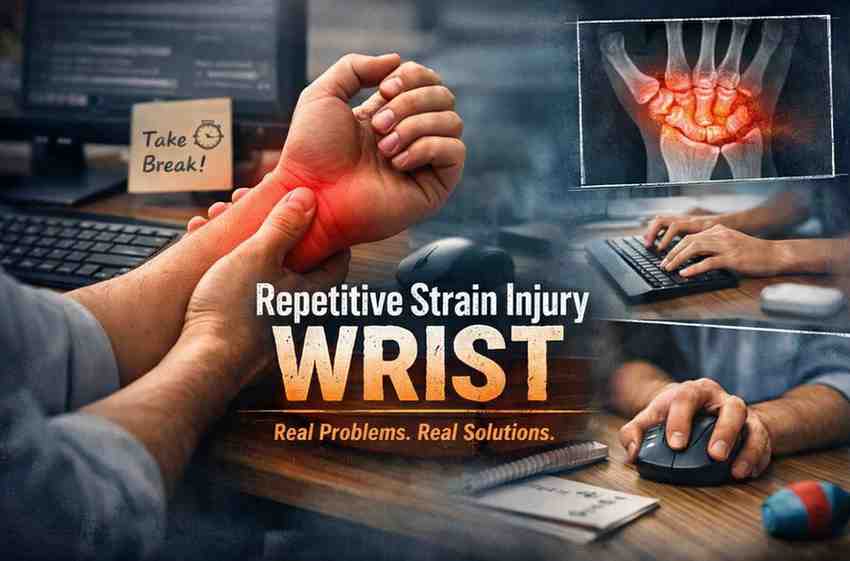
Honestly… the first time I started hearing people complain about repetitive strain injury wrist problems, most of them didn’t even know that’s what they were dealing with.
It usually started small.
A designer friend who said his wrist felt “tight” after long Photoshop sessions.
A trader who thought his mouse hand was just “a bit sore.”
A freelance writer who noticed typing felt weird but kept pushing through it.
At first, everyone said the same thing:
“Probably just fatigue.”
Then a few weeks passed.
And that tiny discomfort turned into something much more annoying… sometimes scary.
Pain when gripping a coffee mug.
A strange burning feeling near the thumb.
Numbness while typing.
What surprised me most after watching dozens of people deal with this is how predictable the pattern actually is.
Almost everyone ignores the early signs.
Almost everyone tries the wrong fixes first.
And almost everyone eventually hits the same moment of frustration:
“Why isn’t this going away?”
From what I’ve seen… repetitive strain injury wrist issues are rarely about one bad day.
They’re usually the result of hundreds of tiny movements repeated thousands of times.
Mouse clicks.
Typing.
Phone scrolling.
Gaming.
Design work.
Trading terminals.
Individually? Harmless.
Repeated daily for months?
That’s where problems quietly start building.
What Repetitive Strain Injury Wrist Actually Looks Like in Real Life
People expect dramatic pain.
That’s not usually how it begins.
Most of the cases I’ve watched unfold start with subtle signals that are easy to dismiss.
Common early signs people describe:
-
A dull ache after long computer sessions
-
Wrist stiffness in the morning
-
Slight tingling in fingers
-
Weak grip strength
-
Burning sensation near the thumb or forearm
-
Fatigue in the wrist faster than before
And here’s the part that honestly surprised me after seeing so many cases.
The pain often disappears temporarily with rest.
Which tricks people into thinking nothing serious is happening.
So they go right back to the same habits.
Same desk setup.
Same mouse grip.
Same typing posture.
And slowly… the discomfort returns faster each time.
Why So Many People Develop RSI Without Realizing It
The biggest misunderstanding I see?
People think repetitive strain injuries require intense activity.
They imagine factory workers or athletes.
But the majority of wrist RSI cases I’ve seen come from something far less dramatic:
computer work.
Especially jobs involving:
-
long typing sessions
-
mouse-heavy workflows
-
design or editing
-
coding
-
gaming
-
day trading
-
phone-heavy work
The wrist is actually a fragile structure of tendons and nerves.
When the same motion repeats constantly without variation, small micro-stress builds up.
Over time:
micro-stress → inflammation → irritation → pain.
And because it develops slowly, people adapt to the discomfort instead of addressing it.
The Early Mistake Almost Everyone Makes
Most people treat the symptom.
Not the cause.
They try things like:
-
wrist braces
-
painkillers
-
temporary rest
-
stretching randomly
And while these things can help temporarily, they often don’t fix the real issue.
From what I’ve observed, the root cause is usually one of three patterns.
1. Poor desk ergonomics
This is probably the biggest one.
I’ve seen people working daily with:
-
wrists bent upward while typing
-
mouse positioned too far away
-
desk height forcing awkward angles
-
laptop keyboards without support
Even small misalignments repeated for hours matter.
2. No movement variation
One thing almost every RSI sufferer admits later:
They worked long stretches without breaks.
Two hours.
Sometimes four.
Same wrist movement the entire time.
That constant repetition overloads the tendons.
3. Grip tension
This one surprised me after watching people work.
Many people grip the mouse way too hard.
Or they type with excessive force.
Over time that tension accumulates in the wrist and forearm.
What Consistently Helps People Recover
Recovery is rarely instant.
But there are patterns that repeatedly seem to help.
Not quick fixes.
More like behavior shifts.
1. Changing the workstation setup
This alone sometimes reduces symptoms quickly.
Adjustments that helped many people I’ve seen:
-
keyboard at elbow height
-
wrists in neutral position
-
mouse closer to body
-
arm supported by desk or armrest
-
ergonomic keyboard or vertical mouse
One small change can reduce strain dramatically.
2. Micro-breaks
People hate hearing this.
But it works.
Taking 30-60 second breaks every 20–30 minutes reduces tendon overload.
Some people use simple timers or break reminder apps.
It feels annoying at first.
But over time it becomes automatic.
3. Wrist and forearm strengthening
Here’s something most people miss.
Weak forearm muscles can make the wrist work harder.
Simple strengthening exercises sometimes help stabilize the area.
Examples people use:
-
wrist curls with light weights
-
rubber band finger extensions
-
forearm stretches
Nothing extreme.
Consistency matters more than intensity.
4. Reducing total strain
Sometimes the real fix is reducing daily load temporarily.
For example:
-
voice typing instead of constant typing
-
trackpad instead of mouse
-
alternating hands for certain tasks
This gives irritated tendons time to calm down.
How Long Does Repetitive Strain Injury Wrist Take to Heal?
This is the question people ask the most.
And honestly… the answer varies a lot.
From what I’ve seen across many cases:
Mild cases
→ 2 to 6 weeks once habits change
Moderate cases
→ 6 to 12 weeks
Chronic cases ignored for months
→ sometimes several months
The frustrating part is this:
Recovery is rarely linear.
People often feel better… then worse again… then better.
That’s normal.
Tendons heal slowly.
Common Mistakes That Make RSI Worse
Almost everyone I’ve watched struggle with wrist RSI does at least one of these.
Sometimes several.
Ignoring early pain
The biggest one.
People push through discomfort for weeks.
By the time they stop, inflammation is already serious.
Taking rest but changing nothing
This is surprisingly common.
Someone rests for a few days.
Pain improves.
Then they return to the exact same setup.
The problem repeats.
Over-stretching aggressively
Too much stretching can actually irritate inflamed tendons.
Gentle mobility works better than aggressive stretching routines.
Returning to heavy workload too quickly
Another pattern.
Someone feels better for a few days.
Then goes back to 8–10 hours of typing.
And the pain returns immediately.
Quick Answers to Questions People Always Ask
Is repetitive strain injury wrist permanent?
Usually not.
Most cases improve once movement patterns and strain levels change.
But ignoring it for long periods can lead to chronic issues.
Should you stop typing completely?
Not always.
Reducing intensity and improving ergonomics is often enough.
Are wrist braces useful?
Sometimes.
They can reduce movement temporarily.
But they rarely solve the root cause alone.
Does exercise help or hurt?
Light strengthening usually helps.
But heavy workouts during inflammation can worsen symptoms.
The Objection I Hear the Most
“I can’t change my work habits. My job requires typing all day.”
Honestly… a lot of people are in that situation.
Designers. Developers. Writers. Analysts. Traders.
What I’ve seen work best is small adjustments instead of dramatic lifestyle → changes.
For example:
-
better mouse design
-
keyboard positioning
-
break reminders
-
voice input tools
-
alternating tasks
Tiny improvements compound.
Reality Check: Who This Advice Might NOT Help
It’s important to say this clearly.
Some wrist pain isn’t simple RSI.
Other conditions exist.
For example:
-
Carpal Tunnel Syndrome
-
De Quervain's Tenosynovitis
-
nerve compression injuries
-
inflammatory joint disorders
If symptoms include:
-
constant numbness
-
severe weakness
-
night pain that wakes you up
-
fingers going completely numb
That’s usually the moment people should talk to a medical professional.
Self-adjustments only go so far.
The Patterns That Actually Surprise People
After watching so many people deal with wrist RSI… a few things consistently catch them off guard.
The real issue is often the forearm
Not the wrist itself.
Tight forearm muscles create tension that travels down into the wrist.
The mouse is often worse than the keyboard
Many RSI cases seem more related to constant mouse clicking and dragging.
Especially for designers and traders.
Phone use adds hidden strain
People forget how often they scroll on phones.
Thumb strain and wrist tension accumulate there too.
Practical Takeaways Most People Eventually Learn
If someone asked me what actually helps in real life… I’d probably summarize it like this.
Do these early:
-
adjust your desk setup
-
keep wrists neutral while typing
-
move the mouse closer to your body
-
take micro-breaks consistently
Avoid these habits:
-
pushing through pain daily
-
gripping the mouse tightly
-
typing aggressively
-
marathon work sessions without breaks
Expect this emotionally:
-
recovery feels slow
-
improvements come gradually
-
some days feel worse again
And honestly… patience matters more than most people expect.
Tendon recovery isn’t dramatic.
It’s subtle.
I’ve watched enough people deal with repetitive strain injury wrist problems to know one thing for sure.
Most of them wish they had taken the early signs more seriously.
Not in a panic way.
Just… paying attention sooner.
Because once people start making small adjustments — their desk, their habits, their breaks — the situation usually begins shifting in the right direction.
Slowly.
Sometimes frustratingly slowly.
But enough people eventually find relief → that it’s hard to ignore the pattern.
And sometimes that small shift — realizing the problem is manageable — is the moment people stop feeling stuck.