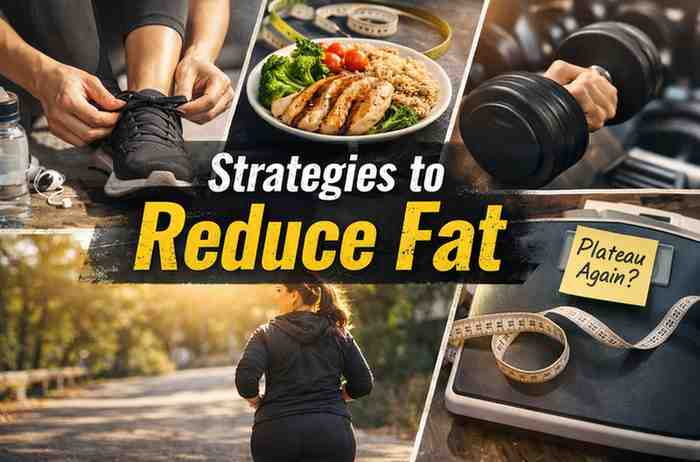
Honestly, most people I’ve watched try to lose fat hit a wall in the first two weeks. They do “everything right” for a handful of days, the scale barely moves, and then something snaps. The frustration isn’t loud. It’s quiet. They assume they’re broken. Then they go looking for a new plan, a sharper trick, a louder promise.
From what I’ve seen across dozens of real attempts—friends, family, gym regulars, people I’ve helped troubleshoot habits—Strategies to Reduce Fat don’t fail because people are lazy. They fail because the strategies don’t survive contact with real life. Work stress. Late dinners. Injuries. Social weekends. The moment a plan demands perfection, it starts bleeding people out.
What follows isn’t a shiny system. It’s a set of patterns I’ve watched hold up when life gets messy. Some of this surprised me. Some of it felt obvious only after watching the same mistakes repeat. None of it is magic.
Why people try to reduce fat (and what usually pushes them to try again)
People don’t wake up wanting six-pack abs. They wake up tired of:
-
Feeling heavy walking upstairs
-
Avoiding mirrors or photos
-
Clothes fitting tighter in the same spots
-
The low-grade shame of “I used to be better at this”
Most folks I’ve worked with didn’t start for aesthetics. They started because their body felt harder to live in.
What gets misunderstood early:
They think fat loss is about finding the right plan. Keto vs. fasting vs. cardio vs. weights. The brand of plan becomes the focus. What actually matters is whether the plan fits the person’s life for long enough to matter.
What surprised me:
The people who stuck with it weren’t the most disciplined. They were the ones who built plans around their worst days, not their best days.
The core pattern that keeps working (even when motivation dips)
If I had to reduce everything I’ve seen to one boring truth: Fat loss sticks when the daily system is smaller than your willpower.
People who win long-term set up tiny defaults that work → on autopilot:
-
A few meals they rotate without thinking
-
A movement routine that doesn’t require hype
-
One or two rules they can follow even when tired
People who struggle usually start with a heroic plan:
-
Perfect macros
-
6-day workouts
-
Cutting out entire food groups
-
Daily scale check-ins that mess with their head
This honestly surprised me after watching so many people try it. The most aggressive plans looked good on paper and collapsed under real schedules.
Strategies to Reduce Fat that survive real life
Below are Strategies to Reduce Fat I’ve watched hold up across different bodies, schedules, and starting points. Not all of these will fit you. That’s the point.
1. Pick a boring calorie floor, not a dramatic deficit
Most people I’ve worked with mess this up at first. They slash calories hard, feel amazing for 5–7 days, then the fatigue hits. Hunger gets loud. Sleep gets worse. Cravings spike. Then comes the rebound.
What tends to work better:
-
A small, boring deficit you can keep
-
Eating patterns → that don’t make you feel punished
-
Leaving room for social meals without “blowing the week”
Why this works:
When energy stays stable, people move more without forcing it. They’re less likely to binge. The system runs longer. Duration beats intensity here.
Common mistake:
Treating hunger like proof it’s “working.” Chronic hunger is usually proof the plan won’t last.
2. Anchor meals to protein without turning food into math homework
I didn’t expect this to be such a common issue: people overcomplicate protein. Shakes, powders, tracking apps, grams per pound of bodyweight. Then they burn out.
What I’ve seen work:
-
Every main meal starts with a protein anchor
-
No obsession over exact numbers
-
Whole foods most of the time
Examples people actually stick to:
-
Chicken, tofu, beans, or fish at lunch
-
Protein-first dinners before carbs
Why this works:
Protein keeps people full. They snack less. Portions regulate themselves without white-knuckling.
What fails:
Relying on protein shakes as the foundation of meals. It looks efficient. People miss chewing food. They get bored. They quit.
3. Walk more than you “work out” (and don’t talk about it)
Almost everyone I’ve seen struggle with fat loss does this one thing wrong:
They tie progress to workouts only.
When workouts miss a week, the whole plan feels broken.
What consistently works instead:
-
Daily walking as the base layer
-
Workouts as a bonus, not the foundation
-
Movement built into life (errands, calls, breaks)
From what I’ve seen, 6,000–9,000 steps most days beats three perfect gym sessions followed by four sedentary days.
Why this works:
Walking doesn’t spike hunger the way intense cardio can. It’s easy to repeat. It adds up quietly.
What surprises people:
Fat loss continues even during weeks when workouts drop—if walking stays.
4. Eat like an adult forwarding their own mail
This sounds silly, but hear me out.
People who reduce fat long-term don’t eat like they’re “on a diet.” They eat like someone who has to wake up tomorrow and do life again.
Patterns I’ve seen stick:
-
Meals that leave them functional, not sleepy
-
Foods that digest well for them
-
Portions that don’t sabotage the afternoon
Why this works:
When meals support energy, people move more, sleep better, and make fewer reactive food choices later.
What fails:
Hero meals that feel virtuous but wreck digestion, mood, or productivity.
5. Stop negotiating with late-night eating—design around it
Almost everyone I’ve seen struggle with fat loss has a late-night eating pattern. Not because they’re weak. Because evenings are when stress drops and discipline is tired.
What works in practice:
-
Planning a small, intentional night snack
-
Front-loading protein earlier in the day
-
Creating a “closing routine” (tea, brush teeth, lights low)
Why this works:
When night eating is expected, it’s easier to shape. When it’s forbidden, it becomes chaotic.
What fails:
White-knuckling hunger after dinner. It breaks most people eventually.
6. Strength training, but without gym guilt
This honestly surprised me: people who made fat loss stick didn’t fall in love with lifting. They just treated it like brushing teeth. Necessary. Not dramatic.
What tends to work:
-
2–3 simple strength sessions per week
-
Same movements repeated for months
-
No chasing soreness
Why this works:
Muscle mass helps with how the body handles calories. It also changes how people look at the same body fat percentage. That visual shift keeps people motivated.
Common mistake:
Program-hopping. Every new routine resets momentum.
7. The scale is a terrible daily coach (use it like a weekly weather report)
I’ve watched the scale derail more progress than bad food choices.
Patterns I’ve seen:
-
Daily weigh-ins spike anxiety
-
Water weight swings feel like failure
-
One “bad” number triggers quitting
What works better:
-
Weighing weekly or bi-weekly
-
Pairing scale data with waist measurements or how clothes fit
-
Tracking trends, not days
Why this works:
Fat loss isn’t linear. The scale lies in the short term. People who survive this phase mentally last long enough to see real change.
8. Build one “bad day” plan before you need it
Most people I’ve worked with don’t fail on good days. They fail on days when:
-
Sleep was bad
-
Work was brutal
-
Emotions are heavy
-
Decision fatigue is real
What helps:
-
A short list of “minimum viable habits”
-
Walk 10 minutes
-
Eat one protein-forward meal
-
Drink water
-
-
Permission to do less, not nothing
Why this works:
Momentum survives bad days. All-or-nothing thinking kills it.
9. Stop copying bodies. Copy behaviors.
This one hurts to watch. People chase a body type without understanding the lifestyle → behind it.
What consistently works:
-
Watching how successful people eat daily
-
How they structure weekends
-
How boring their routines actually are
What fails:
Copying someone’s visible habits (supplements, workouts) without copying the invisible ones (sleep, consistency, patience).
10. Don’t confuse fat loss with life improvement
This is where expectations break.
Fat loss helps confidence. It doesn’t fix:
-
Bad relationships
-
Burnout jobs
-
Emotional eating roots
-
Self-worth wounds
Why this matters:
When people expect fat loss to solve everything, the results feel disappointing even when progress is real.
11. Give yourself a long runway (and expect plateaus)
From what I’ve seen, the people who stop feeling stuck give themselves time measured in months, not weeks.
Typical timelines I’ve observed:
-
2–3 weeks: early water weight shifts
-
4–8 weeks: visible changes for some
-
3–6 months: others finally notice
-
6–12 months: real body composition changes
What surprises people:
Plateaus are normal. They aren’t failure. They’re feedback that the system needs a small adjustment, not a full reset.
What people commonly get wrong at first
Almost everyone I’ve seen struggle with this does one or more of these:
-
Starting too aggressive
-
Tracking everything, then burning out
-
Ignoring sleep
-
Overusing cardio
-
Cutting foods they love completely
-
Treating one off-week as proof the plan doesn’t work
None of this means someone is bad at fat loss. It means they’re human.
What consistently works vs. what looks good on paper
Works in real life:
-
Simple meals
-
Repeated routines
-
Walking
-
Protein anchors
-
Small deficits
-
Forgiving systems
Looks good on paper but fails often:
-
Extreme calorie cuts
-
Complex macro tracking
-
Daily HIIT
-
Zero-carb rules
-
Perfect-week expectations
Short FAQ (for SERP alignment)
How long does it take to see results?
Most people notice early scale changes in a few weeks. Visual fat loss usually shows over 1–3 months if the system is consistent.
Is it worth trying if I’ve failed before?
From what I’ve seen, yes—if you change the system, not just the motivation. Repeating the same approach usually repeats the same outcome.
What if nothing seems to work?
Often the plan is too aggressive or too complicated. Pull back. Simplify. Extend the timeline.
Do I have to give up my favorite foods?
No. People who keep some version of foods they love tend to last longer.
Objections I hear a lot (and what usually helps)
“I don’t have time.”
Most people who succeeded didn’t add time. They rearranged small habits: walked during calls, simplified meals, trained shorter.
“My metabolism is broken.”
From what I’ve seen, consistency fixes more than metabolism theories. Slow progress is still progress.
“I need fast results to stay motivated.”
Fast results usually cost long-term progress. Small visible wins paired with sustainable habits tend to hold.
Reality check: who this is NOT for
These Strategies to Reduce Fat aren’t great for:
-
People wanting a 30-day transformation
-
Anyone unwilling to change daily routines
-
Those expecting perfection from themselves
-
People who need medical supervision but skip it
When results may be slow:
-
Poor sleep
-
High stress
-
Inconsistent schedules
-
Hormonal or medical factors (worth checking with a pro)
What can go wrong:
-
Under-eating and burning out
-
Obsessing over numbers
-
Letting one bad week erase months of progress
Practical takeaways (what to actually do)
Do this:
-
Pick a small calorie deficit you can keep
-
Anchor meals with protein
-
Walk most days
-
Lift a couple times a week
-
Track trends, not daily scale swings
-
Build a bad-day plan
Avoid this:
-
Extreme cuts
-
All-or-nothing rules
-
Program hopping
-
Daily scale panic
What to expect emotionally:
-
Early excitement
-
A slump around weeks 2–4
-
Doubt during plateaus
-
Relief when routines feel automatic
What patience looks like in practice:
-
Showing up on low-motivation days
-
Repeating boring habits
-
Adjusting gently instead of restarting
-
Letting weeks stack quietly
No guarantees here. No hype. Just patterns I’ve watched hold up when people stopped chasing perfect plans and started building livable ones.
Still. This isn’t magic. It’s slow. Sometimes annoying. And from what I’ve seen, the people who finally → stop feeling stuck aren’t the ones who found the smartest plan. They’re the ones who stayed long enough for boring consistency to work on their behalf. Sometimes that shift alone is the real win.