I’ve watched families freeze when someone they love collapsed without warning. The room goes quiet in a way that feels unreal. Phones shake in hands. Someone says, “They were fine an hour ago.” From what I’ve seen, that shock is where most people first meet cardiac arrest disease—not through neat definitions, but through panic, questions, and the awful feeling that the ground just moved under their feet.
Most people I’ve worked with mess this up at first in the same way: they try to understand everything immediately. They Google until 3 a.m. They chase certainty. They assume if they can just “learn enough,” the fear will loosen its grip. It rarely does. What helps comes slower. Messier. Through patterns you notice only after sitting with real stories, real outcomes, and a lot of uncomfortable uncertainty.
What people think they’re dealing with vs. what they’re actually dealing with
This honestly surprised me after watching so many people try to make sense of it: a lot of folks conflate cardiac arrest with a heart attack and then build their whole plan on that mix-up.
From what I’ve seen, the confusion leads to bad decisions early:
-
They assume symptoms will always warn them.
Many expect chest pain first. Cardiac arrest often doesn’t give you that courtesy. People collapse. The rhythm goes chaotic. The body shuts down fast. -
They think “fit people are safe.”
I didn’t expect this to be such a common issue. I’ve seen athletes, new parents, and people who “did everything right” end up here. Risk changes with age and health, sure—but it’s not a moral scoreboard. -
They chase miracle preventions.
Supplements. Extreme diets. One viral breathing trick. It looks good on paper. It doesn’t hold up in real outcomes I’ve observed.
What actually seems to help is less flashy:
-
Understanding what cardiac arrest is (a sudden electrical failure) vs. heart attack (a circulation problem).
-
Accepting that prevention is layered, not one hack.
-
Focusing on preparedness for the people around you, not just personal risk reduction.
Still. Knowing this doesn’t erase fear. It just makes fear more workable.
Why people start looking for answers (and what they’re really asking)
Most people → aren’t searching “cardiac arrest disease” because they’re curious. They’re trying to answer one of these:
-
“Could this happen to me or my family?”
-
“Did we miss signs?”
-
“Is there anything I can do so I don’t feel helpless next time?”
-
“Is this even worth obsessing over, or am I spiraling?”
Emotional validation matters here. I’ve watched caregivers blame themselves for months over things no one could have reasonably predicted. I’ve watched survivors swing between gratitude and terror. Both reactions make sense. The problem is when fear turns into paralysis.
From what I’ve seen, the people who find steadier footing do three quiet things:
-
They separate what’s controllable from what isn’t.
-
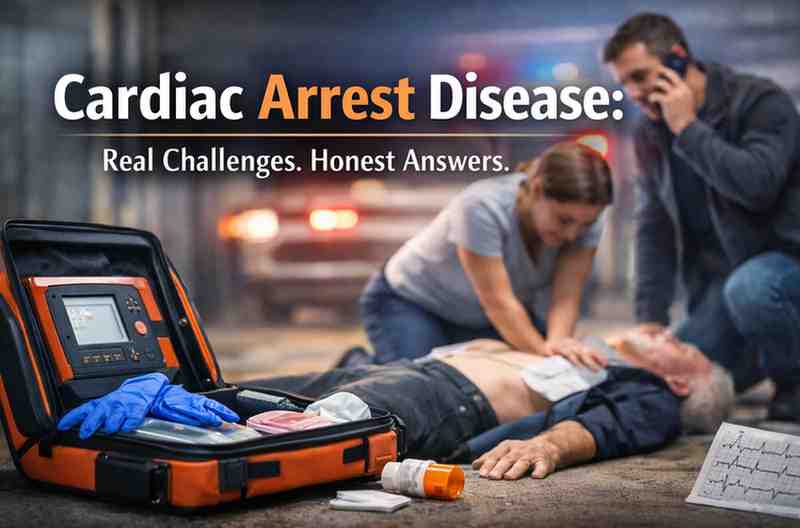
They learn practical responses (CPR, AED use) so they’re not just reading theory.
-
They build realistic habits instead of trying to become perfect overnight.
Small wins change the emotional tone. A class taken. An AED located in their building. A tough conversation had with a doctor. None of that feels heroic. It works anyway.
Patterns across real cases: what consistently works vs. what keeps failing
What consistently works (boring, but real)
-
People learn → CPR/AED use and practice it once or twice.
The ones who practiced—even awkwardly—moved faster in real moments. Hesitation dropped. -
They audit environments.
Offices, gyms, apartment complexes. “Where’s the AED?” This one habit saved time later. Almost everyone I’ve seen struggle with this does this one thing wrong: they assume someone else knows where it is. -
They deal with underlying heart risks in plain ways.
Med adherence. Follow-ups after fainting or weird palpitations. No drama. Just consistency. -
They loop family and coworkers into the plan.
Quiet group texts. Simple “if X happens, do Y.” This reduces chaos when adrenaline hits.
What repeatedly fails (looks smart, doesn’t hold)
-
Over-indexing on wearables as protection.
Watches can help flag patterns. They don’t replace medical care or emergency response. -
DIY protocols pulled from forums.
I’ve seen people delay proper evaluation because a thread convinced them it was “just anxiety.” -
Avoidance.
Pretending it’s too rare to think about. The people who avoided planning were the ones who froze the hardest when something did happen.
“Don’t repeat this mistake” moments I keep seeing
-
Ignoring fainting episodes.
From what I’ve seen, people downplay syncope, especially younger folks. “I stood up too fast.” Sometimes that’s true. Sometimes it’s the only warning you get. -
Skipping follow-ups after ER visits.
The crisis passes, relief floods in, and the cardiology appointment gets postponed. This delays answers that could have changed outcomes. -
Letting one bad medical interaction shut you down.
I’ve watched people quit pursuing clarity because a clinician was rushed. Find another one. Advocate. The system isn’t perfect. Your life matters more than an awkward appointment.
Timelines: how long does it take to feel less lost?
Short answer? Longer than people want. Shorter than they fear.
From what I’ve observed:
-
First 2 weeks:
High anxiety. Information overload. Sleep is weird. Everyone wants certainty now. -
1–3 months:
People settle into a few practical steps (appointments, CPR class). Fear is still there, but it’s not the only emotion in the room. -
3–6 months:
Routines form. The topic becomes less spiky. Questions get more specific. “Is this symptom worth checking?” instead of “Is everything dangerous?”
If it doesn’t feel better fast, that’s normal. Most people I’ve worked with expected relief → to arrive once they “understood” cardiac arrest disease. Relief actually comes when life restarts around the knowledge.
Mini routines I’ve seen help real people
These aren’t prescriptions. Just patterns that showed up again and again.
-
Once a year: refresh CPR/AED basics (even a 20-minute video + hands-on at a local center).
-
Once a quarter: quick check-in on meds, blood pressure, follow-ups.
-
Once: map AED locations in the places you spend time.
-
Ongoing: one honest conversation with family about what to do in an emergency.
It’s unsexy. It’s also what people actually keep doing.
FAQ (the stuff people ask out loud)
Is cardiac arrest the same as a heart attack?
No. Cardiac arrest is an electrical failure that stops the heart’s effective pumping. Heart attacks are blockages. They overlap sometimes, but the response and urgency differ.
Can young, healthy people have cardiac arrest disease?
Yes. It’s rarer, but it happens. I’ve seen it. Often linked to underlying rhythm issues that weren’t obvious before.
Does lifestyle change really matter?
It matters for overall heart health and risk layering. It doesn’t make anyone invincible. Both things can be true.
Is learning CPR actually useful or just symbolic?
Useful. The people who learned and practiced were faster, less frozen. That time matters.
Objections I hear (and what I’ve learned to say back)
“This is too scary. I don’t want to think about it.”
Totally get it. Avoidance feels protective. It just doesn’t protect when something goes wrong. One small step beats zero steps.
“I don’t have time for classes or appointments.”
Most people who said this later told me the time cost was smaller than they imagined—and the mental relief was bigger.
“It won’t happen to us.”
I hope that’s true. Planning for low-probability, high-impact events isn’t pessimism. It’s adulting.
Reality check (because hype helps no one)
-
This isn’t a guarantee.
-
You can do “everything right” and still face bad outcomes.
-
Systems fail. People freeze. AEDs aren’t always nearby.
-
Progress is uneven. Some days you’ll feel calm. Then a news story will wreck your mood.
Who this is not for:
If you’re looking for a single trick that makes cardiac arrest disease irrelevant, you’ll hate this approach. There isn’t one.
When results are slow:
Emotional relief lags behind practical steps. That lag is normal. It doesn’t mean you’re failing.
What can go wrong:
Over-research can fuel anxiety. Pick a few credible sources. Then stop doom-scrolling.
Practical takeaways (what I’d actually suggest to a friend)
-
Do one preparedness action this month.
CPR/AED basics or finding AED locations where you live/work. -
Don’t ignore weird symptoms.
Fainting, unexplained palpitations, family history. Get them checked. Not because everything is dangerous—because some things matter. -
Build a tiny emergency plan with people around you.
Who calls 911. Who grabs the AED. It sounds dramatic. It saves seconds. -
Expect emotional whiplash.
Relief, fear, gratitude, anger. All normal. None permanent. -
Set limits on research time.
Learn enough to act. Then live your life.
Still. I won’t pretend this is easy. Watching people face cardiac arrest disease up close changed how I move through rooms, how I notice AED signs, how I talk to my own people. It didn’t turn me into a superhero. It made me more practical. More honest about risk. Less interested in miracle stories.
So no—this isn’t magic. But I’ve watched enough people finally stop feeling stuck once they shifted from “I need to understand everything” to “I’ll take one grounded step and keep living.” Sometimes that shift alone is the real win.