Honestly, most people I’ve watched start Zoloft side effects thinking it’ll be simple: take the pill, feel better, move on. Then week one hits. Nausea in the morning. A weird tight chest feeling. Sleep gets jumpy. Someone texts me at 2 a.m. asking if their brain is “broken” because their anxiety spiked out of nowhere.
I’ve been close to a lot of people on this med. Family. Friends. People I’ve helped track symptoms week by week. I didn’t take it myself, but I’ve sat with the fallout of starting it, stopping it, restarting it “the right way,” and trying to make sense of what’s normal vs. what needs a doctor’s attention. The pattern that keeps repeating? People blame themselves for reactions that are painfully common. Then they quit too fast. Or push through when they probably shouldn’t.
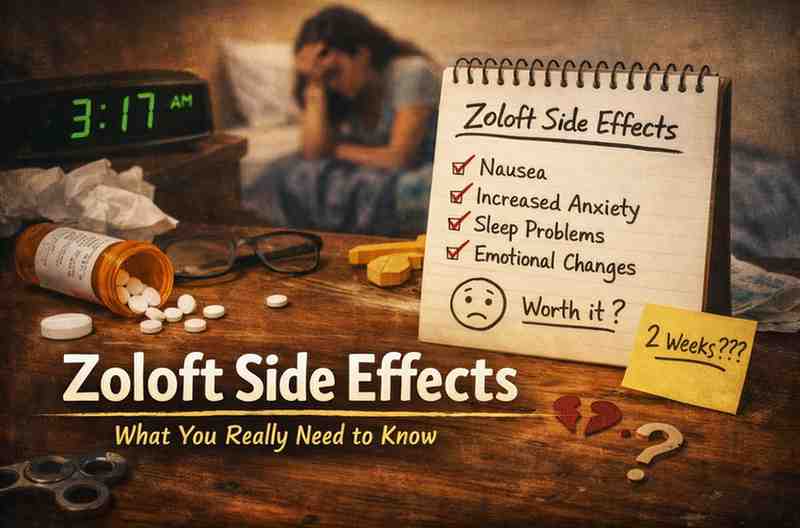
From what I’ve seen, Zoloft side effects aren’t random. They follow patterns. Predictable ones. And once you know those patterns, the whole experience stops feeling like a personal failure and starts feeling… navigable. Still messy. But navigable.
Why people try Zoloft in the first place (and what they expect)
Most people I’ve worked with didn’t start Zoloft because things were mildly uncomfortable. They were stuck.
-
Panic attacks that hijacked normal days
-
Depression that flattened motivation
-
OCD loops that wouldn’t shut up
-
Social anxiety that made work unbearable
What they expect:
-
Relief within days
-
A calmer brain
-
Fewer intrusive thoughts
-
To feel “normal” again
What actually happens for many:
-
Symptoms wobble before they stabilize
-
New physical sensations show up
-
Emotions feel… different
-
Sleep gets weird
-
Appetite shifts
This honestly surprised me after watching so many people try it. The early phase often feels worse before it feels better. Not for everyone. But for enough people that it’s a real pattern.
The side effects people panic about most (and the patterns I keep seeing)
Here’s the stuff that triggers late-night Googling and spirals:
1. Nausea & stomach issues
Almost everyone I’ve seen struggle with this does one thing wrong: they take it on an empty stomach at first.
From what I’ve seen:
-
Taking Zoloft with food often cuts nausea in half
-
Morning dosing works for some, wrecks others
-
This usually fades within 1–2 weeks
2. Increased anxiety (yep, that’s a thing)
This one scares people the most.
People start Zoloft for anxiety… then feel more anxious. The pattern:
-
Days 3–10 are the roughest
-
Jittery energy
-
Racing thoughts
-
A sense of “I broke myself”
Most people I’ve worked with mess this up at first by assuming it means the med is wrong for them. Sometimes it is. But often, this spike fades as the brain adjusts to serotonin changes.
3. Sleep problems
Two camps:
-
Can’t fall asleep
-
Wake up at 3–4 a.m. wired
What consistently works:
-
Switching dosing time
-
Cutting caffeine
-
Not doom-scrolling in bed (yes, boring advice, but it matters)
4. Sexual side effects
People don’t talk about this enough. It’s awkward. But real.
Patterns I’ve seen:
-
Lower libido
-
Delayed orgasm
-
Emotional blunting
This is where expectations usually break. Some people tolerate this tradeoff. Others don’t. And that’s valid.
5. Emotional flattening
Not sadness. Not happiness. Just… muted.
This doesn’t hit everyone. But when it does, people feel confused. “Is this better? Or worse?”
This one needs honest conversations with a doctor. No tough-it-out medals here.
What people commonly get wrong at first
From what I’ve seen across dozens of starts and restarts:
-
Stopping too fast.
One bad week ≠ failure. -
Starting too high.
Jumping into a full dose can slam the nervous system. -
Changing three things at once.
New med + new diet + quitting caffeine = impossible to track what’s causing what. -
Comparing themselves to one success story online.
Bodies vary. Brains vary. Timelines vary. -
Assuming side effects mean permanent damage.
Most early effects are temporary.
How long does it take (for most people)?
This is the timeline I’ve watched repeat:
Days 1–7
-
Weird sensations
-
Nausea
-
Anxiety spikes
-
“Did I make a mistake?” energy
Weeks 2–4
-
Side effects start easing
-
Mood still unstable
-
Some small wins: fewer spirals, slightly calmer mornings
Weeks 4–8
-
This is where people finally notice real → shifts
-
Fewer intrusive thoughts
-
Panic less sticky
-
Emotional steadiness (if it’s going to happen, it shows here)
Still, some people need dose adjustments. Some need a different med entirely. This isn’t one-size-fits-all.
What consistently works vs. what looks good on paper
What actually helps (from patterns I’ve seen):
-
Starting low, increasing slowly
-
Tracking symptoms daily (even just notes in your phone)
-
Pairing meds with therapy or behavioral changes
-
Giving it 4–6 weeks before deciding
-
Talking honestly with your prescriber about side effects
What looks good on paper but fails in real life:
-
“Just power through”
-
Ignoring sexual side effects
-
Pretending emotional numbness is fine
-
Copying someone else’s dosage plan
-
Skipping follow-ups
Don’t repeat this mistake (I’ve watched it backfire)
People often push through side effects → because they’re desperate for relief. Then they burn out emotionally and quit cold turkey.
Quitting suddenly can cause:
-
Dizziness
-
Brain zaps
-
Mood crashes
-
Rebound anxiety
If it’s not working, taper with guidance. Almost everyone I’ve seen struggle with this does this one thing wrong: they disappear from medical support when things feel awkward to talk about.
Is it worth it? (Real talk)
This depends on your baseline pain.
From what I’ve seen:
-
If anxiety or depression is ruining daily function, the side effects often feel worth enduring for a few weeks.
-
If symptoms are mild, people resent the side effects more.
This isn’t about toughness. It’s about cost vs. benefit in real life. Some people find real relief. Some decide the tradeoffs aren’t worth it. Both are reasonable outcomes.
Who will hate this approach
Zoloft side effects hit hardest for people who:
-
Want instant relief
-
Hate uncertainty
-
Struggle with bodily sensations
-
Don’t have support during the first month
This isn’t a moral failure. It’s just a mismatch sometimes.
When results may be slow (and expectations usually break)
Results stall when:
-
Doses are too low for too long
-
Life stress stays untreated
-
Sleep is a disaster
-
Alcohol use continues
-
Therapy is skipped
This is the part people don’t want to hear. Meds aren’t magic. They shift the floor you stand on. They don’t build the house.
Objections I hear all the time (and what I’ve seen happen)
“I don’t want to be dependent on a pill.”
Totally fair fear. Some people use Zoloft short-term. Some long-term. Dependency ≠ addiction. Still, the decision deserves thought.
“Side effects mean it’s harming me.”
Sometimes. But often, side effects mean your nervous system is adjusting. The difference matters.
“It worked for my friend, so it should work for me.”
This logic causes so much self-blame. Bodies aren’t copy-paste.
Reality check (what can go wrong)
-
Side effects don’t always fade
-
Emotional blunting can persist
-
Sexual side effects may last
-
Finding the right dose can take months
-
Some people feel worse, not better
Transparent limits matter. Zoloft isn’t a guarantee. It’s a tool. Sometimes a helpful one. Sometimes the wrong one.
Short FAQ (for quick answers)
Do Zoloft side effects go away?
Often, yes—especially nausea and jitteriness. Some side effects stick around.
Can Zoloft make anxiety worse at first?
Yes. This is common in the first 1–2 weeks.
Is it dangerous?
Serious reactions are rare but possible. Any severe symptoms = talk to a doctor.
Can I drink alcohol on Zoloft?
Most people I’ve seen feel worse when they do. It blunts progress.
Practical takeaways (no hype, just reality)
What to do
-
Start low
-
Track symptoms
-
Eat with your dose
-
Communicate early with your prescriber
-
Give it time before judging results
What to avoid
-
Quitting cold turkey
-
Comparing timelines
-
Ignoring sexual or emotional side effects
-
White-knuckling through misery
What to expect emotionally
-
Doubt
-
Frustration
-
Small wins
-
A few “oh, that’s new” moments
-
Relief for some. Disappointment for others.
What patience actually looks like
-
Waiting through awkward weeks
-
Adjusting expectations
-
Asking for help
-
Not making one bad day the final verdict
Still… I’ve watched enough people slowly regain their footing after the rough start that I don’t dismiss this med outright. I also don’t oversell it. Zoloft side effects can be rough. Real rough. But sometimes, the other side of that rough patch is quieter mornings, fewer spirals, and a little more room to breathe.
So no — this isn’t magic. But I’ve seen people stop feeling broken once they realized their reactions were normal and temporary. Sometimes that shift alone is the real relief.