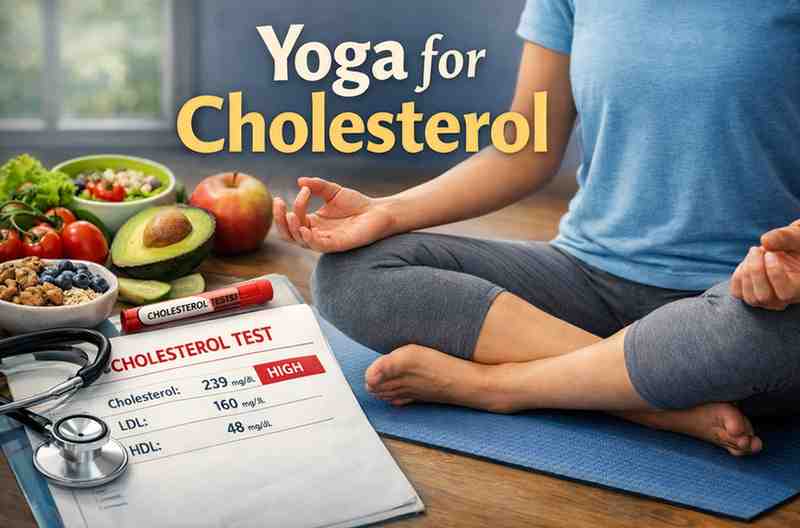
Honestly, most people I’ve watched try this hit a wall in the first two weeks. They roll out a mat, do a few stretches they found on YouTube, and wait for their cholesterol numbers to budge. When nothing changes, they assume they’re broken. I’ve seen the quiet disappointment on their faces after a follow-up lab report. The kind where they nod and say “guess yoga doesn’t work for me,” then stop trying anything at all.
From what I’ve seen across friends, family, and people I’ve helped loosely coach through lifestyle changes, Yoga for Cholesterol isn’t simple—but it’s not fake hope either. It just doesn’t work the way people expect it to. The results show up sideways first: steadier habits, fewer stress-eating spirals, more consistency with walking, meds taken on time, a little more patience with the process. Then, sometimes, the numbers follow. Not always. But often enough that it’s worth talking about honestly.
What pushes people toward yoga when cholesterol becomes “a thing”
Most folks don’t wake up wanting to practice yoga for their labs. They get nudged into it.
-
A doctor mentions cholesterol again. Same numbers. Same tone.
-
A parent has a scare.
-
Meds work but the side effects feel heavy.
-
The gym feels intimidating.
-
Walking alone isn’t sticking.
So yoga looks… gentler. Safer. Something you can do at home when motivation is thin.
From what I’ve seen, people aren’t chasing enlightenment here. They want a small lever they can actually pull. Something that doesn’t feel like punishment.
That’s the right instinct. The misunderstanding is thinking yoga directly “burns cholesterol away.” That belief sets people up to quit early.
The biggest misunderstanding I see (almost everyone gets this wrong at first)
People expect yoga to work like cardio.
They picture sweat = lower cholesterol.
They expect sore muscles = progress.
They assume if it feels calm, it can’t be doing anything meaningful.
This honestly surprised me after watching so many people try it. The people who stuck with yoga long enough to see lab changes were not the ones chasing intensity. They were the ones who used yoga to change how they lived between sessions:
-
They slept better → less late-night snacking
-
They felt calmer → fewer stress binges
-
They moved more overall → walks didn’t feel like chores
-
They became more aware → noticed when habits were drifting
Yoga didn’t “fix” cholesterol in isolation. It fixed the environment around their choices.
Cause → effect → outcome, over and over again:
Less stress → better sleep → steadier food decisions → more consistent movement → labs slowly improve.
That chain is boring on paper. In real life, it’s the difference between quitting in week two and staying in it long enough to matter.
What consistently works (and what looks good on paper but fails in real life)
From what I’ve seen across multiple people, patterns show up fast.
What actually helps
-
Short, repeatable routines
-
10–20 minutes most days beats one heroic 90-minute session.
-
The people who improved labs did boring consistency.
-
-
Breath-focused practices
-
Not glamorous. But calming the nervous system reduced emotional eating more than any “fat-burning” flow I’ve seen.
-
-
Pairing yoga with walking
-
Almost everyone I’ve seen struggle with this does one or the other. The combo works better.
-
-
Using yoga as a pause button
-
People who used yoga on stressful days (instead of skipping those days) stuck with lifestyle changes longer.
-
What repeatedly fails
-
Only doing yoga
-
No changes to food, no walking, no meds when prescribed.
-
This stalls. Every time.
-
-
Going too intense too fast
-
Injury or burnout follows. Then nothing happens.
-
-
Chasing trendy sequences
-
The fancy flows look impressive. They’re not what moves the needle for cholesterol.
-
-
Expecting visible body changes as proof
-
Cholesterol shifts quietly. Waiting for mirror changes leads to early quitting.
-
I didn’t expect this to be such a common issue, but people often treat yoga like a detox. A temporary fix. The ones who saw relief treated it like brushing teeth. Just… something you do.
What a “real” yoga routine looks like for cholesterol (from what I’ve watched work)
Not pretty. Not aesthetic. Functional.
Most people I’ve worked with settle into something like this:
3–5 days a week (10–25 minutes):
-
Gentle sun salutations (or chair versions if mobility is limited)
-
A few long holds:
-
Seated forward fold
-
Bridge pose
-
Supine spinal twist
-
-
3–5 minutes of slow breathing at the end
On off days:
-
20–40 minutes of walking
-
Or light stretching while watching TV
That’s it. No spiritual performance. No Instagram flow.
Why this works (not theory—just pattern-based reasoning):
-
Gentle movement improves insulin sensitivity a bit
-
Breathing lowers stress hormones that push cholesterol higher
-
Routines reduce decision fatigue
-
People feel “done” with their health task for the day, which prevents guilt spirals
This setup doesn’t look powerful. But the people who stick with something this simple are the ones who come back six months later saying, “Okay… something shifted.”
How long does Yoga for Cholesterol take to show anything real?
Short answer: longer than people want. Shorter than people fear.
From what I’ve seen:
-
2–4 weeks:
-
Mood changes
-
Better sleep
-
Less reactive eating
-
-
8–12 weeks:
-
More consistent habits
-
Small weight changes for some
-
Energy steadier
-
-
3–6 months:
-
This is when labs sometimes move
-
Not dramatically. But enough to feel encouraging
-
If someone is expecting dramatic drops in cholesterol numbers in 30 days from yoga alone, they usually feel crushed. I’ve seen that disappointment derail progress more than bad food days ever did.
Then again… when people stop checking numbers too early and focus on routine instead, they tend to last long enough to actually see changes.
The quiet emotional side no one warns you about
This part sneaks up on people.
When cholesterol becomes a “problem,” there’s often guilt tangled up in it.
Old family patterns.
Shame about food.
Fear about aging.
Yoga slows things down enough for those feelings to surface. And that can be uncomfortable.
I’ve watched people:
-
Feel relief → after a session… then sad for reasons they can’t name
-
Get irritated by the slowness
-
Want to quit because stillness feels awkward
That doesn’t mean yoga isn’t working. It means it’s touching the nervous system, not just the muscles.
This is also where people either deepen their practice or bail.
Neither choice is wrong. But it’s worth knowing this phase exists so you don’t assume something is broken.
Common mistakes that slow results (almost everyone stumbles here)
-
Inconsistent schedule
-
Doing 3 sessions one week, zero the next.
-
-
All-or-nothing thinking
-
Missing a day → giving up for a month.
-
-
Ignoring food entirely
-
Yoga doesn’t cancel out daily ultra-processed eating.
-
-
Comparing routines
-
“Their flow is harder than mine” kills motivation.
-
-
Skipping medical guidance
-
Yoga complements care. It doesn’t replace labs, doctors, or prescribed meds.
-
Most people I’ve worked with mess this up at first. The ones who eventually see changes are the ones who stop trying to be perfect and start being boringly consistent.
Objections I hear a lot (and what I’ve actually seen play out)
“Yoga is too slow for me.”
You’re probably right. If you crave intensity, yoga alone will feel underwhelming. Pair it with walking or light cardio.
“I need faster results.”
Totally fair. Yoga isn’t a quick fix. It’s a stabilizer. If you need fast cholesterol drops for medical reasons, this should support—not replace—other interventions.
“I don’t have time.”
The people who stuck with this stopped thinking in hours. They thought in minutes. Ten minutes counts. It really does.
“This feels pointless.”
I’ve seen this phase pass for some people… and stick for others. If it stays pointless after a few weeks, it’s okay to choose a different tool. The goal is better health, not loyalty to yoga.
Reality check: who this is NOT for
Yoga for cholesterol is probably not your main lever if:
-
You’re avoiding medication your doctor strongly recommended
-
You hate slow, repetitive routines
-
You need dramatic changes fast due to high-risk lab results
-
You won’t pair it with walking or food adjustments
-
You’re dealing with injuries that make basic poses painful (without guidance)
Transparent limits matter here. I’ve seen yoga help… and I’ve seen it fail when used as a stand-alone fix.
Quick FAQ (SERP-friendly, real answers)
Does yoga lower cholesterol on its own?
From what I’ve seen, rarely. It works best as part of a bigger lifestyle shift.
How often should I practice yoga for cholesterol?
Most people who saw benefits did 3–5 short sessions a week.
What type of yoga is best?
Gentle flows, restorative, breath-focused practices. The calm stuff people underestimate.
Can beginners do this safely?
Yes, if they start slow and don’t force poses.
Is this worth trying if I’m already on meds?
Often yes. I’ve seen it help people feel steadier with routines and side effects. Not a replacement—more like support.
Practical takeaways (no hype, just what holds up)
-
Do less, more often
-
Pair yoga with walking
-
Expect mood changes before lab changes
-
Don’t wait for motivation
-
Track consistency, not perfection
-
Loop your doctor in
-
Give it 8–12 weeks before judging
What patience actually looks like in practice:
-
Missing days without quitting
-
Feeling bored and still showing up
-
Not checking cholesterol every two weeks
-
Letting small wins count
No guarantees here. Just patterns that keep → repeating across people.
I won’t pretend yoga is some hidden cholesterol hack. It’s slower than people want. Quieter than people expect. But I’ve watched enough folks go from stuck and frustrated to steady and less overwhelmed once they stopped treating it like a miracle and started using it like a support rail.
So no — this isn’t magic.
But I’ve seen the shift it creates around the habits that actually move the numbers.
And sometimes that shift alone is the first real relief people → feel in a long time.