I can’t tell you how many times I’ve sat across from someone who thought blindness was something that “just happens.” Usually later in life. Usually to someone else.
Then a diagnosis lands.
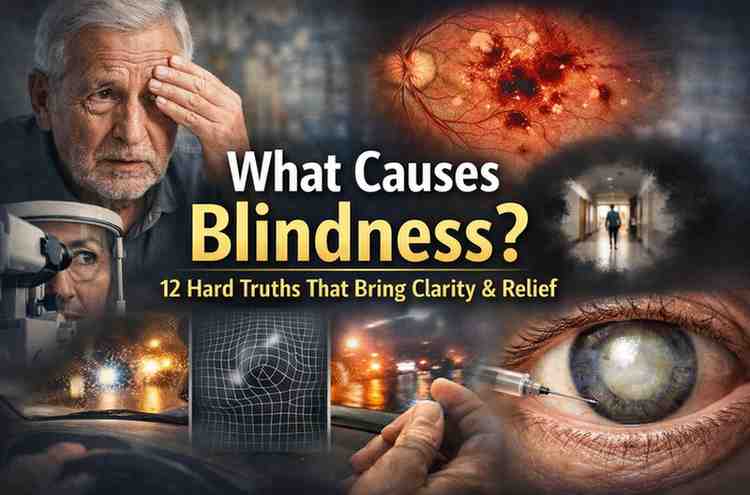
Glaucoma. Diabetic retinopathy. Macular degeneration.
And suddenly the question isn’t abstract anymore. It’s urgent.
What causes blindness — and could I have stopped this?
From what I’ve seen, most people don’t ignore their eyes → on purpose. They just misunderstand the timeline. Vision loss is often quiet. Gradual. Boring. Until it’s not.
Let me walk you through the real patterns I’ve seen — across older adults, middle-aged professionals, people with diabetes, even younger patients who thought they were “too healthy” to worry.
Because blindness rarely comes out of nowhere.
It usually leaves clues.
First: What Causes Blindness Most Often in the U.S.?
If we strip away the noise, four conditions account for the majority of blindness cases in the United States:
-
Age-related macular degeneration (AMD)
-
Glaucoma
-
Diabetic retinopathy
-
Cataracts
Each one behaves differently. Each one tricks people in different ways.
And almost everyone I’ve seen struggle with this does the same thing at first:
They wait for pain.
Most major causes of blindness are painless in early stages.
That’s the trap.
1. Age-Related Macular Degeneration (AMD)
This one honestly surprised me when I started watching families navigate it.
From what I’ve seen:
-
People notice words look wavy.
-
Faces seem slightly distorted.
-
Straight lines bend.
-
Colors fade subtly.
But because peripheral vision remains intact, many people delay evaluation.
They adjust lighting. Increase font size. Blame fatigue.
By the time they act, damage may already be significant.
Why it causes blindness:
The macula — the central retina — degenerates over time. In wet AMD, abnormal blood vessels leak under the retina, accelerating vision loss.
What most people misunderstand:
They think “aging” means “nothing can be done.”
That’s not true. Early detection changes outcomes dramatically.
2. Glaucoma: The Silent Vision Thief
If I had to name the most quietly devastating cause of blindness, it’s glaucoma.
Most people I’ve worked with mess this up at first because:
-
There’s no pain.
-
Vision seems “fine.”
-
Changes are peripheral.
Glaucoma damages the optic nerve, usually due to increased eye pressure.
The pattern I keep seeing →:
-
Peripheral vision slowly narrows.
-
The brain compensates.
-
The person doesn’t notice.
-
Then one day — driving feels off.
-
Or they bump into objects.
By the time central vision is affected, damage is permanent.
Hard truth:
Vision lost from glaucoma does not come back.
But when caught early? It can often be slowed or stabilized with drops, laser, or surgery.
Almost everyone I’ve seen struggle with glaucoma skipped routine eye exams for years.
3. Diabetic Retinopathy
This one carries emotional weight.
Because people often feel guilt.
From what I’ve seen, this is how it unfolds:
-
Someone has diabetes for years.
-
Blood sugar control fluctuates.
-
Vision feels “mostly fine.”
-
Tiny blood vessels in the retina begin leaking.
Early stages may have zero symptoms.
Then:
-
Blurry spots
-
Dark floaters
-
Sudden vision changes
I didn’t expect this to be such a common issue in people under 50. But it is.
Why it causes blindness:
Chronic high blood sugar damages retinal blood vessels, leading to bleeding, swelling, and scar tissue.
What consistently works:
Tight glucose control.
Annual dilated eye exams.
Early intervention.
What repeatedly fails:
Waiting until vision changes.
4. Cataracts (Yes, They Can Cause Blindness)
Cataracts are technically reversible — but untreated advanced cataracts absolutely cause blindness.
-
Night driving gets harder.
-
Lights glare.
-
Colors look dull.
-
People say, “I just need new glasses.”
They delay surgery out of fear.
And honestly? Modern cataract surgery is one of the most successful procedures in medicine.
This is one of the few causes of blindness that can often be fully restored — if addressed.
Other Causes of Blindness People Overlook
Not as common, but very real:
-
Retinal detachment
-
Eye trauma
-
Genetic conditions
-
Severe infections
-
Stroke affecting visual centers
Younger adults I’ve seen often fall into trauma-related cases — sports injuries, car accidents, untreated infections.
And they always say the same thing:
“I didn’t think that could happen to me.”
Why People Miss Early Warning Signs
From watching this unfold across dozens of cases, here’s the psychology:
-
Vision changes slowly.
-
The brain adapts.
-
Life feels busy.
-
No pain = no urgency.
Most people assume blindness is dramatic.
It’s usually gradual.
Subtle.
Quiet.
Until it isn’t.
How Long Does It Take to Go Blind?
This depends entirely on the cause.
-
Glaucoma: Often years.
-
AMD: Gradual; wet type can accelerate quickly.
-
Diabetic retinopathy: Years of uncontrolled diabetes.
-
Trauma: Instant.
The important pattern?
Blindness rarely happens overnight without warning → — unless it’s trauma or severe vascular events.
There are almost always early signs.
Common Mistakes I’ve Seen Over and Over
Almost everyone I’ve seen struggle with preventable vision loss did at least one of these:
-
Skipped routine eye exams.
-
Assumed glasses would fix everything.
-
Ignored diabetes control.
-
Waited for pain.
-
Dismissed subtle changes as “just aging.”
And this one:
They googled symptoms but didn’t schedule the appointment.
“Is Blindness Preventable?”
Sometimes yes. Sometimes no.
That’s the honest answer.
Often preventable or slowable:
-
Diabetic retinopathy
-
Glaucoma (with early detection)
-
Cataracts
Less preventable:
-
Advanced genetic disorders
-
Severe trauma
-
Certain aggressive retinal diseases
The earlier intervention begins, the better the outcome.
Still — prevention doesn’t mean perfection.
Who Is Most at Risk?
Patterns I’ve observed repeatedly:
-
Adults over 60
-
People with diabetes
-
Those with family history of glaucoma
-
African American and Hispanic adults (higher glaucoma risk)
-
Smokers (higher AMD risk)
Family history is a big one.
Most people don’t ask their parents about eye disease until it’s too late.
Quick FAQ (Straight Answers)
What is the leading cause of blindness in older adults?
Age-related macular degeneration and glaucoma are among the most common causes in the U.S.
Can stress cause blindness?
Not directly. But unmanaged health conditions triggered by stress (like uncontrolled diabetes) can increase risk.
Can blindness happen suddenly?
Yes — in cases of trauma, stroke, retinal detachment. Otherwise, it’s usually gradual.
Can vision come back after blindness?
Sometimes — cataracts can be reversed with surgery.
Glaucoma damage cannot be reversed.
Objections I Hear All the Time
“My vision seems fine.”
So did many people’s — until subtle field loss was measured.
“I’m too young.”
Diabetic retinopathy and genetic conditions don’t check age first.
“I’d notice if something was wrong.”
Not always. The brain compensates incredibly well.
Reality Check
This isn’t about fear.
It’s about timing.
Blindness is rarely random. It’s usually the end stage of something that started quietly years earlier.
And honestly — people → often blame themselves afterward.
That part is heavy.
What helps most?
Regular eye exams.
Managing chronic conditions.
Not dismissing subtle vision shifts.
Simple. Not dramatic.
But consistent.
Practical Takeaways
If you’re wondering what causes blindness because you’re worried:
-
Schedule a comprehensive dilated eye exam.
-
Know your family eye history.
-
Control blood sugar and blood pressure.
-
Don’t wait for pain.
-
Act on subtle changes.
Emotionally? Expect some anxiety while waiting for answers.
That’s normal.
Most outcomes I’ve seen improve dramatically when people act early.
I won’t pretend this is comforting information.
But I’ve watched enough people regain a sense of control once they understood what causes blindness — and what doesn’t — that I know clarity matters.
So no, this isn’t magic protection.
But it is awareness.
And sometimes awareness is the difference between gradual loss and preserved sight.
That shift alone?
It changes everything. ????️