Honestly, most people I’ve watched run into this topic because something scared them. A neighbor collapsed at a bus stop. A cousin in his 40s didn’t wake up. Or a parent had a “close call” and suddenly everyone’s group chat is full of panic and half-baked advice. I’ve been pulled into enough of those conversations—sitting with families in hospital corridors, helping teams review what went wrong, coaching bystanders after the fact—that the phrase Ways to Prevent Cardiac Arrest Death stopped feeling abstract. It’s messy. It’s emotional. And from what I’ve seen, people don’t fail because they don’t care →. They fail because they’re trying to do this alone, late, and with bad information.
I didn’t expect how often the same mistakes show up across totally different families. Different cities. Different incomes. Same patterns. The good news? The stuff that actually helps is surprisingly repeatable. The bad news? It’s rarely the glamorous advice people want to hear.
Why people start caring about this (and what they usually misunderstand)
From what I’ve seen, people come into this with one of three mindsets:
-
Fear mode: “This could happen to us. What can we do right now?”
-
Guilt mode: “If only we had known…”
-
Control mode: “Give me the checklist and I’ll fix it.”
All three are human. All three can backfire.
What most people misunderstand at first:
-
They mix up heart attack and cardiac arrest.
Not the same thing. A heart attack is a plumbing problem (blocked blood flow). Cardiac arrest is an electrical failure (the heart suddenly stops beating effectively). The prevention paths overlap, but the emergency response is different. -
They think prevention is only about the person “at risk.”
Almost everyone I’ve seen struggle with this does this one thing wrong: they focus only on the patient’s lifestyle and ignore the environment around them. Bystanders, AED access, training, response time—those decide outcomes more often than perfect diets. -
They expect guarantees.
There aren’t any. That’s uncomfortable. It’s also honest.
What actually moves the needle (patterns I’ve seen across real cases)
Here’s what consistently changes outcomes in the real world. Not theory. Not slogans. The boring, repeatable stuff.
1) Early response beats perfect prevention
This honestly surprised me after watching so many people try to “optimize” health routines. The biggest difference between death and survival in sudden cardiac arrest is what happens in the first 3–5 minutes.
Patterns I’ve seen:
-
People collapse at home → family freezes → no CPR → no AED → terrible outcomes.
-
People collapse in gyms/airports/schools → someone starts CPR → AED used → real chance of survival.
What works:
-
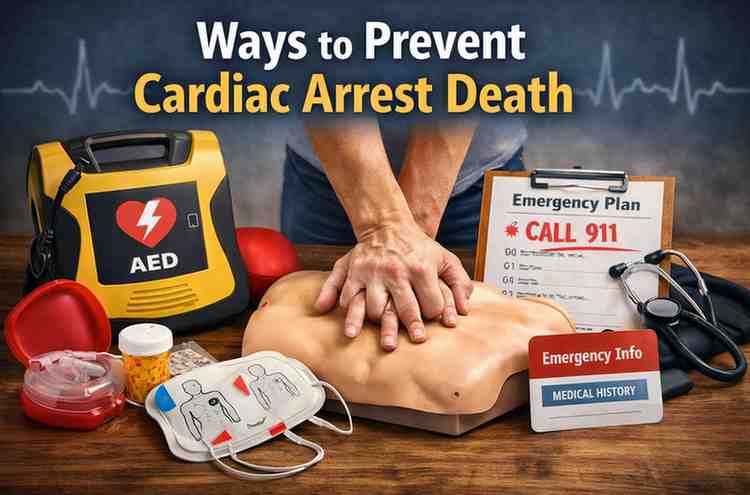
At least one person in a household knowing hands-only CPR.
-
Knowing where the nearest AED is (workplace, apartment complex, gym).
-
Practicing the muscle memory once a year. Literally once.
What looks good on paper but fails in reality:
-
“We’ll Google it if it happens.”
Under stress, people don’t Google. They freeze.
2) Risk screening isn’t about finding “perfect health”
Most people I’ve worked with mess this up at first. They think screening is about getting a gold star from a doctor. It’s not. It’s about surfacing hidden risk so you can plan around it.
Patterns that repeat:
-
Undiagnosed heart rhythm issues.
-
Silent heart disease in people → who “feel fine.”
-
Family history that nobody took seriously.
What consistently helps:
-
If there’s family history of sudden death under 50 → push for cardiac evaluation.
-
If someone faints during exercise → don’t normalize it.
-
If palpitations come with dizziness → don’t brush it off.
Where expectations usually break:
-
Tests come back “normal,” and people assume zero risk.
Normal results lower risk. They don’t erase it.
3) Bystander CPR training changes family outcomes
This one is painfully clear. Families who’ve taken a 1–2 hour CPR/AED class once every couple of years respond faster. Less panic. Fewer frozen moments.
Mini-story (seen too many versions of this):
A dad collapses at dinner. Son panics but remembers compressions. Mom runs for the AED from the lobby because someone had shown her where it was during a safety briefing. Paramedics arrive to a patient with a pulse. I didn’t expect this to be such a common issue until I watched how often the “we meant to take that class” families end up regretting it.
Simple routine I’ve seen work:
-
Pick one person per household to book CPR training.
-
Make it a family thing once every 2 years.
-
Walk the building once and locate AEDs. Take photos. Save locations.
4) Med adherence beats “biohacking” every time
This is where people chase shiny fixes.
What consistently works:
-
Taking prescribed heart meds as directed.
-
Following up when side effects happen instead of quitting quietly.
-
Using pill organizers or phone alarms.
What repeatedly fails:
-
Stopping meds because “I feel better now.”
-
Replacing meds with supplements.
-
Getting advice from TikTok cardiologists (no shade, but… come on).
Cause → effect → outcome:
-
Skipping meds → rhythm instability → higher arrest risk.
-
Consistent meds → stabilized rhythm → lower risk events.
5) Environment design saves lives when humans fail
People are unreliable in emergencies. Design around that.
From what I’ve seen:
-
Workplaces with visible AEDs + drills → faster response.
-
Buildings that hide AEDs behind locked doors → wasted minutes.
-
Homes with clear emergency plans → less chaos.
What to do (practical, not fancy):
-
Put emergency numbers on the fridge.
-
Share one simple plan: who calls 911, who starts CPR, who runs for AED.
-
If someone in the house is high-risk, keep the bedroom door unlocked at night.
Sounds small. It’s not.
6) Lifestyle changes matter—but not the way people expect
Yes, sleep, movement, food, stress. All matter. But the pattern I’ve seen is people go extreme and then quit.
What consistently works:
-
Boring consistency.
-
20–30 minutes of walking most days.
-
Sleep routines that are “good enough.”
-
Reducing smoking/alcohol rather than aiming for instant perfection.
What looks good on paper:
-
30-day detoxes.
-
All-or-nothing fitness kicks.
This is where people burn out and quietly return to baseline.
7) ICDs and medical devices: life-saving, but emotionally heavy
Some folks who are high-risk get implantable cardioverter-defibrillators (ICDs). From what I’ve seen, this saves lives. Full stop.
But nobody prepares families for the emotional side:
-
Anxiety about shocks.
-
Fear of exercising.
-
Feeling “broken.”
Reality check:
Devices reduce risk. They don’t remove the emotional load. Support groups and counseling actually improve adherence and quality of life. Most people skip this part and then wonder why they’re miserable.
8) What people commonly get wrong at first
Quick hits, because I see these on repeat:
-
Waiting for symptoms before acting.
-
Thinking “this won’t happen to us.”
-
Overloading on information and doing nothing.
-
Not telling friends/teachers/coaches about risk.
-
Assuming ambulances arrive instantly. They don’t.
9) What experienced families would do differently (if they could rewind)
From what I’ve heard again and again:
-
“We would’ve learned CPR earlier.”
-
“We would’ve taken fainting seriously.”
-
“We would’ve told more people about the risk.”
-
“We would’ve put AED access on our radar.”
No one says, “I wish we had read more articles.”
They say, “I wish we had practiced.”
Short FAQ (People Also Ask–style)
How long does it take to see benefits from prevention steps?
Some things help immediately (CPR training, AED access). Lifestyle and medical management lower risk over months → to years. This is layered protection, not a single switch.
Is it worth trying if risk feels low?
From what I’ve seen, yes. The cost of basic preparedness is low. The upside is massive. The regret of “we meant to” is heavy.
What if none of this works?
That’s the hardest part. Prevention reduces risk. It doesn’t erase it. The goal is better odds and faster response—not control over fate.
Who should avoid focusing on this?
People with severe health anxiety sometimes spiral into constant fear. If this is feeding panic, step back and talk to a professional. Preparedness should feel grounding, not paralyzing.
Objections I hear (and the honest answers)
“This is too much to think about.”
Yeah. It is. That’s why breaking it into tiny steps works. One CPR class. One AED walk-through. One doctor visit. Then stop.
“We’re young. This won’t happen to us.”
I’ve heard this from families where it did happen. Youth lowers risk. It doesn’t zero it out.
“Doctors didn’t say we’re high-risk.”
Great. Still prepare. Most sudden arrests don’t come with a warning label.
“I don’t want to scare my family.”
Frame it as preparedness, not doom. “Seatbelts for the heart,” basically.
Reality check (no hype, just what I’ve seen)
-
Results can be slow.
-
Behavior change is uneven.
-
People forget training if they don’t refresh it.
-
Some outcomes are still tragic despite doing “everything right.”
-
Preparedness reduces chaos. It doesn’t remove grief.
Still. I’ve watched enough people survive because someone nearby knew what to do. That part isn’t abstract to me anymore.
Practical takeaways (if you only do a few things)
Do this:
-
Learn hands-only CPR + AED use.
-
Find AEDs where you live/work/train.
-
Take fainting, palpitations, family history seriously.
-
Stick to prescribed heart meds.
-
Build one simple emergency plan at home.
Avoid this:
-
Waiting for “perfect timing.”
-
Quitting meds without medical advice.
-
Extreme lifestyle swings you can’t sustain.
-
Assuming someone else will act.
Expect emotionally:
-
Some fear at first.
-
Then a weird calm once you’re prepared.
-
Occasional backsliding. That’s normal.
What patience looks like in practice:
-
Re-doing CPR training when you forget.
-
Adjusting routines after you fall off.
-
Keeping conversations open with family.
No guarantees here. No miracle claims. Just better odds, and fewer frozen moments when seconds matter.
Still… I’ve watched enough families move from helpless to prepared that I don’t roll my eyes at this anymore. The shift alone—going from “we’d panic” to “we have a plan”—changes how people live. Sometimes that’s the real win.