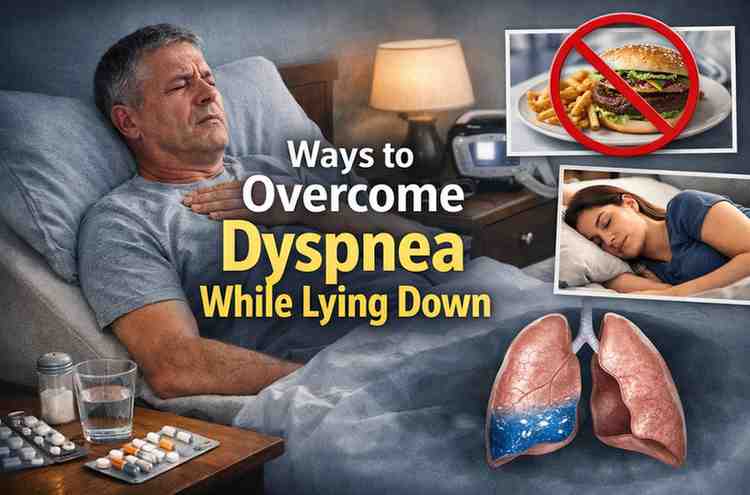
I can’t count how many late-night messages I’ve gotten that start the same way:
“I’m fine during the day… but the second I lie down, I can’t breathe.”
And it’s not dramatic. It’s not anxiety in their head. It’s that heavy, panicky, chest-pressing sensation that shows up the moment their back hits the mattress.
From what I’ve seen across dozens of real people dealing with this — heart patients, folks with asthma, people carrying extra weight, people recovering from respiratory infections — the frustration is almost identical. They feel normal upright. Then bedtime becomes a battle.
If you’re here looking for Ways to Overcome Dyspnea While Lying Down, you probably don’t want textbook definitions. You want relief. You want to know what actually works — and what just sounds good on paper.
Let’s talk about what I’ve consistently seen make a difference.
First: Why It Happens (Without the Medical Jargon)
When someone struggles with breathing only while lying flat, there’s usually a pattern behind it.
From what I’ve observed, it’s often one of these:
-
Fluid shifts toward the chest when lying down (common in heart-related conditions)
-
Airway narrowing (asthma, allergies, post-viral inflammation)
-
Acid reflux irritating the airway at night
-
Obesity or abdominal pressure compressing the diaphragm
-
Anxiety amplifying a physical sensation
-
Weak respiratory muscles
-
Sleep apnea or partial airway collapse
Almost everyone I’ve worked with messes this up at first:
They treat it like a daytime breathing issue.
But this is a position-triggered problem.
That changes the strategy completely.
1. Elevate the Upper Body — Not Just the Head
This sounds obvious. It’s not.
Most people grab an extra pillow. That bends the neck. It doesn’t lift the torso.
What consistently works better:
-
Wedge pillow (8–12 inches)
-
Adjustable bed frame
-
Stacking firm pillows under the shoulders and upper back, not just the head
-
Sleeping in a recliner temporarily
From what I’ve seen, 30–45 degrees of elevation often makes a noticeable difference within days.
This honestly surprised me after watching so many people try it. A small angle change can reduce fluid pressure and ease diaphragm strain.
Who sees the fastest results?
People with mild fluid overload or reflux-related breathing discomfort.
Who doesn’t?
Those with untreated heart failure. That requires medical management.
2. Don’t Eat Within 3 Hours of Bed
I didn’t expect this to be such a common issue.
So many people say, “But it’s not heartburn.”
Doesn’t matter.
Even silent reflux can irritate the airway and cause that tight, breathless sensation when lying down.
Pattern I’ve seen repeatedly:
-
Late dinner
-
Lying flat
-
Micro-aspiration or reflux irritation
-
Nighttime breathlessness
When people shift dinner earlier and reduce heavy, fatty meals at night, breathing improves within 1–2 weeks.
Not overnight.
But steady.
3. Gentle Evening Breathing Practice (Done the Right Way)
Here’s where almost everyone I’ve seen struggle makes one mistake:
They try to take big deep breaths.
That actually increases air hunger in some people.
What works better:
-
Slow nasal inhale (4 seconds)
-
Soft pause (2 seconds)
-
Long relaxed exhale through pursed lips (6–8 seconds)
10 minutes before bed.
Not during panic. Before it.
Why this works:
Longer exhale activates parasympathetic tone. Calms the respiratory drive. Reduces hyperventilation patterns.
I’ve seen this take 2–3 weeks to retrain breathing rhythm.
People who quit after 3 days say it “doesn’t work.”
The ones who stick with it? Notice quieter nights.
4. Manage Fluid Retention (If That’s Your Pattern)
If breathlessness improves during the day but worsens lying down — especially with:
-
Swollen ankles
-
Sudden weight gain
-
Fatigue
That’s a red flag for fluid-related causes.
This is not DIY territory.
What actually helps:
-
Physician-guided diuretics
-
Sodium reduction
-
Daily weight monitoring
-
Elevating legs during the day
From what I’ve seen, when fluid management is dialed in properly, nighttime breathing improves dramatically.
But ignoring it? That’s where things spiral.
5. Side Sleeping > Flat on Back
This one is underrated.
Left side sleeping often reduces reflux.
Side sleeping in general can reduce airway collapse.
I’ve seen people shift from back sleeping to side sleeping and cut nighttime breathlessness by half.
Simple change.
Huge difference for some.
6. Weight Loss (I Know… You’ve Heard This)
I hesitate to say it. But I’d be dishonest not to.
Extra abdominal weight compresses the diaphragm when lying flat.
Even 5–10% body weight reduction has improved nighttime breathing for people I’ve worked with.
Not instantly.
But progressively.
Still — this is long-term. Not immediate relief.
7. Treat Underlying Conditions Properly
This is where optimism needs balance.
If dyspnea while lying down is caused by:
-
Congestive heart failure
-
COPD
-
Severe asthma
-
Sleep apnea
You cannot posture-hack your way out of it.
CPAP therapy for sleep apnea?
Game-changer for the right person.
Proper inhaler use?
Often misused at first. Most people I’ve worked with mess up inhaler timing or technique.
Correct use alone can improve nighttime breathing significantly.
Common Mistakes That Slow Results
Almost everyone I’ve seen struggle with this does one or more of these:
-
Waiting too long to see a doctor
-
Assuming it’s “just anxiety”
-
Ignoring swelling or weight gain
-
Overusing rescue inhalers
-
Trying 5 changes at once (no tracking)
-
Lying flat just to “test” if it’s gone
Progress improves when changes are systematic. Not chaotic.
How Long Does It Take to See Improvement?
Short answer: It depends on the cause.
From patterns I’ve observed:
-
Reflux-related: 1–3 weeks
-
Breathing retraining: 2–4 weeks
-
Fluid management: Often days to 2 weeks (with medical care)
-
Weight-related: Gradual, months
-
Sleep apnea treatment: Immediate once properly treated
If nothing changes after 3–4 weeks of consistent effort?
That’s a signal to reassess.
FAQ (Short, Direct Answers)
Is dyspnea while lying down dangerous?
Sometimes. Especially if accompanied by swelling, chest pain, or sudden worsening.
Should I go to the ER?
If you can’t breathe, have chest pressure, or symptoms are new and severe — yes.
Is anxiety the cause?
It can amplify symptoms. But rarely is it the only cause.
Does sleeping upright long-term hurt?
Not typically. But it shouldn’t replace treating the underlying issue.
Objections I Hear All the Time
“I don’t want to rely on machines.”
If CPAP fixes your nights, that’s not weakness. That’s physiology.
“I don’t want to change my diet.”
Late-night eating is one of the easiest fixes I’ve seen.
“I tried pillows. Didn’t work.”
Were you elevating your torso? Or just your neck?
Small details matter here.
Reality Check
This is not a cosmetic issue.
If you’re waking up gasping.
If you need 3 pillows to survive the night.
If swelling is present.
You need medical evaluation.
These strategies help. But they don’t replace diagnosis.
And honestly? The people who improve fastest are the ones who stop pretending it’ll just disappear.
Practical Takeaways
If I were guiding someone step-by-step, this is what I’d say:
-
Elevate your torso properly tonight.
-
No food 3 hours before bed.
-
Start slow exhale breathing nightly.
-
Track weight and swelling.
-
Try side sleeping.
-
Book a medical appointment if symptoms persist.
Emotionally? Expect frustration the first week.
Expect some nights to feel worse before better.
Patience here looks like consistency — not intensity.
I’ve watched enough people deal with this to know one thing: nighttime breathlessness makes people feel helpless.
But I’ve also watched that shift.
When they understand the pattern.
When they stop guessing.
When they apply the right fix → to the right cause.
So no — this isn’t magic.
But I’ve seen real relief happen → when people stop fighting the symptom blindly and start addressing the mechanism behind it.
Sometimes that shift alone is the real win.