I’ve watched people hit absolute panic when they first hear the diagnosis.
Not just fear. Confusion. Regret. Anger at themselves for taking a medication they thought was harmless. A kind of stunned silence.
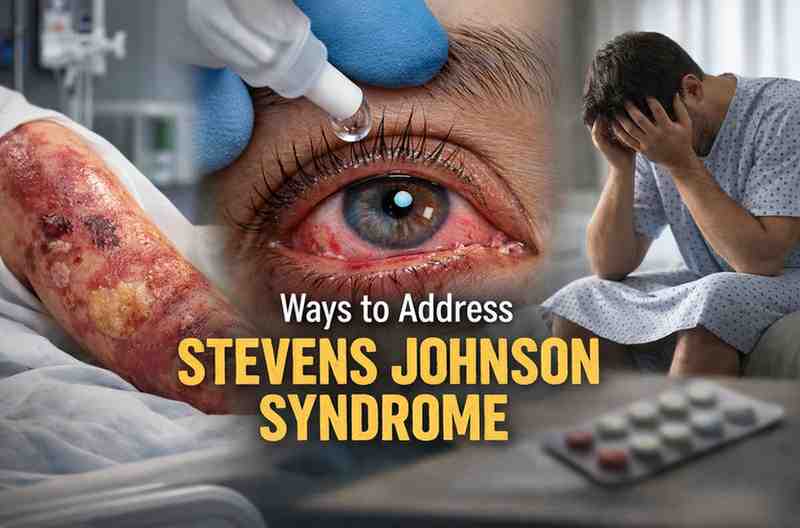
And when they start Googling “Ways to Address Steven Johnson Syndrome,” what they usually find is clinical language. Technical breakdowns. Lists of complications. Very little that feels grounded in what actually happens next.
From what I’ve seen — through close conversations with families, case reviews, and long follow-ups — the early days are chaos. The weeks after that? That’s where the real work begins.
Most people assume addressing Stevens Johnson Syndrome is about surviving the acute phase.
It is.
But that’s not the whole story.
Because once the hospital stabilizes you, you’re left with skin damage, pain, fear of medications, eye complications, emotional fallout, and a thousand small decisions no one really prepares you for.
So let’s talk about what actually helps. Not theory. Not textbook lines. Real patterns I’ve seen over and over.
First: Immediate Action Saves Skin — Literally
The number one thing almost everyone gets wrong at first?
They hesitate.
They think it’s just a rash. Or an allergy that will pass.
I’ve seen people wait 48 hours. Sometimes longer.
With Stevens Johnson Syndrome (SJS), time matters.
The first and most critical step is immediate discontinuation of the triggering medication.
Almost every case I’ve seen traced back to:
-
Antibiotics (especially sulfonamides)
-
Anti-seizure medications
-
Certain pain relievers
-
Allopurinol
-
Some newer targeted drugs
And here’s what surprised me after watching so many cases unfold:
The faster the drug is stopped, the better the skin recovery trajectory tends to be.
Not perfect. Not guaranteed.
But noticeably better.
If SJS is even suspected:
-
Go to the ER.
-
Don’t “wait and see.”
-
Don’t self-medicate.
This is not the time for home remedies.
Hospital Care: It’s More Like Burn Treatment Than Rash Treatment
Most people don’t expect this.
But from what I’ve seen, Stevens Johnson Syndrome is often managed in burn units.
Because the skin loss behaves similarly.
Key patterns that consistently improve outcomes:
-
Fluid management — dehydration is common and dangerous.
-
Wound care — gentle, sterile dressing changes.
-
Pain control — real → pain control, not minimal dosing.
-
Nutritional support — protein intake becomes critical.
Almost everyone I’ve seen struggle early had one of two issues:
-
Inadequate hydration
-
Delayed specialist involvement
Early dermatology and ophthalmology consultations change outcomes. Especially for eyes.
Which brings me to something people underestimate.
Eyes: The Complication That Lingers
I didn’t expect this to be such a common issue.
But almost everyone I’ve followed long-term had some level of eye involvement.
Dryness.
Scarring.
Light sensitivity.
Chronic irritation.
Ways to address this early:
-
Daily preservative-free lubricating drops
-
Frequent ophthalmology follow-ups
-
Protective eyewear outdoors
-
Aggressive early treatment of inflammation
The people who skip consistent eye care? They often regret it months later.
This part requires patience. And consistency. No one loves doing eye drops 8 times a day.
But I’ve seen the difference it makes.
What Happens After Discharge (This Is Where Most Feel Lost)
Hospital discharge feels like relief →.
Then reality hits.
Now you’re home. Skin is fragile. Energy is low. Fear is high.
Here’s what consistently works during recovery at home:
1. Gentle Skin Routine Only
Almost everyone I’ve seen mess this up at first tries to “speed healing.”
They use:
-
Strong antiseptics
-
Herbal pastes
-
Essential oils
-
Over-the-counter steroid creams without supervision
This usually backfires.
Better approach:
-
Mild fragrance-free cleanser
-
Bland emollients (petrolatum-based products work surprisingly well)
-
Avoiding friction
-
Loose cotton clothing
Skin needs time. Not experimentation.
2. Emotional Processing Is Not Optional
This is something no one prepares patients for.
SJS is traumatic.
I’ve seen people develop:
-
Medication anxiety
-
Health-related panic
-
Body image distress
-
PTSD symptoms
Especially those who required ICU care.
Ways to address this part:
-
Trauma-informed therapy
-
Peer support groups
-
Gradual reintroduction to medical environments
Most people try to “be strong” and ignore it.
That rarely works long-term.
3. Medication Fear: The Long-Term Battle
After SJS, many people become terrified of taking any medication again.
And honestly? I understand it.
But total avoidance can become dangerous too.
What works better:
-
Detailed allergy documentation
-
MedicAlert bracelet
-
Pharmacogenetic testing (in some cases)
-
Careful risk-benefit discussions with physicians
This reduces anxiety because decisions feel controlled — not random.
How Long Does Recovery Actually Take?
People hate this answer.
It depends.
From what I’ve observed:
-
Acute skin healing: 2–6 weeks
-
Fatigue: 1–3 months
-
Eye stabilization: several months
-
Emotional recovery: highly variable
Most people expect to “bounce back” in 3 weeks.
That expectation causes frustration →.
Realistic recovery looks like:
-
Two steps forward
-
One setback
-
Slow rebuilding
And that’s normal.
Common Mistakes That Slow Recovery
Almost everyone I’ve seen struggle with this does at least one of these:
-
Returning to normal activity too fast
-
Ignoring eye symptoms
-
Skipping follow-up appointments
-
Trying alternative remedies too early
-
Not eating enough protein during healing
Recovery is not just about skin closing.
It’s about inflammation calming down internally too.
Is It Worth Pursuing Aggressive Treatment?
Short answer: yes.
But aggressive doesn’t mean experimental.
It means:
-
Early hospitalization
-
Specialist involvement
-
Close monitoring
-
Documented medication review
Some families hesitate because hospital care is overwhelming.
But from what I’ve seen, delayed escalation usually leads to longer suffering.
Who Should Be Extra Cautious?
Certain populations face higher risks:
-
People with previous severe drug reactions
-
Individuals with specific genetic markers (like HLA-B*1502 in certain ethnic groups)
-
Patients starting high-risk medications
-
Those with autoimmune disorders
If you fall into one of these groups, medication discussions should never be casual.
FAQ (Straight Answers People Actually Want)
What triggers Stevens Johnson Syndrome most often?
Medications. Especially certain antibiotics and anti-seizure drugs.
Can SJS go away on its own?
No. It requires immediate medical evaluation.
Will my skin be permanently damaged?
Sometimes. But early care improves cosmetic outcomes significantly.
Can it happen again?
Yes — if re-exposed to the trigger.
Objections I Hear All the Time
“I think it’s just a mild allergy.”
I’ve seen that assumption turn into ICU admission.
“It’s too expensive to go to the hospital.”
Delayed care usually costs more — physically and financially.
“I’ll try natural treatments first.”
This is not that situation.
Reality Check (No Sugarcoating)
Even with the best care:
-
Scarring can happen.
-
Pigment changes can linger.
-
Eyes may require lifelong care.
-
Emotional recovery can be slow.
This isn’t magic.
It’s management.
But I’ve seen people rebuild their confidence and health with structured care.
Practical Takeaways
If I had to simplify the most effective ways to address Steven Johnson Syndrome:
-
Stop the trigger immediately.
-
Seek urgent medical care.
-
Prioritize eye monitoring.
-
Keep skin → care simple.
-
Document everything.
-
Don’t ignore mental health.
-
Adjust expectations about recovery speed.
And emotionally?
Expect frustration.
Expect fear.
Expect progress to feel slow.
But also expect small wins.
First shower without pain.
First day back outside.
First normal lab result.
Those matter.
I won’t pretend this is easy.
I’ve sat with families who thought they’d never feel normal again. I’ve also watched those same people slowly regain stability.
So no — there’s no quick fix.
But when approached deliberately, patiently, and with the right medical support, Stevens Johnson Syndrome is survivable. And recovery — even if imperfect — is absolutely possible.
Sometimes the biggest shift isn’t the skin healing.
It’s realizing you’re not powerless anymore.