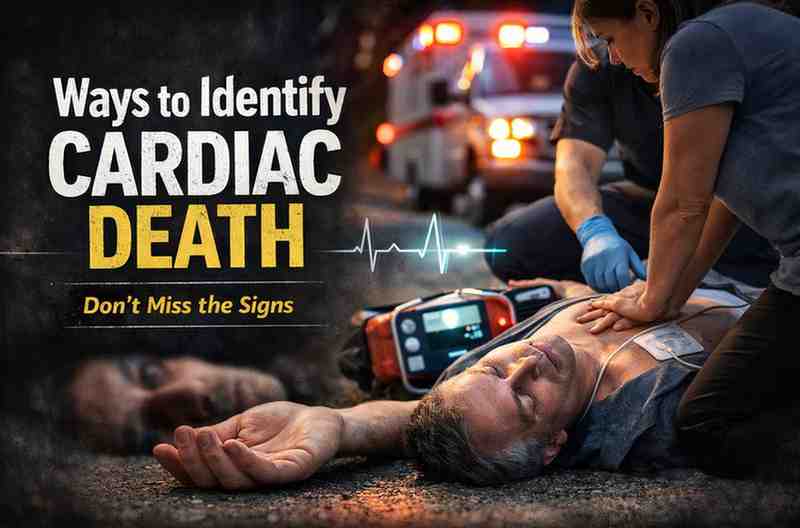
Ways to Identify Cardiac Death: 9 Hard Truths Most Families Learn Too Late (And a Little Relief)

Ways To Identify Cardiac Death 9 Hard Truths Most Families Learn Too Late And A Little Relief 1
Ways to Identify Cardiac Death 9 Hard Truths Most Families Learn Too Late And a Little Relief

I can’t tell you how many times I’ve watched families freeze in that first minute.

Someone collapses. There’s confusion. Someone says, “Maybe they just fainted.” Another person insists, “Give it a second.” And those seconds stretch.

When people search for Ways to Identify Cardiac Death, they’re usually not curious. They’re scared. Or they’ve already been through something and don’t want to feel that helpless again.

From what I’ve seen—across ER nurses, EMTs, families who’ve lost someone suddenly, and even people who survived cardiac arrest—most people misunderstand what cardiac death actually looks like. It’s not always dramatic. It’s not always loud. Sometimes it’s frighteningly quiet.

Let’s walk through this in a grounded way. Not theory. Not textbook definitions. Real-world patterns.


First, What People Mean by “Cardiac Death”

In everyday language, most people mean sudden cardiac arrest leading to death.

Cardiac death typically happens when:

  • The heart suddenly stops beating effectively

  • Blood stops circulating

  • Oxygen stops reaching the brain

  • Brain injury begins within 4–6 minutes without CPR

Important distinction most people miss:

  • Heart attack = blocked blood flow to the heart muscle

  • Cardiac arrest = electrical malfunction; heart stops pumping

From what I’ve seen, almost everyone uses those interchangeably. That confusion alone delays action.


The Most Reliable Immediate Signs (When It’s Happening Now)

If someone collapses and you’re trying to determine whether this is cardiac arrest (which can quickly lead to cardiac death without intervention), these are the signs that matter most in real life:

1. Sudden Collapse

No warning. No slow slide to the floor.

They were standing. Talking. Walking.

Then down.

This honestly surprises people. They expect clutching the chest first. Sometimes that happens. Sometimes it doesn’t.

2. No Responsiveness

You shake them. You shout their name.

Nothing.

Not groggy. Not confused.

Just… no response.

Most people I’ve worked with mess this up at first. They assume the person is “in deep sleep” or “coming around.” In true cardiac arrest, there’s no meaningful response.

3. No Normal Breathing

This is the one almost everyone gets wrong.

They look for dramatic choking or silence.

Instead, what often happens is agonal breathing — irregular gasping sounds. It looks like they’re trying to breathe.

Families say:
“But they were breathing!”

No. They were gasping.

Agonal breathing is not effective breathing. It’s a brainstem reflex.

If the breathing is:

  • Gasping

  • Snorting

  • Irregular and far apart

Treat it like cardiac arrest.

4. No Pulse (But Don’t Waste Time Searching Forever)

Technically, absence of pulse confirms cardiac arrest.

But here’s the honest truth: untrained people waste critical time trying to find it.

EMTs I’ve spoken to consistently say:
If they’re unresponsive and not breathing normally — start CPR. Don’t debate.

Time matters more than perfection.


What Cardiac Death Looks Like When It’s Already Occurred

Now, if someone has been unresponsive for longer, and death has already occurred, these are the signs medical professionals look for:

  • No pulse

  • No breathing

  • Fixed, dilated pupils

  • Skin turning pale or bluish

  • Cooling of the body

  • Rigor mortis (later stage)

  • Livor mortis (purplish pooling of blood)

But I want to be very clear:

In the U.S., only medical professionals legally declare death in most settings.

Families should call 911 immediately if there’s any doubt.

I’ve seen families hesitate because they’re unsure. That hesitation is something many regret.


What Usually Happens in the First 5 Minutes (Patterns I Keep Seeing)

Here’s what I’ve repeatedly observed from stories:

  1. Person collapses.

  2. Someone assumes fainting.

  3. They wait 30–90 seconds.

  4. Panic sets in.

  5. Someone searches symptoms on their phone.

  6. CPR starts too late — or not at all.

Almost everyone I’ve seen struggle with this does this one thing wrong:

They hesitate because they don’t want to overreact.

In cardiac arrest, overreacting saves lives.

Underreacting costs them.


Early Warning Signs Before Sudden Cardiac Death

Now let’s talk prevention, because most people searching this don’t want to identify death — they want to avoid it.

From what I’ve seen across cardiology consult cases and survivor stories, these patterns show up repeatedly before sudden cardiac events:

Recurring Chest Discomfort

  • Pressure

  • Squeezing

  • Tightness

  • Not always sharp pain

Men tend to ignore it.
Women often describe it as fatigue or pressure.

Unexplained Shortness of Breath

Especially during mild activity.

People dismiss this as aging. Stress. Weight gain.

Sometimes it is.

Sometimes it’s not.

Fainting (Syncope)

This one gets overlooked.

Unexplained fainting — especially during exertion — should never be brushed off.

Heart Palpitations

Racing heart.
Fluttering.
Skipped beats.

Most are benign.

Some are electrical instability warnings.

Severe Fatigue

The kind that feels different.
Heavy. Draining.

Women especially report this before major cardiac events.

I didn’t expect this to be such a common issue until I started hearing the same story over and over.


How Long Does It Take?

If the heart stops completely:

  • Brain injury begins in 4–6 minutes

  • Irreversible damage often begins after 10 minutes without CPR

  • Survival drops dramatically each minute without defibrillation

With immediate CPR + AED use?

Survival rates increase significantly.

The difference between 1 minute and 5 minutes is not small.

It’s everything.


What Actually Improves Survival (Consistently)

From patterns seen across emergency response outcomes:

  • Immediate 911 call

  • Bystander CPR

  • Use of AED within first few minutes

  • Quick EMS response

People assume CPR is complicated.

It’s not.

Push hard.
Push fast.
Center of chest.
100–120 compressions per minute.

I’ve watched people regret not trying more than people regret trying incorrectly.


Common Mistakes That Delay Action

Let’s be blunt here.

These are the repeat offenders:

  • Waiting to see if they “wake up”

  • Misinterpreting gasping as breathing

  • Being afraid of breaking ribs during CPR

  • Searching online instead of acting

  • Assuming young people “can’t have cardiac arrest”

That last one? Dangerous myth.

Sudden cardiac death can happen in:

  • Athletes

  • Young adults

  • People with undiagnosed heart conditions

Rare? Yes.

Impossible? No.


FAQ: Quick, Direct Answers

How can you tell if someone has died from cardiac arrest?

Unresponsiveness, no normal breathing, no pulse. Only medical professionals officially declare death.

Is gasping a sign they’re still alive?

Agonal gasping can occur during cardiac arrest. It is not normal breathing. Start CPR.

Can someone survive cardiac arrest?

Yes — if CPR and defibrillation happen quickly.

Is cardiac death always painful?

Not always. Some people collapse without warning.


Objections I Hear All the Time

“I don’t want to do CPR wrong.”

You probably won’t.

Doing something is almost always better than doing nothing.

“What if they’re just fainting?”

If they’re breathing normally and responsive, it’s likely fainting.

If they’re not responsive and not breathing normally — treat it as cardiac arrest.

“Is it really worth learning CPR?”

Yes.

I’ve seen people save coworkers.
Spouses.
Strangers in parking lots.

The confidence alone changes how people move through the world.


Reality Check: This Isn’t Always Preventable

Here’s where I won’t sugarcoat it.

Even with fast response:

  • Some people don’t survive.

  • Some underlying heart conditions are silent.

  • Some events are catastrophic.

Medicine is powerful.

It’s not omnipotent.

That’s hard to sit with. I know.


Who Should Take This Extra Seriously

  • People with known heart disease

  • Family history of sudden cardiac death

  • High blood pressure

  • Diabetes

  • Smokers

  • Obesity

  • Athletes with fainting episodes

  • Anyone over 40 ignoring recurring symptoms

And honestly?

Anyone living in the United States where heart disease remains a leading cause of death.


Practical Takeaways (If You Want Something Actionable)

Here’s what I tell people plainly:

  1. Learn CPR.
    A 2-hour class can change outcomes forever.

  2. Know where AEDs are in your workplace or gym.

  3. Don’t ignore chest discomfort that feels “off.”

  4. Treat unexplained fainting seriously.

  5. If someone collapses and isn’t breathing normally — act immediately.

What to expect emotionally?

Panic.
Adrenaline.
Second-guessing.

That’s normal.

Patience in prevention looks like:

  • Getting regular checkups

  • Not dismissing symptoms

  • Having uncomfortable conversations about family history

It’s not dramatic. It’s boring, actually.

But boring is protective.


Still — none of this makes those moments easy.

I’ve watched people replay those first 60 seconds in their heads for years. Wondering if they missed something. If they should’ve moved faster.

So no — this isn’t magic knowledge that removes risk.

But from what I’ve seen, the people who at least understand the real signs of cardiac arrest don’t freeze the same way. They act faster. They feel less helpless.

And sometimes that shift alone changes the ending.

Sometimes that’s the real win.
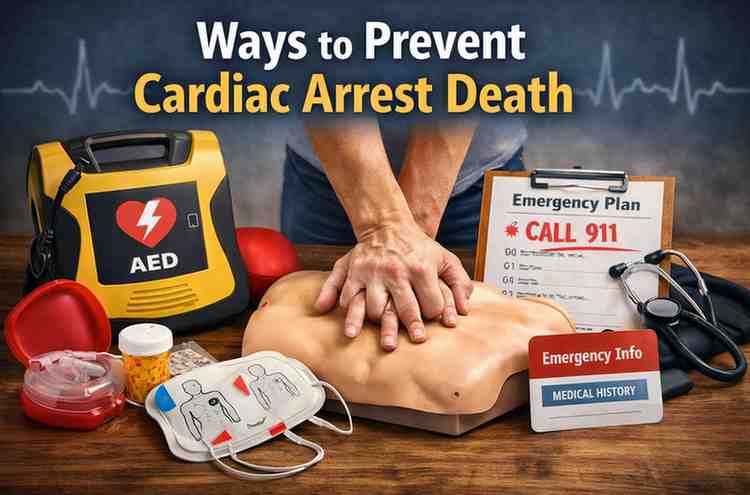
Ways to Prevent Cardiac Arrest Death: 9 Real-World Lessons That Offer Hope (and a Few Hard Truths)

Ways To Prevent Cardiac Arrest Death 9 Real World Lessons That Offer Hope And A Few Hard Truths 1
Ways to Prevent Cardiac Arrest Death 9 Real World Lessons That Offer Hope and a Few Hard Truths

Honestly, most people I’ve watched run into this topic because something scared them. A neighbor collapsed at a bus stop. A cousin in his 40s didn’t wake up. Or a parent had a “close call” and suddenly everyone’s group chat is full of panic and half-baked advice. I’ve been pulled into enough of those conversations—sitting with families in hospital corridors, helping teams review what went wrong, coaching bystanders after the fact—that the phrase Ways to Prevent Cardiac Arrest Death stopped feeling abstract. It’s messy. It’s emotional. And from what I’ve seen, people don’t fail because they don’t care. They fail because they’re trying to do this alone, late, and with bad information.

I didn’t expect how often the same mistakes show up across totally different families. Different cities. Different incomes. Same patterns. The good news? The stuff that actually helps is surprisingly repeatable. The bad news? It’s rarely the glamorous advice people want to hear.


Why people start caring about this (and what they usually misunderstand)

From what I’ve seen, people come into this with one of three mindsets:

  • Fear mode: “This could happen to us. What can we do right now?”

  • Guilt mode: “If only we had known…”

  • Control mode: “Give me the checklist and I’ll fix it.”

All three are human. All three can backfire.

What most people misunderstand at first:

  • They mix up heart attack and cardiac arrest.
    Not the same thing. A heart attack is a plumbing problem (blocked blood flow). Cardiac arrest is an electrical failure (the heart suddenly stops beating effectively). The prevention paths overlap, but the emergency response is different.

  • They think prevention is only about the person “at risk.”
    Almost everyone I’ve seen struggle with this does this one thing wrong: they focus only on the patient’s lifestyle and ignore the environment around them. Bystanders, AED access, training, response time—those decide outcomes more often than perfect diets.

  • They expect guarantees.
    There aren’t any. That’s uncomfortable. It’s also honest.


What actually moves the needle (patterns I’ve seen across real cases)

Here’s what consistently changes outcomes in the real world. Not theory. Not slogans. The boring, repeatable stuff.

1) Early response beats perfect prevention

This honestly surprised me after watching so many people try to “optimize” health routines. The biggest difference between death and survival in sudden cardiac arrest is what happens in the first 3–5 minutes.

Patterns I’ve seen:

  • People collapse at home → family freezes → no CPR → no AED → terrible outcomes.

  • People collapse in gyms/airports/schools → someone starts CPR → AED used → real chance of survival.

What works:

  • At least one person in a household knowing hands-only CPR.

  • Knowing where the nearest AED is (workplace, apartment complex, gym).

  • Practicing the muscle memory once a year. Literally once.

What looks good on paper but fails in reality:

  • “We’ll Google it if it happens.”
    Under stress, people don’t Google. They freeze.


2) Risk screening isn’t about finding “perfect health”

Most people I’ve worked with mess this up at first. They think screening is about getting a gold star from a doctor. It’s not. It’s about surfacing hidden risk so you can plan around it.

Patterns that repeat:

  • Undiagnosed heart rhythm issues.

  • Silent heart disease in people who “feel fine.”

  • Family history that nobody took seriously.

What consistently helps:

  • If there’s family history of sudden death under 50 → push for cardiac evaluation.

  • If someone faints during exercise → don’t normalize it.

  • If palpitations come with dizziness → don’t brush it off.

Where expectations usually break:

  • Tests come back “normal,” and people assume zero risk.
    Normal results lower risk. They don’t erase it.


3) Bystander CPR training changes family outcomes

This one is painfully clear. Families who’ve taken a 1–2 hour CPR/AED class once every couple of years respond faster. Less panic. Fewer frozen moments.

Mini-story (seen too many versions of this):
A dad collapses at dinner. Son panics but remembers compressions. Mom runs for the AED from the lobby because someone had shown her where it was during a safety briefing. Paramedics arrive to a patient with a pulse. I didn’t expect this to be such a common issue until I watched how often the “we meant to take that class” families end up regretting it.

Simple routine I’ve seen work:

  • Pick one person per household to book CPR training.

  • Make it a family thing once every 2 years.

  • Walk the building once and locate AEDs. Take photos. Save locations.


4) Med adherence beats “biohacking” every time

This is where people chase shiny fixes.

What consistently works:

  • Taking prescribed heart meds as directed.

  • Following up when side effects happen instead of quitting quietly.

  • Using pill organizers or phone alarms.

What repeatedly fails:

  • Stopping meds because “I feel better now.”

  • Replacing meds with supplements.

  • Getting advice from TikTok cardiologists (no shade, but… come on).

Cause → effect → outcome:

  • Skipping meds → rhythm instability → higher arrest risk.

  • Consistent meds → stabilized rhythm → lower risk events.


5) Environment design saves lives when humans fail

People are unreliable in emergencies. Design around that.

From what I’ve seen:

  • Workplaces with visible AEDs + drills → faster response.

  • Buildings that hide AEDs behind locked doors → wasted minutes.

  • Homes with clear emergency plans → less chaos.

What to do (practical, not fancy):

  • Put emergency numbers on the fridge.

  • Share one simple plan: who calls 911, who starts CPR, who runs for AED.

  • If someone in the house is high-risk, keep the bedroom door unlocked at night.
    Sounds small. It’s not.


6) Lifestyle changes matter—but not the way people expect

Yes, sleep, movement, food, stress. All matter. But the pattern I’ve seen is people go extreme and then quit.

What consistently works:

  • Boring consistency.

  • 20–30 minutes of walking most days.

  • Sleep routines that are “good enough.”

  • Reducing smoking/alcohol rather than aiming for instant perfection.

What looks good on paper:

  • 30-day detoxes.

  • All-or-nothing fitness kicks.

This is where people burn out and quietly return to baseline.


7) ICDs and medical devices: life-saving, but emotionally heavy

Some folks who are high-risk get implantable cardioverter-defibrillators (ICDs). From what I’ve seen, this saves lives. Full stop.

But nobody prepares families for the emotional side:

  • Anxiety about shocks.

  • Fear of exercising.

  • Feeling “broken.”

Reality check:
Devices reduce risk. They don’t remove the emotional load. Support groups and counseling actually improve adherence and quality of life. Most people skip this part and then wonder why they’re miserable.


8) What people commonly get wrong at first

Quick hits, because I see these on repeat:

  • Waiting for symptoms before acting.

  • Thinking “this won’t happen to us.”

  • Overloading on information and doing nothing.

  • Not telling friends/teachers/coaches about risk.

  • Assuming ambulances arrive instantly. They don’t.


9) What experienced families would do differently (if they could rewind)

From what I’ve heard again and again:

  • “We would’ve learned CPR earlier.”

  • “We would’ve taken fainting seriously.”

  • “We would’ve told more people about the risk.”

  • “We would’ve put AED access on our radar.”

No one says, “I wish we had read more articles.”
They say, “I wish we had practiced.”


Short FAQ (People Also Ask–style)

How long does it take to see benefits from prevention steps?
Some things help immediately (CPR training, AED access). Lifestyle and medical management lower risk over months to years. This is layered protection, not a single switch.

Is it worth trying if risk feels low?
From what I’ve seen, yes. The cost of basic preparedness is low. The upside is massive. The regret of “we meant to” is heavy.

What if none of this works?
That’s the hardest part. Prevention reduces risk. It doesn’t erase it. The goal is better odds and faster response—not control over fate.

Who should avoid focusing on this?
People with severe health anxiety sometimes spiral into constant fear. If this is feeding panic, step back and talk to a professional. Preparedness should feel grounding, not paralyzing.


Objections I hear (and the honest answers)

“This is too much to think about.”
Yeah. It is. That’s why breaking it into tiny steps works. One CPR class. One AED walk-through. One doctor visit. Then stop.

“We’re young. This won’t happen to us.”
I’ve heard this from families where it did happen. Youth lowers risk. It doesn’t zero it out.

“Doctors didn’t say we’re high-risk.”
Great. Still prepare. Most sudden arrests don’t come with a warning label.

“I don’t want to scare my family.”
Frame it as preparedness, not doom. “Seatbelts for the heart,” basically.


Reality check (no hype, just what I’ve seen)

  • Results can be slow.

  • Behavior change is uneven.

  • People forget training if they don’t refresh it.

  • Some outcomes are still tragic despite doing “everything right.”

  • Preparedness reduces chaos. It doesn’t remove grief.

Still. I’ve watched enough people survive because someone nearby knew what to do. That part isn’t abstract to me anymore.


Practical takeaways (if you only do a few things)

Do this:

  • Learn hands-only CPR + AED use.

  • Find AEDs where you live/work/train.

  • Take fainting, palpitations, family history seriously.

  • Stick to prescribed heart meds.

  • Build one simple emergency plan at home.

Avoid this:

  • Waiting for “perfect timing.”

  • Quitting meds without medical advice.

  • Extreme lifestyle swings you can’t sustain.

  • Assuming someone else will act.

Expect emotionally:

  • Some fear at first.

  • Then a weird calm once you’re prepared.

  • Occasional backsliding. That’s normal.

What patience looks like in practice:

  • Re-doing CPR training when you forget.

  • Adjusting routines after you fall off.

  • Keeping conversations open with family.

No guarantees here. No miracle claims. Just better odds, and fewer frozen moments when seconds matter.

Still… I’ve watched enough families move from helpless to prepared that I don’t roll my eyes at this anymore. The shift alone—going from “we’d panic” to “we have a plan”—changes how people live. Sometimes that’s the real win.
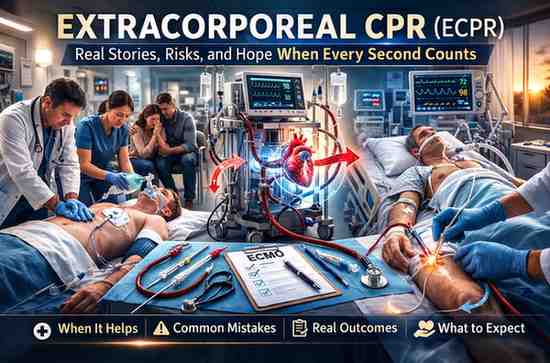
Extracorporeal CPR: 7 Hard Truths, Real Hope, and Why Families Feel So Frustrated

Extracorporeal Cpr 7 Hard Truths Real Hope And Why Families Feel So Frustrated 1
Extracorporeal CPR 7 Hard Truths Real Hope and Why Families Feel So Frustrated

Honestly, most families I’ve stood beside during a cardiac arrest thought CPR was the whole story. Press hard, breathe, wait for the ambulance, pray. Then the words extracorporeal CPR get mentioned in a rushed hallway conversation, and suddenly everything feels heavier. More technical. More hopeful. More terrifying.

From what I’ve seen through close connections in emergency care, real patient stories, and sitting in on case reviews, people don’t struggle because they don’t care. They struggle because no one prepares them for how messy the decision-making around extracorporeal CPR actually is. They hear “advanced life support” and think it’s a switch you flip. Then reality hits. Hard.

I’ve watched families go quiet when it doesn’t work. I’ve watched clinicians wrestle with the call to start it. And I’ve watched a few people walk out of the hospital who probably wouldn’t have without it. That mix of hope and frustration? It’s real. Let’s talk about what this actually looks like in practice.


What pushes people toward extracorporeal CPR in the first place

Most people I’ve been around don’t go looking for extracorporeal CPR. It shows up when everything else feels like it’s failing.

Patterns I keep seeing:

  • Sudden cardiac arrest in younger or otherwise healthy people.
    Families latch onto any option that isn’t “we’ve done all we can.”

  • Long resuscitations that aren’t getting traction.
    Standard CPR + meds + defibrillation just… stall.

  • Hospitals with ECMO programs.
    If the team has the gear and the reps, the option is more likely to be raised.

What people misunderstand at first:

  • They assume extracorporeal CPR is a stronger version of CPR.
    It’s not. It’s CPR plus a whole machine-based life support system (ECMO) that temporarily takes over heart/lung work.

  • They think starting it equals survival.
    I’ve seen that belief shatter more than once. Outcomes vary wildly.

This honestly surprised me after watching so many people try to wrap their heads around it. The tech sounds definitive. The reality is conditional.


The stuff that looks good on paper vs. what actually plays out

On paper:

  • Rapid cannulation

  • Oxygenated blood flowing

  • Time bought to fix the underlying problem

  • Neurologic recovery possible

In the room:

  • Delays happen

  • Anatomy isn’t always cooperative

  • Teams are human

  • The underlying cause might not be fixable

Most people I’ve worked with mess this up at first: they think the machine is the treatment. It’s not. It’s a bridge. A pause button. What happens after extracorporeal CPR starts is what decides outcomes.

What consistently works better than expected

From what I’ve seen across multiple cases:

  • Early activation.
    When teams consider extracorporeal CPR early (not as a last, last resort), outcomes look better.

  • Clear criteria.
    Programs with strict inclusion rules (age, downtime, cause of arrest) make fewer emotionally driven calls.

  • Rehearsed teams.
    Units that practice this regularly move faster. Speed matters.

  • Fast cause-finding.
    Blocked artery fixed quickly? Massive difference. Reversible cause = better odds.

What repeatedly fails

I didn’t expect this to be such a common issue:

  • Starting too late.
    Long low-flow time (CPR without adequate circulation) quietly stacks the odds against the brain.

  • Using it for the wrong patients.
    Terminal illness, severe trauma, prolonged downtime with no bystander CPR. The machine doesn’t fix those realities.

  • No plan after cannulation.
    If no one knows what problem they’re trying to reverse, extracorporeal CPR just prolongs uncertainty.


How long does it take to see if extracorporeal CPR “worked”?

People always ask this. It’s a fair question.

From what I’ve seen, timelines look like this (roughly, and it varies):

  • Minutes to hours:
    Did we get stable flow? Did oxygenation improve? Is there any return of pulse?

  • First 24–72 hours:
    Are organs waking up or failing? Any signs of neurologic responsiveness?

  • Days to weeks:
    Can the heart recover or be supported? Any meaningful neurologic recovery?

Here’s the part people don’t expect:
Sometimes it “works” in the narrow sense (circulation restored), but the brain injury is already too severe. That’s where families feel betrayed by hope. No one lied. The timeline just isn’t kind.


Common mistakes I’ve watched people make around this decision

Almost everyone I’ve seen struggle with this does this one thing wrong:
They treat the decision as purely emotional or purely technical. It’s both.

Other patterns:

  • Waiting for certainty.
    There is none. You’re choosing under fog.

  • Not asking about neurologic risk.
    Survival without meaningful recovery is a different outcome.

  • Assuming “more aggressive care” equals “more loving care.”
    Sometimes restraint is the harder, kinder call.

  • Not asking about the hospital’s experience.
    Volume and protocols matter. A lot.


Who extracorporeal CPR is usually not for (from what I’ve seen)

This part is uncomfortable, but skipping it causes harm.

Extracorporeal CPR tends to be a poor fit when:

  • Downtime before CPR was long and unwitnessed

  • Severe multi-system trauma is present

  • Advanced terminal illness is already there

  • No reversible cause is likely

  • The hospital rarely performs ECMO cannulations

I’ve watched teams gently explain this and families still hear, “We’re giving up.” That emotional gap is brutal.


Quick FAQ (People Also Ask–style)

Is extracorporeal CPR worth trying?
Sometimes. In carefully selected cases with early initiation and a reversible cause, I’ve seen it change outcomes. In others, it extends suffering without benefit. Worth it depends on context, not hope alone.

How successful is extracorporeal CPR?
Success rates vary by center and patient selection. Survival with good neurologic outcome is not guaranteed and is often in the minority. Programs with experience and strict criteria do better.

What are the biggest risks?
Bleeding, infection, limb ischemia, stroke, prolonged life support without recovery. These aren’t rare edge cases.

Can anyone get it in the U.S.?
No. It’s available in specialized centers. Access depends on location, resources, and protocols.

Does starting it late still help?
Occasionally, but late starts usually correlate with worse neurologic outcomes from what I’ve observed.


Objections I hear (and the grounded answers)

“This feels like false hope.”
Sometimes it is. Sometimes it isn’t. The honest frame I’ve seen help: it’s a chance to buy time, not a promise of recovery.

“Why would we put them through this?”
Because there’s a narrow window where outcomes can change. The key is knowing when you’re inside that window—and when you’re not.

“Doctors just want to try everything.”
Good teams don’t. They follow criteria. They talk about limits. If that’s not happening, ask directly.


Reality check nobody likes but everyone needs

This is the part where expectations usually break.

  • Extracorporeal CPR does not undo brain injury that already happened.

  • It does not fix non-reversible disease.

  • It often leads to long ICU stays with uncertain outcomes.

  • Families can feel relief and trauma afterward. Both can be true.

I’ve seen people blame themselves for choosing it. I’ve seen others regret not trying. There’s no emotionally clean ending here.


Practical takeaways (what I’d tell a close friend in this spot)

What to do:

  • Ask early if extracorporeal CPR is even an option at this hospital.

  • Ask what criteria they use to decide.

  • Ask what they think the best-case and worst-case outcomes look like.

  • Ask about neurologic risk. Not just survival.

What to avoid:

  • Don’t assume technology equals rescue.

  • Don’t wait for perfect certainty.

  • Don’t let guilt make the call for you.

What to expect emotionally:

  • Whiplash.

  • Hope mixed with dread.

  • Second-guessing, no matter what you choose.

What patience actually looks like:

  • Sitting in ICU rooms with no clear answers.

  • Measuring progress in tiny, uneven steps.

  • Accepting that “working” can still mean “not enough.”


Still. I’ve watched a few people come back to their families because extracorporeal CPR bought just enough time for the real fix to happen. I’ve also watched it stretch out goodbyes. Both are true. If you’re standing in this decision, you’re not weak for feeling torn. You’re human. And sometimes the bravest thing is asking the hard questions out loud, even when the answers are messy.

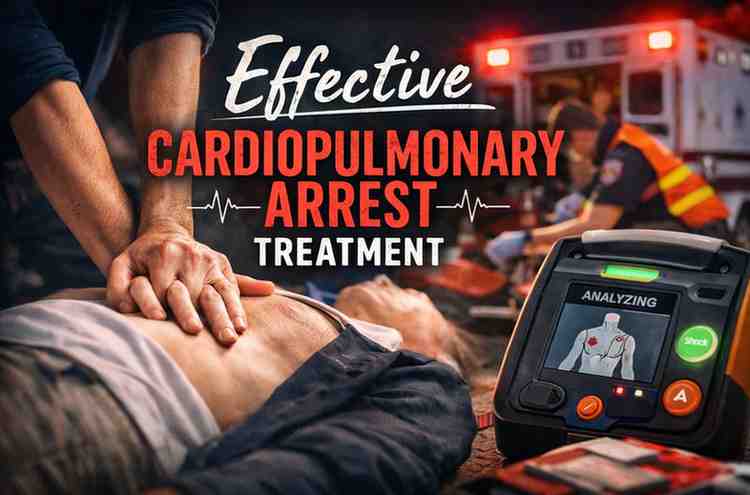
Effective Cardiopulmonary Arrest Treatment: 9 Critical Steps That Bring Real Hope in Chaos

Effective Cardiopulmonary Arrest Treatment 9 Critical Steps That Bring Real Hope In Chaos 1
Effective Cardiopulmonary Arrest Treatment 9 Critical Steps That Bring Real Hope in Chaos

Honestly, most people I’ve watched face cardiac emergencies don’t freeze because they don’t care. They freeze because they’re overwhelmed.

I’ve stood next to family members who thought cardiopulmonary arrest meant “heart attack.” I’ve watched coworkers argue over whether to move someone. I’ve seen trained staff hesitate because they were second-guessing protocol.

And here’s the hard truth: effective cardiopulmonary arrest treatment isn’t complicated in theory.

But in real life? It’s loud. Emotional. Fast. And seconds disappear while people debate.

From what I’ve seen over and over again — the difference between chaos and survival usually comes down to whether someone understands what to do before it happens.

Let’s slow this down and talk about what actually works.


What Cardiopulmonary Arrest Really Means (And Why People Misread It)

Cardiopulmonary arrest is not the same as a heart attack.

It’s when:

  • The heart stops pumping effectively.

  • The person stops breathing normally.

  • Blood flow to the brain stops.

No pulse. No effective breathing. Unresponsive.

And here’s where most people I’ve worked with mess this up at first:

They look for dramatic signs.

But in real cases, it’s often:

  • Sudden collapse

  • Gasping or agonal breathing

  • No response when shaken

  • No normal breathing

That gasping? People mistake it for life.

It isn’t.

This honestly surprised me after watching so many people try to “wait and see.” Waiting is the mistake.


The 9 Steps I’ve Seen Save Lives (When Done Fast)

These are not theoretical steps. These are the patterns I’ve seen consistently work in real emergencies.

1. Recognize It Immediately

Don’t overthink it.

If someone:

  • Collapses

  • Isn’t responsive

  • Isn’t breathing normally

Treat it as cardiopulmonary arrest.

Almost everyone I’ve seen struggle with this does this one thing wrong: they try to diagnose instead of act.

Seconds matter more than certainty.


2. Call 911 Immediately (United States Protocol)

In the U.S., emergency response systems are built for speed — but only if activated early.

Call 911.
Put it on speaker.
Start CPR while dispatch guides you.

I’ve watched dispatchers coach panicked family members through compressions in real time. It works.

But only if you call early.


3. Start High-Quality CPR

This is the core of effective cardiopulmonary arrest treatment.

Chest compressions:

  • Center of chest

  • 100–120 compressions per minute

  • 2–2.4 inches deep

  • Full recoil between pushes

If untrained, do hands-only CPR.

I didn’t expect this to be such a common issue, but people push too softly. Or they stop too often.

You will feel like you’re pushing too hard.

You’re probably not.

Broken ribs are survivable.

Brain damage from no oxygen is not.


4. Use an AED As Soon As Possible

Automated External Defibrillators (AEDs) are everywhere now:

  • Airports

  • Gyms

  • Schools

  • Office buildings

  • Shopping centers

And almost everyone I’ve seen is afraid to use one.

They’re designed for non-medical people.

Open it.
Turn it on.
Follow the voice prompts.

It will not shock unless needed.

This honestly surprised me after watching so many bystanders hesitate — the machine does most of the thinking for you.


5. Minimize Interruptions

Here’s something that looks small but changes outcomes.

Stopping compressions:

  • To reposition

  • To check pulse repeatedly

  • To argue

Every pause drops blood flow.

Experienced responders are almost obsessive about keeping compressions going.

That pattern shows up repeatedly in survival cases.


6. Rotate Compressors Every 2 Minutes

Fatigue happens fast.

I’ve seen strong athletes give high-quality compressions for about 90 seconds before depth drops without them realizing it.

Switch every 2 minutes if possible.

Quality over pride.


7. Advanced Care (EMS & Hospital)

Once EMS arrives, treatment may include:

  • Advanced airway management

  • Medications like epinephrine

  • Cardiac monitoring

  • Defibrillation

  • Rapid transport

In-hospital, they may initiate:

  • Targeted temperature management

  • Cardiac catheterization

  • Intensive monitoring

But here’s something people don’t expect:

Survival often depends more on the first 3–5 minutes than the advanced hospital care later.

That window is everything.


Why People Search for “Effective Cardiopulmonary Arrest Treatment”

From what I’ve seen, people look this up for three reasons:

  1. They witnessed an arrest and feel shaken.

  2. They have a high-risk family member.

  3. They want to be prepared but feel unsure.

And underneath all of that?

Fear.

“What if I freeze?”
“What if I do it wrong?”
“What if I make it worse?”

Most people I’ve worked with carry quiet guilt even if they acted correctly.

That emotional weight is real.


Common Mistakes I Keep Seeing

Let’s call these out clearly.

Waiting for certainty

If they’re not responsive and not breathing normally, act.

Shallow compressions

Too soft. Too hesitant.

Stopping too often

Checking pulse repeatedly kills momentum.

Not using AED

Fear of harming the patient.

Assuming younger people don’t arrest

Sudden cardiac arrest happens across ages.

Almost everyone I’ve seen struggle with this thought it “probably isn’t that serious.”

It usually is.


How Long Does It Take to See Results?

This question feels strange in this context, but I’ve heard it.

CPR buys time.

Brain injury can begin within 4–6 minutes without oxygen.

Early CPR can double or triple survival odds.

Defibrillation within minutes drastically improves outcomes.

But — and this matters — not every case results in survival.

That’s the part people don’t talk about enough.

Even perfect response doesn’t guarantee recovery.

And that’s not always a failure of treatment.


Who Should Avoid Taking This Lightly

This approach is not optional if you’re:

  • A caregiver

  • A coach

  • A teacher

  • A gym staff member

  • Living with someone with heart disease

Still, I’ve seen people assume:
“I’ll figure it out if it happens.”

That’s rarely how panic works.

Training changes reaction speed. Dramatically.


Objections I’ve Heard (And What I’ve Observed)

“I’m afraid I’ll break ribs.”

You might.

I’ve seen it happen.

But survival outweighs bruising or fractures.

“I’m not certified.”

Hands-only CPR saves lives.

Certification improves confidence. But action matters more.

“What if it’s not really cardiac arrest?”

If they’re responsive and breathing normally, CPR won’t be indicated.

If they’re not — delaying is the bigger risk.


Quick FAQ (People Also Ask)

What is the most effective treatment for cardiopulmonary arrest?

Immediate high-quality CPR and early defibrillation with an AED are the most effective early treatments.

Is CPR alone enough?

CPR maintains blood flow. Defibrillation is often needed to restore rhythm.

Can someone survive after 10 minutes without oxygen?

Rare, but possible with immediate CPR. Survival odds drop significantly after 4–6 minutes without circulation.

Should you always use an AED?

If available, yes. It analyzes and only shocks if necessary.


Reality Check: This Isn’t Comfortable

CPR is physical.
It’s intense.
It’s emotionally loud.

I’ve seen people shake afterward.

Even trained professionals.

You don’t walk away from these moments unchanged.

But I’ve also seen families grateful that someone tried.

That someone acted.

That someone didn’t stand there frozen.


Is It Worth Learning This?

If you’re wondering whether learning effective cardiopulmonary arrest treatment is worth it — yes.

Not because you’ll use it every day.

But because when it’s needed, nothing else matters.

I’ve seen untrained bystanders save lives.

I’ve seen trained professionals hesitate.

Preparation changes that.

And it doesn’t take years to learn. A short CPR certification class can completely change your reaction speed.


Practical Takeaways

If I had to distill this from everything I’ve observed:

  • Don’t wait for certainty.

  • Call 911 immediately.

  • Start compressions fast and push hard.

  • Use the AED without fear.

  • Minimize pauses.

  • Rotate compressors.

  • Accept that outcomes vary.

Emotionally?

Expect adrenaline.
Expect doubt.
Expect afterward replaying it in your head.

That’s normal.

Patience in this context means understanding that survival is influenced by timing, underlying health, and pure unpredictability.

No guarantees.

But action dramatically improves odds.


I won’t pretend this is easy.

It’s not.

Still — from what I’ve seen — the people who prepare ahead of time don’t eliminate fear.

They just act faster despite it.

And sometimes, that shift alone changes everything.

So no — this isn’t magic. But I’ve watched enough real situations unfold to know that effective cardiopulmonary arrest treatment isn’t about perfection.

It’s about seconds.

And someone deciding to move instead of freeze.

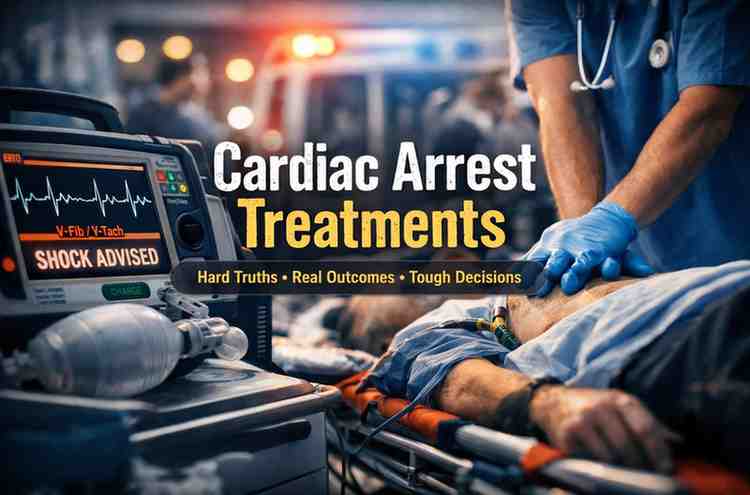
Cardiac Arrest Treatments: 9 Hard Truths That Bring Real Relief

Cardiac Arrest Treatments 9 Hard Truths That Bring Real Relief 1
Cardiac Arrest Treatments 9 Hard Truths That Bring Real Relief

Honestly, most people I’ve watched collide with cardiac arrest treatments don’t struggle with the science first. They struggle with the chaos around it.

The sirens.
The waiting rooms.
The blur of acronyms no one slows down to explain.

I’ve sat next to family members who nodded along to doctors, then looked at me later and said, “I didn’t actually understand any of that. Is this even working?” I’ve watched people cling to one promising-sounding intervention, only to feel crushed when the outcome didn’t match the hope they’d quietly built around it.

From what I’ve seen, the frustration isn’t about effort. It’s about not knowing what matters in cardiac arrest treatments, what’s just noise, and what to expect emotionally while you’re in the middle of it.

Let me walk you through what tends to help in the real world. Not the brochure version. The lived-in version I’ve picked up from close connections, hospital corridors, and too many late-night conversations with people trying to make sense of outcomes they didn’t choose.


Why people chase cardiac arrest treatments so hard (and why it makes sense)

Almost everyone I’ve seen step into this space is in survival mode. You’re not shopping for a wellness routine. You’re trying to keep someone alive. Or help them come back to themselves.

The reasons people dig into cardiac arrest treatments usually look like this:

  • Someone they love collapsed without warning

  • They were told “every minute matters” and now time feels like a threat

  • They’re haunted by “What if we’d done X sooner?”

  • They’re overwhelmed by options and terrified of choosing wrong

That emotional cocktail changes how people hear information. Even smart, grounded folks start over-weighting anything that sounds decisive or advanced.

This honestly surprised me after watching so many people try to “optimize” outcomes. They’d fixate on one procedure or one drug, thinking that’s the lever that decides everything.

But cardiac arrest treatments don’t work like a single switch.

They’re a chain.
Break one link, the outcome shifts.


The chain most people misunderstand

Here’s the pattern I’ve seen again and again:

People assume the hospital phase is where everything important happens.

In reality, outcomes are shaped long before that.

From what I’ve seen, the chain that actually moves the needle looks more like:

  • Immediate recognition
    Someone notices collapse and doesn’t wait it out.

  • Early CPR
    Even imperfect CPR buys the brain time.

  • Fast defibrillation (when appropriate)
    This is where rhythm matters. Timing is brutal here.

  • Rapid EMS response
    Good handoff. Clear timeline.

  • Post–cardiac arrest care in the hospital
    Cooling protocols (when indicated), careful oxygenation, monitoring for brain injury, treating the underlying cause.

Most people I’ve worked with mess this up at first by over-focusing on the last step.

They think, “If the ICU is advanced enough, that should fix it.”

But the ICU can’t undo minutes without oxygen. It can only work with what arrives.

That’s not blame.
It’s reality.

And it changes how you emotionally process what “treatment” even means.


What consistently works (even when it’s not perfect)

There are some boring-sounding things that quietly carry outcomes more than flashy interventions.

From what I’ve seen:

  • Bystander CPR matters more than people want to admit
    I’ve watched families beat themselves up because CPR “wasn’t perfect.”
    It didn’t need to be.
    The act of starting at all is the win.

  • Early defibrillation saves lives when the rhythm is shockable
    AEDs in public places look like props until the day they’re not.
    The people who survive long-term often crossed paths with one early.

  • Clear timelines help doctors make better calls
    When EMS or family can say roughly how long the person was down, treatment decisions get sharper.
    Vague timelines lead to cautious but sometimes less targeted care.

  • Post-arrest care done slowly and thoughtfully
    This part looks passive from the outside.
    Families expect “more action.”
    But careful temperature management, oxygen levels, blood pressure control—this is where brains get protected or injured.

What consistently works is boring discipline across the chain.

Not miracles.


What looks good on paper but disappoints in real life

I didn’t expect this to be such a common issue, but here we are:

People get emotionally attached to individual interventions.

You’ll hear things like:

  • “If we just get hypothermia therapy, he’ll wake up.”

  • “Once they place the stent, she’ll be fine.”

  • “The new protocol is supposed to change outcomes.”

Those things can help.
They don’t override the chain.

From what I’ve seen fail people emotionally:

  • Treating one procedure like a guarantee

  • Assuming newer always means better

  • Ignoring the underlying cause of the arrest

  • Expecting neurological recovery to be quick or linear

Almost everyone I’ve seen struggle with this does this one thing wrong:

They mentally skip the recovery phase.

They expect a clear “better or worse” answer in days.
Recovery from brain injury doesn’t respect timelines.


The part nobody prepares you for: emotional whiplash

This isn’t talked about enough.

One day you’re hopeful.
The next day you’re numb.
Then someone says, “There’s a small improvement,” and suddenly you’re planning the future again.

From what I’ve seen, cardiac arrest treatments create emotional oscillation:

  • Early hope when machines stabilize things

  • Crushing doubt when neurologic exams are slow

  • Micro-wins that feel huge

  • Setbacks that feel personal, even though they aren’t

People often ask, “Is this normal?”
Yes. Painfully so.

What helps a little:

  • Writing down what doctors actually say

  • Asking one grounded person to help translate

  • Not attaching meaning to every single data point

Still.
It’s messy.
No clean emotional arc here.


How long does it take to know if treatments are working?

This is one of the most common questions I hear.

Short answer: longer than people expect.

From what I’ve seen:

  • Immediate survival is decided in minutes

  • Organ stability is assessed over hours to days

  • Neurologic outcome unfolds over days to weeks

  • Functional recovery can take months

The hardest part is the middle phase.

That gray zone where:

  • The heart is stable

  • The person is alive

  • The brain’s future is uncertain

People want certainty in that window.
There isn’t much to give.

What usually helps emotionally is reframing “working” to mean:

  • Are complications being prevented?

  • Is the underlying cause being treated?

  • Is there any trend, even subtle?


Common mistakes I’ve watched slow outcomes

This part is uncomfortable, but it comes up a lot.

Not blame.
Patterns.

  • Delaying CPR because of fear of doing it wrong
    Doing something imperfect beats doing nothing.

  • Waiting too long to call emergency services
    People hesitate.
    That hesitation costs time the brain doesn’t have.

  • Over-trusting online miracle stories
    Survivorship bias is loud.
    Quiet outcomes don’t go viral.

  • Ignoring rehab
    Once someone survives, families assume the crisis is over.
    Recovery is its own battle.

  • Burning out caregivers
    Exhausted people make worse decisions.
    I’ve seen this derail otherwise solid plans.


Who should avoid certain approaches (or at least slow down)

This isn’t one-size-fits-all.

From what I’ve seen, some people struggle with parts of cardiac arrest treatments because:

  • They want fast emotional closure

  • They can’t tolerate uncertainty

  • They equate “more intervention” with “more care”

  • They don’t have support to handle long recovery phases

This approach will feel brutal if:

  • You need guarantees to feel okay

  • You want simple rules

  • You expect linear improvement

  • You’re doing this alone without backup

That doesn’t make you weak.
It just means you’ll need more support than you think.


Objections I hear all the time (and the honest answer)

“Is it worth trying all these treatments if outcomes are uncertain?”
From what I’ve seen, yes—when there’s a real chance of meaningful recovery.
No—when treatment only prolongs suffering with no path to quality of life.
That line is hard. It’s personal. It shifts with values.

“Doctors keep saying ‘wait and see.’ Are they avoiding answers?”
Usually not.
They’re respecting uncertainty.
False certainty hurts more later.

“Why do some people recover and others don’t?”
Timing.
Cause of arrest.
Overall health.
Minutes without oxygen.
Luck, in a way people hate to hear.

“Is newer technology changing outcomes dramatically?”
Incrementally, yes.
Revolutionarily, no.
The chain still rules.


Reality check (the part people don’t want to hear)

Cardiac arrest treatments are not a single event.

They’re:

  • A sequence of time-sensitive actions

  • Followed by days of careful monitoring

  • Followed by weeks or months of recovery work

  • All happening under emotional strain

What can go wrong:

  • Brain injury limits recovery

  • Complications arise

  • Progress plateaus

  • Family conflict over goals of care

  • Burnout

Where expectations usually break:

  • Expecting dramatic wake-ups

  • Expecting doctors to predict the future

  • Expecting recovery to look like before

Still.
People do recover.
I’ve seen it.

Just not in the movie-script way.


Quick FAQ (for the stuff people Google at 2 a.m.)

What are the main cardiac arrest treatments right now?
Early CPR, defibrillation when indicated, advanced life support by EMS, and post–cardiac arrest care in the hospital (including treating the cause, brain protection, and organ support).

Is survival possible without immediate CPR?
Sometimes, but outcomes are far better with early CPR. The difference is not small.

How long before brain damage occurs?
It can begin within minutes without oxygen. This is why early action matters so much.

Can someone seem fine at first and worsen later?
Yes. Secondary brain injury and complications can unfold over days.

Do all survivors recover fully?
No. Recovery ranges from full return to significant disability.


Practical takeaways (what I’d actually tell a friend)

If you’re close to this situation, here’s what I’d ground you in:

What to do

  • Learn CPR. Even basic. Even rusty.

  • Call emergency services immediately. Don’t negotiate with fear.

  • Ask doctors to explain timelines in plain language.

  • Write down updates. Memory fails under stress.

  • Push for rehab planning early if survival is likely.

What to avoid

  • Waiting for perfect information before acting

  • Treating one intervention as the savior

  • Making big emotional promises to yourself

  • Carrying this alone

What to expect emotionally

  • Swings between hope and despair

  • Confusion

  • Guilt that doesn’t belong to you

  • Tiny wins feeling enormous

What patience actually looks like

  • Measuring progress in weeks, not days

  • Letting uncertainty exist without forcing meaning onto it

  • Taking breaks from the bedside without shame

  • Allowing yourself to not know what the right choice is sometimes

No guarantees.
No clean story arc.
Just slow, real movement.


Still… I’ve watched people come out the other side of cardiac arrest treatments changed, not just medically, but in how they see time. It’s not magic. It’s not fair. But when people stop fighting the process and start working with the messy reality of it, they tend to suffer a little less inside the waiting. Sometimes that shift alone is the real relief.

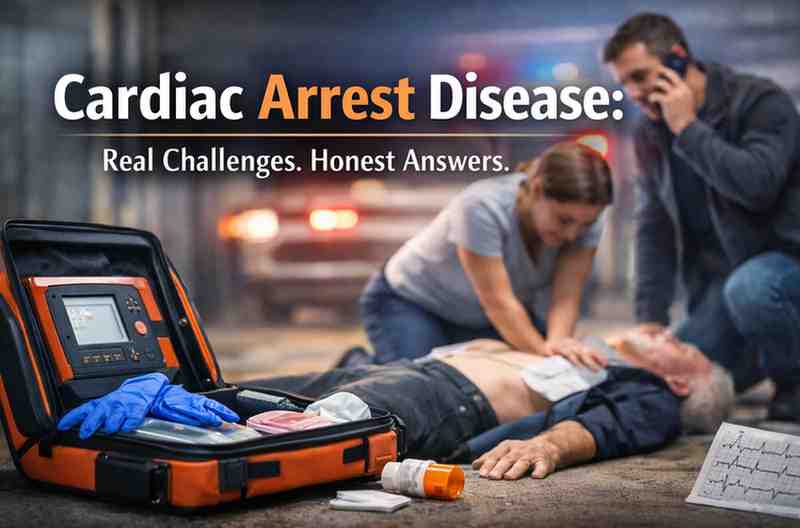
Cardiac arrest disease: 7 hard truths that bring relief when you’re overwhelmed

Cardiac Arrest Disease 7 Hard Truths That Bring Relief When Youre Overwhelmed 1
Cardiac arrest disease 7 hard truths that bring relief when youre overwhelmed

I’ve watched families freeze when someone they love collapsed without warning. The room goes quiet in a way that feels unreal. Phones shake in hands. Someone says, “They were fine an hour ago.” From what I’ve seen, that shock is where most people first meet cardiac arrest disease—not through neat definitions, but through panic, questions, and the awful feeling that the ground just moved under their feet.

Most people I’ve worked with mess this up at first in the same way: they try to understand everything immediately. They Google until 3 a.m. They chase certainty. They assume if they can just “learn enough,” the fear will loosen its grip. It rarely does. What helps comes slower. Messier. Through patterns you notice only after sitting with real stories, real outcomes, and a lot of uncomfortable uncertainty.


What people think they’re dealing with vs. what they’re actually dealing with

This honestly surprised me after watching so many people try to make sense of it: a lot of folks conflate cardiac arrest with a heart attack and then build their whole plan on that mix-up.

From what I’ve seen, the confusion leads to bad decisions early:

  • They assume symptoms will always warn them.
    Many expect chest pain first. Cardiac arrest often doesn’t give you that courtesy. People collapse. The rhythm goes chaotic. The body shuts down fast.

  • They think “fit people are safe.”
    I didn’t expect this to be such a common issue. I’ve seen athletes, new parents, and people who “did everything right” end up here. Risk changes with age and health, sure—but it’s not a moral scoreboard.

  • They chase miracle preventions.
    Supplements. Extreme diets. One viral breathing trick. It looks good on paper. It doesn’t hold up in real outcomes I’ve observed.

What actually seems to help is less flashy:

  • Understanding what cardiac arrest is (a sudden electrical failure) vs. heart attack (a circulation problem).

  • Accepting that prevention is layered, not one hack.

  • Focusing on preparedness for the people around you, not just personal risk reduction.

Still. Knowing this doesn’t erase fear. It just makes fear more workable.


Why people start looking for answers (and what they’re really asking)

Most people aren’t searching “cardiac arrest disease” because they’re curious. They’re trying to answer one of these:

  • “Could this happen to me or my family?”

  • “Did we miss signs?”

  • “Is there anything I can do so I don’t feel helpless next time?”

  • “Is this even worth obsessing over, or am I spiraling?”

Emotional validation matters here. I’ve watched caregivers blame themselves for months over things no one could have reasonably predicted. I’ve watched survivors swing between gratitude and terror. Both reactions make sense. The problem is when fear turns into paralysis.

From what I’ve seen, the people who find steadier footing do three quiet things:

  1. They separate what’s controllable from what isn’t.

  2. They learn practical responses (CPR, AED use) so they’re not just reading theory.

  3. They build realistic habits instead of trying to become perfect overnight.

Small wins change the emotional tone. A class taken. An AED located in their building. A tough conversation had with a doctor. None of that feels heroic. It works anyway.


Patterns across real cases: what consistently works vs. what keeps failing

What consistently works (boring, but real)

  • People learn CPR/AED use and practice it once or twice.
    The ones who practiced—even awkwardly—moved faster in real moments. Hesitation dropped.

  • They audit environments.
    Offices, gyms, apartment complexes. “Where’s the AED?” This one habit saved time later. Almost everyone I’ve seen struggle with this does this one thing wrong: they assume someone else knows where it is.

  • They deal with underlying heart risks in plain ways.
    Med adherence. Follow-ups after fainting or weird palpitations. No drama. Just consistency.

  • They loop family and coworkers into the plan.
    Quiet group texts. Simple “if X happens, do Y.” This reduces chaos when adrenaline hits.

What repeatedly fails (looks smart, doesn’t hold)

  • Over-indexing on wearables as protection.
    Watches can help flag patterns. They don’t replace medical care or emergency response.

  • DIY protocols pulled from forums.
    I’ve seen people delay proper evaluation because a thread convinced them it was “just anxiety.”

  • Avoidance.
    Pretending it’s too rare to think about. The people who avoided planning were the ones who froze the hardest when something did happen.


“Don’t repeat this mistake” moments I keep seeing

  • Ignoring fainting episodes.
    From what I’ve seen, people downplay syncope, especially younger folks. “I stood up too fast.” Sometimes that’s true. Sometimes it’s the only warning you get.

  • Skipping follow-ups after ER visits.
    The crisis passes, relief floods in, and the cardiology appointment gets postponed. This delays answers that could have changed outcomes.

  • Letting one bad medical interaction shut you down.
    I’ve watched people quit pursuing clarity because a clinician was rushed. Find another one. Advocate. The system isn’t perfect. Your life matters more than an awkward appointment.


Timelines: how long does it take to feel less lost?

Short answer? Longer than people want. Shorter than they fear.

From what I’ve observed:

  • First 2 weeks:
    High anxiety. Information overload. Sleep is weird. Everyone wants certainty now.

  • 1–3 months:
    People settle into a few practical steps (appointments, CPR class). Fear is still there, but it’s not the only emotion in the room.

  • 3–6 months:
    Routines form. The topic becomes less spiky. Questions get more specific. “Is this symptom worth checking?” instead of “Is everything dangerous?”

If it doesn’t feel better fast, that’s normal. Most people I’ve worked with expected relief to arrive once they “understood” cardiac arrest disease. Relief actually comes when life restarts around the knowledge.


Mini routines I’ve seen help real people

These aren’t prescriptions. Just patterns that showed up again and again.

  • Once a year: refresh CPR/AED basics (even a 20-minute video + hands-on at a local center).

  • Once a quarter: quick check-in on meds, blood pressure, follow-ups.

  • Once: map AED locations in the places you spend time.

  • Ongoing: one honest conversation with family about what to do in an emergency.

It’s unsexy. It’s also what people actually keep doing.


FAQ (the stuff people ask out loud)

Is cardiac arrest the same as a heart attack?
No. Cardiac arrest is an electrical failure that stops the heart’s effective pumping. Heart attacks are blockages. They overlap sometimes, but the response and urgency differ.

Can young, healthy people have cardiac arrest disease?
Yes. It’s rarer, but it happens. I’ve seen it. Often linked to underlying rhythm issues that weren’t obvious before.

Does lifestyle change really matter?
It matters for overall heart health and risk layering. It doesn’t make anyone invincible. Both things can be true.

Is learning CPR actually useful or just symbolic?
Useful. The people who learned and practiced were faster, less frozen. That time matters.


Objections I hear (and what I’ve learned to say back)

“This is too scary. I don’t want to think about it.”
Totally get it. Avoidance feels protective. It just doesn’t protect when something goes wrong. One small step beats zero steps.

“I don’t have time for classes or appointments.”
Most people who said this later told me the time cost was smaller than they imagined—and the mental relief was bigger.

“It won’t happen to us.”
I hope that’s true. Planning for low-probability, high-impact events isn’t pessimism. It’s adulting.


Reality check (because hype helps no one)

  • This isn’t a guarantee.

  • You can do “everything right” and still face bad outcomes.

  • Systems fail. People freeze. AEDs aren’t always nearby.

  • Progress is uneven. Some days you’ll feel calm. Then a news story will wreck your mood.

Who this is not for:
If you’re looking for a single trick that makes cardiac arrest disease irrelevant, you’ll hate this approach. There isn’t one.

When results are slow:
Emotional relief lags behind practical steps. That lag is normal. It doesn’t mean you’re failing.

What can go wrong:
Over-research can fuel anxiety. Pick a few credible sources. Then stop doom-scrolling.


Practical takeaways (what I’d actually suggest to a friend)

  • Do one preparedness action this month.
    CPR/AED basics or finding AED locations where you live/work.

  • Don’t ignore weird symptoms.
    Fainting, unexplained palpitations, family history. Get them checked. Not because everything is dangerous—because some things matter.

  • Build a tiny emergency plan with people around you.
    Who calls 911. Who grabs the AED. It sounds dramatic. It saves seconds.

  • Expect emotional whiplash.
    Relief, fear, gratitude, anger. All normal. None permanent.

  • Set limits on research time.
    Learn enough to act. Then live your life.


Still. I won’t pretend this is easy. Watching people face cardiac arrest disease up close changed how I move through rooms, how I notice AED signs, how I talk to my own people. It didn’t turn me into a superhero. It made me more practical. More honest about risk. Less interested in miracle stories.

So no—this isn’t magic. But I’ve watched enough people finally stop feeling stuck once they shifted from “I need to understand everything” to “I’ll take one grounded step and keep living.” Sometimes that shift alone is the real win.

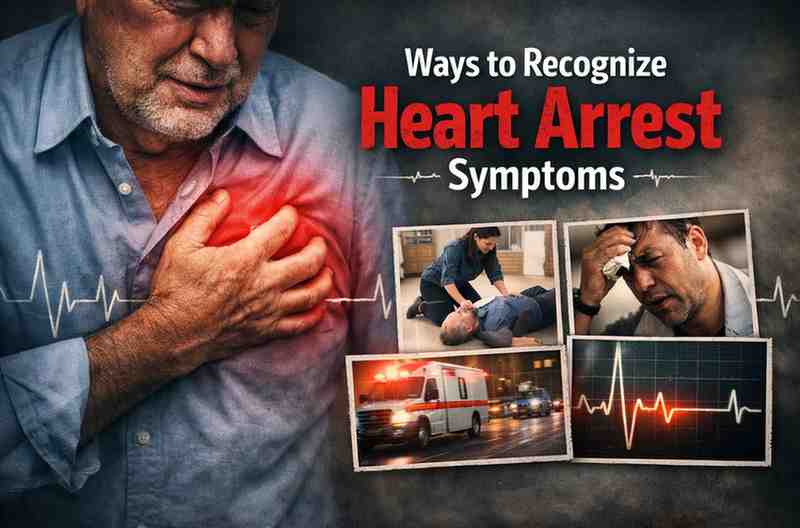
Ways to Recognize heart arrest symptoms: 11 warning signs that bring relief after weeks of confusion

Ways To Recognize Heart Arrest Symptoms 11 Warning Signs That Bring Relief After Weeks Of Confusion 1
Ways to Recognize heart arrest symptoms 11 warning signs that bring relief after weeks of confusion

Honestly, most people I’ve watched hit a wall with this. They assume recognizing heart arrest symptoms should be obvious. Dramatic. Movie-style. Then they sit with weird chest pressure or sudden breathlessness, talk themselves out of it, and only later realize they were way closer to danger than they thought. I’ve seen this pattern across friends, coworkers, neighbors’ parents, and people I’ve helped prep for emergencies. The confusion isn’t because people don’t care. It’s because real life doesn’t look like the poster in the clinic hallway. From what I’ve seen, the ways to recognize heart arrest symptoms only start to make sense after you’ve watched enough close calls and near-misses to notice what actually shows up in real bodies, in real moments.

This is messy knowledge. Field-notes stuff. The kind you collect after late-night calls, urgent drives, shaky “should we go in?” decisions, and the relief that hits hours later when someone’s okay. Or the gut-punch when they weren’t.


What people think heart arrest looks like (and what actually shows up)

Most people picture sudden collapse. No warning. One second fine, next second down. That does happen. But it’s not the only pattern I’ve seen.

What shows up more often:

  • Subtle weirdness before the big moment

  • Symptoms people label as “not serious enough”

  • Confusion between heart arrest and heart attack

That last one trips people up constantly. Heart arrest is when the heart suddenly stops pumping effectively. A heart attack is a blockage cutting off blood to part of the heart. One can lead to the other. In real life, people mix the terms and that confusion delays action. I didn’t expect that to be such a common issue until I watched multiple families freeze because they thought, “This doesn’t feel like a heart attack.”

It still counts. The body doesn’t care what label you use.


The 11 warning signs I’ve seen repeat across real cases

These aren’t textbook lists. This is what keeps showing up across people I’ve been around. Patterns, not guarantees.

1) Sudden collapse or fainting

This one is obvious when it happens. What’s not obvious is how fast it can come after someone said, “I just feel off.”
Most people I’ve worked with mess this up at first by assuming fainting = dehydration or low sugar. Sometimes it is. Sometimes it isn’t. If fainting comes with other symptoms below, that’s when alarms should go off.

2) No pulse or irregular breathing

When the heart isn’t pumping right, breathing can turn weird. Gasping. Shallow. Long pauses.
Almost everyone I’ve seen struggle with this does this one thing wrong: they wait to be 100% sure. Don’t. If breathing looks wrong and the person is unresponsive, that’s enough to act.

3) Chest discomfort that feels “wrong,” not just painful

Not always crushing pain.
Sometimes it’s pressure. Tightness. A heavy, sinking feeling.
This honestly surprised me after watching so many people try to describe it. They kept saying, “It’s not pain exactly… just wrong.” That “wrong” feeling matters.

4) Sudden shortness of breath

Out of nowhere. Not after running. Not after stairs.
I’ve seen people chalk this up to anxiety. Then sit with it. Then it gets worse. Breathlessness plus chest discomfort is a combo I don’t ignore anymore.

5) Extreme dizziness or lightheadedness

Not the normal “stood up too fast” stuff.
The kind where someone needs to sit down immediately and still feels like the room is tilting. From what I’ve seen, this often shows up right before things escalate.

6) Cold sweats or clammy skin

People underestimate this one. They think sweating = heat.
But the cold, sticky sweat? I didn’t expect this to be such a common issue until I noticed how often it showed up right before an emergency call.

7) Nausea or vomiting with chest or jaw discomfort

This combo is sneaky.
A lot of people I’ve seen write it off as food poisoning or a stomach bug. Especially if the chest discomfort is mild. The overlap is annoying and dangerous.

8) Pain spreading to jaw, neck, back, or arms

Especially the left arm, but not only.
What surprises people: sometimes the chest doesn’t hurt much, but the jaw or back does. That throws them off. They wait. They regret the wait.

9) Sudden confusion or unresponsiveness

This can look like zoning out.
I’ve watched people talk to someone who suddenly couldn’t track the conversation. Just… drifted. That’s not “being tired.” That’s oxygen not getting where it needs to go.

10) Heart racing, fluttering, or stopping suddenly

Palpitations can be benign.
But when someone goes from “my heart feels weird” to lightheaded or faint, that pattern matters. Cause → effect → outcome. The pattern is the warning.

11) A strong “something is really wrong” gut feeling

This isn’t mystical.
It’s pattern recognition your brain does faster than words. I’ve learned to respect this. Most people who ignored it told me later they wish they hadn’t.


Why people hesitate (and how that hesitation plays out)

From what I’ve seen, people hesitate for a few reasons:

  • They don’t want to overreact

  • They’re embarrassed

  • They’re worried about cost

  • They think they’ll “wait it out”

What consistently fails: waiting for clarity.
What consistently works: acting on uncertainty when multiple signs line up.

This is the uncomfortable truth. You often don’t get clean certainty until after you’ve already lost precious time.


The messy reality of recognizing heart arrest symptoms in real life

Here’s what experienced folks do differently:

  • They don’t argue with the body

  • They act when patterns stack

  • They’d rather be wrong at the ER than right at home

Most people I’ve worked with mess this up at first by trying to be “rational” in the moment. Rationality is great. But the body in crisis doesn’t present like a checklist. It presents like chaos with hints.

What typically surprises people

  • Symptoms can come and go

  • Pain isn’t always dramatic

  • Younger people can still have serious heart events

  • “Healthy” people still end up in emergencies

What looks good on paper but fails in real life

  • Waiting for one perfect symptom

  • Googling for reassurance

  • Downplaying because it doesn’t match a textbook

What actually helps

  • Noticing patterns across symptoms

  • Looping in someone else’s eyes (“Does this look okay to you?”)

  • Acting early


How long do symptoms take to escalate?

This is messy.
I’ve seen it escalate in minutes.
I’ve also seen weird warning signs show up days before something major.

There’s no clean timeline. That uncertainty is part of why people freeze. Still, if symptoms are sudden, worsening, or stacking together, time matters. Early action doesn’t mean panic. It means respect for how fast things can turn.


Short FAQ (quick answers people usually want)

Is heart arrest the same as a heart attack?
No. Different mechanism. They overlap in symptoms. One can trigger the other.

Should I call 911 if I’m not sure?
From what I’ve seen, yes when multiple warning signs stack. EMTs would rather assess than arrive late.

Can anxiety mimic these symptoms?
Yes. And heart issues can feel like anxiety. That overlap is exactly why people get stuck.

What if I’m wrong and it’s nothing?
Then you went home embarrassed but alive. I’ve watched people choose embarrassment over safety. That choice ages well.


Objections I hear all the time (and what actually happens)

“I don’t want to waste emergency resources.”
I get the feeling. Still, emergency systems exist for uncertainty. Most responders would rather check and leave than arrive to silence.

“It’s probably just stress.”
Maybe. Stress doesn’t usually cause fainting, clammy skin, chest pressure, and breathlessness together.

“I’ll wait an hour.”
Almost everyone I’ve seen struggle with this does this one thing wrong: they negotiate with time. Time doesn’t negotiate back.


Reality check (no hype, no guarantees)

This isn’t about becoming hyper-vigilant.
This isn’t about turning every ache into a crisis.

It’s about pattern recognition.
Multiple symptoms. Sudden change. Something clearly off.

Who this is not for:

  • People looking for certainty before acting

  • People who want a neat checklist

  • People who prefer to tough it out no matter what

Where expectations usually break:

  • Thinking symptoms will be dramatic

  • Assuming youth or fitness protects you

  • Expecting fear to feel “logical”

What can go wrong:

  • Overthinking

  • Waiting

  • Downplaying your own signals


Practical takeaways (grounded, not heroic)

What to do

  • Act when symptoms stack

  • Loop in another person fast

  • Call emergency services when something feels seriously off

What to avoid

  • Waiting for perfect clarity

  • Minimizing because it’s inconvenient

  • Arguing with your own discomfort

What to expect emotionally

  • Doubt

  • Embarrassment

  • Second-guessing

What patience actually looks like

  • Not waiting things out

  • Letting professionals assess

  • Sitting with uncertainty instead of ignoring it


From what I’ve seen, learning the ways to recognize heart arrest symptoms isn’t about memorizing signs. It’s about trusting patterns you’ve watched play out across real people. I’ve seen folks freeze because they didn’t want to be dramatic. I’ve also seen the relief when someone acted early and everything turned out okay. That relief sticks with you. It changes how you decide next time.

So no — this isn’t magic. And it won’t remove fear. But I’ve watched enough people stop feeling helpless once they stopped waiting for perfect certainty. Sometimes that shift alone is the real win.

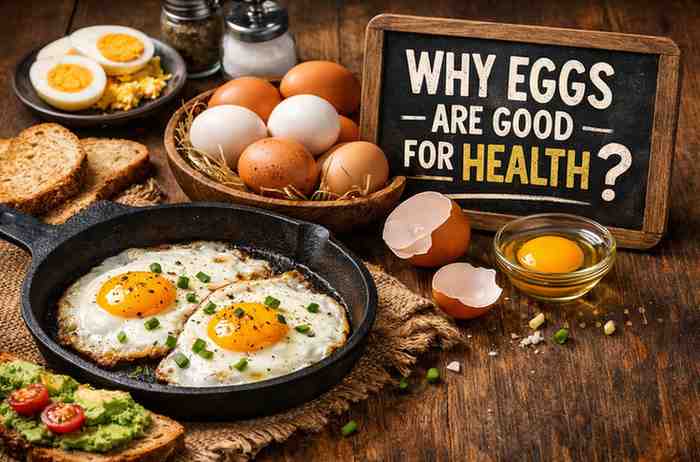
Why Eggs Are Good For Health: 7 Surprising Benefits That Finally Won Me Over

Why Eggs Are Good For Health 7 Surprising Benefits That Finally Won Me Over 1
Why Eggs Are Good For Health 7 Surprising Benefits That Finally Won Me Over

Honestly, I used to side-eye eggs. Hard.
Like… cholesterol bomb? Old news? Breakfast food that makes you sleepy? That was my vibe.

Then life got messy. My energy crashed. I was skipping meals, grabbing junk, and wondering why I felt foggy by 11 a.m. I didn’t “decide” to become an egg person. I caved. Cheap food. Easy to cook. Felt safe. And that’s when I started seeing why eggs are good for health — not in a dramatic, life-changing way at first. More like, “Huh… this actually helped me get through the day.”

Not gonna lie, I messed this up at first. Overcooked them. Ate them at the wrong times. Got bored. Then I learned a few things the slow way.

Here’s the real version of what happened.


I Tried Eggs Because I Was Tired of Feeling Tired

This wasn’t some wellness phase.
I was exhausted. All the time.

Morning me:

  • Coffee

  • Something sweet

  • Crash

  • More coffee

  • More crash

Rinse. Repeat.

I kept hearing people say protein helps.
I rolled my eyes. Then I realized I wasn’t eating any.

So I tried eggs. Simple. Cheap. Five minutes in a pan. No planning.
At first, it was just to feel full longer.

What I noticed after a week:

  • I wasn’t starving by mid-morning

  • My mood felt… less jagged

  • I snacked less on trash food

Not perfect. But calmer.

This honestly surprised me.


I Messed Up the Cholesterol Fear (Big Time)

This part tripped me up for years.

I avoided eggs because of cholesterol.
My family warned me. The internet yelled at me.
So I stayed scared.

Then I actually paid attention to how I felt when I ate them.
No chest pain. No weird heaviness. Just… normal.

From what I’ve seen, at least, eggs don’t mess everyone up the same way.
Some people react. Some don’t. I didn’t expect that at all.

My mistake:

  • Assuming one food ruins everyone’s health

  • Ignoring how my own body felt

What I do now:

  • I don’t eat six eggs daily

  • I don’t fry them in a lake of oil

  • I pair them with veggies or toast

Balance helped more than fear ever did.


The “Oh… This Keeps Me Full” Moment

This one hit fast.

I’d eat a bagel.
Two hours later, I was hunting snacks.

I’d eat eggs with toast.
Three to four hours later? Still okay.

Not super full.
Just… not desperate.

That alone changed my mornings.

Here’s what stuck:

  • I wasn’t thinking about food nonstop

  • I could focus longer

  • My mood dips eased up

I didn’t expect eggs to change my mental state.
But steady fuel matters. Who knew.

This is one big reason I stopped questioning why eggs are good for health in real life, not just on paper.


Cooking Them Wrong Ruined Everything at First

Confession: I burned eggs for years.
Dry. Rubbery. Sad.

No wonder I didn’t like them.

My early mistakes:

  • High heat

  • No seasoning

  • Overcooking “just to be safe”

  • Zero fat in the pan (huge mistake)

Once I chilled out and cooked them slower, everything changed.

What worked for me:

  • Low heat

  • Small splash of oil or butter

  • Salt at the end

  • Taking them off early

Suddenly, eggs weren’t punishment food.
They were… kinda comforting.

That alone made me stick with them.


The Quiet Energy Boost I Didn’t Expect

This part is subtle.

No sugar rush.
No “I’m unstoppable” feeling.

Just steady.

Before eggs:

  • Wired then tired

  • Shaky hunger

  • Random headaches

After eggs most mornings:

  • Less shaky

  • Less cranky

  • Fewer “I need something now” moments

It wasn’t dramatic.
But it was noticeable.

Still, I’m not claiming eggs fixed my life.
They just made mornings easier.

And honestly? That counts.


The Boring Truth: Eggs Didn’t Fix Everything

Let’s keep this real.

Eggs didn’t:

  • Melt fat

  • Cure my bad sleep

  • Fix my stress

  • Magically make me disciplined

I still ate junk some days.
I still skipped meals sometimes.
I still felt tired on bad nights.

But eggs gave me a baseline.

A floor.
Something stable to start from.

That’s underrated.


My Go-To Egg Routines (Nothing Fancy)

I’m lazy with food.
So I kept this simple.

Some routines that stuck:

Morning default

  • 2 eggs

  • Toast

  • Whatever veggies I have

Late breakfast

  • Scrambled eggs

  • Leftover rice

  • Soy sauce (don’t judge)

No-time mornings

  • Hard-boiled eggs from the fridge

  • Grab and go

That’s it. No superfoods.
Just repeatable habits.

This made it way easier to keep going when motivation dipped.


When Eggs Might Not Be Your Thing (And That’s Fine)

Real talk:

  • Some people don’t digest eggs well

  • Some get bored fast

  • Some just don’t like them

If eggs make you feel heavy or weird, listen to that.
I didn’t at first. I should have.

I also noticed:

  • Fried eggs hit heavier than boiled for me

  • Late-night eggs messed with my sleep

  • Too many days in a row = boredom

So I rotate food.
Eggs aren’t my whole personality.

That helped.


Stuff I Wish Someone Told Me Sooner

If I could rewind and talk to past me:

  • Don’t overthink the food science

  • Try eggs for two weeks before judging

  • Cook them gently

  • Pair them with something fibrous

  • Notice how you feel, not what blogs scream

Simple stuff.
But I complicated it.

That’s kind of my brand.


Practical Takeaways (No Fluff, No Promises)

Here’s the short version, learned the slow way:

  • Start small. One or two eggs is enough.

  • Don’t drown them in oil.

  • Eat them with something else.

  • Give it a week or two.

  • Notice energy and hunger, not hype.

  • Stop if they make you feel off.

That’s it. No magic.

If you’re curious about why eggs are good for health, try them like a normal person, not like a biohacker.


The Weird Emotional Shift I Didn’t Expect

This part is awkward to admit.

Eating eggs made me feel… responsible?

Not proud.
Not disciplined.

Just less chaotic.

It was one small choice that didn’t feel like punishment.
That changed how I treated the rest of my day.

Tiny wins stack.
Even food ones.

Then again, maybe I just needed something consistent.
Hard to say.


So yeah. I’m not here to sell eggs like they’re a miracle cure. They didn’t fix my life. They didn’t transform me into a morning person. But for me? They took mornings from frantic to manageable.

If you’re tired, hungry all the time, or just sick of overthinking breakfast, try them. Mess up. Adjust. See how your body reacts.

No pressure. No hype. Just… try and notice.

Calorie in Eggs: 7 Hard Truths That Finally Made My Diet Easier

Calorie In Eggs 7 Hard Truths That Finally Made My Diet Easier 1
Calorie in Eggs 7 Hard Truths That Finally Made My Diet Easier

Honestly, I didn’t think counting the calorie in eggs would mess with my head this much. I mean… it’s eggs. Basic. Breakfast stuff. You crack one, toss it in a pan, eat it, move on with your life. Not gonna lie, I thought people who tracked this stuff were being dramatic.

I was wrong.
And also… kinda confused at first.

Here’s the messy part: I started paying attention to my food because my jeans were tight and my energy was trash. Not some big “new year, new me” moment. Just one of those random Tuesday wake-up calls where you catch your reflection and go, “Oh. Okay. We’re here now.”

Eggs were my “safe food.”
Cheap. Easy. High-protein. Feels healthy.

So when I finally looked into the calories, I expected it to be simple. One egg equals X. Done. Turns out, yeah… not that clean.

And that surprised me. A lot.


Why I Even Started Paying Attention to Eggs

I didn’t jump into this to be shredded or whatever. I just wanted:

  • to stop feeling bloated by 10 a.m.

  • to not crash hard after breakfast

  • to eat something that didn’t feel like cardboard

Eggs were already in my routine. Three most mornings. Sometimes four if I was extra hungry. I told myself it was “protein” so it was fine.

That logic lasted about two weeks.

Because what I thought was happening and what was actually happening didn’t line up. I was still tired. Still snacking by noon. Still annoyed.

So I did the annoying thing and actually looked into the numbers behind the calorie in eggs. And wow… I had been winging it.

Not in a cool way.
More like a “dude, what were you thinking?” way.


What I Messed Up at First (Don’t Do This)

I’ll save you some frustration. Here’s what I got wrong early:

  • I counted eggs as “low calorie” no matter how I cooked them

  • I ignored the oil, butter, and cheese (lol)

  • I ate more eggs when I was stressed

  • I told myself “it’s protein, so it doesn’t count”

That last one is wild, by the way. My brain really said that with confidence.

The truth? The calorie in eggs changes based on how you cook them and what you add. Fried in butter vs. boiled? That’s a different world. Same egg. Totally different outcome.

This honestly surprised me.

And yeah, I felt a little dumb when I realized it. But also relieved. Because suddenly my “nothing works” phase made sense.


The Weird Mental Shift That Actually Helped

Here’s where it clicked for me:

I stopped treating eggs like a free pass.
Not an enemy either. Just… neutral.

Once I stopped emotionally labeling food, the whole calorie in eggs thing became less stressful. It turned into:

“Okay, if I eat this many eggs this way, I feel good.”

Instead of:

“Why am I still hungry? Why is this not working? Is my body broken?”

It wasn’t my body.
It was my assumptions.

From what I’ve seen, at least, food tracking messes with your head when you expect perfection. When I allowed some messiness? Things got easier.

Still awkward. Still imperfect. But manageable.


How I Actually Eat Eggs Now (Real Life Version)

Not some influencer morning routine. Just what I do most days.

Weekdays (busy, half-awake mode):

  • 2 eggs

  • cooked in a non-stick pan

  • tiny bit of oil spray

  • toast or fruit on the side

Weekends (chaos but happy):

  • 3 eggs

  • scrambled with onions or leftovers

  • sometimes cheese (I know, I know)

  • coffee, always

This change alone made the calorie in eggs feel predictable. I wasn’t guessing anymore. I wasn’t shocked later.

And weirdly… that calmed my food anxiety.
Didn’t expect that at all.


The Part Nobody Talks About: Eggs Get Boring

Let’s be real. Eggs are great.
They’re also boring if you eat them the same way for weeks.

I hit this wall hard.

I went through a phase where I was so focused on the calorie in eggs that I sucked the joy out of breakfast. Same pan. Same seasoning. Same taste. Every. Single. Day.

Then I’d snap and eat a random pastry because I was tired of being “good.”

So now I rotate:

  • boiled eggs on days I want zero effort

  • omelets when I need something warm and comforting

  • fried eggs when I’m craving texture

  • egg sandwiches when I feel rebellious ????

Still aware of the calories.
But not miserable about it.

That balance matters more than people admit.


What Worked (And What Didn’t)

Let’s keep this honest:

What worked for me

  • Not skipping breakfast

  • Eating fewer eggs, but with more sides

  • Being consistent with cooking style

  • Not lying to myself about toppings

What didn’t

  • Eating eggs alone and calling it a meal

  • Going extreme with low-calorie everything

  • Tracking every crumb

  • Punishing myself for “messing up”

I messed this up at first by trying to be perfect. That never lasts. It just leads to burnout and late-night cereal.

Still happens sometimes. I’m human.


How Long Did It Take to Feel Normal About This?

Short answer: a few weeks.

Longer answer:
Mentally? A month or two.
Physically? Faster.

Once I understood the calorie in eggs in a practical way, my breakfasts stopped feeling random. My hunger evened out. I wasn’t snacking like a raccoon at 11 a.m.

It wasn’t magic.
But it was… quieter. Less chaos around food.

That’s huge when you’ve been overthinking every bite.


What If It Doesn’t “Work” for You?

This is important.

Eggs don’t work for everyone.
Some people feel great.
Some feel bloated.
Some just hate them.

If you try adjusting how you eat eggs and nothing changes?

  • you didn’t fail

  • your body isn’t broken

  • it just means this isn’t your lever

Food is personal. The calorie in eggs is just one small piece of the puzzle. If it’s not moving the needle for you, cool. Try another lever.

No shame in that.


Would I Do This Again?

Yeah.
But I wouldn’t obsess like I did at first.

I’d still pay attention to the calorie in eggs.
I’d just stop treating it like a moral test.

Food is fuel.
Also comfort.
Also habit.
Also culture.

Trying to reduce it to math alone made me weird around eating. Once I zoomed out, things balanced.

That took time. And a few “ugh, why am I like this” moments.


Practical Takeaways (The Stuff I Wish Someone Told Me)

If you’re trying to make sense of this without losing your mind:

  • Don’t count eggs as “free food”

  • Pay attention to how you cook them

  • Add sides so you’re not hungry later

  • Rotate styles so you don’t hate breakfast

  • Be honest about oils, cheese, and sauces

  • Track for awareness, not punishment

Also:
If you mess up one day? It doesn’t erase the week.
That took me way too long to accept.


So yeah… this whole thing started because my pants got tight and my mornings felt off. I didn’t expect learning about eggs to change anything meaningful. It felt too small to matter.

But small shifts stack. Quietly.
And sometimes that’s all you need to get unstuck.

So no — this isn’t magic.
But for me? Yeah.
It finally made things feel… manageable.

Foods High in Potassium for Weight Loss: 9 Hard Lessons I Learned (and Some Relief)

Foods High In Potassium For Weight Loss 9 Hard Lessons I Learned And Some Relief 1
Foods High in Potassium for Weight Loss 9 Hard Lessons I Learned and Some Relief

Honestly, I didn’t think this would work. I’d already tried “eat clean,” cutting carbs, walking 10k steps, that whole exhausting carousel. I was tired of being hopeful. Tired of being mad at myself for getting hopeful again. Then someone casually mentioned foods high in potassium for weight loss and how it helped them stop retaining water and snacking out of boredom. I rolled my eyes. Another wellness thing. Another maybe.

But I was bloated. Like, painfully. My rings felt tight. My jeans did that thing where they fit in the morning and betray you by afternoon. So I tried it. Half out of desperation. Half out of spite.

Not gonna lie… I messed this up at first.


Why I even tried potassium (and what I misunderstood)

Here’s what I thought potassium would do:

  • Melt fat

  • Kill cravings overnight

  • Fix my energy levels

  • Basically be a magic mineral

Yeah. No.

Here’s what it actually did (from what I’ve seen, at least):

  • Helped with water retention

  • Smoothed out some insane salt cravings

  • Made my workouts feel slightly less like punishment

  • Gave me fewer “I’m starving” moments that were actually just electrolyte weirdness

I didn’t expect that at all. I thought potassium was just a banana thing. Turns out it’s more like a balance thing. Sodium pulls water in. Potassium helps push it out. When that balance is off, your body does weird stuff. Bloating. Cravings. Low energy. Mood swings. The kind that make you order fries at 10 pm and call it “self-care.”

At first, I went full chaos:

  • Two bananas a day

  • Coconut water like it was holy

  • Avocados whenever I remembered

  • Zero plan

Result?
My stomach hated me. I felt heavy. Weirdly tired. And I gained two pounds of what I’m pretty sure was just water + poor planning.

Lesson one: more isn’t better. Balance is better.


The foods high in potassium for weight loss that actually fit real life

I’m not into “superfood lists” that require three specialty stores and a blender you’ll use twice. I needed stuff I could buy at Target or a regular grocery store and not resent eating.

Here’s what ended up working for me:

Potassium-rich foods I could stick with:

  • Avocados
    Not daily. I tried. My wallet cried.
    A few times a week? Perfect. Keeps me full. Doesn’t spike my hunger.

  • Sweet potatoes
    This one surprised me. I used to fear these because “carbs.”
    Turns out: way more filling than white bread.
    Less snacky behavior later.

  • Spinach (cooked, not raw salads)
    Raw salads made me hungrier.
    Cooked spinach felt grounding. Warm. Real food energy.

  • White beans / lentils
    I avoided beans for years because bloating.
    Small portions + more water = zero drama.
    Big portions = chaos. Learn from my pain.

  • Greek yogurt
    Not huge potassium numbers, but enough to help with balance.
    Also stopped me from raiding the pantry at night.

  • Tomatoes (real ones, not just sauce)
    Easy. Add to eggs. Add to sandwiches. Add to everything.

  • Coconut water (small amounts)
    Not the sugar bombs. Just half a cup post-workout.
    Any more and I felt weirdly wired.

What I tried and quietly gave up on:

  • Drinking potassium water

  • Supplement powders

  • “Electrolyte drinks” with neon colors

  • Eating bananas like it was a job

Not saying those are evil. Just… not for me. Real food worked better. My body trusted it more. So did my brain.


The part no one tells you: potassium doesn’t cause weight loss

This is where I got annoyed.

Foods high in potassium for weight loss don’t magically burn fat. They don’t “unlock” anything. What they do (in my messy, lived experience):

  • Reduce water retention → the scale drops a little → motivation goes up

  • Calm salt cravings → fewer random snacks

  • Support muscle function → workouts feel doable

  • Stabilize energy → fewer “I need sugar right now” spirals

That combo matters.

Weight loss is boring. It’s momentum. Potassium helped me keep momentum. That’s the honest benefit.


How long did it take to notice anything?

Short answer:
3–5 days to feel less bloated.
2–3 weeks to notice fewer cravings.
4–6 weeks to see consistent scale trends.

Longer answer:
It wasn’t linear. Some weeks I swore it was working. Some weeks I thought I’d imagined everything. Then I realized my habits were the thing changing:

  • Fewer salty late-night snacks

  • More real meals

  • Less “snack because I’m tired” behavior

  • Slightly better workouts

So yeah. Slow. Unsexy. Real.


The mistakes that slowed everything down (don’t repeat these)

I made these so you don’t have to:

  • Going all-in too fast
    My digestion hated the sudden fiber + potassium spike.

  • Ignoring sodium entirely
    Low sodium + high potassium = headaches, dizziness.
    Balance matters. I learned the hard way.

  • Using potassium as an excuse to overeat
    “But it’s healthy” doesn’t cancel calories.
    I wanted it to. It didn’t.

  • Expecting fat loss from minerals
    Potassium supports the system.
    It doesn’t do the work for you.

  • Forgetting protein
    I went full produce at first.
    Felt weak. Hungrier. Then cranky.


Short FAQ (because I googled these at 1 a.m.)

Do foods high in potassium actually help with weight loss?
Indirectly, yes. They help with bloating, cravings, and energy. That support can make weight loss feel less brutal.

How much potassium do I need a day?
I stopped counting. I focused on 2–3 potassium-rich foods daily. My body responded better to patterns than numbers.

Can I just take supplements instead?
You can. I didn’t love how they made me feel. Food felt steadier.

Is this safe long-term?
For most people, yes—through food. If you have kidney issues or are on certain meds, this is not DIY territory. Talk to a doctor.


Objections I had (and what I learned)

“This sounds too simple.”
Yeah. It is simple. Not easy. Simple.

“I’ve tried everything.”
Same. This wasn’t the thing.
It was a small thing that made the hard stuff easier.

“I hate tracking nutrients.”
Same. That’s why I stopped tracking.
I just ate from a short list and moved on with my life.

“What if this doesn’t work for me?”
Then you drop it. No moral failure. No identity reminder. Just data.


Reality check (because someone needs to say it)

This approach is not for you if:

  • You have kidney issues and aren’t medically supervised

  • You’re trying to hack weight loss without changing habits

  • You’re looking for fast, dramatic results

  • You already struggle with disordered eating and nutrient obsession

Also:

  • You will still plateau

  • You will still have bloated days

  • You will still emotionally eat sometimes

  • This won’t fix stress

  • This won’t fix sleep

It’s support, not salvation.


What my actual routine ended up looking like

Nothing fancy. Just repeatable.

Most days:

  • Breakfast: eggs + spinach + tomatoes

  • Lunch: chicken + lentils or white beans

  • Snack: Greek yogurt

  • Dinner: sweet potato + veggies + protein

  • 2–3 glasses of water more than I used to drink

  • Salt my food normally. No extremes.

What changed emotionally:

  • I stopped feeling “puffy” all the time

  • I trusted my hunger cues a little more

  • I didn’t panic when the scale stalled

  • I felt less like my body was working against me

That last part mattered more than I expected.


Practical takeaways (no hype, just what helped)

  • Add 2–3 potassium-rich foods per day.

  • Don’t nuke sodium. Balance it.

  • Start slow if fiber messes with you.

  • Pair potassium with protein and real meals.

  • Expect bloating relief before fat loss.

  • Track patterns, not perfection.

  • If you feel dizzy, off, or weird — stop and reassess.

Emotionally:

  • Expect doubt.

  • Expect impatience.

  • Expect small wins before big ones.

  • Expect to question whether this is “worth it.”

It’s not dramatic. It’s stabilizing.


So no — foods high in potassium for weight loss didn’t change my life overnight. They didn’t suddenly make me love dieting. But they did make the whole process feel less hostile. Less like my body was sabotaging me for trying. That relief alone? Worth something.

If you’re stuck and tired and bloated and low-key mad at your own metabolism… this might not be the answer. But it could be one of the small things that makes the bigger stuff feel possible.