How to Burn Belly Fat: 9 Honest Lessons After Watching So Many People Struggle (and Finally Break Through)

How To Burn Belly Fat 9 Honest Lessons After Watching So Many People Struggle And Finally Break Through 1
How to Burn Belly Fat 9 Honest Lessons After Watching So Many People Struggle and Finally Break Through

Honestly… most people I’ve watched try to burn belly fat hit the same quiet wall.

It usually starts with motivation.

Someone cuts carbs.
Another starts doing 200 crunches every night.
Someone else begins running every morning at 5 AM.

For the first week or two they feel hopeful.

Then the mirror doesn’t change.

And slowly you see the frustration creeping in.

A friend of mine once said something that stuck with me: “I’m doing everything people say… but my stomach is the one thing that refuses to leave.”

After watching dozens of people try different approaches — friends, gym regulars, clients I helped analyze routines for — one thing became painfully obvious:

Most people trying to burn belly fat aren’t actually doing the wrong things…

…but they’re doing the wrong things in the wrong order, with the wrong expectations.

And belly fat is especially unforgiving about that.

From what I’ve seen again and again, the difference between people who stay stuck and those who finally see their waist shrink often comes down to a handful of patterns almost nobody talks about honestly.


Why Belly Fat Feels So Stubborn (Even When You’re Trying)

This surprised me the first time I noticed it.

Two people can follow the same diet plan, do the same workouts, and still get very different belly fat results.

And at first glance… it makes no sense.

But after watching enough people go through the process, some patterns start showing up.

Belly fat behaves differently than other fat

Your body doesn’t treat fat storage equally.

Arms often lean out first.
Face changes quickly.
Chest sometimes shrinks early.

But the stomach area?

That’s usually the last place your body lets go of fat.

I’ve seen people lose 15–20 pounds overall and still complain: “Why is my stomach still here?”

And the honest answer is frustrating:

Because belly fat tends to be metabolically protective fat.
Your body holds onto it longer.

So when people expect fast results specifically in the stomach…

They assume something is broken.

Usually it isn’t.

The process is just slower there.


What Most People Get Wrong When Trying to Burn Belly Fat

This is where almost everyone I’ve seen struggle makes the same mistakes early.

Not because they’re careless.

Because most advice online oversimplifies the process.

Mistake #1: Thinking ab workouts burn belly fat

Crunches. Sit-ups. Ab machines.

I’ve watched people do hundreds.

The result?

Stronger abs… under the same layer of fat.

Ab exercises build muscle, but they don’t selectively burn fat from your stomach.

Fat loss happens systemically across the body, not locally.

This realization frustrates people.

But once they understand it, their strategy finally improves.


Mistake #2: Extreme diets that last two weeks

Almost every person I’ve seen panic about belly fat eventually tries something like:

  • Keto overnight

  • 1200 calorie crash diet

  • Juice cleanses

  • No-carb challenges

For about 10–14 days, it looks like it’s working.

Weight drops.

Then something happens:

Hunger explodes.

Energy crashes.

And they slowly drift back to normal eating.

The belly fat returns.

Not because the diet was useless.

Because it wasn’t sustainable long enough to produce real fat loss.


Mistake #3: Only focusing on exercise

This one is incredibly common.

Someone starts running daily or joins a gym.

But eating habits stay mostly the same.

After a few weeks they say: “I’m working out but my stomach isn’t shrinking.”

From what I’ve seen repeatedly, the reality is simple:

Exercise helps.

But diet controls the majority of fat loss.

Without adjusting calorie intake, the belly rarely changes much.


The Patterns That Actually Help Burn Belly Fat

Now here’s the part that surprised me after watching enough people figure this out.

The ones who eventually lose belly fat rarely follow complicated plans.

Their success usually comes from consistent boring habits done long enough.

Pattern #1: Slight calorie deficit (not starvation)

The people who finally made progress rarely starved themselves.

Instead they did something simpler:

They ate slightly less than their body burned daily.

Usually that looked like:

  • Removing sugary drinks

  • Cutting late-night snacks

  • Reducing portion sizes slightly

Nothing dramatic.

But done consistently.

Over months, not weeks.


Pattern #2: Protein becomes the anchor

I didn’t expect this to be such a common pattern.

But almost everyone who succeeded increased protein intake.

Not obsessively.

Just intentionally.

Typical adjustments I’ve seen:

Why it works:

Protein helps people stay full longer, which naturally lowers overall calorie intake.


Pattern #3: Walking more than people think matters

Honestly… this surprised me.

I expected intense workouts to be the biggest driver.

But the people who lost belly fat most consistently did something simpler:

They walked a lot.

Daily steps often climbed to 8,000–12,000 steps per day.

Walking:

  • burns calories

  • reduces stress

  • supports fat metabolism

And most importantly…

People actually stick with it.


Pattern #4: Strength training twice per week

Cardio helps.

But strength training changes how the body burns energy long term.

Even basic routines I’ve seen work well include:

  • Squats

  • Push-ups

  • Dumbbell rows

  • Deadlifts

  • Planks

2–3 sessions per week.

Nothing extreme.

Over time, muscle mass increases metabolism slightly and improves body composition.


The Emotional Phase Most People Go Through

Almost everyone I’ve seen working on belly fat hits this moment.

Around week 3 or week 4.

Progress slows.

The scale barely moves.

And they start thinking: “Maybe this just doesn’t work for me.”

But here’s what I’ve noticed repeatedly.

Often around week 6–8, things start shifting again.

Waistlines slowly shrink.

Clothes fit differently.

Not dramatic.

But noticeable.

The people who succeed are usually just the ones who stayed consistent long enough to reach this phase.


How Long Does It Usually Take to Burn Belly Fat?

People hate this answer.

But the pattern is pretty consistent.

From what I’ve observed across many people:

Time Typical Changes
2 weeks Water weight shifts
4 weeks Slight waist reduction
8 weeks Visible stomach changes
12+ weeks Noticeable fat loss

Belly fat tends to respond slower than overall weight loss.

That delay frustrates people.

But it’s normal.


Common Mistakes That Slow Belly Fat Loss

Almost everyone I’ve watched struggle makes at least one of these.

Skipping sleep

Poor sleep increases hunger hormones.

People snack more.

Cravings rise.

Fat loss slows dramatically.


Drinking hidden calories

Alcohol, soda, sugary coffee drinks.

These add hundreds of calories quickly.

And people rarely account for them.


Overestimating workouts

After exercise, many people reward themselves with extra food.

Sometimes more calories than they burned.

Progress stalls quietly.


Stress eating

This one is huge.

Chronic stress raises cortisol levels, which may contribute to abdominal fat retention.

I’ve seen people improve belly fat simply by improving sleep and stress habits.


Quick Answers to Questions People Usually Ask

Can you target belly fat specifically?

No.

Fat loss happens across the whole body.

But as total body fat decreases, belly fat eventually reduces.


Do fat-burning supplements work?

Most people I’ve observed using them saw little to no meaningful difference.

Consistency beats supplements almost every time.


Is cardio required?

Not strictly.

But some form of regular movement helps maintain calorie balance.

Walking works surprisingly well.


Does age make belly fat harder to lose?

Sometimes.

Metabolism slows slightly with age.

But habits still matter far more than age alone.


Objections I Hear All the Time

“I don’t have time to exercise.”

Fair.

But many people I’ve seen succeed focused on daily walking first, not gym workouts.


“I tried dieting before and failed.”

Most people fail at extreme diets, not moderate sustainable changes.


“My genetics make belly fat impossible to lose.”

Genetics affect fat distribution.

But I’ve rarely seen someone completely unable to reduce belly fat when overall body fat decreases.


Reality Check: Who This Approach May Not Work For

Being honest here matters.

This approach may feel frustrating for:

  • People expecting fast transformation

  • Those looking for “one trick” solutions

  • Anyone unwilling to adjust eating habits

Fat loss is rarely instant.

And belly fat especially requires patience.


Practical Takeaways Most People Wish They Knew Earlier

If someone asked me what actually works based on the patterns I’ve seen, it would look like this:

Focus on these first

  • Maintain a small calorie deficit

  • Eat more protein

  • Walk daily

  • Strength train 2–3 times per week

  • Sleep well

Avoid these traps

  • Crash diets

  • Endless ab workouts

  • Obsessing over the scale

  • Expecting quick belly fat loss

Emotionally prepare for

  • Slow progress

  • Temporary plateaus

  • Motivation dips

That part is normal.


The funny thing is…

The people who eventually lose belly fat rarely describe the process as dramatic.

No miracle moment.

No magical workout.

Usually it’s something quieter.

They just stopped chasing shortcuts.

They adjusted small habits.

They stuck with them longer than they expected to.

And somewhere along the way… the stomach that felt impossible to change slowly started shrinking.

So no — burning belly fat isn’t easy.

But from what I’ve seen watching so many people try…

It becomes a lot less frustrating once you understand how the process actually behaves in real life.

How to Stop Hair Loss: 11 Hard Truths I Learned After Watching People Fight It (And Finally Find Relief)

How To Stop Hair Loss 11 Hard Truths I Learned After Watching People Fight It And Finally Find Relief 1
How to Stop Hair Loss 11 Hard Truths I Learned After Watching People Fight It And Finally Find Relief

Honestly… the first time someone close to me started losing hair, I didn’t think much of it.

He joked about it. Said it was just “stress.” Said it would grow back.

Three months later he wasn’t joking anymore.

He was taking photos of his hairline in bathroom lighting. Checking the shower drain. Googling solutions at 2 AM.

And the weird thing?

Over the years I’ve watched a lot of people go through that exact same phase.

Different ages. Different lifestyles. Same quiet panic.

They all eventually ask the same question:

“How do you actually stop hair loss?”

Not slow it down.
Not hide it.

Stop it.

And from what I’ve seen… this is where things get messy.

Because most people don’t fail due to bad luck.

They fail because the internet makes hair loss sound simpler than it is.

I’ve watched people waste:

  • months on the wrong solutions

  • hundreds of dollars on miracle products

  • energy blaming themselves

When the real issue was something else entirely.

So this isn’t theory.

This is what I’ve seen actually happen in real people trying to stop hair loss.

The wins.
The mistakes.
The patterns that keep repeating.


The First Thing Most People Get Wrong About Hair Loss

Almost everyone I’ve seen struggle with this does one thing wrong at the start.

They assume hair loss has one cause.

So they try one fix.

New shampoo.
A vitamin.
A random oil.

Then they wait.

Nothing happens.

And they conclude:

“Well… I guess it’s just genetics.”

But hair loss almost never works like that.

From what I’ve seen across a lot of cases, it usually involves three overlapping things:

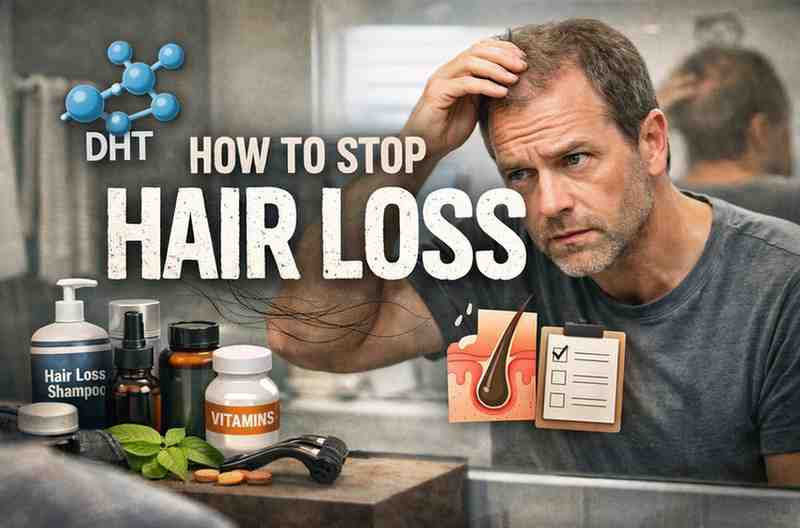
1. Hormones (especially DHT)
This is the big one behind pattern hair loss.

2. Scalp health
Inflammation, buildup, poor circulation.

3. Nutritional or stress triggers
Iron, protein, cortisol spikes, crash diets.

Most people attack only one layer.

The people who actually slow or stop hair loss usually end up addressing two or three at the same time.

That’s the pattern that keeps showing up.


Why People Start Trying to Stop Hair Loss (Usually Too Late)

This part honestly surprised me after watching so many people go through it.

Most people ignore early signs.

They think hair loss starts with obvious bald spots.

It usually doesn’t.

The early patterns I’ve seen look more like this:

• Hair in the shower suddenly doubles
• Hairline feels thinner in photos
• Hair takes longer to grow
• Ponytails feel smaller
• More scalp visible under bright light

And people brush it off for 6–12 months.

By the time they act, the follicles have already been shrinking for a while.

That doesn’t mean it’s hopeless.

But it does mean patience becomes part of the process.

Hair growth is slow.

Painfully slow.


What Actually Helps Stop Hair Loss (From What I’ve Seen)

The people who eventually stabilize their hair tend to build a simple but consistent routine.

Nothing flashy.

But layered.

Here’s the pattern that works most often.


1. Addressing DHT (The Root of Most Male Pattern Hair Loss)

This is the uncomfortable truth a lot of people avoid.

If hair loss is genetic, DHT is usually involved.

And oils or shampoos alone rarely stop that.

What I’ve seen people try:

• DHT-blocking medications
• Natural blockers (less powerful)
• Scalp treatments that reduce follicle stress

Most people resist medication at first.

Totally understandable.

But I’ve watched a lot of people circle back to it after 6–12 months of failed alternatives.

Not everyone chooses that path.

But ignoring DHT completely tends to stall progress.


2. Fixing Scalp Conditions People Don’t Realize They Have

This one… I didn’t expect.

A surprising number of people dealing with hair loss also had:

• chronic dandruff
• itchy scalp
• product buildup
• inflammation

And they assumed it was unrelated.

But once they fixed their scalp environment, shedding slowed.

The routines that worked often included:

• medicated dandruff shampoos
• gentle exfoliation
• less heavy product buildup

Nothing glamorous.

Just clean, healthy scalp conditions.


3. The Nutrition Piece Everyone Underestimates

I didn’t realize how common this was until I saw it repeatedly.

People trying to stop hair loss while eating like this:

• skipping meals
• low protein
• crash dieting
• high stress caffeine cycles

Hair is basically a luxury function for the body.

If the body senses stress or nutrient shortage…

Hair growth slows first.

The fixes that helped many people:

• consistent protein intake
• iron checks (especially for women)
• zinc and biotin support when deficient

Not magic.

But foundational.


The Routine That Seems to Work Best Over Time

From watching people experiment, fail, restart, and eventually stabilize…

The routines that worked usually looked something like this:

Morning:

• gentle shampoo or scalp treatment
• balanced breakfast with protein

Evening:

• topical treatment (if using one)
• scalp massage for circulation

Weekly:

• dandruff-control shampoo if needed
• diet check-in
• stress management (sleep matters a lot)

Nothing complicated.

Just consistency for months.

Which is the part people struggle with.


How Long Does It Take to Stop Hair Loss?

This is one of the most common questions I hear.

And honestly…

This is where expectations usually break.

From what I’ve seen across real cases:

Hair shedding may slow in 2–3 months

Visible regrowth often takes:

4–8 months

Full improvement sometimes takes:

12 months or longer

Hair follicles move slowly.

If someone expects results in 30 days, frustration hits fast.

And many people quit right before progress begins.


The Mistakes I Keep Seeing Over and Over

Watching people go through this, a few patterns repeat constantly.

1. Product hopping too fast

Trying a new solution every 3 weeks.

Hair cycles don’t move that fast.

2. Ignoring scalp problems

Dry scalp, dandruff, inflammation.

Those issues quietly sabotage progress.

3. Expecting oils alone to fix hormonal hair loss

Natural oils can support scalp health.

But they rarely stop DHT-driven hair loss alone.

4. Quitting during the shedding phase

Some treatments trigger temporary shedding before regrowth.

People panic and stop.

Ironically… that’s often when follicles were resetting.


A Quick Reality Check (That Most Articles Skip)

Stopping hair loss is possible for many people.

But this is where honesty matters.

Some situations are harder to reverse:

• advanced baldness
• long-term follicle shrinkage
• autoimmune hair loss conditions

And sometimes the real win becomes:

slowing loss instead of reversing it completely.

That still matters.

A lot.


Common Questions People Ask When Trying to Stop Hair Loss

Can hair loss actually be reversed?

Sometimes, yes.

If follicles are still alive, they can produce hair again.

But once follicles die completely, regrowth becomes unlikely.


Does stress really cause hair loss?

Yes.

High stress can trigger telogen effluvium, a temporary shedding phase.

The good news: it usually grows back once stress stabilizes.


Are expensive hair products worth it?

Honestly… not usually.

Some of the most effective treatments are surprisingly simple.

Many luxury products just package basic ingredients with marketing.


Does cutting hair help stop hair loss?

No.

Hair length doesn’t affect follicle health.

But shorter styles can make thinning less noticeable.


Objections I Hear All The Time

“If hair loss is genetic, nothing helps.”

Not true.

Genetics influences sensitivity to DHT.

But treatment can slow or interrupt the process.


“Natural remedies should fix this.”

Sometimes they help.

But severe genetic hair loss often needs stronger solutions.


“If a treatment works, results should be quick.”

Hair growth doesn’t follow that timeline.

Even effective treatments move slowly.

Patience is part of the deal.


Who This Approach Might Not Work For

Being honest here.

This kind of routine tends to frustrate people who:

• want instant results
• dislike daily routines
• stop treatments quickly when results aren’t immediate

Hair recovery is a long game.

The people who succeed are usually the ones who treat it like maintenance, not a quick fix.


Practical Lessons I’ve Learned Watching People Try to Stop Hair Loss

If someone asked me what actually matters after seeing so many attempts…

It would probably be these:

Start earlier than you think you need to

Waiting rarely improves outcomes.


Treat the cause, not just the symptoms

Shampoos alone rarely solve deeper issues.


Give treatments time

Hair cycles take months.

Not weeks.


Fix lifestyle basics

Sleep. Nutrition. Stress.

Those things show up in hair health more than people realize.


Consistency beats perfect products

Simple routines done daily outperform fancy routines done inconsistently.


Still…

Hair loss messes with people emotionally in ways they don’t expect.

I’ve seen confident people suddenly become hyper-aware of mirrors.

Checking photos. Avoiding bright lighting.

That frustration is real.

But the good news is… most people who approach hair loss with patience and realistic expectations eventually find some level of control.

Maybe not perfect hair.

But progress.

And honestly, that shift alone often changes how they feel about the whole situation.

So no — stopping hair loss isn’t magic.

But I’ve watched enough people finally stop feeling helpless once they approached it with the right expectations.

Sometimes that shift alone is the real win.

Anti-Inflammatory Foods to Include in Your Diet: 17 Grounded Choices That Bring Real Relief

Anti Inflammatory Foods To Include In Your Diet 17 Grounded Choices That Bring Real Relief 1
Anti Inflammatory Foods to Include in Your Diet 17 Grounded Choices That Bring Real Relief

Honestly, most people I’ve watched try to “eat healthier” aren’t chasing abs or some diet trend. They’re tired. Their joints ache. Their stomach feels off. Brain fog. Random flare-ups. Skin that won’t calm down. And they quietly start Googling things like anti-inflammatory foods to include in your diet hoping the answer is simpler than another prescription.

From what I’ve seen working closely with families, friends, and clients trying to fix chronic inflammation, the first two weeks are usually optimism. The next two? Confusion. Because they remove one thing, add another, and nothing dramatic happens. Then they assume it’s not working.

It’s rarely that simple.

Inflammation isn’t dramatic. It’s cumulative. It’s slow. And the food patterns that calm it down aren’t extreme — they’re consistent.

Let’s talk about what actually works in the real world.


Why People Start Looking for Anti-Inflammatory Foods

Most don’t start because a doctor says “systemic inflammation.” They start because:

  • Their knees hurt going upstairs.

  • They wake up stiff.

  • Their digestion feels unpredictable.

  • They feel puffy all the time.

  • Their energy crashes hard by 2 PM.

  • Blood work shows rising markers.

  • Or they just feel inflamed and don’t know how else to describe it.

I’ve seen this pattern a lot in Americans juggling high stress, processed convenience food, poor sleep, and desk jobs. It’s rarely one catastrophic habit. It’s accumulation.

And here’s what surprises people:

It’s not about finding one miracle food.
It’s about lowering the total inflammatory load.

Almost everyone I’ve seen struggle with this tries to “add turmeric” while keeping everything else the same.

That’s not how this works.


What Inflammation-Friendly Eating Actually Looks Like (In Practice)

From watching dozens of real attempts, the pattern that consistently works looks like this:

  • More whole foods.

  • More color.

  • Less refined sugar.

  • Less ultra-processed oils.

  • Steady protein.

  • Fiber at nearly every meal.

  • Fewer blood sugar spikes.

It’s boring.
And it works.

Now let’s break down the anti-inflammatory foods to include in your diet that I’ve repeatedly seen make the biggest difference.


1. Fatty Fish (Salmon, Sardines, Mackerel)

Omega-3 fats are one of the few things that consistently show visible results.

What I’ve seen:

  • Joint stiffness improves within 3–6 weeks.

  • Brain fog often lifts subtly.

  • Skin flare-ups calm down over time.

Why it works:
Omega-3s help balance the omega-6-heavy modern American diet. That ratio matters more than most people realize.

Common mistake:

  • Eating salmon once every two weeks and expecting change.

  • Buying fried fish instead of baked or grilled.

What works better:

  • 2–3 servings per week.

  • Or high-quality fish oil if someone truly won’t eat fish.


2. Extra Virgin Olive Oil

This honestly surprised me after watching so many people try it consistently.

When someone replaces vegetable oils with real extra virgin olive oil:

  • Bloating drops.

  • Post-meal heaviness decreases.

  • Labs often improve gradually.

Why?
It contains polyphenols that reduce inflammatory pathways. But quality matters. Cheap blends don’t cut it.

Mistake:

  • Using olive oil for deep frying at high heat repeatedly.

Better:

  • Use it for sautéing lightly.

  • Drizzle over vegetables.

  • Use in dressings.


3. Berries

Blueberries, strawberries, raspberries.

From what I’ve seen:

  • People who swap sugary desserts for berries + yogurt see visible change in energy swings.

  • Skin texture improves slowly.

  • Cravings reduce.

Anthocyanins (the pigments) have anti-inflammatory properties. But the bigger win?

They crowd out worse options.


4. Leafy Greens (Spinach, Kale, Arugula)

Almost everyone I’ve seen struggle with inflammation eats far less fiber than they think.

Leafy greens:

  • Improve digestion.

  • Support gut bacteria.

  • Reduce systemic irritation.

What people mess up:

  • They add one sad side salad and think that’s enough.

What works:

  • 2 full cups daily minimum.

  • In smoothies, eggs, soups, wraps.

Consistency > volume once.


5. Turmeric (With Black Pepper)

People either overhype this or underdose it.

Turmeric alone doesn’t absorb well. It needs piperine (black pepper).

From what I’ve seen:

  • Helpful for joint discomfort.

  • Subtle, not dramatic.

  • Works best alongside diet changes.

Mistake:

  • Expecting turmeric lattes to reverse years of poor eating.


6. Nuts (Especially Walnuts & Almonds)

Small handful daily.

What I’ve observed:

  • Improved satiety.

  • Fewer blood sugar crashes.

  • Better snacking habits overall.

Overdoing it backfires.
Portion creep is real.


7. Avocados

This is one of those foods that consistently stabilizes people.

Healthy fats.
Fiber.
Potassium.

People who include half an avocado daily often report:

  • Less bloating.

  • Smoother digestion.

  • Fewer afternoon cravings.


8. Tomatoes (Cooked > Raw for Lycopene)

Cooked tomatoes increase lycopene absorption.

This is one of those small optimizations experienced users make.

Add:

  • Tomato sauce (low sugar).

  • Roasted tomatoes.

  • Soups.


9. Beans & Lentils

If someone tolerates them well, these are powerful.

High fiber.
Plant protein.
Gut-supportive.

I’ve seen:

  • Lower cholesterol markers.

  • Reduced inflammatory markers.

  • Better fullness.

But — and this matters —

Some people need to increase slowly to avoid bloating.


10. Green Tea

Simple. Effective. Affordable.

People who replace one sugary drink with green tea often notice:

  • Less jitteriness.

  • Fewer crashes.

  • Subtle energy stability.

It’s small. But small things compound.


What Most People Get Wrong

This is the part that repeats over and over.

1. They Don’t Remove the Big Triggers

You can’t out-salmon:

  • Ultra-processed snacks.

  • Fried fast food.

  • Excess sugar.

  • Seed oil-heavy packaged meals.

Addition without subtraction rarely works.


2. They Expect Fast Results

“How long does it take?”

From what I’ve observed:

  • 2 weeks: digestion shifts.

  • 4–6 weeks: joint pain starts easing.

  • 8–12 weeks: blood markers may improve.

  • 3+ months: visible body composition shifts.

Anyone promising faster systemic change? Be skeptical.


3. They Go Extreme

Cutting everything.
Burning out.
Quitting.

The people who win? They go steady.


Quick FAQ (People Also Ask Style)

What are the top anti-inflammatory foods?

Fatty fish, olive oil, berries, leafy greens, nuts, turmeric, beans, avocados, green tea.

Is coffee inflammatory?

For most people, moderate coffee isn’t inflammatory. Excess sugar and creamers are the issue.

Are eggs inflammatory?

Usually not. Highly individual. I’ve seen more issues from processed meats than eggs.

Can diet alone reduce inflammation?

Often yes — but sleep, stress, and movement matter too.


Who This Is NOT For

  • People looking for overnight fixes.

  • Anyone unwilling to reduce processed foods.

  • Those expecting one supplement to solve everything.

  • People with complex autoimmune conditions without medical supervision.

Sometimes medication and dietary change work together. Not either/or.


Objections I Hear All the Time

“Healthy food is expensive.”

It can be.
But frozen berries, canned sardines, dry beans, bulk greens? Affordable.

“I don’t have time.”

Most of the people I’ve guided batch-cook twice a week. That’s the shift.

“What if it doesn’t work for me?”

Then we look at sleep. Stress. Hidden sugar. Food sensitivities. It’s rarely just the list.


The Reality Check Section

This isn’t glamorous.

You’ll feel:

  • Impatient.

  • Doubtful.

  • Slightly annoyed.

  • Tempted to quit around week three.

Almost everyone I’ve seen struggle with this does that at week three.

Then the subtle improvements show up.

Less swelling in rings.
Better mornings.
Clearer head.

Small wins.


Practical Takeaways

If I had to guide someone starting tomorrow:

  1. Eat fatty fish 3x/week.

  2. Replace vegetable oils with olive oil.

  3. Add 2 cups greens daily.

  4. Swap dessert for berries 5 nights/week.

  5. Reduce sugary drinks completely.

  6. Add beans slowly.

  7. Give it 8 weeks minimum.

Emotionally?

Expect slow change.
Expect boredom.
Expect second-guessing.

But also expect steadiness.


I won’t pretend this fixes everything. It doesn’t.

But I’ve watched enough people go from constantly inflamed and frustrated to stable and clear-headed just by consistently including the right anti-inflammatory foods in their diet.

Not perfectly.

Not obsessively.

Just steadily.

And sometimes that steady shift is the first time they feel in control again.

That alone?
It’s worth trying.

How Long Are You Contagious With The Flu? 7 Honest Timelines Most People Get Wrong (Relief + Warning)

Chatgptimagefeb27202604 03 22p 1
How Long Are You Contagious With The Flu? 7 Honest Timelines Most People Get Wrong (Relief + Warning)

Last winter, I watched three different families repeat the same cycle.

Kid spikes a fever. Parent keeps them home two days. Fever drops. Everyone breathes. By day three, they’re back at school or work because “they seem fine.”

Five days later? The other sibling is down. Then a coworker. Then the parent who thought they dodged it.

The question that kept coming up — over and over — was simple:

How long are you contagious with the flu, really?

Not the polite answer. Not the “generally speaking” version.
But the timeline that actually plays out in real life.

From what I’ve seen guiding families, watching patterns, and hearing frustrated updates in group chats… most people either go back too soon or isolate way longer than they need to.

Both create problems.

Let’s break this down in a way that actually helps you make decisions.


The Short Answer (Because You Probably Just Want That First)

Most people with the flu are contagious:

  • 1 day before symptoms start

  • 5–7 days after symptoms begin

  • Longer if you’re a child or immunocompromised

But that clean answer misses the messy part.

Because contagious doesn’t stop just because you “feel better.”

And feeling terrible doesn’t automatically mean you’re still spreading it at full force either.

This is where most confusion happens.


When You’re Actually Most Contagious

From what I’ve consistently seen play out:

The flu spreads hardest in the first 3–4 days after symptoms begin.

That’s when:

  • Fever is high

  • Cough is heavy

  • Body aches are intense

  • Viral shedding is strongest

What surprised me after watching so many cases?
People often spread it before they even realize they’re sick.

Day zero — the day before symptoms — is a silent spreader day.

Someone goes to work thinking they’re just “a little tired.”
That’s when exposure usually happens.

Almost everyone I’ve seen struggle with this does this one thing wrong:

They assume contagious starts when symptoms feel “serious.”

It doesn’t.

It often starts before you even connect the dots.


The 7-Day Pattern I See Most Often

Here’s the real-world timeline that shows up again and again:

Day 1

Sudden fever. Chills. Headache. That “I got hit by a truck” feeling.

Contagious? Yes. Very.

Day 2–3

Peak misery.

High viral shedding.
This is when spreading risk is strongest.

Day 4

Fever often drops. Energy slightly improves. False sense of security kicks in.

Still contagious? Usually yes.

Day 5–6

Cough lingers. Fatigue heavy. Fever gone for 24 hours.

Contagious? Lower, but still possible.

Day 7

Most healthy adults are no longer highly contagious — if fever has been gone for 24 hours without medication.

Children? Often contagious longer.
I’ve seen kids spread it up to 10 days.


The Fever Rule (That Actually Matters)

If there’s one practical guideline that consistently works:

Stay home until:

  • Fever is gone

  • And it has been gone for 24 hours

  • Without using fever-reducing medicine

This rule alone prevents most secondary spread.

Where people mess up:

  • Taking ibuprofen

  • Fever drops

  • They assume they’re clear

That doesn’t count.

The virus doesn’t care that Tylenol is masking symptoms.


“But I Still Have a Cough — Am I Contagious?”

This one causes anxiety.

From what I’ve seen:

A lingering dry cough after fever is gone for 24 hours usually does not mean you’re highly contagious.

The flu damages airway lining. That irritation can last weeks.

It’s not always active viral spread.

Still:

  • If cough is heavy and wet

  • If fever returns

  • If symptoms worsen again

That’s a different conversation.


What Changes the Contagious Timeline?

Not everyone follows the neat 5–7 day arc.

Here’s who often spreads longer:

Children

Kids shed virus longer. I didn’t expect the gap to be so wide until I saw it repeatedly.

Parents clear in 6 days.
Child still contagious day 9.

Immunocompromised adults

People undergoing chemo, transplant patients, certain autoimmune conditions — viral shedding can last weeks.

Severe cases

Hospital-level flu can extend contagious periods.

Antiviral medication (like Tamiflu)

Can reduce symptom duration and possibly shorten contagious window — but only if started early.


What People Commonly Get Wrong

I’ve watched this play out dozens of times:

1. “I feel better, so I’m not contagious.”

Wrong. Symptom improvement doesn’t instantly equal non-contagious.

2. “No fever means no risk.”

Lower risk, yes. Zero risk? Not always.

3. “It’s just a cold.”

Flu hits hard and fast. Colds ramp slowly. Misidentifying means mistiming isolation.

4. Going back too early because of guilt

This one is emotional.

Parents feel bad keeping kids home.
Employees worry about workload.

Almost everyone I’ve seen rush back regrets it when the house goes down round two.


FAQ: Quick Answers People Search For

How long are you contagious with the flu after starting Tamiflu?

Possibly shorter — but usually still several days. Medication doesn’t make you non-contagious overnight.

Can you spread flu without fever?

Yes. Especially early in infection.

When is it safe to return to work?

After fever is gone 24 hours without meds, and symptoms are clearly improving.

Are you contagious if you just have a cough left?

Usually low risk if fever has been gone for over 24 hours.


Is It Worth Being Extra Cautious?

Short answer? Yes.

From what I’ve seen, the households that isolate one extra day avoid weeks of domino infections.

The ones that gamble?
It drags out.

That said — over-isolating for 14 days in a mild, typical case usually isn’t necessary for healthy adults.

Balance matters.


Objections I Hear All the Time

“I can’t miss more work.”

I get it. But spreading it costs more time overall.

“My symptoms are mild.”

Mild for you doesn’t mean mild for someone older or immunocompromised.

“I already exposed everyone.”

Not necessarily. Reducing exposure still lowers viral load spread.


Reality Check (Because This Isn’t Perfect)

This isn’t a clean science lab situation.

You don’t have a contagious meter.

Even doctors estimate based on patterns.

There will always be gray areas:

  • Symptoms overlap

  • Kids behave unpredictably

  • Work pressure is real

But if you follow the fever-free 24-hour rule and aim for day 5–7 before returning to normal contact, you dramatically reduce spread risk.

That’s the consistent pattern.


What Actually Works in Practice

Here’s what I’ve seen reduce second-wave infections:

  • Isolate immediately at first symptom

  • Mask around household members first 3–4 days

  • Separate towels and utensils

  • Increase airflow

  • Don’t rush back after fever drops

Simple. Not dramatic.

But effective.


What Patience Looks Like (Emotionally)

Day 3 feels endless.

Day 4 tricks you into thinking you’re fine.

Day 5 is the dangerous confidence day.

Most people I’ve worked with underestimate that day.

It’s boring advice, honestly.

Wait one more day.

That extra day is usually the difference.


Who This Guidance Is NOT For

  • Hospitalized flu cases

  • Infants under 6 months

  • Immunocompromised individuals with severe symptoms

  • Anyone with worsening breathing issues

Those situations need direct medical care.

This is for typical U.S. household flu cases.


Practical Takeaways

If you want the grounded version:

  • Expect to be contagious up to 7 days

  • Peak spread = first 3–4 days

  • Fever-free 24 hours is your minimum checkpoint

  • Kids spread longer

  • Don’t trust “feeling better” alone

  • One extra day of caution saves chaos later

No guarantees.

But this pattern shows up consistently.


Most people I’ve watched navigate this just want one thing — certainty.

And the frustrating truth?

There isn’t a perfect line where contagion flips off.

There’s a probability curve.

But if you respect the first week, isolate during fever, and don’t let early improvement trick you… you avoid most of the regret I’ve seen play out in households.

So no — this isn’t magic.

But I’ve seen enough families finally stop the repeat cycle once they slowed down and respected the timeline.

Sometimes that small pause is the real win.

Pressure Points for Clogged Nose Relief: 9 Real-World Insights After Watching the Frustration Up Close

Pressure Points For Clogged Nose Relief 9 Real World Insights After Watching The Frustration Up Close 1
Pressure Points for Clogged Nose Relief 9 Real World Insights After Watching the Frustration Up Close

I’ve watched this play out more times than I expected.

Someone’s sitting there, mouth breathing, eyes tired, slightly irritable because they haven’t slept properly in three nights. They’ve tried steam. They’ve tried sprays. They’ve Googled at 2:00 AM. And then they land on pressure points for clogged nose relief.

Usually with skepticism.

From what I’ve seen, most people don’t try acupressure because they believe in it. They try it because they’re fed up.

And honestly? That frustration matters. Because it changes how they approach it — either rushed and half-hearted… or carefully, almost desperately hoping it works.

After watching a lot of people test this — friends, family, clients dealing with chronic sinus pressure — patterns show up. Very clear ones.

Some get real relief.
Some feel nothing.
And almost everyone makes the same early mistakes.

Let’s talk about what actually happens.


Why People Even Try Pressure Points for Clogged Nose Relief

It’s rarely the first choice.

Most people I’ve worked with go in this order:

  • Decongestant spray

  • Steam inhalation

  • Hot shower

  • Saline rinse

  • Menthol rub

  • Then… “Okay fine, I’ll try these pressure points.”

By the time they get here, they’re tired.

The appeal is obvious:

  • No medication

  • No drowsiness

  • No rebound congestion

  • Something you can do immediately

But what people misunderstand is this:

Pressure points don’t “unclog” your nose the way a spray does.

They influence circulation.
They affect nerve signaling.
They reduce localized inflammation tension.

It’s subtler.

And that subtlety is where most people mess up.


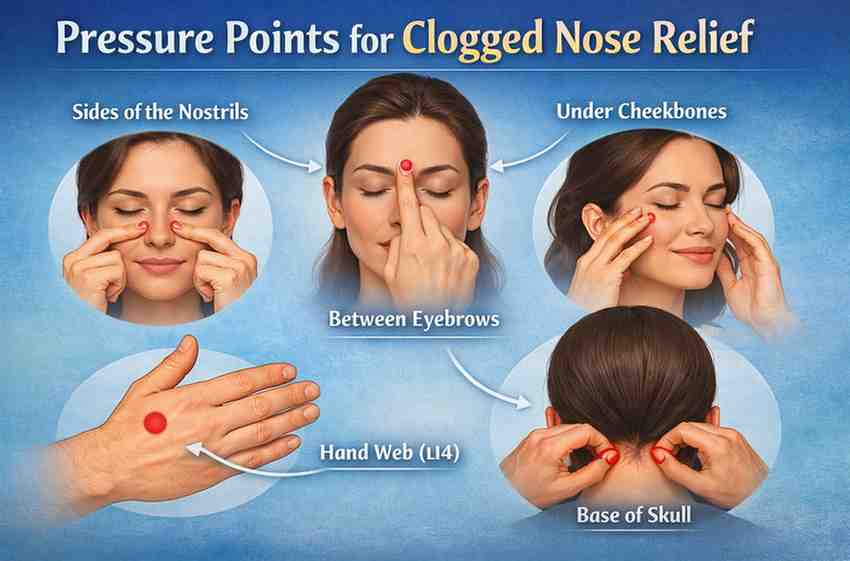
The 5 Pressure Points That Actually Get Used (Not Just Listed)

I’m not going to dump a long anatomy lecture on you. These are the ones I’ve consistently seen people use.

1. The Sides of the Nostrils (LI20 Area)

This is the first one almost everyone tries.

You press gently on the outer edges of your nostrils, right where the cheek meets the nose.

What I’ve seen:

  • Mild congestion responds well here.

  • Allergy-related stuff sometimes eases within 1–3 minutes.

  • People press way too hard.

Almost everyone I’ve seen struggle with this does this one thing wrong:

They jab instead of press.

This isn’t a bruise-it technique. It’s steady pressure, 60–90 seconds, slow breathing.

When it works, the shift feels gradual — like one nostril quietly opening.

Not dramatic.
But noticeable.


2. Between the Eyebrows (Yintang)

This one surprised me after watching so many people try it.

It doesn’t always “clear” the nose instantly.

But it reduces that heavy sinus pressure feeling.

And that changes everything.

When sinus congestion comes with:

  • Forehead tension

  • Eye strain

  • Headache

This point often reduces the pressure sensation even if airflow isn’t fully restored.

Most people expect instant airflow.
But what they get first is pressure relief.

That’s still a win.


3. Under the Cheekbones (Maxillary Sinus Area)

This is where I’ve seen the biggest difference in people with sinus infections or thick congestion.

Firm, circular pressure under the cheekbones.

What consistently works:

  • Slow circles

  • 2–3 minutes

  • Leaning slightly forward

What repeatedly fails:

  • Doing it for 10 seconds

  • Not breathing deeply

  • Trying it once and quitting

This one often needs repetition — 2–3 times a day.


4. The Web Between Thumb and Index Finger (LI4)

This one confuses people.

“How is my hand connected to my nose?”

Fair question.

From what I’ve seen, this works best when congestion is tied to overall inflammation or headache.

It’s not magic.
But it seems to modulate pain and pressure perception.

Common mistake?

Pressing lightly and expecting dramatic results.

This one needs firm, tolerable pressure. 60 seconds per hand.

And no — it’s not for pregnant individuals. I always tell people that upfront.


5. Base of the Skull (Occipital Points)

I didn’t expect this to be such a common issue — but a lot of sinus pressure comes with neck tension.

Pressing at the base of the skull where the neck meets the head can:

  • Reduce tension

  • Improve drainage sensation

  • Relieve that “blocked head” feeling

Especially in people who sit at desks all day.

This one doesn’t clear mucus.
It reduces structural tension.

Big difference.


How Long Does It Take to Work?

Here’s the honest pattern I’ve seen:

  • Mild congestion: 1–5 minutes of noticeable shift

  • Moderate sinus pressure: 5–15 minutes

  • Severe infection-level blockage: minimal change

If someone is fully blocked due to infection, thick mucus, or structural issues?

Pressure points alone rarely solve it.

They help with discomfort.
Not necessarily full airflow restoration.

And that’s where expectations usually break.


What Most People Get Wrong

Almost everyone I’ve seen struggle with this does at least one of these:

  • Trying it once and declaring it useless

  • Not combining it with hydration

  • Pressing too hard

  • Holding their breath

  • Doing it while stressed and rushed

This works better when:

  • You’re seated

  • Shoulders relaxed

  • Slow nasal breathing (even if limited)

  • 2–3 rounds

It’s a regulation technique. Not a brute-force one.


Is It Worth Trying?

Short answer?

Yes — if:

  • Your congestion is mild to moderate

  • You want a non-drug option

  • You’re okay with subtle improvement

No — if:

  • You expect instant spray-level decongestion

  • You have severe sinus infection

  • You’re unwilling to try it consistently

It’s low-risk.
Low-cost.
Low downside.

That alone makes it reasonable to test.


Who Will Probably Hate This Approach

Let me be blunt.

If you want fast, dramatic, guaranteed results — this will frustrate you.

If you’re already irritated and impatient, you’ll likely press for 30 seconds and give up.

And if your congestion is caused by:

  • Deviated septum

  • Nasal polyps

  • Advanced sinus infection

This won’t fix the root issue.

It’s supportive.
Not curative.


Common Objections I Hear

“There’s no science behind this.”
There is some physiological basis around nerve pathways and circulation — but it’s not as robust as pharmaceutical trials. That said, real-world observation shows consistent symptom modulation.

“It didn’t work the first time.”
Most people need repetition.

“It feels silly.”
So does mouth breathing at 3:00 AM. Pick your discomfort.


Quick FAQ (People Also Ask Style)

Do pressure points really relieve a clogged nose?
For mild to moderate congestion, they often reduce pressure and slightly improve airflow.

How many times a day should I do it?
2–3 sessions daily during congestion episodes seems common in people who see benefit.

Can this replace decongestants?
Not usually for severe cases.

Is it safe?
Generally yes — if you avoid excessive force and know contraindications (like LI4 during pregnancy).


Reality Check Section

This is not:

  • A cure for chronic sinusitis

  • A replacement for antibiotics when needed

  • A structural correction for nasal anatomy

It is:

  • A tension modulator

  • A circulation stimulator

  • A discomfort reducer

Different category.

That distinction matters.


Practical Takeaways

If you’re going to try pressure points for clogged nose relief, here’s what I’d tell you based on what I’ve seen work repeatedly:

  • Start with nostril sides + cheekbones

  • Add eyebrow point if forehead pressure exists

  • Use hand point for headache involvement

  • Stay consistent for 2–3 days

  • Pair with hydration

What to avoid:

  • Over-pressing

  • Expecting instant dramatic results

  • Using it once and quitting

Emotionally?

Expect mild hope.
Small shifts.
Gradual improvement.

Patience here looks like repetition, not intensity.


So no — this isn’t magic.

But I’ve watched enough people go from “nothing works” to “okay, that actually helped a little” to know it deserves a fair trial.

Sometimes relief isn’t dramatic.

Sometimes it’s just enough space to breathe a little easier.

And honestly, when you’ve been congested for days?

That small shift feels bigger than it sounds.

Ways to Lose Belly Fat for Men: 9 Honest Fixes That Actually Work (Even If You’re Frustrated)

Ways To Lose Belly Fat For Men 9 Honest Fixes That Actually Work Even If Youre Frustrated 1
Ways to Lose Belly Fat for Men 9 Honest Fixes That Actually Work Even If Youre Frustrated

Honestly, most men I’ve watched try to lose belly fat hit a wall somewhere around week two.

They start strong. Cut carbs. Run hard. Maybe skip dinner. The scale drops a few pounds. Then it stalls. Or worse — the belly looks exactly the same.

And that’s usually when frustration kicks in.

From what I’ve seen, the problem isn’t effort. It’s direction. Most guys are trying harder instead of trying smarter. They’re following random advice from YouTube, copying what worked for a shredded 24-year-old, or punishing themselves into exhaustion.

If you’re searching for Ways to Lose Belly Fat for Men, you’re probably not looking for theory. You want to know:

  • Why your stomach is the last thing to change

  • Whether this is even worth the effort

  • How long it actually takes

  • And what actually works in real life

Let me walk you through what I’ve observed over and over again.

Not hype. Not miracles.

Just patterns.


Why Belly Fat Is So Stubborn for Men (And Why That Surprises Most Guys)

This honestly surprised me after watching so many people try it.

Men tend to store fat around the abdomen because of hormonal patterns — especially testosterone levels and insulin sensitivity. But here’s what most people I’ve worked with mess up at first:

They assume belly fat is a “target” problem.

It’s not.

You can’t spot reduce it. I’ve seen dozens try — endless crunches, ab machines, sweat belts. The belly doesn’t care.

Fat loss happens system-wide. The belly just tends to leave last.

And that’s where the mental battle begins.

Most guys quit when they’re 70% of the way there.


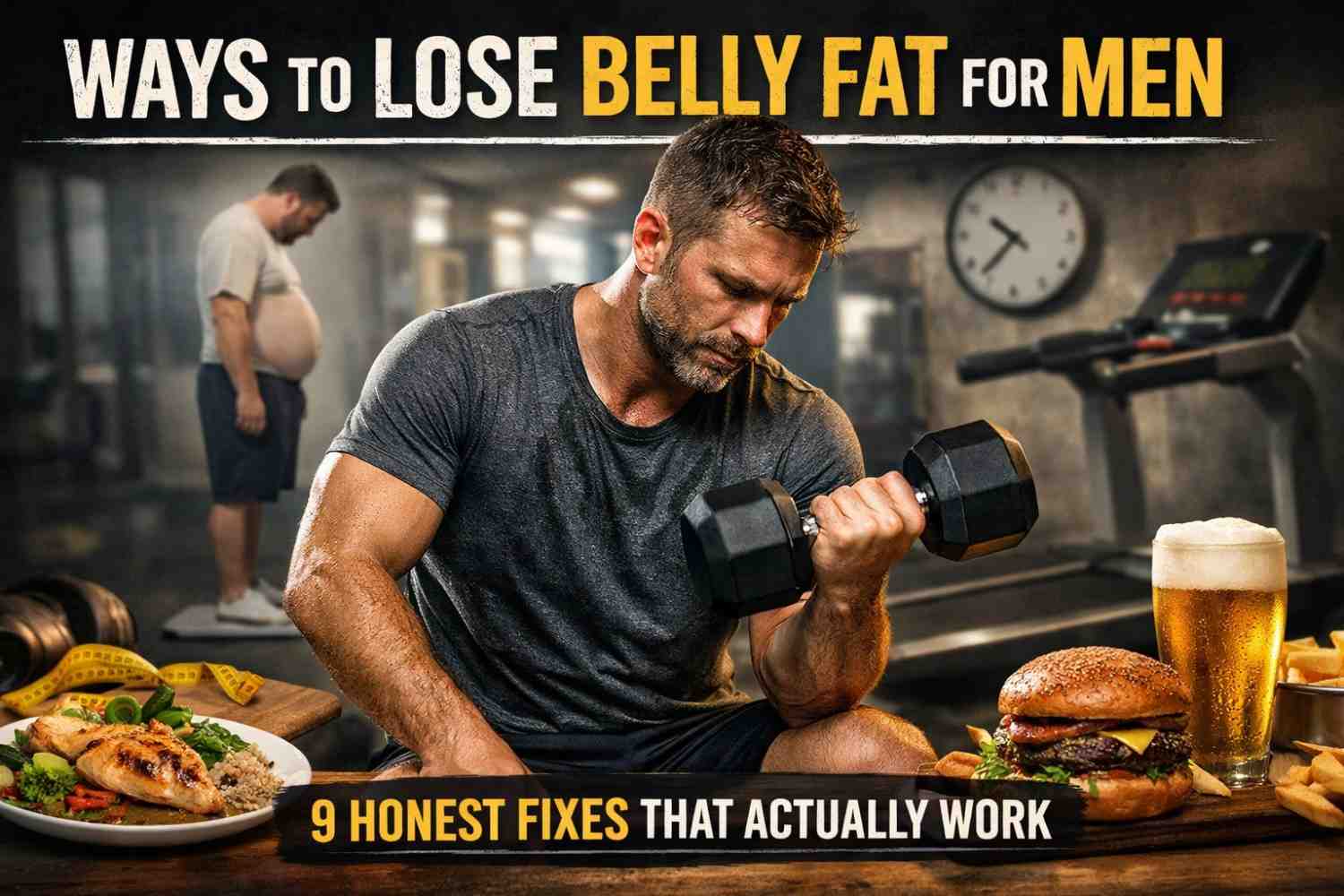
The 9 Ways to Lose Belly Fat for Men That Consistently Work

These aren’t trendy hacks. These are patterns I’ve seen succeed repeatedly.

1. Lift Weights (Even If You Think Cardio Is Better)

Almost everyone I’ve seen struggle with this does this one thing wrong:

They focus only on cardio.

Running every day. Sweating buckets. Burning calories.

But strength training changes body composition. It preserves muscle while losing fat. That matters.

What I’ve seen work best:

  • 3–4 weight sessions per week

  • Compound movements (squats, presses, rows, deadlifts)

  • Moderate intensity

  • Progressive overload

The guys who lift consistently? Their waistlines shrink more predictably.

The guys who only run? Often smaller… but still soft.


2. Stop Slashing Calories Too Hard

This is the mistake I didn’t expect to be so common.

Men go extreme.

They drop from 2,800 calories to 1,400 overnight.

Results?
Fast drop. Then exhaustion. Then binge. Then guilt.

From what I’ve seen, sustainable fat loss happens around:

  • 300–500 calorie deficit

  • High protein (0.7–1g per pound bodyweight)

  • Fiber-rich foods

  • Minimal liquid calories

Aggression backfires.

Consistency wins.


3. Walk More Than You Think You Need To

This one feels too simple, so people ignore it.

But almost every guy who lost belly fat long-term increased daily steps significantly.

8,000–12,000 per day.

Walking regulates stress, improves insulin sensitivity, and doesn’t spike hunger like intense cardio sometimes does.

Honestly? It’s boring.

But it works.


4. Fix Sleep Before You Add More Workouts

I’ve seen this derail progress more than bad diet.

Men sleeping 5–6 hours a night wondering why fat won’t budge.

Poor sleep increases cortisol. That increases belly fat retention.

When guys go from 5 hours to 7–8 consistently?

Cravings drop. Energy improves. Fat loss accelerates.

It’s not flashy advice.

But it’s real.


5. Reduce Alcohol (Not Just Calories)

This is where resistance usually shows up.

“I only drink on weekends.”

That’s often 1,200+ calories.

Plus:

  • Lower testosterone

  • Increased belly fat storage

  • Poor sleep

  • Bad food decisions

From what I’ve seen, reducing alcohol alone shrinks waistlines noticeably within 4–6 weeks.

You don’t have to quit forever.

But you do have to be honest.


6. Train Your Core — But Not For Fat Loss

This is a nuance people misunderstand.

Core training doesn’t burn belly fat.

But it improves posture and tightens appearance.

When someone builds:

  • Strong transverse abdominis

  • Obliques

  • Lower back

The stomach looks flatter even before full fat loss happens.

It’s subtle. But motivating.


7. Manage Stress (Or It Will Manage Your Waistline)

Almost every high-pressure professional I’ve seen struggles with stubborn belly fat.

Stress → cortisol → abdominal fat storage.

This doesn’t mean “do yoga daily.”

It means:

  • Stop overtraining

  • Take rest days

  • Build downtime

  • Protect sleep

Sometimes the fix isn’t more work.

It’s less chaos.


8. Track Something (Even Lightly)

The guys who “wing it” usually plateau.

The guys who track:

  • Calories

  • Protein

  • Steps

  • Workouts

See patterns.

You don’t need obsessive macro spreadsheets.

But awareness matters.


9. Give It 8–12 Weeks Minimum

This is where expectations break.

Most men expect visible belly fat reduction in 2–3 weeks.

Realistically?

Noticeable change for most:
6–8 weeks

Clear reduction:
8–12 weeks

Significant transformation:
3–6 months

If you’re 30+, progress may be slower.

Not impossible.

Just slower.


Common Mistakes That Slow Belly Fat Loss

From what I’ve seen repeatedly:

  • Cutting calories too aggressively

  • Obsessing over abs instead of total fat loss

  • Drinking more than admitted

  • Sleeping poorly

  • Doing random workouts with no progression

  • Expecting visible results in 14 days

Most people I’ve worked with mess this up at first.

They think effort alone guarantees results.

It doesn’t.

Structure does.


How Long Does It Take to Lose Belly Fat for Men?

Short answer:

  • 1–2 weeks: scale shifts

  • 3–4 weeks: subtle visual change

  • 6–8 weeks: others start noticing

  • 12+ weeks: real difference

But here’s the emotional truth:

Weeks 2–4 feel the hardest.

That’s when doubt creeps in.

Almost everyone I’ve seen wants to quit right there.

If you push through that phase — things shift.


“Is It Worth It?” — The Honest Answer

If you’re expecting rapid six-pack abs?

Probably not worth it.

If you’re aiming for:

  • Better health

  • Lower blood pressure

  • Higher testosterone

  • Better energy

  • More confidence

Then yes.

Every single man I’ve seen reduce belly fat moderately reports:

  • Better mood

  • Better posture

  • Better sleep

  • More confidence in social situations

It’s not just aesthetics.

It’s identity.


Who This Approach Is NOT For

Let’s be real.

This isn’t for:

  • Men expecting extreme 30-day transformations

  • Anyone unwilling to adjust alcohol intake

  • People who refuse strength training

  • Those who won’t track anything

It also may not be enough if you have:

  • Severe hormonal issues

  • Untreated thyroid problems

  • Chronic medical conditions

In those cases, medical support matters.


Objections I Hear All the Time

“I’m over 40. It’s impossible now.”
Slower? Yes. Impossible? No. I’ve seen 45-year-olds make visible changes in 4–5 months.

“I don’t have time to work out.”
Three 45-minute sessions per week is enough.

“My genetics are bad.”
Genetics affect speed. Not possibility.

“I eat healthy already.”
Healthy doesn’t always mean calorie-appropriate.


Quick FAQ (For Straight Answers)

Can you target belly fat specifically?
No. You lose total body fat. Belly goes last.

Do supplements help?
Minimal impact compared to diet, training, sleep.

Is cardio necessary?
Helpful, not mandatory. Walking + lifting works.

Does fasting work?
For some. Only if it creates sustainable calorie control.


The Reality Check Most Men Need

You didn’t gain belly fat in 4 weeks.

You probably built it over years:

  • Stress

  • Inconsistent training

  • Social drinking

  • Busy schedule

  • Late nights

Expecting it to disappear instantly creates disappointment.

From what I’ve seen, men who detach from urgency make better progress.

They treat it like skill-building.

Not punishment.


Practical Takeaways (If You Want Something Concrete)

If I had to simplify this for someone serious:

Do this for 12 weeks:

  • Lift 3–4x per week

  • Walk 8,000+ steps daily

  • Eat high protein

  • Maintain moderate calorie deficit

  • Sleep 7+ hours

  • Reduce alcohol

  • Track progress weekly

Avoid:

  • Crash dieting

  • Random workout programs

  • Comparing your timeline to 20-year-olds

  • Obsessing over daily scale changes

Expect emotionally:

  • Doubt around week 3

  • Frustration around week 5

  • Momentum around week 8

  • Real confidence around week 12

That’s the pattern I’ve seen.

Over and over.


Still — this isn’t magic.

Some weeks will feel flat. Some workouts will suck. Some measurements won’t move.

But I’ve watched enough men stop feeling stuck once they approached belly fat with structure instead of intensity.

Sometimes that shift — from chaos to clarity — is the real win.

The belly follows.

Bed Bug Freeze Treatment: 7 Honest Insights That Bring Relief (If You Do It Right)

Bed Bug Freeze Treatment 7 Honest Insights That Bring Relief If You Do It Right 1
Bed Bug Freeze Treatment 7 Honest Insights That Bring Relief If You Do It Right

Honestly, most people I’ve watched deal with bed bugs hit a breaking point before they ever find a solution that works.

It usually starts the same way.
A few bites.
Denial.
Late-night Googling.
Then a quick trip to the hardware store.

And somewhere in that spiral, someone grabs a can labeled Bed Bug Freeze Treatment because it sounds clean. Immediate. Non-toxic. Like something that should just solve it.

From what I’ve seen across dozens of homes and conversations, this is where hope and frustration start wrestling each other.

Because freeze treatment can work.

But almost everyone I’ve seen struggle with this does one thing wrong — they expect it to behave like a full extermination strategy instead of what it actually is: a precision tool.

Let me walk you through what I’ve learned by watching real people try this in real U.S. homes.


Why People Try Bed Bug Freeze Treatment in the First Place

There are patterns here.

Most people who choose Bed Bug Freeze Treatment fall into one of these categories:

  • They’re scared of chemical exposure (kids, pets, asthma concerns)

  • They live in apartments and don’t control the whole building

  • They can’t afford a $1,500–$3,000 heat treatment

  • They want something they can do right now

  • They feel embarrassed and don’t want to tell anyone

I’ve seen single moms use it because they couldn’t take off work for prep-heavy treatments.
College students use it in dorms.
Landlords try it between tenants.

It feels empowering. Like taking control.

And honestly? That emotional shift matters.

But here’s where reality steps in.


What Bed Bug Freeze Treatment Actually Does (And Doesn’t)

Most freeze sprays sold in the U.S. use carbon dioxide (CO₂) or similar cryogenic technology.

They work by:

  • Rapidly freezing bed bugs on contact

  • Killing exposed adults and nymphs instantly

  • Leaving behind no chemical residue

What they do not do:

  • Penetrate deep into walls

  • Kill hidden eggs reliably

  • Travel through voids

  • Replace a whole-home strategy

This surprised me after watching so many people try it.

They assume “freeze” means total elimination.

But it’s more like using a sniper rifle — not a bomb.

If you hit the bug directly? It dies.
If it’s two inches deeper in a crack? It survives.


The Biggest Mistake I Keep Seeing

Almost everyone I’ve seen struggle with this does this one thing wrong:

They spray the mattress.

And stop there.

Mattresses are rarely the core hiding zone.

From what I’ve observed in multiple homes across different states — Texas, Florida, Ohio — bed bugs prefer:

  • Bed frames (especially screw holes)

  • Headboards (behind mounted ones)

  • Box spring interiors

  • Baseboards near beds

  • Nightstands within 5 feet

People freeze what they can see.

The infestation survives where they don’t look.

Then two weeks later, they assume the product failed.

It didn’t.

The targeting did.


How Long Does Bed Bug Freeze Treatment Take to Work?

Direct answer:

  • Instant kill on contact

  • 2–4 weeks to know if you actually controlled the problem

  • Often requires multiple passes

Here’s what usually happens:

Week 1:
People feel hopeful. Fewer visible bugs.

Week 2:
A bite appears. Panic.

Week 3–4:
Either things stabilize — or it becomes clear deeper areas were missed.

Bed bug eggs hatch in about 6–10 days under normal room conditions. If you didn’t eliminate egg clusters, you’re seeing generation two.

That’s not failure.

That’s incomplete coverage.


What Consistently Works (From What I’ve Seen)

Freeze treatment works best when it’s part of a layered approach.

The setups that actually stabilized infestations usually included:

  • Mattress encasements

  • Interceptor traps under bed legs

  • Thorough vacuuming (especially seams and cracks)

  • Decluttering within 3 feet of the bed

  • Repeated inspections every 5–7 days

The people who treated this like a process — not a one-day fix — had the best outcomes.

One guy I worked with in Arizona did something smart.

He froze visible bugs nightly for 10 days straight.
He vacuumed daily.
He sealed cracks.
He isolated his bed from the wall.

It wasn’t glamorous.
It was consistent.

His infestation stopped spreading.

That said — it wasn’t instant.


What Repeatedly Fails

Let me be blunt.

These approaches almost always fail:

  • One single freeze session

  • Spraying randomly without inspection

  • Ignoring the bed frame

  • Skipping follow-up checks

  • Using it as the only solution in heavy infestations

If you’re seeing bugs during the day, in multiple rooms, or crawling on walls — freeze treatment alone probably isn’t enough.

I’ve watched people burn weeks hoping it would be.


Is Bed Bug Freeze Treatment Worth It?

Short answer:

It depends on the scale.

It’s worth it if:

  • You caught the infestation early

  • You can clearly identify hiding spots

  • You’re willing to inspect repeatedly

  • You’re pairing it with physical prevention

It’s probably not worth it if:

  • You have widespread infestation

  • You live in a multi-unit building with active spread

  • You’re expecting one-and-done results

  • You can’t commit to follow-up work

Most people I’ve worked with mess this up at first because they underestimate how thorough they need to be.


Who Will Hate This Approach

Let’s be honest.

This is not for:

  • People who want instant total elimination

  • People unwilling to inspect cracks and seams

  • People uncomfortable handling insects directly

  • Large-scale infestations in houses over 2,000 sq ft

Freeze treatment is hands-on.

You’ll be close to the problem.

Some people just don’t want that. And that’s okay.


What People Don’t Expect

Two things surprised me after watching so many people try this.

  1. How loud the spray can be (it startles people).

  2. How emotionally draining repeated inspections feel.

The second one matters more.

You think you’re done.

Then you keep checking.

And checking.

That mental loop is exhausting.

Almost everyone I’ve seen struggle with this underestimates the emotional fatigue.


FAQ – Real Questions I Keep Hearing

Does Bed Bug Freeze Treatment kill eggs?

Sometimes — but not reliably if they’re hidden deep in fabric folds or cracks.

Direct exposure is key.

Is it safe around pets and kids?

Most CO₂-based freeze sprays leave no chemical residue, which is why many families prefer them. Still, follow label instructions carefully.

How many times should I use it?

Plan on multiple inspections over 2–4 weeks.

Can it replace professional heat treatment?

Not in heavy infestations. Heat penetrates entire rooms. Freeze is targeted.


Objections I Hear (And What I’ve Observed)

“If it kills on contact, why wouldn’t it solve everything?”

Because bed bugs hide extremely well.
Contact is the limitation.

“I sprayed and still got bitten.”

Likely missed eggs or secondary hiding spots.

“I don’t want chemicals.”

That’s valid. But non-chemical doesn’t mean effortless.


Reality Check Section

Let me ground this.

Bed Bug Freeze Treatment is:

  • A tool

  • Effective for exposed bugs

  • Best for early or contained infestations

  • Labor-intensive

It is not:

  • Magic

  • Passive

  • A substitute for building-wide management

  • A guarantee

If you’re in an apartment building where neighbors aren’t treating, you may keep seeing reinfestation.

That’s not your failure.

That’s structural.


Practical Takeaways

If you’re going to try this, here’s what I’d tell a close friend:

Do this:

  • Inspect first, spray second.

  • Remove drawers from nightstands.

  • Flip the box spring.

  • Use a flashlight.

  • Repeat weekly for a month.

  • Isolate your bed from walls.

Avoid this:

  • Spraying blindly.

  • Skipping follow-ups.

  • Assuming one bite means total failure.

  • Ignoring clutter.

Expect this emotionally:

  • Anxiety at first.

  • Hope after initial kills.

  • Doubt in week two.

  • Relief only after consistency.

Patience doesn’t look dramatic here.

It looks like checking seams with a flashlight at 10 p.m. again.


Still — I’ve watched people regain control this way.

Not instantly.
Not perfectly.

But steadily.

And that steady shift — from helpless to proactive — often reduces more stress than the bugs themselves.

So no, Bed Bug Freeze Treatment isn’t magic.

But when it’s used as a focused, repeatable tool instead of a miracle spray, I’ve seen it bring real relief in real homes.

Sometimes that’s enough to finally sleep again. ????️

Boost Your Stress Hormone: 9 Brutally Honest Lessons I Learned the Hard Way

Boost Your Stress Hormone 9 Brutally Honest Lessons I Learned The Hard Way 1
Boost Your Stress Hormone: 9 Brutally Honest Lessons I Learned the Hard Way

I’ll be real with you… I didn’t expect to ever google anything like boost your stress hormone.
It sounds like the kind of phrase a sleep-deprived college student mumbles during finals week. Or something a gym bro whispers before deadlifting a car.

But yeah, life pushed me into that weird corner where I realized my body wasn’t stressed enough.
And honestly?
That confused me because I spent years trying to do the opposite — reduce stress, avoid burnout, drink herbal tea like it could fix my personality.

Then I learned something surprising:

Your stress hormone (cortisol) isn’t the enemy.

When it’s too low, everything feels wrong — tired, foggy, slow, unmotivated, “why am I like this?” vibes.

I didn’t expect that at all.
But once I connected the dots, things finally made sense.

This is the messy, trial-and-error journey that followed.


Why I Even Looked Into Raising Cortisol (Yes… the opposite of what everyone says)

Okay, let’s not pretend this is normal.
People usually want to lower stress.
Meanwhile, I was sitting there wondering why I felt like a phone stuck at 3% battery.

Here’s what pushed me toward the phrase “boost your stress hormone” in the first place:

  • I woke up tired no matter what

  • My brain felt like mashed potatoes

  • My motivation was “ehhhhh” at best

  • I couldn’t handle workouts I used to crush

  • Coffee helped for 20 minutes then made me crash

  • I felt weirdly anxious and exhausted

  • My body felt too calm… like “something’s missing” calm

At first I thought it was depression.
Then burnout.
Then lack of sleep.

But the more I paid attention, the more it felt like my engine just wasn’t firing.
Like I was stuck in idle mode.

That’s when I fell into the rabbit hole about cortisol being too low, not too high.
And how sometimes you actually need to boost your stress hormone so your system wakes the hell up.

Not gonna lie — that honestly surprised me.


1. “Boost Your Stress Hormone” Doesn’t Mean “Become A Stress Monster”

Here’s what I completely misunderstood at first:

Cortisol isn’t the “bad guy.”
It’s your morning wake-up hormone, your focus hormone, your get-sh*t-done hormone.

If cortisol is too low:

  • you drag through the day

  • you feel cold and weak

  • everything feels heavier than it should

  • your mood is flat

  • your energy doesn’t rise even after sleep

  • you can’t handle any pressure

  • your appetite gets weird

So boosting your stress hormone isn’t about panic or chaos.
It’s about turning the lights back on inside your body.

I wish someone told me that earlier.


2. The Signs I Ignored Like an Idiot

Looking back, the signs were screaming at me.
But I just kept brushing them off because they didn’t fit the “stress = bad” narrative.

These are the things I kept ignoring:

  • craving salt like it owed me money

  • feeling lightheaded when standing

  • 4 p.m. dizziness

  • no appetite in the morning

  • tired after eating

  • waking up more exhausted than when I went to sleep

  • needing naps at weird times

  • zero motivation

  • random muscle weakness

I thought I was just being dramatic.
Turns out my body needed a cortisol boost just to function normally.


3. The Stupid Things I Tried First (Please Don’t Do This)

Ah yes, the “I can fix this in 24 hours” phase.
We all know it. We all regret it.

Here’s what I totally messed up:

  • Drinking double the coffee (my heart hated me)

  • Eating almost no carbs (why did I do this??)

  • Taking cold showers every morning like a Navy SEAL

  • Exercising way too hard

  • Staying up late thinking my problem was “not enough hustle”

  • Trying meditation apps that made me fall asleep mid-sentence

  • Googling symptoms until 2 a.m.

None of that helped.
Some of it made my cortisol worse.
(Yes, overtraining lowers stress hormones. Who knew??)


4. What Actually Worked (And Why It Shocked Me)

I expected extreme biohacking.
What worked was… surprisingly normal.

(1) Eating breakfast within an hour of waking up

Huge change.
A real breakfast, not just coffee pretending to be food.

Protein + carbs = happy cortisol.

(2) Salt — not too much, just enough

Low cortisol messes with electrolytes.
Adding a pinch of salt to water in the morning felt like flipping a switch.

(3) Natural morning light

I hated this advice.
Then I tried it.
Boom — cortisol boost.
Felt alert for the first time in months.

(4) Short bursts of exercise (not intense)

Like:

  • brisk walking

  • light jogging

  • 10-minute movement

Not pushing to the point of fatigue.
Just telling my body: “Hey, wake up.”

(5) A consistent sleep schedule

Not perfect sleep.
Just consistency.

My cortisol loved that.

(6) Having carbs at dinner

Yes, really.
Carbs at night helped me sleep deeper → better cortisol the next day.

(7) Lowering caffeine

Total plot twist.
Less caffeine = more natural cortisol.

(8) Doing something stimulating in the morning

Not doomscrolling.
Something like:

  • music

  • sunlight

  • movement

  • cold water on the face

My body responded to it way faster than I expected.


5. The Timeline (Because I Hate Vague “It Takes Time” Advice)

Here’s how long it took for things to change when I tried to boost my stress hormone properly:

  • Week 1: Morning grogginess slightly improved

  • Week 2: More stable energy

  • Week 3: No afternoon crashes

  • Week 4: Motivation came back

  • Week 6: Mood felt lighter

  • Week 8: Full “I feel normal again” mode

The turning point was around week 3.
Before that, I kept doubting everything.


6. Strange Tricks That Worked Way Better Than Expected

Some of these sound ridiculous but trust me… my body was like “Finally, thank you.”

1. Standing outside for 5 minutes after waking

Not even walking.
Just existing in sunlight.

2. Breathing exercises that weren’t slow and relaxing

Fast, energizing breaths made my cortisol rise naturally.

3. Eating something salty + sweet mid-morning

Game changer.

4. Taking breaks BEFORE I was tired

Preventing crashes boosted my stress hormone steadier than forcing through fatigue.

5. Keeping mornings predictable

Cortisol loves routine more than toddlers love chaos.


7. The Emotional Rollercoaster Nobody Warned Me About

I’ll be honest… this part blindsided me.

Boosting your stress hormone makes you feel:

  • more alert

  • more focused

  • more alive

But there’s a crossover moment where you might also feel:

  • sensitive

  • irritable

  • overstimulated

It’s like your brain is waking up after a long nap and needs a second to adjust.

I didn’t expect that.
At one point I actually thought: “Am I too stressed?? Did I overdo it??”

But it leveled out.
Once my cortisol hit a healthy range, everything felt smooth.


8. When to Chill and When to Actually Worry

If you’re trying to boost your stress hormone, here’s my honest guideline:

Totally normal:

  • mornings feel impossible

  • energy stays flat

  • emotions feel muted

  • you’re tired but can’t rest

  • you crash after workouts

Time to get checked:

  • extreme dizziness

  • fainting

  • darkening skin patches

  • high salt cravings

  • waking up shaking

  • extreme fatigue even after weeks of lifestyle changes

Nothing here is about panic — just awareness.


9. The Big Lessons I Wish Someone Told Me Earlier

Here’s the simple version of everything I learned:

1. Cortisol isn’t evil

It’s your body’s “go” button.

2. Low cortisol is way more common than people admit

Especially after chronic stress.

3. Boosting it is more about rhythm than intensity

Habits > hacks.

4. Breakfast matters more than coffee

Your gut and brain will thank you.

5. Light is medicine

I didn’t want to believe this.
I was wrong.

6. You can’t “push through” low cortisol

You’ll crash. Hard.

7. Every small improvement stacks up

Even if it feels slow.


So yeah… that’s the messy, very human, very “I didn’t expect to learn any of this” story of how I figured out how to boost your stress hormone without wrecking myself.

If you’re in that low-energy limbo right now, don’t panic.
Your body isn’t broken. It’s just tired and trying to reboot.

And once you give it the right nudges?
Everything — mood, energy, appetite, motivation — slowly clicks back into place.

Not magic.
But definitely manageable.

What is Osteoarthritis? 9 Hard Truths That Finally Bring Relief (Most People Learn Too Late)

What Is Osteoarthritis 9 Hard Truths That Finally Bring Relief Most People Learn Too Late 1
What is Osteoarthritis 9 Hard Truths That Finally Bring Relief Most People Learn Too Late

Honestly, the moment most people realize something is wrong with their joints… it’s not during exercise.

It’s something smaller.

Getting out of a car.
Standing up from a couch.
Walking down stairs in the morning.

I’ve watched this play out with friends, relatives, older neighbors, even people in their late 30s who assumed joint pain was “temporary.”

At first it’s brushed off.

“Probably just stiffness.”
“Maybe I slept wrong.”
“Must be aging.”

Then months go by.

The stiffness keeps showing up.
The knee clicks more.
The fingers feel swollen in the morning.

Eventually someone Googles the question almost everyone asks at that point:

“What is osteoarthritis?”

And here’s the strange part I’ve noticed after seeing so many people go through it…

Most people already have osteoarthritis symptoms long before they understand what it actually is.

And the misunderstanding is where most of the frustration starts.


What Is Osteoarthritis (In Plain Human Terms)

From what I’ve seen, medical definitions often confuse people.

So here’s the simplest explanation that actually matches what people experience.

Osteoarthritis is gradual joint wear that happens when the protective cartilage inside a joint slowly breaks down.

Cartilage is basically the smooth cushion between bones.

When it’s healthy:

  • joints glide smoothly

  • movement feels quiet

  • pressure spreads evenly

When cartilage begins thinning or roughening:

  • bones rub more directly

  • inflammation appears

  • stiffness becomes common

  • pain appears during movement

Over time the joint becomes less efficient.

Not destroyed overnight.
Not suddenly broken.

Just… worn.

And that slow progression is exactly why people underestimate it.

Because the changes happen quietly for years.


The Pattern I’ve Seen Again and Again

Most people I’ve talked with about osteoarthritis share a weirdly similar timeline.

It usually unfolds in phases.

Phase 1 — Mild stiffness nobody worries about

This is where almost everyone ignores the signs.

Typical comments I hear:

  • “My knee just feels tight in the morning.”

  • “My hands take a minute to warm up.”

  • “My hip feels stiff when I stand.”

Pain level?

Usually very low.

Which is exactly why nothing changes yet.


Phase 2 — Movement starts triggering discomfort

Months later something shifts.

People begin noticing:

  • knee pain walking downstairs

  • hip pain after long sitting

  • finger stiffness gripping things

  • ankle discomfort after exercise

This is where people finally start researching what osteoarthritis is.

But here’s the surprising thing.

Most people at this stage still believe it’s temporary inflammation.

Not structural wear.


Phase 3 — The joint starts complaining daily

This is where frustration kicks in.

Symptoms become more consistent:

  • morning stiffness lasting longer

  • grinding or clicking sounds

  • swelling around joints

  • reduced range of motion

I’ve watched people reach this point and say: “I wish I paid attention earlier.”

And honestly… that’s extremely common.


Why People Develop Osteoarthritis

Most people assume osteoarthritis is simply aging.

But from what I’ve observed across different cases, it’s rarely just age alone.

Usually it’s a mix of things.

1. Joint overuse patterns

Athletes
Manual labor workers
Runners
Construction workers

Years of repetitive pressure can slowly wear cartilage.

Even fitness enthusiasts run into this if recovery is ignored.


2. Previous injuries

This one surprised me after hearing so many stories.

A knee injury in your 20s…

Can quietly turn into osteoarthritis in your 40s.

Old injuries change how joints distribute pressure.

Small imbalances build up over time.


3. Body weight pressure

Every extra pound increases load on weight-bearing joints.

Particularly:

  • knees

  • hips

  • lower spine

And most people don’t realize how dramatically this changes joint stress.

Even 10–15 pounds can shift joint mechanics.


4. Muscle weakness around joints

This is something physical therapists mention often.

Weak muscles mean joints absorb more force.

Strong muscles act like shock absorbers.

Without them, cartilage takes the hit.


5. Genetics

Some families simply develop osteoarthritis earlier.

Especially in:

  • hands

  • hips

  • knees

I’ve seen siblings experience similar joint issues within just a few years of each other.


What Osteoarthritis Actually Feels Like

People researching what is osteoarthritis often want to know something simpler:

“What does it actually feel like day to day?”

From what I’ve seen people describe, the feeling is very specific.

Common sensations

  • deep aching inside the joint

  • stiffness after inactivity

  • sharp pain during certain movements

  • grinding or popping sounds

  • reduced flexibility

Morning stiffness is incredibly common.

But interestingly…

It usually improves once people start moving.

That detail often surprises people.


The 5 Biggest Mistakes I See People Make

Almost everyone I’ve seen struggle with osteoarthritis makes at least one of these early on.

Sometimes several.

1. Waiting too long before addressing it

People assume pain must be “severe” before it deserves attention.

But early intervention helps the most.

The earlier people start adjusting movement and strengthening muscles…

The better the joint adapts.


2. Completely avoiding movement

This one is extremely common.

Pain shows up → people stop moving the joint.

Unfortunately, inactivity often makes stiffness worse.

Controlled movement is usually better than total rest.


3. Chasing miracle supplements

I’ve watched people spend hundreds of dollars on:

  • collagen powders

  • cartilage rebuild formulas

  • exotic joint pills

Some supplements may help symptoms slightly.

But they rarely reverse cartilage loss.

That expectation creates disappointment.


4. Ignoring muscle strengthening

Physical therapists almost always emphasize one thing:

Strong muscles protect joints.

Yet many people focus only on pain relief.

Not structural support.


5. Expecting quick fixes

Osteoarthritis changes happened slowly.

Recovery improvements also happen slowly.

Most people underestimate that timeline.


What Actually Helps (From What I’ve Seen Work)

Watching people manage osteoarthritis over time, certain strategies consistently help.

Not instantly.

But gradually.

Gentle strength training

Muscles around the joint absorb impact.

This often includes:

  • quadriceps strengthening for knees

  • glute strengthening for hips

  • grip exercises for hands

People who stay consistent here often report the biggest long-term improvements.


Low-impact movement

Activities that reduce joint shock:

  • swimming

  • cycling

  • walking

  • elliptical machines

These keep joints moving without excessive pressure.


Weight management

Even modest weight loss can reduce knee stress significantly.

Several people I’ve known noticed noticeable relief after losing 10–20 pounds.


Heat therapy

This surprised me.

Many people report heat helping more than ice for stiffness.

Warm showers or heating pads often ease morning stiffness.


Physical therapy guidance

People who work with trained therapists tend to learn:

  • proper movement mechanics

  • strengthening strategies

  • joint protection techniques

That guidance prevents many setbacks.


How Long Does Osteoarthritis Take to Progress?

One of the most common questions people ask.

The honest answer?

It varies widely.

Some people experience slow progression over decades.

Others notice faster changes after injuries or high-stress lifestyles.

From what I’ve seen:

  • mild symptoms can remain stable for years

  • lifestyle changes often slow progression

  • inactivity often accelerates stiffness

There’s no universal timeline.

But early management helps.


Reality Check Most People Need to Hear

This part can be frustrating.

But it’s honest.

Osteoarthritis currently cannot be fully reversed once cartilage is significantly damaged.

That said…

Symptoms can absolutely improve.

Pain can decrease.
Mobility can increase.
Daily life can become easier.

But it usually requires consistent habits.

Not one-time fixes.


Quick FAQ (Questions People Ask All the Time)

Is osteoarthritis the same as rheumatoid arthritis?

No.

Osteoarthritis is wear-and-tear joint damage.

Rheumatoid arthritis is an autoimmune disease attacking joints.

Completely different causes.


Can young people get osteoarthritis?

Yes.

Especially after injuries or intense joint overuse.

It’s less common but definitely possible.


Does cracking joints cause osteoarthritis?

No strong evidence supports that.

Joint cracking is usually gas bubbles releasing.


Is exercise safe with osteoarthritis?

Usually yes.

Low-impact strengthening often improves symptoms.

But high-impact activities may need adjustment.


Objections I Often Hear

“If cartilage is gone, what’s the point?”

This question comes up often.

Even if cartilage can’t fully regenerate, improving joint stability and muscle strength can still reduce pain dramatically.

Movement quality matters.


“Won’t exercise damage the joint more?”

When done correctly, exercise usually protects the joint.

The key is controlled strengthening, not high-impact strain.


“I’m too old to improve this.”

I’ve seen people in their 60s and 70s improve mobility significantly with gradual strength training and therapy.

Progress can happen at any age.


Who This Advice May Not Work For

It’s important to say this clearly.

These strategies may be limited for people with:

  • severe joint degeneration

  • advanced bone damage

  • complex inflammatory diseases

  • major structural deformities

In those cases, medical treatments or surgical options may be necessary.

And that’s okay.

Different stages require different approaches.


Practical Takeaways I Share With Friends

If someone asked me what actually matters most when dealing with osteoarthritis, I’d say this.

1. Pay attention early

Don’t ignore recurring stiffness.

Small signals matter.


2. Keep joints moving

Gentle movement prevents stiffness from locking in.

Stillness rarely helps long term.


3. Strengthen muscles around joints

Muscle support reduces joint stress dramatically.


4. Be patient with progress

Improvements often take months.

Not weeks.


5. Avoid miracle promises

Anything claiming to “rebuild cartilage fast” deserves skepticism.


And honestly…

What surprises people most about osteoarthritis is this:

It’s not always about eliminating the condition.

It’s about learning how to live well around it.

I’ve seen people go from frustrated and stuck… to managing their joints confidently once they understand how the condition actually behaves.

So no — it isn’t magic.

And yes, it can be discouraging at first.

But I’ve watched enough people regain comfortable movement after making small, consistent adjustments.

Sometimes that shift alone is the real relief.

What Are Alcohol Withdrawal Symptoms? 13 Brutal Realities People Don’t Expect (But Relief Is Possible)

What Are Alcohol Withdrawal Symptoms 13 Brutal Realities People Dont Expect But Relief Is Possible 1

What Are Alcohol Withdrawal Symptoms 13 Brutal Realities People Dont Expect But Relief Is Possible

I still remember a call from a friend at 2:30 AM.

Not drunk. Not partying.

Shaking.

He had decided that day to stop drinking. Just… stop. Cold turkey.

By midnight he thought he had the flu.
By 2 AM he was convinced something was seriously wrong with his brain.

Hands trembling.
Heart racing.
Sweating through two shirts.
Mind spinning with panic he couldn’t explain.

And the scariest part?

He had no idea these were alcohol withdrawal symptoms.

That moment… I’ve seen versions of it play out again and again across different people. Friends, coworkers, relatives, people asking for quiet advice.

Most people imagine quitting alcohol looks like this:“You stop drinking. You feel proud. Life improves.”

Reality… is messier.

What actually happens is your brain suddenly realizes the chemical environment it relied on for years has vanished.

And it reacts.

Sometimes mildly.

Sometimes violently.

From what I’ve seen watching people go through this, the symptoms themselves are often less shocking than the confusion around them.

People think:

  • “Something is wrong with me.”

  • “I’m losing control.”

  • “Maybe quitting was a mistake.”

But often… their body is simply recalibrating.

Still. The process can be rough.

Let’s talk honestly about what alcohol withdrawal symptoms actually look like in real life — not the sanitized version you see in health pamphlets.


What Are Alcohol Withdrawal Symptoms (In Plain Language)

At the simplest level:

Alcohol withdrawal symptoms happen when someone who drinks regularly suddenly stops or sharply reduces alcohol intake.

Your nervous system has adapted to alcohol’s constant presence.

Alcohol slows brain activity.
Your brain compensates by becoming more excitable.

When alcohol disappears suddenly…

The brain is left overstimulated.

That’s why symptoms often include things like:

  • shaking

  • anxiety

  • sweating

  • insomnia

  • nausea

  • heart racing

  • irritability

  • confusion

From what I’ve seen, people are often shocked by how physical it feels.

They expect psychological cravings.

Instead they get a body that feels like it’s vibrating.


The Alcohol Withdrawal Symptoms Most People Experience

Not everyone gets every symptom.

But after hearing dozens of real experiences, certain patterns show up again and again.

1. Trembling Hands

This is the one that surprises people first.

Hands shake when:

  • holding a cup

  • typing

  • unlocking a phone

Sometimes it’s mild.

Sometimes it’s so strong people spill water trying to drink it.

Most people I’ve seen go through withdrawal think the shaking means something is seriously wrong neurologically.

In many cases… it’s the nervous system recalibrating.


2. Intense Anxiety (That Feels Out of Nowhere)

This one catches almost everyone off guard.

People describe it like:

  • a constant sense of dread

  • heart pounding for no reason

  • feeling like something terrible is about to happen

Even people who normally aren’t anxious.

Honestly… I didn’t expect this to be such a common issue until I saw multiple people hit the exact same wall around 24 hours after their last drink.


3. Insomnia That Feels Endless

Sleep becomes weird.

People feel exhausted… but their brain refuses to power down.

Common patterns I’ve seen:

  • falling asleep for 30 minutes then waking up

  • vivid dreams

  • night sweats

  • restless tossing

Some people go 2–3 nights with almost no sleep.

That alone can amplify every other symptom.


4. Sweating (Even When It’s Cold)

This one is strange.

People sweat through shirts while sitting still.

Cold room. No activity.

Still drenched.

A lot of people assume this means fever or infection.

Usually it’s the nervous system being overstimulated.


5. Nausea and Digestive Chaos

Alcohol messes with the digestive system more than people realize.

When it suddenly disappears:

  • nausea

  • stomach cramps

  • lack of appetite

  • occasional vomiting

Pretty common in the first 48 hours.


6. Heart Racing

Another symptom that causes panic.

People check their pulse and think they’re having a cardiac issue.

But often it’s simply the body running in high alert mode.

Still — this is one of the symptoms doctors take seriously.


7. Irritability and Emotional Swings

I’ve watched calm people become strangely emotional during withdrawal.

Mood can swing quickly between:

  • frustration

  • sadness

  • anger

  • anxiety

Some people feel like they’re “not themselves.”

Honestly… they aren’t. Temporarily.

The brain chemistry is adjusting.


8. Brain Fog and Confusion

A lot of people expect clarity after quitting alcohol.

Instead they get this strange mental fog.

Examples I’ve seen:

  • forgetting simple tasks

  • trouble focusing

  • slow thinking

  • difficulty finishing sentences

Usually temporary.

But unsettling.


The Withdrawal Symptom People Rarely Expect

There’s one reaction that surprises people the most.

Hallucinations.

Not everyone experiences this. But it happens.

People sometimes report:

  • seeing shadows move

  • hearing sounds

  • extremely vivid dreams

  • brief visual distortions

These symptoms can appear 24–48 hours after stopping alcohol.

This is one area where medical attention becomes important.


Severe Alcohol Withdrawal (The Dangerous Version)

Most people experience mild to moderate symptoms.

But occasionally withdrawal becomes dangerous.

The most severe form is called Delirium Tremens (DTs).

Symptoms can include:

  • severe confusion

  • high fever

  • seizures

  • hallucinations

  • extreme agitation

This usually occurs 48–72 hours after the last drink.

It’s rare — but serious.

From what I’ve seen, people underestimate this risk when they’ve been drinking heavily for years.

If someone experiences:

  • seizures

  • severe confusion

  • uncontrollable shaking

they should seek medical help immediately.

No hesitation.


Alcohol Withdrawal Timeline (What Most People Experience)

Patterns tend to follow a rough timeline.

Not exact… but close.

6–12 Hours After Last Drink

Early symptoms begin:

  • anxiety

  • headaches

  • mild shaking

  • nausea

  • irritability

People often assume they’re just stressed.


12–24 Hours

Symptoms intensify.

Common experiences:

  • insomnia

  • sweating

  • stronger tremors

  • racing heart

This is usually when people start wondering if quitting was a bad idea.


24–48 Hours

Peak discomfort for many people.

Possible symptoms:

  • stronger anxiety

  • digestive issues

  • hallucinations in some cases

  • severe restlessness


48–72 Hours

Symptoms begin easing for most people.

Energy still feels low.

Sleep still messy.

But the body starts stabilizing.


1–2 Weeks

Things slowly normalize.

Sleep improves.

Mood stabilizes.

Energy returns.

From what I’ve seen… this is when people finally realize quitting might actually work.


The Mistake Almost Everyone Makes

Almost everyone I’ve watched struggle with alcohol withdrawal does this one thing wrong.

They assume: “If withdrawal feels this bad, something must be wrong with me.”

So they drink again.

Just one drink.

To calm the shaking.

And it works.

Temporarily.

But the cycle resets.

I’ve seen this happen dozens of times.

The withdrawal relief reinforces drinking… which deepens the dependence.

Not because people are weak.

Because the body is reacting.


Why Some People Have Worse Withdrawal Than Others

This honestly surprised me after watching so many people try to quit.

Withdrawal severity varies wildly.

Major factors include:

Length of drinking history

Years of daily drinking increase risk.

Amount consumed

Heavy intake creates stronger dependence.

Frequency

Daily drinking causes more adaptation.

Health status

Liver health and nutrition matter more than people realize.

Previous withdrawal attempts

Each withdrawal episode can sometimes become more severe.


Common Mistakes People Make During Alcohol Withdrawal

From what I’ve seen… a few patterns show up repeatedly.

1. Trying to Quit Completely Alone

A lot of people hide the process.

No support.

No guidance.

That isolation often makes symptoms feel more frightening.


2. Not Hydrating

Alcohol dehydrates the body.

Withdrawal worsens dehydration.

Water and electrolytes matter more than people expect.


3. Expecting Immediate Mental Clarity

Many people expect:

“I’ll feel amazing after quitting.”

Reality…

There’s often a temporary foggy phase.

Totally normal.


4. Panic-Googling Symptoms

Late-night symptom searches tend to spiral into worst-case scenarios.

Which makes anxiety worse.

Seen that happen more times than I can count.


People Also Ask: Alcohol Withdrawal Questions

How long do alcohol withdrawal symptoms last?

For most people:

  • 24–72 hours for peak symptoms

  • 1–2 weeks for full stabilization

Sleep and mood can take longer to normalize.


Can alcohol withdrawal happen after moderate drinking?

Yes.

Even people who drink daily but not excessively can experience mild withdrawal symptoms.

Especially if alcohol has been part of a routine for years.


Is alcohol withdrawal dangerous?

Sometimes.

Most cases are uncomfortable but manageable.

However severe withdrawal can involve seizures or delirium tremens, which require medical care.


Should you quit alcohol cold turkey?

This depends on drinking history.

Heavy daily drinkers often benefit from medical supervision during withdrawal.

Safer than guessing.


The Emotional Side Nobody Talks About

Something else I’ve noticed watching people go through this…

Withdrawal is emotional.

Not just physical.

People suddenly confront:

  • habits built over years

  • social routines centered around drinking

  • stress they used alcohol to numb

And that realization hits hard.

Sometimes harder than the physical symptoms.


A Quick Reality Check

Quitting alcohol isn’t always a smooth process.

There are days where people feel:

  • proud

  • frustrated

  • exhausted

  • strangely hopeful

All within the same week.

From what I’ve seen, the people who succeed aren’t the ones who feel the least discomfort.

They’re the ones who expected some discomfort and kept going anyway.


Practical Takeaways From Watching Many People Go Through This

A few grounded lessons stand out.

1. Expect symptoms, don’t fear them

Knowing what’s happening reduces panic.


2. Hydration and nutrition help more than people realize

Simple but powerful.


3. Sleep will be weird for a while

Normal.

Temporary.


4. Support matters

Even one person aware of the process helps.


5. Withdrawal discomfort usually peaks early

The worst part often passes faster than people expect.


I’ve watched enough people walk through alcohol withdrawal to know something important.

Most people assume quitting alcohol will feel like failure before it starts feeling like progress.

And honestly… that’s pretty normal.

Still.

The ones who push through that early chaos often look back later and say something surprising:

The symptoms that once scared them the most were actually the beginning of their body healing.

So no — alcohol withdrawal symptoms aren’t pleasant.

But they’re also not random.

They’re signals.

Your brain learning how to function again without something it relied on for a long time.

Messy process.
Uncomfortable sometimes.

But from what I’ve seen… very possible to get through.