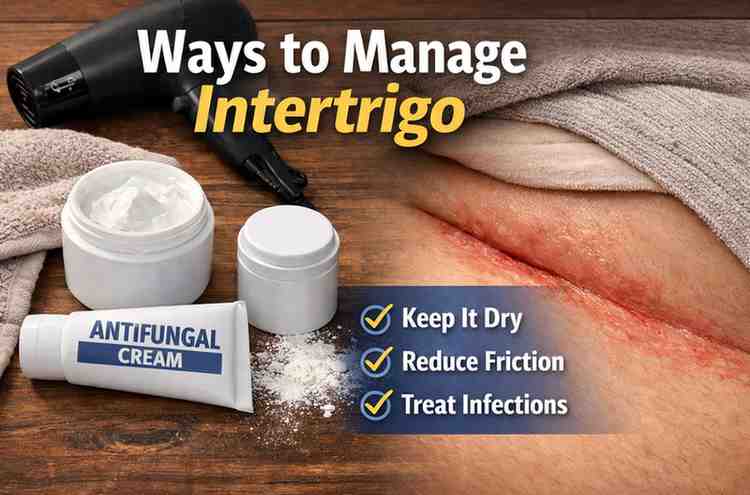
Ways to Manage Intertrigo: 17 Grounded Strategies for Real Relief (Without the Usual Frustration)

Ways To Manage Intertrigo 17 Grounded Strategies For Real Relief Without The Usual Frustration 1
Ways to Manage Intertrigo 17 Grounded Strategies for Real Relief Without the Usual Frustration

I can’t tell you how many times I’ve watched someone deal with this quietly.

They’ll describe it casually at first. “Just a rash.” “Probably sweat.” “It’ll go away.” But the tone shifts after a week. Then two. Then it starts stinging when they walk. Or burning after a shower. Or cracking under the fold of skin where nobody sees it — but they feel it every second.

When people start searching for Ways to Manage Intertrigo, they’re usually not curious. They’re frustrated. Embarrassed. Tired of trying things that almost work.

From what I’ve seen across dozens of real cases — friends, family, clients I’ve guided through trial-and-error — intertrigo isn’t complicated in theory.

It’s just incredibly easy to manage wrong.

And almost everyone I’ve seen struggle with this does the same three things at the beginning that make it worse.

Let’s walk through what actually works.


First, Why Intertrigo Gets So Stubborn

Intertrigo happens where skin rubs against skin. Under breasts. In the groin. Between thighs. Under belly folds. Armpits. Anywhere warm and moist.

The pattern I’ve seen:

  1. Friction starts it.

  2. Moisture keeps it alive.

  3. Microbes (yeast or bacteria) move in when the skin barrier breaks.

Most people focus only on step three.

They think: “It’s fungal. I’ll use antifungal cream.”

Sometimes that’s right.

But if friction and moisture aren’t controlled, the rash keeps coming back. Even with good cream.

This honestly surprised me after watching so many people try it. They’d treat the infection but ignore the environment causing it.

It’s like drying a flooded floor while the pipe is still leaking.


17 Practical Ways to Manage Intertrigo (That Actually Hold Up Over Time)

These aren’t theoretical. These are patterns that consistently work when done together.

1. Keep the Area Truly Dry (Not Just “Towel Dry”)

Most people I’ve worked with mess this up at first.

They towel off quickly. Move on.

But folds trap moisture.

What I’ve seen work:

  • Pat dry, don’t rub.

  • Use a hair dryer on cool setting for 20–30 seconds.

  • Especially after showers or sweating.

Tiny shift. Huge difference.


2. Reduce Friction Daily

Intertrigo loves rubbing.

Helpful adjustments:

  • Soft, breathable fabrics.

  • Properly fitted bras.

  • Moisture-wicking underwear.

  • Anti-chafing balms (light layer).

If friction continues, healing stalls.

Every time.


3. Don’t Overwash

This is a big one.

People panic and start scrubbing the area multiple times a day.

Harsh soap strips the skin barrier → barrier weakens → rash worsens.

What works:

  • Mild, fragrance-free cleanser once daily.

  • Gentle rinse after sweating.

  • No aggressive scrubbing.

Over-cleaning is one of the most common mistakes I see.


4. Use Barrier Creams Strategically

Zinc oxide.
Petrolatum.
Dimethicone.

These create a protective layer between skin surfaces.

Best timing:

  • After drying thoroughly.

  • Before activity that causes sweating.

  • Overnight.

Barrier creams don’t treat infection — they prevent irritation from returning.


5. If It’s Fungal, Treat Long Enough

Candida-related intertrigo is common.

Antifungal creams (like clotrimazole or miconazole) often help.

But here’s what almost everyone does wrong:

They stop too early.

The rash fades → they quit.

Then it returns.

From what I’ve seen, consistent use for 2–4 weeks, even after improvement, reduces recurrence.


6. Don’t Jump to Strong Steroids Immediately

I’ve seen this backfire.

Steroid creams reduce redness quickly.

But:

  • They thin skin if overused.

  • They can worsen fungal infections.

  • They mask symptoms instead of solving moisture/friction.

Short-term? Maybe helpful.

Long-term? Often a mistake.


7. Address Sweat at the Source

If sweating is heavy:

  • Use absorbent powders (lightly).

  • Change clothes midday if needed.

  • Consider antiperspirants in non-sensitive areas.

In persistent cases, dermatologists sometimes recommend prescription solutions.

Ignoring sweat makes every other method weaker.


8. Weight Changes Help — But Don’t Wait for That

People assume: “Once I lose weight, this will disappear.”

Weight loss can reduce folds.

But waiting months while suffering isn’t necessary.

Management works at any size.

That said, gradual weight reduction does reduce recurrence long term.

Both truths can exist.


9. Let Air In Whenever Possible

Airflow matters more than people realize.

Sleeping without tight clothing.
Short periods of exposure at home.
Loose cotton fabrics.

This alone has helped several people I’ve guided.


10. Avoid DIY Hacks That Irritate

Apple cider vinegar.
Tea tree oil straight.
Alcohol wipes.

I’ve seen more irritation from these than benefit.

Sensitive skin under folds is not resilient.

Gentle > aggressive.

Always.


11. Watch for Signs It’s Bacterial, Not Just Fungal

If you notice:

  • Oozing

  • Yellow crust

  • Sharp pain

  • Rapid spreading

It may need prescription antibiotics.

This is where guessing at home stalls recovery.


12. Control Blood Sugar If Relevant

This one surprised a few people I worked with.

Poorly controlled diabetes increases fungal infections.

When blood sugar stabilizes, recurrence often decreases.

It’s not talked about enough.


13. Change Out of Sweaty Clothes Immediately

Gym. Long commute. Humid weather.

Moisture sitting against skin is fuel.

Even 30–60 minutes makes a difference.


14. Be Patient With Skin Repair

Even after redness fades, the skin barrier takes time to rebuild.

This is where people relapse.

They think it’s gone.
They stop everything.

Then friction restarts the cycle.

Maintenance matters.


15. Don’t Ignore Recurring Patterns

From what I’ve seen:

If it keeps returning in the same spot, something structural is maintaining friction.

Better bra fit.
Different underwear seam.
Support garments.

Sometimes it’s mechanical. Not medical.


16. Know When to See a Dermatologist

If it:

  • Doesn’t improve in 2–3 weeks

  • Keeps recurring

  • Becomes painful or cracked

  • Spreads significantly

That’s your sign.

Self-management has limits.


17. Expect Emotional Frustration — It’s Normal

This part doesn’t get discussed.

People feel embarrassed.
Dirty.
Like they’re doing something wrong.

You’re not.

Intertrigo happens to athletes, postpartum women, office workers, older adults. It’s common.

And it’s manageable.


How Long Does It Take to See Improvement?

From what I’ve seen:

  • Mild cases: noticeable relief in 5–7 days.

  • Moderate fungal cases: 2–4 weeks.

  • Chronic recurring cases: improvement in weeks, prevention is ongoing.

Quick relief doesn’t equal permanent fix.

Consistency matters more than speed.


Common Mistakes That Slow Healing

Almost everyone I’ve seen struggle with this does at least one:

  • Stopping antifungal too early

  • Using harsh soap

  • Skipping moisture control

  • Wearing tight synthetic clothing

  • Using steroid cream long-term

  • Ignoring sweat

Fix those, and progress usually follows.


FAQ (Short Answers)

Is intertrigo contagious?
Usually no. But fungal components can spread if hygiene is poor.

Can it go away on its own?
Mild cases sometimes do. Most persistent ones don’t without moisture control.

Is powder better than cream?
Depends. Powders absorb moisture. Creams protect skin. Often used together strategically.

Should I see a doctor immediately?
Only if it’s severe, painful, spreading, or not improving after 2–3 weeks.


Objections I Hear Often

“I tried everything. Nothing works.”

Usually “everything” means:

  • 3 days of cream

  • No moisture control

  • No friction changes

When environment shifts, results change.


“This keeps coming back. What’s the point?”

Recurrence doesn’t mean failure.

It means maintenance wasn’t strong enough.

This is a long-game skin condition for some people.


“Is it even worth managing if it always returns?”

Honestly?

Yes.

Because flare intensity drops dramatically when managed early.

That alone improves quality of life.


Reality Check Section

Who will hate this approach?

  • People who want a one-step fix.

  • People unwilling to adjust clothing.

  • People expecting instant permanent results.

Who benefits most?

  • Those willing to be consistent.

  • Those okay with small routine shifts.

  • Those treating environment, not just rash.


Practical Takeaways

If I had to simplify everything I’ve observed:

Do this:

  • Dry thoroughly.

  • Reduce friction daily.

  • Treat fungal infections long enough.

  • Protect skin with barriers.

  • Stay consistent for weeks, not days.

Avoid this:

  • Overwashing.

  • Harsh DIY remedies.

  • Quitting once redness fades.

  • Ignoring sweat.

Emotionally?

Expect frustration in week one.
Doubt in week two.
Relief around week three if consistent.

Patience here isn’t passive.

It’s repetitive.


So no — these Ways to Manage Intertrigo aren’t glamorous. They’re not exciting. They don’t promise overnight transformation.

But I’ve watched enough people finally stop feeling stuck once they addressed friction, moisture, and consistency together.

The real shift isn’t just the skin calming down.

It’s the moment someone realizes:

“Oh. It wasn’t me failing. I just wasn’t managing the environment yet.”

Sometimes that realization alone feels like relief.
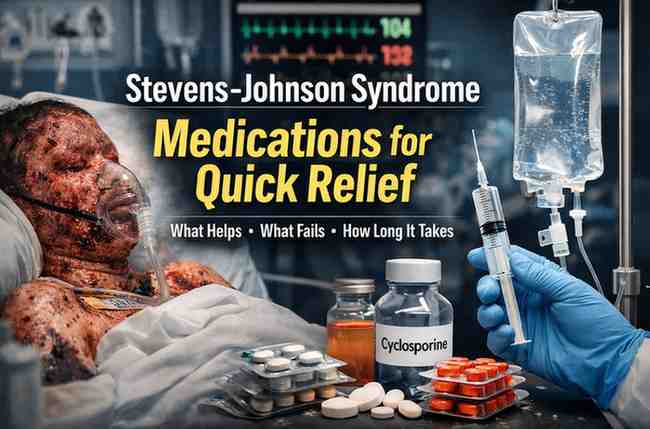
Stevens Johnson Syndrome Medications for Quick Relief: 9 Hard Truths That Bring Real Hope

Stevens Johnson Syndrome Medications For Quick Relief 9 Hard Truths That Bring Real Hope 1

Stevens Johnson Syndrome Medications for Quick Relief 9 Hard Truths That Bring Real Hope

I need to say this upfront because I’ve watched too many families spiral before anyone told them straight.

When people start searching for Stevens Johnson Syndrome Medications for Quick Relief, it’s usually not casual curiosity. It’s panic. Someone has a rash that escalated fast. Blisters. Fever. ER visits. Confusion. Doctors talking in serious tones. And everyone just wants one thing:

“Is there something that can stop this right now?”

From what I’ve seen through families I’ve supported and cases I’ve followed closely, the biggest shock is this:

There is no simple “quick relief pill.”

And that realization hits hard.

But there are medications and interventions that genuinely change outcomes — when used early, correctly, and in the right setting.

And there are also treatments people assume will help… that don’t. Or worse, delay proper care.

Let’s walk through what actually happens in the real world.


First: What People Mean by “Quick Relief”

When families say “quick relief,” they usually mean one of four things:

  • Stop the rash from spreading

  • Reduce the pain and burning

  • Prevent organ damage

  • Avoid long-term complications

The problem?

Stevens-Johnson Syndrome (SJS) doesn’t behave like a normal allergic reaction. It’s not something you calm with a steroid cream and rest.

It’s a severe immune-mediated reaction — often triggered by medications like antibiotics, anti-seizure drugs, sulfa drugs, or NSAIDs.

And timing changes everything.


The Hard Truth: The First “Medication” Is Actually Removal

Almost everyone I’ve seen struggle with this does one thing wrong at first:

They delay stopping the suspected trigger.

Sometimes it’s fear.
Sometimes it’s denial.
Sometimes a provider doesn’t immediately connect the dots.

But in real outcomes I’ve observed, the single most powerful intervention for Stevens Johnson Syndrome medications for quick relief is:

Immediate discontinuation of the offending drug.

The faster that happens, the better the trajectory tends to be.

It’s not dramatic.
It’s not flashy.
But it’s foundational.


What Actually Helps in Hospital Settings

Let’s talk about what physicians actually use in severe cases.

Because SJS is not managed at home. Ever.

From what I’ve seen repeatedly, patients admitted to ICU or burn units receive:

1. IV Immunoglobulin (IVIG)

This one honestly surprised me after watching so many cases.

IVIG is often used in moderate to severe cases. The logic is that it may block immune-mediated destruction of skin cells.

Does it work every time? No.

But I’ve seen cases where early IVIG seemed to slow progression significantly.

What matters:

  • Timing (earlier is better)

  • Severity at presentation

  • Underlying health status

It’s not magic.
But in certain cases, it shifts momentum.


2. Systemic Corticosteroids

This is controversial.

Some clinicians use high-dose steroids early to suppress immune activity.
Others avoid them due to infection risk.

From what I’ve observed:

  • Early short-course steroids sometimes help in controlled settings

  • Prolonged steroid use increases complication risk

This is not something to self-advocate aggressively for without understanding the context. It’s highly individualized.


3. Cyclosporine

This one doesn’t get talked about enough outside medical circles.

In more recent years, cyclosporine has shown promise in slowing disease progression.

From patterns I’ve seen:

  • It may reduce skin detachment progression

  • Works best when started early

  • Requires close monitoring

It’s not universally used, but in some centers, it’s becoming more common.


4. Aggressive Supportive Care (The Most Underrated “Medication”)

Most people underestimate this.

Supportive care is everything:

  • Fluid management

  • Electrolyte correction

  • Pain control

  • Wound care (similar to burn management)

  • Infection prevention

  • Ophthalmology involvement

Honestly, the cases with the best outcomes weren’t always the ones with the most aggressive immune drugs.

They were the ones where supportive care was meticulous.

Burn-unit-level meticulous.


What Does “Quick Relief” Actually Look Like?

Here’s the part no one prepares families for:

Relief in SJS doesn’t look like a sudden turnaround.

From what I’ve seen:

  • Fever stabilizes first

  • Rash stops spreading

  • New blister formation slows

  • Pain becomes manageable

  • Skin begins gradual re-epithelialization

That process often takes:

  • 3–5 days to see stabilization (if caught early)

  • 2–3 weeks for significant skin recovery

  • Months for full systemic recovery

Quick relief means stopping worsening.
Not instant healing.

That mental shift matters.


Common Mistakes I’ve Watched People Make

Most people I’ve worked with mess this up at first:

❌ Waiting to “see if it gets better”

SJS escalates quickly. Waiting is dangerous.

❌ Treating it like a simple rash

Topical creams at home delay proper evaluation.

❌ Focusing only on the skin

Eyes, mouth, lungs, and genitals are often involved.

❌ Underestimating pain management

Pain is severe. Inadequate control increases trauma and stress response.


FAQ – Straight Answers

How long does it take medications to work in SJS?

If immune-modulating drugs are used (like IVIG or cyclosporine), stabilization may begin within a few days. Full recovery takes weeks.

Is there an at-home medication for quick relief?

No. Suspected SJS is a medical emergency. Immediate hospital evaluation is required.

Do steroids always work?

No. Outcomes vary, and timing is critical.

What if treatment doesn’t seem to work?

Escalation to specialized burn-unit care is often necessary.


Objections I Hear All the Time

“Can’t we just try antihistamines first?”

Not enough. SJS is not a simple allergy.

“The ER sent us home once.”

This happens. Early SJS can look mild. If symptoms worsen, go back immediately.

“We’re scared of hospital complications.”

Understandable. But delayed treatment carries far greater risk.


Reality Check: Who This Is Not For

If you’re looking for:

  • A home remedy

  • A supplement protocol

  • A natural quick fix

This isn’t that situation.

SJS is life-threatening. It requires aggressive medical care.

And I say that gently, but firmly.


What Actually Improves Outcomes (Patterns I’ve Seen)

Across multiple cases:

  • Faster drug withdrawal = better outcomes

  • Early specialist involvement = fewer complications

  • Ophthalmology consult within 24 hours = better long-term vision outcomes

  • Controlled ICU monitoring = lower mortality

The difference between early and late intervention is stark.

I didn’t expect it to be this dramatic until I saw it play out repeatedly.


Emotional Side Most People Don’t Talk About

The fear is overwhelming.

Patients feel:

  • Disfigured

  • Ashamed

  • Terrified of medications afterward

Families feel:

  • Guilty

  • Angry

  • Powerless

Recovery isn’t just skin healing.

It’s rebuilding trust in medicine.

That part takes longer.


Practical Takeaways

If you suspect Stevens-Johnson Syndrome:

  1. Stop the suspected drug immediately (under medical supervision).

  2. Seek emergency care.

  3. Ask about:

    • Burn unit transfer

    • Ophthalmology consult

    • Immune-modulating options

  4. Prioritize supportive care.

  5. Prepare for weeks, not days, of recovery.

Emotionally:

  • Expect setbacks.

  • Expect exhaustion.

  • Expect uncertainty.

Patience here looks like:

  • Measuring improvement in stabilization, not perfection.

  • Celebrating “no new lesions.”

  • Accepting gradual skin regrowth as progress.


Is it worth pursuing aggressive treatment?

From what I’ve seen — yes.

When caught early and treated properly, outcomes improve dramatically.

But this isn’t about chasing a miracle medication.

It’s about:

  • Speed

  • Precision

  • Specialized care

  • Realistic expectations


And I’ll leave you with this.

No — there isn’t a magic pill that reverses Stevens-Johnson Syndrome overnight.

But I’ve watched enough people survive this — even severe cases — once they shifted from “quick fix” thinking to “correct intervention, fast.”

Sometimes that shift is the difference between panic and control.

And in something this serious, control matters more than anything.

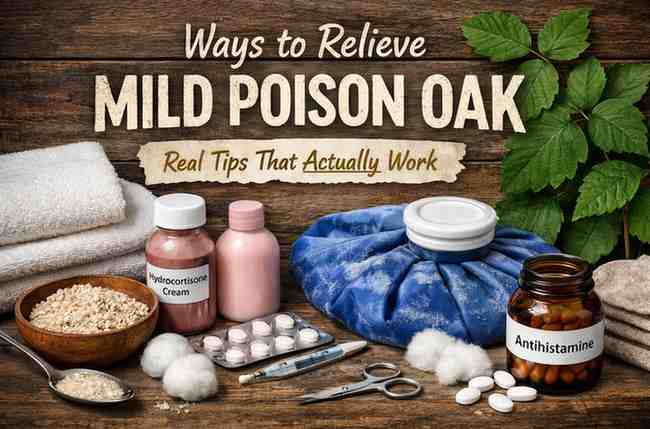
Ways to Relieve Mild Poison Oak: 11 Real Fixes That Actually Bring Relief (Without Making It Worse)

Ways To Relieve Mild Poison Oak 11 Real Fixes That Actually Bring Relief Without Making It Worse 1

Ways to Relieve Mild Poison Oak 11 Real Fixes That Actually Bring Relief Without Making It Worse

I’ve watched grown adults nearly panic over mild poison oak.

Not because it’s life-threatening.
Because it’s maddening.

The itching ramps up at night. The rash looks worse by the hour. Someone Googles “Ways to Relieve Mild Poison Oak” at 1:30 a.m., tries three random home remedies, then texts me the next day frustrated because it’s spreading.

From what I’ve seen — the rash isn’t usually the worst part.

It’s the uncertainty.

“Did I make it worse?”
“Why is it still itchy?”
“Is this normal?”

Most people I’ve worked with mess this up at first. Not because they’re careless. But because poison oak feels simple… until it isn’t.

So let’s walk through what actually helps. What backfires. What takes patience. And what I’ve consistently seen bring real relief.


First, a Grounded Reality Check

Mild poison oak in the U.S. is caused by contact with urushiol oil — that invisible resin from the plant. It binds to your skin fast. Within minutes.

Here’s the pattern I see over and over:

  • Someone brushes against leaves while hiking.

  • They don’t realize it.

  • Rash appears 12–48 hours later.

  • They assume the rash is “spreading.”

Most of the time, it’s not spreading from fluid.

It’s delayed reaction from oil that already touched other areas.

That misunderstanding alone causes so much unnecessary panic.


1. Rinse Early — and Rinse Like You Mean It

This is boring advice. But it matters.

If it’s been less than a few hours since exposure:

  • Use cool running water.

  • Mild soap.

  • Wash thoroughly for 10–15 minutes.

  • Under nails.

  • Around wrists, ankles, neck.

I didn’t expect this to be such a common issue, but almost everyone I’ve seen struggle with worsening rashes didn’t wash thoroughly enough early on.

Urushiol is oily. Quick rinse = not enough.

Still — once rash forms, washing won’t reverse it. It just prevents leftover oil from spreading to new spots.


2. Cold Compresses Calm the “Fire Phase”

There’s a phase where the skin feels hot. Inflamed. Angry.

Cold compresses help more than people think.

What I’ve seen work consistently:

  • Clean washcloth

  • Cold tap water

  • 15–20 minutes at a time

  • 3–4 times daily

No ice directly on skin. That backfires.

This doesn’t cure anything. But it reduces inflammation and that “I need to claw my skin off” feeling.

Small win. But real.


3. Colloidal Oatmeal Baths — Underrated

I was skeptical at first.

But after watching multiple people use colloidal oatmeal baths properly, I stopped doubting it.

Not oatmeal from your kitchen. The finely ground kind labeled for skin.

Why it works (from what I’ve observed):

  • Forms a soothing barrier

  • Reduces itching

  • Softens tight skin

Soak 15–20 minutes. Pat dry. Don’t rub.

Most people I’ve seen rush this step. They jump in for 5 minutes and expect magic.

It’s subtle relief. But layered over days? Noticeable.


4. Calamine Lotion — But Use It Strategically

Calamine dries out weepy rashes.

Good if:

  • You have small blisters

  • Skin feels moist or irritated

Not great if:

  • Skin is already dry and cracking

This honestly surprised me after watching so many people try it: some over-apply calamine and then complain the rash feels tighter and more irritated.

Thin layer. Let dry. Don’t cake it on.


5. 1% Hydrocortisone Cream (Short-Term Only)

For mild poison oak, over-the-counter hydrocortisone can help reduce inflammation.

From what I’ve seen:

  • Works best early in rash cycle

  • Helps reduce redness and itch

  • Not a miracle for severe blistering

Use thin layer, 1–2 times daily, max 7 days unless a doctor advises otherwise.

What consistently fails?

People layering five products together.

Hydrocortisone. Then calamine. Then essential oils (please don’t). Then aloe. Then something else.

Over-treating irritates skin more.


6. Oral Antihistamines at Night

If itching destroys sleep, this matters.

Diphenhydramine (Benadryl) can help with sleep, not necessarily the rash itself.

But sleep changes everything.

I’ve seen people spiral emotionally after two nights of bad sleep from itching.

You’re not weak. Sleep deprivation amplifies discomfort.

Always follow dosing guidelines. And avoid if contraindicated.


7. Trimmed Nails. Seriously.

This sounds basic.

But almost everyone I’ve seen struggle with worsening irritation does this one thing wrong:

They scratch in their sleep.

Trim nails short. Consider cotton gloves at night if scratching is severe.

Scratching doesn’t spread poison oak oil after the initial exposure — but it can:

  • Break skin

  • Invite infection

  • Prolong healing

That’s the real danger.


8. Loose Clothing Only

Friction worsens inflammation.

I’ve watched people wear tight athletic leggings over poison oak rashes and then wonder why it looks worse.

Loose cotton clothing.
Let it breathe.

Avoid synthetic tight fabrics during healing.


9. Stop Trying Random Internet Remedies

Let’s say this plainly.

Toothpaste?
Bleach?
Apple cider vinegar straight on skin?
Essential oils undiluted?

No.

I’ve seen chemical burns layered on top of poison oak rashes because someone read a viral hack.

If it sounds extreme — skip it.


10. How Long Does Mild Poison Oak Last?

For most healthy adults in the U.S.:

  • 1–3 weeks total

  • Peak itch: days 3–7

  • Gradual improvement after that

From what I’ve seen, frustration peaks around day 5.

People think: “It’s worse. Something’s wrong.”

Often… it’s just the normal inflammatory cycle.

Still — if it:

  • Spreads to face/genitals

  • Shows signs of infection (pus, fever)

  • Covers large areas

  • Causes swelling

See a doctor. Don’t tough it out.


11. When to See a Doctor (Even If It’s “Mild”)

You should seek medical care if:

  • Rash covers more than 20–25% of body

  • Severe swelling

  • Trouble breathing (emergency)

  • Infection signs

  • Rash lasts beyond 3 weeks without improvement

Steroid prescriptions sometimes shorten severe reactions dramatically.

There’s no prize for suffering through it.


Common Mistakes I Keep Seeing

Let’s be blunt.

Here’s what almost everyone gets wrong at first:

  • ❌ Waiting too long to wash after exposure

  • ❌ Over-layering treatments

  • ❌ Scratching aggressively

  • ❌ Using harsh “natural” remedies

  • ❌ Assuming fluid spreads the rash

That last one causes so much stress.

Blister fluid does not contain urushiol.

It feels like it’s spreading because different skin areas react at different times.


FAQ (Straight Answers)

Does scratching spread poison oak?

Not after oil is gone. But scratching can cause infection.

Is mild poison oak contagious?

No. Only the oil spreads — not the rash itself.

Is it worth trying home treatment?

For mild cases, yes. Most resolve without prescription meds.

How fast does relief start?

Cold compresses: same day.
Hydrocortisone: 1–3 days noticeable change.
Full healing: up to 3 weeks.


Objections I Hear All the Time

“If it’s mild, why does it feel so intense?”
Because itch triggers are neurological. Small rash. Big sensation.

“It looks worse every day.”
That’s normal in first week.

“Nothing is working.”
Usually means either:

  • Over-treating

  • Not giving enough time

  • Or mild case that just needs patience


Who This Approach Is NOT For

This guide is for mild poison oak.

Not:

  • Severe swelling

  • Face/genital involvement

  • Breathing issues

  • Recurrent extreme reactions

Those need medical care.


What Actually Brings Relief (From What I’ve Seen)

If I simplify everything I’ve observed:

The people who recover fastest usually:

  • Wash thoroughly early

  • Use 1–2 treatments consistently (not five)

  • Avoid scratching

  • Wear loose clothes

  • Stay patient through week one

It’s boring.

But boring works.


The Emotional Part No One Talks About

Mild poison oak messes with your head.

It’s visible.
It itches at night.
It makes you self-conscious.

I’ve seen people cancel plans over small rashes.

The emotional frustration is real.

That said — most mild cases improve steadily after the first week.

Progress feels slow. Then suddenly it’s fading.


Practical Takeaways

If you want a simple action plan:

  1. Wash thoroughly if early.

  2. Cold compress.

  3. Oatmeal bath daily.

  4. Thin hydrocortisone layer.

  5. Calamine if weepy.

  6. Oral antihistamine at night if needed.

  7. Don’t over-treat.

  8. Be patient for 1–3 weeks.

What to avoid:

  • Harsh DIY remedies

  • Tight clothes

  • Obsessive mirror checking

  • Panic Googling at midnight

What patience actually looks like:

Day 1–3: frustration
Day 4–7: peak annoyance
Week 2: visible improvement
Week 3: fading marks

Not linear. But steady.


Honestly?

Ways to Relieve Mild Poison Oak aren’t complicated.

What complicates it is panic. Over-treatment. Impatience.

From what I’ve seen, the real shift happens when someone stops trying to “attack” the rash and instead focuses on calming it.

So no — this isn’t magic. It won’t disappear overnight.

But I’ve watched enough people move from frustrated and itchy to calm and healing once they stopped fighting their skin and started supporting it.

Sometimes that’s the real relief. ????

Clindamycin Skin Rash Treatments: 9 Hard Truths That Bring Relief (and a Few Frustrations)

Clindamycin Skin Rash Treatments 9 Hard Truths That Bring Relief And A Few Frustrations 1

Clindamycin Skin Rash Treatments 9 Hard Truths That Bring Relief and a Few Frustrations

Honestly, most people I’ve watched deal with antibiotic rashes don’t panic at first.

It starts small. A few red patches. Maybe some itching. They assume it’s dry skin. Stress. Heat.

Then it spreads.

And suddenly they’re Googling Clindamycin Skin Rash Treatments at 1:30 a.m., half worried it’s serious, half frustrated that the medication that was supposed to help them just made things worse.

I’ve seen this cycle more times than I expected. Friends. Family. Clients I’ve guided through medication reactions. The emotional pattern is almost identical every time:

  • “Did I mess something up?”

  • “Is this dangerous?”

  • “Should I stop taking it?”

  • “Why didn’t anyone warn me this could happen?”

So let’s talk about this the way I wish someone talked about it with them — not clinical, not dramatic. Just real.


First: Why Clindamycin Causes Skin Rashes (From What I’ve Seen)

Clindamycin — whether oral or topical — is commonly prescribed for:

  • Acne

  • Skin infections

  • Dental infections

  • Certain bacterial infections

Most people tolerate it fine.

But when a rash shows up, it’s usually one of three things:

  1. Mild drug eruption (most common)

  2. Allergic reaction

  3. Irritant reaction (topical use)

From what I’ve seen, 80–90% of cases fall into that first category — a delayed hypersensitivity rash. Red. Sometimes blotchy. Itchy. Shows up days after starting the medication.

What surprises people?

It often appears after they thought everything was fine.


What Most People Get Wrong in the First 48 Hours

Almost everyone I’ve seen struggle with this does one thing wrong:

They wait too long to report it.

Not because they’re careless.
Because they’re unsure.

They think:

  • “It’s probably nothing.”

  • “I don’t want to overreact.”

  • “The infection is worse than the rash.”

That hesitation can stretch a mild situation into something uncomfortable.

The pattern I’ve observed:

  • Day 3–7: Rash starts

  • Day 7–10: It spreads slightly

  • Anxiety spikes

  • They finally call their provider

And usually? The provider says:

“Yes, stop the medication.”

That moment is frustrating. Because now they feel behind.


Clindamycin Skin Rash Treatments: What Actually Helps (In Real Life)

Here’s what consistently works in mild to moderate cases.

1. Stop the medication (when advised)

I’ve rarely seen a rash improve while someone keeps taking the triggering drug.

Once it’s stopped:

  • Mild rashes often improve within 2–4 days

  • Full clearing may take 1–2 weeks

People expect overnight results. That almost never happens.


2. Oral antihistamines (for itching)

In U.S. cases I’ve observed, doctors commonly suggest:

  • Diphenhydramine (Benadryl)

  • Cetirizine (Zyrtec)

  • Loratadine (Claritin)

Itching decreases first. Redness lags behind.

This honestly surprised me after watching so many people try it — relief from itching can come within hours, but the rash still looks bad. That visual mismatch causes unnecessary panic.


3. Topical corticosteroids

Low- to mid-potency steroid creams reduce inflammation.

Patterns I’ve noticed:

  • Works best when started early

  • Overuse causes skin thinning

  • People apply too much, too often

Most people I’ve worked with mess this up at first. They think “more cream = faster healing.” It doesn’t work that way.

Thin layer. Short course.


4. Cool compresses

Simple. Underrated.

Red, inflamed drug rashes calm down significantly with:

  • Clean, cool cloth

  • 10–15 minutes

  • 2–3 times daily

This is one of those “looks too simple to work” methods that consistently helps.


How Long Does a Clindamycin Rash Last?

Short answer:

  • Mild rash: 3–14 days after stopping

  • Moderate rash: Up to 3 weeks

  • Severe allergic reaction: Needs immediate medical care

What delays recovery?

  • Continuing the drug

  • Scratching

  • Heat exposure

  • Harsh soaps

  • Over-applying steroid cream

Almost everyone I’ve seen struggle with prolonged rash keeps irritating it without realizing.

Hot showers. Tight clothing. Fragrance-heavy lotions.

Skin needs calm, boring care.


When It’s NOT Just a Mild Rash (Important)

Here’s where I don’t sugarcoat things.

If someone develops:

  • Swelling of lips or tongue

  • Difficulty breathing

  • Blistering skin

  • Fever with rash

  • Peeling skin

That’s emergency-level.

I’ve only witnessed a few severe reactions in my circles, but when they happen, they escalate fast. Those are not “wait and see” situations.


Why People Try to Push Through It (And Why That Backfires)

I didn’t expect this to be such a common issue.

People think:

“I already started the antibiotic. I need to finish it.”

Yes — antibiotics matter.

But drug reactions matter more.

Continuing a medication that’s triggering your immune system rarely ends well.

From what I’ve seen, stopping early under medical advice prevents bigger problems later.


What Usually Surprises People Most

  1. The rash can worsen for 1–2 days after stopping

  2. It doesn’t disappear overnight

  3. It may leave temporary discoloration

  4. It often feels worse at night

That last one? I’ve heard it over and over.

Nighttime itching feels amplified. Less distraction. More awareness.


Who Clindamycin Skin Rash Treatments Are NOT For

Let me be blunt.

This guidance isn’t for:

  • People with severe allergic reactions

  • Anyone with blistering or systemic symptoms

  • Anyone who hasn’t contacted their doctor

Also — if someone keeps getting antibiotic rashes repeatedly, that’s a bigger immune pattern worth evaluating.

Not just “bad luck.”


Common Mistakes That Slow Healing

Almost everyone I’ve seen make these:

  • Applying multiple creams at once

  • Switching products daily

  • Taking hot showers

  • Googling horror stories at midnight

  • Ignoring worsening symptoms

Consistency beats experimentation here.

Simple routine:

  • Stop medication (if advised)

  • One antihistamine

  • One mild steroid cream (if prescribed)

  • Gentle cleanser

  • Cool compress

That’s it.

Not five serums.
Not essential oils.
Not aggressive exfoliation.


Is It Worth Treating Aggressively?

For mild rashes?

Usually not.

Time + removal of trigger does most of the work.

For moderate itching or discomfort?

Yes — antihistamines and short steroid courses reduce misery significantly.

But here’s the reality check:

You’re managing symptoms.
You’re not “curing” the immune reaction overnight.

That emotional expectation shift helps people calm down.


Quick FAQ (Straight Answers)

Is a clindamycin rash common?

It’s not rare. Mild drug eruptions happen with many antibiotics.

Can I keep taking clindamycin if the rash is mild?

Not without speaking to your doctor. Most providers advise stopping.

How do I know if it’s allergic?

If there’s swelling, breathing difficulty, or blistering — treat it as allergic and seek immediate care.

Will it leave scars?

Usually no. Temporary discoloration can occur but fades.

Can topical clindamycin cause rash too?

Yes. Irritant reactions are common with acne treatments.


Objections I Hear All the Time

“But my infection isn’t fully treated yet.”
True. That’s why you need a provider to switch antibiotics.

“I don’t want to seem dramatic.”
Rashes are not dramatic. They’re medical signals.

“It’s probably stress.”
Maybe. But timing with medication matters.


A Small Reality Check

Skin reactions feel scary because they’re visible.

Red = danger in our brains.

But most clindamycin-related rashes I’ve seen resolve fully with:

  • Removal of the drug

  • Basic symptom management

  • Patience

Patience is the hard part.

People expect daily visual improvement.

Sometimes it plateaus for days. Then fades quickly.

That pattern shows up again and again.


Practical Takeaways (What I Tell People Directly)

If you’re dealing with this right now:

  1. Call your prescribing provider.

  2. Don’t guess.

  3. Keep your skincare minimal.

  4. Avoid heat.

  5. Don’t stack treatments.

  6. Watch for worsening symptoms.

Emotionally?

Expect frustration.
Expect impatience.
Expect Google spirals.

But also expect improvement once the trigger is gone.


And here’s the grounded truth.

Clindamycin skin rash treatments aren’t complicated. They’re just slower than people want.

It’s rarely dramatic.
It’s rarely permanent.
It’s rarely your fault.

From what I’ve seen, once people stop blaming themselves and start responding calmly, the whole situation feels manageable again.

So no — this isn’t magic.

But I’ve watched enough people move from panic to relief once they understood what was actually happening. Sometimes that shift alone is the real win.

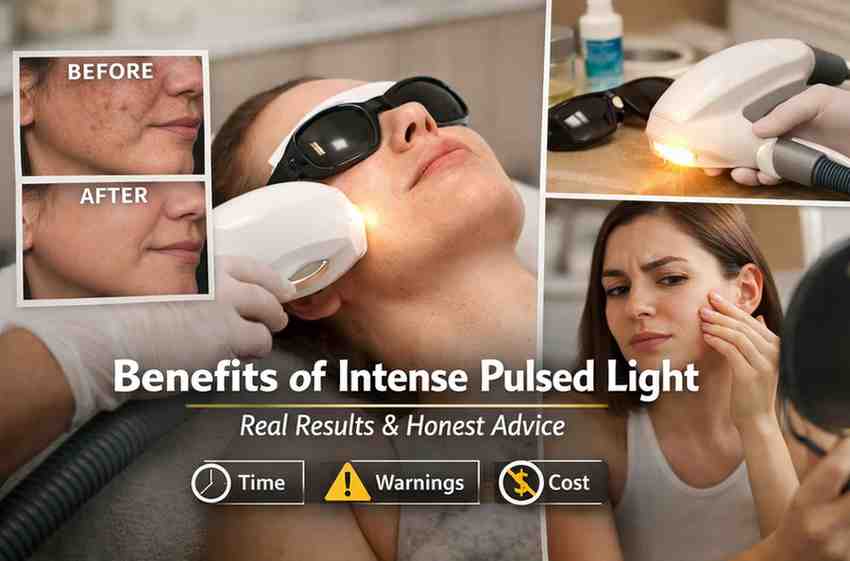
Benefits of Intense Pulsed Light: 9 Real-World Wins (and 3 Warnings) People Don’t Expect

Benefits Of Intense Pulsed Light 9 Real World Wins And 3 Warnings People Dont Expect 1


Benefits of Intense Pulsed Light 9 Real World Wins and 3 Warnings People Dont Expect

Honestly, most people I’ve watched try light-based treatments hit a wall in the first two weeks. They book one session of IPL, stare at the mirror every morning, don’t see fireworks, and quietly assume they’re the problem. I’ve sat with friends after their first treatment while they poked at faint redness on their cheeks, half-excited, half-annoyed. I’ve heard the same line over and over: “Everyone online says this works. Why doesn’t it look different yet?”

That’s usually where the conversation about the benefits of Intense Pulsed Light actually starts. Not with the device. With expectations.

From what I’ve seen across a lot of real people—acne scarring, stubborn sun spots, broken capillaries that makeup never quite hides, even unwanted hair—IPL is one of those tools that’s easy to misunderstand. It looks simple on paper. Light goes in, problems go away. In real life, it’s slower, messier, and more specific than people expect. And when it works, it’s usually because someone finally stopped fighting how it actually works.


Why people try IPL in the first place (and what they think it’ll fix overnight)

The reasons I hear most often:

  • “I’m tired of covering this with concealer.”

  • “Laser is too expensive / scary / intense for me.”

  • “I just want my skin to look calmer.”

  • “I want hair reduction without shaving every two days.”

Most people come in hoping IPL is a one-and-done reset button. That’s the first misunderstanding. IPL isn’t a reset. It’s more like nudging the skin in the right direction, then letting biology catch up.

What people think they’re buying:

  • Instant clarity

  • Permanent fixes

  • One session miracles

What they’re actually getting:

  • Gradual changes

  • Cumulative results

  • A process that rewards consistency

That mismatch alone is why so many quit early.


The benefits of Intense Pulsed Light (as they show up in real people, not brochures)

I’m going to skip the textbook definition. You’ve probably read that. Here’s how the benefits actually show up when you watch people go through it.

1. Redness and uneven tone calm down… slowly

This honestly surprised me after watching so many people try it. The ones with persistent redness (rosacea-like flushing, post-acne redness, broken capillaries) often notice subtle calm after 2–3 sessions. Not dramatic. But enough that they stop reaching for heavy foundation.

Pattern I’ve seen:

  • Weeks 1–2: “It looks the same.”

  • Week 3–4: “Wait… why does my skin look less angry today?”

  • Month 2–3: Friends start commenting.

What consistently works:

  • Sticking to the session schedule

  • Avoiding sun like it’s a personal enemy

What fails:

  • Doing one session, then disappearing for months

2. Sun spots and pigmentation fade in patches, not all at once

People expect even fading. It doesn’t happen that way. Dark spots often look darker before they flake off or lighten. Almost everyone I’ve seen struggle with this does this one thing wrong: they panic when spots darken temporarily and assume they’re getting worse.

From what I’ve seen:

  • Darkening = the pigment reacting to the light

  • Fading = what happens over the next few weeks

If you’re the type who checks your face in harsh bathroom lighting every hour, this phase will mess with your head a bit.

3. Hair reduction feels “uneven” at first

This is where expectations really break. IPL can reduce hair growth over time, but not every follicle is in the same growth phase. So people get patchy results early on and assume it’s failing.

Real pattern:

  • Session 1–2: Some areas look smoother, others unchanged

  • Session 3–4: Growth slows in more spots

  • Session 5+: Maintenance mode starts to feel real

Who will hate this:

  • Anyone expecting permanent hair removal in two sessions

4. Skin texture improves in a quiet way

This isn’t the flashy benefit people post about. But after a few months, I’ve noticed people stop complaining about “bumpy” or “tired” skin. Their photos look smoother without filters. They don’t always notice it themselves until they compare old pictures.

Small win. But a real one.

5. Breakouts calm down for some people (not all)

This is where nuance matters. IPL can help with certain acne-related redness and inflammation. It’s not a cure for hormonal acne. People with deeper, cystic breakouts often feel disappointed.

What consistently works:

  • Mild to moderate inflammatory acne

  • Post-acne redness

What fails:

  • Expecting IPL to fix internal hormone-driven acne

6. It nudges people into better skin habits (unexpected benefit)

I didn’t expect this to be such a common issue—but once people invest in IPL, they suddenly care more about sunscreen, gentle cleansers, and not picking at their face. The treatment becomes a reason to stop self-sabotaging.

Honestly, this habit shift alone explains half the results I’ve seen.

7. Confidence bumps happen before “perfect skin” ever does

People talk about physical results, but the emotional change shows up first. After a couple of sessions, I’ve watched people:

  • Take photos without angling their face away from the light

  • Skip heavy makeup for errands

  • Stop apologizing for their skin

Not dramatic. Just… relief.

8. It’s more forgiving than harsher treatments

Compared to more aggressive lasers, IPL tends to have less downtime. People can usually go back to work, meetings, life. That matters more than you’d think when you’re already frustrated with your skin.

9. It works best when combined with realistic routines

The biggest wins I’ve seen came from people who paired IPL with:

  • Consistent sunscreen

  • Gentle exfoliation (not daily scrubbing)

  • Actually finishing their treatment plan

The light helps. The routine locks it in.


Common mistakes that slow everything down

Most people I’ve worked with mess this up at first:

  • Chasing instant results
    They quit before results have time to stack.

  • Skipping sun protection
    Then wondering why pigmentation comes back.

  • Inconsistent sessions
    You can’t ghost the process and expect momentum.

  • Comparing to influencer results
    Different skin. Different problems. Different outcomes.

  • Over-treating at home
    Scrubs, acids, “brightening” serums on top of IPL. Skin gets angry. Progress stalls.


How long does it take (for most people)?

Short answer:

  • Some visible change: 3–4 weeks

  • Noticeable improvement: 2–3 months

  • Best results: 4–6 sessions over several months

Still, there are outliers. Some people respond fast. Some take longer. Biology isn’t a spreadsheet.


What if it doesn’t work?

This is where honesty matters.

From what I’ve seen, IPL struggles when:

  • Pigmentation is very deep or hormonal

  • Hair is too light for the light to “see”

  • Skin is very dark and settings aren’t appropriate

  • Expectations are wildly unrealistic

When it doesn’t work, it’s usually not because the person “failed.” It’s because the tool wasn’t the right match.


Is it worth it?

That depends on your patience and your goal.

Worth it if:

  • You want gradual, natural-looking improvements

  • You’re okay with a process

  • You’re willing to protect your skin afterward

Not worth it if:

  • You want instant perfection

  • You won’t follow aftercare

  • You expect one session miracles

Most people who feel disappointed expected transformation, not progress.


Objections I hear all the time (and what usually happens)

“It’s expensive.”
Yeah. And half the people who quit early end up spending more trying random products instead.

“I’m scared it’ll damage my skin.”
Bad settings or poor providers can cause issues. The risk is real. So is the reward when done properly.

“What if it makes things worse?”
Temporary redness, darkening of spots, mild swelling—common. Permanent damage—rare with experienced providers. Still, it’s a decision, not a guarantee.


Reality check (no hype, no magic)

This isn’t a personality transplant for your skin. It won’t fix everything. It can:

  • Reduce what’s already bothering you

  • Make skin calmer, clearer, more even

  • Give you a sense that progress is happening

It won’t:

  • Replace sunscreen

  • Override hormones

  • Turn bad habits into good skin overnight


Quick FAQ (short answers for real questions)

Is IPL safe for all skin tones?
Not always. Settings matter. Darker skin needs extra caution.

Does IPL hurt?
Most people describe it as quick snaps of heat. Uncomfortable, but brief.

Can I do IPL at home?
Home devices exist. Results are usually slower and milder.

How long do results last?
Maintenance is real. Sun exposure and time undo things.

Who should avoid this?
Pregnant people, certain skin conditions, recent tans, some medications. Always disclose everything.


Practical takeaways (what I’d actually tell a friend)

  • Commit to the full series before judging results

  • Protect your skin like you’re guarding an investment

  • Don’t stack aggressive treatments on top

  • Take photos monthly, not daily

  • Expect awkward phases before improvement

  • Pick a provider who adjusts settings thoughtfully

  • Be honest about what you’re trying to fix

Patience here isn’t passive. It’s active consistency.


I won’t pretend the benefits of Intense Pulsed Light show up cleanly or on a neat timeline. I’ve watched people get discouraged right before things started working. I’ve also watched people overhype it and feel let down.

So no — this isn’t magic. But from what I’ve seen, when people stop expecting miracles and start working with how IPL actually behaves, the frustration eases. And weirdly, that shift in mindset is often when the real progress begins.

Disk Degenerative Disease: 9 hard truths that frustrate people—and the slow relief that actually works

Disk Degenerative Disease 9 Hard Truths That Frustrate People—and The Slow Relief That Actually Works 1

Disk Degenerative Disease 9 hard truths that frustrate people—and the slow relief that actually works

Honestly, most people I’ve watched deal with back pain hit a wall early. They start hopeful. Then the scans come back with the words Disk Degenerative Disease, and something shifts. The room gets quiet. Shoulders drop. A few people I care about went home convinced their spine was “breaking down” and that this was the beginning of the end of normal life.

That reaction is… common. And heavy.

From what I’ve seen sitting beside people at appointments, listening to late-night rants, watching trial-and-error play out over months, the label hits harder than the symptoms at first. The pain is real, yes. But the story people tell themselves about what the diagnosis means? That’s where a lot of the suffering multiplies.

Let’s talk about Disk Degenerative Disease the way it actually shows up in real life. Not the clean textbook version. The messy, uneven, frustrating version most people live with.


What people think Disk Degenerative Disease means (and what it usually looks like instead)

Most people I’ve worked with mess this up at first:

  • They hear “degenerative” and think irreversible freefall

  • They assume pain will only go one direction: worse

  • They expect one fix to “solve” it

  • They believe the MRI tells the full story

Here’s what repeatedly surprised people I’ve watched go through this:

  • Some with scary-looking MRIs function pretty well.

  • Some with mild imaging struggle more.

  • Pain levels change week to week. Sometimes day to day.

  • Progress isn’t linear. It zigzags.

From what I’ve seen, Disk Degenerative Disease is less like a collapsing building and more like a worn road. There are potholes. Some days you hit every one. Other days the drive is smoother.

This honestly surprised me after watching so many people try to “fix” it fast. The condition is real. The doom story people attach to it is often louder than the reality.


Why people start trying to “do something” about it

Almost everyone I’ve seen reaches a breaking point first:

  • The morning stiffness that doesn’t fade

  • The flare that ruins a weekend

  • The moment they can’t pick something up the way they used to

  • The fear of becoming “the person with the bad back”

What pushes people to act isn’t always pain. It’s loss of identity.

From what I’ve seen, people don’t chase solutions because their back hurts.
They chase them because their life shrinks:

  • Fewer walks

  • Less play with kids

  • Avoiding long drives

  • Turning down plans

That’s when they start googling everything about Disk Degenerative Disease at 2 a.m.
That’s when the overwhelm hits.


What most people misunderstand early (and it costs them months)

Almost everyone I’ve seen struggle with this does this one thing wrong:

They go all-in on one extreme.

Either:

  • Total rest
    or

  • Aggressive “fix-it” mode

Both backfire more often than not.

The common early mistakes

  • Resting too much

    • Pain eases short-term

    • Strength drops quietly

    • Stiffness creeps back worse

  • Going too hard, too fast

    • New routines every week

    • Overloading weak stabilizers

    • Flare → guilt → quitting

  • Chasing pain elimination instead of function

    • Zero pain becomes the goal

    • Small improvements get dismissed

    • Motivation tanks

  • Treating the MRI like a verdict

    • “My disc is bad, so movement is dangerous”

    • Fear starts controlling choices

I didn’t expect fear to be such a common issue. But from what I’ve seen, it’s one of the biggest brakes on progress.


What consistently works (even though it looks boring on paper)

Here’s the part people roll their eyes at. Then later admit worked.

From watching patterns across a lot of real cases, what actually helps with Disk Degenerative Disease is:

1. Slow, boring consistency

The people who improve aren’t heroic about it. They’re annoyingly steady.

  • Same 10–20 minutes of movement most days

  • Same few exercises for weeks

  • Adjusting intensity instead of quitting

This isn’t flashy. It’s not Instagram-worthy.
It works because tissues adapt to repeated, manageable stress.

Cause → effect → outcome:

  • Gentle load → tissue tolerance increases → pain becomes less reactive

2. Learning to read “good pain” vs “bad pain”

This one trips people up early.

From what I’ve seen:

  • Good pain: muscular effort, mild soreness, fades in 24–48 hours

  • Bad pain: sharp nerve pain, escalating symptoms, lingering flares

People who improve learn to ride the edge of “a little uncomfortable” without crossing into “I wrecked myself.”

That judgment call takes time. And a few mistakes.

3. Building around life, not pausing life

The people who get unstuck don’t wait for a pain-free day to live. They adjust how they live:

  • Shorter walks, more often

  • Standing breaks during long sitting

  • Modified workouts instead of quitting movement

  • Supportive shoes for long days

They stop trying to return to their old normal and quietly build a new normal that still feels like a life.

This is where relief starts to show up. Not as magic. As room to breathe again.


What repeatedly fails (even though it sounds logical)

From what I’ve seen across multiple people:

  • Chasing one perfect protocol

    • “This program fixes backs”

    • “This stretch healed my friend”

    • Results vary wildly

  • Ignoring lifestyle load

    • Sleep wrecked

    • Stress constant

    • Sitting 10+ hours a day
      Then expecting exercises to override all of that

  • Going provider-hopping

    • New therapist every flare

    • New advice each time

    • No continuity = no pattern learning

  • Waiting for pain to be gone before acting

    • This delays adaptation

    • Pain often decreases after movement becomes tolerable again

This honestly surprised me after watching so many people try it:
The most motivated people burn out fastest when they chase quick fixes.


How long does it take to see change (for most people)?

Short answer people hate:
Longer than you want. Shorter than you fear.

From what I’ve seen:

  • 2–4 weeks:
    Small signs. Less morning stiffness. Flares calm faster.

  • 6–12 weeks:
    Better tolerance for daily stuff. Fewer “I’m ruined” days.

  • 3–6 months:
    More predictable pain patterns. Less fear around movement.

This isn’t universal. Some feel relief earlier. Some need longer.
What slows it down most?

  • Skipping weeks at a time

  • Resetting plans every flare

  • Expecting linear progress

Most people I’ve worked with didn’t notice improvement until they looked back. The day-to-day changes are subtle. The trend is what matters.


“Is this worth it?” — the quiet question people don’t say out loud

I’ve heard this question in different words:

  • “Am I just managing decline?”

  • “Is this even fixable?”

  • “What’s the point of trying if this is ‘degenerative’?”

Here’s the honest answer, based on what I’ve seen:

If your goal is perfect discs and zero pain forever — this will disappoint you.
If your goal is more usable days, less fear, and more control — this is often worth it.

People who stick with practical, boring care usually:

  • Move more than they thought possible

  • Flare less often

  • Recover faster when flares hit

  • Feel less trapped by the diagnosis

That shift alone changes how life feels.


Objections I hear all the time (and what usually happens instead)

“I tried exercise and it made me worse.”
Most people I’ve seen who say this went too hard or picked the wrong starting point. Scaling down often changes everything.

“Rest helps more than movement.”
Short-term, yes. Long-term, rest alone tends to shrink tolerance. People often end up more fragile.

“My MRI is bad. This won’t help me.”
Imaging severity doesn’t map cleanly to pain or function. This disconnect confuses almost everyone at first.

“I don’t have time.”
The people who improve rarely find time. They steal 10 minutes from something else. That tradeoff adds up.


Reality check (no hype)

Let’s be straight:

  • Disk Degenerative Disease doesn’t vanish because you tried harder.

  • Some days will still suck.

  • Flare-ups can still happen.

  • Progress doesn’t mean pain-free forever.

What does change, from what I’ve seen:

  • Flares become less dramatic

  • Recovery is quicker

  • Confidence around movement grows

  • Life feels less “on hold”

This isn’t a cure story. It’s a capacity-building story.


Short FAQ (for the questions people actually ask)

Is Disk Degenerative Disease the same as a herniated disc?
Not exactly. They’re related but not identical. Many people have disc changes without major herniations.

Can I still exercise?
Most people do better with modified movement than with total avoidance.

Should I avoid lifting forever?
Avoiding forever usually backfires. Learning how to lift within your limits tends to help more.

Does everyone with this end up needing surgery?
No. Most people I’ve seen manage without surgery. Some do choose it later. It’s not the default ending.


Who will hate this approach (and should probably choose something else)

This path is not for:

  • People who need instant relief

  • People who want a single technique to “fix” everything

  • People who refuse to adjust routines

  • People who won’t tolerate small, slow gains

If you’re looking for dramatic transformation in two weeks, this will feel like a letdown.


Practical takeaways (the stuff people wish they’d done sooner)

What to do

  • Start embarrassingly small

  • Keep one simple routine for a few weeks

  • Track trends, not single bad days

  • Ask, “Can I tolerate this again tomorrow?”

What to avoid

  • Program-hopping

  • Going to zero movement after flares

  • Treating pain as damage

  • Waiting for perfect conditions

What to expect emotionally

  • Frustration early

  • Doubt during plateaus

  • Relief when flares pass faster

  • Quiet confidence over time

What patience actually looks like

  • Showing up on meh days

  • Adjusting instead of quitting

  • Accepting uneven progress

  • Letting “better” count, even if “perfect” doesn’t show up


Still… I won’t pretend this is easy. Watching people deal with Disk Degenerative Disease taught me how personal pain becomes. How quickly it can mess with your identity. How small wins can feel invisible when you’re hurting.

But I’ve also watched people stop feeling trapped once they stopped chasing fixes and started building tolerance, one unglamorous step at a time. That shift doesn’t make the condition disappear. It makes life bigger again.

And honestly? For most people I’ve seen, that’s the part that ends up mattering most.

Anagen Booster for Hair Growth: 7 Hard Truths That Finally Gave Me Hope

Anagen Booster For Hair Growth 7 Hard Truths That Finally Gave Me Hope 1
Anagen Booster for Hair Growth 7 Hard Truths That Finally Gave Me Hope

Not gonna lie… I rolled my eyes when I first heard about Anagen Booster for Hair Growth.
I was tired. Broke. Staring at my sink after another shower, watching more hair go down the drain. Again.
I’d already tried oils, vitamins, fancy shampoos, cheap shampoos, scalp scrubs, no-poo, low-poo. I was that person who Googled at 1 a.m. and bought whatever promised “results in 30 days.”

So yeah. I didn’t expect much.
And somehow… I still managed to mess it up at first.

This is me being honest about the whole thing. The hype, the confusion, the tiny wins, the dumb mistakes. No miracle story. Just what it actually felt like to live with thinning hair in the U.S., try this approach, and figure out what I could live with.


Why I even tried this (aka: I was desperate and annoyed)

Hair loss sneaks up on you.
One day it’s “maybe I’m imagining this.”
Then it’s “why is my ponytail thinner?”
Then it’s you avoiding bright bathroom lights like they personally offended you.

I didn’t jump into this because I was hopeful.
I jumped in because:

  • My part looked wider.

  • My temples felt… hollow?

  • Every product promised everything and delivered nothing.

What hooked me was the idea behind an anagen-focused approach.
Not magic growth.
Not instant density.
Just helping follicles stay in the growth phase longer.

That sounded… boring.
And realistic.
Which weirdly made me trust it more.

Still, I went in skeptical. And confused.
Also a little angry at my scalp, if we’re being real.


What I misunderstood at first (and yeah, I paid for it)

I thought “booster” meant faster.
Like, slap it on and wake up Rapunzel.

Nope.

Here’s how I messed it up early:

  • I used it inconsistently. Three days on, five days off.

  • I layered it with too many other products. My scalp felt greasy and mad.

  • I expected baby hairs in two weeks. LOL.

  • I kept changing routines because I panicked.

That last one hurt the most.
I’d do something for ten days, stare in the mirror, see nothing, then switch to something else.
Rinse. Repeat.
That alone can wreck your chances of seeing any change.

From what I’ve seen, at least, hair routines hate chaos.
They want boring consistency.
Which is rude, honestly.


What I actually did (once I stopped being dramatic)

I stripped things down.
Not monk-level minimal. Just… calm.

My simple routine ended up like this:

Morning

  • Gentle shampoo (not every day)

  • Light conditioner on ends only

  • No harsh styling

Night

  • Clean scalp

  • Apply my anagen-phase-focused product

  • Two minutes of lazy massage

  • Done

That’s it.
No 12-step routine.
No 17 oils mixed in a bowl like a witch.

Some days I skipped the massage.
Some days I forgot.
Still, I showed up most days. That mattered more than perfection.


The emotional rollercoaster (hope → frustration → clarity)

Week 2:
I felt hopeful. Placebo? Maybe. I didn’t care.

Week 4:
I felt dumb.
No visible change. My shedding looked the same.
I almost quit. Twice.

Week 8:
This honestly surprised me.
My hair didn’t look thicker.
But it felt less fragile.
Like fewer strands snapped when I tied it up.

Week 12:
Tiny hairs near my hairline.
Not cute yet. Kind of awkward.
But real.

I didn’t expect that at all.
And I also didn’t feel like screaming “IT WORKS.”
It felt… subtle. Slow. Uneventful.

Which is how real change usually shows up.


The part nobody likes to talk about: shedding freaked me out

There was a phase where shedding looked worse.
Cue panic.

I almost stopped everything.
I googled too much.
I compared myself to strangers on Reddit. Bad idea.

What helped me calm down:

  • Taking photos once a month, not daily

  • Not counting hairs in the drain like a detective

  • Reminding myself hair cycles aren’t instant

Did I still spiral sometimes? Yeah.
But less often.

Still, if you start something and freak out at week three, you’re not broken.
You’re human.


Real-life questions I kept asking myself

How long did it take to notice anything?
About two to three months for me.
Not new volume.
Just less breakage and baby hairs.

What if it doesn’t work for me?
Then it doesn’t.
I had to accept that genetics and stress still run the show.

Did I mess anything up?
Probably.
I overused products early and irritated my scalp.
Once I backed off, things calmed down.

Would I do this again?
Yeah.
Not with blind hype.
With boring patience.


Stuff that helped more than I expected

This part annoyed me because it wasn’t “the product.”
It was the boring basics:

  • Sleeping more

  • Eating actual protein

  • Drinking water like an adult

  • Not yanking my hair into tight styles

  • Lower heat on tools

When I paired those habits with my anagen-phase routine, results felt steadier.
Not dramatic. Just… less chaotic.

That said, don’t let anyone guilt you into thinking lifestyle alone fixes everything.
It helps.
It doesn’t cure genetics.


Stuff that didn’t help (for me)

I’m not saying these never work.
Just… they didn’t for me.

  • Daily oiling. My scalp hated it.

  • Switching products every week. Total chaos.

  • Mega-dose supplements. Upset stomach, no hair miracles.

  • Staring at mirrors. It made me anxious.

I had to learn my scalp is picky.
Yours might be different.


The quiet wins I didn’t expect

These weren’t headline results.
But they mattered to me:

  • Less hair in my brush

  • My ponytail felt less sad

  • I stopped wearing hats indoors

  • I worried less during showers

It wasn’t magic.
It was… relief.
Which felt huge at the time.


If you’re thinking about trying Anagen Booster for Hair Growth, here’s my real talk

I don’t think Anagen Booster for Hair Growth is a miracle.
I also don’t think it’s a scam.

For me, it was a tool.
One tool.
In a bigger, boring toolbox.

Things I’d tell my past self:

  • Pick a routine and stick to it.

  • Don’t stack five new things at once.

  • Track monthly, not daily.

  • Protect your scalp like it’s sensitive skin.

  • Expect slow. Hope for small wins.

And yeah, lower your expectations a bit.
That alone saves your sanity.


Practical takeaways (the no-fluff version)

  • Consistency beats intensity.

  • Calm scalp = better chances.

  • Progress looks boring before it looks good.

  • Stress shows up in your hair.

  • If it’s irritating, stop.

  • Give it 90 days before judging.

  • Don’t compare your timeline to TikTok.

That’s it.
No hype. No guarantees. Just what I learned the messy way.


I wish I could end this with some dramatic “before and after” moment.
I don’t have one.

What I have is less dread when I wash my hair.
More patience with my reflection.
And the weird comfort of knowing I’m doing something that feels grounded, not desperate.

So no — this isn’t magic.
But for me?
Yeah. It finally made things feel… manageable.

Ovarian Cancer Symptoms: 11 Warning Signs That Bring Relief — or More Frustration at First

Ovarian Cancer Symptoms 11 Warning Signs That Bring Relief — Or More Frustration At First 1
Ovarian Cancer Symptoms 11 Warning Signs That Bring Relief — or More Frustration at First

Honestly, most people I’ve watched run into ovarian cancer symptoms don’t clock them as “cancer symptoms” at all. They clock them as life. Stress. Hormones. A weird month. Something they’ll deal with later. Then later stretches. The pattern repeats across different people I’ve sat with—friends of friends, coworkers’ sisters, neighbors who kept apologizing for “making a big deal.” The frustration is quiet at first. The relief, when someone finally gets a straight answer, comes later. Sometimes too late.

From what I’ve seen, ovarian cancer symptoms don’t announce themselves like a siren. They creep in as annoyances you learn to work around. You adjust your jeans. You stop finishing meals. You carry antacids in your bag. You tell yourself it’s perimenopause, IBS, a bad run of weeks. Most people I’ve worked with mess this up at first because the symptoms feel small and scattered. But when you line them up over time, a pattern shows its face.

Below is what those patterns look like in real life—what people miss, what surprises them, what actually moves the needle, and where expectations usually break.


The pattern most people miss (and why it’s missed)

I didn’t expect this to be such a common issue: people wait for pain.
Pain is late. Discomfort and weird pressure come first.

Across multiple stories I’ve heard and helped untangle, ovarian cancer symptoms showed up as:

  • things that were persistent (most days, not once in a while)

  • things that were new (not lifelong quirks)

  • things that stacked (one weird symptom, then another, then another)

The trap is that each symptom alone feels normal enough to ignore. Together, over weeks or months, they tell a story.


11 ovarian cancer symptoms people keep writing off (until they can’t)

This honestly surprised me after watching so many people try to “be patient” with their bodies. The symptoms below are the ones that show up again and again in real conversations—not textbook definitions, but how people describe them.

  1. Bloating that doesn’t leave
    Not the end-of-day bloat that fades overnight. This is the kind that sticks around, changes how clothes fit, and makes people quietly buy looser pants.

  2. Feeling full really fast
    Two bites in and you’re done. People think they’re just “eating cleaner” or losing appetite from stress. The pattern: this doesn’t come and go. It lingers.

  3. Pelvic or lower abdominal pressure
    Not sharp pain. More like a heavy, dull presence. Many folks describe it as “something sitting there.”

  4. Urinary urgency or frequency
    Peeing more. Feeling like you need to go again right after you went. Often blamed on UTIs or hydration changes.

  5. Changes in bowel habits
    Constipation. Diarrhea. Alternating between the two. People assume IBS, diet, or travel messed them up.

  6. Unexplained fatigue
    Not just tired. Drained. The kind that sleep doesn’t fix. People push through this for months.

  7. Back pain that doesn’t quite make sense
    Especially lower back discomfort that lingers without a clear injury.

  8. Pain during sex
    This one gets minimized or not mentioned at all. From what I’ve seen, people normalize it because it feels awkward to bring up.

  9. Menstrual changes
    Heavier bleeding. Spotting. Irregular cycles. Often blamed on hormones or age.

  10. Nausea or indigestion that keeps returning
    Antacids become a routine. The relief is partial and temporary.

  11. Unintentional weight changes
    Gaining from bloating or losing from appetite changes. People assume it’s lifestyle drift.

What people get wrong: waiting for one dramatic symptom instead of noticing a cluster of small, stubborn ones.


Why people delay getting checked (and I get it)

Most delays aren’t denial. They’re practical. From what I’ve seen:

  • People don’t want to be “dramatic.”

  • They’ve been told before that symptoms were “normal.”

  • Appointments are a hassle. Childcare. Work. Money. Energy.

  • They’re scared of being told it’s anxiety again.

Almost everyone I’ve seen struggle with this does this one thing wrong:
They wait for symptoms to become unbearable before asking for imaging or specialist referrals. By then, things are harder to ignore—and harder to treat.

That’s not blame. That’s just the pattern.


What consistently helps (and what looks good on paper but fails)

What actually helps, in the real world:

  • Tracking symptoms for 2–4 weeks
    Simple notes: what you felt, how often, what changed. Patterns become obvious on paper.

  • Being specific with doctors
    Not “I feel off.” More like:
    “I’ve had daily bloating and early fullness for 3 weeks. It’s new for me.”

  • Asking directly about ovarian cancer symptoms
    It feels scary. It’s also clarifying. It changes the tone of the visit.

  • Pushing for imaging when symptoms persist
    Ultrasound. Follow-ups. Second opinions when things don’t add up.

What fails (over and over):

  • Googling alone and then minimizing yourself.

  • Trying five diet changes before one medical conversation.

  • Accepting “probably stress” without any follow-up plan.

  • Waiting for pain.


How long does it take to know if symptoms are serious?

This is messy. No clean timeline.

From what I’ve seen:

  • Some people get clarity within weeks because a doctor takes them seriously early.

  • Others bounce between appointments for months because symptoms are vague.

  • The delay often isn’t testing. It’s escalation. Knowing when to say, “This hasn’t improved. What’s next?”

If symptoms last more than 2–3 weeks and are new, persistent, or stacking, that’s when most experienced clinicians I’ve worked alongside start pushing for deeper checks. Not because it’s definitely cancer. Because that’s the line where “wait and see” stops being helpful.


People Also Ask (short answers, real talk)

Are ovarian cancer symptoms obvious early?
No. Early ovarian cancer symptoms are subtle. That’s the problem. They look like everyday issues until they repeat.

Can bloating alone mean ovarian cancer?
Bloating alone usually isn’t enough to jump to conclusions. Bloating that’s new, persistent, and paired with other symptoms? That’s when people should get checked.

What’s the most common first symptom?
From what I’ve seen: persistent bloating or early fullness. People mention those first, then realize other symptoms were there too.

Is ovarian cancer rare?
It’s less common than some cancers, but not rare enough to ignore patterns. Especially when symptoms persist.


Objections I hear a lot (and what actually helps)

“I don’t want to waste a doctor’s time.”
Doctors expect vague symptoms. What helps is clarity. Write down what’s new and how often it happens.

“I’m probably overthinking this.”
Maybe. But tracking for two weeks gives you data instead of anxiety. Data changes conversations.

“I’ve had IBS forever.”
That’s real. The key is change. New intensity. New frequency. New combos of symptoms.

“What if it’s nothing and I look silly?”
Most people I’ve seen feel relief after getting checked—even when results are normal. The waiting is worse than the appointment.


Reality check (no sugarcoating)

This isn’t a checklist that diagnoses anything.
Some people chase symptoms for months and it turns out to be something benign. That can feel exhausting and unfair. Tests can be slow. Appointments can be rushed. Not every doctor connects the dots on the first visit.

Where expectations usually break:

  • People expect one test to rule everything out. It often takes steps.

  • People expect symptoms to match a neat list. Bodies don’t work that way.

  • People expect immediate reassurance. Sometimes you get “we need to monitor this,” which is emotionally rough.

Who this approach is not for:

  • Someone who wants a single clear answer today, no follow-ups, no uncertainty.

  • Someone unwilling to advocate for themselves when symptoms persist.


Practical takeaways (what to do, what to avoid, what to expect)

What to do:

  • Track symptoms for 2–4 weeks.

  • Notice what’s new, persistent, and stacking.

  • Bring specifics to appointments.

  • Ask directly about ovarian cancer symptoms when patterns fit.

  • Follow up if nothing changes.

What to avoid:

  • Waiting for pain.

  • Minimizing yourself because others seem “worse off.”

  • Treating Google as your only doctor.

  • Dropping the issue after one vague reassurance.

What to expect emotionally:

  • Frustration. Waiting is hard.

  • Relief when someone finally takes you seriously.

  • Doubt when tests are inconclusive.

  • A weird mix of “I hope it’s nothing” and “I just want to know.”

What patience actually looks like in practice:

  • Not months of silence.

  • It’s checking in with your body, then checking in again when things don’t change.


Small stories I keep thinking about

One woman kept buying antacids and smaller meals because she felt full all the time. Another kept blaming her job stress for the bloating that never went down. A third apologized to her doctor for “being dramatic” while listing five symptoms that had been happening daily for a month.

This honestly surprised me after watching so many people try to tough it out: the turning point wasn’t a dramatic symptom. It was someone saying, “These things keep happening. This is new for me.” That sentence changes rooms.

So no — this isn’t magic. And yes — most of the time, ovarian cancer symptoms end up being something else. But I’ve watched enough people stop feeling stuck once they treated persistence as a signal, not a nuisance. Sometimes that shift alone is the real win.

Angiotensin Converting Enzyme: 7 Frustrating Truths That Finally Brought Relief for People I’ve Watched

Angiotensin Converting Enzyme 7 Frustrating Truths That Finally Brought Relief For People Ive Watched 1
Angiotensin Converting Enzyme 7 Frustrating Truths That Finally Brought Relief for People Ive Watched

Honestly, most people I’ve watched run into Angiotensin Converting Enzyme for the first time when they’re already overwhelmed.

High blood pressure that won’t behave.
A new prescription they don’t fully trust.
Side effects they weren’t warned about.
A Google rabbit hole that somehow made things feel worse, not better.

What usually gets me is the look on their face when they say,
“I thought this was just one enzyme. Why does it feel like it’s controlling my whole life?”

From what I’ve seen sitting beside people at kitchen tables, in clinic waiting rooms, and in those late-night “can you explain this to me like I’m five?” texts… Angiotensin Converting Enzyme isn’t hard because it’s complex. It’s hard because it sits right in the middle of real fears: stroke, heart attacks, kidney problems, meds you might be stuck with forever.

And nobody explains it in a way that connects to real life.

So here’s the grounded version. The one built from patterns I’ve watched across a lot of people trying to make sense of this thing while just wanting their numbers to calm down and their life to feel normal again.


Why people even care about Angiotensin Converting Enzyme (ACE) in the first place

Nobody wakes up curious about enzymes.

People care about Angiotensin Converting Enzyme because:

  • Their doctor said “ACE inhibitor” and handed them a prescription

  • Their blood pressure won’t stay down

  • They’re managing diabetes or kidney issues and ACE keeps coming up

  • A family member had a heart scare and now they’re connecting dots backward

From what I’ve seen, most people arrive here frustrated, not curious.

They’re trying to answer:

  • “Why am I on this medication?”

  • “Is this safe long-term?”

  • “Is there anything I can do besides popping pills?”

And here’s the simple framing that actually sticks:

Angiotensin Converting Enzyme is part of the system that tightens your blood vessels.
Tighter vessels = higher blood pressure.
Blocking that enzyme = vessels relax = pressure comes down.

That’s it.
Everything else is just details on top of that.

What surprised me after watching so many people learn this is how much relief that one mental model brings. Suddenly the meds don’t feel random. The body doesn’t feel broken. It feels… understandable.

Still. That doesn’t mean the experience is smooth.


What most people misunderstand about Angiotensin Converting Enzyme

Almost everyone I’ve seen struggle with this messes up the same three things at first:

1. They think ACE is the problem

They start blaming the enzyme like it’s a villain.

But ACE isn’t “bad.”
It’s a normal part of how your body regulates pressure and fluid.

The issue is context:

  • Stress

  • Diet patterns

  • Genetics

  • Age

  • Kidney function

  • Long-term inflammation

From what I’ve seen, people who treat ACE like the enemy tend to look for extreme fixes. They want to “shut it down completely” through supplements, harsh diets, or sketchy advice. That usually backfires.

2. They expect instant results

This one hurts to watch.

Most people I’ve worked with take their first ACE inhibitor pill and then:

  • Check their BP 3 hours later

  • Don’t see magic

  • Quietly assume the medication doesn’t work

In reality, what consistently shows up is:

  • Mild changes in the first few days

  • More stable patterns over 2–4 weeks

  • Full adjustment sometimes closer to 6–8 weeks

That delay messes with people emotionally. They feel like they’re failing at something that’s mostly about letting the body recalibrate.

3. They don’t connect ACE to daily habits

This honestly surprised me.

People separate medication from lifestyle in their minds.
They’ll take ACE inhibitors but keep:

  • Heavy sodium habits

  • Poor sleep

  • Chronic dehydration

  • Stress patterns that spike BP daily

Then they’re confused when results feel inconsistent.

From what I’ve seen, ACE-related treatments work best when the daily environment stops fighting them.

Not perfection.
Just less resistance.


What consistently works (and what looks good on paper but fails in real life)

Here’s the messy truth from watching real routines unfold.

What actually helps people stabilize blood pressure when ACE is involved

These patterns show up again and again:

  • Taking medication at the same time daily
    People who anchor it to one habit (morning coffee, brushing teeth) miss fewer doses.

  • Gentle sodium awareness, not obsession
    The folks who slowly reduced processed foods did better than those who tried zero-salt overnight and burned out.

  • Hydration with intention
    Not chugging gallons. Just consistent water intake through the day.

  • Light daily movement
    Walking. Not punishing workouts.
    This one surprises people because it works quietly.

  • Tracking trends, not single readings
    BP swings day to day. People who stopped panicking over one high reading felt calmer and stayed consistent longer.

What looks good on paper but fails in real life

I’ve seen people try:

  • Extreme “blood pressure detox” cleanses

  • Stacking multiple supplements without understanding interactions

  • Randomly stopping ACE inhibitors because “I feel okay today”

  • Cutting salt to the point of dizziness and fatigue

Almost always, the pattern is:
Big effort → short burst → frustration → quit → guilt

Slow and boring beats dramatic and unstable here. Every time.


“Don’t repeat this mistake” moments I’ve watched too many times

If I could grab people by the shoulders before they start, I’d say:

  • Don’t stop ACE meds without talking to your doctor
    Even when side effects show up. Adjustments exist. Abrupt stops cause chaos.

  • Don’t chase perfect numbers daily
    This turns blood pressure into an emotional rollercoaster.

  • Don’t assume side effects mean failure
    Cough. Dizziness. Fatigue.
    These are common early signals. They’re not automatic deal-breakers.

  • Don’t compare your timeline to someone else’s
    Bodies adapt differently. This one causes quiet discouragement.

I didn’t expect this to be such a common issue:
People often think struggling early means ACE “isn’t for them.”
Most of the time, it just means their system is adjusting.


How long does it take to feel like Angiotensin Converting Enzyme-related treatment is actually working?

Here’s the pattern I’ve seen across multiple people:

Typical timeline (not a promise):

  • First few days:
    Mild changes. Sometimes nothing noticeable.

  • 2–4 weeks:
    Blood pressure starts stabilizing. Fewer spikes.

  • 1–3 months:
    People report feeling “less on edge” physically.
    Fewer headaches. Less pounding sensation.

  • 3–6 months:
    This is where routines settle.
    Less obsession. More trust in the process.

Emotionally, the hardest part is the waiting.
Physically, the hardest part is adjusting to subtle changes.

Most people underestimate how quiet progress feels here.


Common mistakes that slow everything down

From what I’ve seen, these derail people more than the medication itself:

  • Skipping doses “just this once”

  • Taking meds at random times

  • Doom-scrolling side effect forums at 2 AM

  • Ignoring sleep patterns

  • Trying to “biohack” without guidance

  • Giving up when numbers wobble

Almost everyone I’ve seen struggle with this does one thing wrong:
They treat blood pressure control like a sprint instead of a boring daily practice.

That mismatch causes burnout.


Who will hate dealing with Angiotensin Converting Enzyme approaches

Let’s be honest. This isn’t for everyone.

You’ll probably hate this if:

  • You want instant fixes

  • You don’t like routine

  • You resist taking any medication long-term

  • You expect lifestyle changes to work overnight

  • You hate tracking anything

From what I’ve seen, people who need visible progress fast get frustrated here. ACE-related treatment works quietly. It’s not dramatic. It doesn’t “feel” powerful.

That lack of drama is actually the benefit. But emotionally, it takes getting used to.


Objections I hear all the time (and what usually happens next)

“I don’t want to be on meds forever.”
Totally fair. Most people I’ve seen don’t want that either.
But many end up using ACE inhibitors as a stabilizing bridge while they work on lifestyle patterns. Some reduce meds later. Some don’t. Both outcomes can still be wins.

“What if this damages my kidneys?”
This fear comes up constantly.
In real-world patterns, ACE inhibitors are often used to protect kidney function, especially in people with diabetes. Monitoring matters. Blind fear usually does more harm than informed tracking.

“I feel fine. Why take this?”
High blood pressure is sneaky.
People feel okay until something goes wrong.
The hardest part is taking action when symptoms aren’t screaming.

“I tried this and it didn’t work.”
When I dig into these stories, it’s usually:

  • inconsistent use

  • unrealistic timelines

  • or unaddressed lifestyle factors

Not always. But often.


Reality check: what can go wrong

This isn’t magic.
And it’s not risk-free.

Things I’ve seen happen:

  • Persistent cough leading to medication switches

  • Dizziness when standing up

  • Fatigue during the adjustment phase

  • Blood pressure dropping too low

  • Frustration from slow progress

  • Emotional burnout from over-monitoring

Who this is not for (without close medical guidance):

  • People with certain kidney conditions

  • History of angioedema

  • Specific pregnancy contexts

  • Complex medication interactions

This is where I’ve watched bad advice cause real harm.
DIY-ing ACE-related treatment is a bad idea.


Short FAQ (for the questions people actually ask)

What is Angiotensin Converting Enzyme in simple terms?
It’s part of the system that tightens blood vessels. Blocking it helps relax them and lower blood pressure.

Is it worth trying ACE inhibitors?
For many people I’ve seen, yes. Especially when blood pressure won’t respond to lifestyle changes alone.

How long before I see results?
Most people notice changes within 2–4 weeks. Stability often takes longer.

What if it doesn’t work for me?
There are alternatives. ACE isn’t the only option. Adjustment is normal.

Can lifestyle changes replace ACE treatment?
Sometimes. Often not immediately. The combination works better than either alone.


Practical takeaways (no hype, just what holds up in real life)

What to do:

  • Take meds consistently

  • Track trends, not single readings

  • Pair treatment with sleep, hydration, and light movement

  • Ask questions early

  • Be patient with the adjustment phase

What to avoid:

  • Stopping meds abruptly

  • Chasing miracle fixes

  • Comparing timelines

  • Overreacting to one bad reading

  • Getting advice from extremes

What to expect emotionally:

  • Frustration early

  • Doubt

  • Quiet progress

  • Occasional setbacks

  • Relief when patterns stabilize

What patience actually looks like:

  • Weeks of boring consistency

  • Small changes you almost miss

  • Fewer spikes, not instant perfection

  • Feeling less anxious about your body over time

No guarantees.
Just patterns that tend to hold.


Still. I get why this topic feels heavy.

I’ve watched people carry guilt about their numbers like it’s a personal failure. It’s not. Bodies are complicated. Angiotensin Converting Enzyme just happens to sit at an annoying crossroads between biology and daily habits.

So no — this isn’t magic.
But I’ve watched enough people finally stop feeling stuck once they understood what ACE actually does and stopped fighting the process emotionally. Sometimes that shift alone is the real win.

Antibiotic Doxycycline Side Effects: 9 Warnings Most People Learn the Hard Way

Antibiotic Doxycycline Side Effects 9 Warnings Most People Learn The Hard Way 1
Antibiotic Doxycycline Side Effects 9 Warnings Most People Learn the Hard Way

Honestly, most people I’ve watched start doxycycline hit a wall in the first two weeks. They expect a mild antibiotic with a few throwaway side effects. Then the nausea hits. Or the sunburn that shows up after a short walk outside. Or that weird chest burn that feels like heartburn on steroids. A lot of them quietly assume they’re just “bad at meds” and try to power through.

From what I’ve seen, antibiotic doxycycline side effects aren’t rare or random. They follow patterns. And those patterns matter, because the people who know them early tend to do fine. The people who don’t… they usually end up stopping the medication or hating the entire experience.

I’ve been close to a lot of people who’ve taken doxycycline—for acne, Lyme, UTIs, sinus infections, STIs, rosacea, you name it. Different bodies, same surprises. Same mistakes. Same “why did no one warn me?” moments.

This isn’t a medical lecture. This is field notes from watching real people try to live normal lives while their body reacts to this drug in very predictable ways.


Why people try doxycycline in the first place

Most folks don’t start doxycycline casually. They’re usually:

  • Tired of acne that won’t quit

  • Dealing with a stubborn infection that didn’t respond to something lighter

  • Panicking after a tick bite

  • On a long-term plan for rosacea or chronic inflammation

  • Treating an STI and just want it handled, fast

There’s usually frustration baked in before the first pill. The vibe is: “Please let this finally work.”

That emotional setup matters. Because when side effects show up, people take it personally. Like they’re failing the treatment. They’re not. They’re reacting like humans react to doxycycline.


The side effects I’ve seen show up again and again

Not all side effects hit everyone. But across a lot of people, these keep repeating.

1. Nausea and stomach upset (the most common early quit reason)

This honestly surprised me after watching so many people try it. Doxycycline is rough on empty stomachs.

What people do wrong at first:

  • Take it first thing in the morning with just water

  • Skip food because the label says “take on an empty stomach”

  • Lie down right after swallowing

What actually helps most people:

  • Taking it with a small meal (not dairy-heavy)

  • Staying upright for 30 minutes

  • Drinking a full glass of water

From what I’ve seen, the nausea usually fades after 5–10 days if people adjust how they take it. The ones who don’t? They quit.


2. Acid reflux / chest burning (the “is this normal?” moment)

Almost everyone I’ve seen struggle with this does this one thing wrong: they take doxycycline right before bed.

Then they wake up with:

  • Burning chest pain

  • Painful swallowing

  • A sore throat that feels chemical

This isn’t subtle. It’s miserable.

Why it happens:

  • Doxycycline can irritate the esophagus

  • Lying down lets the pill linger and burn tissue

What consistently works:

  • Take it earlier in the evening

  • Stay upright

  • Full glass of water

  • No bedtime dosing

This one mistake alone ruins the experience for a lot of people.


3. Sun sensitivity (the side effect people don’t believe until it happens)

This one catches people off guard every time.

I’ve seen:

  • Mild sunburn after 15 minutes outside

  • Rash on arms after driving

  • Lips peeling after normal exposure

What people misunderstand:

  • They think sunscreen = problem solved

  • They assume cloudy days are safe

  • They forget that car windows don’t block all UV

Reality:
Doxycycline can make your skin react aggressively to sunlight. Not “a little more sensitive.” Aggressively.

Patterns that help:

  • Cover skin, don’t rely on sunscreen alone

  • Avoid midday sun

  • Hats, long sleeves

  • Lip balm with SPF

If your lifestyle is outdoors-heavy, this side effect alone can make doxycycline feel unbearable.


4. Yeast infections and gut imbalance

I didn’t expect this to be such a common issue. But it shows up a lot, especially with longer courses.

What I’ve seen:

  • Vaginal yeast infections

  • Oral thrush

  • Bloating

  • Weird digestion patterns

Why it happens:
Antibiotics don’t just kill bad bacteria. They mess with the whole ecosystem.

What consistently helps:

  • Probiotics (not magic, but helpful for some)

  • Fermented foods

  • Paying attention to early symptoms instead of waiting until it’s full-blown

What fails:

  • Ignoring symptoms

  • Assuming “this is normal, I’ll deal with it later”

Later is usually worse.


5. Fatigue and brain fog (the quiet side effect)

This one doesn’t get talked about much. But from what I’ve seen, a chunk of people feel:

  • Low energy

  • Weirdly flat emotionally

  • Slightly foggy

  • Less motivated

It’s subtle. People often blame stress, work, or sleep. But when they stop doxycycline, the fog lifts.

This isn’t dangerous. But it messes with daily life more than people expect.


6. Skin reactions and rashes

Not common, but when it happens, it freaks people out.

What I’ve seen:

  • Red patches

  • Itchy rashes

  • Photosensitive reactions that look like burns

This is one of those “don’t tough it out” side effects. Skin reactions can escalate. This is where medical advice matters.


7. Headaches and dizziness

These tend to show up early and then fade.

Patterns:

  • Worse if dehydrated

  • Worse if taken without food

  • Worse during the first few days

What helps:

  • Water

  • Food

  • Giving the body a few days to adapt


8. Mood changes (rare, but real)

This honestly surprised me after watching so many people try it. A few people noticed:

  • Irritability

  • Low mood

  • Feeling off emotionally

Not common. But when it happens, it’s unsettling. People don’t connect mood shifts to antibiotics. But I’ve seen enough cases to say it’s not imaginary.


9. Allergic reactions (rare but serious)

This isn’t a pattern. This is a warning.

Signs:

  • Swelling

  • Hives

  • Trouble breathing

This isn’t a “wait it out” situation. This is medical attention territory.


How long do side effects usually last?

This is one of the top questions people ask.

From what I’ve seen:

  • First 3–7 days: worst for nausea, headaches, stomach issues

  • 1–2 weeks: many side effects fade if dosing habits improve

  • Long-term use (weeks to months): sun sensitivity and gut issues become the main annoyance

  • After stopping: most side effects clear within days to a couple of weeks

If side effects are getting worse after two weeks instead of better, that’s usually a sign something isn’t working for that person.


The mistakes that make doxycycline side effects way worse

Most people I’ve worked with mess this up at first:

  • Taking it on an empty stomach

  • Lying down right after

  • Skipping water

  • Ignoring sun protection

  • Not spacing it away from supplements (iron, calcium)

  • Powering through side effects instead of adjusting habits

This isn’t about being tough. It’s about not creating unnecessary suffering.


What consistently works vs. what looks good on paper

Looks good on paper:

  • “Take on an empty stomach”

  • “Just wear sunscreen”

  • “Side effects are rare”

  • “Push through, your body will adapt”

Consistently works in real life:

  • Small meal + full glass of water

  • Upright posture after dosing

  • Physical sun protection

  • Listening to early warning signs

  • Adjusting timing

  • Asking for alternatives if it’s unbearable

The textbook version of doxycycline use and the lived version don’t always match. The people who adapt do better.


Who should avoid doxycycline (or at least be cautious)

This is where expectations usually break.

This may not be worth it if you:

  • Work outdoors all day

  • Have a sensitive stomach already

  • Struggle with acid reflux

  • Have a history of yeast infections

  • Are pregnant (this is a hard no)

  • Have had bad reactions to tetracycline antibiotics before

It’s not about being weak. It’s about fit.


Is it worth it?

This is the quiet question behind most Google searches.

From what I’ve seen:

It’s worth it when:

  • The condition is stubborn

  • Other antibiotics failed

  • The benefits clearly outweigh the discomfort

  • The person is willing to adjust habits

It’s not worth it when:

  • Side effects dominate daily life

  • Quality of life drops

  • The issue being treated is mild

  • There are good alternatives

I’ve watched people push through miserable side effects for mild acne when other options existed. That rarely ends well emotionally.


What if it doesn’t work?

This happens more than people expect.

Patterns I’ve seen:

  • People blame themselves

  • They assume they didn’t “do it right”

  • They wait too long to speak up

Reality:
Sometimes doxycycline just isn’t the right fit. Bodies are weird. Bacteria are weird. Treatment plans aren’t personal.

Switching meds isn’t failure. It’s data.


Common mistakes that slow results

  • Skipping doses

  • Taking with dairy or supplements that block absorption

  • Inconsistent timing

  • Stopping early because of side effects without adjusting habits

  • Expecting instant results

Almost everyone I’ve seen struggle with results does at least two of these.


Mini routines that helped people stick with it

These are patterns I’ve seen across multiple people:

Morning routine

  • Pill with toast or crackers

  • Full glass of water

  • No lying down

  • Sunscreen + long sleeves

Evening routine

  • Take earlier, not right before bed

  • Light meal

  • Upright posture

  • No iron/calcium within 2 hours

Small changes. Big difference.


Objections I hear all the time

“I’m not good with medications.”
Most people aren’t. This isn’t a personality flaw. Doxycycline is just finicky.

“The side effects mean it’s harming me.”
Not always. Discomfort isn’t the same as damage. But persistent or severe symptoms deserve attention.

“It worked for my friend, so it should work for me.”
Bodies don’t copy-paste.

“I should tough it out.”
This mindset causes more dropouts than success.


Reality check (no hype)

This isn’t magic.
This isn’t gentle for everyone.
This isn’t a one-size-fits-all fix.

Doxycycline can help a lot of people. I’ve seen real improvements in acne, infections, and inflammation. But I’ve also seen people quietly suffer through side effects because they thought that was the price of healing.

It doesn’t have to be.


Quick FAQ (for the questions people keep Googling)

How long does it take for doxycycline to work?
From what I’ve seen, some infections improve in days. Skin conditions often take weeks. Early side effects show up before benefits, which messes with motivation.

Can I drink alcohol on doxycycline?
Light drinking doesn’t seem to wreck results for most people, but it often worsens nausea and headaches. The combo feels rough for a lot of folks.

Can I take it with food?
Yes. Despite what people think, small meals help many tolerate it better.

What should I do if side effects are intense?
Adjust habits first. If it’s still rough, talk to your provider. There are alternatives.


Practical takeaways (the stuff people wish they knew on day one)

  • Don’t take it on an empty stomach unless told otherwise

  • Never take it right before lying down

  • Respect the sun sensitivity

  • Watch for gut issues early

  • Adjust habits before quitting

  • Don’t suffer in silence

  • Track patterns in your own body

  • Ask for alternatives if quality of life tanks

Emotionally, expect:

  • Some frustration early

  • A learning curve

  • A weird sense of “is this worth it?”

  • Relief once side effects settle

  • Or clarity if it’s not the right fit

Patience in practice looks like:

  • Tweaking routines

  • Giving it a little time

  • But not ignoring red flags

No guarantees. No hero stories. Just realistic expectations.


Still… I’ve watched enough people finally get relief from stubborn issues once they understood how to work with doxycycline instead of fighting it. And I’ve also watched people walk away because the side effects were louder than the benefits.

Both are valid.

If you’re in that messy middle right now, feeling unsure, slightly annoyed at your body, wondering if you’re doing something wrong—yeah. That part is normal.