Are soya chunks good for health? 9 Real Lessons That Finally Brought Me Some Relief

Chatgptimagefeb19202608 58 03a 1
Are soya chunks good for health? 9 Real Lessons That Finally Brought Me Some Relief

Honestly, I didn’t expect to care this much about a beige, sponge-looking food. I started asking are soya chunks good for health out of pure frustration. I was tired. Protein powders upset my stomach. Chicken got boring. Beans made me bloated. And I was stuck in that annoying loop where you want to eat better, but every “healthy” thing you try feels like another small failure.

Not gonna lie… I went into this skeptical and kind of grumpy. I’d already tried three “simple fixes” that didn’t stick. So when someone told me to try soya chunks, I rolled my eyes. They looked like packing foam. Still, I bought a bag. Cheap. Shelf-stable. High protein. Fine. I told myself I’d try them for two weeks and then probably never touch them again.

This is what actually happened. The good, the weird, the stuff I messed up at first, and the parts nobody warned me about.


Why I even tried soya chunks (and what I misunderstood)

I wasn’t trying to become plant-based. I wasn’t on some clean-eating quest. I just needed:

  • More protein without wrecking my stomach

  • Something cheap and easy

  • Food I wouldn’t hate by day three

My misunderstanding? I thought soya chunks were just “soybeans in a different shape.” They’re not. They’re defatted soy flour pressed into chunks. Which means:

  • Super high protein

  • Very low fat

  • Basically flavorless until you fix that

I also assumed I could cook them like chickpeas. Big mistake. More on that in a second.


The first week: I messed this up at first

Here’s how I ruined my first three meals:

  • I didn’t soak them properly

  • I didn’t season them enough

  • I ate too much, too fast

Soaking matters. If you skip it, they taste like cardboard that’s been to the gym. And my stomach? Yeah. Not happy. Bloating. Gassy. The whole glamorous situation.

I remember sitting there thinking, “Cool, another ‘healthy food’ my body hates.”

But I stuck with it. Smaller portions. Better prep. And suddenly… it wasn’t terrible. Actually, it started working.


What surprised me (in a good way)

This honestly surprised me:

I stayed full longer.

Not “I’m stuffed and miserable” full. Just… steady. I wasn’t rummaging through the pantry an hour later. My afternoon crashes softened. I didn’t get that panicky hunger feeling.

From what I’ve seen, at least for me, the combo of:

  • High protein

  • Slow digestion

  • Chewy texture

made my brain register, “Okay, we’re good for now.”

Another surprise:
My grocery bill dropped. A lot. Soya chunks are ridiculously cheap for the protein you get. That alone made me keep them around.


Are soya chunks good for health? My lived answer

Short answer: They can be. But they’re not magic.

Longer, lived-in answer:

They helped me when I used them as:

  • A protein base

  • Not a whole personality

  • Not every single meal

What worked for me:

  • Replacing some ultra-processed protein bars

  • Adding to veggie-heavy meals so I wasn’t starving later

  • Using them 3–4 times a week, not daily

What didn’t:

  • Eating huge portions

  • Treating them like a miracle food

  • Ignoring how my body reacted

If you’re expecting instant energy, glowing skin, and abs… yeah, you’re gonna be disappointed.


How long did it take to notice anything?

People always want timelines. Here’s mine:

Week 1:
Confusion. Gas. Mild regret. Learning curve.

Week 2:
Less bloating. Felt fuller after meals. Less snacking.

Week 3–4:
Energy steadier. Fewer junk cravings. Digestion settled down.

No overnight transformation. Just small, boring improvements that added up. The kind that don’t look sexy on Instagram but actually help in real life.


Real routines I ended up keeping

I didn’t turn into a meal-prep robot. I kept it stupid simple:

My go-to prep (that finally tasted decent):

  • Soak chunks in boiling salted water for 10 minutes

  • Squeeze out the water (this matters)

  • Pan-cook with oil, garlic, spices, whatever sauce I’m already using

  • Throw into tacos, rice bowls, wraps

Other combos that didn’t make me sad:

  • Crumbled into pasta sauce

  • Stir-fried with frozen veggies

  • Tossed into soups when I forgot to plan dinner

If I tried to eat them plain? Nope. Not happening.


Common mistakes (don’t repeat my mistakes)

  • Not soaking long enough → weird taste + tough texture

  • Skipping seasoning → you’ll hate this food

  • Eating too much at once → bloating city

  • Replacing all protein with soya chunks → burnout + digestion issues

  • Assuming “more is better” → it’s not

Small servings. Build up. Let your body adjust.


The objections I had (and still kind of do)

“Isn’t soy bad for hormones?”

This one freaked me out. I read too many scary headlines. What I learned the slow way:

  • Moderate soy intake is generally fine for most people

  • Whole soy foods ≠ ultra-processed junk

  • My body didn’t freak out on reasonable amounts

That said, if you have thyroid issues or specific sensitivities, this is where you slow down and maybe talk to a professional. I’m not here to pretend one food works for everyone.

“Won’t this get boring?”

Yes. It will.
That’s why I rotate proteins. Soya chunks are a tool, not a lifestyle.

“Is it worth it?”

For me?
Yeah. As a budget-friendly protein option, it was worth adding.
As a miracle fix? Nope.


Who should probably avoid or be careful

This is important:

  • If soy messes with your digestion → listen to that

  • If you have soy allergies → obvious no

  • If you’re prone to bloating → start tiny

  • If you hate chewy textures → you might hate this food forever

Also, if you already eat plenty of protein and feel good? You don’t need this. Don’t fix what isn’t broken.


Quick FAQ (for the “People Also Ask” brain)

Are soya chunks good for health long-term?
From what I’ve seen, moderate use is fine for many people. I wouldn’t base my entire diet on them, though.

Can I eat soya chunks every day?
You can. I didn’t love how I felt when I did. Rotating protein sources worked better.

Do soya chunks help with weight loss?
They helped me stay fuller, which made overeating less likely. They didn’t “burn fat” or anything magical.

Are soya chunks good for gut health?
At first, they messed with my gut. Over time, my body adjusted. If your gut is sensitive, go slow.


Reality check (no hype zone)

Let’s be honest for a second:

Soya chunks won’t:

  • Fix a chaotic diet

  • Cancel out junk food

  • Magically make you disciplined

  • Solve emotional eating

They’re just… food. Useful food. High-protein food. Sometimes annoying food.

But when I used them as a support instead of a solution, things felt less impossible.


Practical takeaways (the stuff I’d tell a friend)

What to do:

  • Start with small portions

  • Soak + season properly

  • Use them in meals you already like

  • Rotate with other proteins

What to avoid:

  • Eating them plain

  • Going all-in immediately

  • Forcing your body to “get used to it” if it clearly hates it

What to expect emotionally:

  • Initial doubt

  • Mild disappointment

  • Then… quiet relief when hunger becomes easier to manage

What patience looks like:

  • A few awkward meals

  • Some trial-and-error

  • Small improvements you barely notice at first

No guarantees. No miracle claims. Just… a tool that might help.


So yeah. Are soya chunks good for health?
For me, they weren’t a breakthrough. They were a small relief. And honestly, that was enough. I stopped feeling like every meal decision was a battle. I had one more option in my back pocket. Not perfect. Not glamorous. Just… useful.

If you’re stuck and tired of trying things that don’t stick, this might be worth a low-pressure experiment. Try it gently. See how your body reacts. And if it’s a no? Cool. At least you’ll know.


Natural Remedies for Improving Sleep Quality: 9 Honest Lessons From Frustration to Relief

Natural Remedies For Improving Sleep Quality 9 Honest Lessons From Frustration To Relief 1
Natural Remedies for Improving Sleep Quality 9 Honest Lessons From Frustration to Relief

Honestly, I didn’t think any of this would work. I’d already tried the obvious stuff—no phone before bed, sleepy tea, that whole “just relax” vibe people love to suggest when you’re staring at the ceiling at 2:47 a.m. I felt stupid for hoping again. But after a few months of being wired and exhausted at the same time, I started experimenting with natural remedies for improving sleep quality out of pure desperation. Not as a “wellness journey.” More like a last-ditch attempt to stop dreading bedtime.

Some of what I tried flopped. A couple things helped a little. A few surprised me way more than I expected. And one thing I was sure would work? Made my sleep worse. So yeah. If you’re here because you’re stuck, frustrated, and tired of advice that sounds good but doesn’t land in real life… I get it.

Below is the messy, honest version of what actually helped me sleep better—and what I’d tell a close friend before they waste months repeating my mistakes.


Why I Even Tried Natural Remedies (And What I Got Wrong First)

I didn’t start because I’m anti-medication. I started because I didn’t want to rely on something forever without at least trying gentler options first. Also, my sleep issues weren’t dramatic insomnia at first. It was that slow-burn stuff:

  • I could fall asleep… eventually

  • I woke up around 3–4 a.m. for no clear reason

  • My brain would start doing spreadsheets of regrets

  • I’d get back to sleep right before my alarm

I misunderstood one big thing at the start: I treated natural remedies like instant fixes.

I wanted:

  • one tea

  • one supplement

  • one “hack”

What I learned the slow way: sleep is more like a system. You tweak one piece, it barely moves the needle. You tweak a few together, consistently, and then stuff starts shifting.

Not overnight. More like… the vibe of nights changes first. Less dread. Less tension. Then sleep follows.


What Actually Helped (From Least Obvious to Most Reliable)

I’ll walk you through the ones that made a difference for me, with the ugly parts included.

1. Morning Sunlight (Annoying Advice That Works)

I rolled my eyes at this. Truly. I’m not a “rise and shine” person. But from what I’ve seen, at least, getting sunlight in your eyes within an hour of waking does something real to your sleep rhythm.

What I tried:

  • 5–10 minutes outside

  • No sunglasses

  • Just standing there like a zombie

What changed:

  • Nights felt less random

  • I started getting sleepy around the same time

  • My 3 a.m. wakeups eased up after about 10–14 days

What I messed up:

  • I skipped it on weekends

  • My sleep got worse again

Lesson: circadian rhythm stuff is boring but powerful. Consistency matters more than intensity here.


2. Magnesium (Helpful, But Easy to Screw Up)

This one honestly surprised me.

Not gonna lie… the first magnesium I tried wrecked my stomach. Wrong form. Rookie move.

What worked better for me:

  • Magnesium glycinate (gentler)

  • 200–300 mg about an hour before bed

What changed:

  • My body felt heavier in a good way

  • Less twitchy restlessness

  • Falling asleep got easier within a week

What didn’t change:

  • It didn’t fix my anxious thoughts

  • It didn’t keep me asleep by itself

Don’t repeat my mistake:

  • More is not better

  • Start low

  • If your stomach hates it, switch forms or stop

Who this isn’t for:

  • People on certain medications

  • Anyone with kidney issues (check with a doc, seriously)


3. Breathing Routines (Cringe at First, Calming Eventually)

I hated this. It felt fake. Performative. Like I was pretending to be calm instead of actually being calm.

But I kept coming back to one simple pattern:

  • Inhale 4

  • Hold 4

  • Exhale 6–8

I’d do 5–10 rounds.

What shifted:

  • My heart rate slowed

  • My chest felt less tight

  • I stopped checking the time as obsessively

What didn’t:

  • My thoughts didn’t magically disappear

  • Some nights I still spiraled

This works better as a “volume knob” than an off switch. It turns down the noise. It doesn’t delete it.


4. Evening Rituals (Not Routines—Rituals)

I used to think routines were productivity nonsense. Turns out, my nervous system likes predictability.

I built a low-effort wind-down ritual:

  • Same dim lamp

  • Same playlist

  • Same tea

  • Same dumb journaling question

What surprised me:

  • My body started associating those cues with sleep

  • I’d get sleepy before finishing the tea

Mistake I made:

  • Changing it too often

  • Novelty is fun for the brain, not great for sleep

If you try this, pick boring. Boring works.


5. Herbal Teas (Helpful, But Not Magic)

Chamomile didn’t do much for me. Passionflower made me groggy the next morning. Lemon balm? That one actually helped my racing thoughts calm down.

My take:

  • Teas help with the ritual more than the chemistry

  • The warmth + pause matters

  • The effect is subtle

Is it worth it?
If you’re expecting a knockout punch, no.
If you want a gentle nudge into calmer territory, yeah, it can help.


6. Reducing Late-Night Doomscrolling (The Hardest Change)

This one hurt to admit.

I was lying to myself about how “relaxing” my phone was at night. It wasn’t. It was stimulating my brain while pretending to numb it.

What I changed:

  • Phone charges outside the bedroom

  • I keep one paperback on my nightstand

What changed:

  • I fall asleep faster

  • I wake up less wired

  • I’m less angry at bedtime (weird but true)

I messed this up at first:

  • “Just five minutes” turned into 45

  • I had to physically move the charger to another room

If you hate this idea, you’ll probably benefit from it. Sorry.


7. Temperature Tweaks (Tiny Change, Big Impact)

This one was pure trial-and-error.

I learned I sleep better when:

  • The room is cooler than I thought I liked

  • My feet are warm

  • My face is slightly cool

Sounds minor. It wasn’t.

I added:

  • A lighter blanket

  • Socks I can kick off

  • Cracked window when possible

Result:

  • I stopped waking up sweaty

  • Falling back asleep got easier

Sleep is weirdly sensitive to tiny comfort details.


8. Light at Night (The Quiet Sleep Killer)

I didn’t think light mattered that much.

It did.

What I changed:

  • Warm bulbs only after sunset

  • No overhead lights at night

  • Screen dimmed way lower than comfortable

Effect:

  • My eyes stopped feeling wired

  • My brain took the hint that it was nighttime

This took about a week to notice. It felt subtle. Then one night I turned on the bright light and my body went “absolutely not.” That’s when I realized it was working.


9. Letting Go of “Perfect Sleep”

This one isn’t a remedy. It’s a mindset shift. And it helped more than I expected.

I stopped aiming for:

  • 8 perfect hours

  • Falling asleep in 5 minutes

  • Never waking up

I aimed for:

  • Less dread

  • More ease

  • Better recovery

Paradoxically, when I stopped trying to control sleep, sleep stopped resisting me so hard.


How Long Did It Take to Notice a Real Difference?

Short answer: not overnight. And that was frustrating.

Rough timeline for me:

  • 3–5 days: felt calmer at bedtime

  • 1–2 weeks: fell asleep faster

  • 2–4 weeks: fewer middle-of-the-night wakeups

  • 1–2 months: sleep felt more predictable

If someone tells you this works in one night… I’d take that with a grain of salt. Some people get quick wins. Most of us need reps.


Common Mistakes That Slowed My Progress

If I could go back, I’d avoid these:

  • Trying five new things at once
    I couldn’t tell what was helping or hurting.

  • Quitting after a bad night
    Progress wasn’t linear. Some weeks sucked.

  • Chasing “the perfect routine”
    Simple and boring beat optimized and complicated.

  • Expecting calm thoughts immediately
    The body calms before the mind. At least for me.


Objections I Had (And What I Think Now)

“Is this even worth trying?”
If your sleep issues are mild to moderate, yeah, it’s worth testing. The upside is real. The downside is mostly time and patience.

“What if none of this works for me?”
Then you learned something about your body. That’s not wasted. It helps you have better conversations with professionals later.

“I don’t have the discipline for routines.”
Same. That’s why I made them stupidly simple. Two or three cues beat a 12-step ritual you’ll quit.

“This sounds slow.”
It is slower than popping a pill. It’s also more sustainable, from what I’ve seen.


Reality Check (The Part People Don’t Like Hearing)

Natural remedies for improving sleep quality aren’t for everyone.

This approach may not be enough if:

  • You have severe insomnia

  • There’s untreated anxiety or depression

  • Sleep apnea or other medical issues are in play

  • Your schedule is wildly inconsistent

Also:

  • Some supplements interact with meds

  • Some herbs don’t agree with everyone

  • Some people feel worse before they feel better

If sleep is wrecking your life, getting medical input isn’t a failure. It’s a smart move.


Quick FAQ (Short, Straight Answers)

Do natural remedies for improving sleep quality actually work?
They can, especially for mild to moderate sleep issues. Think gradual improvements, not instant fixes.

How long should I try before deciding it’s not working?
Give any one change 1–2 weeks. Give a small combo 3–4 weeks.

Can I combine multiple remedies?
Yes, but add them one at a time so you know what’s helping.

What’s the fastest win most people see?
Light exposure timing and evening screen habits, from what I’ve seen.

Who should avoid supplements?
If you’re on meds, pregnant, or have kidney issues—talk to a professional first.


Practical Takeaways (No Hype, Just What Helped Me)

If you’re overwhelmed, start here:

Do this:

  • Get morning sunlight

  • Dim lights at night

  • Pick one calming ritual

  • Try one gentle supplement (if safe for you)

Avoid this:

  • Changing everything at once

  • Expecting perfect sleep

  • Beating yourself up after bad nights

Expect this emotionally:

  • Frustration early on

  • Small wins before big ones

  • A weird sense of relief when nights stop feeling like a battle

What patience looks like:

  • Tracking trends, not single nights

  • Not panicking when sleep backslides

  • Sticking with what mostly works


I won’t pretend this fixed my sleep forever. I still have off nights. Stress still messes with me. Travel still wrecks my rhythm. But sleep stopped feeling impossible. That alone was huge.

So yeah. No miracles here. Just a bunch of small, unglamorous changes that slowly added up. If you try one thing from this and it nudges your nights even 10% better… that’s not nothing. It’s how the momentum starts.

Best Yoga Poses for Lower Back Pain Relief: 9 Moves That Finally Brought Me Real Relief ????‍????

Best Yoga Poses For Lower Back Pain Relief 9 Moves That Finally Brought Me Real Relief 😮 💨

" width=

Honestly, I didn’t think this would work. I’d already tried heating pads, painkillers, YouTube “10-minute miracle” routines, and one very expensive chair that promised to fix my posture. My lower back still felt like it was quietly plotting against me every time I stood up. I was tired. A little embarrassed, too. Still, I kept circling back to Best Yoga Poses for Lower Back Pain Relief because people wouldn’t shut up about them. So I tried. Half hopeful. Half rolling my eyes.

Not gonna lie… I messed this up at first. I rushed it. Picked random poses. Skipped warm-ups. Got sore in new, creative ways. But after a few weeks of doing it badly, then a few months of doing it less badly, something shifted. The pain didn’t vanish. It stopped running my life. That felt huge.

This is the messy, lived-in version of what actually helped my lower back. No miracles. Just real patterns I noticed, mistakes I made, and what I’d do differently if I had to start over tomorrow.


Why I even tried yoga (after swearing I wouldn’t)

I’m not a “stretchy person.” My hamstrings feel like guitar strings someone tuned too tight. I also sit a lot. Work, driving, doomscrolling. My lower back pain started as a dull ache. Then it became this constant background noise.

What I misunderstood at first:

  • I thought yoga was about flexibility.

  • I thought pain meant I was “doing it right.”

  • I thought 10 minutes once in a while would be enough.

Spoiler: none of that was true for me.

What pushed me to try anyway was frustration. Physical therapy helped a bit but felt clinical. The gym made my back angry. Walking helped… until it didn’t. Yoga felt like a low-stakes experiment. If it sucked, I could quit.


The 9 yoga poses that actually helped my lower back (from what I’ve seen, at least)

These aren’t fancy. They’re the boring basics that I kept coming back to. The order matters more than I expected. Starting gentle made everything else safer.

1) Child’s Pose (Balasana)

This one surprised me. It felt too easy to matter.
What it did for me:

  • Gave my lower back a break without collapsing into bad posture

  • Let me breathe into tight spots

  • Made my nervous system chill out (which mattered more than I thought)

Mistake I made: forcing my hips down. Don’t. Let gravity do the work.

2) Cat–Cow (Marjaryasana–Bitilasana)

This became my daily reset button.
Why it worked:

  • Gentle movement instead of static stretching

  • Helped me notice where I was stiff vs. guarding

  • Woke up my spine without drama

How long it took to feel helpful: immediately. Relief wasn’t permanent, but the session-to-session ease showed up fast.

3) Sphinx Pose

I used to jam into backbends like I was trying to win a contest. Bad idea.
Sphinx gave me:

  • A mild, controlled extension

  • Less compression than Cobra

  • A way to test if extension helped my pain (it did, but gently)

Reality check: If extension hurts your back, skip this. Not everyone’s pain likes backbends.

4) Knees-to-Chest (Apanasana)

This one feels like a hug for your spine.
Why it worked:

  • Decompressed my lower back after sitting all day

  • Gave immediate relief when things felt jammed

Tiny tweak: rock side to side. I didn’t expect that to help. It did.

5) Supine Twist (gentle version)

Twists scared me. I thought I’d “throw something out.”
What changed:

  • Keeping both shoulders heavy

  • Not forcing the knee down

  • Breathing through resistance

This honestly surprised me. Twists made my back feel less locked up the next morning.

6) Figure Four (lying down)

My lower back pain wasn’t just my back. My hips were part of the mess.
Figure Four:

  • Loosened my hips

  • Reduced that “pull” feeling in my lower back

  • Made standing up from chairs less dramatic

Common mistake: yanking the knee in. Let it float. Use patience. (I hated that advice. It works.)

7) Bridge Pose (gentle, supported)

Strength mattered more than stretching. I learned that late.
Bridge helped:

  • Wake up my glutes

  • Take pressure off my lower back

  • Build trust in extension again

What failed: holding it too long. Short holds, more reps worked better for me.

8) Seated Forward Fold (with bent knees)

Forward folds used to wreck me.
What changed:

  • Bending my knees

  • Folding from hips, not rounding my back

  • Stopping way earlier than my ego wanted

Who should avoid deep forward folds: anyone with disc issues who hasn’t been cleared by a pro. This can backfire.

9) Legs Up the Wall

This is my “I can’t deal today” pose.
Why it helped:

  • Took pressure off my spine

  • Reduced end-of-day swelling in my legs

  • Calmed my brain, which weirdly helped my pain


My real routine (what I actually stuck to)

Not a perfect flow. Just what fit my life.

On good days (15–20 minutes):

  • Cat–Cow (1–2 minutes)

  • Child’s Pose (1 minute)

  • Sphinx (30–60 seconds, twice)

  • Figure Four (30–60 seconds per side)

  • Bridge (5–8 short holds)

  • Supine Twist (30–60 seconds per side)

On bad days (5–8 minutes):

  • Knees-to-Chest

  • Child’s Pose

  • Legs Up the Wall

Consistency beat intensity. I hate that this is true. But it is.


How long did it take to feel real relief?

Short answer: I felt some relief right away.
Long answer: noticeable, lasting change took about 4–6 weeks of doing this most days.

What changed first:

  • Less stiffness in the morning

  • Easier transitions (standing up, getting out of the car)

What took longer:

  • Fewer flare-ups

  • Less fear of movement

  • More trust in my body

If you’re hoping for overnight relief, this might annoy you. It annoyed me too.


Common mistakes that slowed my progress (learn from my chaos)

  • Pushing into pain
    Discomfort is one thing. Sharp pain is your body yelling. I ignored it. That backfired.

  • Skipping rest days
    I thought more was better. My back disagreed.

  • Random YouTube hopping
    Too many styles. No consistency. Pick one gentle approach and stick to it for a few weeks.

  • Ignoring strength
    Stretching alone didn’t fix my problem. Bridge and gentle core work mattered.

  • Comparing myself to bendy people
    Just… don’t. It messes with your head.


Objections I had (and what actually happened)

“Is this worth trying, or is it just another wellness trend?”
For me, it was worth trying because the downside was low. No equipment. Low cost. Low risk when done gently. The upside wasn’t magic—but it was meaningful.

“I’m not flexible. Will this even work?”
I wasn’t either. Still not. Flexibility wasn’t the point. Awareness + consistency was.

“What if yoga makes my pain worse?”
It can, if you push or pick the wrong poses. That’s real. Start slow. If pain spikes and stays, stop and reassess.

“I don’t have time.”
Five minutes on bad days still helped more than zero. That’s the honest truth.


Who this approach is NOT for

This matters. Yoga isn’t neutral for everyone.

Skip DIY yoga for lower back pain if you:

  • Have severe or worsening pain without a diagnosis

  • Have numbness, tingling, or weakness down one leg

  • Recently had surgery or trauma

  • Were told by a clinician to avoid certain movements

Get cleared first. Please. This isn’t about toughness. It’s about not making things worse.


Reality check (no hype, just truth)

Yoga didn’t “cure” my lower back pain.
It didn’t erase bad days.
It didn’t fix my job chair.
It didn’t magically undo years of sitting.

What it did:

  • Gave me tools

  • Reduced the intensity and frequency of flare-ups

  • Helped me feel less helpless in my own body

Some weeks, progress stalled.
Some days, I felt worse after a session.
Then the pattern continued.
Then, slowly, the baseline improved.

That part isn’t sexy. But it’s real.


Quick FAQ (the stuff people actually ask)

Do the Best Yoga Poses for Lower Back Pain Relief work for sciatica?
Sometimes. Gentle poses helped my sciatica-like symptoms. Deep forward folds made them worse. Go slow. If nerve pain spikes, stop.

How often should I do these poses?
3–5 times a week worked for me. Daily short sessions beat long, random ones.

Can beginners do this at home?
Yes, if you keep it gentle and boring at first. That’s where the wins are.

Do I need props?
A pillow, a folded blanket, a wall. That’s enough.

What if nothing helps after weeks?
That’s information. It might mean you need a different approach or professional guidance. Not failure. Just data.


Practical takeaways (what I’d tell my past self)

  • Start stupidly gentle. You’re not proving anything.

  • Build strength, not just stretch.

  • Track patterns. What makes you feel better tomorrow, not just today.

  • Expect uneven progress. Two steps forward, one step back is still forward.

  • If pain spikes and sticks around, stop and get help. Seriously.


I’m not here to sell you a miracle. I didn’t find one.
But these Best Yoga Poses for Lower Back Pain Relief took my pain from “this is ruining my mood and my sleep” to “this is annoying, but manageable.”

That shift changed how I showed up to my days.
It made me less afraid to move.
Less dramatic getting out of bed.
Less mad at my own body.

So no—this isn’t magic.
But for me? It stopped feeling impossible.
And that was enough to keep going.

How to Follow a Healthy Diet: 9 Honest Lessons That Finally Gave People Relief

How To Follow A Healthy Diet 9 Honest Lessons That Finally Gave People Relief 1
How to Follow a Healthy Diet 9 Honest Lessons That Finally Gave People Relief

Honestly, most people I’ve watched try to follow a healthy diet hit the same wall around week two.

Week one is enthusiasm.

Week two is confusion.

Week three is frustration.

I’ve seen this play out with coworkers, family friends, gym buddies, and a few people who asked me for help after their doctor told them to “fix their diet.”

They start with good intentions.
They download meal plans.
They buy expensive ingredients.

Then something quietly collapses.

Usually the same things:

  • the diet feels too strict

  • the food becomes repetitive

  • they get one bad day and assume they “failed”

After watching this happen again and again, one thing became clear.

Most people don’t fail at healthy eating.

They fail at the version of healthy eating they were told to follow.

And those two things… are not the same.

So if you’re trying to figure out how to follow a healthy diet, the real answer isn’t a perfect meal plan.

It’s understanding the patterns that actually work in real life.

Not the ones that look good on Instagram.


Why People Start Trying to Follow a Healthy Diet

The motivations are surprisingly similar.

From what I’ve seen, people rarely start because they suddenly love vegetables.

They start because something scares them a little.

Usually one of these:

  • A doctor mentions cholesterol or blood sugar

  • Clothes start fitting tighter

  • Energy levels crash every afternoon

  • Someone in the family gets a health scare

  • They feel constantly tired or foggy

I remember a friend saying something that stuck with me. “I didn’t want to become a ‘diet person’. I just didn’t want to feel like this anymore.”

That’s the real driver most of the time.

Not weight.

Not aesthetics.

Just wanting to feel normal again.

Still… when people search how to follow a healthy diet, what they usually find is rigid rules.

And that’s where things begin to break.


What Most People Get Wrong About Healthy Diets

This part honestly surprised me after watching so many people try.

Almost everyone assumes a healthy diet means removing things.

No carbs.
No sugar.
No snacks.
No eating after 7pm.

But the people I’ve seen succeed long-term did something completely different.

They focused on adding stability, not restriction.

Their diets usually improved because they started doing three small things consistently.

1. They Stopped Skipping Meals

Almost everyone I’ve seen struggle with healthy eating does this at first.

They skip breakfast.

Then lunch becomes rushed.

Then dinner turns into overeating.

By night they feel guilty… and the cycle repeats.

The people who stabilized their eating usually did something simple:

They ate three real meals per day.

Not perfect meals.

Just predictable ones.

Example routine I’ve seen work repeatedly:

Breakfast

  • Eggs or yogurt

  • Toast or oatmeal

  • Fruit

Lunch

  • Protein

  • Something green

  • Something filling (rice, potatoes, bread)

Dinner

  • Protein

  • Vegetables

  • Carb source

Nothing fancy.

But consistency changed everything.


2. They Stopped Trying to Eat “Perfect”

This might be the biggest trap.

People think a healthy diet means flawless eating.

What actually works is closer to this rule:

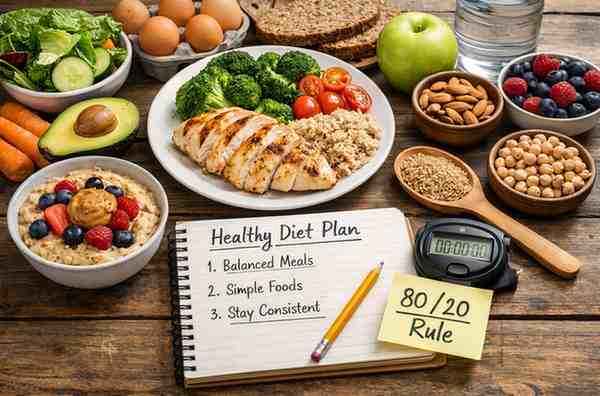
80% reasonable. 20% flexible.

From what I’ve seen, people who follow this pattern stick with it for years.

Their weeks look something like:

  • Mostly whole foods

  • Some convenience meals

  • Occasional takeout

  • Dessert sometimes

And that balance prevents the crash-and-binge cycle.

Because honestly… extreme diets almost always snap back.


3. They Fixed Their Grocery Habits

This is one of those small details people underestimate.

But it shows up constantly.

Most people who struggle with healthy diets don’t have easy food at home.

They have ingredients.

But not meals.

So when they get tired, they order food.

The people who improved their diet usually kept simple fallback foods stocked.

Things like:

  • eggs

  • Greek yogurt

  • frozen vegetables

  • rotisserie chicken

  • canned beans

  • oatmeal

  • rice

Not glamorous.

But practical.

And that’s the difference.


What a Healthy Diet Actually Looks Like (In Real Life)

Healthy eating rarely looks like the meal plans you see online.

It usually looks… boring.

But stable.

Typical day I’ve seen work for a lot of people:

Breakfast

  • Oatmeal with fruit and peanut butter
    or

  • Eggs and toast

Lunch

  • Chicken or tuna sandwich

  • Salad or fruit

Snack

  • Yogurt

  • Nuts

  • Apple

Dinner

  • Rice or potatoes

  • Vegetables

  • Chicken, fish, tofu, or beans

Nothing extreme.

Just balanced.

And repeatable.

That last word matters more than most people realize.


How Long Does It Take to Adjust to a Healthy Diet?

Most people I’ve seen go through the same timeline.

Week 1: Excitement

Motivation is high.

They’re planning meals.
Cooking more.
Feeling optimistic.

Week 2–3: Friction

This is where most people struggle.

They get bored.

Cravings spike.

Life gets busy.

And the old habits start calling.

Week 4–6: Stabilization

The people who push through this phase usually report something interesting.

Food decisions start feeling automatic.

Energy improves.

And the diet stops feeling like a project.

This doesn’t happen overnight.

But it happens faster than people expect once the routine clicks.


The Most Common Mistakes I Keep Seeing

After watching dozens of attempts, a few mistakes repeat constantly.

Mistake 1: Starting Too Aggressively

People jump from:

Fast food → strict diet overnight.

That shift rarely lasts.

The people who succeed usually change one meal at a time.

Breakfast first.

Then lunches.

Then dinners.

Slow changes… stick.


Mistake 2: Trying Complicated Recipes

Healthy eating fails quickly when every meal requires effort.

Most sustainable diets rely on simple meals repeated often.

Think:

  • grilled chicken + rice

  • eggs + toast

  • yogurt + fruit

It may sound dull.

But it works.


Mistake 3: Underestimating Hunger

Many people trying to eat healthy accidentally eat too little.

Then they binge later.

The people who maintain healthy diets usually eat enough food.

Just better food.


Reality Check: Healthy Diets Aren’t Always Fun

This is something that doesn’t get said enough.

Healthy eating is satisfying…

But it’s not always exciting.

Sometimes dinner is just:

Chicken.
Vegetables.
Rice.

Again.

And again.

But something interesting happens over time.

Your body starts to like the predictability.

Energy becomes stable.

Cravings calm down.

People who stick with it usually say the same thing: “I didn’t realize how chaotic my eating used to be.”


Who This Approach May Not Work For

To be fair… this approach isn’t for everyone.

People who often struggle with it include:

  • Those who enjoy strict rules and structure

  • People following medical diets (keto for epilepsy, etc.)

  • Individuals who love cooking elaborate meals daily

This approach works best for people who want:

  • stability

  • flexibility

  • long-term habits

Not short-term transformation.


Objections I Hear a Lot

“Healthy food is expensive”

It can be.

But many of the diets I’ve seen work rely on simple foods.

Rice
Eggs
Beans
Potatoes
Chicken
Frozen vegetables

Sometimes the cost difference is smaller than expected.


“I don’t have time to cook”

Most sustainable routines rely on 20-minute meals or less.

Or leftovers.

Or batch cooking twice a week.

People who succeed usually simplify cooking dramatically.


“I always fall off after a few weeks”

Honestly… almost everyone does.

The difference is what happens next.

People who maintain healthy diets restart quickly.

Not next month.

Not Monday.

Next meal.

That small reset habit changes everything.


Quick FAQ About Following a Healthy Diet

What is the simplest way to follow a healthy diet?

Focus on balanced meals:

  • protein

  • fiber-rich foods

  • healthy carbs

  • whole foods when possible

Consistency matters more than perfection.


Do you need to cut out sugar completely?

No.

From what I’ve seen, moderate sugar intake works fine for most people.

The problem is excessive processed food, not occasional sweets.


Can you still eat out?

Yes.

Most people who maintain healthy diets still eat out.

They just do it occasionally, not daily.


Is calorie counting necessary?

Some people benefit from it.

But many people improve their diet simply by:

  • eating regular meals

  • choosing balanced foods

  • reducing ultra-processed snacks


Practical Takeaways (From Watching What Actually Works)

If someone asked me tomorrow how to follow a healthy diet, I’d tell them something like this.

Start simple.

Really simple.

1. Eat three real meals daily

Even imperfect ones.

Consistency beats perfection.


2. Build meals around three things

  • protein

  • fiber

  • carbs

That combination stabilizes hunger.


3. Keep easy food available

Healthy eating collapses when people are tired and hungry.

Stock simple fallback foods.


4. Accept repetition

The healthiest eaters I know repeat meals constantly.

Variety is nice.

But routine builds habits.


5. Expect boredom sometimes

Not every meal will be exciting.

That’s normal.


And maybe the most important lesson I’ve noticed after watching people try this for years…

The ones who succeed don’t treat healthy eating like a challenge.

They treat it like maintenance.

Something steady.

Something quiet.

Something that slowly becomes normal.

And no — this isn’t magic.

Some weeks still get messy.

People order pizza.
They skip meals.
They eat too many snacks.

That still happens.

But once someone understands how to follow a healthy diet in a realistic way, they stop seeing those moments as failure.

They just… return to the routine.

And honestly, that shift alone is where most people finally stop feeling stuck.

Ways to Boost Bone Density Naturally: 11 Honest Lessons That Finally Give People Hope

Ways To Boost Bone Density Naturally 11 Honest Lessons That Finally Give People Hope 1
Ways to Boost Bone Density Naturally 11 Honest Lessons That Finally Give People Hope

Honestly… bone density is one of those things people don’t even think about until something quietly goes wrong.

I’ve seen this pattern more times than I expected.

Someone in their late 30s or early 40s starts getting weird aches. A small fracture from something that shouldn’t have caused one. A doctor casually mentions “bone density.” Then suddenly they’re Googling ways to boost bone density naturally at midnight wondering how their body got here.

What surprised me most after watching so many people deal with this is how confusing the advice is.

Everyone says the same vague things:

  • “Take calcium.”

  • “Exercise more.”

  • “Drink milk.”

And then months pass. Nothing changes. People assume their bones are just… declining.

But from what I’ve seen working with people trying to improve bone health — and watching dozens of real attempts play out — the issue usually isn’t effort.

It’s that most people unknowingly focus on the wrong pieces of the puzzle.

Bone density doesn’t respond to random healthy habits.

It responds to very specific signals.

Once you understand those signals… things start to make a lot more sense.


Why People Start Looking for Ways to Boost Bone Density Naturally

Most people don’t start this journey proactively.

They start because something scares them a little.

Common situations I’ve seen:

  • A bone density scan shows early osteopenia

  • A small fall causes a surprising fracture

  • A doctor warns about osteoporosis risk

  • Menopause or aging suddenly shifts bone markers

  • Long-term inactivity catches up

And here’s something interesting.

A lot of people I’ve talked to were already living “healthy” lives.

They were eating vegetables. Walking daily. Taking vitamins.

Yet their bone density was still dropping.

That’s usually the moment they realize something important:

Bone strength isn’t just about general health.

It’s about targeted mechanical and nutritional signals that bones respond to.

And most people simply haven’t been taught those signals.


What Bones Actually Need to Get Stronger

One of the biggest misunderstandings I see is this idea: Bones get stronger from nutrients alone.

That’s only half true.

Bones behave more like muscles than people realize.

They strengthen when they receive three consistent signals:

1. Mechanical Stress

Bones respond to load and resistance.

When muscles pull against bone, the body says:

“We should reinforce this area.”

That’s how density improves.

2. Mineral Supply

Calcium, magnesium, phosphorus and trace minerals provide the raw materials.

Without them, strengthening signals can’t build anything.

3. Hormonal Support

Hormones regulate bone rebuilding cycles.

This includes:

  • Vitamin D

  • Estrogen

  • Testosterone

  • Growth factors

If any of these are missing, bone rebuilding slows.

That’s why simple calcium supplements rarely solve the problem.


11 Ways to Boost Bone Density Naturally (That Actually Show Results Over Time)

These are the patterns I’ve repeatedly seen help people improve bone markers or stabilize declining density.

Not overnight.

But steadily.


1. Strength Training (The Most Overlooked Factor)

Almost everyone I’ve seen struggling with bone density was doing cardio only.

Walking. Jogging. Cycling.

Those are great for heart health.

But bones respond much more strongly to resistance training.

When people start adding:

  • Squats

  • Deadlifts

  • Lunges

  • Resistance bands

  • Weighted carries

Something interesting happens.

Bone scans often stabilize or improve after months of consistent strength training.

It’s not magic.

It’s simple biomechanics.

Bones adapt to load.


2. High-Impact Movement (When Safe)

Another surprising pattern.

Low-impact exercise alone often isn’t enough.

Activities that stimulate bone formation include:

  • Jumping

  • Short sprints

  • Hiking on uneven terrain

  • Tennis

  • Basketball

These movements create brief force spikes through the skeleton.

Bones respond strongly to those signals.

That said — not everyone should start jumping immediately, especially if fracture risk is already high.

But for many people, controlled impact exercises make a difference.


3. Vitamin D Optimization

I didn’t expect this to be such a common issue.

But low Vitamin D shows up constantly in people with poor bone density.

Without Vitamin D:

  • Calcium absorption drops

  • Bone remodeling slows

  • Muscle strength declines

From what I’ve seen, people who improve their Vitamin D levels often report:

  • Better energy

  • Stronger muscles

  • Improved bone markers

Sunlight alone sometimes works.

But many people still need supplementation depending on their levels.


4. Calcium From Real Food (Not Just Supplements)

This one is tricky.

Calcium supplements help some people.

But food sources often work better long term.

Examples I see people incorporate successfully:

  • Yogurt

  • Sardines with bones

  • Leafy greens

  • Almonds

  • Sesame seeds

  • Tofu

The reason food works well is that it delivers supporting minerals too.

Calcium alone isn’t enough.

Bone formation needs a mineral network.


5. Magnesium (The Quiet Partner)

This nutrient rarely gets the spotlight.

But magnesium plays a huge role in:

  • Bone formation

  • Vitamin D metabolism

  • Muscle function

A pattern I’ve seen repeatedly:

People increase calcium intake but still struggle.

Later they add magnesium-rich foods like:

  • Pumpkin seeds

  • Dark chocolate

  • Spinach

  • Avocados

And things start improving.

Bones require mineral balance.

Not just a single nutrient.


6. Protein Intake (Often Too Low)

Most people trying to improve bone density actually eat too little protein.

Protein helps:

  • Build collagen matrix in bone

  • Support muscle mass

  • Improve structural strength

From what I’ve seen, increasing protein intake often helps people feel stronger overall.

Muscle strength protects bones too.


7. Walking With Load

Plain walking is helpful.

But adding weight changes the signal dramatically.

Examples:

  • Hiking with a backpack

  • Weighted vests

  • Carrying groceries regularly

  • Farmer carries at the gym

The extra load encourages bones to adapt.

And people often find it easier than intense gym routines.


8. Reducing Soda Consumption

This surprised a few people I worked with.

Heavy soda consumption may interfere with mineral balance.

I’ve seen individuals reduce soda intake and increase water and mineral-rich foods.

It’s not the single solution.

But it removes a common hidden interference.


9. Sleep (Bone Remodeling Happens at Night)

Bone repair happens during sleep cycles.

People with chronic sleep deprivation often struggle to improve bone markers.

When sleep improves:

  • Hormone balance improves

  • Recovery improves

  • Bone remodeling improves

This is easy to underestimate.

But it matters more than most realize.


10. Consistency Over Intensity

This is where people mess up the most.

They try extreme routines for two weeks.

Then stop.

Bone density responds to months and years of signals, not bursts of effort.

Slow and steady wins here.

Every time.


11. Hormone Awareness

Especially for women after menopause.

Estrogen plays a big role in bone preservation.

Ignoring hormonal changes makes bone health much harder to maintain.

That doesn’t mean medication is always necessary.

But it means awareness matters.


How Long Does It Take to Improve Bone Density?

This question comes up constantly.

And honestly… the timeline frustrates people.

Bone density changes slowly.

Most improvements show up on scans after:

12–24 months

That’s normal.

Bone remodeling cycles are long.

Small improvements accumulate quietly over time.


Common Mistakes I See People Make

Almost everyone I’ve observed struggling with bone density does at least one of these.

Relying only on supplements

Supplements alone rarely stimulate bone growth.

Bones need mechanical stress.


Avoiding resistance exercise

Fear of injury leads people to avoid strength training.

Ironically, that often worsens bone decline.


Expecting fast results

Bone health is a long-term project.

People quit right before results appear.


Ignoring protein intake

Many bone-health diets are accidentally too low in protein.


Following generic internet advice

Some advice sounds good but doesn’t trigger actual bone adaptation.


Reality Check: Who This Approach Might Not Work For

I try to be honest about this.

Natural methods help many people.

But not everyone.

They may be limited if someone has:

  • Severe osteoporosis

  • Certain autoimmune diseases

  • Long-term steroid medication use

  • Hormonal disorders

  • Advanced age with fracture risk

In those cases, medical treatment may still be necessary.

Natural strategies can still support outcomes though.


Objections I Hear All the Time

“Is it too late to improve bone density?”

Usually not.

Even small improvements reduce fracture risk.

Bones can adapt longer than most people think.


“What if I hate going to the gym?”

You don’t need a gym.

Weighted walking.

Resistance bands.

Bodyweight exercises.

These work surprisingly well.


“Does milk fix bone density?”

Not by itself.

Bone health depends on mechanical stress + minerals + hormones.

Milk alone can’t provide all three.


Practical Takeaways Most People Find Helpful

If someone asked me where to start, I’d suggest this simple framework.

Focus on these five things first:

  1. Strength training 2–3 times per week

  2. Adequate protein intake daily

  3. Vitamin D optimization

  4. Mineral-rich whole foods

  5. Consistent movement with load

Avoid overcomplicating it.

Bone health improves from repeatable habits, not complicated protocols.


And honestly… watching people go through this process has changed how I think about bone health.

Most people believe bone loss is inevitable.

Like it’s some quiet countdown.

But what I’ve seen is a little different.

Bones respond to signals.

When those signals are missing, density declines.

When they return… improvement often follows.

Not instantly.

Not dramatically.

But slowly.

Quietly.

Enough to matter.

And sometimes that’s the shift people need most — realizing their bones are still listening.

Cure for Chagas Disease: 7 Hard Truths That Finally Bring Clarity and Hope

Cure For Chagas Disease 7 Hard Truths That Finally Bring Clarity And Hope 1
Cure for Chagas Disease 7 Hard Truths That Finally Bring Clarity and Hope

I still remember a call from a friend who had just received a positive Chagas disease test after years of unexplained symptoms.

He sounded more confused than scared.

Because the internet had given him two completely opposite messages.

One side said:

“There’s no cure.”

The other side promised miracle herbs, parasite cleanses, and overnight recovery.

And honestly… I’ve watched a lot of people get stuck right in that confusing middle.

Over the years—through conversations with patients, caregivers, and even a few clinicians working with immigrant communities in the U.S.—one pattern keeps repeating.

People searching for a cure for Chagas disease usually arrive already exhausted.

They’ve read too much.

They’ve tried things that sounded promising.

And most of them are asking one simple question beneath all of it:

Is there actually a real way to treat this… or am I chasing something that doesn’t exist?

From what I’ve seen, the answer isn’t as hopeless as people think.

But it’s also not as simple as people hope.

And almost everyone I’ve watched go through this makes the same few mistakes early on.


What Most People Mean When They Search “Cure for Chagas Disease”

Here’s something that honestly surprised me after seeing so many conversations around this.

Most people aren’t really asking for a scientific definition of cure.

They’re asking things like:

  • Can the parasite be eliminated?

  • Will symptoms stop getting worse?

  • Can my heart stay healthy long-term?

  • Did I catch this too late?

Those are very different questions.

And the answers depend heavily on which stage of the infection someone is in.

Chagas disease has two major phases:

1. Acute Phase (Early Infection)

This happens shortly after infection with the parasite Trypanosoma cruzi.

The tricky part?

Most people don’t notice it.

Symptoms can look like:

  • Mild fever

  • Fatigue

  • Swelling near the bite site

  • Eye swelling (Romana’s sign)

But many cases are so mild they go unnoticed.

From what I’ve seen discussed repeatedly in patient groups, people often discover the infection years later during routine blood testing.

2. Chronic Phase

This is where most U.S. diagnoses happen.

And this phase has two paths:

Indeterminate chronic phase

No symptoms. Parasite still present.

Determinate chronic phase

Symptoms appear, often affecting:

  • Heart

  • Digestive system

  • Nervous system

This stage is where people start worrying about long-term damage.

Which is why the question of “cure” becomes complicated.


The Two Medications That Actually Target the Parasite

Despite all the alternative cures floating around online, there are currently two main treatments recognized by infectious disease specialists.

And from what I’ve seen in real-world discussions, many people don’t even realize these exist.

1. Benznidazole

This is the most commonly used treatment.

It works by damaging the parasite’s DNA so it can’t reproduce.

Doctors in the United States often obtain it through the CDC treatment program.

Typical treatment length:

60 days

What people often report during treatment:

  • Fatigue

  • Skin rashes

  • Nerve irritation

  • Digestive issues

Most people I’ve heard from say the first few weeks are manageable.

But around week three or four… side effects can start appearing.

That’s where some patients quit early.

And unfortunately, stopping halfway can reduce effectiveness.


2. Nifurtimox

The second option.

Often used if someone cannot tolerate benznidazole.

It works differently but still targets the parasite.

Treatment duration:

60–90 days

Common complaints I’ve seen discussed:

  • Appetite loss

  • Nausea

  • Weight loss

  • Mood changes

Neither medication is easy.

But they remain the only treatments proven to directly attack the parasite.

And that matters.


The Biggest Misunderstanding About “Cure”

Almost everyone I’ve seen go through this initially assumes something like this:

“Once I take the medication, the parasite is gone forever.”

That’s… not exactly how doctors frame it.

What treatment aims to do is:

  • Kill as many parasites as possible

  • Prevent disease progression

  • Reduce long-term complications

In early infections, treatment success rates are very high.

Some studies suggest parasite clearance rates above 80% in children and early cases.

But in long-standing infections, it’s harder to confirm full eradication.

The immune system and parasite interactions become complicated over time.

So doctors often measure success differently.

Success might mean:

  • Lower parasite levels

  • Stabilized heart function

  • No worsening symptoms

Which, honestly, is still a big win.


Why Early Treatment Changes Everything

This is one pattern that comes up again and again.

People who discover infection early often respond much better to treatment.

From what infectious disease specialists say, early treatment can:

  • Eliminate parasites more effectively

  • Prevent heart damage

  • Prevent digestive complications

And that’s huge.

Because Chagas disease complications—especially cardiomyopathy—can develop slowly over decades.

I’ve seen multiple patients say they only found out they had Chagas after:

  • Blood donation screening

  • Pregnancy testing

  • Immigration medical exams

And those accidental discoveries sometimes end up being life-saving.


The Mistakes I Keep Seeing People Make

This part might sound blunt.

But most people I’ve worked with or spoken to mess up the early decision phase.

Usually in one of these ways.

Mistake #1: Waiting Too Long

Fear of medication side effects causes delays.

People spend months researching alternatives.

Meanwhile, the parasite remains active.

Mistake #2: Falling for “Parasite Cleanses”

There are endless online detoxes claiming to cure Chagas.

Things like:

  • Herbal parasite flushes

  • Coffee enemas

  • Oxygen therapy

  • High-dose supplements

I’ve never seen credible infectious disease doctors recommend these as primary treatments.

Some might help with general health.

But they don’t eliminate Trypanosoma cruzi.

Mistake #3: Stopping Medication Early

Side effects hit.

People quit at week three.

But parasite treatment requires complete therapy duration.

Stopping early can undermine results.

Mistake #4: Ignoring Cardiac Monitoring

Even after treatment, doctors often recommend periodic heart testing.

Things like:

  • ECG

  • Echocardiogram

  • Holter monitoring

Some patients assume treatment means zero follow-up.

That’s risky.


How Long Does Treatment Usually Take?

The medication itself typically lasts:

60–90 days

But recovery isn’t measured only by finishing pills.

Doctors often track patients over months or years.

Monitoring may include:

  • Blood tests

  • Heart scans

  • Symptom tracking

Many people report feeling normal during treatment.

Others feel exhausted for weeks.

It varies widely.

And honestly… the emotional side of this can be harder than the physical part.


Who Benefits Most From Treatment

From what I’ve seen discussed among clinicians and public health programs, treatment tends to be most effective for:

  • Children

  • Recently infected individuals

  • Adults under 50 with early disease

  • Women of childbearing age (to prevent congenital transmission)

Still, treatment may be recommended even in chronic stages.

Because slowing progression matters.


Who Might Need a Different Approach

Not everyone is automatically treated.

Some cases require careful evaluation.

For example:

  • Severe heart disease

  • Advanced organ damage

  • Pregnancy

  • Medication intolerance

Doctors sometimes weigh risk vs benefit carefully in these situations.

Which can be frustrating for patients hoping for a clear answer.

But it’s part of responsible care.


FAQ: Real Questions People Keep Asking

Is Chagas disease completely curable?

In early infections, treatment can often eliminate the parasite.

In chronic cases, treatment aims to reduce parasite levels and slow disease progression.

Can Chagas disease go away on its own?

Very rarely.

Most infections remain lifelong without treatment.

Is treatment dangerous?

Side effects are common but usually manageable under medical supervision.

Doctors monitor patients closely.

How do people in the U.S. get Chagas disease?

Most cases occur in people who:

  • Lived in Latin America

  • Received blood transfusions before screening programs

  • Were born to infected mothers


Objections I Hear All the Time

Let’s talk about the doubts people bring up.

Because they’re understandable.

“The medication sounds harsh.”

Yes.

It can be.

But untreated infection can lead to heart failure decades later.

Doctors weigh that risk carefully.

“What if I’ve had this for 20 years?”

Treatment can still help slow progression.

And many doctors still recommend it.

“Why didn’t my doctor mention this?”

Chagas disease is rare in the U.S. healthcare system.

Some physicians simply aren’t familiar with it.

Specialists in infectious disease or tropical medicine usually know more.


A Reality Check Most People Need

Here’s the hard truth.

Even after treatment:

  • Some people still develop complications.

  • Heart monitoring may continue for years.

  • Recovery isn’t always obvious.

But I’ve also seen the opposite.

People who start treatment early often feel an enormous sense of relief.

Because the unknown finally becomes something manageable.

That emotional shift matters more than people realize.


Practical Takeaways From Watching People Navigate This

If someone close to me were dealing with this, these are the steps I’d quietly recommend.

1. Confirm diagnosis properly

Blood testing through experienced labs matters.

2. Talk to an infectious disease specialist

Not every general physician handles Chagas frequently.

3. Start treatment sooner rather than later

Especially if the infection is recent.

4. Prepare mentally for side effects

Knowing what might happen reduces panic.

5. Keep long-term follow-up

Heart health monitoring is important.

6. Ignore miracle cure claims

If something promises overnight parasite elimination, be skeptical.


And honestly…

I’ve watched enough people go through the early confusion stage to know how overwhelming this search can feel.

You type “cure for Chagas disease” into Google hoping for one clean answer.

Instead you get science papers, scary statistics, and miracle solutions that sound too good to be true.

The real path tends to be quieter.

Diagnosis.

Treatment.

Monitoring.

Small decisions over time.

No — it isn’t a magical fix.

But I’ve seen the relief people feel once they finally stop guessing and start working with doctors who actually understand the disease.

Sometimes that shift alone is the moment things begin to feel manageable again.

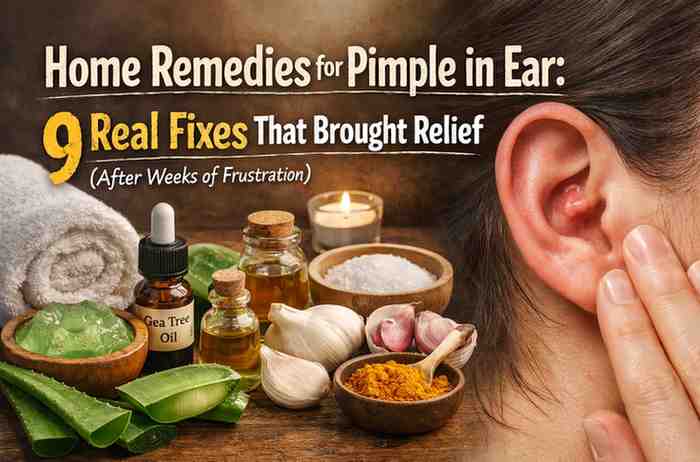
Home Remedies for Pimple in Ear: 9 Real Fixes That Brought Relief (After Weeks of Frustration)

Home Remedies For Pimple In Ear 9 Real Fixes That Brought Relief After Weeks Of Frustration 1
Home Remedies for Pimple in Ear 9 Real Fixes That Brought Relief After Weeks of Frustration

Honestly, I didn’t think this would work.
I’d already poked at my ear like an idiot (don’t do that), Googled myself into a spiral, and tried three “quick fixes” that made things worse. The pimple was deep in my ear canal, painful in that sharp, throbby way that makes chewing annoying and sleep… not fun. I felt ridiculous for hoping again. But I was also desperate.

That’s how I ended up trying home remedies for pimple in ear. Not because I’m anti-doctor. Just because it was late, clinics were closed, and I needed something—anything—to take the edge off without shoving random stuff into my ear. What happened next surprised me. Some things helped. Some things were a straight-up mistake. A few were neutral. And one almost sent me to urgent care. Cool cool cool.

Here’s the messy, honest version of what I learned.


Why I even tried home remedies (and what I misunderstood)

Not gonna lie… I assumed “pimple in ear” meant the same thing as a face pimple. Slap on something drying, wait, done.
Wrong.

The ear canal is sensitive. Moist. Dark. Bacteria love it there. Add earbuds, sweat, or aggressive cleaning (hi, cotton swabs), and you’ve got a tiny, angry ecosystem brewing. What I misunderstood at first:

  • It’s not just oil clogging a pore. Often it’s irritation + bacteria + trapped moisture.

  • Pressure matters. Anything you shove in there can make swelling worse.

  • Drainage is unpredictable. Sometimes it pops on its own. Sometimes it just sulks.

I tried to treat it like a forehead zit. That backfired. The goal shifted from “nuke it” to “calm the area, reduce bacteria, let the body do its thing.”


The home remedies I tried (what worked, what failed, and why)

I didn’t do all of these at once. I rotated. Learned. Adjusted. Here’s the real rundown.

1) Warm compress (the boring one that actually helped)

This felt too simple to matter. It mattered.

What I did:

  • Clean washcloth

  • Warm (not hot) water

  • Held it gently against the outside of my ear for 10–15 minutes, 2–3 times a day

What happened:
The throbbing eased within the first session. By day two, the pressure felt less… stabby. From what I’ve seen, at least, warmth helps blood flow and can encourage gentle drainage without you forcing anything.

Mistake I made:
I tried heat that was too hot once. Instant regret. Skin irritation = more inflammation.

Worth it?
Yeah. Low risk, real relief. This became my baseline.


2) Tea tree oil (diluted) – helped, but I overdid it

I messed this up at first.

What I did (wrong):
Undiluted tea tree oil on a cotton tip, dabbed near the entrance of the ear. It burned. Not cute.

What I did (right):

  • 1 drop tea tree oil + 1 teaspoon carrier oil (olive oil worked for me)

  • Tiny dab on the outer ear skin near the canal opening (not deep inside)

What happened:
The redness calmed down over 24–48 hours. The area felt cleaner, less irritated. Tea tree is antibacterial, but it’s also intense. Dilution matters.

Who will hate this:
Anyone with sensitive skin. If you’ve reacted to essential oils before, skip this.


3) Aloe vera – soothing, not a cure

This honestly surprised me. I expected nothing.

What I did:
Pure aloe gel (no fragrance), a light smear on the outer ear skin where it felt tender.

What happened:
Didn’t “cure” the pimple. But it took the angry edge off the skin around it. Less itchy. Less tight. That made me less tempted to mess with it, which probably helped more than the aloe itself.

Worth it?
As a comfort move, yes. As a fix? Nah.


4) Warm saltwater compress – subtle but calming

This felt old-school. My grandma would approve.

What I did:

  • 1 cup warm water

  • ½ tsp salt

  • Soaked a cloth, wrung it out, pressed it against the ear

What happened:
Mild relief. The area felt cleaner and less inflamed. I didn’t notice dramatic change overnight, but paired with the warm compress routine, it seemed to help the swelling settle.

Reality check:
It’s supportive care, not magic.


5) Apple cider vinegar – nope, not for me

Internet swore by this. I tried it once. Once.

What I did:
Diluted ACV on a cotton pad, dabbed near the outer ear.

What happened:
Burning. Redness. Instant “why did I listen to the internet” moment.

Lesson:
Acids + delicate ear skin = risky. If your skin barrier is already irritated, this can make things worse.

Would I recommend this?
Honestly, no. Too easy to mess up. Too little upside.


6) Garlic oil – weirdly helpful, but smell alert

I didn’t expect that at all.

What I did:
Warm (not hot) garlic-infused oil. Tiny amount on the outer ear skin near the canal opening.

What happened:
Garlic is antibacterial. The tenderness dropped over two days. The smell, though… not subtle. I did this at night so I wouldn’t smell like an Italian kitchen all day.

Who should avoid this:
If you’re sensitive to strong scents or have super reactive skin. Patch test first.


7) Turmeric paste – messy, mildly effective

This one stains everything. Learn from my mistake.

What I did:
Turmeric + water paste on the outer ear skin. Covered with a bandage so I wouldn’t smear yellow everywhere.

What happened:
Inflammation went down a bit. Not a dramatic change, but the area felt calmer the next morning.

Don’t repeat my mistake:
Don’t use this before leaving the house unless you want to explain why your ear is neon.


8) Steam (from a shower) – comfort more than cure

I noticed this accidentally.

What happened:
After a warm shower, the pressure eased temporarily. Moist heat can help circulation. But steam alone didn’t “fix” anything.

Use it for:
Short-term relief. Not treatment.


9) Doing nothing (besides not touching it) – underrated

This was the hardest one for me.

What happened:
Once I stopped poking, prodding, and “checking” it every hour, the swelling went down faster. The body is annoyingly good at healing when you stop sabotaging it.


The routine that finally worked for me

Not glamorous. Just consistent.

Morning:

  • Warm compress (10 minutes)

  • Gentle cleanse of outer ear only (no digging)

Afternoon (if it throbbed):

  • Warm saltwater compress

Night:

  • Diluted tea tree oil or aloe (not both)

  • Hands off. Seriously.

Timeline (roughly):

  • Day 1: Pain relief started

  • Day 2–3: Swelling noticeably down

  • Day 4–5: Pimple softened and drained on its own

  • Day 6–7: Mostly gone, just tender

How long does it take?
From what I’ve seen, at least, mild ear pimples can calm down in 3–7 days with gentle care. Deep, infected ones can take longer. If it’s not improving by day 3–4, that’s a signal.


Common mistakes that slowed my results

  • Using cotton swabs inside the ear (I kept “checking” it ????)

  • Trying multiple harsh remedies in one day

  • Applying undiluted essential oils

  • Popping it (made swelling worse)

  • Sleeping on that side (more pressure, more pain)


Short FAQ (the stuff people actually ask)

Is it safe to use home remedies for pimple in ear?
Sometimes, for mild cases near the outer ear. If it’s deep, super painful, oozing pus, or affecting hearing, skip DIY and see a clinician.

How long does it take to heal?
Usually a few days to a week if it’s mild and you don’t irritate it. Longer if it’s infected.

Can I put oil inside my ear?
I wouldn’t. I kept everything on the outer ear skin near the canal opening. Putting stuff inside can trap moisture and bacteria.

What if it doesn’t work?
That’s not a failure. It’s feedback. Some ear pimples need prescription drops or professional drainage.

Is it worth trying home remedies first?
For mild discomfort, yeah. For intense pain, swelling, fever, or hearing changes? No. That’s doctor time.


Objections I had (and what I learned)

“This feels too gentle to work.”
Same thought. Turns out, gentle is the point. Less irritation = faster healing.

“Natural means safe, right?”
Not automatically. Essential oils can burn. Acids can irritate. “Natural” can still mess you up.

“I just want it gone now.”
I get it. But rushing with harsh fixes slowed me down.


Reality check (who this is NOT for)

Skip home remedies and get medical help if:

  • The pain is severe or worsening

  • There’s spreading redness or swelling

  • You have fever

  • Your hearing is affected

  • The pimple is deep inside the ear canal

  • You get these frequently (could be chronic infection or skin condition)

No shame in that. Ear stuff is delicate.


Practical takeaways (the stuff I’d tell a friend)

What to do:

  • Start with warmth and hands-off care

  • Keep everything gentle and outside the ear canal

  • Pick one mild remedy and stick with it for 48 hours

What to avoid:

  • Popping

  • Shoving things into your ear

  • Undiluted essential oils

  • Acidic “hacks”

What to expect emotionally:

  • Impatience

  • The urge to poke

  • Doubt when progress is slow

What patience looks like:

  • Relief before “healing”

  • Two steps forward, one step back

  • Letting your body lead

No guarantees. No miracle cures. Just steady progress.


So yeah—this wasn’t some overnight fix. I still rolled my eyes at myself for hoping. But it stopped feeling impossible. The pain eased. The swelling went down. I slept on both sides again.

Not magic. Just… enough.

Soya Chunks Benefits: 11 Honest Wins That Gave Me Relief (After So Much Frustration)

Soya Chunks Benefits 11 Honest Wins That Gave Me Relief After So Much Frustration 1
Soya Chunks Benefits 11 Honest Wins That Gave Me Relief After So Much Frustration

Honestly, I didn’t think this would work. I’d already tried “clean eating,” protein shakes that tasted like wet cardboard, and meal plans that looked great on Instagram and fell apart by Wednesday. I was tired of feeling hungry, tired of feeling weak at the gym, and tired of pretending I had discipline when I was just… exhausted.
So when someone told me to try soya chunks, I rolled my eyes. Cheap pantry food? That’s the fix? Sure.

Not gonna lie—I bought them out of mild desperation. I figured if they were awful, I’d chalk it up as another failed experiment and move on. But the soya chunks benefits I stumbled into were not what I expected. Some were obvious. Some surprised me. A couple came with annoying downsides I had to learn the hard way.
This is the messy version of that story. What I tried first. What flopped. What actually helped. And who I’d tell to skip this entirely.


Why I even tried soya chunks (and what I misunderstood)

My starting point was not noble. I was broke. I needed cheap protein. That’s it.
Every “high-protein” option I’d leaned on before was either:

  • Expensive

  • Gross after day three

  • Or made me weirdly bloated and moody

I kept hearing about soya chunks benefits in fitness forums and from a friend who meal preps like it’s a competitive sport. I assumed they were:

  • Bland

  • Hard to digest

  • Basically sad little protein nuggets with no soul

I was wrong about one of those things. Guess which one.

What I messed up at first

I cooked them like a robot.

  • Boiled them.

  • Squeezed the water out.

  • Threw them into a pan with some salt.

That’s it. No spices. No acid. No texture work.
They tasted like regret.

I almost quit right there. But I’m stubborn. And hungry. So I tried again.

Second attempt, I:

  • Soaked them in hot water with salt and a splash of vinegar

  • Squeezed them dry (important, learned this later)

  • Pan-fried with garlic, cumin, chili flakes

  • Finished with lemon

This honestly surprised me.
They were… good. Like, “I’d eat this again on purpose” good.

That’s when I stopped thinking of soya chunks as a sad substitute and started treating them like an ingredient that needs respect.


The real soya chunks benefits I noticed (no hype)

I’m not here to sell you a miracle food. But here’s what actually changed for me.

1. I stayed full longer (this one mattered)

This was the first noticeable win.
Meals with soya chunks kept me full in a way carb-heavy meals didn’t.

From what I’ve seen, at least, that combo of protein + fiber is clutch. I wasn’t prowling the kitchen an hour later looking for snacks like a raccoon.

Why this worked for me:
Protein slows digestion. Fiber adds bulk. Together, they shut up my “I’m starving” signals for a few hours.

2. My protein intake finally stopped being a guessing game

Before this, I was either:

  • Undereating protein

  • Or relying on shakes I hated

Soya chunks made it easy. I could eyeball a portion and know I was getting a decent protein hit without opening an app or weighing everything like a lab experiment.

3. Energy dips leveled out (not dramatic, but real)

I didn’t turn into a superhero.
But those mid-afternoon crashes? Less brutal.

This wasn’t instant. It took about 10–14 days of consistently eating balanced meals with enough protein. Then I noticed I wasn’t dragging myself through the day as much.

4. My grocery bill dropped (quiet but huge win)

This one hit emotionally.
Not stressing over food costs made it easier to stay consistent. When something fits your budget, you don’t resent it as much.

Cheap + filling = easier habits.

5. Digestion improved… after an awkward adjustment phase

I’m gonna be real.
The first week? My stomach was confused.
There was… activity. Gas. Some discomfort.

Then my body adapted.
After that, digestion actually felt better. More regular. Less “why is my stomach mad at me?” energy.

Don’t repeat my mistake:
I went from zero to a lot of soya chunks overnight. Ease in. Your gut will thank you.

6. It forced me to learn how to cook better

This was unexpected.
Soya chunks are unforgiving if you’re lazy with seasoning. That pushed me to:

  • Use spices properly

  • Balance salt with acid

  • Add texture (crisping in a pan instead of boiling into mush)

That skill carried over to everything else I cooked. So yeah, weirdly, soya chunks benefits included leveling up my kitchen game.

7. Weight changes (slow, not magical)

If you’re here for fat loss hopes, here’s the grounded version:

  • Soya chunks didn’t melt fat off me.

  • They helped me stick to higher-protein meals.

  • That made it easier to not overeat junk.

The scale moved slowly. Like, painfully slowly.
But it moved in the right direction when the rest of my habits weren’t chaos.


How long did it take to notice anything?

Short answer:

  • Fullness: 1–3 days

  • Energy: 1–2 weeks

  • Body composition changes: several weeks to months

  • Digestive comfort: 1–2 weeks (after the awkward phase)

If you’re expecting overnight results, this will disappoint you.
If you’re okay with quiet, boring progress, it might work.


Common mistakes that made this suck (learn from me)

I messed this up at first. A few times.

Mistake #1: Not squeezing out the water
Wet soya chunks = spongy sadness.
Press them dry. Seriously.

Mistake #2: Zero seasoning
These things need flavor. They’re not magically delicious on their own.

Mistake #3: Eating too much too fast
Your stomach might protest. Ease in.

Mistake #4: Expecting weight loss without other changes
Soya chunks benefits don’t override late-night pizza marathons. Trust me, I tested that theory.

Mistake #5: Making them the only protein source
Variety matters. I felt better when I mixed proteins instead of relying on one food.


Short FAQ (People Also Ask–style)

Are soya chunks healthy to eat daily?
For most people, yeah—in reasonable amounts. I ate them several times a week without issues after my gut adjusted. Balance still matters.

Do soya chunks cause hormonal issues?
This worried me too. From what I’ve read and experienced, normal dietary amounts didn’t mess with anything noticeable. If you have hormone-related conditions, talk to a doctor.

Are soya chunks good for weight loss?
They can help with fullness and protein intake, which supports weight loss habits. They don’t cause weight loss by themselves.

Do soya chunks taste bad?
Only if you cook them badly. Which I did. Once.

How much should I eat?
Start small. A modest serving. See how your body reacts. Then adjust.


Objections I had (and how I see them now)

“Soy is controversial.”
Yeah. I went down that rabbit hole. My take now: moderate amounts didn’t cause me issues. I didn’t go extreme.

“This is gym-bro food.”
Nope. It’s just food. Cheap, versatile protein.

“It’s processed.”
True. This isn’t whole-food purity land. I still ate vegetables, grains, fruit. Soya chunks were a tool, not my entire diet.

“I tried it once and hated it.”
Same. My first attempt was trash. Cooking matters more than people admit.


Reality check (stuff no one sells you on)

  • You might not like the texture. Some people never do.

  • Your stomach might need time to adapt.

  • Results are boringly slow.

  • This won’t fix chaotic eating patterns on its own.

  • If you already get enough protein from foods you enjoy, you might not need this.

Who should probably avoid or be cautious:

  • People with soy allergies (obviously)

  • Anyone with digestive conditions that flare with legumes

  • Folks who get obsessive about “superfoods” and swing between extremes

This is not for perfectionists. It’s for people who want something workable.


Practical takeaways (the grounded version)

What to do:

  • Start with small portions

  • Season aggressively

  • Pair with veggies and carbs

  • Use fat + acid for flavor

  • Eat it a few times a week, not every meal

What to avoid:

  • Plain boiled chunks

  • Overnight dietary overhauls

  • Expecting instant body changes

  • Using this as your only protein

What to expect emotionally:

  • Mild disappointment at first

  • Then quiet relief when it becomes easy

  • Occasional boredom

  • Small wins that don’t feel dramatic but add up

What patience looks like:

  • Two weeks before you judge it

  • A month before you evaluate results

  • Adjusting instead of quitting


The part I didn’t expect to feel

Relief.
Not the loud, cinematic kind. The quiet kind where food stops being a daily argument in your head.

Soya chunks benefits didn’t change my life overnight.
They just made things feel less impossible. Less expensive. Less complicated.

I still mess up.
I still skip meals sometimes.
I still get bored of foods and rotate things out.

But this stopped being another “failed attempt” and turned into a tool I actually use.

So no—this isn’t magic.
But for me? It made consistency feel less heavy.
And that was enough to keep going.

Does Kesimpta Cause Weight Loss? 7 Hard Lessons, Real Relief, and a Warning I Wish I Heard

Does Kesimpta Cause Weight Loss 7 Hard Lessons Real Relief And A Warning I Wish I Heard 1
Does Kesimpta Cause Weight Loss 7 Hard Lessons Real Relief and a Warning I Wish I Heard

Honestly, I didn’t think this would work.
I’d already tried three other things.
Two diets. One “lifestyle reset” I quit by week two.
When I started Kesimpta, I wasn’t chasing weight loss. I just wanted my MS to stop bullying my body. The weight question came later—after I noticed my jeans fitting differently and panicked a little because… wait, is this even related?

So yeah. Does Kesimpta cause weight loss?
Not gonna lie, I googled it at 2 a.m. like a gremlin. The answers were vague. Clinical language. No one saying what it actually feels like to be in this body on this med. So here’s the messy, lived version. Take what helps. Ignore what doesn’t.


Why I Even Started Kesimpta (and What I Got Wrong at First)

I went into Kesimpta with one job: stop the relapses.
That’s it. No glow-up fantasies. No scale goals.

What I misunderstood:

  • I assumed any weight change = side effect

  • I expected my body to behave the same on a new med

  • I didn’t factor in how fatigue and inflammation mess with appetite and movement

Big mistake.

Before Kesimpta, my routine was chaos:

  • Eat when I’m exhausted (aka late-night carbs)

  • Skip meals because nausea

  • Zero consistency with movement

  • Stress hormones doing parkour in my body

So when the scale dipped, my first thought wasn’t “cool.”
It was “oh great, another weird thing to worry about.”


So… Does Kesimpta Cause Weight Loss? The Real Answer

Short answer for featured snippet vibes: Kesimpta itself isn’t known to directly cause weight loss.

But some people notice weight changes indirectly because their symptoms improve, inflammation drops, energy comes back, and routines stabilize.

That’s the part no one tells you.

From what I’ve seen (and felt), weight changes happen because:

  • Fewer flares = more energy to move

  • Less inflammation = less water retention

  • Better sleep = fewer late-night snack spirals

  • More stable days = fewer “I can’t cook, order takeout” nights

This honestly surprised me.
I expected injections to wreck my appetite. They didn’t.

What actually changed:

  • My cravings got quieter

  • My bloating eased up

  • I moved more because I wasn’t wiped out by noon

That combo? Yeah, the scale noticed.


The Timeline (Because Everyone Asks “How Long Does It Take?”)

Let me be real. Nothing dramatic happened in the first month.

My rough timeline:

  • Weeks 1–4:

    • Injection anxiety

    • Mild flu-ish vibes

    • No weight change

    • Questioning all my life choices

  • Months 2–3:

    • Fewer bad days

    • Slight appetite normalization

    • Pants feel… less tight?

    • Noticed less face puffiness

  • Months 4–6:

    • Slow, boring progress

    • The good kind

    • Weight drifted down a bit

    • Energy stabilized enough to walk regularly

If you’re looking for a quick drop?
This will frustrate you.

If you’re okay with slow changes that come from your body calming down?
This might feel like relief.


What Worked (That I Didn’t Expect to Work)

I didn’t “diet.” I didn’t go monk mode.

Stuff that actually helped:

  • Protein first in the morning
    Even just yogurt. It kept my hunger less chaotic.

  • Short walks on good days
    10–15 minutes. No fitness influencer nonsense.

  • Hydration
    Inflammation bloat is sneaky. Water helped more than I expected.

  • Tracking patterns, not calories
    I noticed when fatigue days led to junk food. Awareness changed choices.

The weird part?
Once my symptoms eased, I stopped “panic eating.”
I didn’t expect that at all.


What Failed (Don’t Repeat My Mistake)

I messed this up at first.

  • I tried to force weight loss while my body was still adjusting

  • I cut food too hard

  • My energy crashed

  • Then I binged

  • Then I blamed the med ????

Other mistakes that slowed things down:

  • Skipping meals → rebound hunger

  • Comparing my progress to people on TikTok

  • Expecting linear results

  • Weighing daily (terrible for my mental state)

If your body is already dealing with MS + a new med, don’t add war on food to the list. It backfires.


Common Questions (Short FAQ for Real Life)

Does Kesimpta cause weight loss in everyone?
No. Some people lose a little. Some gain. Most see no direct change from the drug itself.

Can Kesimpta cause weight gain?
Indirectly, yes—if fatigue, steroids from relapses, or reduced activity happen. It’s not the med alone.

How long until I notice any change?
If weight shifts happen, it’s usually over months, not weeks.

Is it worth starting Kesimpta for weight loss?
Nope. That’s the wrong reason. It’s for MS control first.

What if nothing changes at all?
That’s normal. Neutral is still a win if your disease activity is calmer.


Objections I Had (and Maybe You Do Too)

“I’m scared this will mess with my metabolism.”
I was too. From what I’ve experienced and what’s reported, Kesimpta doesn’t directly alter metabolism. The changes come from symptom control and routine shifts.

“I don’t want to lose weight—I’m already struggling.”
Totally valid. If weight loss would be harmful for you, talk to your neuro and a dietitian. Prioritize stability over scale changes.

“What if this makes me feel worse?”
The first doses can be rough. That part is real. It settled for me. But if side effects linger, that’s a conversation with your care team—not something to push through alone.


Reality Check (Because I Needed One)

This isn’t a weight loss solution.
It’s not a body hack.
It’s not a shortcut.

What it can be:

  • A stabilizer

  • A chance for your body to calm down

  • Space to rebuild habits that MS messed up

What can go wrong:

  • You might expect body changes and feel disappointed

  • You might tie self-worth to scale shifts

  • You might ignore nutrition because “the med will fix it” (it won’t)

Who this is NOT for (in terms of weight expectations):

  • People looking for fast weight loss

  • Anyone with a history of disordered eating who uses meds as control tools

  • Folks expecting the injection to do lifestyle work for them


Practical Takeaways (No Hype, Just What Helped)

What to do:

  • Focus on symptom stability first

  • Eat regularly, even on tired days

  • Walk when you can. Rest when you can’t.

  • Track patterns, not just numbers

What to avoid:

  • Crash dieting during med adjustment

  • Daily weigh-ins

  • Comparing your body to anyone else’s timeline

  • Blaming Kesimpta for every fluctuation

What to expect emotionally:

  • Relief when flares calm

  • Impatience when nothing changes fast

  • Weird hope creeping in

  • Occasional fear when your body feels different

What patience actually looks like:

  • Boring consistency

  • Small routines

  • Forgiving bad weeks

  • Not quitting because progress is quiet


I won’t pretend Kesimpta magically fixed my relationship with my body. It didn’t.
But it did give me fewer bad days. And fewer bad days gave me room to take better care of myself.

So no—Kesimpta causing weight loss isn’t the point.
For me, the point was getting my nervous system to chill out enough that I could show up for my own life again.

Still messy. Still learning.
But it stopped feeling impossible.
And honestly? That was enough to keep going.

Teething Rash on Tummy: 9 Frustrating Fixes That Finally Brought Me Relief

Teething Rash On Tummy 9 Frustrating Fixes That Finally Brought Me Relief 1

Teething Rash on Tummy 9 Frustrating Fixes That Finally Brought Me Relief

Honestly, I didn’t even connect the dots at first. My baby was drooling nonstop, cranky as hell, and suddenly there was this angry red patch creeping up their tummy. I kept thinking: diaper rash? heat rash? weird detergent reaction? The pediatrician casually mentioned “teething rash on tummy” and I remember nodding like I understood… while internally thinking, that makes zero sense.

Not gonna lie—I rolled my eyes. Teething messes with gums, right? Why is my kid’s stomach paying the price?

Cue me trying three things that made it worse. Cue guilt. Cue late-night Googling with one hand while bouncing a sweaty, unhappy baby with the other. If you’re here because you’re stuck in that loop—confused, frustrated, second-guessing every cream in your cabinet—I feel you. This isn’t a neat, clinical guide. It’s what I learned the messy way. What worked. What didn’t. And the stuff I wish someone had just told me straight.


What I Thought It Was (and Why I Was Wrong)

I was convinced it was:

  • Detergent rash (so I rewashed everything—no change)

  • Heat rash (turned the AC into a freezer—still angry red bumps)

  • Food reaction (cut out things—baby still rashy)

Here’s what surprised me: the rash wasn’t random. It flared on heavy drool days. Like clockwork. When the bib soaked through and the onesie stayed damp against their tummy? Boom. Red, irritated skin by evening. That was my “oh… wow” moment. The rash wasn’t about what touched the skin once. It was about wet skin staying wet for hours.

From what I’ve seen, at least, teething rash on tummy isn’t some mysterious condition. It’s irritation + moisture + friction. Simple. Annoying. Very real.


The Stuff I Tried That Failed (So You Don’t Repeat It)

I messed this up at first. Here’s my hall-of-shame list:

  • Thick, fragranced lotion
    Felt soothing for 10 minutes. Then trapped moisture. The rash got angrier. Oops.

  • Letting it “air out” with no barrier
    Sounds logical. Didn’t work for us. Drool kept dripping down and re-irritating the skin.

  • Using baby wipes on the tummy
    Why did I think this was smart? Wipes are for butts, not already irritated bellies. It stung. Baby cried. I felt awful.

  • Switching laundry detergent three times
    Didn’t touch the rash. Just wasted time and my energy.

If your gut is telling you “this should help” but the rash looks worse after 24 hours… trust the rash. It’s telling you something.


What Actually Helped (The Unsexy, Boring Stuff)

This is where it got better. Not overnight. But noticeably.

1. Keep the tummy dry like it’s your job

No, really. I treated drool like a leak I had to manage.

  • Changed bibs often (not just when soaked)

  • Swapped damp onesies immediately

  • Gently patted the tummy dry during changes

It felt excessive. It helped more than any cream.

2. Light barrier cream, not heavy lotion

This honestly surprised me. Thick creams trapped moisture. What worked better:

  • A thin layer of petroleum jelly or zinc oxide

  • Just enough to protect skin from drool

  • Reapplied after wiping the area dry

Barrier > moisturizer for this kind of rash.

3. Short, lukewarm baths

Hot baths made it angrier. Lukewarm water + quick rinse calmed things down. I skipped soap on the rash area most days. Soap dried it out and made it flaky.

4. Breathable clothes (sorry, cute outfits)

Tight, synthetic onesies? Gone. We lived in loose cotton for a bit. Not Instagram cute. But the rash faded faster.

5. Gentle patting, not rubbing

Rubbing felt like I was “drying” the skin. I was actually irritating it more. Light patting helped the redness calm down.


How Long Did It Take to See Improvement?

This is the part everyone wants a clean answer to. I hate this answer but it’s honest:

  • Mild rash: looked better in 24–48 hours

  • Angry, raw rash: took about 4–6 days to calm down

  • Recurring flares: went away when teething drool slowed

I kept checking like every hour. That didn’t help my sanity. The rash needed consistency more than micromanagement.


Common Mistakes That Slowed Us Down

If I could go back, I’d stop myself from:

  • Overwashing the area

  • Trying new products every day

  • Ignoring how wet the fabric stayed

  • Panicking and doing too much

Sometimes “less, but done consistently” works better than a new fix every 12 hours.


People Also Ask (Real Questions I Had at 2 AM)

Can teething cause a rash on the tummy?
Yeah. Not directly from teeth, but from drool and moisture traveling down the chest and sitting on the tummy. That combo irritated my baby’s skin fast.

What does teething rash on tummy look like?
For us: red patches, tiny bumps, sometimes a rough texture. It looked worse after naps when clothes stayed damp.

Is this an allergy?
It can look like one, but if it flares on drool-heavy days and improves when the skin stays dry, it’s probably irritation, not a true allergy.

When should I worry?
If it’s spreading fast, oozing, crusting, or your baby has a fever—get it checked. Don’t play guessing games with infections.


Objections I Had (And What Changed My Mind)

“This seems too simple to work.”
Same. I wanted a magic cream. Turns out boring habits beat fancy products.

“My baby drools constantly. This feels impossible.”
It’s annoying, yeah. But even cutting wet time in half helped. Perfection isn’t required.

“I don’t want to overuse petroleum jelly.”
Fair. I used a super thin layer. Not slathered. It’s about protection, not soaking the skin.


Reality Check (No Sugarcoating)

This approach is:

  • Annoying

  • Time-consuming

  • Not cute

It won’t stop teething. It won’t prevent every flare. And if your baby has eczema or super sensitive skin, this might not be enough on its own. You may still need medical guidance. That’s not failure. That’s just… reality.

Also, if the rash doesn’t budge after a week of keeping the area dry + protected, something else might be going on. Yeast rashes can look similar and need different treatment. Don’t power through blindly like I almost did.


Who This Is NOT For

This probably won’t be your fix if:

  • The rash is clearly fungal or infected

  • There’s oozing, cracking, or yellow crust

  • Your baby has a known skin condition that flares differently

  • You’ve tried dryness + barrier for a week with zero improvement

In those cases, looping in a pediatrician sooner rather than later saves you stress.


Practical Takeaways (The Stuff I’d Actually Tell a Friend)

  • Keep the tummy dry like it’s priority #1

  • Use a light barrier, not heavy lotion

  • Change wet clothes fast

  • Avoid harsh wipes or soaps on irritated skin

  • Give it a few days before judging results

  • If it worsens or spreads, get it checked

Emotionally? Expect to feel annoyed. Maybe a little helpless. That’s normal. Patience here looks like doing the same boring thing repeatedly, even when you want a faster fix.


I didn’t expect something so low-tech to work. I wanted a miracle cream. What I got was… relief. Slower than I wanted. Messier than I imagined. But real. So no—this isn’t magic. But for me? The teething rash on tummy stopped feeling like this impossible mystery. And that was enough to keep going.