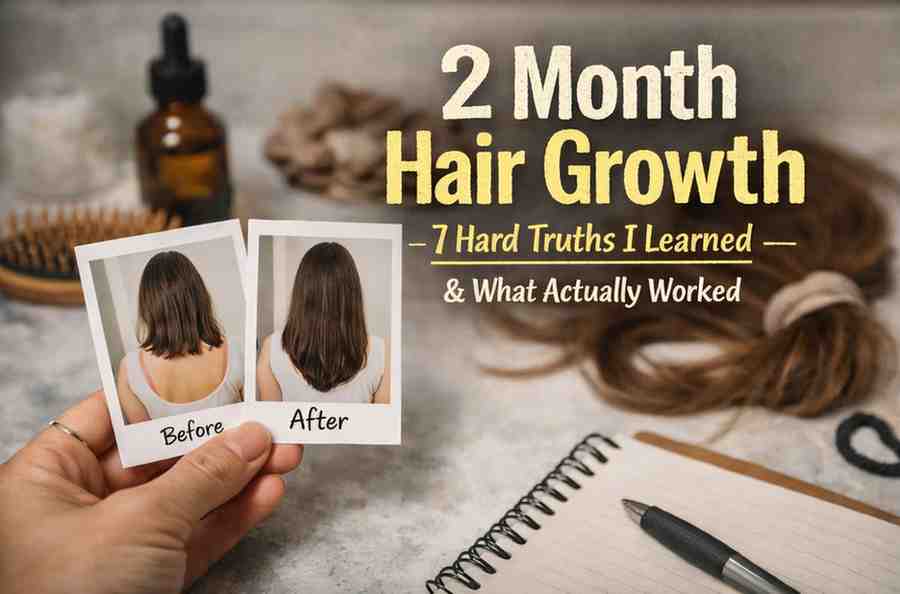
2 Month Hair Growth: 7 Hard Truths I Learned (and One That Finally Worked)

2 Month Hair Growth 7 Hard Truths I Learned And One That Finally Worked 1
2 Month Hair Growth 7 Hard Truths I Learned and One That Finally Worked

Not gonna lie… I rolled my eyes the first time someone said “just give it two months.” I’d already been waiting years for my hair to act right. Thin spots near my temples. Breakage I pretended not to see. A shower drain that felt like it was personally attacking me. Still, I gave 2 Month Hair Growth a shot because I was tired of feeling stuck and a little embarrassed about it.

I didn’t expect miracles. I did expect… something. Anything. What I got was messy progress, a few dumb mistakes, and one routine that finally clicked. It wasn’t cute. It was real. And yeah, it surprised me.


Why I Even Tried This (and Why I Almost Quit in Week Two)

I didn’t wake up one day feeling brave. I woke up annoyed. My part looked wider in photos. My ponytail felt sad. I kept telling myself it was “just stress,” which is my go-to excuse for everything.

So I decided to treat two months like a tiny experiment. Not a forever commitment. Just long enough to see if I was lying to myself about “nothing works for me.”

Week one felt hopeful. New products. Fresh routines. I was that person taking mirror pics like a scientist.

Week two? Ugh. My scalp felt weird. My hair looked greasy one day, dry the next. I started thinking, “Okay, this is a scam and I fell for it.”

Here’s what I misunderstood early:

  • I thought growth would show up fast. Like, visible in two weeks. Nope.

  • I mixed too many methods at once. Confusing results. Confusing scalp.

  • I kept changing products. That reset my progress over and over.

Honestly, the second week is where most people quit. I almost did.


The Stuff I Tried (Some of This Was Dumb, I’ll Admit)

I went in hot. Too hot. I tried:

  • A “stimulating” scalp oil that burned more than it helped

  • Daily washing because I thought “clean = growth” (wrong for me)

  • Tight buns to “protect” my ends (yeah… that backfired)

  • Skipping trims because I wanted length fast

That combo? Not great.

My scalp got mad. My ends snapped. I was stressed about being stressed, which is a whole loop.

The biggest mistake: I didn’t give anything time. I’d use something for five days, get bored, switch. From what I’ve seen, at least, hair hates chaos. It wants boring routines.

So I simplified. Hard.


What Finally Felt Different (and Why It Took Time to Notice)

Here’s the boring routine that actually helped me stick with the 2 Month Hair Growth experiment:

What I kept:

  • Washing 2–3 times a week

  • Gentle scalp massage in the shower

  • One basic conditioner I didn’t hate

  • Loose styles most days

What I stopped:

  • Heat tools on weekdays

  • Tight styles that pulled at my edges

  • Panic-buying new products at 2 a.m.

I also started doing this tiny habit: every night, I’d run my fingers through my hair and check for knots. If I felt one, I’d deal with it right then. Sounds small. It wasn’t. Breakage dropped a lot after that.

This honestly surprised me: less “effort” gave me better results. I thought doing more meant caring more. Turns out, my hair just wanted consistency.


The Emotional Whiplash Is Real

There were days I felt proud. There were days I stared at the mirror and thought, “Cool, nothing changed. Love that for me.”

Here’s the emotional rollercoaster in short:

  • Week 1: Hopeful. Motivated. Slightly delusional.

  • Week 2: Frustrated. Scalp acting up. Doubt creeping in.

  • Week 3: Neutral. Less shedding in the shower. Huh.

  • Week 4: Curious. Baby hairs? Or am I imagining things?

  • Week 6: Cautious optimism. My part looked… normal-ish.

  • Week 8: Quiet relief. Things felt steadier.

No fireworks. No movie montage. Just small signs that added up.

And yeah, I took photos. I hated taking them. But later, they helped me see changes I missed day to day.


What I Actually Noticed After Two Months (No Hype)

Let me be clear: I didn’t wake up with Rapunzel hair. That’s not how bodies work.

What changed:

  • My shedding slowed down

  • My edges felt less fragile

  • My hair didn’t snap as much when I detangled

  • My scalp felt calmer

The growth part? Subtle. My hair felt a little longer when I stretched it. That’s it. Still, compared to where I started, the 2 Month Hair Growth timeline gave me momentum. Momentum matters more than inches at first.

Would this work for everyone? Probably not. Hair is personal. Hormones, stress, diet, sleep… it’s all tangled up (pun intended).


“Did I Mess This Up?” Moments (Yes, Several)

I kept tripping over the same stuff:

  • Over-checking. Looking every day made me impatient.

  • Comparing to strangers online. Bad for the brain.

  • Expecting linear progress. Some weeks looked worse.

Don’t make my mistake: if you feel like nothing’s happening, zoom out. Two weeks is nothing. Two months is barely something. Still, it’s enough to learn your patterns.

One more thing I messed up: I ignored my stress levels. When work got wild, my shedding spiked. I didn’t expect that at all. Hair reacts to life. Rude, but true.


What If Nothing Changes?

This is the part people don’t say out loud.

Sometimes, you do the routine. You’re patient. And your hair still… does its own thing.

If that’s you:

  • It doesn’t mean you failed.

  • It might mean your issue isn’t routine-based.

  • It could be medical, hormonal, or stress-related.

I’m not a doctor. I’m just someone who tried to stop pretending “it’ll fix itself.” If nothing shifts after a couple months, getting checked isn’t dramatic. It’s practical.

That said, even when growth felt slow, my hair health improved. That alone was worth it for me.


The One Thing I’d Do Again (and One I Wouldn’t)

If I ran the 2 Month Hair Growth experiment again, I’d keep one core habit: consistency. Same wash days. Same detangle routine. Same low-drama approach.

What I wouldn’t repeat: changing stuff mid-week because I got bored. Hair progress is boring. That’s the truth nobody sells.

Also, I’d stop doom-scrolling hair timelines at midnight. That messed with my head more than my hair.


Practical Takeaways (Short and Real)

If you’re thinking about trying this, here’s the no-BS version:

  • Pick a simple routine. Stick to it.

  • Take photos once a week. Not daily.

  • Avoid tight styles. Your edges will thank you.

  • Detangle gently. When tired, be extra gentle.

  • Expect slow wins, not dramatic flips.

  • If your scalp burns, stop. Burning isn’t “working.”

And please… don’t buy five new products in one night. I did that. My cabinet is a graveyard of hope.


I went into this thinking I’d either “fix” my hair or prove that nothing works for me. Turns out, it was neither. It was quieter than that. The 2 Month Hair Growth window gave me proof that small, boring habits can calm the chaos. No magic. No overnight glow-up. Just progress I could live with.

If you’re tired and confused and still trying anyway… yeah, I get that. Keep it simple. Be patient with your scalp. And don’t beat yourself up when it feels slow. It’s allowed to be slow.
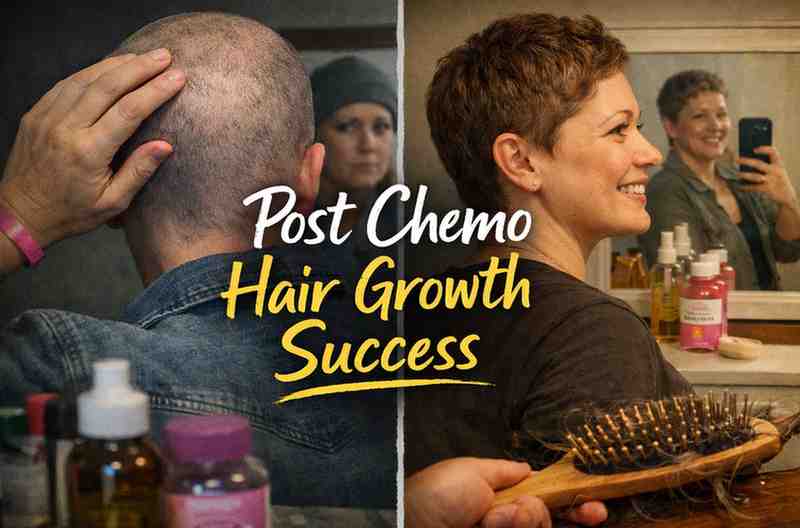
Post Chemo Hair Growth Success: 9 Brutally Honest Lessons From a Year of Messy Hope

Post Chemo Hair Growth Success 9 Brutally Honest Lessons From A Year Of Messy Hope 1
Post Chemo Hair Growth Success 9 Brutally Honest Lessons From a Year of Messy Hope

Honestly, I didn’t expect to care this much about hair.
After chemo, I told myself it was “just hair.” Brave face. Fake calm.
Then I caught my reflection in a Target window and felt my chest drop.
That’s when Post Chemo Hair Growth Success stopped being some fluffy phrase I scrolled past and started feeling… personal. Like, oh, this is happening to me now personal.

Not gonna lie—I thought regrowth would be quick.
It wasn’t.
I also thought the internet had answers.
It… kinda didn’t. Mostly vibes and miracle oils.

This is the version nobody warned me about. The slow weeks. The itchy scalp. The days where you think it’s growing and then realize you’re just squinting at peach fuzz in bad lighting.
I messed this up at first. More than once.
But a year later? I learned what actually helped. And what was pure noise.


The First Weeks Were Weird (and Kind of Lonely)

The silence surprised me.
No one talks about the quiet part after treatment ends. The “okay, now what?” phase.

People expected me to celebrate. I tried.
But the mirror felt loud.

Here’s what I didn’t expect:

  • My scalp felt sore for weeks

  • Tiny hairs came in patchy

  • The texture was… rude

  • My eyebrows lagged behind (rude again)

From what I’ve seen, at least, this phase messes with your head. You’re grateful to be alive. Also annoyed at your reflection. Both can exist. I had to let that be okay.

Still, I wanted some kind of plan. So I made one.
It wasn’t great at first.


The Stuff I Tried That Did Basically Nothing

Let’s get this part out of the way.
I wasted money. Yep. Real talk.

I tried:

  • Fancy serums with long names

  • Biotin gummies that tasted like candy

  • Cold showers (why did I do this?)

  • Head massages with tools that looked medieval

Some of it felt nice. None of it changed the timeline.

What I learned the hard way:

  • No oil grows hair from zero

  • More products ≠ faster results

  • Overwashing made my scalp angry

  • Panic-buying fixes nothing

This honestly surprised me. I wanted a hack.
There wasn’t one.
There was… patience. Ugh.


What Finally Shifted Things (Slowly)

I stopped chasing speed.
That was the shift.

Instead, I focused on:

1) Being gentle, almost boring about care

  • Warm water, not hot

  • Mild shampoo

  • No scrubbing

  • No tight hats

2) Eating like it mattered (because it did)

Not perfect. Just better.

  • More eggs

  • More beans

  • More water

  • Less “I forgot to eat” days

3) Letting air hit my scalp

This felt silly at first.
But sitting by a window? Kinda calming.
My scalp stopped itching as much.

4) Taking photos every two weeks

This one saved my sanity.
Growth is slow. Photos don’t lie. My eyes did.

This didn’t turn me into Rapunzel.
But it made the process feel… real.

That’s when the idea of Post Chemo Hair Growth Success stopped sounding fake. It became small wins stacked over time.


The Emotional Whiplash No One Mentions

Hope.
Then frustration.
Then hope again.

I’d wake up excited.
Then get mad at my cowlick.
Then feel guilty for being mad.

The emotional swings were wild.

Some days I felt proud.
Other days I wore a beanie to the grocery store in July.
Don’t judge me. Florida is cruel.

Here’s what helped emotionally:

  • Talking to one friend who “got it”

  • Muting miracle-growth accounts

  • Laughing at the awkward stage

  • Letting myself skip mirrors some days

I didn’t expect that at all.
I thought the hard part was chemo.
Turns out, the after part hits different.


The Awkward Stage Is a Personality Test

Three to five months in?
That phase tested me.

Hair grows in:

  • Straight in one spot

  • Curly in another

  • Pointing up for no reason

It looked like I lost a bet.

I tried to style it. Big mistake.
It didn’t want to be styled. It wanted time.

What worked better:

  • Soft beanies

  • Light scarves

  • Letting it be weird

  • Trimming only the neck fuzz

Don’t make my mistake:
I trimmed the top once. It set me back weeks.
Learned my lesson.


The Stuff That Helped More Than Products

Not glamorous, but real:

  • Sleep – growth is slower when I’m fried

  • Stress breaks – even 5 minutes

  • Consistency – same care, boring routine

  • Lower expectations – huge relief

That said, I did keep one simple scalp oil.
Used it twice a week.
Not magic. Just soothing.

The success part of Post Chemo Hair Growth Success wasn’t speed.
It was steadiness.
And my mood improved when I stopped racing the calendar.


How Long Did It Take (For Me, Anyway)?

This varies. A lot.
For me:

  • Fuzz showed at 4 weeks

  • Noticeable growth at 3 months

  • Short haircut vibes at 6 months

  • “Okay, this is hair” at 9–12 months

What if it’s slower for you?
That’s normal too.

What if it’s patchy?
Also normal.

What if you’re tired of waiting?
Same. I get it.

Still, it does move.
Even when it feels stuck.


The Social Part Was Harder Than I Thought

People mean well.
But comments land weird.

Things I heard:

  • “At least it’s growing!”

  • “You’re lucky you survived.”

  • “You look different, but strong.”

I know they meant support.
Some days I wanted silence.

I started answering with short lines:

  • “Yeah, one day at a time.”

  • “It’s a process.”

  • “I’m okay today.”

Protect your energy.
You’re allowed to.


Would I Do This All Again?

The routine? Yes.
The panic-buying? Nope.
The comparing myself to strangers online? Never again.

If I could rewind, I’d tell past-me:

  • Chill. Growth takes time.

  • Be kinder to your scalp.

  • Take photos. Trust proof.

  • Don’t believe every miracle post.

From what I’ve seen, at least, real progress is boring.
And boring is good.

That’s the quiet truth behind Post Chemo Hair Growth Success.
It’s not fireworks.
It’s showing up on dull days.


Practical Takeaways (No Fluff)

  • Go gentle. Always.

  • Eat protein when you can.

  • Drink more water than you think.

  • Track growth with photos.

  • Skip miracle promises.

  • Protect your mood.

  • Let the awkward stage pass.

  • Ask for help when it feels heavy.

No hype. No guarantees.
Just small steps that stack.


I won’t pretend this journey fixed everything.
Some days I still wish it grew faster.
Then again, I catch my reflection now and don’t flinch. That’s new.

So yeah—this isn’t magic.
But for me?
It finally made things feel… manageable.

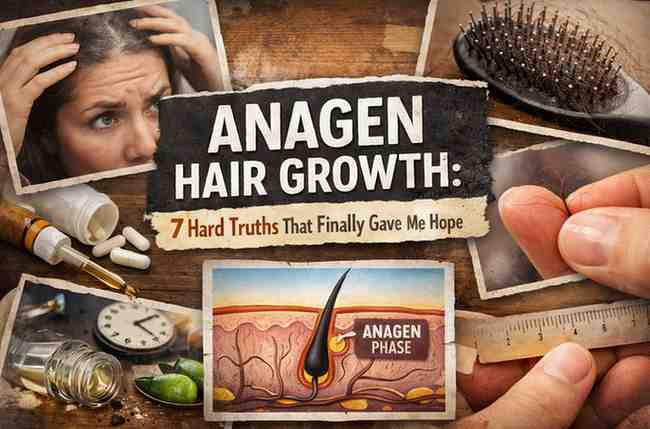
Anagen Hair Growth: 7 Hard Truths That Finally Gave Me Hope (After Months of Frustration)

Anagen Hair Growth 7 Hard Truths That Finally Gave Me Hope After Months Of Frustration 1
Anagen Hair Growth 7 Hard Truths That Finally Gave Me Hope After Months of Frustration

Honestly, I didn’t think this would work.
I’d already burned money on two “miracle” serums, watched way too many confident YouTubers with suspiciously perfect hairlines, and stared at my own thinning temples like they were personally mocking me. Not gonna lie… I felt dumb for hoping again.

Then I stumbled into anagen hair growth while doom-scrolling at 1:30 a.m. It wasn’t framed as magic. It sounded boring. Technical. Slow. Which weirdly made me trust it more. Still, I rolled my eyes and thought, cool, another science word people use to sell shampoo.

I didn’t expect anything to change.
But something did. Not fast. Not dramatically. Just… enough to mess with my certainty that “my hair is done growing, period.”

This is me, trying to explain what actually happened. The messy version. The parts that worked. The stuff I messed up at first. The moments I almost quit. And why, from what I’ve seen at least, this whole anagen thing is less about “growth hacks” and more about getting out of your own way.


Why I even cared about anagen hair growth (aka: the moment denial cracked)

I didn’t wake up one day panicking about hair. It crept up.
More scalp in harsh bathroom lighting. Ponytail feeling thinner. Shower drain becoming… suspicious.

I tried to ignore it. Then I tried to out-product it.

  • Thickening shampoos

  • “Natural” oils that smelled like regret

  • One supplement that made my stomach mad but promised “visible growth in 30 days”

Nothing felt stable. Some weeks looked okay. Then I’d shed again and spiral.

What finally clicked wasn’t a product. It was realizing hair actually has phases. And I’d been treating growth like a light switch. On/off. It’s not.

Anagen hair growth is basically the phase where hair is actively growing. That’s it. Simple. But the implications hit me hard:
If your hair isn’t in anagen, no serum in the world is gonna bully it into growing.

That was both depressing and… weirdly relieving.


The stuff I misunderstood (and paid for)

I messed this up at first. Big time.

Mistake #1: Thinking “stimulate growth” means “grow hair now”

I assumed anything that “boosts growth” would force hair into anagen. Like pushing a button. That’s not how bodies work. Hair cycles on its own timeline. You can support it. You can sabotage it. But you can’t scream at it into changing phases overnight.

Mistake #2: Overdoing everything at once

Classic me.

  • New shampoo

  • New scalp oil

  • Microneedling (I went too hard, don’t do that)

  • Supplements

  • Massaging like I was kneading dough

My scalp got irritated. I started shedding more. Panic ensued. I almost quit everything thinking I’d made it worse.

Reality check: irritated scalp ≠ happy anagen phase. I slowed way down and things calmed.

Mistake #3: Expecting visible results in weeks

I hate this about myself, but yeah. I was checking for baby hairs after like 10 days. That’s not how this works. Hair that’s entering anagen still needs time to, you know, actually grow long enough to see.

That lag time is brutal. Emotionally brutal.


What actually helped anagen hair growth feel… possible

I’m not about miracle routines. This is what stuck for me because it felt doable and didn’t wreck my scalp or my sanity.

1. I stopped abusing my scalp

This sounds obvious. I was low-key rough with my head.

  • Gentler washing

  • No aggressive scratching

  • Less heat styling

  • I stopped switching products every week

My scalp stopped feeling tight and angry. From what I’ve seen, calmer scalp = better chance hair stays in anagen longer. Not scientific. Just pattern recognition from my own head.

2. Consistent, boring scalp stimulation

Not intense. Just consistent.

  • 3–4 minutes of light massage when I washed

  • A soft silicone brush (not metal, I learned that the hard way)

  • Occasional oiling, but not drowning my scalp

This honestly surprised me. The consistency mattered more than the product.

3. Eating like I actually wanted hair to grow

I hate when people say “just eat better,” but… yeah. I was skipping protein and wondering why my hair felt like straw.

What changed for me:

  • More protein (not crazy, just intentional)

  • Iron-rich foods (I was borderline low)

  • Not pretending caffeine counts as nutrition

Did this alone trigger anagen hair growth? Probably not.
Did things improve after I stopped underfeeding myself? From what I’ve seen, yeah.

4. Stress management (ugh, I know)

I rolled my eyes at this too. Then I noticed my worst shedding lined up with my worst stress months. Coincidence? Maybe. But when I slept better and wasn’t in constant fight-or-flight, my shedding slowed.

Not zero. Just less dramatic.


How long did anagen hair growth take to show anything?

Here’s the unsexy truth:

  • 2–4 weeks: Nothing visible. Maybe less itching. Maybe less shedding. Mostly vibes.

  • 2–3 months: Tiny baby hairs at the hairline. Easy to miss. Easy to doubt.

  • 4–6 months: Density felt slightly better. Ponytail didn’t feel as sad.

  • 6+ months: This is where I stopped obsessing daily because I could tell something shifted.

Is this fast? No.
Is it realistic? Yeah. Hair grows slow. Anagen hair growth is a long game.

If someone tells you you’ll see dramatic change in 14 days, I’d be skeptical. Not saying impossible things can’t happen. Just saying… manage expectations or you’ll burn out emotionally.


Common mistakes that quietly sabotage results

I see people (and past-me) do these all the time:

  • Switching routines every 2 weeks

  • Over-scrubbing the scalp

  • Using “growth” products that actually irritate your skin

  • Panic-buying new solutions during normal shedding cycles

  • Comparing your timeline to someone on TikTok with filters and extensions

Honestly? The comparison thing hurt me the most. It made slow, real progress feel like failure.


Is anagen hair growth “worth it” to focus on?

Short answer: yeah, but not in the way marketing makes it sound.

You’re not “hacking” growth.
You’re just creating conditions where your hair can stay in the growing phase longer and fall out less dramatically.

Is it glamorous? No.
Is it controllable? Only partially.
Is it better than doing nothing and spiraling? For me, yes.

If you’re someone who needs instant feedback to stay motivated, this might drive you nuts.
If you can tolerate slow, quiet progress, this is one of the few approaches that didn’t make me feel scammed.


Objections I had (and still kinda have)

“What if my hair loss is genetic?”
Then anagen hair growth support alone won’t override that. It can help maximize what you’ve got, but it’s not a cure-all.

“What if I’m doing everything right and nothing changes?”
That can happen. Hormones, health issues, meds… they matter. This isn’t a morality test. Sometimes bodies just do their own thing.

“Isn’t this just another way to sell products?”
Yeah, the term gets abused. That doesn’t mean the phase itself is fake. It just means people slap the word “anagen” on stuff to sound legit.


Reality check (the part no one wants to hear)

This approach is not for:

  • People who want fast, dramatic change

  • People who hate routines

  • Anyone already burnt out by hair loss content

Results can be slow.
Shedding can still happen.
Some months you’ll feel hopeful. Some months you’ll want to shave your head and be done.

Also: sometimes the emotional weight of caring about hair is heavier than the hair issue itself. That took me longer to admit.


Quick FAQ (for the “People Also Ask” crowd)

What is anagen hair growth, in simple terms?
It’s the phase where your hair is actively growing. The longer hairs stay in this phase, the longer and fuller they can get.

How long does the anagen phase last?
Anywhere from 2 to 7 years depending on genetics, health, and age. You can’t control the max length, but you can influence how stable the phase is.

Can products force hair into anagen?
Not really. They can support the scalp environment. They can’t override your biology.

Is it worth trying to support anagen hair growth?
If you’re okay with slow progress and realistic expectations, yeah. If you’re desperate for fast fixes, it’ll probably frustrate you.

Who should avoid obsessing over this?
Anyone whose mental health takes a hit from constant hair tracking. It’s okay to step back.


Practical takeaways (the stuff I wish I knew earlier)

Do this:

  • Pick a simple routine and stick with it for at least 3 months

  • Treat your scalp gently

  • Eat like your body matters

  • Track progress monthly, not daily

Avoid this:

  • Over-stimulation

  • Constant product hopping

  • Expecting visible results in weeks

  • Comparing your timeline to strangers online

Expect emotionally:

  • Doubt before hope

  • Boring weeks

  • Tiny wins that feel stupid to celebrate (but still matter)

Patience, for me, looked like not checking my hairline every morning. It looked like trusting the process enough to let time do its quiet thing.


I’m not gonna pretend this fixed everything.
Some days I still catch myself angling my head away from harsh lighting. Old habits die hard.

But focusing on anagen hair growth shifted something in my head. It stopped feeling like my body was betraying me. It started feeling like we were… negotiating. Slowly. Imperfectly.

So no — this isn’t magic.
But for me? It stopped feeling impossible. And that was enough to keep going.

Growing Out Short Hair: 9 Honest Lessons I Learned the Hard Way (Relief + Frustration)

Growing Out Short Hair: 9 Honest Lessons I Learned the Hard Way (Relief + Frustration)

Honestly, I didn’t think growing out short hair would work for me. I’d done the impulsive chop during a rough season of my life (classic), loved it for about three weeks, and then woke up one morning hating every mirror in my apartment. Not dramatic at all.
But the part no one warned me about? The middle. The awkward, why-did-I-do-this middle.

Growing out short hair isn’t just a hairstyle change. It’s a slow, daily negotiation with your patience. Some days I felt kind of powerful for not running back to the salon. Other days I wanted to shave it all off just to stop thinking about it.
Not gonna lie… I messed this up at first. A few times.

This is what actually happened for me. No miracle tricks. No “just be patient” fluff. Just the messy, lived-in version of trying to grow my hair out without losing my mind.


Why I Even Tried Growing Out Short Hair (and What I Got Wrong)

I went short because I wanted a reset.
I told myself it was about “low maintenance.”
What I didn’t admit? I was tired of my own reflection and thought a haircut could fix that.

It worked for a minute. Then reality showed up.

Here’s what I misunderstood:

  • I thought short hair meant zero effort

  • I assumed growing it out would be passive

  • I believed time alone would solve the awkward phase

  • I expected compliments to carry me through the ugly stages (lol, no)

What surprised me:

  • Short hair actually needed more styling to look intentional

  • Growing it out felt emotionally heavier than cutting it

  • Bad hair days hit harder when you can’t hide behind length

  • People have opinions. Too many opinions.

There’s this weird vulnerability when you’re growing out short hair. You don’t get instant results. You can’t “fix it” overnight. And when it looks bad, it’s just… bad.

No ponytail. No bun. No quick escape.


The Awkward Phase Is Real (And It Lasted Longer Than I Expected)

If you’re here wondering, “How long does it take to grow out short hair?”
Here’s the unromantic answer:

Longer than you want. Shorter than forever.

For me:

  • First 2 months: felt cute sometimes

  • Months 3–5: identity crisis

  • Month 6: starting to see shape again

  • Month 9+: finally felt like “okay, this is going somewhere”

From what I’ve seen, at least, hair grows about half an inch a month.
Which sounds fine until you’re staring at your reflection every single day.

The awkward phase hit when:

  • My hair was too long to be “pixie cute”

  • Too short to tuck behind my ears

  • Flipping out weirdly on one side

  • Refusing to lay flat no matter what product I used

This honestly surprised me:
The awkward phase wasn’t just visual. It messed with my mood.

I caught myself:

  • Canceling plans

  • Wearing hats indoors

  • Avoiding photos

  • Getting snippy over tiny things (hi, emotional regulation)

No one tells you growing out short hair can mess with your confidence in sneaky ways.


What I Tried First That Failed (Learn From My Mistakes)

I went into this thinking effort = progress.
Wrong. Sometimes effort = sabotage.

Things I did that slowed everything down:

  • Over-trimming “just to shape it”
    I kept asking stylists to “clean it up.”
    Clean it up = cutting off my progress.

  • Heat styling every day
    I wanted control. I got damage instead.

  • Trying to force long-hair routines on short hair
    Oils, heavy masks, aggressive brushing.
    My hair just looked greasy and sad.

  • Switching products constantly
    I kept chasing “the perfect routine.”
    My scalp was confused. So was I.

  • Comparing my growth to TikTok timelines
    Huge mistake. Those glow-ups skip the ugly middle.

If I could rewind, I’d tell myself:
Stop micromanaging. Let it be weird for a bit.


What Actually Helped (Not Magic, Just Consistent)

No miracle serum changed my life.
But a few boring habits did more than I expected.

What worked for me:

  • Trims with intention (not panic)
    I only trimmed when ends were visibly damaged.
    Not because I was uncomfortable.

  • Light styling, not control styling
    Texture sprays > flat irons
    Let it look imperfect on purpose.

  • Protective sleep habits
    Satin pillowcase. Low effort, noticeable difference.

  • Washing less often
    This helped texture form naturally.
    Also… less time staring at it in the mirror.

  • Finding one “okay” style for the awkward phase
    Headbands, side part, tucked behind one ear.
    Just one reliable fallback look.

  • Tracking progress monthly (not daily)
    Photos once a month kept me sane.
    Daily checks made me spiral.

Why this works (simple logic):

  • Hair grows slow

  • Damage compounds fast

  • Stress makes you touch it more

  • Touching it more makes it look worse

  • Which makes you more stressed
    … you see the loop.

Breaking the loop mattered more than any product.


Common Mistakes That Drag This Process Out

If growing out short hair feels impossible, one of these might be happening:

  • You’re cutting too often “for shape”

  • You’re heat styling to control awkward growth

  • You’re expecting each phase to look good

  • You’re switching routines every two weeks

  • You’re punishing yourself for hating it some days

Not gonna lie… I did all of these.

This is where patience isn’t just waiting.
It’s resisting the urge to “fix” things that aren’t broken.


Is Growing Out Short Hair Actually Worth It?

Short answer:
Sometimes. Not always.

For me?
Yeah. Eventually.

Here’s when it felt worth it:

  • When I could finally tie a tiny ponytail

  • When my hair started framing my face again

  • When I stopped planning haircuts as emotional resets

  • When I felt less reactive about my appearance

Here’s when it didn’t feel worth it:

  • During the awkward middle

  • On days I felt invisible

  • When photos made me cringe

  • When people said “just cut it again”

So… is it worth trying?

If you’re doing this to:

  • Prove something to yourself

  • Regain a sense of continuity

  • Rebuild patience with your body

Then yeah. It can be weirdly grounding.

If you’re doing this because:

  • You think longer hair will fix your confidence

  • You’re hoping for a fast glow-up

  • You hate every stage that isn’t “perfect”

This might be a rough ride.


Objections I Had (and What I Learned the Hard Way)

“I don’t have time to style through the awkward phase.”
Totally fair. This phase takes more micro-effort, not less.
If low effort is your top priority, staying short might be better.

“My hair texture makes this impossible.”
Texture changes the awkward phase, not the growth itself.
Curly hair has its own chaos. Straight hair has its own flat moments.
Both are annoying in different ways.

“What if I hate it halfway through?”
You might. I did. Multiple times.
You’re allowed to change your mind.
Growing out short hair isn’t a contract.

“I feel dumb caring this much about hair.”
Same.
But appearance affects mood. Pretending it doesn’t doesn’t make you deep.
It just makes you quieter about what’s bothering you.


Reality Check (What No One Puts in Before/After Posts)

Let’s ground this:

  • Growth isn’t linear

  • Some months you’ll see nothing

  • Stress can slow progress

  • Breakage hides growth

  • Your “end goal” might change

Also… you might outgrow the reason you wanted long hair again.
That part surprised me the most.

Halfway through, I realized this wasn’t about length.
It was about learning to sit with discomfort without immediately escaping it.

That’s a lot for a haircut.
But yeah. It went there.


Quick FAQ (Real Answers, Not Salon-Speak)

How long does it take to grow out short hair?
From super short to shoulder-length?
Roughly 12–18 months for most people.
You’ll see small wins sooner. The full vibe takes time.

What if it doesn’t work for me?
Then it doesn’t.
You didn’t fail. You tested something and learned your preference.

What slows results the most?
Heat damage. Over-trimming. Constant routine changes. Stress-touching your hair.

Who should avoid growing out short hair?
If you’re in a season where your patience is already maxed out.
This process asks for emotional bandwidth, not just time.


Practical Takeaways (No Hype, Just Reality)

If you’re going to try growing out short hair, here’s what I’d actually recommend:

Do this:

  • Pick one low-effort style for bad days

  • Take monthly progress photos

  • Use less heat, not better heat tools

  • Trim only for damage, not discomfort

  • Let some days look bad on purpose

Avoid this:

  • Panic cuts

  • Comparing timelines

  • Daily mirror-check spirals

  • Switching routines constantly

  • Expecting every phase to feel cute

Expect emotionally:

  • Mood swings tied to hair days

  • Random confidence dips

  • Tiny wins feeling huge

  • Occasional “why am I doing this?” moments

Patience here doesn’t look calm.
It looks like continuing even when you’re mildly annoyed most days.


Still… there were moments I caught my reflection and thought,
“Oh. Okay. This is changing.”

Not dramatically. Not magically.
Just enough to feel like the effort wasn’t wasted.

So no — growing out short hair isn’t some glow-up shortcut.
It’s slow. It’s awkward. It tests your patience in dumb little ways.

But for me?
It stopped feeling impossible.
And honestly, that was enough to keep going ????

Improve Ejection Fraction for a Healthier Heart: 9 Hard Lessons That Finally Gave Me Relief

Improve Ejection Fraction For A Healthier Heart 9 Hard Lessons That Finally Gave Me Relief 1
Improve Ejection Fraction for a Healthier Heart 9 Hard Lessons That Finally Gave Me Relief

Honestly, I didn’t think this would work. I’d already tried three other things and felt kind of stupid for hoping again. The phrase improve ejection fraction for a healthier heart had started to sound like one of those neat promises doctors say when they’re trying to keep you calm. Meanwhile, I was out of breath tying my shoes. Not dramatic—just real.
Not gonna lie… I was frustrated, scared, and low-key angry at my own body. I kept thinking I’d done “enough” to deserve a heart that worked better. Turns out, hearts don’t care about fairness. They respond to boring, unsexy consistency. And a few choices I messed up at first.

What follows isn’t a miracle story. It’s the messy version. The part where I screwed up, learned slower than I wanted to, and still saw progress that surprised me.


Why I even tried to improve my ejection fraction (and what I misunderstood)

I didn’t wake up one day inspired. I got nudged into it by numbers on a report that felt way too small. Seeing a low ejection fraction messes with your head. You start Googling at 2 a.m. You picture worst-case stuff. You overcorrect.

Here’s what I misunderstood at first:

  • I thought one big change would fix it.

  • I thought more effort = faster results.

  • I assumed if I did “heart-healthy things,” my body would immediately thank me.

None of that turned out to be true.

What actually pushed me to try was this quiet moment: I couldn’t keep up with someone walking at a normal pace. Not sprinting. Walking. That hit harder than any lab result.

So yeah, I decided to try to improve ejection fraction for a healthier heart. Not because I felt motivated. Because I felt cornered.


What I tried first (and how I messed it up)

The “I’ll fix everything at once” phase

This is where I burned myself out.

I jumped into:

  • Aggressive cardio

  • Cutting salt to the point food tasted like punishment

  • Skipping meals to “be healthier” (dumb, I know)

  • Taking random supplements because the internet said so

It backfired.

  • I felt dizzy.

  • My energy tanked.

  • I missed workouts because I overdid it early.

  • I got cranky and quit for a week. Then felt guilty. Then repeated the cycle.

Don’t repeat my mistake: going from zero to hero doesn’t make your heart stronger. It just makes you tired and inconsistent.

What surprised me

Small, boring changes worked better than dramatic ones.

Like… annoyingly better.


What actually helped (from what I’ve seen, at least)

I’m not a doctor. I leaned on mine. But here’s the stuff that finally started to move the needle for me.

1. The right kind of movement (not the heroic kind)

I expected workouts to look like sweat-soaked victory montages.
Reality: it looked like slow walking that felt embarrassing at first.

What worked:

  • Walking most days

  • Short intervals of slightly faster pace

  • Light resistance training (bodyweight, bands)

What didn’t:

  • Pushing through fatigue “to prove something”

  • Skipping rest days

  • Competing with my past self

Why this works (simple logic): your heart adapts to what you repeat. Not what you attempt once and abandon.

2. Meds: boring, necessary, not optional (for me)

I resisted this part emotionally. I wanted control.
But the meds were part of improving ejection fraction for a healthier heart. Period.

What changed when I stopped fighting them:

  • Fewer scary dips in energy

  • More predictable days

  • Less anxiety about “am I making this worse?”

I didn’t expect that at all. I thought meds were just a background thing. They became a stabilizer that made lifestyle changes actually doable.

3. Food changes I could live with

I tried to be perfect. Failed. Then I got practical.

What stuck:

  • Cooking most meals at home

  • Eating protein earlier in the day

  • Not demonizing carbs

  • Lower sodium without turning food into cardboard

What didn’t:

  • Extreme diets

  • “Heart superfoods” I hated

  • Tracking every gram of everything

Small win: finding 3–4 meals I actually enjoyed and rotating them. That consistency beat any fancy plan.

4. Sleep (yeah, I rolled my eyes too)

This one annoyed me because it felt too simple.

When I slept better:

  • Workouts felt easier

  • My mood stabilized

  • I stuck to routines more

When I didn’t:

  • Everything felt harder

  • I skipped walks

  • I made worse food choices

Still annoys me. Still true.


How long did it take to see anything?

Short answer: longer than I wanted.
Longer answer: shorter than I feared.

Here’s my rough timeline:

  • First 2–3 weeks: no visible change. Just routine building.

  • 1–2 months: less breathless during daily stuff.

  • 3–6 months: measurable improvement (not dramatic, but real).

  • Beyond that: progress slowed, but it stuck.

This is the part people don’t like to hear. Improving ejection fraction for a healthier heart is slow. It’s not linear. Some weeks feel like you’re going backward. Then randomly, something clicks.


Common mistakes that slow results (ask me how I know)

  • Quitting when progress isn’t obvious

  • Comparing your timeline to someone else’s

  • Overtraining out of panic

  • Under-eating

  • Ignoring mental health (stress is not neutral for your heart)

One of my dumbest moves: I skipped gentle days because I thought they “didn’t count.”
They count. They’re the glue.


Quick FAQ (for People Also Ask vibes)

Is it worth trying to improve ejection fraction for a healthier heart?
If your quality of life sucks right now? Yeah. For me, the small gains stacked into something that felt like relief.

How long does it take to improve ejection fraction?
Months, not weeks. Sometimes longer. It’s annoying. Still worth it.

Can ejection fraction really improve?
Sometimes, yes. Sometimes it plateaus. Improvement doesn’t always mean “normal.” It can still mean “better than before.”

What if nothing changes?
Then you’ve still built habits that protect what you have. That’s not nothing.

Do I need to be perfect?
No. Perfection slowed me down. Consistency helped.


Objections I had (and how I worked through them)

“This sounds like too much effort.”
It felt like too much effort until my daily life felt heavier than the effort.

“I’m tired of trying things that don’t work.”
Same. That’s why I stopped trying everything and stuck to a few boring things.

“What if I fail again?”
You will. I did. Repeatedly. Failing didn’t break the process. Quitting did.

“I don’t have time.”
I had time to feel awful. Turns out I had time for 20-minute walks.


Reality check (no hype zone)

Let’s be real for a second:

  • This won’t fix everything.

  • Some days you’ll do everything “right” and still feel off.

  • Improvements can stall.

  • Not everyone’s ejection fraction improves the same way.

Who this is NOT for:

  • People looking for a quick fix

  • Anyone who wants guarantees

  • Folks unwilling to follow medical guidance

  • People who hate routines with a passion

What can go wrong:

  • Overdoing exercise

  • Ignoring symptoms

  • Chasing trends instead of basics

  • Getting discouraged too early


What I’d do differently if I started again

  • Start slower

  • Ask more questions earlier

  • Track energy, not just numbers

  • Build one habit at a time

  • Stop punishing myself for off days

This honestly surprised me: treating my heart recovery like a relationship worked better than treating it like a project. Less force. More listening.


Practical takeaways (the stuff I wish someone had told me)

What to do

  • Walk most days

  • Strength train lightly

  • Take prescribed meds

  • Eat like a human, not a monk

  • Sleep on purpose

What to avoid

  • Hero workouts

  • Extreme diets

  • Internet-only advice

  • All-or-nothing thinking

What to expect emotionally

  • Frustration

  • Random hope

  • Setbacks

  • Small relief moments that feel bigger than they look

What patience actually looks like

  • Doing the same simple things on boring days

  • Not quitting when progress is invisible

  • Letting “better” be enough for now

No guarantees. No magic. Just patterns that, from what I’ve seen, give your heart a fighting chance.


I’m not cured. I still have days where stairs feel personal. But improving ejection fraction for a healthier heart stopped feeling like a joke and started feeling… possible. That shift alone changed how I show up for myself.
So no — this isn’t magic. But for me? It took the edge off the fear. And that was enough to keep going.

Obese to Muscular Transformation: 7 Hard Lessons, Real Frustration, and the Relief I Didn’t Expect

Obese To Muscular Transformation 7 Hard Lessons Real Frustration And The Relief I Didnt Expect 1
Obese to Muscular Transformation 7 Hard Lessons Real Frustration and the Relief I Didnt Expect

Honestly, I didn’t think this would work. I’d already tried three other “fresh starts” and felt kind of dumb for hoping again. The scale kept bouncing like it was messing with me. I’d lose five, gain seven. My shirts fit tighter, then looser, then tight again. Somewhere in the middle of all that whiplash, I decided to try an obese to muscular transformation—not because I believed in some dramatic before/after story, but because I was tired of feeling heavy in my own body. Heavy physically, yeah, but also… heavy in my head.

Not gonna lie, I messed this up at first. More than once. I thought lifting would magically cancel out late-night snacks. I thought sweating meant fat was leaving my body in real time (lol). I thought I could “motivate” my way through habits I hadn’t changed. I was wrong on all of that.

This is messy. It’s not a highlight reel. It’s what actually happened, the stuff I wish someone had told me before I burned a few months doing things that felt productive but weren’t moving the needle.


Why I Even Tried This (and What I Got Wrong at the Start)

I didn’t wake up one day wanting to be “muscular.” I just wanted to stop avoiding mirrors and photos. I wanted stairs to stop feeling like a personal attack. I wanted my energy back in the afternoons instead of that weird, foggy slump.

Here’s what I misunderstood early on:

  • I thought muscle = instant fat loss.
    Like, I figured if I lifted heavy, my body would just… switch modes. Turns out you can gain strength and still hold onto fat if your food and recovery are chaotic.

  • I chased soreness instead of progress.
    If I wasn’t wrecked the next day, I assumed the workout “didn’t count.” So I overdid it. Then skipped days because I was too sore. Great system. ????

  • I copied routines from people who were already lean.
    Their volume, their split, their “eat big to get big” advice. My joints hated it. My recovery hated it more.

What surprised me:

  • Lifting didn’t make me bulky overnight.

  • Walking—just boring walking—did more for my fat loss consistency than any fancy HIIT I tried to force myself to love.

  • Sleep mattered more than the pre-workout I was obsessing over.

I didn’t expect that at all.


What Actually Worked (From What I’ve Seen, At Least)

This is where things got boring. And boring is kind of the point.

My simple weekly routine (that I could actually stick to)

Training (4 days/week):

  • Day 1: Upper body (push + pull)

  • Day 2: Lower body (squats, hinges, some calves)

  • Day 3: Rest or long walk

  • Day 4: Upper body (different angles, lighter)

  • Day 5: Lower body (lighter, more reps)

  • Weekend: One long walk + one day off

Walking (most days):

  • 7–10k steps. No heroics. Headphones, podcasts, done.

Food (nothing extreme):

  • Protein at every meal.

  • I didn’t ban foods. I just made it annoying to overeat them (smaller plates, not keeping snacks in arm’s reach).

  • I tracked calories for a while, then stopped when I could eyeball portions better.

Recovery:

  • Sleep before supplements.

  • Two full rest days if my joints started talking back.

That’s it. No secret stack. No 90-minute sessions. The consistency part was the hard part.

What failed (so you don’t repeat my mistake)

  • All-or-nothing weeks.
    I’d go perfect for 6 days, then blow day 7 and spiral into “welp, might as well start Monday.” That reset mentality cost me months.

  • Chasing new plans every two weeks.
    Program hopping feels productive. It isn’t.

  • Eating “clean” but not enough protein.
    I was tired, hungry, and cranky. Then I’d binge later. Protein fixed more than willpower ever did.


How Long Did It Take… Really?

Short answer for featured snippets and real life:
Visible change: ~8–12 weeks. Real, durable change: 6–12 months.

Longer answer, emotionally honest:

  • Weeks 1–4:
    Scale drops a bit. Mostly water. You feel hopeful. Also sore in weird places.

  • Weeks 5–8:
    Clothes fit a little better. Strength goes up. Scale might stall. This is where most people quit because it feels like effort without applause.

  • Months 3–6:
    This honestly surprised me. People started commenting. I could see shape in my shoulders. Fat loss was slower, but the mirror finally told the same story my workouts were telling.

  • Months 6–12:
    Less dramatic. More… steady. This is where it becomes a lifestyle or it falls apart.

If you’re hoping for a 30-day miracle, this will disappoint you. If you’re okay with boring progress that compounds, it’s weirdly satisfying.


Common Mistakes That Slow Everything Down

Quick hits, scannable, no fluff:

  • Trying to lose fat and train like a bodybuilder at the same time

  • Eating too little and wondering why workouts feel awful

  • Ignoring steps/cardio because “lifting burns more”

  • Changing the plan every time motivation dips

  • Comparing your month 2 to someone else’s year 3

I did all of these. Repeatedly. Learned slowly.


Is It Worth It?

Not gonna lie… some days, no.
Some days it’s annoying. You’re tired. Your friends want late food. The gym feels like a chore.

But overall? Yeah. For me, it was worth it because:

  • I stopped negotiating with myself every morning about whether I “felt like” moving.

  • My energy leveled out. No more 3 p.m. crash.

  • I felt capable again. That’s hard to put a price on.

That said, this isn’t for everyone.


Who Will Hate This Approach (and Should Probably Avoid It)

This is the trust part.

Avoid this path if:

  • You want fast visual results for an event in 3–4 weeks.

  • You hate routine and refuse to repeat simple habits.

  • You’re dealing with an active eating disorder (this can make it worse).

  • You need external validation to stay consistent.

This works best if you’re okay being bored sometimes. If you need constant novelty, you’ll fight the process.


Objections I Had (and What Changed My Mind)

“I’m too overweight to start lifting.”
I thought I needed to “get smaller first.” Lifting actually made everything easier—stairs, posture, daily movement.

“Won’t muscle make me heavier?”
The scale did go up once. Then my waist went down. I learned to trust measurements and photos more than one number.

“I don’t have time.”
Three focused workouts + walking fit into my life better than the five random sessions I kept skipping.


Reality Check (The Stuff Nobody Sells You)

  • Some weeks you’ll do everything right and nothing changes.

  • Fat loss isn’t linear. It comes in awkward chunks.

  • You might lose social momentum for a bit.

  • You’ll question if it’s working before it starts working.

Also: injuries can happen. Start lighter than your ego wants. Warm up. Rest days are not a moral failure.


Quick FAQ (People Also Ask–Style)

Does obese to muscular transformation actually work?
Yes, if you’re patient and consistent. No, if you expect dramatic changes in a month.

Can you build muscle while losing fat?
Early on, yes. Especially if you’re new to lifting. Later, it’s slower and more strategic.

What if the scale isn’t moving?
Check measurements, photos, strength progress. The scale lies sometimes.

Do I need supplements?
No. Protein helps. Creatine can help. Nothing replaces sleep and food.


Practical Takeaways (No Hype, Just What I’d Do Again)

  • Start smaller than you think. You can always add later.

  • Pick a boring plan and run it for 8–12 weeks.

  • Anchor protein at every meal.

  • Walk more than feels impressive.

  • Track something: steps, workouts, photos—so you don’t gaslight yourself into thinking “nothing’s happening.”

  • Expect emotional dips. That doesn’t mean it’s failing. It means you’re human.

What patience looks like:
Doing the same basic things when the novelty wears off.
Showing up when motivation is quiet.
Letting progress be slow and still calling it progress.


I won’t pretend this fixed everything in my life. It didn’t. Some days I still feel stuck. Some weeks I still want to skip the boring stuff and chase something shiny.

But this shift—from obese to muscular transformation being a fantasy to being… doable—changed how I see effort. It stopped feeling impossible. It started feeling manageable.

And honestly? That was enough to keep me going.

Mushroom Allergy Home Remedy: 9 Hard-Learned Lessons That Brought Real Relief (With Hope)

Mushroom Allergy Home Remedy 9 Hard Learned Lessons That Brought Real Relief With Hope 1
Mushroom Allergy Home Remedy 9 Hard Learned Lessons That Brought Real Relief With Hope

Honestly, I didn’t think this would work.
Not gonna lie… I was tired of trying “one more thing.” I’d already blown money on antihistamines that made me foggy, cut out foods I loved for no clear reason, and spent nights scratching my arms like a raccoon in a dumpster. The rashes would show up after meals. My nose would clog. Sometimes my lips tingled. I kept Googling mushroom allergy home remedy at 2 a.m., half-hoping the internet would tell me there was a simple fix. Half-expecting another dead end.

Here’s the messy truth: I stumbled into something that helped. Not a miracle. Not a cure. But real relief. And yeah, I messed this up at first. A few times.

If you’re here because mushrooms wreck your skin, your stomach, or your sinuses—and you’re tired of being told to “just avoid them”—I get it. Avoiding is obvious. Living is harder. Especially when mushrooms hide in sauces, broths, seasoning blends, “natural flavors,” and that one dish you thought was safe.

This is what I learned the hard way.


Why I even tried a home remedy (and what I misunderstood)

I started with the wrong mindset. I wanted a hack. A fast off-switch for my body freaking out over mushrooms. What I got instead was… management. Calmer reactions. Fewer flare-ups. Less dread when eating out.

What I misunderstood at first:

  • I thought “allergies” were one-size-fits-all.
    They’re not. My reactions weren’t anaphylaxis-level. More like skin + gut + congestion. That matters for what’s safe to try at home.

  • I assumed more remedies = faster results.
    Nope. Stacking everything at once made it impossible to tell what helped and what irritated me more.

  • I underestimated hidden exposure.
    Mushroom powder, yeast extracts, “umami” seasonings… yeah. Surprise attacks.

So I slowed down. Picked a few things. Paid attention.

That’s when the mushroom allergy home remedy angle stopped feeling like internet nonsense and started feeling… workable.


What I tried first (and how I messed it up)

I went in hot with three things at once:

  • Apple cider vinegar shots (don’t do this on an empty stomach, wow)

  • Raw garlic (because someone swore by it)

  • A random herbal tea blend

Result? Heartburn. Nausea. My skin still itched. I felt dumb.

The mistake wasn’t the ingredients. It was the chaos.

So I reset. One change at a time. Boring. Slow. But it finally showed me what actually helped.


The home remedies that actually helped me (from what I’ve seen, at least)

This is the part people want. No fluff.

1) Gentle antihistamine support (the natural kind)

I’m not anti-meds. But I wanted something lighter for daily life.

What helped:

  • Quercetin (from foods, not mega doses):
    Apples, onions, berries. I didn’t supplement at first. I just ate more of these consistently.

  • Vitamin C from real food:
    Citrus, bell peppers. It didn’t stop reactions instantly, but my baseline itchiness dropped over a few weeks.

Why this worked for me:
It felt like my body was less “on edge.” Reactions didn’t vanish, but they were quieter. Less explosive.

What didn’t work:
Mega-dose supplements on an empty stomach. Headaches. Jitters. Not worth it.


2) The boring one: consistent hydration + electrolytes

This honestly surprised me.
When I was dehydrated, my reactions felt worse. Skin flared faster. Congestion stuck around longer.

What I did:

  • Drank water like it was my job

  • Added a pinch of salt + a squeeze of lemon to one glass a day

Why this helped:
Inflammation hits harder when you’re dried out. My skin calmed down faster when I stayed hydrated.

Not glamorous. Still real.


3) Oatmeal baths for skin flare-ups

If your mushroom reactions show up as rashes or itching, this one saved my sanity.

What I did:

  • Ground plain oats into a powder

  • Tossed it into lukewarm bath water

  • Soaked for 15–20 minutes when flare-ups hit

Immediate relief?
Yeah. Not a cure. But the itch dialed down enough that I could sleep.

Mistake I made:
Hot water. Big nope. Made everything angrier.


4) Cooling compresses for facial tingling or hives

This felt too simple to matter. It mattered.

  • Cold, clean cloth

  • 5–10 minutes on irritated areas

It doesn’t fix the reaction.
It stops the spiral. When the itch calms, I stop scratching. When I stop scratching, my skin actually heals.


5) Food journaling (annoying, but necessary)

I resisted this. I hate tracking.
But mushrooms were sneaking into my life through:

  • Broths

  • Seasoning mixes

  • Vegan “meat” alternatives

  • Restaurant sauces

Once I wrote it down, patterns jumped out.
My reactions weren’t random. They were predictable. That alone reduced my anxiety.


How long did it take to notice real change?

Short answer: not overnight.

Longer answer:

  • Skin relief from oatmeal baths: same day

  • Less intense reactions overall: 2–3 weeks

  • Fewer surprise flare-ups: about a month (after I caught hidden mushroom sources)

If someone tells you a mushroom allergy home remedy will “fix everything in 24 hours,” I’d side-eye that. Hard.


Common mistakes that slowed my progress

I made these so you don’t have to:

  • Trying five remedies at once

  • Not reading ingredient labels closely

  • Assuming “natural flavoring” meant safe

  • Giving up after one bad day

  • Expecting a cure instead of management

Progress wasn’t linear.
Some weeks felt like backsliding. Then I realized I’d accidentally eaten mushroom powder in a snack bar. Oops.


Objections I had (and what changed my mind)

“Home remedies are placebo.”
Maybe some are. But symptom relief is still relief. If my skin stops burning, I don’t care what label you put on it.

“If it’s a real allergy, you shouldn’t mess around.”
True for severe reactions. If you’ve had trouble breathing, swelling of the throat, or needed emergency care—this is not your lane. Medical supervision only.

“Avoidance is the only real solution.”
Avoidance is necessary. It’s not always sufficient. Life is messy. Accidental exposure happens.


Reality check (because this isn’t magic)

This approach:

  • Did NOT cure my allergy

  • Did NOT make mushrooms suddenly safe

  • Did NOT replace medical advice

What it did:

  • Made reactions milder

  • Made recovery faster

  • Made my daily life less stressful

And honestly? That felt like winning.


Short FAQ (quick answers people keep asking)

Is a mushroom allergy home remedy actually worth trying?
If your reactions are mild to moderate and you’re tired of feeling helpless, yeah—worth trying carefully.

How long until I know if it’s working?
Give it 2–4 weeks for baseline improvement. Some relief (like oatmeal baths) is immediate.

Can I keep eating mushrooms while trying this?
I wouldn’t. That’s like stepping on a bruise and asking why it hurts.

Who should avoid home remedies for mushroom allergy?
Anyone with severe reactions (breathing issues, throat swelling, anaphylaxis history). Please don’t experiment.

What if nothing changes?
Then you learned something about your body. That’s still data. Time to pivot.


Who will hate this approach

  • People who want a single pill solution

  • Folks who hate tracking food

  • Anyone expecting fast, dramatic results

  • People with severe allergies who need medical care (this isn’t for you)

If you’re okay with slow, unsexy progress… this might fit.


Practical takeaways (no hype, just real)

  • Pick one home remedy at a time

  • Track what you eat (hidden mushrooms are sneaky)

  • Use soothing, low-risk relief for skin (oatmeal baths, cool compresses)

  • Support your baseline inflammation with food, hydration, and patience

  • Don’t push through reactions “to test it”

  • Know when to stop and get medical help

Emotionally?
Expect frustration.
Expect a few false starts.
Expect tiny wins that don’t feel like much… until they stack.


So yeah—this isn’t some miracle mushroom allergy home remedy story where everything disappears and I go skipping through a forest of shiitake. I still avoid mushrooms. I still get annoyed reading menus. I still mess up sometimes.

But it stopped feeling impossible.
And when you’ve been stuck in reaction-mode for months, that shift alone is huge.

If you’re in that tired, itchy, “why is my body like this” place right now… you’re not broken. You’re learning your triggers. Slowly. Messily. One small win at a time.

Reducing Stress and Anxiety Naturally: 9 Hard Lessons That Finally Brought Me Relief

Reducing Stress And Anxiety Naturally 9 Hard Lessons That Finally Brought Me Relief 1

Reducing Stress and Anxiety Naturally 9 Hard Lessons That Finally Brought Me Relief

Honestly, I didn’t think reducing stress and anxiety naturally would work for me.
I’d already tried three apps, two supplements, and one “life-changing” routine I quit after four days. I felt dramatic for even hoping again. Not gonna lie… I was tired of being the person who couldn’t relax. Tired of waking up with a tight chest for no clear reason. Tired of people telling me to “just breathe” like I hadn’t tried that at 3 a.m. while staring at the ceiling.

What finally pushed me to try again wasn’t hope. It was exhaustion.
I didn’t want to be calm. I just wanted the noise in my head to shut up for five minutes.

This isn’t a miracle story.
It’s messy. I messed this up at first. I quit things too early. I judged myself for not “feeling better fast enough.” But over time, reducing stress and anxiety naturally stopped feeling like a scam and started feeling… workable. Slow. Unsexy. Real.

Here’s what I learned the hard way.


Why I Even Tried Natural Approaches (and what I got wrong at first)

I didn’t come into this with crystals and candles energy. I came in cynical.

The reason I went “natural” wasn’t some purity thing. It was because:

  • Meds weren’t an option for me at that moment (long story)

  • Therapy was helpful but not enough on its own

  • I needed stuff I could actually do on a random Tuesday night when my brain went feral

What I got wrong:

  • I thought “natural” meant easy

  • I expected fast relief

  • I treated it like a checklist instead of a lifestyle shift

  • I quit the boring stuff way too early

I wanted a hack.
What I needed was a pattern change.


The Stuff I Tried That Didn’t Work (or only worked for 10 minutes)

Let me save you some time.

These aren’t bad things. They just didn’t fix the core issue for me on their own:

  • Meditation apps
    Helped for the session. Then my brain snapped back like a rubber band.

  • Breathing exercises (the random ones I found on TikTok)
    Some made me more aware of my anxiety. Which… not the goal at 2 a.m.

  • Herbal teas
    Nice ritual. Did nothing for my spiraling thoughts.

  • Journaling when I was already overwhelmed
    Turned into a doom spiral on paper.

  • Cold showers
    I hated every second. Stress + cold + anger = not calming.

This honestly surprised me:
The things people swear by didn’t work for me until I fixed the foundation. I was trying to add calm on top of chaos.

That doesn’t work.


What Actually Started Reducing My Stress and Anxiety Naturally (the boring but real stuff)

None of this is sexy.
All of it is annoyingly effective.

1. Walking. Not workouts. Just walking.

I didn’t need another intense routine.
I needed low-stakes movement.

What worked:

  • 20–30 minutes

  • No headphones some days

  • Same route so my brain didn’t have to “decide”

Why it helped (from what I’ve seen, at least):

  • It burned off nervous energy

  • It gave my thoughts somewhere to go

  • It interrupted rumination loops

I didn’t expect that at all.
But my anxiety softened on days I walked. Not vanished. Softened.


2. Fixing my sleep schedule (I hated this part)

I wanted to keep my chaos schedule and still feel calm.
That was not realistic.

What changed:

  • Same sleep time most nights

  • Phone out of reach

  • No “just one more video”

Did it fix everything? No.
Did it reduce my baseline stress by like 30%? Yeah.

Turns out being exhausted makes anxiety louder.
Who knew.


3. Cutting caffeine (I argued with myself about this)

I loved coffee.
I also loved not feeling like my heart was trying to escape my body.

What I did:

  • Reduced slowly

  • Switched to half-caf

  • No caffeine after noon

This sucked for a week.
Then my anxiety stopped peaking at random times. That alone felt like relief.


4. Setting stupidly small boundaries

This part felt awkward.

I started saying:

  • “I can’t today.”

  • “I need a quiet night.”

  • “Can we talk later?”

No big explanations.
No emotional essays.

At first I felt guilty.
Then I noticed my stress didn’t spike as often.

Reducing stress and anxiety naturally wasn’t about adding more self-care.
It was about subtracting pressure.


5. Creating a “when I spiral” routine

I stopped pretending I wouldn’t spiral.

Instead, I planned for it.

My routine (yours can look totally different):

  • Stand up

  • Drink water

  • Step outside for 2 minutes

  • Name 3 things I can see

  • One slow breath (not a fancy pattern)

This worked because:

  • It was automatic

  • It didn’t require motivation

  • It broke the freeze response

I messed this up at first by trying to make it perfect.
Simple works better when you’re anxious.


The Emotional Part No One Warns You About

This part is annoying but real.

Reducing stress and anxiety naturally didn’t feel empowering at first.
It felt boring.
It felt slow.
It felt like I wasn’t “doing enough.”

There were days I thought:

  • “This isn’t working.”

  • “I’m broken.”

  • “Other people seem to get calm faster than me.”

Then I noticed something subtle:

My bad days were still bad.
They just didn’t wreck the entire week.

That’s when I realized this was actually working.

Not dramatically.
Quietly.


How Long Did It Take to Feel Any Real Difference?

Short answer:
Some relief in 2–3 weeks.
Real change in 2–3 months.

Longer answer:

  • First 10 days: frustrating

  • Week 3: small wins

  • Month 2: fewer panic spikes

  • Month 3: stress didn’t control my schedule anymore

If you’re looking for instant calm, this will disappoint you.
If you want your baseline to slowly shift? This can help.


Common Mistakes That Slowed My Progress

I did all of these. Learn from my stubbornness:

  • Expecting one habit to fix everything

  • Quitting after a bad day

  • Overloading myself with “wellness tasks”

  • Comparing my pace to other people’s

  • Trying to be perfect

This isn’t about discipline.
It’s about consistency with compassion.

Yeah, that sounds cheesy.
Still true.


Objections I Had (and what actually happened)

“This sounds slow.”
It is. Fast relief is rare without side effects.

“I don’t have time.”
I didn’t either. I replaced doom scrolling with walking.

“What if this doesn’t work for me?”
Some parts won’t. That’s normal. Build your own stack.

“Is this even worth trying?”
For me, yes. Because doing nothing wasn’t working either.


Reality Check (no hype, just truth)

Reducing stress and anxiety naturally:

  • Won’t cure trauma

  • Won’t erase your triggers

  • Won’t make life easy

It can:

  • Lower your baseline tension

  • Make spirals shorter

  • Give you more control on bad days

This is not for you if:

  • You’re in crisis and avoiding professional help

  • You expect quick fixes

  • You hate slow progress

  • You want guaranteed results

And that’s okay.


Quick FAQ (People Also Ask, but in real language)

Does reducing stress and anxiety naturally actually work?
It can, if you treat it like a lifestyle shift instead of a hack.

Is this better than medication or therapy?
Not better. Different. For me, it worked best alongside support.

How long until I feel calmer?
Small relief in weeks. Real shifts in months.

What if nothing helps?
Then you deserve more support. This isn’t a failure on your part.

Can this make anxiety worse at first?
Yeah. Awareness can feel louder before it feels lighter.


Practical Takeaways (what I’d actually tell a friend)

If you’re going to try reducing stress and anxiety naturally, do this:

  • Pick 2 habits. Not 10.

  • Make them boring and easy.

  • Track patterns, not perfection.

  • Expect slow progress.

  • Plan for bad days.

  • Stop trying to fix yourself. You’re not broken.

What to avoid:

  • Chasing quick fixes

  • Copying someone else’s routine exactly

  • Quitting after one bad week

  • Shaming yourself for struggling

What to expect emotionally:

  • Doubt

  • Impatience

  • Small wins

  • Random setbacks

  • Quiet improvement

Patience looks like:

  • Doing the thing even when you don’t feel better yet

  • Noticing patterns instead of moments

  • Letting progress be uneven

No guarantees.
No miracles.
Just gradual relief if you stick with it.


So yeah… reducing stress and anxiety naturally didn’t turn me into a calm monk.
I still get anxious. I still spiral sometimes.
But it doesn’t own my entire day anymore.

That was the shift I didn’t know to hope for.
Not perfect calm.
Just… less drowning.

And honestly?
That’s been enough to keep me going.

Chicken Salads: 9 Hard Lessons, Real Relief, and Why I Almost Gave Up (2026 Guide)

Chicken Salads 9 Hard Lessons Real Relief And Why I Almost Gave Up 2026 Guide 1
Chicken Salads 9 Hard Lessons Real Relief and Why I Almost Gave Up 2026 Guide

Honestly, I didn’t think this would work. I’d already tried “eating better” in a bunch of half-hearted ways and felt stupid for hoping again. But Chicken Salads kept popping up everywhere—meal prep TikToks, doctor’s office posters, that one friend who suddenly had opinions about olive oil. I was tired, bloated, bored with food, and low-key mad at myself for not sticking to anything longer than three days. So I gave in. I started making Chicken Salads. Not the pretty Pinterest ones. The messy, fridge-leftovers, “please don’t taste bad” kind.

Not gonna lie… the first week was rough. I messed this up at first. Like, I genuinely thought I hated Chicken Salads. Turns out I just hated how I was making them.


Why I even tried Chicken Salads (and what I misunderstood)

I didn’t wake up one day craving lettuce. I tried Chicken Salads because:

  • I was tired of ordering takeout and feeling gross after.

  • My energy was weirdly low.

  • I needed something that worked on autopilot when I didn’t feel motivated.

What I misunderstood:

  • I thought Chicken Salads were just diet food. Dry chicken. Sad greens. No joy.

  • I assumed I’d get bored in a week.

  • I thought it would take way more time than it actually does.

What surprised me:

  • How much the texture matters. Crunch is not optional.

  • How much dressing ruins or saves the whole thing.

  • That “healthy” doesn’t have to taste like punishment.

From what I’ve seen, at least, people quit Chicken Salads because they make the bland version and then blame the concept. That was almost me.


The ugly first attempts (aka: don’t repeat my mistakes)

My first Chicken Salads were… tragic.

Here’s what I did wrong:

  • Overcooked chicken. Dry as cardboard. I chewed like I was mad at it.

  • No fat. Fat = flavor + satiety. I went “low-fat” and stayed hungry.

  • Too many sad greens. I dumped in spring mix like that would save me.

  • One-note flavor. Salt + lemon. That’s it. Who was I trying to impress?

I’d take three bites and start negotiating with myself about ordering pizza. Not a great sign.

The fix wasn’t complicated. It was just… human.

  • I started seasoning the chicken like I meant it.

  • I added something crunchy (nuts, apples, croutons).

  • I let myself use real dressing. Not buckets. Just enough to feel satisfied.

This honestly surprised me: the moment the salad felt like food and not a chore, I stopped fighting it.


The version that finally worked for me (no fancy chef stuff)

Here’s the routine that didn’t burn me out:

Base

  • Romaine or mixed greens (not the sad wilted bag)

  • Rotisserie chicken or leftover grilled chicken

Texture

  • Something crunchy: almonds, sunflower seeds, crispy chickpeas

  • Something juicy: grapes, apple slices, cherry tomatoes

Fat

  • Avocado or a real dressing (olive oil + vinegar, or a decent store-bought)

Flavor

  • Pickled onions or banana peppers

  • A sprinkle of cheese (parmesan or feta)

Optional when I’m tired

  • A handful of tortilla strips or croutons. Yes, I said it.

I didn’t expect that at all, but this combo stopped me from craving random snacks an hour later. I felt… normal. Not “on a diet.” Just fed.


How long did it take to feel like this wasn’t a punishment?

Short answer: about 7–10 days.

Longer answer:

  • Day 1–3: I hated everything. Wanted comfort food. Felt deprived.

  • Day 4–6: Less dramatic hunger swings. Still bored.

  • Day 7+: My body chilled out. Energy was steadier. Cravings weren’t screaming.

Is this scientific? No. It’s just what happened to me. Bodies are weird. But there was a noticeable shift once I stopped under-eating and stopped pretending flavor didn’t matter.

If you’re waiting for Chicken Salads to feel good on day one… yeah, that’s probably not happening. Give it a week of making them actually enjoyable.


Common mistakes that slow everything down

If Chicken Salads feel like they’re “not working,” check these:

  • Too little protein. You’ll be hungry in 45 minutes.

  • Zero fat. You’ll feel unsatisfied and resentful.

  • Same flavor every day. Burnout is fast and loud.

  • Not prepping anything. Decision fatigue will win.

  • Treating it like punishment food. You’ll rebel.

I did all of these. Especially the last one.


Is it worth it? (Real talk)

This is the part people lie about.

Chicken Salads are worth it if:

  • You want a low-effort default meal.

  • You’re tired of guessing what to eat.

  • You need something that doesn’t wreck your stomach.

  • You’re okay eating similar foods on repeat.

They’re not worth it if:

  • You hate cold meals.

  • You need variety every single day.

  • You’re in a phase where cooking anything feels overwhelming.

  • You expect instant body changes.

For me? Worth it. Not because Chicken Salads are magic. But because they removed a daily decision. That mental relief alone helped me stay consistent with other good habits.


Objections I had (and how I worked through them)

“I’ll get bored.”
Yeah, you will. Rotate flavors. Southwest one week. Greek the next. Curry-ish after that. Don’t marry one recipe.

“It’s too much prep.”
Batch cook chicken once. Wash greens once. The rest is assembly. 5 minutes on busy days.

“It’s expensive.”
Rotisserie chicken + bulk greens + store-brand dressing is cheaper than delivery. I did the math. Painfully.

“It’s rabbit food.”
Add protein, fat, and crunch. This isn’t a moral test.

“I’ll mess it up.”
You will. Then you’ll fix it. That’s the whole game.


Reality check (because no one likes being lied to)

Chicken Salads won’t:

  • Fix your relationship with food overnight.

  • Make weight fall off without other changes.

  • Cure emotional eating.

  • Feel exciting forever.

They will:

  • Give you a reliable option when you’re tired.

  • Help you notice hunger vs boredom.

  • Make some days easier.

Some days I still choose a burger. That doesn’t cancel the other days. This is about patterns, not purity.


Short FAQ (quick answers people actually want)

Are Chicken Salads healthy?
They can be. Depends what you put in them. Protein + veggies + fat = solid baseline.

How long do Chicken Salads last in the fridge?
Chicken: 3–4 days. Greens: 3–5 days if dry. Don’t pre-mix dressing unless you like soggy leaves.

Can I eat Chicken Salads every day?
You can. I did for a stretch. Just rotate ingredients so you don’t hate your life.

What if I don’t like lettuce?
Use cabbage slaw, spinach, or even roasted veggies. “Salad” is flexible.

Is store-bought dressing okay?
Yes. Pick one you actually enjoy. Perfection kills consistency.


Practical takeaways (the stuff I wish someone told me)

What to do

  • Season your chicken like it matters.

  • Add crunch and fat.

  • Prep once, assemble fast.

  • Rotate flavors weekly.

What to avoid

  • Making sad, dry salads.

  • Forcing “clean” versions you hate.

  • Expecting motivation to show up daily.

What to expect emotionally

  • Initial resistance.

  • Random cravings.

  • Small wins that don’t feel dramatic but add up.

What patience looks like

  • One boring meal at a time.

  • Tweaking instead of quitting.

  • Letting “good enough” count.

No guarantees here. Some people will try Chicken Salads and bounce. That’s fine. Food isn’t one-size-fits-all.


If I’m being honest, Chicken Salads didn’t change my life. They changed my afternoons. I stopped crashing. I stopped spiraling about what to eat next. That sounds small. It didn’t feel small when I was in it.

So no—this isn’t magic. But for me? It stopped feeling impossible. And that was enough to keep going.

Acupressure Points for Sneezing and Runny Nose Relief: 7 Real Fixes That Finally Brought Relief

Acupressure Points For Sneezing And Runny Nose Relief 7 Real Fixes That Finally Brought Relief 1
Acupressure Points for Sneezing and Runny Nose Relief 7 Real Fixes That Finally Brought Relief

Honestly, I didn’t think this would work. I was already on my third tissue box of the morning, nose raw, eyes watery, brain foggy from bad sleep. I’d tried steam. I’d tried antihistamines. I’d tried that “just drink more water” advice people love to throw out like it fixes everything. Nothing stuck.

Out of pure annoyance (and maybe a little desperation), I started poking around with acupressure points for sneezing and runny nose relief. Not because I believed in it. Because I was tired of feeling like a leaky faucet with a face.

Not gonna lie… I expected placebo vibes at best. I also expected to mess it up. Which I did. A few times. But something weird happened over the next couple of days. The sneezing fits got shorter. The constant drip slowed down. Not gone. But manageable. And honestly? That was enough to keep me trying.


Why I Even Tried Acupressure (and What I Got Wrong at First)

Here’s the unglamorous truth: I tried this because I didn’t want to keep taking meds every single day. They help. I’m not anti-meds. I just hate the dry mouth, the jittery feeling, the way my head goes cottony. Plus, my symptoms come in waves—sometimes allergies, sometimes a random cold, sometimes “my nose hates me for no reason.”

What I misunderstood at first:

  • I thought one quick press would magically stop a sneeze attack.

  • I pressed way too lightly. Like I was scared of my own face.

  • I did it once, felt nothing, and almost wrote the whole thing off.

The first night I tried, I pressed around randomly for maybe 30 seconds and went, “Yep, this is nonsense.” Then I sneezed five more times and went to bed mad.

The next day, I slowed down. Looked up the actual points. Gave it more than a half-hearted try. That’s when things started to shift.


The Points That Actually Did Something (From What I’ve Seen, at Least)

I’m not here to dump a textbook on you. I’m telling you the few spots that made a noticeable difference for my sneezing and runny nose. I’ll also tell you what they felt like when I pressed them—because that mattered more than I expected.

1. LI20 – The “Stop the Drip” Spot (Sides of the Nose)

This one is right next to your nostrils, in the little grooves where your nose meets your face.

What it felt like:
Tender. Like, “oh wow, that’s sore” tender. Which surprised me.

How I did it (after messing it up first):

  • Two fingers.

  • Press inward and slightly up.

  • Hold for 60–90 seconds.

  • Slow breaths.

What changed:
This didn’t instantly stop sneezing. But it calmed the constant dripping. Within 10 minutes, I wasn’t reaching for tissues every 30 seconds.

Mistake I made:
I pressed too hard at first and just irritated my skin. You want firm, not aggressive.


2. Yintang – The “Why Am I So Congested” Dot Between the Brows

Dead center between your eyebrows.

This honestly surprised me. I didn’t expect a point on my forehead to do anything for my nose. But when my head felt heavy and my sinuses were stuffed, this helped ease that pressure.

How I used it:

  • One finger.

  • Gentle circular motion.

  • 1–2 minutes while breathing slow.

What changed:
It didn’t stop sneezing on its own. But when I combined this with the nose points, my head felt clearer. Less pressure = fewer sneeze spirals, at least for me.


3. LI4 – The Hand Point Everyone Talks About (and Yeah, It’s Legit)

Between your thumb and index finger. The fleshy part.

I rolled my eyes at this one because everyone online talks about it for everything. Headaches. Stress. Sinuses. The whole menu.

But… yeah. It helped. Not dramatically. But consistently.

How I used it:

  • Pinch and hold until it feels achy.

  • 60 seconds each hand.

  • Repeat 2–3 rounds.

What changed:
Sneezing fits didn’t feel as explosive. That’s the best way I can explain it. The urge came down a notch.

Small warning:
Don’t go wild with pressure. If your hand goes numb, you’re doing too much. Ask me how I know. ????


4. Bitong – The “I Didn’t Know This Was a Thing” Spot

This one is just a little above the LI20 points, slightly higher along the side of the nose.

I didn’t expect that at all. I found it by accident while pressing around the area.

What it felt like:
A weird tender spot that made my eyes water when I hit it right.

What changed:
After about a minute on each side, my nose felt… open. Not cured. But less blocked. Less itchy inside. That itchy feeling is usually what triggers my sneeze storms.


My Actual Routine (Because Random Pressing Didn’t Work)

What finally worked wasn’t just hitting one point and hoping. It was doing a short routine, especially when I felt a sneeze attack building.

Here’s what I settled into:

  • LI20 (sides of nose): 1–2 minutes

  • Bitong (upper nose sides): 1 minute

  • Yintang (between brows): 1 minute

  • LI4 (hand): 1 minute each side

Total time: about 5 minutes.

I did this:

  • Once in the morning

  • Once before bed

  • And once mid-day if symptoms flared

How long did it take to notice a difference?

  • Day 1: mild relief, mostly less pressure

  • Day 2: sneezing fits shorter

  • Day 4–5: runny nose not constant

  • After a week: symptoms still there, but not running my life

So no, it wasn’t instant. That part annoyed me. I wanted a quick fix. This wasn’t that. But it did stack over time.


Stuff That Didn’t Work (So You Don’t Waste Time Like I Did)

Not everything helped. Some things felt like busywork.

  • Pressing for 10 seconds and expecting results

  • Doing it once a day and forgetting about it

  • Pressing random spots because “they hurt so maybe that’s good”

  • Trying it when I was already in a full-blown sneeze meltdown (harder to calm things once it’s in full swing)

This worked better as prevention or early intervention, not as a miracle stop-button mid-attack.


Common Mistakes I Made (Don’t Repeat These)

  • Being impatient. I almost quit after one day.

  • Pressing too lightly. It should feel like “oh, that’s tender” but not painful.

  • Doing it while doom-scrolling. Sounds silly, but breathing slow actually mattered.

  • Expecting it to replace everything else. I still used tissues. I still used saline spray. This wasn’t an either/or thing.


Is This Worth Trying or Just Another Internet Fix?

Short answer?
If your sneezing and runny nose are driving you a little nuts and you want something low-risk to layer on top of what you’re already doing… yeah, it’s worth trying.

Longer, more honest answer:

This is not magic.
This will not cure allergies.
This will not stop a cold in its tracks.

But from what I’ve seen, at least in my body, it can:

  • Take the edge off

  • Shorten sneezing episodes

  • Reduce that constant drip feeling

  • Help you feel less helpless about your symptoms

If you’re expecting instant relief in 30 seconds, you’ll probably be disappointed. If you’re okay with small improvements stacking over a few days, this might surprise you.


Quick FAQ (Real Questions I Had)

How long does it take to work?
For me, small relief showed up within a day. Noticeable change took about 3–5 days of consistent use.

What if it doesn’t work at all?
Then it doesn’t. Bodies are annoying like that. If you try it for a week and feel zero difference, it’s fair to drop it.

Can I do this with allergy meds?
Yeah. I did. No issues. It felt complementary, not conflicting.

How often is too often?
I stuck to 2–3 times a day. More than that just irritated my skin.


Objections I Had (and My Honest Take Now)

“This sounds placebo.”
Maybe. I don’t fully care anymore. The relief felt real in my body. Placebo or not, I’ll take less sneezing.

“I don’t have time for this.”
Five minutes is annoying when you’re busy. But so is blowing your nose 40 times an hour.

“What if I’m doing it wrong?”
You probably will at first. I did. It still helped once I got closer to the right spots.


Reality Check (Because I Don’t Want to Oversell This)

This is not for:

  • People with severe, chronic sinus infections

  • Anyone with unexplained nosebleeds

  • Anyone who needs urgent medical care

  • People expecting one-and-done results

Also:

  • It can irritate sensitive skin if you go too hard.

  • It can feel awkward at first.

  • Results can be slow and uneven. Some days it helped more than others.

There were days I did everything “right” and still sneezed like a cartoon character. That’s just… bodies.


Practical Takeaways (What I’d Tell a Friend)

  • Try it for a week, not one day.

  • Use firm, steady pressure—not poking.

  • Pair it with slow breathing. It weirdly matters.

  • Don’t ditch what already helps you. Layer this on.

  • Expect small wins, not miracles.

  • If it annoys you or does nothing after a week, drop it guilt-free.

Emotionally, expect:

  • Mild hope

  • Mild disappointment

  • Then, if you’re lucky, a quiet “huh… this helps a little” moment

That was the turning point for me. Not fireworks. Just relief enough to breathe without rage.


I’m not going to pretend acupressure fixed my nose forever. It didn’t. I still have allergy days. I still get random sniffles.

But it gave me a small sense of control when everything felt stuck. And honestly? That mattered more than I expected.

So no — this isn’t magic.
But for me? It stopped feeling impossible.
And that was enough to keep going.