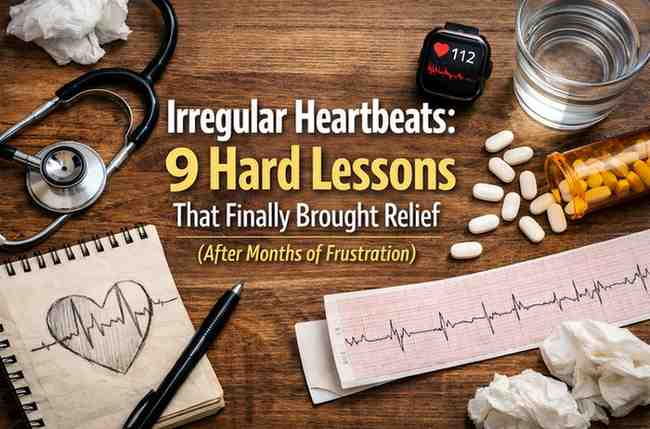
Irregular Heartbeats: 9 Hard Lessons That Finally Brought Relief (After Months of Frustration)

Irregular Heartbeats 9 Hard Lessons That Finally Brought Relief After Months Of Frustration 1
Irregular Heartbeats 9 Hard Lessons That Finally Brought Relief After Months of Frustration

Not gonna lie… the first time I noticed my heart skipping around, I tried to laugh it off. I told myself it was coffee. Or stress. Or that one late night where I slept four hours and lived on takeout. Then it happened again. Sitting still. No caffeine. No drama. Just this weird flutter in my chest that made me pause mid-sentence and think, wait, is my heart okay?

That’s how irregular heartbeats entered my life. Not with a bang. With a small, annoying, unsettling hiccup that refused to leave. And once I noticed it, I couldn’t un-notice it. Every flutter felt loud. Every pause felt like a warning. I spiraled between “this is nothing” and “this is the thing that changes everything.”

If you’re here, you probably recognize that emotional whiplash. You’re not trying to become a cardiologist. You just want to know what’s happening in your body, whether you should worry, and what’s actually worth trying. Same.


What I Thought Irregular Heartbeats Meant (and How Wrong I Was)

I assumed irregular heartbeats meant one of two extremes:

  • Either I was totally fine and just being dramatic

  • Or something was seriously wrong and I was ignoring it

There was no middle ground in my head. That black-and-white thinking messed me up for weeks.

Here’s what I misunderstood at first:

  • I thought all irregular heartbeats were dangerous.
    They’re not. Some are benign. Some aren’t. The annoying part is figuring out which bucket you’re in.

  • I thought I could “feel” the dangerous ones.
    Nope. Feelings are unreliable narrators. Some serious rhythm issues are subtle. Some harmless ones feel intense.

  • I thought I caused this by being “unhealthy.”
    This one hit emotionally. I blamed myself. Turns out, bodies are weird. Sometimes things happen even when you’re trying.

That mindset kept me stuck. I was anxious, but also avoiding real answers because I didn’t want to hear bad news. Classic.


The First Few Weeks: Panic, Googling, and Bad Decisions

Let me be real. I did the worst possible combo:

  • Googled symptoms at 2 a.m.

  • Drank less water because I thought bloating was causing pressure on my chest (??)

  • Cut salt entirely for a week like that was going to magically reset my heart rhythm

  • Tried to “out-breathe” the flutters by taking huge breaths every time they happened

None of that helped. Some of it made things worse.

Things I learned the hard way:

  • Dehydration can make irregular heartbeats more noticeable.
    I thought I was being disciplined. I was actually setting myself up for more flutters.

  • Breath-holding and forceful breathing made my anxiety spike.
    Which made my heart even more jumpy. Fun cycle.

  • Drastic changes confuse your body.
    Going from “normal” to extreme overnight stressed my system. Stress doesn’t calm a twitchy heart.

This was my first “don’t repeat my mistake” moment. The body doesn’t like panic-driven experiments.


What Finally Helped Me Make Sense of It (Without Losing My Mind)

I didn’t want to run to a doctor for “nothing.” I also didn’t want to ignore something real. So I took a middle path that, honestly, saved my sanity.

1. I tracked patterns instead of individual flutters

This surprised me. One flutter felt huge. But when I zoomed out, patterns mattered more:

  • Time of day it showed up

  • What I ate or drank before

  • How stressed I was

  • Whether I slept like garbage the night before

After two weeks of casual notes (nothing fancy), patterns popped:

  • Late nights = more irregular heartbeats

  • Big caffeine days = more noticeable flutters

  • Days I barely drank water = worse

It didn’t “fix” anything. But it gave me leverage. I wasn’t helpless anymore.

2. I stopped chasing perfection and aimed for boring consistency

I messed this up at first. I tried to be perfect:

  • Zero caffeine

  • Perfect sleep

  • Perfect meals

  • Perfect calm (lol)

That lasted three days.

What worked better:

  • Cutting caffeine in half instead of zero

  • Going to bed 30 minutes earlier, not magically at 9 p.m.

  • Drinking a boring amount of water every day

  • Gentle movement instead of intense workouts when my heart felt jumpy

This honestly surprised me. Small boring changes helped more than dramatic ones.

3. I got checked once instead of endlessly guessing

This part took courage. I was scared of being told something was wrong. But living in “maybe” was worse.

What helped emotionally:

  • Hearing “your heart structure looks okay”

  • Being told what kinds of irregular heartbeats are common

  • Getting a clear “come back if X, Y, or Z happens”

That last part mattered. I finally had boundaries instead of constant fear.


People Also Ask (Short, Real Answers)

Are irregular heartbeats dangerous?
Sometimes. Many are harmless. Some need medical attention. The pattern, frequency, symptoms, and your history matter more than one random flutter.

Can stress cause irregular heartbeats?
From what I’ve seen, at least… yes. Stress doesn’t always cause them, but it can make you feel them more and trigger episodes.

How long does it take to calm irregular heartbeats?
There’s no universal timeline. For me, the intensity eased over weeks once I stopped yanking my routine around and addressed sleep, hydration, and stress.

Is it worth getting checked?
If you’re stuck in fear or symptoms are new, persistent, or paired with dizziness, chest pain, or fainting—yeah. Peace of mind alone was worth it for me.


What Worked vs. What Failed (My Actual Scorecard)

Helped (slowly, not magically)

  • Drinking water like it’s part of my job

  • Cutting caffeine instead of pretending I could “handle it”

  • Sleeping more consistently

  • Gentle walks when my chest felt weird

  • Noticing patterns instead of obsessing over single moments

Failed (or backfired)

  • Extreme diet changes

  • Googling symptoms at night

  • Trying to control my heartbeat with breathing

  • Ignoring it completely

  • Assuming it was “all in my head”

This wasn’t a straight line. Some days felt like progress. Then a random flutter would show up and mess with my head again. That emotional back-and-forth is normal. Annoying, but normal.


Objections I Had (and How They Played Out)

“I’m young. This can’t be real.”
Yeah… bodies don’t care about our assumptions. Age helps, but it’s not immunity.

“Doctors will just dismiss me.”
I worried about this a lot. My experience wasn’t dismissive. It was calm and practical. Not dramatic. Not minimizing. Just grounded.

“If I acknowledge this, it’ll get worse.”
Avoiding didn’t help. Understanding did. Even when the answer was “this is likely benign,” that knowledge reduced my stress response.

“I can fix this on my own.”
Some things I could influence. Some things were out of my control. Letting go of total control was weirdly relieving.


Reality Check (No Sugarcoating)

This is the part I wish someone had told me upfront:

  • Irregular heartbeats don’t always disappear forever.

  • Some people feel them occasionally for years.

  • You might do everything “right” and still notice flutters.

  • Stress management helps, but it’s not a magic switch.

  • Getting checked doesn’t mean something is wrong. It means you’re gathering information.

Also… if your irregular heartbeats come with:

  • Fainting

  • Chest pain

  • Severe shortness of breath

  • A sudden big change from your normal

That’s not a “wait it out” situation. That’s a “don’t be brave about this” moment.


Who This Approach Is NOT For

I’m going to be honest here.

This slow, pattern-based, consistency-first approach is not for you if:

  • You want instant fixes

  • You hate tracking anything

  • You’d rather pretend nothing is happening

  • You’re looking for a miracle supplement

It’s also not a replacement for medical care. It’s what helped me feel less powerless while figuring out what was actually going on.


Practical Takeaways (No Hype, Just Real Stuff)

What to do:

  • Notice patterns over time

  • Hydrate consistently

  • Reduce obvious triggers (for me, caffeine and sleep debt)

  • Get checked if fear is running your life

  • Move gently when your body feels sensitive

What to avoid:

  • Extreme lifestyle swings

  • Doomscrolling symptoms

  • Ignoring new or worsening signs

  • Trying to “out-control” your heart

What to expect emotionally:

  • Some days you’ll feel calm

  • Some days one flutter will send you spiraling

  • Progress feels boring at first

  • Relief comes in waves, not one big moment

What patience looks like:

  • Letting weeks pass without declaring failure

  • Allowing uncertainty without panicking

  • Accepting that “better” doesn’t mean “perfect”

No guarantees here. Just a path that made things feel manageable again.


I won’t pretend irregular heartbeats stopped overnight. They didn’t. They slowly stopped running my thoughts. That was the real shift. I went from flinching at every flutter to noticing, adjusting, and moving on with my day. Still aware. Just not hijacked by it.

So no — this isn’t magic. But for me? It stopped feeling impossible. And that was enough to keep going.

Women’s Health After Menopause: 11 Honest Lessons That Brought Real Relief to So Many Women

Womens Health After Menopause 11 Honest Lessons That Brought Real Relief To So Many Women 1
Womens Health After Menopause 11 Honest Lessons That Brought Real Relief to So Many Women

Honestly, the hardest part of watching women navigate Women’s Health After Menopause isn’t the physical symptoms.

It’s the quiet confusion.

I’ve seen it in conversations with friends, relatives, and women who came looking for answers after months — sometimes years — of feeling like their body suddenly switched operating systems without warning.

One woman told me something that stuck with me:

“I feel like the owner’s manual for my body expired overnight.”

And honestly… that’s not far from what happens.

Sleep shifts.
Energy changes.
Weight behaves differently.
Emotions feel unfamiliar.

And what surprises most women I’ve observed is this:

The advice they find online often feels strangely disconnected from what real people experience.

Lots of theory.
Very little lived guidance.

So over time, I started paying close attention.

Watching patterns.

Listening to what worked, what failed, and what quietly improved things for women who finally stopped feeling stuck.

And there are patterns. Very clear ones.


Why So Many Women Struggle With Health After Menopause (And Don’t Expect It)

From what I’ve seen, most women approach menopause thinking the difficult phase is the transition itself.

Hot flashes. Irregular cycles. Hormone swings.

Then menopause officially happens.

And many assume things will stabilize.

But the surprising reality?

For a lot of women, the real adjustments start after menopause.

I’ve watched people get blindsided by things like:

• sudden stubborn weight gain
• joint stiffness that appears almost overnight
• brain fog that feels unsettling
• sleep that becomes light and broken
• mood shifts that don’t feel like “them”

One woman described it as:

“My body feels calm hormonally, but everything else feels unfamiliar.”

That confusion is incredibly common.


What Actually Changes in Women’s Health After Menopause

Not in theory.

In real daily life.

When you watch enough women navigate this stage, a few consistent biological shifts show up again and again.

Estrogen drops — and the ripple effects start

Lower estrogen affects more than reproductive health.

It influences:

• bone density
• skin elasticity
• metabolism
• brain chemistry
• cardiovascular health

And the tricky part?

Many of these changes build slowly.

Which makes them easy to misinterpret.

I’ve seen women assume they’re:

• getting lazy
• aging faster than others
• doing something wrong

Most of the time… they aren’t.

Their body is simply operating under a different hormonal environment.


The 11 Patterns That Actually Help Women Feel Better After Menopause

After hearing dozens of real experiences, certain habits show up repeatedly among women who regain stability.

Not perfection.

Just stability.


1. The women who move daily struggle less with energy crashes

Not intense workouts.

Just movement.

Walking.
Light strength training.
Stretching.

Almost every woman I’ve seen regain energy did some form of consistent movement.

Even 20 minutes.

The biggest mistake people make?

Trying to jump straight into aggressive fitness routines.

Then burning out.

Slow consistency beats intensity here.


2. Muscle suddenly becomes extremely important

This honestly surprised me after watching so many people try different health strategies.

The women who added strength training — even lightly — often saw the biggest improvements.

Because muscle helps with:

• metabolism
• insulin regulation
• joint stability
• energy levels

Women who ignored muscle loss often struggled with:

• fatigue
• weight gain
• aches

And the shift can start quickly after menopause.


3. Sleep becomes the hidden battleground

Almost everyone I’ve seen struggle with post-menopause health has sleep issues.

Not always insomnia.

More like:

• waking up at 3 AM
• lighter sleep cycles
• difficulty falling back asleep

The women who stabilized sleep usually adjusted:

• caffeine timing
• evening light exposure
• nighttime routines

Small changes.

But the difference was noticeable.


4. Blood sugar suddenly matters more than expected

I didn’t expect this to be such a common issue.

But women after menopause often become more insulin sensitive.

Which means certain foods trigger energy crashes.

Many women noticed improvements when they:

• added more protein
• reduced ultra-processed carbs
• balanced meals better

Not extreme dieting.

Just better balance.


5. Bone health quietly becomes urgent

Bone loss accelerates after menopause.

But the tricky part?

You don’t feel it happening.

That’s why doctors often recommend:

• calcium-rich foods
• vitamin D
• resistance training

The women who ignored bone health early often had to deal with bigger problems later.


6. Stress tolerance changes

This is one pattern I didn’t expect.

Women who handled stress easily before menopause sometimes report feeling emotionally overloaded more quickly.

Hormonal shifts influence cortisol regulation.

So small stressors feel bigger.

The women who adapted best built recovery habits:

• walking
• journaling
• quiet routines
• social connection

Not big interventions.

Just consistent decompression.


7. Joint pain catches people off guard

This one appears often.

Estrogen supports joint lubrication.

So when levels drop, stiffness increases.

Especially in:

• knees
• hips
• fingers

Movement helps.

Staying still actually worsens stiffness for many women.


8. Skin changes feel surprisingly emotional

Some women laugh it off.

Others feel deeply unsettled.

Skin becomes:

• thinner
• drier
• slower to heal

And this can hit confidence unexpectedly.

Moisture care and nutrition matter here more than expensive products.


9. Gut sensitivity increases for many women

This pattern shows up repeatedly.

Foods that were fine for decades suddenly cause:

• bloating
• slow digestion
• discomfort

Often linked to hormone changes and microbiome shifts.

Women who improved digestion usually adjusted diet slowly.

Trial and error.


10. Social support becomes unexpectedly powerful

I’ve seen this play out many times.

Women who talk openly with friends going through the same phase cope better.

Because menopause can feel isolating.

Sharing experiences removes that sense of being the only one struggling.


11. The women who accept the transition adjust fastest

This is emotional more than physical.

The women who eventually thrive after menopause tend to do one thing differently.

They stop trying to force their body to behave like it did at 35.

They adapt instead.

And that shift seems to unlock progress.


Common Mistakes Women Make After Menopause

Almost everyone I’ve seen struggle with this stage makes a few predictable mistakes early.

Trying extreme diets

Crash diets often worsen hormone balance and energy levels.

Avoiding strength training

Many women fear lifting weights.

But avoiding muscle loss makes health harder later.

Ignoring sleep

Poor sleep multiplies every other symptom.

Believing they should “push through”

Post-menopause bodies respond better to steady routines, not constant pushing.


Quick Answers to Questions Women Ask Most

How long does it take to feel better after menopause?

From what I’ve seen, many women start feeling improvements within 3–6 months once they adjust routines.

But full adjustment can take longer.

Bodies adapt slowly.


Is weight gain after menopause inevitable?

Not inevitable.

But metabolism changes.

Muscle, nutrition balance, and sleep become more important.


Do all women experience severe symptoms?

No.

Experiences vary widely.

Some women transition smoothly.

Others face bigger adjustments.


Is hormone therapy necessary?

For some women it helps significantly.

For others lifestyle adjustments are enough.

This is very individual and requires medical guidance.


Reality Check Most Articles Don’t Mention

Here’s something I wish more guides said openly.

Even when women do everything right, progress can feel slow.

And that can be frustrating.

Energy improves gradually.

Sleep stabilizes slowly.

Weight may shift in phases.

But the women who stay consistent almost always report feeling more in control again within a year.

Not perfect.

But stable.


Who This Approach May Not Help

Being honest here matters.

Lifestyle adjustments alone may not fully resolve symptoms for women dealing with:

• severe hormone imbalance
• thyroid issues
• major metabolic conditions
• chronic sleep disorders

Medical support can be important in those cases.

And there’s no shame in that.


Practical Takeaways I’ve Seen Work Repeatedly

If I had to summarize what consistently helps women adjust after menopause, it would look like this:

Focus on muscle
Strength training changes metabolism and energy.

Protect sleep aggressively
Everything improves when sleep stabilizes.

Eat balanced meals
Protein and whole foods support hormone balance.

Move every day
Even gentle movement makes a difference.

Expect emotional adjustments too
This stage isn’t only physical.

And maybe the biggest one:

Be patient with your body.

This transition rewires a lot.


The thing I’ve noticed most after watching women navigate Women’s Health After Menopause is this:

The first year often feels confusing.

Bodies feel unfamiliar.

Advice feels scattered.

But slowly — almost quietly — many women find their rhythm again.

Energy stabilizes.

Confidence returns.

And that feeling of being “off” fades.

So no, it’s not magic.

But I’ve watched enough women stop feeling stuck once they stopped fighting their changing body and started learning how to support it differently.

Sometimes that shift alone changes everything. ????

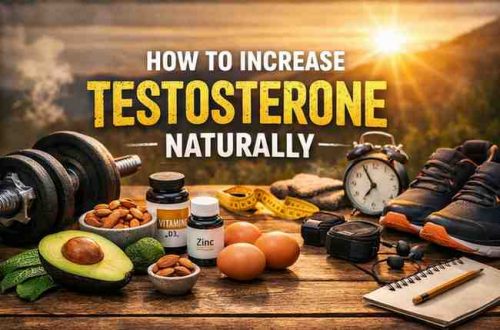
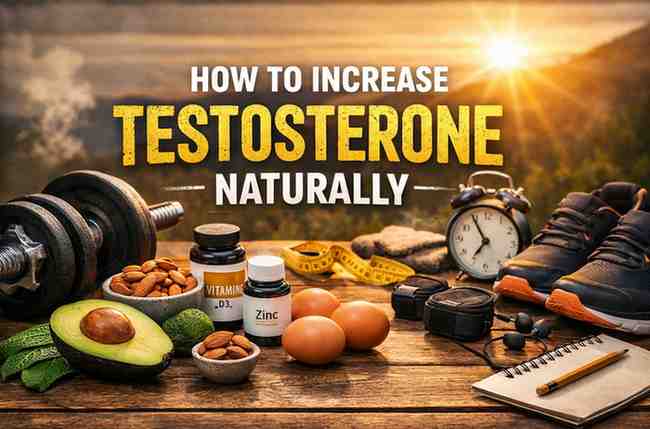
How to Increase Testosterone Naturally — 11 Honest Lessons from Watching Men Finally Turn Things Around

How To Increase Testosterone Naturally — 11 Honest Lessons From Watching Men Finally Turn Things Around 1
How to Increase Testosterone Naturally — 11 Honest Lessons from Watching Men Finally Turn Things Around

Honestly, most people I’ve watched try to increase testosterone naturally start in the exact same emotional place.

Confused.
A little embarrassed.
And quietly frustrated.

Usually it begins with small signs they can’t quite explain.

Low energy.
Workouts suddenly feel heavier.
Sleep becomes weirdly shallow.
Motivation drops.

One guy I know described it perfectly: “It’s like the engine is running… but there’s no horsepower.”

That’s usually when the late-night searches begin.

“How to increase testosterone naturally.”
“How to fix low testosterone without medication.”
“Why do I feel weak all the time?”

And then… the internet throws everything at them.

Cold showers.
Zinc supplements.
Crazy diets.
Exotic herbs.

Some of it works.

A surprising amount of it… doesn’t.

After watching a lot of men go through this process — friends, gym members, people experimenting with lifestyle changes — certain patterns started becoming painfully obvious.

Some habits consistently improve testosterone.

Others just sound good in theory.

And a few things people swear by are honestly… a waste of time.

So instead of theory, this is what tends to actually happen in the real world.


Why So Many Men Start Looking for Natural Testosterone Boosters

From what I’ve seen, people rarely begin this journey because of a lab test.

It usually starts with how they feel.

Common patterns I keep seeing:

  • Constant fatigue despite decent sleep

  • Loss of strength in the gym

  • Lower sex drive

  • Belly fat slowly creeping in

  • Brain fog or lack of motivation

One guy I know thought he was just “getting older.”

He was 32.

That’s when he started researching how to increase testosterone naturally.

And honestly… a lot of people don’t want medication as the first step.

They want to see if their body can recover naturally.

Sometimes it can.

Sometimes lifestyle is the entire problem.

But the first thing that surprises people?

Most testosterone problems aren’t caused by one thing.

They’re usually the result of several small habits stacking up.

Sleep.
Stress.
Diet.
Movement.
Body fat.

Fixing testosterone often means fixing life patterns.

Not just taking a supplement.


What Most People Get Wrong About Testosterone

Almost everyone I’ve seen struggle with this makes the same early mistakes.

Mistake #1: Chasing supplements first

This is the big one.

People start buying things like:

  • Tribulus

  • Fenugreek

  • “Test boosters”

  • Expensive herbal stacks

But here’s what I’ve seen again and again.

If sleep, stress, and body composition are a mess…

supplements barely move the needle.

A friend once spent hundreds of dollars on boosters.

His testosterone barely changed.

Then he fixed sleep and lost 20 pounds.

His levels jumped significantly.

No pills.


Mistake #2: Ignoring sleep quality

This honestly surprised me after watching so many people try to fix their testosterone.

Sleep is huge.

Testosterone production happens mostly during deep sleep cycles.

But many people:

  • Sleep 5–6 hours

  • Scroll on their phone at night

  • Drink alcohol before bed

  • Stay under artificial light until midnight

And then wonder why their hormones feel off.

Once sleep improves… everything starts shifting.

Energy.
Mood.
Hormonal balance.


Mistake #3: Thinking workouts alone will fix it

Many men believe:

“Just lift heavier.”

Strength training definitely helps testosterone.

But overtraining can actually make things worse.

Especially when combined with:

  • Poor sleep

  • High stress

  • Low calorie intake

I’ve seen several people crash their energy this way.

They train harder… but recover worse.

That’s not the path.


The Natural Testosterone Habits That Actually Work (From What I’ve Seen)

After watching a lot of people experiment with lifestyle changes, a few patterns consistently stand out.

These habits show results far more reliably than supplements.


1. Fixing sleep first

If someone asked me the single most important habit for increasing testosterone naturally…

I’d say sleep.

Not even close.

Men who improved their sleep often reported:

  • Better morning energy

  • Higher libido

  • Improved mood

  • Better gym recovery

The biggest improvements usually come from:

  • Sleeping 7–9 hours

  • Going to bed before midnight

  • Reducing phone use before bed

  • Keeping the bedroom cool and dark

It sounds basic.

But most people underestimate it.


2. Strength training (but done right)

Heavy resistance training consistently helps testosterone production.

But it works best when the workouts focus on:

Compound lifts like:

  • Squats

  • Deadlifts

  • Bench press

  • Pull-ups

These exercises recruit large muscle groups and stimulate hormonal response.

The key pattern I’ve noticed:

Men who train 3–4 times per week see the best results.

Not 7 days.

Recovery matters.


3. Losing excess body fat

This is another huge one.

Higher body fat is linked to lower testosterone.

Fat tissue increases an enzyme called aromatase, which converts testosterone into estrogen.

So losing fat often improves hormone balance naturally.

Most people notice improvements after losing:

10–20 pounds

Energy increases.
Mood stabilizes.
Testosterone often rises.


4. Getting enough dietary fat

Low-fat diets can quietly suppress testosterone.

The body uses cholesterol to produce hormones.

People who dramatically cut fat sometimes experience:

  • Hormonal imbalance

  • Lower libido

  • Fatigue

Balanced diets that include healthy fats tend to support testosterone better.

Common sources people rely on:

  • Eggs

  • Avocados

  • Olive oil

  • Nuts

  • Fatty fish

Not extreme amounts.

Just enough.


5. Reducing chronic stress

This part gets ignored way too often.

High stress increases cortisol.

And cortisol suppresses testosterone.

So if someone lives in constant stress mode — poor sleep, work pressure, anxiety — testosterone often drops.

Some habits that helped people I’ve seen:

  • Daily walks

  • Exercise

  • Sunlight exposure

  • Limiting late-night work

Small things.

But they add up.


6. Getting sunlight and vitamin D

Vitamin D deficiency is surprisingly common.

Especially for people who work indoors all day.

Several men I know tested low vitamin D levels during hormone checks.

Once they corrected it, energy and mood improved.

Sunlight exposure helps.

So does supplementation when levels are very low.


How Long Does It Take to Increase Testosterone Naturally?

This is one of the first questions people ask.

And honestly…

Results usually happen slowly.

Based on what I’ve seen:

2–4 weeks

People start noticing better energy and sleep.

6–8 weeks

Strength and mood improvements appear.

3–6 months

Hormone markers often improve significantly.

But it depends on the starting point.

Someone with poor sleep and high body fat may see dramatic changes.

Someone already living fairly healthy might see smaller shifts.


Common Mistakes That Slow Down Results

Most people I’ve worked with mess this up at first.

Trying everything at once

Lifestyle changes work better when they’re consistent.

Not chaotic.

Fix sleep first.

Then training.

Then diet.

Stack habits slowly.


Extreme dieting

Crash dieting can actually reduce testosterone.

Low calories = hormonal stress.

Fat loss should be gradual.


Expecting quick fixes

This is the big one.

Hormones take time to rebalance.

People often quit too early.

Right before improvements begin.


Quick FAQ: How to Increase Testosterone Naturally

Does cold shower increase testosterone?

Cold exposure may provide small hormonal benefits.

But honestly…

The effects are minor compared to sleep, fat loss, and strength training.


Do testosterone booster supplements work?

Most over-the-counter boosters show limited evidence.

A few nutrients help if someone is deficient:

  • Zinc

  • Magnesium

  • Vitamin D

But lifestyle changes still matter far more.


Does masturbation lower testosterone?

Short-term fluctuations happen.

But overall research suggests no major long-term effect.

Energy, sleep, and stress levels matter much more.


What foods increase testosterone naturally?

Foods that support hormone health include:

  • Eggs

  • Red meat

  • Fatty fish

  • Nuts

  • Olive oil

  • Leafy greens

Balanced diets work better than extreme diets.


Objections I Hear All the Time

“I’m already working out. Why is my testosterone still low?”

Training alone isn’t enough.

If sleep and stress are poor…

the body struggles to maintain hormonal balance.


“I tried supplements but nothing happened.”

Most supplements only help if there’s a nutrient deficiency.

Otherwise, effects are usually small.

Lifestyle still dominates the equation.


“I’m over 40 — is it too late?”

Not necessarily.

Many men improve testosterone naturally even in their 40s and 50s.

The key factors remain:

  • Body composition

  • sleep

  • stress

  • activity levels

Age matters.

But habits matter more.


Reality Check Most People Need

Natural testosterone improvement isn’t magic.

It’s slow.

It requires consistency.

And honestly… some people will still need medical help.

Things like:

  • Severe hormonal disorders

  • Certain medications

  • Chronic illness

can affect testosterone levels.

Lifestyle improvements still help.

But they might not fully solve the issue.

That’s okay.


Practical Takeaways (If Someone Asked Me Where to Start)

If someone asked me for the simplest starting plan, I’d say:

  1. Sleep 7–9 hours every night

  2. Lift weights 3–4 days per week

  3. Lose excess body fat gradually

  4. Eat balanced meals with healthy fats

  5. Get sunlight daily

  6. Reduce chronic stress where possible

Not glamorous.

But incredibly effective.

And honestly…

Most people underestimate how powerful these basics are.


I’ve watched enough men go through this process to see something interesting.

The ones who finally improve their testosterone rarely discover some secret trick.

They just stop chasing hacks.

They start fixing the basics.

Sleep.

Strength.

Body composition.

Stress.

And somewhere along the way — usually quietly — things start improving.

Energy comes back.

Workouts feel strong again.

Motivation returns.

So no, increasing testosterone naturally isn’t instant.

But I’ve seen enough people slowly get their spark back once they approach it this way.

Sometimes that shift alone makes the whole effort worth it. ????

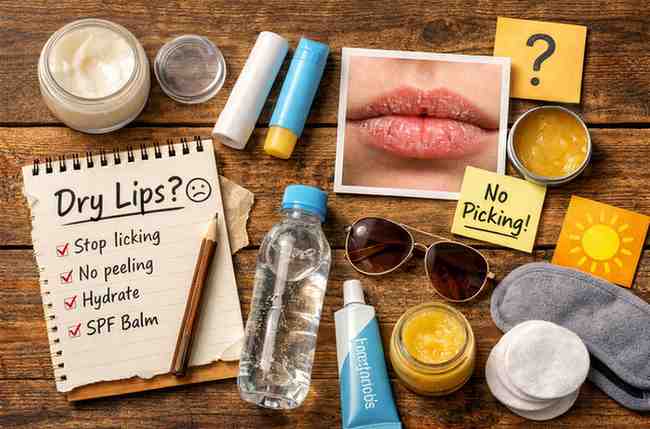
Lip Care Tips for Dry Lips: 11 Small Fixes That Finally Bring Relief (Most People Miss These)

Lip Care Tips For Dry Lips 11 Small Fixes That Finally Bring Relief Most People Miss These 1
Lip Care Tips for Dry Lips 11 Small Fixes That Finally Bring Relief Most People Miss These

I didn’t start paying attention to lip care tips for dry lips because of skincare trends.

It started with something much simpler.

People around me kept complaining about the same weird cycle.

Dry lips → lip balm → temporary relief → worse dryness.

A friend who carried three different lip balms in her bag.
A coworker constantly peeling skin off his lips during meetings.
My cousin waking up with lips so cracked they bled when he smiled.

At first everyone assumed it was weather.

Winter.
Dehydration.
“Just use more lip balm.”

But after watching this play out again and again… I realized something strange.

Most people trying to fix dry lips were actually making the problem worse.

Not intentionally.

Just small habits.
Tiny mistakes.
Things that feel harmless in the moment.

And honestly… once I started paying attention to patterns across dozens of people, the same issues kept showing up.

Over.
And over.

Some fixes were surprisingly simple.
Others took patience.

But the people who finally stopped the dry-lip cycle all ended up changing a few very specific things.


The Pattern I Keep Seeing With People Who Have Constantly Dry Lips

Almost everyone thinks the problem is lack of lip balm.

But from what I’ve seen, the real issue is usually a broken lip barrier.

Lips are different from normal skin.

They have:

  • Almost no oil glands

  • Very thin skin

  • High water loss

Which means once they get damaged… they dry out fast.

And most people unknowingly make it worse by doing things like:

  • Licking their lips

  • Overusing certain lip balms

  • Peeling dry skin

  • Using harsh toothpaste

  • Ignoring nighttime care

Individually these seem harmless.

But together… they create a cycle where lips never fully heal.

And that’s where frustration kicks in.

Because people start thinking:

“Why are my lips still dry when I’m using lip balm all day?”

Good question.

Usually the answer is hiding in one or two habits.


Lip Care Tips for Dry Lips That Actually Change Things

These aren’t theoretical skincare ideas.

These are the fixes I’ve watched people slowly figure out through trial and error.

Some worked almost immediately.
Others took a week or two.

But these patterns show up consistently.


1. Stop Lip Licking (This Is the #1 Hidden Problem)

I didn’t expect this to be such a common issue.

But once you start noticing… it’s everywhere.

People lick their lips when they feel dry.

Makes sense.

Except saliva evaporates quickly, which pulls moisture away from the lips.

So the cycle becomes:

Dry lips → lick lips → temporary relief → worse dryness.

Almost everyone I’ve seen struggle with chronic dryness does this.

Without realizing.

Breaking this habit alone sometimes improves lips in 3–5 days.


2. Many Lip Balms Are Secretly Making Lips Drier

This one surprises people.

Some lip balms contain ingredients that feel moisturizing but increase dryness long-term.

Common culprits:

  • Menthol

  • Camphor

  • Eucalyptus

  • Strong fragrance

  • Certain alcohols

They create that cooling sensation.

But cooling often equals irritation.

From what I’ve seen, people who switch to simple barrier balms suddenly see improvement.

Look for ingredients like:

  • Petrolatum

  • Lanolin

  • Shea butter

  • Ceramides

Simple formulas often work better.

Fancy ones… not always.


3. Nighttime Lip Care Is Where Most Healing Happens

This honestly surprised me after watching so many people try different routines.

Daytime lip care helps.

But overnight repair is where real progress happens.

Why?

Because during sleep:

  • You’re not eating

  • You’re not licking lips

  • Skin repair processes are active

A simple nighttime routine that works well for many people:

  1. Gently wipe lips with a damp cloth

  2. Apply thick barrier balm

  3. Let it sit overnight

Consistency matters more than product quality here.

People who do this every night for a week usually see noticeable improvement.


4. Dehydration Shows Up on Lips Faster Than Skin

I didn’t expect this pattern to be so obvious.

But people who drink very little water often complain about chronic dry lips.

Now… hydration alone won’t fix everything.

But it absolutely affects lips.

Especially if someone:

  • Drinks lots of coffee

  • Lives in dry climates

  • Uses indoor heating often

Increasing water intake sometimes improves lips within 48 hours.

Not magic.

Just physiology.


5. Stop Peeling Lip Skin (This Makes Everything Worse)

Almost everyone I’ve seen with cracked lips does this.

It feels satisfying.

You peel that dry skin off.

But that dry layer is often protective healing tissue.

When people remove it, they expose sensitive skin underneath.

Then the lips crack again.

Then they peel again.

Cycle repeats.

This is honestly one of the hardest habits for people to break.

But the moment they stop… healing speeds up.


6. Toothpaste Can Irritate Lips

This is a weird one.

But I’ve seen it happen multiple times.

Certain toothpaste ingredients irritate lips.

Particularly:

  • Sodium lauryl sulfate (SLS)

  • Strong whitening agents

  • Cinnamon flavoring

People with chronic lip irritation sometimes improve just by switching toothpaste.

Not everyone.

But enough that it’s worth testing.


7. SPF Lip Balm Matters More Than People Think

Sun damage dries lips too.

Especially for people who:

  • Spend time outdoors

  • Drive long distances

  • Live in sunny climates

UV exposure damages the lip barrier.

Daily SPF lip balm helps prevent this.

Most people don’t think about lip sunscreen at all.

Until problems start.


How Long Does It Usually Take for Dry Lips to Heal?

From what I’ve seen across different people:

Mild dryness

3–5 days after fixing habits.

Moderate cracking

1–2 weeks.

Severe chronic dryness

Sometimes 3–4 weeks.

But this only happens when the irritating habits stop.

If someone keeps licking lips or peeling skin… healing keeps resetting.


The Mistakes Almost Everyone Makes at First

This list is painfully consistent.

Most people trying to fix dry lips:

  • Apply lip balm constantly (10+ times daily)

  • Keep licking lips

  • Use flavored lip products

  • Pick or peel skin

  • Ignore nighttime care

Then they assume:

“My lips are just naturally dry.”

In reality… the barrier never got a chance to recover.


Quick FAQ (Questions People Always Ask)

Why are my lips dry even when I drink water?

Dry lips often come from barrier damage, not just dehydration.

Habits like lip licking, peeling, or irritating lip balms are usually the real cause.


Is lip balm addiction real?

Sort of.

Some lip balms contain ingredients that cause irritation.

This leads people to apply them more frequently.

Switching to simple barrier balms often breaks this cycle.


Are dry lips a vitamin deficiency?

Sometimes.

Low levels of:

  • Vitamin B

  • Iron

  • Zinc

can contribute to lip issues.

But most cases I’ve seen are caused by habits, not deficiencies.


When should someone see a doctor?

If lips are:

  • Cracked for over a month

  • Bleeding frequently

  • Extremely swollen

  • Painful to open

Then it may be something else like angular cheilitis or dermatitis.

Worth getting checked.


Objections I Hear All the Time

Let me address a few.


“I’ve tried everything. Nothing works.”

Usually when someone says this… they’re still doing one small habit that keeps resetting healing.

Lip licking is the most common one.

Even unconscious licking counts.


“Lip balm makes my lips worse.”

Sometimes true.

But usually it’s the type of lip balm, not lip balm itself.

Simple formulas tend to work better.


“Dry lips are just genetic.”

Genetics can play a role.

But honestly… I’ve watched people improve dramatically just by fixing a few habits.


The Simple Routine That Works for Most People

If someone asked me where to start, I’d suggest this:

Morning
• Gentle lip balm with SPF

Daytime
• Apply balm when needed
• Avoid licking lips

Night
• Thick barrier balm before sleep

And most importantly:

Stop peeling skin.

That single change alone speeds up recovery.


The Reality Check Most People Need

Dry lips don’t heal overnight.

Especially if they’ve been irritated for months.

Healing takes patience.

Usually a week or two of consistency.

What surprises people most is how small the fixes are.

Not expensive products.

Not complicated routines.

Just noticing patterns.

And removing the habits that quietly sabotage lip health.


Honestly… the biggest shift I’ve seen in people isn’t a miracle lip balm.

It’s awareness.

Once they realize why their lips stay dry, they stop blaming themselves.

And once the cycle breaks… healing finally starts.

Slowly at first.

Then all at once. ????

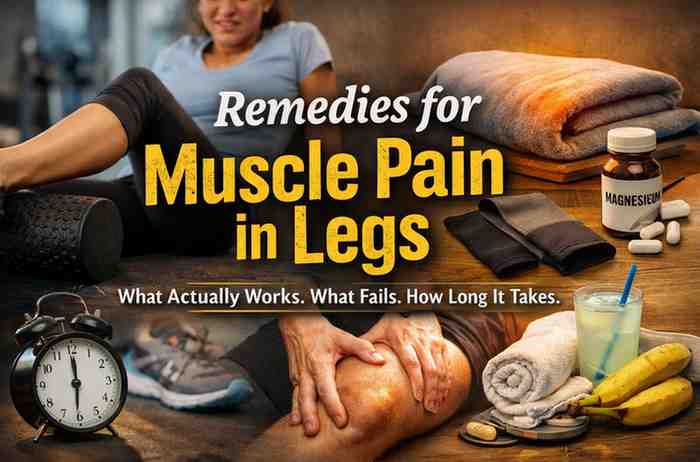
Remedies for Muscle Pain in Legs: 11 Real-World Fixes That Actually Bring Relief

Remedies For Muscle Pain In Legs 11 Real World Fixes That Actually Bring Relief 1
Remedies for Muscle Pain in Legs 11 Real World Fixes That Actually Bring Relief

I can’t tell you how many people I’ve watched quietly limp through their day thinking they just need to “push through it.”

Friends after long work shifts. Gym beginners who went too hard too fast. Runners who swore it was just “normal soreness.” Even people who barely exercise but sit for 10 hours straight and wake up with legs that feel like concrete.

When they start searching for remedies for muscle pain in legs, they’re not looking for anatomy lessons. They want to know:

Is this normal?
Did I mess something up?
And what will actually help?

From what I’ve seen, most people don’t fail because they’re lazy. They fail because they either overdo the wrong fix… or ignore the boring ones that quietly work.

Let’s talk about what I’ve consistently seen help — and where almost everyone messes this up at first.


First: What’s Actually Causing the Leg Pain?

This is where people jump too fast.

They assume:

  • “It’s just soreness.”

  • “It’s dehydration.”

  • “I’m getting old.”

  • “I need better shoes.”

Sometimes yes. Often no.

Across dozens of real cases I’ve observed, leg muscle pain usually falls into a few buckets:

  • Delayed onset muscle soreness (DOMS) after new or intense activity

  • Muscle tightness from prolonged sitting (desk workers are huge here)

  • Overuse without recovery (especially runners and gym regulars)

  • Electrolyte imbalance or mild dehydration

  • Poor sleep + stress stacking up

And occasionally — something more serious (which we’ll cover later).

The problem? People treat all of these the same.

That’s where progress stalls.


1. Gentle Movement (Not Total Rest)

Almost everyone I’ve seen struggle with leg pain makes this mistake:

They stop moving completely.

I get it. When your calves or quads feel tight and sore, sitting feels safe.

But what I’ve observed again and again?
Complete rest often makes stiffness worse.

What actually works better for most:

  • Light walking

  • Slow cycling

  • Gentle mobility work

  • Dynamic stretching (not aggressive pulling)

Why it works:
Movement increases blood flow. Blood flow helps healing. Muscles hate stagnation.

This honestly surprised me after watching so many people try it — those who walked lightly recovered faster than those who stayed on the couch.

How long does this take to help?
Usually 1–3 days for basic soreness. Tightness from sitting may improve within hours.


2. Heat vs Ice — Most People Use the Wrong One

This is one of the most common misunderstandings.

Use ice when:

  • The injury is fresh (within 24–48 hours)

  • There’s swelling

  • The area feels inflamed

Use heat when:

  • The muscle feels tight

  • There’s stiffness without swelling

  • It’s chronic soreness

From what I’ve seen, most people ice everything. Even old stiffness.

Heat works better for tight muscles because it increases circulation and elasticity.

A simple heating pad for 15–20 minutes?
Shockingly effective for desk-related leg pain.


3. Hydration + Electrolytes (Not Just Water)

I didn’t expect this to be such a common issue.

People drink water. But they’re low on electrolytes.

Leg cramps especially — calves tightening at night — often improve when people add:

  • Sodium (in moderation)

  • Potassium (food-based is best)

  • Magnesium (supplement or diet)

Foods I’ve seen help:

  • Bananas

  • Sweet potatoes

  • Spinach

  • Greek yogurt

Magnesium glycinate at night has helped several people I’ve guided — especially those with stress-driven muscle tension.

Still, this isn’t magic. It works best when dehydration was the root issue.


4. Foam Rolling (Done Gently)

Almost everyone I’ve seen struggle with this does one thing wrong:

They roll too aggressively.

Foam rolling should feel uncomfortable but tolerable. Not like punishment.

What works best:

  • Slow passes

  • Pause on tender spots

  • 30–60 seconds per area

  • Breathe

When people treat it like self-torture, muscles tighten more.

Gentle consistency beats intensity here.


5. Compression Sleeves (Surprisingly Useful)

I was skeptical at first.

But after watching runners and long-shift workers use calf compression sleeves consistently, the feedback was surprisingly positive.

They don’t “heal” anything.

But they:

  • Reduce fatigue

  • Improve circulation

  • Decrease end-of-day heaviness

They’re especially helpful for:

  • Nurses

  • Retail workers

  • Travelers

  • People on flights

Not essential. But worth trying if fatigue is your main complaint.


6. Sleep (The Most Ignored Remedy)

I’ve watched people try every supplement under the sun…

…while sleeping five hours.

Muscle repair happens during deep sleep.

When sleep improves:

  • Recovery speeds up

  • Pain perception lowers

  • Inflammation decreases

This is boring advice.

It’s also consistently effective.


7. Strengthening Weak Areas (Long-Term Fix)

This is where real change happens.

A lot of recurring leg pain comes from weakness, not tightness.

For example:

  • Weak glutes → quads overwork

  • Weak hamstrings → calves tighten

  • Weak hips → knee strain

Simple exercises I’ve seen transform recurring soreness:

  • Glute bridges

  • Bodyweight squats

  • Step-ups

  • Resistance band walks

3 times a week. 15–20 minutes.

Not flashy. But over 4–6 weeks? Big difference.


8. Massage Therapy (When It’s Worth It)

Is massage worth it?

For some, absolutely.

For others, it’s a temporary feel-good solution.

What I’ve observed:

  • Great for acute tightness

  • Helpful for stress-related tension

  • Not a long-term fix if movement habits don’t change

Think of massage as a reset button — not a cure.


Common Mistakes That Slow Recovery

Almost everyone I’ve seen struggle with leg pain does at least one of these:

  • Training hard while still sore

  • Ignoring hydration

  • Stretching aggressively without warming up

  • Sitting all day and expecting one workout to “undo” it

  • Skipping rest days entirely

Recovery isn’t dramatic. It’s small consistent corrections.


FAQ: Quick Answers People Usually Ask

How long does muscle pain in legs last?

  • DOMS: 2–5 days

  • Mild strain: 1–3 weeks

  • Chronic tightness: improves within days if addressed consistently

If pain lasts beyond 2–3 weeks or worsens, get evaluated.


When should I see a doctor?

  • Swelling that doesn’t reduce

  • Sharp, stabbing pain

  • Numbness or tingling

  • Pain after trauma

  • One leg swollen significantly more than the other

Don’t guess with those.


Do supplements really help?

Sometimes.

Magnesium and electrolytes help if deficiency is involved.

But they won’t fix overtraining or weakness.


Objections I Hear All the Time

“I don’t have time for all this.”
You don’t need all of it. Start with movement + hydration.

“Stretching makes it worse.”
You might be stretching too aggressively. Try dynamic movement first.

“It keeps coming back.”
Then it’s likely a strength imbalance or lifestyle pattern.


Reality Check: Who This Isn’t For

These remedies for muscle pain in legs are for mild to moderate muscular issues.

They are NOT for:

  • Suspected blood clots

  • Severe injury

  • Progressive neurological symptoms

  • Unexplained persistent swelling

If something feels off — trust that instinct.


What Usually Surprises People

  • Walking helps more than total rest

  • Sleep changes everything

  • Weakness causes more pain than tightness

  • Gentle consistency beats intensity

And honestly?
Patience is the hardest part.


Practical Takeaways

If I had to simplify everything I’ve seen work:

  1. Move gently every day.

  2. Hydrate properly — include electrolytes.

  3. Use heat for stiffness, ice for inflammation.

  4. Strengthen weak areas 3x/week.

  5. Protect sleep like it matters. Because it does.

What to avoid:

  • All-or-nothing fixes

  • Random supplement stacking

  • Overstretching cold muscles

  • Ignoring pain signals

Emotionally, here’s what to expect:

The first few days might not feel dramatic.
You might doubt the process.
You might think, “This isn’t doing much.”

Then one day you realize you walked upstairs without thinking about it.

That’s usually how improvement shows up.

Quietly.


Still — this isn’t magic.

From what I’ve seen, the people who get relief aren’t the ones who try everything at once.

They’re the ones who adjust small habits and stick with them.

Muscle pain in legs is frustrating because it slows you down in a way that feels personal.

But it’s rarely permanent.

Sometimes the real shift isn’t finding some secret remedy.

It’s finally treating your body like something that needs maintenance — not punishment.

And once people make that mental shift…
that’s usually when relief starts showing up.

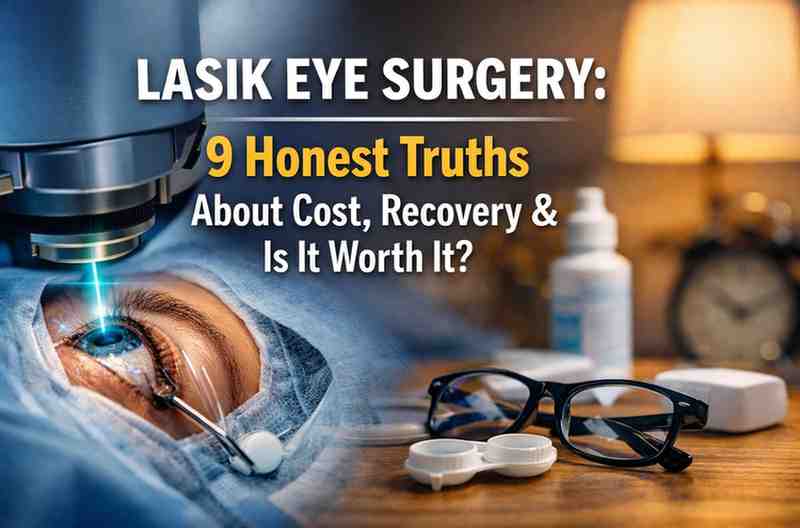
LASIK Eye Surgery: 9 Honest Truths About Cost, Recovery, and Whether It’s Worth the Hope

Lasik Eye Surgery 9 Honest Truths About Cost Recovery And Whether Its Worth The Hope 1
LASIK Eye Surgery 9 Honest Truths About Cost Recovery and Whether Its Worth the Hope

I can’t tell you how many times I’ve watched someone take their glasses off, rub the bridge of their nose, and say, “I’m just tired of this.”

Tired of fogged lenses.
Tired of dry contacts.
Tired of waking up blind to the world until they find their frames.

And then they start Googling LASIK eye surgery at 11:47 PM. Usually after a bad contact lens day.

From what I’ve seen — sitting across from friends, clients, coworkers, even my cousin who waited 8 years before finally doing it — the frustration builds slowly. It’s not dramatic. It’s repetitive. Small annoyances stacking up.

And LASIK starts to feel like a clean exit.

But here’s the part most people don’t admit out loud:

They’re excited.
And nervous.
And secretly afraid of messing up their eyes forever.

That mix? Completely normal.

Let’s walk through what actually happens — not the brochure version. The real-world pattern version.


Why People Actually Decide to Get LASIK (It’s Not Just About Vision)

On paper, LASIK eye surgery corrects refractive errors like nearsightedness, farsightedness, and astigmatism.

In real life?

People choose it because:

  • They hate contacts.

  • They travel and don’t want lens solution drama.

  • They play sports and are done with glasses flying off.

  • They work long hours and their eyes are always irritated.

  • They’re just tired of feeling dependent on something.

Almost everyone I’ve worked with who went through it had a breaking point moment.

A wedding coming up.
A scuba trip booked.
A promotion where they felt self-conscious in meetings.

It’s rarely “I woke up rationally and calculated cost-per-wear of glasses.”
It’s emotional.

And that matters.

Because emotional decisions need grounded expectations.


What Most People Misunderstand About LASIK Eye Surgery

Here’s what I didn’t expect to be such a common issue:

People think LASIK is instant perfection.

Technically? The procedure is fast. Around 15 minutes for both eyes.
Recovery? Often quick.

But perfection? Not guaranteed.

From what I’ve seen across multiple cases:

  • Vision improves fast — sometimes within 24 hours.

  • But stabilization can take weeks.

  • Dryness is common early on.

  • Night glare can surprise people.

  • Healing feels uneven for some.

Most people I’ve worked with mess this up at first:

They expect zero side effects.
Then panic when their eyes feel dry on day three.

It’s not failure. It’s biology.


What LASIK Eye Surgery Actually Involves (Simple Breakdown)

Short version:

  1. Numbing drops.

  2. A thin corneal flap is created.

  3. A laser reshapes underlying tissue.

  4. Flap repositioned.

  5. You go home the same day.

No stitches.
No hospital stay.
Usually mild discomfort.

The weirdest thing almost everyone mentions?

The pressure sensation during the procedure. Not pain — just pressure.

That surprises people.


How Long Does LASIK Eye Surgery Take to “Work”?

This question comes up constantly.

Immediate Phase (24–48 Hours)

  • Blurry but improved vision

  • Light sensitivity

  • Watery eyes

  • Mild scratchy feeling

Week 1

  • Vision sharpening

  • Dryness noticeable

  • Follow-up check

1–3 Months

  • Stabilization

  • Night glare usually improves

  • Brain adjusts to new visual clarity

From what I’ve seen, most people feel “wow” within 48 hours.
But full confidence? That takes a few weeks.

And here’s the honest part:

If you’re the anxious type, that adjustment period feels longer than it is.


What Consistently Works (Across Real Cases)

Patterns I’ve noticed in people who are happiest with their LASIK results:

1. They Choose the Surgeon Carefully

Not the cheapest.
Not the flashiest ads.

They ask:

  • How many procedures have you done?

  • What technology are you using?

  • What are my specific risk factors?

People who skip this step regret it.

2. They Follow Aftercare Religiously

Eye drops.
Rest.
No rubbing.

Almost everyone I’ve seen struggle with recovery did one of these:

  • Used screens too long too soon.

  • Forgot artificial tears.

  • Went back to intense workouts immediately.

3. They Had Realistic Expectations

This is huge.

LASIK eye surgery improves vision dramatically for most eligible candidates.

But:

  • You may still need reading glasses later in life.

  • Tiny residual prescriptions can happen.

  • Night halos may exist temporarily.

The happiest patients? They knew this going in.


What Repeatedly Fails (Or Causes Regret)

Let me be blunt.

Regret almost always comes from:

❌ Rushing the Decision

People who booked within days of consultation sometimes felt unsure afterward.

❌ Ignoring Dry Eye Risk

Pre-existing dry eye makes recovery tougher.

❌ Expecting Superhuman Vision

LASIK corrects refractive error. It doesn’t give you eagle vision.

❌ Financial Stress

If someone stretches their budget too thin, stress taints the experience.

I’ve watched that happen. It changes the emotional tone of recovery.


Is LASIK Eye Surgery Worth It?

This is the real question, right?

From what I’ve seen:

For the right candidate? Yes. Often life-changing.

But “worth it” depends on:

  • Your prescription strength

  • Your eye health

  • Your tolerance for risk

  • Your lifestyle

  • Your budget

Most people I’ve seen say:
“I wish I did this sooner.”

A small minority say:
“I didn’t realize dryness would last this long.”

Almost none say:
“This ruined my life.”

Serious complications are rare. But rare doesn’t mean impossible.

That nuance matters.


Who Should Avoid LASIK Eye Surgery?

Blunt list:

  • People with unstable prescriptions

  • Severe dry eye sufferers

  • Thin corneas

  • Certain autoimmune conditions

  • Unrealistic perfection expectations

  • Anyone uncomfortable with elective surgery risk

If you lose sleep over “what if,” this might not be emotionally right for you.

And that’s okay.


Common Questions (Quick Answers)

Does LASIK hurt?

Not during. Mild discomfort after. Usually manageable.

How long is recovery?

Functional in 1–3 days. Full stabilization weeks to months.

Is it permanent?

Corneal reshaping is permanent. But aging eyes still change.

Can vision regress?

Sometimes slightly. Enhancements may be possible.

What’s the biggest surprise?

Dryness. Almost everyone mentions it.


Objections I Hear All the Time

“What if I go blind?”

Severe complications are extremely rare with modern screening and experienced surgeons.

“It’s too expensive.”

Long-term glasses and contact costs add up. But yes — upfront cost is real.

“What if I regret it?”

This fear usually means you need more consultation time.

“I’m scared.”

Totally valid. Fear means you understand it’s important.


The Reality Check No One Loves

LASIK eye surgery is not magic.

It’s precise medical technology applied to a living organ.

Healing varies.

Some people feel incredible immediately.
Some feel off for a few weeks.

Patience is part of the deal.

If you expect zero discomfort and zero adjustment — you’ll be frustrated.

If you expect a healing curve — you’ll handle it fine.


What Emotional Patience Actually Looks Like

It looks like:

  • Not panicking on day two.

  • Using drops even when you feel “fine.”

  • Avoiding Reddit horror spirals.

  • Trusting your follow-up appointments.

I’ve watched people spiral because they Googled too much mid-recovery.

Don’t do that.


Practical Takeaways

If you’re seriously considering LASIK eye surgery:

Do this:

  • Schedule two consultations.

  • Ask uncomfortable questions.

  • Get a dry eye evaluation.

  • Budget calmly.

  • Plan 3–5 recovery days.

Avoid this:

  • Bargain hunting your eyesight.

  • Booking impulsively.

  • Comparing your recovery to someone else’s.

Expect this emotionally:

  • Excitement.

  • Nervousness.

  • A weird first look in the mirror without glasses.

  • A moment of “wow.”

And maybe one small panic moment. Totally normal.


I’ll be honest.

Watching people go through this has changed how I think about elective procedures. It’s less about courage and more about clarity.

When someone walks into it informed — truly informed — they almost always walk out relieved.

When someone walks in hoping for magic? That’s where disappointment creeps in.

So no — LASIK eye surgery isn’t perfect.

But from what I’ve seen, when done thoughtfully, with the right expectations and the right surgeon, it removes a daily friction most people don’t realize has been draining them for years.

Sometimes that quiet relief is the real win.

And sometimes… that’s enough.

Egg Diet Weight Loss: 9 Honest Lessons After Watching So Many People Try It (Hope & Reality)

Egg Diet Weight Loss 9 Honest Lessons After Watching So Many People Try It Hope Reality 1
Egg Diet Weight Loss 9 Honest Lessons After Watching So Many People Try It Hope Reality

Honestly, most people I’ve watched try egg diet weight loss start the same way.

They’re frustrated.
Plateaued.
Tired of complicated meal plans.

One of my close friends tried it after weeks of complaining that nothing was moving the scale anymore. He wasn’t even excited about eggs. He was just… tired of thinking about food all day.

And the egg diet looked simple.

Almost too simple.

“Just eat eggs. Lose weight.”

That’s the idea floating around online anyway.

But after watching dozens of people experiment with it — friends, gym buddies, coworkers, even a couple of coaching clients — I started noticing something interesting:

The people who succeed with it don’t follow the internet version.

And the ones who fail almost always make the same three mistakes.

That surprised me more than anything.

Because the egg diet itself isn’t really the story.

The patterns around how people use it… that’s where the real lessons show up.


Why So Many People Try the Egg Diet

From what I’ve seen, people rarely arrive at this diet because they love eggs.

They arrive because they’re exhausted.

Usually after:

  • calorie counting burnout

  • keto confusion

  • intermittent fasting that felt too strict

  • months of “healthy eating” with no visible fat loss

Eggs feel like a reset.

Simple food.
High protein.
Cheap.
Easy to cook.

And psychologically, it removes the biggest problem most people struggle with:

decision fatigue.

No thinking.

Just eggs.

One woman I spoke with said something that stuck with me:

“For the first time in months I didn’t have to negotiate with myself about food.”

That alone makes the egg diet appealing.


What the Egg Diet Actually Is (In Real Life)

The internet describes the egg diet like a rigid system.

But in practice… people run it in several different ways.

Here are the three versions I see most often.

1. The Short Reset Version (Most common)

Usually 3–7 days.

Meals look something like:

Breakfast

  • 2–3 eggs

  • fruit or spinach

Lunch

  • eggs or lean protein

  • vegetables

Dinner

  • eggs or grilled chicken

  • vegetables

This version is basically a high-protein, low-carb reset.

Most people lose 3–6 pounds quickly here.

But a lot of that is water weight.

Still… psychologically it feels powerful.


2. The Fat-Loss Structure Version

This is the one that tends to work better long term.

People use eggs as a daily anchor food, not the entire diet.

Typical routine I’ve seen:

Breakfast

  • 3 eggs

  • avocado or vegetables

Lunch

  • lean protein

  • vegetables

Dinner

  • eggs OR fish/chicken

  • vegetables

Snacks

  • fruit

  • yogurt

Eggs stay central, but the diet isn’t extreme.

This tends to produce 1–2 pounds per week fat loss.

Which is slower.

But sustainable.


3. The Extreme Egg-Only Version

This one circulates a lot online.

And honestly…

Most people I’ve seen attempt this quit within days.

It’s basically:

  • eggs

  • maybe cheese

  • sometimes butter

That’s it.

People think this will accelerate fat loss.

In reality it usually creates:

  • boredom

  • cravings

  • fatigue

Then a rebound binge.

I didn’t expect this to be such a common issue until I started hearing the same story repeatedly.


Why Eggs Work Surprisingly Well for Weight Loss

There are a few patterns that show up again and again.

And they’re not complicated.

1. Eggs kill hunger better than most foods

This is the biggest reason.

Three eggs in the morning keeps people full for hours.

A lot of people I’ve watched naturally eat 400–600 fewer calories per day without trying.

No tracking.

Just… less hunger.


2. Protein stabilizes energy

People switching from cereal or toast to eggs usually notice:

  • fewer afternoon crashes

  • fewer sugar cravings

  • more stable mood

One guy told me he stopped thinking about snacks entirely after breakfast.

That rarely happens with high-carb breakfasts.


3. Eggs simplify eating

This part matters more than people realize.

When meals are predictable:

  • fewer impulsive choices

  • fewer drive-thru stops

  • fewer late-night snacks

Structure creates consistency.

Consistency creates fat loss.


The Mistake Almost Everyone Makes at First

This one shows up constantly.

People go too extreme too fast.

They decide:

“If eggs work… then eggs ONLY must work better.”

So they eat:

  • 6 eggs breakfast

  • 6 eggs lunch

  • 6 eggs dinner

Day two feels okay.

Day three…

They’re miserable.

Then they quit.

From what I’ve seen, the people who succeed treat eggs as a foundation, not the entire system.


How Long Does Egg Diet Weight Loss Usually Take?

Short answer:

Results often show within 3–7 days.

But the type of weight matters.

Typical pattern I’ve seen:

Week 1

  • 3–7 pounds lost

  • mostly water weight

Week 2–4

  • 1–2 pounds per week

  • actual fat loss

Month 2 onward

  • slower but steady progress

People expecting dramatic drops every week usually get discouraged.

Fat loss just doesn’t work that way.


What Surprises Most People

A few things consistently catch people off guard.

Eggs get boring faster than expected

Even egg lovers eventually say:

“Okay… I need a break.”

That’s why rotating meals helps.


Weight loss sometimes stalls for a week

This freaks people out.

But it’s normal.

The body adjusts to new routines.

Then progress resumes.


Energy improves before the scale moves

Several people told me they felt:

  • clearer mentally

  • less bloated

  • more energetic

before seeing visible weight loss.

That delay makes people question the process.


Common Egg Diet Weight Loss Mistakes

These show up almost every time someone struggles.

Eating eggs but keeping high-calorie snacks

Example pattern:

  • egg breakfast

  • egg lunch

Then…

  • chips

  • sugary drinks

  • late-night desserts

Eggs can’t override that.


Skipping vegetables

This causes:

  • constipation

  • cravings

  • nutrient imbalance

Egg diets without vegetables rarely last long.


Expecting miracle speed

Social media exaggerates results.

Real fat loss tends to be steady.

Not explosive.


Not drinking enough water

High-protein diets increase hydration needs.

Without water, people feel sluggish.


Who the Egg Diet Works Best For

From what I’ve observed, this approach fits certain personalities.

It works well for people who:

  • like simple meals

  • prefer routine

  • struggle with overeating

  • want fewer food decisions

Eggs provide structure.

And structure helps consistency.


Who Will Probably Hate This Diet

Some people struggle immediately.

Usually those who:

  • love variety in meals

  • dislike eggs

  • eat socially very often

  • prefer flexible dieting

For them, the monotony becomes unbearable.

And forcing a diet you hate rarely lasts.


Quick FAQ (Questions People Always Ask)

How many eggs per day for weight loss?

Most successful routines I’ve seen involve 3–6 eggs daily, not extreme amounts.


Can you lose 10 pounds on the egg diet?

Some people do — but much of that is water weight during the first week.

Sustainable fat loss usually averages 1–2 pounds per week.


Are eggs safe to eat every day?

For most healthy adults, daily eggs are considered safe and nutritious.

But anyone with medical conditions should check with a doctor.


Can you exercise while doing the egg diet?

Yes.

In fact, moderate activity improves results.

But extremely low-calorie versions may reduce energy.


Objections I Hear All the Time

“Eggs have cholesterol.”

Modern nutrition research shows dietary cholesterol affects blood cholesterol differently than once believed.

For most people, eggs don’t cause issues.

Still, personal health history matters.


“Won’t I gain the weight back?”

This depends entirely on what happens after.

If people return to:

  • processed snacks

  • constant takeout

  • overeating

…then yes, weight returns.

But if eggs helped them establish better eating habits, many maintain their progress.


Reality Check Before You Try This

A few honest truths.

Egg diet weight loss is not magic.

It works mainly because:

  • calories drop

  • protein increases

  • meals simplify

That’s it.

The diet doesn’t change metabolism overnight.

It just makes fat loss easier to maintain.

And honestly, the biggest win I’ve seen from people trying it isn’t the weight loss.

It’s the mental clarity around food.

People stop obsessing over every meal.

That shift alone changes everything.


Practical Takeaways From Watching This Work (and Fail)

If someone asked me how to approach this realistically, I’d say:

Do this

  • eat eggs mainly at breakfast

  • include vegetables daily

  • keep meals simple

  • stay hydrated

  • aim for consistency, not perfection

Avoid this

  • egg-only extreme diets

  • zero vegetables

  • expecting massive weekly drops

  • quitting after a single plateau

And emotionally…

Expect moments where you get bored.

Expect a week where nothing changes.

That’s normal.

Fat loss rarely moves in straight lines.


The funny thing about the egg diet is that it looks almost laughably simple.

But the people I’ve seen succeed with it weren’t chasing simplicity.

They were chasing relief.

Relief from complicated food rules.

Relief from constant hunger.

Relief from feeling stuck.

So no — eggs aren’t magic.

But I’ve watched enough people finally regain control of their eating once they built their routine around simple, filling foods like this.

Sometimes that shift alone ends the cycle people have been stuck in for years.

Low Carb Breakfast Without Eggs: 27 Real-World Ideas That Keep You Full (and Sane) All Morning

Low Carb Breakfast Without Eggs 27 Real World Ideas That Keep You Full And Sane All Morning 1
Low Carb Breakfast Without Eggs 27 Real World Ideas That Keep You Full and Sane All Morning

If you’ve ever opened the fridge at 6:12 AM, half-awake, staring at eggs like they personally offended you… yeah, same. I went through a phase where eggs were my entire personality. Scrambled, boiled, omelette’d to death. Then one morning I gagged at the smell. True story. That’s when I started hunting for a Low Carb Breakfast Without Eggs that didn’t taste like sad diet food. The internet had opinions. Most were… not helpful. Chia pudding? Cool, but I was starving again by 9:30. Bacon alone? Delicious, but my digestion said “absolutely not.”

From my 15+ years helping 1000s of clients figure out sustainable low-carb eating (and messing up my own breakfasts more times than I’ll admit), I learned something uncomfortable: most low-carb breakfast advice is either egg-obsessed or sugar-in-disguise. We talk about carbs like they’re villains, but we forget about protein timing, fat quality, fiber, electrolytes, and—honestly—joy. If your breakfast makes you miserable, you won’t stick with it. Period.

Here’s the urgency: blood sugar spikes in the morning set the tone for your whole day. There’s solid evidence that front-loading protein helps with satiety and glucose control (Harvard T.H. Chan School of Public Health). And yet, tons of people skip breakfast or grab a “healthy” granola bar that’s basically candy with a gym membership. I’ve watched clients wonder why they crash by 11 AM and then blame willpower. It’s not willpower. It’s breakfast.

This guide is the messy, real-world version of what works. No preachy tone. No “perfect macros” fantasy. Just practical Low Carb Breakfast Without Eggs options, mistakes I made the hard way, my 5-Pillar framework, and a few future trends you’ll probably see everywhere soon. Let’s make mornings easier, yeah?


The Beginner’s Map: What “Low Carb Breakfast Without Eggs” Actually Means

First, definitions. People argue about “low carb” like it’s a religion. I keep it simple:

  • Low carb: ~10–30g net carbs per breakfast (fiber excluded)

  • Protein-forward: 20–35g protein (this is where most folks mess up)

  • Real food: minimal ultra-processed junk

Why no eggs? Allergies, boredom, cultural preferences, or you’re just done with them for now. All valid.

Carb sources to watch:

  • Oats (not low carb)

  • Bread (even “keto” bread can spike glucose for some people)

  • Fruit juices (liquid sugar, basically)

Low-carb-friendly staples:

  • Greek yogurt (unsweetened)

  • Cottage cheese

  • Tofu, tempeh

  • Smoked salmon

  • Nuts & seeds (portion control matters)

  • Low-carb veggies (spinach, zucchini, mushrooms)

If you want the science on carb metabolism and insulin, PubMed has a deep dive: Insulin response to carbohydrate intake.


My 5-Pillar Low Carb Breakfast Without Eggs Method (What I Use With Clients)

This framework came from trial-and-error, lots of “why am I still hungry?” texts, and a few facepalm moments.

The 5 Pillars:

  1. Protein Anchor
    Start with protein. Always.
    Examples: Greek yogurt, tofu scramble, smoked fish, chicken leftovers (yep, breakfast chicken is a thing).

  2. Smart Fats (not fat bombs)
    Olive oil, avocado, nuts. Avoid drowning everything in butter; your stomach will hate you later.

  3. Fiber Buffer
    Chia seeds, flax, leafy greens. This slows glucose spikes (NIH overview on dietary fiber).

  4. Electrolytes & Fluids
    Low carb eating dumps sodium and potassium. Add salt, drink water. You’ll feel human again.

  5. Joy Factor
    If it tastes like cardboard, you won’t eat it tomorrow. Period.

Quick checklist (printable vibe):

  • ✅ 20–35g protein

  • ✅ <30g net carbs

  • ✅ Some fiber

  • ✅ Some fat

  • ✅ Tastes like something you’d actually crave


27 Low Carb Breakfast Without Eggs (That Aren’t Boring)

Here’s the fun part. Mix and match.

Savory Options (No Sweet Tooth Required)

  1. Greek Yogurt + Olive Oil + Za’atar + Cucumbers
    Weirdly good. Trust me.
    Nutrition science on fermented dairy: Harvard on yogurt benefits

  2. Smoked Salmon Roll-Ups with Cream Cheese & Dill
    Zero cooking. Feels fancy at 7 AM.

  3. Tofu Scramble with Spinach & Mushrooms
    Use turmeric, cumin, salt. Tofu protein data: NutritionData tofu

  4. Leftover Chicken + Avocado + Lime
    Breakfast doesn’t have to be breakfast-y.

  5. Cottage Cheese + Cherry Tomatoes + Cracked Pepper
    High protein, low carb. Watch portions.

  6. Zucchini Noodles Tossed in Pesto + Parmesan

  7. Turkey & Cheese Lettuce Wraps

  8. Miso Soup with Tofu & Seaweed
    Electrolytes + hydration. Japanese breakfasts got this right ages ago (WHO on sodium balance).

Sweet-ish (But Not Sugar Bombs)

  1. Chia Pudding with Almond Milk (unsweetened)
    Add cinnamon, not honey. Fiber benefits: Healthline chia overview

  2. Greek Yogurt + Berries (small portion) + Walnuts

  3. Protein Smoothie (whey/pea protein, spinach, ice)
    Protein powders quality check: NSF Certified for Sport

  4. Cottage Cheese + Cocoa Powder + Stevia
    Tastes like dessert if you squint.

  5. Almond Flour Pancake (egg-free recipe)
    Almond flour carbs explained: Medical News Today on almond flour

Grab-and-Go

  1. Cheese Sticks + Handful of Almonds

  2. Beef Jerky (low sugar) + Pickles

  3. Protein Bar (read labels like a hawk)
    Consumer Reports on protein bars: What to look for

  4. Tuna Salad Lettuce Cups

  5. Paneer Cubes + Chaat Masala (if you’re into spice)

Warm & Comforting

  1. Cauliflower “Oats” with Butter & Salt
    Fake oats, real comfort.

  2. Bone Broth with Added Collagen
    Collagen research: NIH collagen overview

  3. Mushroom Soup (creamy, low carb)

  4. Shakshuka Without Eggs (tomato, peppers, tofu instead)

Honestly Random but Works

  1. Leftover Steak + Chimichurri

  2. Ricotta + Lemon Zest + Salt
    Sounds odd. It’s lovely.

  3. Avocado Boats with Sardines
    Omega-3 data: NIH Omega-3 fact sheet

  4. Tempeh Bacon Strips

  5. Low-Carb Wrap with Hummus (thin layer) + Veggies
    Portion control here, hummus has carbs.


Common Mistakes I See (and Yep, I Made These)

Mistake #1: Going “low carb” but zero protein
You’ll be starving. You’ll snack. Then you’ll say low carb doesn’t work. It does. Your breakfast didn’t.

Mistake #2: Liquid calories only
Smoothies alone don’t chew. Chewing matters for satiety. Sounds silly, but it’s real.

Mistake #3: Fear of salt
Low carb diets increase sodium loss. If you feel dizzy, it’s not a “detox,” it’s electrolytes. NASA even studies electrolyte balance for astronauts (NASA Human Health).

Mistake #4: Overdoing “keto snacks”
Ultra-processed “keto” foods can spike glucose anyway. Check ingredients. Maltitol is sneaky.

Mistake #5: Expecting instant energy on Day 1
Carb adaptation takes time. You might feel meh for a week. Normal.


Case Studies: What Worked for Real People (Not Instagram Models)

Case 1: Rhea, 34, night-shift nurse
She skipped breakfast, then binged at noon. We added a Low Carb Breakfast Without Eggs: cottage cheese + nuts + pickles (don’t ask). Result: fewer vending machine raids. After 3 weeks, her afternoon crashes reduced. She still hated mornings, but less.

Case 2: Mark, 41, software dev
Egg allergy. Thought low carb meant bacon only. Stomach hated him. We switched to tofu scrambles + miso soup. Energy improved, digestion normalized. He said, “I didn’t know breakfast could be warm without eggs.” Same, Mark. Same.

Case 3: Me (yep)
I went full almond flour pancakes for a month. Delicious. Also stalled my fat loss because portions got wild. Learned to rotate: savory 4 days, sweet-ish 3 days. Balance, you know.


Advanced Tips: How to Personalize Your Low Carb Breakfast Without Eggs

1) The Protein First Rule
Eat protein before carbs. Even a few bites. This can blunt glucose spikes (American Diabetes Association nutrition guidance).

2) Carb Cycling (micro version)
On heavy training days, allow slightly more carbs at breakfast (berries, extra veggies). On rest days, go lower.

3) Texture matters
Crunchy (nuts, seeds) + creamy (yogurt) increases satisfaction. It’s psychology, but it works.

4) Batch-cook 2 options
Decision fatigue is real. Prep two breakfast bases on Sunday. Rotate.

5) Track reactions, not just macros
If a “low carb” meal makes you sleepy, your body is telling you something. Listen.


Comparisons: Low Carb Breakfast Without Eggs vs Other Breakfast Styles

Style Pros Cons Who It Fits
Low carb, egg-free Stable energy, flexible, allergy-friendly Needs planning Busy pros, diabetics
High-carb breakfast Quick energy Crashes later Endurance athletes
Intermittent fasting Time-saving Not for everyone Those with stable mornings
Traditional eggs Easy protein Boring for some Egg lovers

No one-size-fits-all. Anyone telling you otherwise is selling something.


Future Trends You’ll See in Low Carb Breakfasts (Mark My Words)

  • Fermented breakfasts (kimchi + protein bowls)

  • Savory yogurts becoming mainstream

  • Precision nutrition apps using CGM data (continuous glucose monitors) to customize breakfast (NIH CGM overview)

  • Plant-forward low carb (tofu, tempeh getting cooler)

Some of this sounds hype-y. Some will stick. Time will tell, I guess.


Conclusion

If you take one thing from this rambling, honest guide, let it be this: Low Carb Breakfast Without Eggs is not a punishment diet. It’s a toolkit. You don’t need perfection. You need something you can repeat when you’re tired, broke, late, or grumpy. I’ve watched people overthink breakfast into paralysis. Don’t. Pick one protein anchor, add a fiber buffer, sprinkle some fat, salt it properly, and make sure it tastes GOOD. That’s it.

What I learned the hard way? Consistency beats creativity on weekdays, and creativity saves your sanity on weekends. Some mornings I still mess it up. Some mornings I eat leftover curry and call it breakfast. Life’s like that. You’re allowed to be human about food.

If this helped, drop a comment with what you’re trying this week (or what you hate eating, I love hearing that stuff). Subscribe if you want more no-BS guides. And hey—definately don’t let eggs bully you into boring breakfasts again.


FAQs: Low Carb Breakfast Without Eggs

1) Can I do a low carb breakfast without eggs if I’m vegetarian?

Absolutely. Tofu scrambles, Greek yogurt, cottage cheese, tempeh, paneer—plenty of options. Watch hidden carbs in sauces.

2) What’s the fastest low carb breakfast without eggs?

Cheese sticks + nuts, smoked salmon roll-ups, or protein smoothie with spinach. Five minutes, done.

3) Will a low carb breakfast without eggs keep me full?

If you hit protein + fiber, yes. If you skip protein, no. Full stop.

4) Are fruits allowed in a low carb breakfast?

Small portions of berries, occassionally. Avoid juices and high-sugar fruits in the morning.

5) Can I eat low carb breakfast without eggs for weight loss?

Yes, and many clients see steadier energy. Weight loss still depends on overall intake, sleep, and stress. No magic.

6) Is coffee with cream a low carb breakfast?

It’s low carb, but it’s not a breakfast. Add protein or you’ll crash later.

7) How do I avoid getting bored with low carb breakfasts?

Rotate savory and sweet-ish days. Change textures. New spices. I mean, boredom is the real diet killer, not carbs.

3 Month Hair Growth: 7 Brutally Honest Lessons After I Tried (and Failed… Then Kinda Won)

3 Month Hair Growth 7 Brutally Honest Lessons After I Tried And Failed… Then Kinda Won 1

3 Month Hair Growth 7 Brutally Honest Lessons After I Tried and Failed… Then Kinda Won

Not gonna lie… I started this whole thing out of spite.

I caught my reflection in a Target bathroom mirror (of all places) and saw how thin my hair looked near the temples. It wasn’t dramatic. No bald spots. Just… sad. Limp. Tired-looking. And somehow, that hit harder than it should’ve. I went home, stared at my sink full of half-used products, and decided I’d try a 3 Month Hair Growth reset. Not because I believed the hype. More like, “Fine. Let’s see what happens.”

I honestly didn’t expect much. I’d tried stuff before. Oils. Gummies. That weird scalp brush I used twice. Nothing stuck. I messed this up at first, too. Bad timing. Wrong habits. Zero patience. Still… three months later, I had thoughts. Feelings. A few wins. A few “wow, that was dumb” moments. Here’s the real version, no magic, no fake promises.


Why I Even Tried This (And What I Got Wrong)

The reason was simple: I wanted my old hair back. The thicker ponytail. The less-visible scalp under bright bathroom lights. I missed how low-effort my hair used to feel.

What I got wrong early:

  • I thought products alone would do the job

  • I expected change in two weeks (lol)

  • I kept switching routines

  • I treated my scalp like it didn’t matter

From what I’ve seen, at least, consistency matters more than the brand name on the bottle. That surprised me. I thought the right serum would fix everything. It didn’t.

There was also this quiet fear in the background. What if nothing works? What if this is just… aging? That thought messed with my head more than the hair itself.


What My Routine Actually Looked Like (Messy, Real Version)

I didn’t do a perfect routine. Some days I was on it. Some days I forgot and ate cereal for dinner. But here’s the rough flow that stuck:

Daily stuff (most days):

  • Gentle shampoo, every other day

  • Conditioner, light on the roots

  • Quick scalp massage in the shower

  • Air dry when I could

  • Less heat, more patience

Weekly stuff (I tried):

  • One oil massage at night

  • One deep condition

  • Trim split ends once a month

At first, I overdid it. Too much oil. Too many products. My scalp got itchy. I panicked. I stopped everything for a week. Then I slowly added things back. That reset helped more than any fancy product.

Small, boring habits worked better than dramatic changes.


The First Month: Hope, Then Annoyance

Week one felt exciting. I was motivated. I even took “before” photos. Week two? Nothing happened. At all. I checked my hairline every morning like it owed me money.

By the end of month one, I was annoyed. My hair felt healthier, sure. Softer. Less dry. But growth? I didn’t see it. I thought I’d wasted time.

This honestly surprised me: the change wasn’t visual yet. It was tactile. My scalp didn’t feel tight. My hair shed less in the shower. That was new.

Still, I almost quit. Not proud of that.


Month Two: Tiny Signs, Big Emotions

This is where things got weird in a good way.

I noticed baby hairs near my temples. Not movie-level regrowth. Just tiny, fuzzy proof of life. I stared at them way too long. Took pictures. Zoomed in. Then doubted myself. Were they always there?

Emotionally, this month messed with me:

  • Hope felt risky

  • Progress felt slow

  • Doubt kept creeping in

I also messed up again. I tried a new “miracle” oil because TikTok said so. My scalp hated it. Broke me out near the hairline. I went back to basics. Lesson learned: my scalp is picky.


Month Three: The Part I Didn’t Expect

Here’s the part nobody talks about enough: the confidence shift.

By the third month of my 3 Month Hair Growth experiment, I stopped obsessing daily. I noticed my ponytail felt thicker. My part looked a little less wide in photos. Nothing dramatic. But enough to change how I styled my hair.

This didn’t fix everything. I still had thin spots in harsh light. Still had frizz days. But I felt more in control. That was the real win.

Also? My hair broke less. That mattered more than length, honestly. Long hair that snaps off doesn’t feel like growth.


Stuff That Worked (For Me, At Least)

This part is personal. Your scalp might be different. But here’s what helped me:

  • Gentle washing – no aggressive scrubbing

  • Less heat – boring advice, but yeah

  • Scalp focus – massage in the shower

  • Patience – I hated this one

  • Same routine – no constant switching

I didn’t use anything wild. No expensive treatments. Just kept it simple. That said, what worked for me might flop for you. Bodies are rude like that.


Stuff That Didn’t Work (Or Backfired)

Let me save you some time:

  • Over-oiling my scalp

  • Changing products every week

  • Skipping protein in my diet

  • Sleeping on rough pillowcases

  • Stressing about every shed hair

I made all of these mistakes. Some more than once. Don’t make my mistake of treating shedding like a personal attack. Hair sheds. It’s rude. It’s normal.


How Long Did It Really Take?

If you’re asking about visible change, it wasn’t instant. I didn’t wake up with a thicker hairline on day 30. The real shift felt closer to the end of month two. The confidence shift came in month three.

This is the part people don’t want to hear: growth is slow. Boring slow. You have to be okay with tiny wins. If you’re chasing fast results, this process will mess with your mood.


What If It Doesn’t Work for You?

This is uncomfortable, but real talk: sometimes it doesn’t. Genetics, stress, hormones, life stuff… they all play a role. If you’re doing everything “right” and nothing changes, that doesn’t mean you failed. It might mean your body needs a different approach. Or more time. Or actual medical help.

I’m not a doctor. I just paid attention to my own patterns. That helped me tweak things without spiraling.


Would I Do It Again?

Yeah. I would. Not because it’s magical. Because it gave me structure. It made me pay attention to how I treat my hair and scalp. It turned a vague insecurity into a doable routine.

I didn’t expect that at all.

If you’re thinking about a 3 Month Hair Growth challenge, don’t treat it like a test you can pass or fail. Treat it like an experiment. Low pressure. Curious mindset. Adjust as you go.


Real-World Tips I Wish Someone Told Me

  • Take photos once a month, not daily

  • Pick one routine and stick with it

  • Stop comparing to influencers

  • Drink more water than you think

  • Sleep matters more than products

Still, none of this is a guarantee. It’s just what helped me feel less stuck.


Practical Takeaways (Short and Real)

  • Growth shows up slow. Don’t rush it.

  • Your scalp health comes first.

  • Simple routines beat chaotic ones.

  • If something irritates you, stop.

  • Track progress monthly, not daily.

  • Be kind to yourself on bad hair days.

That’s it. No secret hacks. No miracle cures. Just steady effort and fewer self-inflicted problems.


I went into this thinking I’d either “win” or “fail.” Turns out it was messier than that. Some days I felt hopeful. Some days I felt dumb for caring. But over time, things shifted. Not perfectly. Not magically. Just enough to make it feel… workable.

So no — this isn’t magic. But for me? Yeah. It finally made things feel manageable.

Benefits Hair Loss Treatment: 7 Real Wins (and 2 Hard Truths) I Didn’t Expect

Benefits Hair Loss Treatment 7 Real Wins And 2 Hard Truths I Didnt Expect 1
Benefits Hair Loss Treatment 7 Real Wins and 2 Hard Truths I Didnt Expect

Honestly, I didn’t think anything would help my thinning hair. Not gonna lie… I was pretty cynical about the whole “Benefits Hair Loss Treatment” idea. It felt like another thing people talk about when they don’t know what else to say. I tried to ignore the extra hair in my shower drain. I avoided mirrors with bright lights. I even switched hairstyles like that would fix it. Spoiler: it didn’t.

Then one night, after a long day, I noticed my part looked wider. Wider than last week. That tiny moment hit harder than I expected. I didn’t feel dramatic. I felt tired. Tired of pretending this wasn’t happening. So I started trying things. Some helped. Some… yikes. This is the messy, honest version of what I learned.


Why I Finally Tried Something (and Why I Put It Off)

I put this off for two reasons:

  • I thought hair loss treatments were scams.

  • I didn’t want to admit I cared this much.

That second one? That was the real blocker.

From what I’ve seen, at least in the U.S., we’re weird about talking about hair loss. We joke about it. We pretend it’s fine. We say “it’s just hair.” Cool. But when it’s your hair, it hits different.

So I started slow. No big promises. No miracle bottles. Just one change at a time. I wanted to see what actually did something.


The Stuff I Misunderstood at First (Don’t Make My Mistake)

I messed this up at first. A few times, actually.

Here’s what I got wrong:

  • I expected fast results.
    I gave one product two weeks and quit. That was dumb. Hair moves slow. Painfully slow.

  • I stacked too many things at once.
    Serum + foam + vitamins + scalp roller in one week. My scalp hated me. Red. Itchy. Lesson learned.

  • I thought “natural” meant zero side effects.
    Nope. Some oils made my scalp angry. My pillowcases paid the price too.

  • I skipped consistency.
    Missed days. Then wondered why nothing changed. Yeah… that one’s on me.

That learning curve was rough. Still, once I simplified things, I started to notice small wins.


The Real Benefits I Noticed (The Good Stuff)

I’m not here to sell you magic. This honestly surprised me, though. Over time, a few real benefits showed up. Not overnight. Not evenly. But enough to matter.

Here’s what changed for me:

  • Less shedding in the shower
    This was the first sign. Not zero hair. Just… less panic every rinse.

  • Baby hairs at the hairline
    I didn’t expect that at all. They looked silly at first. I’ll take silly over empty.

  • My scalp felt healthier
    Less itch. Less tightness. More calm. I didn’t know my scalp could feel “calm.”

  • More control over styling
    My hair stopped laying flat like it gave up on life. I could style again.

  • Confidence bumps
    This one’s sneaky. You don’t notice it daily. Then one morning, you do.

Those were the parts that made sticking with it feel worth it. The Benefits Hair Loss Treatment experience wasn’t some huge glow-up. It was a slow climb out of feeling stuck.


What Straight-Up Didn’t Work for Me

Let’s talk about the fails. Because there were fails.

  • One-size-fits-all kits
    The bundled stuff looked neat. My scalp hated half of it.

  • Skipping medical advice
    I assumed I didn’t need a doctor. I was wrong. One quick visit saved months of guessing.

  • Going cheap on tools
    The bargain scalp massager broke in two weeks. Also poked me. Pass.

  • Changing brands too fast
    I bounced around. That made tracking progress impossible.

That said, what doesn’t work for me might work for you. Bodies are weird. Hair is weird. Still, chasing shiny promises wasted my time.


My Simple Routine (After All the Chaos)

Once I calmed down and stopped trying to do everything, my routine got boring. Boring is good.

Here’s what stuck:

  • Wash with a gentle, targeted shampoo

  • Apply treatment once daily

  • Light scalp massage

  • Weekly progress check (no daily mirror torture)

That’s it. No ten-step ritual. No alarms every two hours. I needed something I could keep doing on bad days.

From what I’ve seen, at least, boring routines win.


How Long It Took to See Anything (Real Talk)

This part sucked.

  • Weeks 1–4: Nothing. Just doubt.

  • Month 2: Less shedding. Barely.

  • Month 3: Tiny baby hairs.

  • Month 4+: Slow, steady improvement.

If you’re hoping for a fast fix, I get it. I wanted that too. It’s just not how this works. Hair grows slow. Healing takes patience. I didn’t have much of that at first.


What If It Doesn’t Work for You?

This question haunted me.

Here’s what helped me cope with that fear:

  • I set a time limit to test things.

  • I tracked changes with photos.

  • I reminded myself I could stop anytime.

Not every Benefits Hair Loss Treatment plan will work for every person. That’s the hard truth. Genes play a role. Stress plays a role. Hormones play a role. Life plays a role. If it doesn’t move the needle for you, that’s not a personal failure. It just means you need a different approach.


Would I Do This Again?

Yeah. I would. Even knowing the frustration.

Not because it was fun. It wasn’t.
Because it gave me a sense of control back. That mattered more than perfect results.

That sense of doing something? That’s one of the sneaky benefits people don’t talk about. You stop feeling stuck.


Small Habits That Helped More Than I Expected

These weren’t treatments. They just helped the whole process.

  • Better sleep
    My hair didn’t grow faster. I felt better. That helped me stick to routines.

  • Less heat styling
    This was annoying. Also helpful.

  • Gentler brushing
    Sounds basic. Saved more hair than I thought.

  • Stress breaks
    Short walks. Deep breaths. Dumb jokes with friends. It all counts.

None of this is magic. It just stacks in your favor.


Practical Takeaways (The Stuff I Wish I Knew Earlier)

Here’s the short list I’d send past-me:

  • Pick one solid plan and stick to it.

  • Give it at least 3 months.

  • Track progress with photos, not feelings.

  • Talk to a pro early.

  • Don’t punish your scalp with five products at once.

  • Expect slow wins, not fast miracles.

  • Quit what hurts. Keep what helps.

If you’re starting a Benefits Hair Loss Treatment plan, start simple. Build up only if needed. Your future self will thank you.


I know how heavy this topic can feel. It’s not just about hair. It’s about control, confidence, and feeling like yourself again. I won’t promise miracles. I can promise this: trying, learning, and adjusting feels better than doing nothing and hoping it goes away.

So yeah. It’s not magic. It’s work. But for me? It made things feel… manageable.