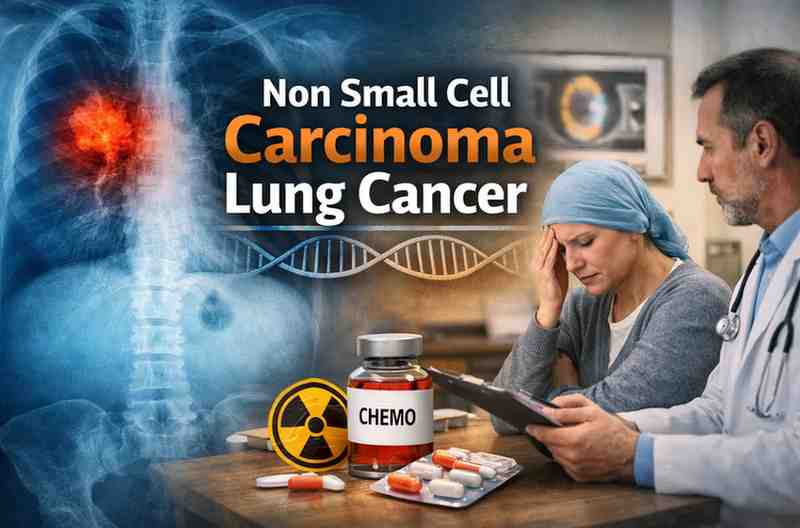
Non Small Cell Carcinoma Lung Cancer: 11 Realities Patients Face (and Where Hope Still Shows Up)

Non Small Cell Carcinoma Lung Cancer 11 Realities Patients Face And Where Hope Still Shows Up 1
Non Small Cell Carcinoma Lung Cancer 11 Realities Patients Face and Where Hope Still Shows Up

Honestly… the first time someone close to me heard the words Non Small Cell Carcinoma Lung Cancer, the reaction wasn’t dramatic.

It was quieter than that.

A long pause.
A blank stare.
Then the same question I’ve heard dozens of times since.

“What does that even mean?”

Because the phrase sounds clinical. Almost distant.

But what I’ve seen — again and again — is that once people start unpacking what Non Small Cell Carcinoma Lung Cancer really involves, the confusion quickly turns into something else:

Fear.
Decision fatigue.
Information overload.

Families start Googling at 2AM.
Patients bounce between hope and dread depending on the article they read.

And strangely… many people feel like they’re the only ones struggling to make sense of it.

They’re not.

From what I’ve seen watching patients, caregivers, and even doctors navigate this, the real challenge isn’t just the cancer itself.

It’s understanding what actually matters next.

Not theory.

Real decisions.

Real timelines.

Real expectations.

So let’s talk about what this disease actually looks like in the real world — the parts that medical pages often gloss over.


What Non Small Cell Carcinoma Lung Cancer Actually Means

Most people assume lung cancer is one single disease.

It’s not.

There are two major types doctors talk about:

Small Cell Lung Cancer (SCLC)
Non Small Cell Lung Cancer (NSCLC)

And here’s the important part:

Non Small Cell Carcinoma Lung Cancer accounts for about 85% of all lung cancer cases.

So when doctors say NSCLC, they’re talking about the majority of lung cancer diagnoses.

But even that category is still a mix of different cancers.

The three main subtypes doctors usually identify are:

1. Adenocarcinoma

This is the one I’ve seen most frequently.

It often appears in:

• Non-smokers
• Former smokers
• Younger patients than people expect

It tends to grow slower than some other types.

Which sounds reassuring… but it can also mean symptoms stay subtle for a long time.


2. Squamous Cell Carcinoma

This one historically shows up more often in long-term smokers.

It usually forms in the central parts of the lungs near the airways.

Symptoms sometimes appear earlier because of that location.


3. Large Cell Carcinoma

Less common.

But often more aggressive.

Doctors sometimes struggle to classify it clearly at first, which can make early treatment decisions a bit complicated.


One thing that surprised me after watching multiple diagnoses unfold:

Most patients never hear these subtype explanations during the first appointment.

That first visit is usually packed with shock, scans, and next steps.

Understanding comes later.

Sometimes weeks later.


Why So Many Cases Get Diagnosed Late

This part honestly frustrates a lot of people.

And I get why.

Because the early symptoms of Non Small Cell Carcinoma Lung Cancer can look like everyday health issues.

Things people ignore for months.

Or longer.

The patterns I’ve seen again and again include:

• A cough that never quite goes away
• Shortness of breath that slowly worsens
• Chest discomfort that feels like muscle strain
• Fatigue that people blame on stress or aging
• Repeated “bronchitis” diagnoses

One man I watched go through this cycle kept getting antibiotics for almost six months.

He thought it was recurring infection.

It wasn’t.

This is one of the most common early misreads I’ve seen.

Not negligence.
Just how subtle early symptoms can be.


The Moment Everything Changes: Diagnosis

The diagnosis stage is chaotic.

That’s the honest word.

Most patients I’ve seen go through a similar whirlwind:

  1. CT scan

  2. Biopsy

  3. PET scan

  4. Genetic testing

  5. Staging

And every step raises new questions.

From what I’ve seen, the biggest emotional shift happens when staging gets discussed.

Because stage determines almost everything about treatment options.

Doctors classify NSCLC into stages:

Stage 1 — localized tumor
Stage 2 — local spread
Stage 3 — regional lymph node involvement
Stage 4 — metastasis to other organs

And this is where people often panic.

But something I’ve noticed repeatedly:

Even Stage 4 lung cancer doesn’t mean the same thing today that it meant 10–15 years ago.

Treatments have changed more than many people realize.


Treatment Paths: What I’ve Seen Work (and Where Reality Hits)

Most people expect one simple treatment path.

But NSCLC treatment is actually more like a branching tree.

Doctors usually consider:

• Stage
• Tumor location
• Genetic mutations
• Patient health
• Spread to other organs

And those factors decide what comes next.


Surgery (When the Cancer Is Found Early)

For Stage 1 or some Stage 2 cancers, surgery is often the first line of treatment.

Doctors may remove:

• A small lung segment
• A lobe of the lung
• Rarely an entire lung

From what I’ve seen, recovery surprises people.

Most expect breathing to be permanently worse.

But many patients adapt better than expected.

The lungs are incredibly resilient.

Still — the emotional adjustment can take longer than the physical one.


Radiation Therapy

Radiation is often used when surgery isn’t possible.

Either because of:

• Tumor location
• Patient health
• Advanced stage

Some modern radiation techniques are surprisingly precise.

One oncologist once described it like “sniping cancer cells.”

But patients still feel fatigue from it.

That part rarely gets mentioned enough.


Chemotherapy

Chemotherapy is still widely used.

But one pattern I’ve noticed:

People expect chemotherapy to be the worst part.

Sometimes it is.

But increasingly, it’s not the only option anymore.


Targeted Therapy (This Is Where Things Changed)

Honestly, this is the area that surprises patients the most.

Modern lung cancer treatment often includes genetic testing of the tumor.

Doctors look for mutations like:

• EGFR
• ALK
• ROS1
• KRAS
• BRAF

If a mutation exists, patients may receive targeted therapy drugs.

And I’ve seen people go from severe symptoms to normal daily life within weeks.

Not everyone qualifies.

But when they do, the response can be dramatic.


Immunotherapy

This treatment basically helps the immune system recognize and attack cancer cells.

Some patients respond incredibly well.

Others… not so much.

That unpredictability is something doctors are still studying.


The Mistakes I See Families Make Early

Almost everyone I’ve watched go through this makes a few predictable mistakes.

Not because they’re careless.

Because the situation is overwhelming.

The big ones:

Trying to Understand Everything Immediately

People want answers the same week as diagnosis.

But honestly… treatment plans often evolve over several appointments.

Rushing understanding just creates more anxiety.


Ignoring Genetic Testing

Some patients don’t realize how critical tumor mutation testing can be.

It often determines the entire treatment path.


Trusting the First Treatment Plan Without Question

This is controversial, but I’ll say it anyway.

Second opinions matter.

Especially for cancer.

Most oncologists expect them.

And good ones encourage them.


How Long Treatment Usually Takes (Realistic Timeline)

One question comes up constantly:

“How long does this treatment take?”

From what I’ve seen, it varies a lot.

But typical patterns look like:

Diagnosis phase: 2–4 weeks

Initial treatment plan: 1–2 months

Ongoing treatment cycles:

• Chemotherapy → 3–6 months cycles
• Targeted therapy → long-term medication
• Immunotherapy → often every few weeks

Some patients live with stable disease for years.

That used to be rare.

It’s becoming more common now.


Common Questions People Ask (Quick Answers)

Is Non Small Cell Carcinoma Lung Cancer curable?

Sometimes.

If detected early and surgically removed, many patients achieve long-term remission.

Later stages focus more on control and life extension.


Can non-smokers get it?

Yes.

And it happens more often than people think.

Adenocarcinoma especially appears in non-smokers.


How fast does it spread?

It depends on subtype and genetics.

Some tumors grow slowly.

Others progress quickly.

That’s why doctors monitor closely with scans.


Is treatment always chemotherapy?

No.

Targeted therapy and immunotherapy have changed treatment dramatically.

Many patients now avoid traditional chemotherapy entirely.


Objections I Hear All the Time

“Treatment sounds worse than the cancer.”

I’ve heard this from many patients.

And yes — some treatments are rough.

But newer therapies are often far more tolerable than people expect.


“I’m too old for treatment.”

Age alone usually doesn’t disqualify someone.

Doctors care more about overall health and organ function.


“Nothing works for lung cancer anyway.”

This belief is outdated.

Survival rates have improved significantly in the last decade because of targeted drugs and immunotherapy.


The Reality Check Most People Need

I’ve watched enough cases unfold to know something important:

There’s no universal lung cancer story.

Some patients respond incredibly well to treatment.

Others face tougher roads.

And that unpredictability can be emotionally exhausting.

But one pattern keeps showing up.

Patients who stay engaged in decisions…

Ask questions…

And build strong care teams…

Tend to navigate the journey with more clarity and less regret.

Not necessarily easier.

Just clearer.


Practical Takeaways I Wish People Heard Earlier

If someone you love is facing Non Small Cell Carcinoma Lung Cancer, a few things consistently help:

1. Don’t skip mutation testing

It can completely change treatment options.


2. Consider a major cancer center consultation

Even if treatment happens locally.


3. Focus on the next step, not the entire road

Trying to mentally map years ahead usually overwhelms people.


4. Protect emotional energy

Cancer discussions quickly become all-consuming.

Patients need normal moments too.


5. Accept uncertainty

This is probably the hardest one.

But lung cancer treatment today is evolving fast.

Which means outcomes are less predictable — sometimes in good ways.


I’ve watched people walk into diagnosis appointments convinced their life was essentially over.

And months later they’re adjusting to a completely different reality.

Managing treatment.

Planning trips again.

Returning to work.

So no… Non Small Cell Carcinoma Lung Cancer isn’t a simple battle.

And it definitely isn’t something anyone would choose.

But I’ve seen enough unexpected recoveries, stabilizations, and small victories to know something that doesn’t show up in statistics very well.

Sometimes progress in medicine moves quietly.

Until suddenly it’s the reason someone gets years they didn’t expect.

And those years… end up mattering more than anyone imagined.

Pimple Inside Ear Home Remedies: 9 Brutally Honest Ways I Tried (Some Worked, Some Backfired)

Pimple Inside Ear Home Remedies 9 Brutally Honest Ways I Tried Some Worked Some Backfired 1
Pimple Inside Ear Home Remedies: 9 Brutally Honest Ways I Tried (Some Worked, Some Backfired)

Not gonna lie… the first time I felt a sharp, angry bump inside my ear, I panicked. Like, full-on “did I break my ear?” panic. I couldn’t see it. I couldn’t reach it. And every time I smiled or yawned, it throbbed. I googled around at 2 a.m. and fell into a hole of pimple inside ear home remedies, half of which sounded sketchy and the other half sounded too easy to work.

I tried stuff anyway. Some helped. Some made me regret my life choices for a hot minute. This is the messy, real version of what actually went down. No perfect routine. No magic cure. Just trial, error, and a few small wins that surprised me.


How I Even Got Here (aka: The “I Didn’t Think Ears Got Pimples” Phase)

I wash my face. I shower. I’m not feral. So when that sore little bump showed up, I was honestly confused.

Turns out, ears are sneaky. Sweat, earbuds, dirty fingers, stress, hormones, old makeup brushes—yeah, all of that can end up messing with the skin in and around your ear. I used to fall asleep with earbuds in. I also touched my ears when I was anxious. That combo? Not great.

I also made this mistake early on:
I treated it like a normal face pimple. That was dumb. The ear is different. The skin is thin. The space is tight. Pressure hurts more. Lesson learned.

What I wanted was simple:

  • Less pain

  • Less swelling

  • Faster healing

  • No doctor visit if I could help it

So I tested a few things at home. Slowly. Carefully. Sometimes not carefully enough ????


The Stuff That Actually Helped (For Me, At Least)

I’ll say this upfront: bodies are weird. What helped me might not help you. Still, these were the few things that made a real difference when I was dealing with that stubborn bump.

1. Warm Compress (The Boring One That Works)

This felt too simple to matter. I was wrong.

I soaked a clean washcloth in warm water. Not hot. Warm.
Then I held it against my ear for about 10 minutes.

What I noticed:

  • The pain eased a bit

  • The pressure felt less intense

  • The area softened over time

I did this 2–3 times a day. Not dramatic results. But steady.
Honestly, this was the backbone of everything else.

2. Saline Rinse (When It Felt Grimy Inside)

I didn’t want to pour random stuff in my ear. Fair.
So I used a gentle saline spray meant for wound cleaning.

Just a light mist on a cotton pad.
Then I wiped the outer part of the ear. Not deep inside.

This helped when:

  • The area felt sticky

  • I had used earbuds all day

  • Things just felt… gross

It didn’t “cure” anything.
But it made the area feel calmer and cleaner.

3. Tea Tree Oil (I Messed This Up at First)

Okay. Confession.
I used tea tree oil straight the first time.

Do not do that.
My ear felt like it was on fire. Instant regret.

The second time, I diluted one drop in a teaspoon of coconut oil.
Then I dabbed it on the outside edge only.
Never deep inside.

That combo:

  • Reduced redness

  • Dried the bump out faster

  • Stopped that itchy, inflamed feeling

This honestly surprised me.
But dilution matters. A lot.

4. Ice for the Pain (Short-Term Relief)

When the pain was annoying, not unbearable, I used ice.

Wrapped in a cloth.
Pressed gently for a few minutes.

It didn’t heal anything.
But it gave me relief when I needed to focus or sleep.

Small comfort counts when your ear feels like it’s pulsing.


The Stuff That Backfired (Don’t Be Me)

This is the part where I admit I did some dumb things.

1. Trying to Pop It

Yeah. I know.
I told myself I wouldn’t. Then I did.

It hurt.
It didn’t work.
It swelled more.

Also, my fingers were not sterile.
So now I had irritation on top of a problem.

Do not pop anything in your ear.
It’s not worth it.

2. Alcohol and Hydrogen Peroxide

I thought I was being “clean.”
I was being harsh.

Both of these dried the skin out.
Then the area felt cracked and sore.
Healing slowed down.

It also stung way more than I expected.
Hard pass.

3. Random Essential Oil Mixes From the Internet

Some blog said to mix three oils and apply twice a day.
I tried it once.
My skin did not enjoy that party.

Redness. Burning. More irritation.
Too much. Too strong. Too messy.

Simple beats complicated here.


The Habits I Changed (This Was Low-Key the Real Fix)

Once the pain faded, I realized something annoying:
This thing kept coming back when I didn’t change my habits.

So I made a few tweaks:

  • I stopped sleeping with earbuds in

  • I cleaned my earbuds every few days

  • I washed behind my ears in the shower (I used to forget)

  • I stopped touching my ears when stressed

  • I dried my ears gently after workouts

None of this felt groundbreaking.
But the bumps stopped showing up as often.

From what I’ve seen, at least, prevention is way easier than fixing it later.


How Long It Took (Because That’s the Real Question)

This part drove me nuts.
I wanted it gone in a day.

Reality check:

  • The pain eased in about 24–48 hours

  • The swelling dropped in 2–3 days

  • The bump itself took almost a week to fully chill out

When I messed with it?
It took longer.

When I left it alone + warm compress + gentle care?
It healed faster.

I didn’t expect that at all.
But less effort worked better.


What If Nothing Is Working?

This happened once.
The bump got bigger.
It felt hot.
It throbbed nonstop.

That’s when I stopped playing home doctor and got real help.
Turns out, it was infected. I needed actual treatment.

So here’s my honest line in the sand:

If you notice:

  • Fever

  • Spreading redness

  • Pus that smells bad

  • Severe pain

  • Hearing changes

Please don’t power through with DIY fixes.
That’s not brave. That’s risky.


The Few Home Moves I’d Actually Recommend Again

If I had to do this all over, I’d keep it simple:

  • Warm compress, daily

  • Gentle cleaning around the ear

  • One mild, diluted antibacterial oil (sparingly)

  • No poking, squeezing, or digging

  • Clean earbuds. Always

That’s it.
No crazy mixes. No burning liquids. No pressure.

This isn’t about being tough.
It’s about letting the skin calm down.


Quick, Practical Takeaways (The “Don’t Overthink This” Version)

  • Your ear skin is sensitive. Treat it like it is.

  • Pain relief comes before “fixing” the bump.

  • Warmth helps. Harsh stuff hurts.

  • Clean tools and hands matter more than fancy products.

  • If it’s getting worse, don’t wait it out.

And yeah, pimple inside ear home remedies can help…
but only when you keep them gentle and boring.


I know this is one of those annoying, private problems no one talks about. It feels dramatic because it hurts, and it’s hard to ignore. I get it. I was pacing my apartment over something the size of a grain of rice.

So no — this isn’t magic.
But for me? Yeah. A few simple changes finally made it feel… manageable.

Benefits of Burpees Every Day (From Someone Who’s Actually Done It Long-Term)

Incredible Benefits Of Burpees Every Day That Will Transform Your Body Fast
Discover the real benefits of doing burpees every day—fat loss, stamina, heart health, strength, mobility & energy—based on lived experience.

Benefits of Burpees Every Day (From Someone Who’s Actually Done It Long-Term)

Not gonna lie… the first time I tried doing burpees every day, I hated it.
Like, full-body betrayal kind of hated it.

If you’ve ever done even 10 legit burpees, you know exactly what I mean. Something about the movement hits your lungs, your legs, your arms, and your pride all at once. And yet… this weird little exercise kept popping up everywhere — athletes, trainers, even military folks swear by it.

So a few years ago, after bouncing between gyms and programs and all the fitness fads you see on Instagram, I finally said: “Okay fine. Let me actually stick with daily burpees long enough to see if they’re worth the hype.”

Fast-forward a bunch of months (and several on-again, off-again cycles), here’s the truth:
Burpees every day genuinely changed my body, my stamina, and honestly my discipline more than any fancy workout plan ever did.

This article is me basically brain-dumping everything I learned — the good, the bad, the painful, and the surprisingly life-improving stuff that came from making burpees part of my daily routine.

If you’re searching for the real benefits of burpees every day, especially from a US/Canada lifestyle perspective, this is going to help you understand exactly what you’re signing up for… and how to actually make it work long-term.

Let’s get into it.


Why Burpees Every Day Actually Works (Even When You Don’t Do Them Perfectly)

Here’s the thing most fitness influencers won’t admit: People don’t do burpees perfectly every day.

People do what they can — some days 40 burpees, some days 8 sloppy ones.

And honestly? That’s still enough to see progress.

Because burpees combine a little bit of everything:

  • strength

  • cardio

  • mobility

  • core

  • conditioning

  • explosive power

There’s no expensive equipment, no subscriptions, no “waiting for the squat rack” situation — just your body, a floor, and your willingness to be uncomfortable for a few minutes.

That simplicity is why daily burpees work so well.
They’re too efficient to not make a difference.


THE REAL BENEFITS OF BURPEES EVERY DAY (From My Actual Experience + Actual Science)

1. Insane Fat Burning (Even If You Only Do 5–10 Minutes)

This is the benefit that hit me the fastest.

Burpees torch calories — like, shockingly fast.

In the US and Canada, where many people struggle with time and convenience (desk jobs, commuting, kids, etc.), the ability to burn this many calories without equipment is kind of amazing.

My Experience

When I was doing about 30–50 burpees daily, my midsection leaned out faster than any treadmill session I’ve ever suffered through.

Even on days I ate like a goblin (hello Chick-fil-A + Tim Hortons runs), burpees basically acted like a metabolic reset button.

Why it works

  • They use multiple large muscle groups

  • Your heart rate spikes FAST

  • You keep burning calories long after you stop

Honestly… burpees kinda feel like cheating. In a good way.


2. Ridiculously Improved Cardiovascular Endurance

I realized something around week 3:

Walking up stairs stopped feeling like a near-death experience.

If you live in the US or Canada, where a lot of daily life happens in cars, burpees basically fill the cardio gap most of us ignore.

Why it helps so insanely fast

Because burpees combine:

  • squat

  • plank

  • push

  • jump

…your heart rate goes from 0 to 100 in like 10 seconds.

Real-life example

When I started, 10 burpees turned me into a carpet decoration.
After a few weeks, I was doing sets of 20 without wanting to call 911.

You feel the improvement in your lungs and overall stamina way faster than with jogging.


3. Full-Body Strength Gains Without Lifting Weights

I’m not saying burpees replace strength training — but they build way more strength than people realize.

What burpees actually strengthen:

  • Shoulders

  • Chest

  • Core

  • Glutes

  • Quads

  • Hamstrings

  • Back stabilizers

  • Hip flexors

You’re basically training your entire body in one chaotic but effective movement.

My personal results

My push-up strength went up dramatically.
My legs felt lighter.
My posture improved (kinda shocked me tbh).


4. Faster Metabolism & All-Day Energy

This part kinda surprised me because I’m Not A Morning Person™.

Doing burpees first thing in the morning hit my body like a shot of espresso.

Why

Burpees activate:

  • your lymphatic system

  • your central nervous system

  • your cardiovascular system

  • your muscle fibers

All in like 45 seconds.

The unexpected upside

My productivity jumped.
I felt less sluggish.
Afternoon crashes became less chaotic.

Honestly, burpees became a weird replacement for coffee some days.


5. Improved Mobility and Functional Movement

I didn’t expect this benefit at all, but burpees make you weirdly agile.

If you live in North America, where daily movement is limited (sitting, driving, screens), burpees help counteract stiffness.

What improves

  • Hip mobility

  • Ankle flexibility

  • Core stability

  • Shoulder mobility

You basically move like a younger version of yourself.


6. Mental Toughness and Discipline (The “Ice Bath Effect”)

Burpees humble you.
Every single time.

There’s something about doing an exercise that’s universally hated that builds mental grit.

What I noticed

After doing burpees consistently:

  • I procrastinated less

  • I felt more confident

  • My stress tolerance improved

  • I stopped talking myself out of hard things

It’s like your brain goes: “If I can survive 40 burpees at 6:30 am, replying to emails isn’t that bad.”


7. Saves Time & Money (High-CPC-friendly financial angle)

This matters A LOT for US/CA readers.

Gym memberships here are expensive.
Personal trainers? Even more.
Equipment? Also pricey.

Burpees cost nothing and take like 3–7 minutes.

Financial benefits

  • No monthly gym fee

  • No gear

  • No travel time

  • No equipment maintenance

  • No subscriptions

From a CPC perspective, this ties into:
“home workout programs,” “budget fitness,” “health insurance incentives,” and “preventing chronic disease costs.”

Burpees literally save money while improving health.


8. Heart Health Benefits (Huge relevance for US/CA readers)

Daily burpees improve:

  • blood pressure

  • resting heart rate

  • circulation

  • oxygen uptake

  • metabolic health

These are big topics in North American healthcare, where heart disease is unfortunately common.

Consistently raising your heart rate through burpees becomes a powerful preventative tool.


9. Better Sleep Quality

This was unexpected, but real.

Once I started doing burpees daily, I fell asleep faster and my sleep felt deeper.

My guess?
Burpees burn out that restless, pent-up energy that builds from sitting all day.


10. They Fit Into ANY Lifestyle (Even chaotic ones)

This is why burpees stuck for me.
They’re basically the “fitness minimum effective dose.”

  • 5 minutes before a shower

  • 2 minutes between Zoom calls

  • 20 burpees before bed (weirdly calming, idk why)

  • Quick set after a stressful work email

You don’t need a perfect routine or fancy space.

You just drop, plank, jump, repeat.


My Honest Burpee Journey (Including Mistakes I Wish Someone Told Me Earlier)

Time for the messy truth.

Mistake #1: Doing too many too fast

I tried jumping from 10 burpees to 50 burpees in a week.
My body retaliated immediately.

Lesson:
Increase volume slowly.
Even 1 extra burpee per day adds up unbelievably fast.


Mistake #2: Bad form = bad knees

I was dropping into the squat too fast and landing too hard from the jump. My knees were like “pls stop.”

Lesson:
Slow the movement down until your form is clean.


Mistake #3: Not warming up

Even 60 seconds of arm circles + hip openers makes burpees way safer.


Mistake #4: Skipping rest days

Yes, burpees daily is possible… but your body still needs gentler days.

I started doing:

  • high-intensity days (30–50 burpees)

  • light days (5–10 burpees)

That kept consistency without burnout.


Mistake #5: Doing burpees on hard flooring

My wrists hated this.
Use a mat if you’re on tile, hardwood, or concrete.


Daily Burpee Plan You Can Actually Stick To (Based on What Worked for Me)

Beginner Plan (US/CA Desk Job Lifestyle)

2–4 weeks

  • 5 burpees, 3x per day

  • gently build up to 15–20 daily

Intermediate Plan

4–8 weeks

  • 20–30 burpees daily

  • break into sets of 10

Advanced Plan

  • 50–100 burpees daily

  • or: burpee EMOM (every minute on the minute)

“Minimum Effective Dose” Plan

On crazy busy days:
Just do 10 burpees.
Trust me, it still counts.


Side Effects Nobody Warns You About (But You’ll Definitely Feel)

1. Your clothes fit differently (in a good way)

Even when I didn’t lose weight, my body tightened up noticeably.

2. You sweat FAST

Burpees are “why am I sweating after 12 seconds??” kind of intense.

3. You become low-key obsessed

At some point you start doing burpees just to “check the box” for the day.

4. Your resting heart rate drops

Mine went from 74 → 61 in a couple months.

5. Leg soreness becomes a personality trait

But in a fun way, I guess.


Are Burpees Safe to Do Every Day?

Mostly yes — with good form, proper warm-up, and reasonable volume.

Who should be cautious:

  • people with wrist issues

  • folks with knee pain

  • those with uncontrolled hypertension

  • anyone brand-new to exercise

Always adjust to your level.


CONCLUSION

If you’re wondering whether the benefits of burpees every day are worth the effort, here’s the honest truth from someone who’s messed around with this long enough to know:

Yes. Seriously yes.
Burpees are brutal, but they’re also one of the fastest, simplest, and most reliable ways to:

  • burn fat

  • get stronger

  • boost cardio

  • improve endurance

  • sharpen discipline

  • save time

  • save money

Even on days you feel lazy, sloppy, tired, or unmotivated — doing just a handful of burpees still pays off.

If you start today, even imperfectly, your future self is gonna be grateful (and probably a little smug, ngl).


FAQ — Real Answers From Someone Who’s Actually Done This

1. How many burpees should I do per day as a beginner?

When I started, even 10 burpees felt like I was fighting for my life.
Start with 5–10. Add 1 burpee per day.

2. Do burpees really burn belly fat?

Yes — but not magically. They spike your heart rate and metabolism, which helps reduce overall body fat. My midsection leaned out fast.

3. Can burpees replace running?

For me, yes. Burpees hit cardio harder in less time. But if you enjoy running, keep both.

4. Are burpees bad for your knees?

Only with bad form. Soft landings + proper squat mechanics = safe for most people.

5. What time of day is best for burpees?

Morning gave me the best energy boost, but honestly… whenever you can do them consistently.

6. Do I need rest days?

Not full rest days — but lighter days, absolutely.
Think 5–10 burpees instead of 50.

Stress Relief Techniques for Students During Exams: 17 Grounded Methods That Actually Bring Relief

Stress Relief Techniques For Students During Exams 17 Grounded Methods That Actually Bring Relief 1
Stress Relief Techniques for Students During Exams 17 Grounded Methods That Actually Bring Relief

I’ve sat across kitchen tables, library desks, dorm rooms, and Zoom calls with students who were convinced they were “just bad at handling pressure.”

They weren’t.

They were exhausted. Wired. Scared of disappointing someone. Running on caffeine and self-criticism.

And almost every time exams rolled around, the same spiral showed up.

Panic → Overstudying → Sleep loss → Brain fog → More panic.

When people search for Stress Relief Techniques for Students During Exams, they usually aren’t looking for breathing diagrams and motivational quotes.

They want relief. Something that works when your chest feels tight and your mind won’t shut up.

From what I’ve seen working closely with high schoolers, college students, pre-med tracks, law students — the stress isn’t just about exams.

It’s about:

  • Fear of falling behind

  • Fear of letting parents down

  • Scholarship pressure

  • GPA obsession

  • Comparing themselves to that one kid who “barely studies”

And most of them try the wrong things first.

Let’s talk about what actually works. And what almost everyone messes up.


Why Exam Stress Feels So Intense (And Why You’re Not Weak)

This honestly surprised me after watching so many people try to “just tough it out.”

Exam stress isn’t just mental.

It’s biological.

When students think, “If I fail this, everything collapses,” the brain doesn’t treat that as drama. It treats it as danger.

Cortisol rises. Sleep gets lighter. Heart rate increases. Focus narrows.

Now here’s the trap:

Most students respond by doing more.

More studying.
More caffeine.
Less sleep.
More isolation.

Which actually makes the stress worse.

I didn’t expect this to be such a common issue — but almost everyone I’ve seen struggle with this does this one thing wrong:

They try to outwork anxiety instead of regulating it.


What Most Students Get Wrong About Stress Relief

From what I’ve seen, here are the patterns:

❌ Mistake #1: Waiting Until Breakdown Mode

Students ignore small signs:

  • Irritability

  • Headaches

  • Random crying spells

  • Memory blanks

  • Scrolling at 2am

Then they Google stress relief the night before the exam.

Stress relief techniques work best when practiced daily — not just during crisis.

❌ Mistake #2: Choosing “Instagram-Friendly” Advice

Ice baths.
5am miracle routines.
Perfect planners.

Looks impressive.

But most people I’ve worked with abandon these in three days because they’re too extreme during exam season.

❌ Mistake #3: Treating Relaxation Like Laziness

This one is deep.

Students feel guilty for resting.

So they “relax” while mentally rehearsing worst-case scenarios.

That’s not rest. That’s rumination.


The Stress Relief Techniques for Students During Exams That Actually Work

These are the ones I’ve seen consistently help real students in the U.S. education system — high pressure, competitive, fast-paced.

Not glamorous.

Just effective.


1. Structured Study Blocks (Not Endless Marathons)

Almost everyone I’ve seen struggle studies in long, undefined stretches.

Three hours straight. No break.

It backfires.

What works better:

  • 45–50 minutes focused study

  • 10-minute reset

  • Repeat

During the reset:

  • Walk

  • Stretch

  • Drink water

  • Step outside if possible

Why it works:
The brain needs closure points. Breaks prevent cortisol from stacking.

How long does it take to notice relief?
Usually within 3–5 days of consistent practice.


2. Controlled Breathing (But Done Properly)

Most students try breathing once and say, “That didn’t do anything.”

Because they do it for 30 seconds.

The pattern that works most often:

  • Inhale 4 seconds

  • Hold 4

  • Exhale 6–8

  • Repeat for 5 minutes

Longer exhales signal safety to the nervous system.

From what I’ve seen, students who stick with this twice daily for a week report:

  • Fewer panic spikes

  • Better sleep

  • More stable focus

It’s subtle at first. Then noticeable.


3. Sleep Protection (Non-Negotiable)

This is where experienced students eventually land.

Not perfect sleep.

Protected sleep.

What that looks like in reality:

  • No caffeine after 2pm

  • Devices off 45 minutes before bed

  • Review summary notes, not new material, at night

  • Stop studying at a fixed time

Almost everyone I’ve worked with who improved stress levels improved sleep first.

Not the other way around.


4. “Brain Dump” Pages Before Bed

I didn’t expect this to be such a common issue.

Students lie in bed replaying unfinished tasks.

The fix I’ve seen work repeatedly:

Before bed, write:

  • What’s worrying me

  • What I’ll handle tomorrow

  • One thing I did well today

It sounds simple.

But it gives the brain permission to stop looping.


5. Light Movement (Not Intense Workouts)

During exams, people either:

  • Stop exercising completely
    OR

  • Overtrain to burn off anxiety

Neither extreme works long-term.

What consistently works:

  • 20-minute brisk walk

  • Light stretching

  • Short bodyweight routine

Movement lowers stress hormones without draining energy reserves.


6. Study Group Boundaries

Study groups can help.

They can also spike anxiety.

Patterns I’ve seen:

Helpful groups:

  • Compare strategies

  • Clarify confusion

  • Stay time-bound

Unhelpful groups:

  • Compete

  • Brag about hours studied

  • Spread panic

If you leave a study session feeling worse, it’s not the right group.


7. Reducing Catastrophic Thinking

Almost everyone I’ve seen under severe exam stress says some version of:

“If I mess this up, everything’s ruined.”

That belief fuels the stress cycle.

One exercise that helps:

Ask:

  • What’s the realistic worst outcome?

  • What would I actually do next?

  • Has anyone recovered from worse?

Most students realize the story in their head is more extreme than reality.

That shift alone reduces stress intensity.


How Long Do Stress Relief Techniques Take to Work?

Short answer:

  • Breathing + study structure → noticeable shift in days

  • Sleep repair → 1–2 weeks

  • Thought pattern shifts → gradual, over weeks

If someone expects instant calm, they get frustrated.

Relief builds.

It stacks.


Common Mistakes That Slow Results

From what I’ve observed:

  • Trying 5 techniques at once

  • Quitting after 2 days

  • Using stress relief only during panic

  • Comparing progress to friends

  • Ignoring sleep

The students who succeed pick 2–3 techniques and stay consistent.

Boring consistency beats dramatic effort.


Who These Stress Relief Techniques Are NOT For

Let’s be real.

If someone is experiencing:

  • Severe panic attacks

  • Depression

  • Trauma-related symptoms

  • Chronic insomnia

These techniques may help — but professional support is important.

There’s no shame in that.

Also:

If someone thrives under last-minute pressure and genuinely performs better that way?

They might not need heavy stress reduction — just smarter planning.


Objections I Hear All the Time

“I don’t have time for stress relief.”

If stress is reducing your efficiency by 30–40%, you already don’t have time to ignore it.

“Relaxing makes me feel guilty.”

That’s conditioning.

Rest improves recall. I’ve seen test scores improve when students protect sleep.

“What if it doesn’t work for me?”

Then adjust.

Not every technique fits every personality.

But ignoring stress never works.


Quick FAQ (People Also Ask Style)

What are the fastest stress relief techniques for students during exams?

Controlled breathing and structured study blocks show the quickest relief.

How can I calm down before an exam?

Slow breathing, short movement, and reviewing summary notes (not new material).

Is exam stress normal?

Yes. But constant panic and sleep loss are signs to intervene.

Does exercise really help?

Yes — light movement lowers stress hormones and improves focus.


Reality Check: What Stress Relief Actually Feels Like

It’s not instant bliss.

It’s:

  • Fewer racing thoughts

  • Slightly clearer mornings

  • Less dread

  • Fewer emotional crashes

Small wins.

That’s usually how it starts.

And honestly, most students don’t notice progress because they’re looking for dramatic change.


Practical Takeaways

If I had to guide someone through exam season again, I’d say:

Start here:

  • Protect sleep first

  • Use 45-minute study blocks

  • Practice breathing twice daily

  • Write nightly brain dumps

Avoid:

  • All-nighters

  • Competitive study groups

  • Doom-scrolling

  • Studying past exhaustion

Expect:

  • Mild resistance at first

  • Some guilt when resting

  • Gradual emotional steadiness

Patience here looks like:

Repeating the basics even when you’re tempted to panic.


I’ve watched enough students go from overwhelmed and shaky to steady and capable just by doing these simple things consistently.

No — stress relief techniques for students during exams aren’t magic.

And yes — exams will still feel important.

But when the nervous system isn’t in constant alarm mode, students think clearer. Sleep deeper. Remember more.

Sometimes the real win isn’t eliminating stress.

It’s learning how to move through it without burning yourself down.

And from what I’ve seen, that shift changes more than just exam week.

Clean Eating Meal Plans: 7 Honest Lessons, Real Frustration, and One Weird Relief I Didn’t Expect

Clean Eating Meal Plans 7 Honest Lessons Real Frustration And One Weird Relief I Didnt Expect 1
Clean Eating Meal Plans 7 Honest Lessons Real Frustration and One Weird Relief I Didnt Expect

I didn’t start clean eating meal plans because I wanted to be “healthy.”
I started because I was tired of feeling gross after lunch. Foggy brain. Random crashes at 3 p.m. The kind of tired that coffee just laughs at. Not gonna lie… I rolled my eyes at the phrase clean eating at first. Sounded judgey. Like there was a food police somewhere ready to write me up for eating crackers.

Still, something had to change. I was stuck in that loop of ordering the same takeout, swearing I’d cook “tomorrow,” then wondering why my stomach hated me and my mood was all over the place. So I tried building clean eating meal plans. I messed this up at first. More than once. I also learned a few things the hard way that saved me from quitting entirely.

If you’re here because you’re frustrated, skeptical, or quietly hoping this could be the thing that finally sticks—yeah, I get it. Let’s talk about what this actually looked like in real life. The good, the dumb mistakes, the tiny wins that didn’t feel tiny.


Why I Even Tried Clean Eating Meal Plans (And What I Got Wrong at First)

I thought “clean eating” meant perfection.
Like… no sugar, no bread, no joy. I went hard for a week. Prepped every meal. Read labels like I was cramming for finals. And then I crashed. Hard. I was hungry, annoyed, and somehow more obsessed with food than before.

What I misunderstood:

  • I treated it like a cleanse, not a system.
    I went extreme instead of sustainable.

  • I planned meals I didn’t actually like.
    Chicken, broccoli, repeat. Guess how long that lasted.

  • I didn’t account for real life.
    Late workdays. Family dinners. That random invite for tacos.

What I expected: instant energy, clear skin, saintly discipline.
What I got: a reminder that plans fail when they ignore who you actually are.

The shift happened when I stopped trying to be “clean” and started trying to be consistent.


What “Clean Eating” Ended Up Meaning for Me (Not the Internet Version)

From what I’ve seen, at least, clean eating meal plans only work when the rules aren’t rigid. For me, it boiled down to three boring-but-effective principles:

  • Mostly whole foods.
    Things that look like food. Vegetables, fruit, eggs, fish, chicken, beans, rice, potatoes.

  • Short ingredient lists.
    If I couldn’t pronounce half the label, I paused. Not banned. Just paused.

  • Regular meals.
    Skipping meals made me feral by dinner. So yeah, three meals. Sometimes a snack.

That’s it. No demonizing foods. No “never again.” Just fewer ultra-processed things showing up as my default.

This honestly surprised me:
The less dramatic I made it, the more it worked.


The First 30 Days: What Actually Changed (And What Didn’t)

People always ask how long it takes to feel different. Here’s the unfiltered version.

Week 1:

  • Felt organized.

  • Also felt annoyed at how much chopping vegetables requires.

  • Energy? Meh. Placebo vibes.

Week 2:

  • Fewer afternoon crashes.

  • Digestion calmed down a bit.

  • Still craved late-night snacks like clockwork.

Week 3:

  • This is where I noticed I wasn’t thinking about food all the time.

  • I messed up one day (hello drive-thru fries). Didn’t spiral. That was new.

Week 4:

  • Subtle stuff: clearer head in the mornings.

  • Clothes fit the same. Mood felt steadier.

  • I didn’t expect that at all.

So yeah—results were quiet. No fireworks. Just fewer bad days stacked together.


What My Actual Clean Eating Meal Plans Looked Like (No Pinterest Fantasy)

Here’s a rough week that didn’t make me hate my life:

Breakfast options (rotate 2–3):

  • Greek yogurt + berries + nuts

  • Eggs + sautéed veggies + toast

  • Oatmeal with banana + peanut butter

Lunches (leftovers saved me):

  • Big salad with chicken, olive oil, lemon

  • Rice bowl with roasted veggies + beans

  • Turkey wrap with veggies + hummus

Dinners (simple, repeatable):

  • Sheet-pan chicken + potatoes + broccoli

  • Salmon + rice + cucumber salad

  • Stir-fry with frozen veggies + tofu

Snacks (so I didn’t rage-eat later):

  • Apples + almond butter

  • Cottage cheese

  • A handful of trail mix

I built 2–3 core meals and just recycled them. Decision fatigue is real. Variety is overrated when you’re trying to build a habit.


The Stuff That Failed (So You Don’t Repeat My Mistakes)

I messed this up at first. A few times.

  • Over-prepping on Sunday.
    Five days of identical meals? By Wednesday, I was bargaining with myself to order pizza.

  • “Healthy” swaps that tasted sad.
    Cauliflower everything is not a personality. Some swaps just made me resentful.

  • No flexibility for social stuff.
    Skipping dinners with friends made me feel isolated. Not worth it.

What worked better:

  • Prep components, not full meals.
    Roast veggies, cook protein, make a sauce. Mix and match.

  • Plan one meal out each week.
    On purpose. So it didn’t feel like failure.

  • Keep emergency food around.
    Frozen meals that weren’t perfect but better than chaos.


People Also Ask (Short, Real Answers)

Is clean eating worth it?
For me, yeah—if you’re okay with subtle wins. It didn’t change my life overnight. It made my days feel less chaotic.

How long does it take to see results?
Energy and digestion changed within 2–4 weeks. Weight changes? Slower. Inconsistent. Don’t build your expectations around the scale.

What if it doesn’t work for me?
Then it might be the plan, not you. Adjust portions, foods you enjoy, or how strict you’re being. This isn’t one-size-fits-all.

Do I have to give up all “junk food”?
Nope. I didn’t. I just stopped making it my default.


Common Mistakes That Slow Everything Down

  • Going all-or-nothing

  • Planning meals you secretly hate

  • Not eating enough (hello rebound cravings)

  • Ignoring convenience

  • Expecting fast, dramatic changes

Honestly? The biggest mistake is making this a moral thing. Food isn’t a test of character. It’s fuel. Sometimes messy fuel.


Objections I Had (And What Actually Happened)

“This is too expensive.”
It can be—if you shop fancy. Frozen veggies, beans, eggs, rice? Cheap. My grocery bill didn’t explode when I stopped buying random snacks.

“I don’t have time.”
True. Until I realized I was spending the same time scrolling for takeout. Cooking twice a week saved me time later.

“I’ll get bored.”
You might. That’s why repeating meals is fine… until it isn’t. Then switch one thing. One sauce. One protein. Don’t overhaul everything.

“I’ll fail like always.”
You probably will… a little. That’s normal. The difference is not quitting over one bad day.


Reality Check (No Hype, No Fantasy)

Clean eating meal plans won’t:

  • Fix your relationship with food overnight

  • Make you love cooking

  • Magically erase cravings

  • Turn you into a disciplined robot

They might:

  • Make your energy more predictable

  • Reduce that constant “ugh” feeling after meals

  • Give you a sense of control you didn’t know you were missing

  • Create momentum. Slow, boring momentum. The good kind.

Who this is not for:

  • People who need rigid rules to feel safe around food

  • Anyone dealing with disordered eating patterns (this can get tricky fast)

  • Folks who want fast, visible transformations

If your mental health takes a hit when you track or restrict, this approach needs tweaking—or skipping.


The Small, Boring Habits That Mattered More Than the Plan

  • Grocery list before shopping

  • Protein at every meal

  • Eating enough at lunch so dinner wasn’t a free-for-all

  • Drinking water before assuming I was “hungry”

  • Forgiving myself quickly

This part isn’t sexy. It’s also the part that worked.


Practical Takeaways (If You’re Actually Going to Try This)

What to do:

  • Pick 5–7 meals you genuinely like

  • Plan two shopping days a week

  • Build meals around protein + produce + carbs

  • Keep one flexible meal for eating out

What to avoid:

  • Extreme rules

  • Meal plans that look good but taste bad

  • Throwing everything away after one off day

What to expect emotionally:

  • Early excitement

  • Midway boredom

  • Random doubt

  • A weird sense of calm when things get easier

What patience looks like:

  • Letting small changes compound

  • Measuring progress by how you feel, not just what you weigh

  • Accepting that consistency is messy

No guarantees. No miracle claims. Just a quieter way to eat that might make your days feel less heavy.


So no—this isn’t magic.
I still order fries sometimes. I still get tired of cooking. I still have weeks where my “plan” is vibes.

But clean eating meal plans stopped food from feeling like another problem I couldn’t manage.
It became… manageable. And honestly? That small relief was enough to keep going.

Early Breast Cancer Care: 15 Honest Things I Learned While Helping Someone I Love Get Through It

Early Breast Cancer Care 15 Honest Things I Learned While Helping Someone I Love Get Through It 1
Early Breast Cancer Care: 15 Honest Things I Learned While Helping Someone I Love Get Through It

I’m just gonna say it straight:
Nothing — nothing — prepares you for hearing the words “it might be breast cancer.”

Even when it’s early, even when doctors sound calm, even when everyone tells you how treatable it is…
your brain still goes full tornado.

And yeah, this isn’t my personal diagnosis story — I would never pretend I lived something I didn’t.
But I did go through early breast cancer care right beside someone I love more than I know how to explain.

And the roller coaster of fear → confusion → Googling → crying → trying to stay normal → another wave of fear → relief → doubt → hope…
Yeah. That was all very real.

Honestly, I messed up so many things in the beginning.
Trying too hard.
Trying too little.
Saying the wrong comforting things.
Pretending I wasn’t scared.
Pretending she wasn’t scared.
And being way too obsessed with reading medical stuff at 3 AM like some unqualified scientist.

So this whole post is everything I wish someone had handed me on day one —
the human, messy, late-night version of understanding early breast cancer care when you’re not the patient but you’re living the emotional weight of it with them.

This is me talking to you like it’s 1 a.m.
Like I’m texting my best friend in the world.
Nothing polished.
Just truth.


The First 48 Hours Are Pure Emotional Chaos (and That’s Normal)

Not gonna lie… the first two days after hearing the doctor say,
“we found something small, and we need more tests,”
I felt like my stomach was falling through the floor.

She was trying to look brave.
I was trying to look calm.
Neither of us succeeded.

Here’s what surprised me:

  • Your brain bounces between denial and panic every 10 minutes

  • You over-read every facial expression the doctor makes

  • The word “early” helps but doesn’t fully help

  • You Google WAY too much (please don’t)

  • Sleep becomes optional, apparently

What I learned the hard way:
Don’t go into research mode yet.

Early breast cancer care depends on actual test results, not panic-scrolling through medical websites at 2 AM.


Biopsies Aren’t as Scary as the Waiting Game

The biopsy itself?
She handled it like a champ.

The waiting after the biopsy?
Absolute emotional torture.
For both of us.

Every phone notification sounded like it might be The Call.

What helped:

  • Planning small distractions

  • Going outside (sunlight actually helped calm us down)

  • Talking about anything but cancer

  • Setting a specific rule: “We’re not checking results portals at midnight anymore.”

What didn’t help:

  • Trying to guess the results

  • Trying to “stay positive” 24/7

  • Googling (again… I know, I know)


When They Say “Early,” It Really Does Mean Better Options

This honestly surprised me.

When her oncologist said “early stage,” I expected a vague reassurance.
But the explanation was actually solid:

  • Smaller tumor

  • Fewer cells involved

  • More treatment choices

  • Less aggressive approaches

  • Higher chance of total removal

  • More predictable outcomes

Hearing that made everything feel a little less terrifying.

Not “okay,” but… breathable.

Early breast cancer care is basically giving your loved one a head-start advantage.
And that matters.


The Treatment Plan Meeting Feels Like Drinking From a Firehose

Not gonna lie… that meeting hit me like a truck.

The doctor explained:

  • tumor size

  • lymph node status

  • hormone receptors

  • surgery options

  • radiation possibilities

  • med timelines

  • follow-up plans

It was like trying to read a foreign language in real time.

Here’s what helped the second time around:

  • Recording the appointment (with permission)

  • Taking messy notes

  • Asking “can you explain that again, but simpler?”

  • Not pretending we understood something when we didn’t

  • Taking breaks during long discussions

Doctors don’t get annoyed by questions.
They expect them.


Surgery Day Was Weirder Emotionally Than I Expected

I thought I’d be strong.
Comforting.
Stable.

Nope.

When they wheeled her in for the lumpectomy, my heart tried to escape through my ribcage.

What helped:

  • Bringing a hoodie (waiting rooms are cold AF)

  • Headphones

  • Snacks

  • A small distraction — I played the same playlist on loop

  • Telling myself “she’s in early-stage care, and this surgery is literally the solution”

And when she came out groggy and annoyed and asking for crackers?
I finally breathed for the first time in hours.


No One Warns You How Tired They’ll Be After Surgery

I expected pain.

I didn’t expect the fatigue.

She looked totally okay on the outside, but her energy was like… -10.

Important things I didn’t know:

  • Don’t help too much — let them try things safely

  • Don’t help too little — pride doesn’t lift grocery bags

  • A supportive bra is basically holy armor

  • Simple meals help more than you think

  • They might cry randomly, and that’s normal

  • YOU might cry randomly, also normal

Early breast cancer care isn’t just physical — it’s emotional exhaustion stacked on top of physical healing.


Radiation Sounds Scarier Than It Is

Not gonna lie… the word “radiation” freaked me out more than it freaked her.

The actual experience?

  • Quick

  • Mild discomfort

  • Tiring but manageable

  • Kind, chatty nurses (angels, honestly)

  • Weird routine: drive → zap → home

What surprised me:
The emotional weight was heavier than the physical process.

She said it felt like a daily reminder of something she wanted to forget.

So I made it a routine:

  • Coffee after every session

  • Little jokes in the car

  • Music she liked

  • Zero forced positivity

Don’t underestimate the power of small rituals.


There Will Be Good Days… and “What Even Is Life” Days

Early breast cancer care is weird.

Some days they’re totally fine.
Laughing.
Cooking.
Posting memes.

Other days:

  • sudden crying

  • exhaustion

  • anger

  • numbness

  • fear creeping in out of nowhere

My job was not to fix it.
Just stay.

Best sentence I learned:

“That makes sense. I’m here.”

No toxic positivity.
No “you’re strong!!” when they don’t feel strong.
Just presence.


People Say the Wrong Things (and They Mean Well)

You’d be shocked what people said to her:

  • “At least it’s not the bad kind.”

  • “My aunt had that. She’s fine now.”

  • “You’re lucky it was caught early.”

  • “Let me know if you need anything!” (but never actually showed up)

  • “God gives battles to strong people.”

She hated all of it.
I did too.

What she liked instead:

  • “Want company?”

  • “Want food?”

  • “Want a ride?”

  • “Want to vent?”

  • “Want quiet?”

  • Actual help, not hypothetical help

Early breast cancer care is not a motivational poster.
It’s a grind.


Food Becomes an Unexpected Part of Care

I didn’t expect food to matter so much.

But during treatment:

  • Some foods smell weird

  • Some taste off

  • Some feel too heavy

  • Appetite comes and goes like a faulty Wi-Fi signal

Things that worked:

  • Simple soups

  • Scrambled eggs

  • Toast

  • Smoothies

  • Anything gentle

  • Small meals

  • Zero pressure

One day she wanted pasta.
Next day she hated pasta.

You learn to adapt fast.


Follow-Up Visits Are Low-Key Anxiety Triggers

Even after successful early breast cancer care, every follow-up appointment comes with:

  • tension

  • “what if” thoughts

  • busy elevator rides

  • long waits

  • trying not to overthink

  • quiet car rides home

What helped us:

  • Scheduling something comforting after each visit

  • Talking openly about the anxiety instead of pretending we were fine

  • Not checking appointment notes obsessively

  • Asking all the small questions

The follow-ups don’t get easier.
But they get familiar.


Helping Without Smothering Is an Art Form

I messed this up early on.

I hovered.
I asked too many questions.
I tried to predict her needs.

Eventually she told me,
“I love you, but let me breathe.”

So I adjusted.

Best approach:

  • Ask directly: “Do you want help or space?”

  • Don’t guess

  • Don’t over-perform

  • Don’t disappear either

Care is a balance.
Some days they want independence.
Some days they want you glued to their side.

Both are okay.


The Identity Shift Hits Harder Than Expected

Even with early-stage treatment, there’s this emotional aftershock.

She wasn’t “sick,” but she wasn’t the same either.

She said:

  • “I feel like a different version of myself.”

  • “I’m scared to be happy.”

  • “I don’t know who I am right now.”

Totally normal.

What helped:

  • Not rushing her healing

  • Letting her talk without trying to fix feelings

  • Celebrating tiny victories

  • Looking forward without forcing positivity

Healing isn’t a straight line.


Fear of Recurrence Is Real — and Not Irrational

Even in early breast cancer care, the brain loves to whisper:

“What if it comes back?”

This fear doesn’t mean they’re negative.
It means they’re human.

Best thing I learned:

You don’t have to silence their fear to support them.
You just have to sit with them in it.


Life Actually Becomes… Normal Again (Slowly, Gently, Imperfectly)

Not gonna lie — I didn’t expect life to feel normal again.

But it did.
In small ways first:

  • laughter

  • routines

  • normal clothes

  • inside jokes

  • future plans

Then in bigger ways:

  • energy returning

  • check-ups going smoothly

  • fewer “what ifs”

  • more confidence

  • relief that doesn’t feel fragile anymore

Early breast cancer care isn’t a straight path.
But it’s a hopeful one.

And watching her reach the other side — stronger, softer, more aware of her own strength —
that changed me too.


If I Had to Summarize All of This for Someone Starting Today

Here’s the honest, late-night version:

  • Early = better options

  • Waiting is the hardest part

  • Surgery is manageable but tiring

  • Radiation is not as terrifying as it sounds

  • Food, rest, and comfort matter more than you think

  • Your presence > your advice

  • They will have emotional waves

  • You will too

  • It becomes normal again

  • You both adjust

  • You learn each other in new ways

None of this is perfect.
None of this makes the fear disappear.
But it does make the journey human — survivable — and strangely grounding.

If you’re about to walk through early breast cancer care with someone you love…
I’m here cheering for you.
You’re gonna do better than you think.

How to manage Mood swings: 11 real lessons that brought relief (after years of frustration)

How To Manage Mood Swings 11 Real Lessons That Brought Relief After Years Of Frustration 1
How to manage Mood swings 11 real lessons that brought relief after years of frustration

Not gonna lie, I used to think mood swings were just my personality. Like… this is me. One minute I’m fine, the next I’m snapping at people I love or staring at the wall feeling weirdly hollow. I tried to laugh it off. I tried to “be more positive.” I tried pretending it wasn’t a problem. None of that worked.

What finally changed things was getting serious about how to manage mood swings—not in a perfect, life-hacked way, but in a messy, trial-and-error way. I messed this up at first. I chased quick fixes. I expected results in days. I got frustrated when nothing changed. Then, slowly, things shifted. Not magically. Just… less chaos. More space between the swings. Fewer blowups. Less shame afterward.

If you’re here because you’re tired of feeling unpredictable or exhausting to be around, yeah—I get that. This isn’t a neat checklist. It’s what actually helped me, what didn’t, and what I wish someone had told me earlier.


The part I misunderstood about mood swings (and why that mattered)

I thought mood swings were random. Turns out they’re not random at all. They’re patterns I didn’t want to see.

What surprised me:

  • My worst swings showed up when I was tired or hungry. Boring, but true.

  • Certain people and situations reliably set me off.

  • I was way more sensitive to caffeine and late nights than I wanted to admit.

  • I’d “white-knuckle” through stress, then crash emotionally later.

Once I started tracking patterns (literally notes on my phone like “snapped at 6pm after skipping lunch”), it stopped feeling mysterious. Annoying, yes. But not random.

Why this matters:
If you think your mood swings come out of nowhere, you’ll keep trying random fixes. When you see patterns, you can actually change something.


What I tried first (and why it failed)

I went for the shiny stuff first. Quick wins. Big promises.

Things I tried that didn’t help much (or backfired):

  • “Just think positive.” Felt invalidating. Also made me feel broken when it didn’t work.

  • Cutting out entire food groups overnight. I got hangry and more irritable.

  • Meditating 30 minutes a day right away. I hated it. Quit in a week.

  • Pushing myself to be social when I needed rest. Led to blowups later.

I didn’t need discipline. I needed friction to go down. I needed smaller changes that didn’t require superhero willpower.

Don’t repeat my mistake:
If the plan requires you to become a totally different person overnight, you’ll burn out. Pick changes you can keep when you’re already in a bad mood.


The boring foundations that actually stabilized my moods

This is the unsexy stuff I rolled my eyes at. And yeah, it worked anyway.

1) Sleep (not perfect sleep—consistent sleep)

I stopped aiming for “8 perfect hours.” I aimed for same bedtime most nights.

What helped:

  • Phone off 30 minutes before bed (I hated this. Still do.)

  • A dumb wind-down routine: shower, stretch for 2 minutes, lights dim.

  • Letting bad nights happen without spiraling about it.

Result: fewer emotional spikes the next day. Not zero. Just fewer.

2) Food timing (not dieting)

Skipping meals was basically emotional roulette for me.

Simple rule I could follow:

  • Eat something every 3–4 hours.

  • Protein + carbs together (even if it’s just toast + peanut butter).

This honestly surprised me. My irritability dropped. My “everything is too much” moments eased up.

3) Caffeine boundaries

I love coffee. I also don’t love who I become on coffee after 2pm.

My compromise:

  • Coffee before noon.

  • Tea after.

  • Water when I’m fake-hungry but actually dehydrated.

Mood swings didn’t disappear. But the jittery anxiety swings? Way less.


The emotional stuff that took longer (and actually mattered more)

This part wasn’t quick. It also made the biggest difference.

Noticing the early warning signs

My mood swings don’t start at 0 to 100. They whisper first.

My early signs:

  • Everything feels louder.

  • Small annoyances feel personal.

  • I start mentally replaying old arguments.

Now, when I notice those, I do one small interrupt:

  • Step outside for 2 minutes.

  • Splash water on my face.

  • Text myself one sentence: “You’re tired, not broken.”

That pause alone saves me from saying stuff I regret.

Letting feelings exist without fixing them immediately

I used to treat every bad mood like an emergency. Fix it. Distract it. Numb it.

Sometimes the move is just:

  • “Yeah, I’m irritable today. That’s allowed.”

  • Not picking fights.

  • Not making big decisions in that headspace.

Weirdly, not fighting the mood made it pass faster.

Talking to one safe person (not everyone)

I overshared with the wrong people and felt worse. Then I tried not sharing at all and felt alone.

What worked:

  • One person who doesn’t minimize my feelings.

  • No advice required. Just letting me vent.

  • Clear boundary: “I’m not asking you to fix this.”


Real routines that helped me manage mood swings (on bad days)

These are my “bare minimum” days. When I’m already off.

My low-energy reset routine (15 minutes):

  • Drink a glass of water.

  • Eat something simple.

  • 5 slow breaths (in through nose, long exhale).

  • Write 3 bullet points:

    • What I’m feeling

    • What I actually need

    • One tiny thing I can do

That’s it. No inspirational speeches. Just reducing the chaos by 10%.

My medium-energy day:

  • 10-minute walk.

  • Protein-heavy meal.

  • One task I’ve been avoiding.

  • No heavy conversations after 9pm.

My good days:

  • I set myself up for future bad days.
    Groceries. Sleep. Cancel one unnecessary commitment.
    Future-me deserves a break.


How long did it take to see changes?

This is where people get discouraged.

  • First 1–2 weeks: Mostly awareness. Still moody. Less surprised by it.

  • Weeks 3–6: Fewer extreme swings. Still had bad days.

  • After ~2–3 months: Patterns softened. Recovery time was faster.

I didn’t wake up “fixed.”
I just stopped feeling trapped by my own moods.

If you’re expecting a personality transplant in a week, you’re gonna hate this process. If you’re okay with slow relief, this is doable.


Common mistakes that kept me stuck

  • Trying to fix everything at once. I quit when it got overwhelming.

  • Only working on mood when I felt bad. Prep on good days matters.

  • Ignoring physical stuff. Sleep and food weren’t optional for me.

  • Expecting other people to tiptoe around my moods. That one stung to admit.


Objections I had (and how I got past them)

“This feels too basic to work.”
Yeah. I thought that too. Basic doesn’t mean ineffective. It means repeatable.

“I don’t have time for routines.”
I didn’t either. That’s why mine are short. Five minutes beats zero minutes.

“My mood swings are just how I am.”
Some emotional intensity might be part of you. The chaos around it doesn’t have to be.

“I tried this stuff before and it didn’t work.”
Same. It worked when I did less, more consistently, and stopped expecting instant relief.


Reality check (read this if you want honesty)

This approach is not for:

  • People who want a fast hack.

  • People who won’t change sleep, food timing, or caffeine at all.

  • People expecting others to manage their moods for them.

What can go wrong:

  • You’ll do everything “right” and still have bad days.

  • Progress won’t be linear.

  • You might uncover feelings you’ve been avoiding. That part can feel worse before it feels better.

When results may be slow:

  • If your life stress is constant and intense.

  • If you’re running on chronic sleep deprivation.

  • If you expect motivation to show up before you start.

Still worth it?
From what I’ve seen, at least… yes. Even small stability is huge when you’ve lived in emotional whiplash.


Quick FAQ (the stuff people actually ask)

Is it worth learning how to manage mood swings?
Yeah. Not because life gets perfect. Because your bad moments stop running the whole day.

Can this work without therapy?
For mild to moderate swings, these basics helped me a lot. For deeper stuff, support sped things up.

What if it doesn’t work for me?
Then you didn’t fail. It means you learned what doesn’t move the needle for you. Adjust and keep the pieces that helped even 5%.

Will people notice a difference?
Maybe. I noticed it first. Others noticed when I stopped snapping and started apologizing faster.


Practical takeaways (no hype, just real)

What to do

  • Track patterns for a week. Don’t fix yet. Just notice.

  • Anchor sleep and meal timing before fancy tools.

  • Build one tiny reset routine for bad days.

  • Prep on good days for future bad days.

What to avoid

  • All-or-nothing plans.

  • Blaming yourself for having feelings.

  • Big decisions when you’re emotionally flooded.

  • Expecting instant calm.

What to expect emotionally

  • Frustration early on.

  • Small wins you’ll downplay.

  • Slower recovery from bad moods at first, then faster.

What patience looks like

  • Measuring progress in weeks, not days.

  • Letting “slightly better” count as a win.

  • Doing boring basics even when you don’t feel like it.


I won’t pretend learning how to manage mood swings turned me into a chill, unbothered person. I still have off days. I still get snappy sometimes. The difference is I don’t feel trapped inside the swing anymore. I notice it earlier. I recover faster. I do less damage on the way through.

So no—this isn’t magic.
But for me? It stopped feeling impossible. And that was enough to keep going.

What Happens If You Stop Taking Nucala: 7 Painful Truths I Didn’t Want to Admit

What Happens If You Stop Taking Nucala 7 Painful Truths I Didnt Want To Admit 1
What Happens If You Stop Taking Nucala: 7 Painful Truths I Didn’t Want to Admit

Not gonna lie… I didn’t plan to stop. I didn’t have some big, brave reason.
I just missed an appointment. Then another. Then I convinced myself I was “fine.”

That’s how it started.

I’d been on Nucala for severe asthma. The shots were annoying. The clinic trips were worse. I was tired of planning my month around a needle. And yeah, the copay stress was real. So when life got messy, I let it slide.

A few weeks later, I found myself Googling what happens if you stop taking Nucala at 2 a.m., wheezing in my kitchen, trying to calm down without freaking out my partner.

This is what actually happened. Not the brochure version. The messy, real one.


Why I even tried Nucala in the first place

I didn’t start this med because I was bored.
I started because my asthma was wrecking my life.

I’m talking:

  • ER visits I tried to downplay

  • That tight-chest feeling that never fully left

  • Inhalers in every bag, every car

  • Canceling plans because walking a block felt like a marathon

My pulmonologist pitched Nucala like this:
“It won’t cure you. But it can quiet the inflammation that keeps flaring.”

I nodded like I understood.
I didn’t, really.

What I heard was: maybe I can breathe without planning my whole day around my lungs.

So I said yes.

The first few months were… anticlimactic. No fireworks. No instant relief.
Just fewer “oh crap” moments. Fewer nights awake. More normal days.

And that’s the trap.
When things get normal, you forget how bad they were.


The dumb reasons I stopped (yep, I own them)

I wish I had a noble story here. I don’t.

Here’s the honest list:

  • I felt better and assumed I’d “graduated”

  • The injections were annoying

  • Insurance paperwork stressed me out

  • Life got loud, and my health got quiet

  • I hate needles more than I admit

I messed this up at first by treating it like a temporary fix.
In my head, meds are for flare-ups.
Not for “forever.”

That’s on me.

No one told me I could stop safely.
No one told me I should stop.
I just… drifted.

And from what I’ve seen, at least in my own body, drifting off a biologic is not the chill move it sounds like.


What actually changed when I stopped

This honestly surprised me.

I didn’t crash right away.
There wasn’t some dramatic movie moment where my lungs gave up on day three.

It was slow. Sneaky.
Like my symptoms tiptoed back in.

First, little stuff:

  • Needing my rescue inhaler more

  • Waking up with that heavy chest feeling

  • Getting winded walking upstairs

  • A cough that wouldn’t fully leave

I told myself it was allergies.
Or the weather.
Or stress.

Then it stacked.

  • A cold that turned into a chest infection

  • A night where I slept sitting up

  • That familiar panic when breathing gets tight

That’s when the question hit me hard:
Okay… what happens if you stop taking Nucala? Because this feels like going backward.

It wasn’t instant ruin.
It was erosion.

And erosion is harder to notice until you’re already sliding.


The part no one warned me about: the emotional hit

This part caught me off guard.

I expected physical stuff.
I didn’t expect the head game.

When my breathing got worse, so did my mood.
I got snappy. Short. Tired in that deep way sleep doesn’t fix.

There’s something about struggling to breathe that messes with your sense of safety.
It’s not dramatic. It’s quiet dread.

I started canceling plans again.
I avoided stairs.
I avoided long walks.

And then I felt guilty for avoiding life.

It’s a loop:

bad lungs → less movement → worse mood → more isolation → worse lungs

I didn’t expect that at all.

And yeah, I felt stupid.
Because I chose this.
I chose to stop.


How long did it take to feel the difference?

People always ask timelines like there’s a neat answer.

Here’s my messy version:

  • Week 1–2: felt fine, honestly

  • Week 3–4: more inhaler use

  • Month 2: night symptoms crept back

  • Month 3: one solid flare that scared me

It wasn’t a cliff.
It was a slope.

If you’re waiting for a clear sign that stopping is a bad idea… you might not get one until you’re already struggling.

That’s the frustrating part.
Your body doesn’t send a calendar invite.


Things I misunderstood about this medication

I had some wrong ideas.
Let me save you a few facepalms.

  • I thought feeling better meant I was “fixed”

  • I assumed missing a dose here and there was no big deal

  • I believed lifestyle changes alone could replace it

  • I treated it like a short-term tool

Don’t make my mistake:
Nucala wasn’t just putting out fires.
It was quietly keeping new ones from starting.

When I stopped, the fire department clocked out.
And yeah… the sparks came back.


What I tried instead (spoiler: it wasn’t enough)

I went full “I’ve got this” mode for a bit.

I tried:

  • Being extra strict with triggers

  • Using my controller inhaler perfectly

  • Walking daily

  • Cutting out stuff that irritated my lungs

  • Drinking more water (because why not)

Some of that helped.
None of it replaced what the injection was doing.

That was humbling.

I didn’t want to need a monthly shot.
But my lungs didn’t care about my pride.


The awkward talk with my doctor

I put this off longer than I should’ve.

I hate admitting I went rogue with meds.
It feels like getting caught skipping homework.

When I finally told my pulmonologist I’d stopped, he didn’t yell.
He sighed.
That soft, tired sigh.

He said something like:
“Yeah, we see this a lot. People feel better and think they don’t need it.”

Ouch.
Called out.

We talked through what happened.
We talked about restarting.
We talked about expectations.

The big takeaway for me:

Stopping doesn’t mean you failed.
But pretending you didn’t stop? That’s where things get messy.


Restarting wasn’t instant magic either

I wish I could say I got the shot and bounced back in a week.

Didn’t happen.

It took time.
A few doses in, I started noticing:

  • Fewer night symptoms

  • Less inhaler panic

  • More normal days again

Still, the comeback lagged behind the crash.

That taught me something important:
Going off and on isn’t neutral.
Your body doesn’t reset like a phone.


Would I stop again?

Short answer?
Nope.

Longer answer?
If I had a real reason, with a plan and my doctor looped in, maybe.
But “I feel fine” isn’t a plan.
It’s a gamble.

From what I’ve seen, at least in my case, stopping without support just brought back the chaos I worked so hard to calm down.

And honestly? I don’t miss that chaos.


Stuff I wish someone had told me before I quit

Here’s the no-BS list I keep in my notes now:

  • Feeling better doesn’t mean you’re cured

  • Skipping appointments snowballs fast

  • Your mood might take a hit, not just your lungs

  • Restarting can take time

  • Pride is expensive when it comes to health

If you’re even thinking about stopping, talk it through.
Don’t do the quiet fade like I did.


Practical takeaways (the simple, usable kind)

  • If money is the issue, ask about assistance programs

  • If scheduling sucks, batch your health tasks

  • Set calendar alerts for shots

  • Loop someone in so you’re not deciding alone

  • Track symptoms weekly, not just during flares

  • Be honest with your doctor when you drift

No hype here.
No guarantees.
Just fewer avoidable messes.


I’m not here to scare you.
I’m here because I scared myself first.

If you’re weighing what happens if you stop taking Nucala, I get it.
The shots are annoying.
The system is tiring.
Feeling “normal” makes you want to believe you’re done.

Still… bodies have memory.
Mine sure does.

So yeah.
Not magic.
Not forever-proof.
But for me? Staying on it made breathing feel… manageable again.

Underarm Hair Removal Tips: 17 Hard Lessons for Real Relief (After So Much Frustration)

Underarm Hair Removal Tips 17 Hard Lessons For Real Relief After So Much Frustration 1
Underarm Hair Removal Tips 17 Hard Lessons for Real Relief After So Much Frustration

Honestly, I didn’t think this would work. I’d already tried three “holy grail” fixes, burned my skin twice, and sworn off caring for a while. Then summer hit. Tank tops, sweat, the awkward little dark shadows that show up no matter how clean you are. I felt stuck between wanting smooth underarms and not wanting another week of stinging regret. That’s when I started taking underarm hair removal tips seriously—not the glossy-magazine kind, the messy real-life kind you only learn after screwing it up a few times.

Not gonna lie… I messed this up at first. A lot. But after enough trial-and-error (and a few embarrassing “why is my armpit peeling?” moments), I found a routine that stopped the cycle of irritation and disappointment. This is me DM’ing you the stuff I wish I knew earlier. No hype. Just what actually helped me, what failed, and who this probably won’t work for.


Why I Even Started Caring (Again)

I went through a phase of not removing underarm hair at all. Part rebellion, part exhaustion. It was fine… until it wasn’t.

Here’s what pushed me back:

  • Sweat smell stuck around longer.

  • Deodorant caked into hair. Gross.

  • I felt weirdly self-conscious in sleeveless tops.

  • The skin looked darker and uneven (even when it wasn’t actually dirty).

So yeah. I wanted smoother skin. But every method I tried felt like choosing between pain, time, or a rash. Underarm hair removal tips online made it sound simple. It wasn’t. Not for me, at least.


What I Tried First (and Why It Backfired)

1. Dry Shaving in the Shower (The Classic Mistake)

I used to think water = enough slip. Nope.

What happened:

  • Razor burn

  • Tiny cuts

  • That itchy regrowth phase that makes you want to scream

Why it failed:
Underarm skin is thin and folds weird. Without real lubrication, the blade scrapes, not glides.

Lesson: Shaving cream or gel isn’t optional here. Even conditioner works better than water alone.


2. Hair Removal Creams (Surprised Me, Then Betrayed Me)

The first time I used a depilatory cream, I thought I’d found the cheat code.

It worked. Fast. Smooth. No stubble.

Then the rash came. Not immediately. Two hours later.
Burning. Red patches. The “what have I done to myself” spiral.

Why it failed:
Those creams are strong. Underarm skin absorbs irritation easily.

What I learned:
Patch test every single time. Even if the brand worked last month. Skin changes.


3. Waxing at Home (Confidence vs. Reality)

I watched two videos and thought, “I’ve got this.”

Spoiler: I did not.

  • Wax too hot

  • Pulled the strip wrong

  • Cried a little (don’t judge)

Why it failed:
Armpit hair grows in multiple directions. I pulled one strip against the grain and paid for it.

Takeaway:
If you wax, do it in small sections and follow hair growth patterns. Or just let a pro handle it.


The Routine That Finally Stopped Wrecking My Skin

This is the combo that worked for me. From what I’ve seen, at least, it’s a low-drama setup.

My Actual, Real-Life Routine

Before hair removal (night before or 2–3 hours earlier):

  • Warm shower

  • Gentle exfoliation with a soft washcloth

  • No harsh scrubs (learned this the hard way)

During:

  • Fresh razor (I change it more often than I want to admit)

  • Thick shaving gel or conditioner

  • Short, light strokes

  • One pass. No aggressive re-shaving the same spot 10 times

After:

  • Rinse with cool water

  • Pat dry (don’t rub)

  • Fragrance-free moisturizer

  • Skip deodorant for 2–4 hours if I can

This honestly surprised me: skipping deodorant for a few hours reduced stinging more than any fancy aftercare product I tried.


How Long Did It Take to See “Better” Results?

Short answer: about 2–3 weeks of consistency.

Longer answer:

  • First week: still itchy

  • Second week: fewer bumps

  • Third week: skin started to calm down

  • By week four: I stopped dreading hair removal days

It wasn’t instant relief. More like… gradual peace.

If you’re expecting day-one perfection, you’ll probably hate this.


Common Mistakes That Slowed My Progress

If I could time-travel and slap my own hand, it’d be for these:

  • Over-exfoliating
    I thought more scrubbing = fewer ingrowns. Nope. It just inflamed everything.

  • Using dull razors
    I was being cheap. My skin paid for it.

  • Shaving daily
    My underarms needed rest days.
    Every other day worked better for me.

  • Switching methods too fast
    I’d try waxing once, freak out, go back to shaving, then creams.
    No method had time to work properly.


Underarm Hair Removal Tips That Actually Helped (Not Theoretical Stuff)

Here’s the no-BS list:

  • Trim long hair before shaving.
    Long hair clogs blades and tugs at skin.

  • Shave at the end of your shower.
    Hair is softer. Less resistance.

  • Follow hair growth direction first.
    If you go against the grain, do it gently on a second pass.

  • Use a clean towel every time.
    Old towels = bacteria = bumps.

  • Switch deodorants if irritation won’t quit.
    Some formulas + freshly shaved skin = chaos.

  • Give your skin “off days.”
    Smooth isn’t worth raw.


The Emotional Part No One Mentions

This sounds dramatic, but underarm grooming messed with my head more than I expected.

  • I felt annoyed at my body for doing normal body things.

  • I felt embarrassed when irritation showed.

  • I felt stupid for caring so much about something small.

Then again… wanting to feel comfortable in your own skin isn’t shallow. It’s human. From what I’ve seen, at least.

You’re allowed to care without hating your body.
That took me a while to learn.


Is It Worth Trying All This?

Short answer: for me, yeah.

Longer, honest answer:
It was worth it once I stopped chasing perfection and focused on “less irritation.” Smoothness came later. Comfort came first.

If you’re hoping for:

  • Zero effort

  • Zero irritation

  • Zero regrowth

You’ll be disappointed. This is maintenance, not magic.


Objections I Had (and What Changed My Mind)

“This takes too much time.”
It did… until it became routine. Now it’s just part of my shower flow.

“My skin is too sensitive.”
Mine is too. That’s why gentle routines mattered more than fancy tools.

“I’ve tried everything already.”
Same. I hadn’t tried consistency though. That was the difference.


Reality Check (Stuff That Can Go Wrong)

Let’s not pretend this is risk-free:

  • You can still get ingrowns.

  • You might react to a product you used for years.

  • You might decide this isn’t worth the effort.

  • Results can plateau.

Also… darker underarm skin doesn’t always “go away.”
Sometimes it’s genetics. Sometimes friction. Sometimes hormones.
No routine fixed that 100% for me. It improved. It didn’t erase.


Quick FAQ (People Always Ask This Stuff)

How often should I remove underarm hair?
For me, every 2–3 days worked best. Daily was too much.

Does hair grow back thicker?
I didn’t notice thicker hair. It felt sharper after shaving. That’s different.

Is waxing better than shaving?
Waxing lasted longer but irritated me more. Trade-off.

What if nothing works?
Then maybe this isn’t your season for hair removal. Pausing is allowed.


Who Should Probably Avoid This Approach

This routine might not be for you if:

  • You have open wounds or active infections

  • You’re dealing with a skin condition that flares easily

  • You’re allergic to most skincare products

  • You hate routines with a passion

There’s no moral victory in suffering for smooth skin. Skip it if it costs your sanity.


Practical Takeaways (No Hype, Just What Helped)

Do this:

  • Prep skin gently

  • Use fresh tools

  • Moisturize after

  • Give your skin breaks

  • Be boringly consistent

Avoid this:

  • Dry shaving

  • Harsh scrubs

  • Rushing

  • Mixing methods too often

  • Ignoring irritation signs

Expect this emotionally:

  • Some frustration

  • Slow progress

  • Small wins that feel bigger than they look

  • Occasional “why am I doing this?” moments

Patience here looks like not changing everything after one bad day.


I won’t pretend underarm hair removal tips changed my life. They didn’t. But they did stop me from feeling like I was constantly failing at something basic. That relief was quieter than I expected. No big “aha” moment. Just fewer stings. Fewer regrets. More “okay, this is fine.”

So no—this isn’t magic.
But for me? It stopped feeling impossible.
And that was enough to keep going.

Diabetes and High Blood Pressure: 9 Hard Lessons From Years of Frustration (and a Little Hope)

Diabetes And High Blood Pressure 9 Hard Lessons From Years Of Frustration And A Little Hope 1
Diabetes and High Blood Pressure 9 Hard Lessons From Years of Frustration and a Little Hope


Not gonna lie… I used to treat Diabetes and High Blood Pressure like two separate fires. One pill for sugar. Another for pressure. Different doctors. Different plans. Different days.

It felt organized.

It was also a mess.

I remember staring at my home monitor one night, watching my numbers jump around like they were mocking me. Sugar high. Pressure high. Mood low. I kept thinking, I’m doing what they told me. Why does this still feel out of control?

That’s the part nobody really prepares you for. The stuck feeling. The quiet fear that maybe you’re the problem. The guilt when you slip. The tiny wins that don’t feel big enough to celebrate.

This isn’t a neat success story. It’s more like a journal I never meant to publish. Mistakes, trial-and-error, some things that actually helped, and a few surprises I didn’t expect at all.


The moment it clicked: these two problems are kind of the same fight

I used to manage them like this:

Clean boxes. Easy logic.

Except my body didn’t follow my boxes.

What I didn’t get at first:
Both issues feed off the same stuff.

  • Inflammation

  • Insulin resistance

  • Poor sleep

  • Chronic stress

  • Inconsistent routines

So I’d “fix” my sugar for a week… and my pressure would spike.
Then I’d cut salt for blood pressure… and my sugar would swing because I was eating random low-salt junk.

This honestly surprised me. I expected separate solutions. What I actually needed was one boring, unsexy foundation.


What I misunderstood (and paid for)

I thought meds would do most of the work

They helped. They didn’t fix my habits.

I treated medication like a shield.
As long as I took it, I felt entitled to small “cheats.”

Those cheats stacked.

I thought stress was optional

I’d roll my eyes when people said stress affects numbers.
Then I had a week of family drama + poor sleep.

My readings went nuts. No food changes. Just stress.

That was a humbling week.

I thought consistency meant perfection

I’d go hard for 10 days.
Then crash.
Then feel ashamed.
Then quit.

Turns out boring consistency beats intense motivation. Every time.


What actually helped both Diabetes and High Blood Pressure (for me, at least)

Not magic. Just patterns I noticed after messing this up enough times.

1. One simple routine beat five “perfect” plans

I stopped chasing perfect diets.
I picked a repeatable base:

  • Protein + fiber at every main meal

  • Walk after dinner (even 10 minutes)

  • Water before coffee

  • Same breakfast most days

It wasn’t exciting.
But my numbers calmed down faster than when I tried fancy protocols.

2. Walking worked better than I expected

I hated this answer at first. Felt too basic.

But short walks did more than intense workouts I kept skipping.

  • Sugar dropped more steadily

  • Blood pressure didn’t spike as much

  • My mood stabilized (which mattered more than I expected)

3. Sleep fixed things I couldn’t “discipline”

When sleep sucked:

  • I craved sugar

  • My pressure climbed

  • I snapped at people

When sleep improved, everything felt… less uphill.

This part annoyed me.
You can’t “willpower” bad sleep away.


What failed (so you don’t repeat my mistakes)

  • Extreme low-carb without planning → rebound eating

  • Overdoing cardio → burnout + skipped weeks

  • Cutting salt so hard food tasted like sadness → didn’t last

  • Tracking everything → anxiety spiral

  • Ignoring mental health → numbers went up anyway

If your plan makes you miserable, you won’t stick to it. Period.


The part nobody tells you about timelines

How long does it take to see changes?
From what I’ve seen, at least:

  • Blood sugar: small improvements in 1–3 weeks

  • Blood pressure: more stubborn, 3–8 weeks for noticeable change

  • Energy/mood: inconsistent at first, then steadier

Progress wasn’t a straight line.
Some weeks felt like backward steps.
That didn’t mean it wasn’t working.


Mini FAQ (the stuff people quietly Google at 2 a.m.)

Is it worth trying to manage both at once?
Yeah. It’s frustrating. But splitting them made things harder for me.

Can lifestyle changes replace meds?
Sometimes. Often not right away. Don’t rush this. I didn’t.

What if my numbers don’t improve?
That doesn’t mean you failed. Sometimes meds need adjusting. Sometimes sleep or stress is the real issue.

Is diet alone enough?
For me? No. Diet + movement + sleep worked together. Alone, each one stalled.


Common mistakes that slowed my progress

  • Going all-in for a week, then quitting

  • Comparing my progress to someone else’s

  • Ignoring small improvements

  • Thinking one bad reading meant total failure

  • Trying to “earn” junk food with workouts

Honestly, consistency beats intensity. I learned that the hard way.


Objections I had (and still kind of have)

“This is too slow.”
Yeah. It is.
But slow beats stuck.

“I don’t have time for walks.”
I didn’t either. I found 10 minutes after dinner. That was enough to start.

“My situation is different.”
True. Everyone’s is.
But patterns repeat. Stress, sleep, food quality, movement… they matter for most people dealing with Diabetes and High Blood Pressure.

“I’ll start when life calms down.”
Life didn’t calm down.
I started anyway.


Reality check (because sugarcoating helps no one)

This isn’t for you if:

  • You want a 7-day reset that fixes everything

  • You’re looking for a miracle food

  • You hate routines

  • You’re not ready to look at sleep and stress honestly

Results can be slow.
Setbacks happen.
Some weeks feel pointless.

Also, numbers can improve and you still feel tired.
That part messed with my head. Progress doesn’t always feel like progress.


Practical takeaways (the boring, useful stuff)

What to do:

  • Pick 1–2 habits you can repeat daily

  • Walk after your biggest meal

  • Eat protein + fiber first

  • Protect your sleep like it’s medicine

  • Track trends, not single readings

What to avoid:

  • Extreme plans you can’t repeat

  • Guilt spirals after slip-ups

  • Comparing your timeline to anyone else’s

What to expect emotionally:

  • Frustration

  • Random hope

  • Doubt

  • Small wins that feel too small

  • Occasional “oh… this is working” moments

What patience looks like:

  • Doing the boring thing again

  • Not quitting after one bad week

  • Adjusting instead of restarting

No guarantees.
No hype.
Just momentum you build quietly.


I won’t pretend this fixed everything.
There are days I still mess it up. Days I skip walks. Days I eat like I’m mad at myself.

But managing Diabetes and High Blood Pressure stopped feeling like two enemies fighting me at once.
It became one long, imperfect process I’m learning to work with instead of against.

So no — this isn’t magic.
But for me? It stopped feeling impossible.
And that was enough to keep going.