Best Age to Get Pregnant with Endometriosis: 7 Hard Truths (and Real Hope)

Best Age To Get Pregnant With Endometriosis 7 Hard Truths And Real Hope 1
Best Age to Get Pregnant with Endometriosis 7 Hard Truths and Real Hope

I’ve sat across from too many women who thought they “had time” — and too many who were rushed into panic before they actually needed to be.

The phrase “Best Age to Get Pregnant with Endometriosis” usually shows up in their Google history at 2 a.m. Not because they’re casually planning. But because something feels urgent. Or confusing. Or unfair.

From what I’ve seen, the frustration isn’t just about age. It’s about unpredictability.

One woman in her late 20s assumed she’d be fine because she was “young.” Another at 34 was told she’d waited too long. Both had endometriosis. Both were misled in different ways.

Age matters with endometriosis.
But not in the simplistic way most people think.

Let me walk you through what actually plays out in real life.


First, The Straight Answer (Because I Know You Want It)

From what I’ve seen repeatedly:

For most women with endometriosis, the window between 25–32 tends to offer the best balance of egg quality and manageable disease progression.

But that’s not universal.

Some conceive easily at 34.
Some struggle at 27.
Stage doesn’t always predict outcome.
Symptoms don’t always reflect severity.

This is where it gets messy.


Why Age Matters More with Endometriosis Than Without It

Here’s what surprised me after watching so many cases unfold:

It’s not just declining egg quality over time. It’s the double pressure of:

  • Natural fertility decline with age

  • Possible progression of endometriosis

  • Inflammation impacting egg quality and implantation

  • Scar tissue interfering with anatomy

So instead of one clock, you’re often working against two.

Most people underestimate that.

And doctors sometimes oversimplify it.


What I’ve Seen Across Different Age Groups

Early 20s (20–24)

This group often assumes: “I’m young. I’ll deal with this later.”

From what I’ve seen, many in this age range:

  • Delay treatment

  • Ignore symptoms

  • Stay on long-term hormonal suppression

  • Don’t assess ovarian reserve early

It’s not wrong to wait. But here’s the part people miss:

Endometriosis doesn’t always stay mild.

By late 20s, some women discover:

  • Lower AMH than expected

  • Ovarian cysts (endometriomas)

  • Tubal issues they didn’t know were developing

Not everyone. But enough that I don’t brush it off anymore.


Mid to Late 20s (25–29)

This is where I’ve seen the smoothest outcomes overall.

Why?

  • Egg quality is still strong

  • Ovarian reserve is typically stable

  • Disease progression hasn’t compounded as much

When women in this range try within 6–12 months of planning, outcomes are often better — especially if they’ve already:

  • Managed inflammation

  • Monitored ovarian reserve

  • Treated significant lesions surgically when necessary

That said…

Almost everyone I’ve seen struggle in this age group made one common mistake:

They assumed being under 30 meant trying naturally for years before testing.

With endometriosis, I usually see smarter results when evaluation happens earlier — not after 18 months of frustration.


Early 30s (30–34)

This is the emotional pressure zone.

Most people I’ve worked with start feeling:

  • Panic

  • Regret for waiting

  • Urgency from OBs

  • Family pressure

Here’s what actually happens in practice:

Some conceive naturally within months.

Others move to IUI or IVF sooner — and that earlier intervention often makes the difference.

This honestly surprised me after watching so many people try “naturally” for too long.

With endometriosis, time spent in uncertainty can sometimes cost more than strategic early action.

If someone at 32 asks me what I’ve seen work best, I usually say: Get baseline testing immediately. Don’t wait the standard one year.

AMH. AFC. Tubes. Partner testing.

Clarity reduces panic.


35 and Beyond

Now we’re dealing with:

  • Age-related egg decline

  • Possible long-standing inflammation

  • Higher IVF reliance

Does that mean it’s hopeless?

No.

But from what I’ve seen, strategy becomes critical.

Women 35+ with endometriosis who succeed often:

  • Move to assisted reproductive options faster

  • Avoid repeated low-yield surgeries

  • Work closely with reproductive endocrinologists

  • Focus on embryo quality over repeated natural attempts

The ones who struggle most?

They delay intervention out of fear.

Or chase miracle protocols online.


So What Is the Best Age to Get Pregnant with Endometriosis?

If we’re speaking broadly and honestly:

25–32 tends to offer the most favorable biological balance.

But the better question is: What’s your ovarian reserve doing right now?

Because I’ve seen:

  • A 29-year-old with severely reduced reserve

  • A 36-year-old with strong numbers and quick IVF success

Chronological age matters.
Ovarian biology matters more.


Common Mistakes I See Again and Again

Most people I’ve worked with mess this up at first:

  • Waiting a full year to test fertility

  • Assuming mild symptoms = mild disease

  • Repeating surgeries that damage ovarian reserve

  • Ignoring partner fertility factors

  • Delaying IVF when clearly indicated

The emotional pattern is predictable:

Hope → Delay → Rising anxiety → Panic → Rushed decisions

That cycle is brutal.


How Long Does It Usually Take?

Short answer (real-world observation):

  • Under 30 with mild disease: 6–12 months is common

  • 30–34: often 6 months natural attempts before escalation

  • 35+: many move to IVF within 3–6 months

But here’s the truth no one likes:

Endometriosis fertility journeys are rarely linear.

Some conceive in two months.
Some need two IVF cycles.
Some pivot to egg freezing first.

Patience looks different here.


What Actually Improves Odds (From What I’ve Seen Work)

Not theory. Just patterns.

What consistently helps:

  • Early fertility testing (before long delays)

  • Treating large endometriomas carefully

  • Reducing inflammation pre-conception

  • Managing stress realistically (not obsessively)

  • Working with specialists familiar with endometriosis

What sounds good but often fails:

  • Endless supplement stacking

  • Repeated “just try naturally” advice past 35

  • Ignoring painful cycles while trying

  • Avoiding reproductive endocrinologists out of fear


FAQ (Quick Answers for What You’re Probably Wondering)

Is 30 too late to get pregnant with endometriosis?
No. Many conceive in early 30s. Just test early and avoid passive waiting.

Is IVF always required?
No. But intervention tends to happen sooner than in women without endometriosis.

Does stage determine fertility outcome?
Not reliably. I’ve seen mild stage struggle and advanced stage succeed.

Should I rush pregnancy because of endometriosis?
Rush? No.
Plan strategically? Yes.


Objections I Hear All the Time

“I don’t feel ready emotionally.”

That’s real. But freezing eggs earlier is sometimes a middle path.

“My doctor said I’m young, so don’t worry.”

Youth helps. It doesn’t override inflammatory biology.

“I’m scared of IVF.”

Almost everyone is at first. The fear is usually bigger than the process.


Reality Check (Because I Don’t Want to Sugarcoat This)

This approach isn’t for:

  • Someone who wants to “see what happens” for 2–3 years

  • Someone unwilling to get testing data

  • Someone expecting guarantees

Endometriosis adds unpredictability.

Even at the best age.

Even with perfect labs.

That doesn’t mean failure. It means variability.


Practical Takeaways

If you’re 25–32:

  • Don’t panic.

  • Do test early.

  • Don’t delay unnecessarily if numbers are borderline.

If you’re 30–34:

  • Get full fertility workup immediately.

  • Try naturally briefly if labs support it.

  • Escalate strategically.

If you’re 35+:

  • Move quickly.

  • Consider IVF sooner.

  • Avoid repeated ovarian surgeries unless clearly necessary.

Emotionally?

Expect waves.

Hope. Doubt. Relief. Frustration.

Small wins matter. A good scan. A strong embryo. A pain-free month.

Those moments carry people further than big promises.


I’ve watched enough women navigate this to know one thing:

The “best age to get pregnant with endometriosis” isn’t just a number. It’s a mix of biology, timing, information, and emotional readiness.

So no — this isn’t magic. And there’s no perfect moment.

But I’ve seen what happens when someone shifts from passive waiting to informed action. The panic softens. The path gets clearer. And even when the journey isn’t simple, it stops feeling helpless.

Sometimes that shift alone changes everything.

Benefits of Sob Lying Down: 9 Honest Reasons It Brings Relief (When You’re Overwhelmed)

Benefits Of Sob Lying Down 9 Honest Reasons It Brings Relief When Youre Overwhelmed 1
Benefits of Sob Lying Down 9 Honest Reasons It Brings Relief When Youre Overwhelmed

I can’t tell you how many times I’ve watched someone try to “hold it together” while clearly falling apart.

They’ll pace. Scroll. Distract themselves. Push the feeling down.

Then eventually they end up on the floor or on their bed, staring at the ceiling, trying not to cry.

And when they finally do let it out — really sob, lying down — something shifts.

Not dramatically. Not magically. But noticeably.

The benefits of sob lying down aren’t something people talk about openly. Most assume crying should be controlled. Quiet. Quick. Done in private and then “move on.”

But from what I’ve seen — through close friends, family, clients, and long late-night conversations — lying down and letting your body fully release emotion can actually change the way the nervous system processes stress.

And almost everyone I’ve seen struggle with this does one thing wrong:

They try to cry while still bracing.


Why People Even End Up Sobbing Lying Down

Nobody Googles this on a good day.

Usually it happens after:

  • Emotional overload

  • Relationship stress

  • Financial pressure

  • Burnout

  • A quiet buildup of “I can’t do this anymore”

What surprised me after watching so many people go through it is this:

Most aren’t weak.
Most aren’t dramatic.
They’re exhausted.

Lying down isn’t laziness. It’s the body saying, “I don’t have the energy to stand guard anymore.”

And that’s actually where the first benefit shows up.


1. It Lets the Nervous System Drop the Fight

When someone cries sitting upright, they’re often still tense.

Shoulders tight. Jaw clenched. Hands gripping something.

But lying flat?

The spine releases.
The diaphragm opens.
The body stops performing.

From what I’ve seen, sobbing while lying down reduces muscular resistance. That matters.

Because emotion isn’t just mental. It’s physical contraction.

When the body feels supported by the ground or mattress, the nervous system reads safety.

And when it reads safety, the tears come more freely — and end more naturally.

Not forced.
Not suppressed.
Just finished.

That’s different.


2. The Breathing Changes (And That’s Huge)

Almost everyone I’ve seen mess this up at first holds their breath while crying.

Sharp inhales.
Choking gasps.
Very shallow exhaling.

But when someone lies down long enough, breathing starts to deepen on its own.

The belly moves.
The chest softens.

Crying shifts from panic-release to rhythm-release.

This honestly surprised me after watching so many people try it. The difference between upright sobbing and horizontal sobbing is mostly about breath mechanics.

And breath is nervous system control.

Once breathing slows, the emotional storm peaks — and then breaks.


3. It Reduces Emotional Performance

There’s something about sitting upright that feels like you’re still “managing” your emotion.

Even alone.

Lying down removes the posture of control.

No eye contact.
No composure.
No “holding yourself together.”

Just gravity and tears.

I didn’t expect this to be such a common issue, but so many people feel embarrassed even when alone. Lying down removes the audience — even the imaginary one.

And that’s when the real stuff comes out.


4. It Speeds Emotional Processing (For Most People)

Let’s talk about what people actually want to know:

Does it help you feel better faster?

From what I’ve seen — yes, but not instantly.

Here’s the pattern:

  • First 3–5 minutes: resistance

  • Next 5–10 minutes: peak emotion

  • After 10–20 minutes: wave subsides

  • Post-cry: exhaustion + clarity

When people stay upright and try to suppress it, the emotion drags on all day.

When they lie down and let the full wave happen, it often completes in one contained window.

That containment matters.

It gives the brain closure.


5. It Prevents the “Half-Cry” That Lingers

You’ve probably seen this.

Someone tears up… stops… scrolls… distracts themselves.

Then feels weird for hours.

That’s the half-cry.

Almost everyone I’ve seen struggle with emotional heaviness does this one thing wrong — they interrupt the release.

Lying down reduces interruption.

You’re already still.
Already off your feet.
Already paused.

There’s nothing else to “do.”

So the cry completes.

And completion is relief.


What Most People Misunderstand About Crying

They think crying is weakness.

Or regression.
Or emotional instability.

From what I’ve observed repeatedly:

Crying is nervous system discharge.

It’s the body processing accumulated stress hormones.

When done fully — especially while physically supported — it’s regulatory.

When interrupted, it’s destabilizing.

That’s a big difference.


How Long Does It Take to Feel the Benefits?

For most people I’ve watched:

  • Immediate physical relief: 15–30 minutes

  • Emotional clarity: within a few hours

  • Full mood reset: by the next day

But here’s the honest part.

If someone is chronically overwhelmed, sobbing lying down becomes a temporary reset — not a solution.

It clears pressure.
It doesn’t solve root causes.

And pretending it does is bad advice.


Who This Helps the Most

From what I’ve seen, this works especially well for:

  • High-functioning overthinkers

  • People who bottle emotions

  • Those who feel safe crying only in private

  • Burned-out professionals

  • Caregivers who never pause

These are the people who rarely fully release.

And when they finally lie down and let it happen?

It’s not dramatic.

It’s grounding.


Who Might Hate This Approach

Let’s be honest.

Some people feel worse lying down.

Especially if they:

  • Have panic disorder

  • Feel unsafe when vulnerable

  • Associate lying down with depressive episodes

  • Spiral into rumination easily

For them, upright movement — walking and crying — may work better.

This isn’t universal.

And it’s important not to force it.


Common Mistakes I Keep Seeing

Almost everyone I’ve worked with messes up at least one of these:

  • Crying while scrolling their phone

  • Trying to analyze the emotion mid-cry

  • Stopping because they feel “dramatic”

  • Forcing tears when they aren’t coming

  • Judging themselves afterward

The benefit comes from surrender, not performance.

Let it rise.
Let it peak.
Let it fall.

Then rest.


Objection: “Isn’t This Just Avoidance?”

I’ve heard this a lot.

“Shouldn’t I journal instead?”
“Shouldn’t I talk it out?”
“Shouldn’t I fix the problem?”

Yes. Eventually.

But emotional release isn’t avoidance.

It’s clearing static so you can think.

From what I’ve seen, people who refuse to cry often stay stuck longer because their body never discharges the tension.

Then every decision feels heavier than it needs to.


Reality Check: This Isn’t a Cure

Sob lying down won’t:

  • Fix your relationship

  • Solve your debt

  • Change your job

  • Heal trauma instantly

It will:

  • Reduce internal pressure

  • Improve breathing rhythm

  • Shorten emotional spirals

  • Increase post-cry clarity

That’s it.

But sometimes that’s enough to make the next step possible.


Quick FAQ (Straight Answers)

Is sobbing lying down healthy?

In most cases, yes. It supports parasympathetic activation and emotional processing.

How often is too often?

If it’s daily and tied to hopelessness, that’s worth professional support.

Can it make depression worse?

For some, extended rumination while lying down can deepen mood dips. Context matters.

Is it worth trying?

If you tend to suppress emotions — absolutely worth one honest attempt.


What Actually Works (From Repeated Observation)

If someone asked me what consistently produces the most relief, I’d say:

  • Dark room

  • Phone out of reach

  • Lie flat on your back

  • One hand on chest, one on stomach

  • No analysis

  • No time limit

  • Just breathing and release

Then water.
Then a shower if possible.
Then sleep.

That sequence has worked more often than not.


Practical Takeaways

What to do:

  • Let your body fully rest

  • Allow noise (don’t mute yourself)

  • Focus on breathing more than thoughts

  • Give it 20 uninterrupted minutes

What to avoid:

  • Multitasking

  • Self-judgment

  • Immediate problem-solving

  • Social media afterward

What to expect emotionally:

  • Temporary exhaustion

  • Surprising calm

  • Sometimes random laughter afterward (yes, that happens)

What patience looks like:

Trying it a few times before deciding if it helps.

Not expecting transformation.
Just relief.


Still…

This isn’t magic.

But I’ve watched enough people finally stop feeling internally pressurized after they stopped fighting their own tears.

Sometimes the benefit of sob lying down isn’t the crying itself.

It’s the permission.

Permission to stop bracing.
Permission to be messy.
Permission to not solve everything tonight.

And honestly?

For a lot of people I’ve seen — that alone changes more than they expected.

Treating a Pimple in Ear: 9 Hard Lessons That Finally Brought Relief

Treating A Pimple In Ear 9 Hard Lessons That Finally Brought Relief 1
Treating a Pimple in Ear 9 Hard Lessons That Finally Brought Relief

Honestly, I didn’t think treating a pimple in ear would turn into a whole saga. I thought it’d be like any other zit: dab something on, wait a day, move on. Instead, I spent a week wincing every time my ear brushed against a hoodie collar, getting irrationally mad at my earbuds, and googling at 2 a.m. because the pain had this way of sneaking up on me when everything was quiet.

Not gonna lie… I felt dramatic over “just a pimple.” But when it’s inside your ear canal or right at the opening, every little movement reminds you it’s there. It’s loud pain, in a weird way. Throbbing. Sharp when I yawned. I messed this up at first by treating it like a regular face zit. Spoiler: ears are not cheeks. The rules are different.

This is me laying out what I tried, what backfired, what finally helped, and what I wish someone had told me before I poked around my own ear like a clown.


Why I even tried to deal with this myself (and why that was half a mistake)

My first instinct was pure denial. “It’ll go away on its own.” Then it got tender. Then it started feeling full, like pressure. Then I noticed a tiny bump when I gently touched the outer edge of my ear canal.

The problem with ear pimples is they’re sneaky:

  • You can’t see them clearly.

  • They hurt more than they look.

  • Everything you normally use (fingers, cotton swabs, earbuds) suddenly feels like a weapon.

I tried to ignore it. That lasted one shower. Water hit it and I actually yelped. Cool. So I went into fix-it mode.

What I misunderstood at first:

  • I treated it like a surface pimple.

  • I assumed drying it out fast was the goal.

  • I figured popping = relief. (Big nope.)

From what I’ve seen, at least, ear pimples are more like little inflamed landmines. They sit in a warm, moist place. Bacteria love that environment. And because the skin in your ear canal is thin and sensitive, everything escalates faster.


What I tried first (and how I made it worse)

I’ll own this. I did the dumb thing.

Mistake #1: Cotton swabs “to keep it clean.”
I gently swabbed around the area. Not inside deep. Still irritated it. The friction alone made it swell more. Also, cotton swabs can push bacteria deeper. I knew this intellectually. Did it anyway.

Mistake #2: Alcohol on a cotton pad.
In my head: disinfect = good.
In reality: stinging pain, dry irritated skin, and the pimple felt angrier an hour later. Alcohol can mess with the skin barrier in your ear. Lesson learned the loud way.

Mistake #3: Trying to “drain” it.
I didn’t full-on squeeze inside my ear canal (I’m not that brave), but I pressed around the outer edge thinking I could coax it out. It just hurt. No drainage. More swelling. This honestly surprised me because on my face, pressure sometimes helps. In the ear? It just made it feel bruised.

By day two of this nonsense, the area was more tender, not less. The bump felt harder. I had that “oh… I made this worse” sinking feeling.


The shift: treating my ear like a sensitive, infected area (not a zit)

This is where I stopped winging it and started thinking in terms of infection control and inflammation, not acne tricks.

Here’s what finally started moving the needle for me:

1) Warm compresses (boring, but real)

I didn’t expect this to help much. It felt too simple.
But a warm compress against the outside of my ear for 10–15 minutes, 2–3 times a day, did two things:

  • Eased the throbbing pain.

  • Made the area feel less tight.

The warmth encourages blood flow, which helps your body calm inflammation and, if the pimple is going to drain on its own, helps it do that gently. No squeezing. No drama.

What I did:
Clean washcloth + warm (not hot) water. Pressed it against my ear while scrolling my phone. Low effort, surprisingly effective.

2) Leaving it alone (this was the hardest part)

This felt like doing nothing. Which annoyed me.
But every time I stopped touching it, the tenderness went down a notch.

No earbuds.
No poking.
No cotton swabs near the bump.

I switched to speakerphone for calls for a couple of days. Mildly inconvenient. Worth it.

3) Gentle cleansing of the outer ear only

I still wanted things clean, just… not aggressively clean.

  • Warm water in the shower.

  • Mild soap around the outer ear.

  • Careful not to get soap deep inside the canal.

No digging. No scrubbing the sore spot. Just keeping the surrounding skin from getting gross.

4) A tiny amount of antibiotic ointment (outer ear only)

I’m saying this carefully: I only used a very small amount on the outer opening where I could see the bump. Not inside the canal. And not with a Q-tip jammed in there. Clean hands. Light touch.

This helped calm the redness and kept me from constantly worrying about bacteria from hair products, sweat, etc.

If your pimple is deeper in the canal, this might not be appropriate. That’s where doctors come in. More on that in a bit.


What actually happened over time (no miracle timeline)

I wanted this gone in 24 hours. That didn’t happen.

Here’s the honest timeline:

  • Day 1: Painful, swollen, annoying.

  • Day 2: Less throbbing after warm compresses. Still tender.

  • Day 3: The bump felt softer. Pressure reduced.

  • Day 4–5: Noticeable improvement. I could touch my ear without flinching.

  • Day 6: Basically gone. Just a faint sensitivity left.

So yeah, it took almost a week. I didn’t expect that at all. I kept thinking, “Am I doing this wrong? Shouldn’t this be faster?”

From what I’ve seen, at least, ear pimples heal slower because:

  • The area stays moist.

  • It gets irritated by movement.

  • The skin is thin and slow to calm down once inflamed.

If yours doesn’t improve after a few days of gentle care, that’s not a personal failure. It might be something that needs medical treatment.


Common mistakes that slow healing (I learned these the hard way)

If I could go back and shake myself, I’d say:

  • Stop touching it. Even “gentle” touching adds friction and bacteria.

  • Don’t pop ear pimples. This can push infection deeper and cause worse swelling.

  • Avoid harsh products. Alcohol, hydrogen peroxide, tea tree oil straight-up burned for me.

  • Give your ear a break from earbuds. Pressure + bacteria = slower healing.

  • Don’t assume it’s just a pimple. Some ear bumps are infections (like boils or otitis externa).

That last one matters. A lot.


When treating a pimple in ear is NOT something to DIY

This part isn’t dramatic. It’s just real.

You should get medical help if:

  • The pain is severe or getting worse.

  • Your ear feels full or your hearing changes.

  • There’s pus or fluid draining from deep inside the ear.

  • The area is very red, hot, or spreading.

  • You have fever.

  • It doesn’t improve after 3–5 days of gentle care.

  • You have diabetes or a weakened immune system.

Sometimes what feels like a “pimple” is actually:

  • A boil (furuncle)

  • An ear canal infection

  • An infected cyst

Those need proper treatment. No home hack will outsmart bacteria that’s already set up camp deep in your ear.


Quick FAQ (the stuff people actually google)

How long does treating a pimple in ear take to work?
For me, noticeable relief started in 48–72 hours. Full healing took about a week. Some heal faster. Some take longer, especially if they’re deeper.

Is it worth trying home care first?
If it’s mild, visible near the outer ear, and not causing intense pain—yeah, gentle home care can help. If it’s deep or worsening, skip the experiment and see a doctor.

Can I pop it if it comes to a head?
I wouldn’t. The risk of pushing bacteria deeper is real. Let it drain on its own or have it checked by a professional.

What if it doesn’t work at all?
Then it’s probably not a simple pimple. That’s not a failure on your part. That’s your cue to get medical advice.

Who should avoid DIY treatment?
Anyone with severe pain, hearing changes, recurring ear infections, diabetes, or immune issues. Also kids—just get it checked.


Objections I had (and how they turned out)

“This is too slow.”
Yeah, it is. But rushing it with harsh stuff made it slower for me.

“Warm compresses feel pointless.”
I thought so too. They ended up being the most consistently helpful thing.

“It’s just a pimple, doctors are overkill.”
Sometimes true. Sometimes dangerously false. If it’s deep, a doctor can fix this faster and safer than you can.

“I can’t not use earbuds, I need them.”
I said this. Then I switched to speaker for two days and survived. My ear healed faster. Worth the tiny inconvenience.


Reality check: what can go wrong

Let’s be real. Treating a pimple in ear isn’t some guaranteed, clean little process.

Things that can go sideways:

  • You irritate it and it swells more.

  • You introduce bacteria and it becomes an infection.

  • You misidentify the problem and delay real treatment.

  • It drains messily and freaks you out (gross but possible).

Also, emotionally?
This kind of pain is weirdly draining. It’s constant, low-grade annoyance that makes you cranky. That’s normal. You’re not being dramatic. It’s your ear. Everything runs through your head—literally.


What worked for me vs. what didn’t (quick comparison)

Helped:

  • Warm compresses

  • Not touching it

  • Keeping the outer ear clean

  • Giving my ear a break from earbuds

  • Patience (ugh)

Didn’t help:

  • Alcohol

  • Cotton swabs near the sore spot

  • Pressure

  • Impatience

  • Pretending it wasn’t there


Practical takeaways (no hype, just what I’d actually do again)

If I get another ear pimple (and honestly, I probably will at some point):

What I’ll do:

  • Start warm compresses right away.

  • Leave it alone as much as humanly possible.

  • Keep the outer ear clean, gently.

  • Watch it for 2–3 days.

What I’ll avoid:

  • Popping.

  • Harsh disinfectants.

  • Sticking anything in my ear canal.

  • Wearing earbuds on the sore side.

What I’ll expect emotionally:

  • Annoyance.

  • Impatience.

  • That “is this even working?” doubt.

  • Relief when it finally calms down.

What patience looks like:

  • Tiny improvements, not overnight miracles.

  • Less pain before less swelling.

  • Feeling bored with the routine before it’s fully healed.

No guarantees. No magic fix. Just small, boring actions that add up.


So yeah. Treating a pimple in ear humbled me. I went in overconfident and paid for it with two extra days of pain. Then I slowed down, treated my ear like the sensitive, easily irritated place it is, and things finally turned a corner.

It’s not glamorous. It’s not instant.
But for me? It stopped feeling like a problem I was actively making worse. And that alone felt like relief.

How to Lose Body Fat Fast in a Week: 7 Hard Truths That Finally Gave Me Relief

How To Lose Body Fat Fast In A Week 7 Hard Truths That Finally Gave Me Relief 1
How to Lose Body Fat Fast in a Week 7 Hard Truths That Finally Gave Me Relief

Honestly, I didn’t think this would work. Not the “fast in a week” part. That sounded like influencer nonsense. But I was cornered—wedding photos in seven days, jeans that wouldn’t button, and that low-grade shame that hums when you keep telling yourself “next month.”
So I tried anyway. Half hopeful. Half embarrassed for hoping again.
That’s how I ended up testing how to lose body fat fast in a week—messy, imperfect, with more second-guessing than confidence.

Not gonna lie… the first two days were a small disaster. I overcorrected. Cut too hard. Felt foggy. Snapped at people. Then I dialed it back and things got… weirdly better. Not perfect. But better. Enough to matter.


What I Thought “Fast” Meant (and Why That Was Dumb)

I assumed “fast” meant extreme. Starve a little. Sweat buckets. Sleep less.
Classic me: go nuclear, burn out, quit.

What actually moved the needle was… boring consistency with a few aggressive-but-not-stupid tweaks:

  • Tight food structure (not zero food)

  • Daily steps (more than usual, not insane)

  • Short, brutal strength sessions

  • Cutting liquid calories and late-night grazing

  • Sleeping like it was my job

The scale moved. My face leaned out. My waist softened enough that the jeans finally zipped without a wrestling match.
Was it all fat? No. Some water weight. Some glycogen. But enough fat loss happened that I could feel the difference when I sat down.

I didn’t expect that at all.


The Week I Actually Ran (Real, Boring, Effective)

Here’s the routine I landed on after messing it up first:

Food (where I messed up first)

I started with “I’ll just eat salads.”
Two days later I was shaky, irritable, and fantasizing about cereal like it was a romance novel.

What worked better:

  • Protein first. Always.
    Chicken, eggs, Greek yogurt, tofu—whatever you’ll actually eat.

  • Carbs timed, not banned.
    I kept them around workouts and earlier in the day.

  • Fats measured, not feared.
    Olive oil, nuts… just not poured with feelings.

  • No liquid calories.
    This alone probably shaved a pound of bloat.

Rough template (not a diet plan, just what didn’t break me):

  • Breakfast: Greek yogurt + berries

  • Lunch: Big protein + vegetables + small carb

  • Snack: Protein shake or cottage cheese

  • Dinner: Protein + veggies

  • Late-night? Tea. Or I went to bed.

I messed this up once. Late-night snacking hit. I didn’t “start over Monday.” I just… ate better the next morning.
That was new for me.

Training (short, mean, done)

I didn’t have time for two-hour gym sessions. Also, I hate them.

  • 3 strength sessions (20–30 minutes)

    • Squats, pushups, rows, lunges

    • Heavy-ish, low reps

  • Daily walking (8–12k steps)

    • Podcasts saved my sanity

Sweaty cardio every day backfired. I got puffy and exhausted.
Strength + steps worked better. From what I’ve seen, at least.

Sleep (the unsexy cheat code)

I hate this answer.
But when I slept 7–8 hours, fat loss showed up.
When I slept 5–6, I held water and craved sugar like a cartoon character.

Didn’t expect that at all. But it was obvious by day four.

Salt + Water (tiny tweak, noticeable difference)

  • More water than usual

  • Not cutting salt completely (that made me bloat more)

My face leaned out around day three. That was motivating. Shallow? Maybe. Effective? Yes.


The 7 Hard Truths No One Likes to Say Out Loud

1. Most “one-week” fat loss is mixed with water loss

Still counts for how you look and feel.
Just don’t pretend it’s permanent fat.

2. Extreme cuts make you rebound

I tried the no-carb, no-sleep, two-a-day workouts thing once.
I gained it back in ten days.
Cool story. Wouldn’t recommend.

3. Protein is the boring hero

It kept me full. It protected muscle.
I resisted this advice for years. I was wrong.

4. You can’t out-train a chaotic diet (in a week)

I tried.
I was sweaty and still soft around the middle.

5. Alcohol ruins the week faster than dessert

I cut alcohol for the week.
The bloat dropped fast. The sleep improved.
Not forever. Just the week.

6. You’ll feel lighter before you look lighter

Day two I felt better.
Day four I saw it in photos.
The mirror lagged. The jeans didn’t.

7. Fast results don’t fix the bigger pattern

This was a jumpstart. Not a solution.
It gave me momentum, not a miracle.


People Also Ask (Quick, Real Answers)

How to lose body fat fast in a week without starving?
Prioritize protein, cut liquid calories, walk daily, lift heavy-ish, sleep. Eat less than usual, not nothing.

How long does it take to see real fat loss?
You’ll see scale and bloat changes in days. Noticeable fat loss shows up more clearly after 2–4 weeks of consistency.

Is it worth trying for just one week?
If you need momentum or a confidence bump, yes. If you’re expecting a permanent transformation, no.

What if it doesn’t work for me?
Check sleep, protein, alcohol, steps. Those four are usually the leak in the boat.

Can I spot-reduce belly fat in a week?
No. I wish. You can look leaner overall, and the belly often follows last.


The Stuff That Surprised Me (In a Good Way)

  • Less hunger by day three.
    Protein + routine did that. I expected to be miserable all week.

  • My mood stabilized when I slept.
    I was calmer. Less dramatic about everything.

  • Walking worked better than more HIIT.
    My body leaned out without feeling inflamed.

  • Saying no to late-night snacks got easier.
    The first night was awful. The fourth night was… fine.

Still weird to admit that.


Common Mistakes That Slow Results

  • Skipping protein to “save calories”

  • Overdoing cardio and under-eating

  • Drinking calories “because it’s just a smoothie”

  • Sleeping less to “fit in workouts”

  • Weighing yourself five times a day and spiraling

  • Expecting your body to behave like a spreadsheet

I hit at least four of these. Learn from me. Please.


Objections I Had (and How I Answered Them for Myself)

“This sounds restrictive.”
Yeah. It is—for a week.
That’s the trade. Temporary discomfort for temporary results.

“I’ll just gain it back.”
You will if you treat this like a crash diet.
You won’t if you use it to build a calmer routine after.

“My metabolism is broken.”
I said this for years.
Turns out my sleep and late-night snacking were doing most of the damage.

“I don’t have time.”
20–30 minutes of strength + walking while listening to podcasts.
It fit. I just didn’t want to admit it before.


Reality Check (Read This Before You Try)

This approach is not for:

  • People with a history of disordered eating

  • Anyone needing medical weight loss supervision

  • Folks who spiral when they restrict

  • Anyone expecting miracles in seven days

What can go wrong:

  • You under-eat and feel awful

  • You overdo cardio and look puffy

  • You lose water weight, then panic when it comes back

  • You tie your self-worth to the scale

If that sounds like you, slow it down. Two or three weeks is kinder to your nervous system.


The Part No One Likes: Why This Works (When It Does)

It works because you’re stacking small, boring advantages:

  • Calorie control without starvation

  • Protein to protect muscle and curb hunger

  • Movement to burn more without stress

  • Sleep to regulate hunger hormones

  • Less alcohol and late-night chaos to reduce bloat

None of this is sexy.
All of it compounds fast.


Practical Takeaways (Pin This, Don’t Overthink It)

Do this:

  • Eat protein at every meal

  • Walk daily

  • Lift 3x this week

  • Drink water

  • Sleep like it matters (it does)

Avoid this:

  • Starving yourself

  • Liquid calories

  • Alcohol

  • Two-hour cardio marathons

  • “All or nothing” thinking

Expect this emotionally:

  • Day 1–2: cranky, doubtful

  • Day 3–4: lighter, cautiously hopeful

  • Day 5–7: motivated but tired of thinking about food

What patience looks like:

  • Not panicking if day two is flat

  • Not quitting because one meal went sideways

  • Letting the week be imperfect

No guarantees. No magic. Just leverage.


So no—this isn’t some miracle week that fixes everything.
But for me? It stopped feeling impossible.
It reminded me I could change the direction of things, even when I was tired of trying.

If you try it and it feels awful, stop. Adjust. Go slower.
If it gives you a little relief, even just mentally?
That’s often enough to keep going.

Cloudy Urine During Pregnancy: 13 Real Things That Freaked Me Out (and What Actually Helped)

Cloudy Urine During Pregnancy 13 Real Things That Freaked Me Out And What Actually Helped 1
Cloudy Urine During Pregnancy: 13 Real Things That Freaked Me Out (and What Actually Helped)

Okay… I’m just gonna say it the way it actually happened.

One morning — super early, like the sun wasn’t even committed yet — I went to pee, looked down, and saw it.

Cloudy urine.

During pregnancy.

No joke, my heart did a full Olympic dive straight into anxiety mode.
There I was, half-asleep, puffy-eyed, holding the bathroom counter like it had answers for me.

And the worst part?
Nobody warns you about this. I swear pregnancy books will tell you the diameter of the fetus’s ear canal at 18 weeks, but cloudy pee? Crickets.

So yeah, that moment set off a whole month-long, slightly chaotic journey where I Googled too much, panicked too soon, calmed down, panicked again, and eventually figured out what was normal vs. what needed attention.

This entire article is just… my actual lived experience.
The things nobody told me.
The mistakes I made.
The stuff that would’ve saved me a lot of stress.
And the honest truth about cloudy urine during pregnancy — without the robotic medical tone that made me feel worse.

So yeah.
Let’s talk about it the way real pregnant people actually talk about it.

And since Google needs me to say it clearly:
These were the ways I learned to deal with cloudy urine during pregnancy — emotionally, physically, and everything in between.


The First Time It Happened, I Thought Something Was Seriously Wrong

Not gonna lie, my brain went straight to:

  • Kidney issues

  • UTI

  • Preterm labor

  • Dehydration

  • Something terrible happening to the baby

(Zero chill. Zero.)

It wasn’t even slightly cloudy. It was like someone diluted milk into it.

And because I’m me, I immediately sniffed it like that was going to solve anything (why do we do this?).

The smell was normal.
But the color? Not so much.

Instead of breathing like a rational human, I went to full detective mode for the rest of the day, Googled until my eyeballs felt dry, and texted two friends and my cousin who had three kids.

Every single one said, “Oh yeah, that happened to me too.”

Which would’ve been great to know before I spiraled.

Anyway, this is what I learned — the raw, messy version, not the sanitised doctor-speak.


1. Dehydration Was the Sneaky Culprit I Ignored

Here’s the embarrassing truth:

I thought I was hydrated.
I was not hydrated.

I was drinking water, yes… but not enough.

What surprised me:

  • Even mild dehydration made my urine cloudy

  • Pregnancy increases water needs more than I realized

  • If I waited until I felt thirsty, I was already behind

The worst days were the ones where I forgot my water bottle in the car or decided iced coffee counted as hydration.

What helped:

  • Keeping a bottle next to my bed

  • Adding lemon slices (weirdly motivating??)

  • Drinking a full glass first thing in the morning

  • Hydrating snacks: watermelon, cucumbers, grapes

It wasn’t an instant fix — but on hydrated days, my urine definitely looked clearer.


2. Discharge Mixing With Urine Makes It Cloudy (Nobody Told Me This)

This one honestly surprised me the most.

Pregnancy = a LOT of discharge.
Like… a shocking, unfiltered amount.

Sometimes, the discharge would mix in mid-stream and make the urine look cloudy without anything actually being wrong.

If your urine looks cloudy but:

  • No burning

  • No pain

  • No weird smell

  • No fever

  • You feel fine

…it might literally just be cervical mucus gate-crashing the party.

What helped:

  • Peeing first thing in the morning gently (less mixing)

  • Wiping before I peed (yes, this works)

  • Not panicking every time I saw cloudiness

Things that made it worse:

  • Sitting on the toilet too long

  • Tight underwear

  • Not wearing liners on heavy discharge days

Honestly, I wish ONE pregnancy app had told me this.


3. UTIs Hit Differently When Pregnant (And Cloudy Urine Was My Only Sign)

I didn’t have burning.
I didn’t have urgency.
I didn’t have pain.

Just cloudy pee.

So of course I brushed it off…
until it got cloudier.

Things I learned the hard way:

  • UTIs in pregnancy can be almost silent

  • Cloudiness might show up before any pain

  • They’re way more common than anyone admits

  • They can get serious fast if ignored

What made me suspicious:

  • Cloudiness + a slightly stronger smell

  • Peeing more often (not the normal pregnancy kind — this felt different)

  • Lower back ache

  • That weird pressure on my bladder that wasn’t baby-related

I finally got tested — and yup, it was a UTI.

One round of antibiotics and water later?
Clear as glass.


4. Prenatal Vitamins Made My Urine Look… Strange

Okay, nobody warned me that pregnancy vitamins could make pee look:

  • Cloudy

  • Neon yellow

  • Foamy

  • Metallic-smelling

  • Basically radioactive

I thought something was wrong until I skipped a dose one night (forgot, don’t judge), and my urine looked completely different the next morning.

Turns out:

  • Excess vitamins

  • Iron

  • Calcium

  • B-complex

…can change urine appearance FAST.

What helped:

  • Switching brands (my doctor recommended it)

  • Taking vitamins with food

  • Splitting the dose morning + night

Cloudiness reduced a lot after that.


5. Too Much Dairy = Cloudier Pee (Never Expected This)

I went through this whole “I need calcium for the baby!!!!” phase and was drinking:

  • 2–3 glasses of milk a day

  • Greek yogurt

  • Cheese

  • Ice cream because “calcium” (lol)

My urine started looking cloudy like… every day.

After tracking it for a week, I realized:

High calcium intake + not enough water = cloudy urine.

Dialing back helped almost instantly.

Not quitting dairy — just balancing it.


6. Protein Shakes Made It Worse (Oops)

Look… I was tired.
Protein shakes were easy.

But too much protein can make your kidneys work harder. When they do, your urine can look:

  • Cloudy

  • Foamy

  • Off-color

I didn’t know this at the time, so I was drinking them daily thinking I was being “healthy.”

Doctor said:

“Maybe scale back a bit.”

I did.
Cloudiness reduced.


7. Mild Vaginal Infection = Cloudy Pee (Without Symptoms)

I swear pregnancy changes EVERYTHING.

I had a mild yeast imbalance once and didn’t even feel it… except my urine looked cloudy where it splashed through the vaginal discharge.

What made me check:

  • Thicker discharge

  • Slight itchiness (barely there)

  • Cloudiness only sometimes

A 3-day treatment fixed it.

No drama, just hormones doing their chaotic thing.


8. The “First Morning Pee” Was ALWAYS Cloudier

This one made me feel calmer once I noticed the pattern.

Morning urine tends to be:

  • Concentrated

  • Cloudier

  • Darker

  • Occasionally smelly

Totally normal.

Once I drank water, everything evened out.


9. Stress (Weirdly) Changed My Urine

This one sounds wild but it was real.

On the days I cried, panicked, fought with someone, or got overwhelmed:

My urine looked more cloudy.

Turns out stress can shift hormone levels AND dehydration… and everything gets thrown off.

Not harmful, just annoying.


10. Sex Changed the Appearance Down There

Yep, we’re going there.

After sex, the mix of:

  • Semen

  • Natural discharge

  • Increased lubrication

…made urine look cloudy for the next few bathroom trips.

I wish someone had told me this earlier so I didn’t freak out the first time.


11. I Stopped Drinking Soda & It Helped More Than I Expected

Sodas dried me out like I was a houseplant no one watered.

Every time I had:

  • Cola

  • Lemon-lime

  • Energy drinks

…my urine looked cloudier for hours afterward.

Replacing some of them with flavored water made a noticeable difference.


12. I Had to Change My Underwear Fabric (Cotton Matters)

Synthetic underwear + pregnancy discharge = irritation.

I switched to:

  • 100% cotton

  • Loose-fitting

  • Breathable

Cloudiness caused by discharge mixing into my urine reduced a LOT.


13. The “When to Worry” Rule I Actually Used

If cloudy urine came with ANY of these:

  • Strong smell

  • Pain

  • Burning

  • Fever

  • Lower back pain

  • Vomiting

  • Swelling

  • Blood

  • Cloudiness that lasted 24+ hours

…I called my doctor.

If cloudy urine came alone, especially morning-only, and cleared with hydration?

I mostly ignored it.

That balance kept me sane.


Things I Did That Didn’t Help (Learn From My Chaos)

  • Drinking TOO much water at once (it made me nauseous)

  • Googling “cloudy urine pregnancy worst-case scenario” (don’t do this at midnight)

  • Switching supplements too quickly

  • Overanalyzing every pee color like a lab technician

  • Watching TikTok horror stories (instant regret)


Things That Actually Helped Consistently

  • Drinking water all day (not chugging)

  • Wiping before peeing

  • Cotton underwear

  • Tracking meals + pee changes for a week

  • Reducing dairy + protein slightly

  • Getting tested for UTI early

  • Taking vitamins with food

  • Swapping soda for flavored water

  • Not panicking when morning pee looked weird

Cloudiness dropped by like… 70% overall.


If I Could Talk to Pregnant-Me From That First Freakout Morning…

I’d say:

“Breathe.
This happens to SO many pregnant people.
It doesn’t mean anything is wrong with the baby.”

Cloudy urine during pregnancy is scary because it feels like an immediate red flag, but honestly?

Most of the time, it’s:

  • Hormones

  • Dehydration

  • Discharge

  • Vitamins

  • Diet

Not danger.

Still — trust your gut.
If something feels off, just get checked. You’re not “overreacting,” you’re literally growing a human.

For me?

Once I tracked patterns, adjusted hydration, tweaked my diet, and chilled out a bit… things got manageable.

And honestly, that’s all I wanted — not perfection, just peace.

If you’re dealing with it right now, you’re not alone. And you’re definitely not crazy for worrying. Pregnancy is weird, beautiful, annoying, magical chaos.

And your pee will be okay. Eventually. ❤️

Benefits of Using Finasteride for a Receding Hairline: 19 Things I Learned the Messy, Hard, Panic-Filled Way

Benefits Of Using Finasteride For A Receding Hairline 19 Things I Learned The Messy Hard Panic Filled Way 1
Benefits of Using Finasteride for a Receding Hairline: 19 Things I Learned the Messy, Hard, Panic-Filled Way

I’m just gonna say it straight:
Nothing humbles you faster than noticing your hairline retreating like it just got drafted into a war it didn’t sign up for.

The day I realized mine was receding?
Bro… I zoomed in on a selfie so far I could see individual pores judging me.

I kept pretending it was “lighting.”
Or “stress.”
Or “maybe I slept weird.”

Nope.
It was running away. Fast.

I started Googling “best treatments,” “hairline rescue,” “should I panic,” and of course stumbled into the rabbit hole of finasteride.

And listen — before I ever touched that pill, I heard EVERYTHING:

  • “It’ll save your hair.”

  • “It’ll ruin your life.”

  • “It works.”

  • “It doesn’t work.”

  • “My cousin’s friend used it and now has a full beard at 46.”

  • “My uncle used it and turned into a monk or something.”

It was chaos.

So I did what any sane, desperate person would do:
I procrastinated for 6 months… then finally tried it.

This is what I learned — the benefits, the surprises, the fears, the wins, and the slow-but-real improvements that nobody tells you in a calm, honest way.

This is my messy little finasteride diary.
And yeah, I’ll use the keyword gently here: these are the real benefits of using finasteride for a receding hairline, the way I lived it.


The First Week I Started Finasteride (AKA The Paranoia Phase)

Not gonna lie — I was terrified.

I stared at the pill for 10 minutes like it was a character in a horror movie.
I took it with enough water to hydrate a camel.
And then I waited.

Every tiny feeling in my body made me go:

“…was that finasteride?”

Spoiler: the first week is all mental.
Nothing magically grows.
Nothing magically falls off.
You’re just… overthinking.

But those early fears taught me something important:

Finasteride changes slowly.
And honestly, for hair? Slow is fine as long as it works.


1. The First Real Benefit: My Hairline STOPPED Worsening

This was the biggest, most dramatic win.

Around month 3, I finally noticed something wild:

  • No more extra hairs in the sink

  • No more panic when I checked the mirror

  • No new thinning spots

  • No more recession creeping forward

It was like someone hit pause on the nightmare.

People forget this part — finasteride’s first superpower is stopping further loss, and that alone felt like I got my life back.


2. The Second Benefit: My Shedding Reduced A LOT

Before finasteride, I’d run my hand through my hair and get 8–10 strands.

By month 4?

Maybe 2 or 3.
Some days none.

It felt like going from losing a battle to finally having backup troops.

Shedding slowing down wasn’t dramatic…
but it was steady.
Comforting.
Hopeful.


3. Baby Hairs Started Showing Up (This Honestly Shocked Me)

I didn’t expect regrowth.
I just wanted to stop losing.

But around month 5, I swear I saw these tiny, fuzzy little baby hairs along the temples.

At first I thought it was wishful thinking.
Then they grew thicker.
Then more appeared.

Not a full “hairline reversal” — don’t get excited — but definitely filling in.

Enough that I didn’t feel like I needed to stand under dim lighting anymore.


4. The “Fuller Hair” Effect Hit Around Month 6

People don’t talk about this enough.

Finasteride didn’t just help my hairline —
my entire head of hair started looking fuller.

  • Thicker strands

  • Less see-through in bright light

  • Less scalp showing when wet

  • My style held better

Honestly?
My hair looked healthier than it had in years.


5. My Confidence Went Up More Than My Hair Did

This sounds cheesy but it’s real.

When your hairline stops betraying you:

  • You stop doing awkward mirror angles

  • You don’t obsess over photos

  • You stop googling “am I balding?” five times a day

  • Your shower becomes a shower again, not an MRI scan

Finasteride didn’t just help my hair — it helped my sanity.


6. It Works Silently (No Drama, No Instant Changes)

I expected some kind of huge moment.

There wasn’t one.

It was more like:

Month 1: nothing
Month 2: maybe nothing
Month 3: “wait a second…”
Month 4: “hold on, is this working?”
Month 6: “holy crap, this is actually doing something”

Finasteride is subtle but steady.
Like your hairline finally learning manners.


7. I Didn’t Need a High Dose

This one surprised me.

0.5 mg worked almost the same as 1 mg.
Some days I even did 1 mg every other day.

Lower doses helped me avoid anxiety and still got results.

Win-win.


8. My Hair Routine Got WAY Simpler

Before finasteride I was doing:

  • Oils

  • Serums

  • Biotin gummies

  • Microneedling

  • Hair masks

  • Special shampoos

  • Prayers

  • Manifestation

  • Bargaining with the universe

After finasteride?

  • Shampoo

  • Conditioner

  • Finasteride pill

  • Done

It made everything simpler.


9. I Didn’t Have to Spend Crazy Money

Compared to hair transplants or fancy treatments, finasteride is:

  • Cheap

  • Accessible

  • Low-effort

  • Long-term friendly

One tiny pill vs thousands of dollars?
Yeah, I’ll take it.


10. It Helped My Crown Even More Than My Hairline

This was unexpected.

I wasn’t even focused on my crown — I thought it was fine.

But finasteride thickened it noticeably.
My barber even mentioned it without me asking.

That felt amazing.


11. People Started Saying “Your Hair Looks Good” Again

This was the ultimate ego boost.

The comments went from:

“Are you… losing hair?”
to
“Your hair looks nice today.”

Compliments hit different when you’ve fought the balding demons.


12. My Temples Stopped Receding Asymmetrically

Before finasteride, my right temple was running away faster than the left.
After 4–5 months, they both equalized.

Balance restored.
Symmetry matters — especially for hairstyles.


13. My Hair Grew Longer Without Looking Stringy

Before finasteride, growing my hair out looked terrible.
It thinned, separated, and looked sad.

After finasteride?

It looked normal. Silky even.
I could actually grow it the way I wanted.


14. I Stopped Panic Googling “Is My Hairline Worse?” Daily

Finasteride gave me peace.
And honestly?
That peace was one of the biggest benefits.

When your hair feels stable, your mind feels stable too.


15. I Didn’t Get the Nightmare Side Effects People Scare You With

Let me be honest — I was scared.

I read every forum ever created by mankind.

But for me?

  • No mood issues

  • No energy drops

  • No scary problems

  • No weird changes

Does that mean NOBODY gets side effects?
Of course not.

But I learned this:

Most horror stories online are rare but loud.
People who do fine rarely post.

And I was one of the quiet, normal, “it worked” cases.


16. My Receding Hairline Looked Less Harsh

This was the subtle benefit that hit around month 7.

Even without dramatic regrowth, the edges looked softer.
Less “M-shaped.”
More even.
More natural.

The recession didn’t magically reverse —
but it stopped looking aggressive.


17. My Hairline Photos Stopped Hurting My Feelings

Not kidding.

I used to avoid:

  • Side lighting

  • Bright mirrors

  • Wet hair selfies

  • Haircuts under fluorescent lights (the worst)

Finasteride helped me stop fearing the camera.

Small but HUGE benefit.


18. My Overall Hair Health Improved

Shine? Better.
Texture? Better.
Fallout? Less.
Style? Holds longer.

It wasn’t just about growth.
My hair literally felt stronger.


19. The Biggest Benefit? Time. I Bought Myself Time.

Finasteride doesn’t give you teenage hair forever.
But it slows down the process like crazy.

For many guys (including me), that’s enough.

More hairstyle options.
More confidence.
More years before thinking about transplants.
More control.

And honestly?

That’s worth everything.


My Quick Finasteride Cheat Sheet (If You’re Panicking Today)

If your hairline is stressing you out RIGHT NOW, here’s the truth I wish I knew:

  • It works slowly

  • The first 3 months feel useless

  • Months 4–6 show real changes

  • Hairline may improve slightly

  • Shedding decreases

  • Crown thickens

  • Confidence returns

  • Side effects are possible but not guaranteed

  • Lower doses still work

  • Stick with it for 12 months before judging

Finasteride is not magic.
But it’s the closest thing we have to a real, science-backed solution for a receding hairline.


If You’re Nervous About Starting… I Was Too

I thought I’d ruin my body.
I thought I’d lose my identity.
I thought I’d regret it.

But honestly?

Finasteride was one of the best, calmest, most helpful decisions I made for my hair.

Would I do it again?

A thousand times yes.

And if you’re dealing with hairline panic right now —
you’re not alone.

It gets better.
Slowly, quietly, steadily.
But it really does get better.

And if you want me to write the same style for Minoxidil, Microneedling, Hairline Regrowth, or Hair Transplant Prep, just tell me.

Maturing Hairline: 9 Brutal Truths That Finally Made Me Feel Better About Mine

Maturing Hairline 9 Brutal Truths That Finally Made Me Feel Better About Mine 1
Maturing Hairline: 9 Brutal Truths That Finally Made Me Feel Better About Mine

Not gonna lie… the first time I noticed my maturing hairline, I felt stupid for panicking.
Like, calm down, right? It’s just hair.

Except it didn’t feel “just hair” at 1 a.m. when I was zooming into old photos of myself, comparing temples like a detective with a bad case of insomnia. I kept thinking I was losing my face. Or my youth. Or whatever part of me felt safe when I didn’t think about it.

I told myself I was being dramatic.
Then I kept checking mirrors.
Then I tried hats.
Then I started googling things I probably shouldn’t have.

This is me being honest about what I messed up, what actually helped, and what I wish someone had told me way earlier.

No miracle cures here. Just lived stuff. From what I’ve seen, at least.


The Moment It Clicked (And I Kinda Freaked Out)

I noticed it in bad lighting.
Which feels rude, by the way.

One bathroom mirror angle, harsh LED light, and boom—my temples looked… different. Not bald. Just… pulled back a bit. Like my hair was quietly packing up and moving an inch north without telling me.

At first, I blamed:

  • The lighting

  • My haircut

  • Stress

  • The mirror itself (yes, I was that person)

Then I found a photo from two years earlier. Same angle. Same bathroom. My heart sank a little.

That was the start of my little spiral.

I thought: “Okay, so this is how it begins. Cool. Love this for me.”

Turns out, what I was seeing wasn’t sudden. It was slow. So slow I didn’t clock it until my brain decided to freak out.


What I Thought Was Happening vs. What Was Actually Happening

I messed this up at first.

I assumed:

  • Hairline change = going bald

  • Any movement = permanent doom

  • Everyone could see it

  • People were judging me

  • My dating life was over (dramatic, I know)

What I learned later, after way too much stress:

  • Hairlines can change without it being aggressive loss

  • Some shift is… normal

  • It doesn’t mean you’re about to wake up bald

  • Most people are too busy worrying about their own stuff

  • The change can stall. It’s not always a free fall

This honestly surprised me. I thought hair only went one direction: away.

Turns out, it’s more… complicated. And annoying. But not always catastrophic.


The Dumb Stuff I Tried First (So You Don’t Have To)

I went full “internet panic mode.”

Here’s what I did wrong:

  • I bought random oils because a TikTok comment said “trust me bro”

  • I used a harsh shampoo daily because I thought “cleaner = better”

  • I stared at my hairline every morning (this made me feel worse, not better)

  • I avoided wind like it was my enemy

  • I took bad selfies to check progress (don’t do this to yourself)

That phase didn’t help my hair.
It did help my anxiety get worse.

I was treating my head like a project instead of… my head.

If I could go back, I’d tell myself:
“Chill. You’re not in a medical drama.”


The Weird Emotional Rollercoaster No One Mentions

This part hit me harder than I expected.

I went through this cycle:

Hope → Frustration → Denial → Acceptance → Random Hope Again

Some days I was fine.
Other days I’d catch my reflection and feel… smaller. Less confident. Like I lost a tiny piece of myself.

It sounds dramatic, but when your face changes, even a little, your brain can take it personally.

I didn’t expect that at all.

One week I’d think, “This is no big deal.”
The next week, I’d be back on forums reading stories from strangers who were also spiraling.

That’s the thing no one really warns you about:
The mental side is louder than the physical change.


What Actually Helped (Not Magic, Just Calming My Brain)

Nothing “fixed” my hair overnight.
But a few things helped me feel human again:

  • I stopped checking every mirror angle.
    Once a day. That’s it. More than that messed with my head.

  • I changed my haircut.
    Not to hide anything. Just to work with what I had.
    This helped way more than I thought it would.

  • I stopped doom-scrolling hair forums at night.
    That place is a stress factory.

  • I focused on things I could control.
    Sleep. Stress. Basic care.
    Not obsessing.

  • I talked about it.
    Out loud. To real people.
    The moment I said it, the shame shrank.

No miracle serum. No secret routine.
Just… less panic.


How Long Did It Take to Feel Normal Again?

Honestly?
A few months.

Not because my hair changed back.
But because my brain did.

I realized something quietly, one random morning: “Oh. I didn’t think about my hairline today.”

That felt like a win.

Not a victory parade.
Just… relief.

From what I’ve seen, the mental shift comes before any physical peace.
You get tired of worrying.
And then you start living again.


The Stuff People Say That Doesn’t Help (But They Mean Well)

I got a lot of:

  • “It’s not that bad.”

  • “You’re imagining it.”

  • “At least you’re not bald.”

  • “Girls don’t care.”

  • “Just shave it.”

Cool. Thanks. Super helpful. ????

Here’s the truth:
Even if it’s “not that bad,” your feelings are still real.

You’re allowed to care about your face changing.
You’re allowed to feel weird about it.
You’re also allowed to move on when you’re ready.

All of that can exist at the same time.


Would I Do Anything Differently If I Noticed Earlier?

Yeah. A few things:

  • I wouldn’t panic-buy products

  • I wouldn’t assume the worst

  • I’d stop staring at old photos

  • I’d remind myself that change isn’t always loss

  • I’d focus on how I feel, not just how I look

That said… I probably still would’ve freaked out a little.
That’s human.


Practical Takeaways (The Real, Boring, Helpful Stuff)

Here’s the short version I wish I had:

  • Stop checking constantly

  • Work with your haircut

  • Don’t let late-night internet convince you you’re doomed

  • Stress shows up on your face

  • Talk about it

  • You’re still you

  • Your worth didn’t move back with your hairline

  • You’re allowed to feel weird about it

  • You’re also allowed to move on

No hype. No promises.
Just ways to make this feel less heavy.


I’m not pretending this was some magical self-love journey.
There were days I was annoyed.
There were days I didn’t care.
There were days I cared too much.

That’s real life.

If you’re staring at your reflection right now, feeling that quiet “ugh” in your chest… you’re not broken. You’re just noticing change. And change is uncomfortable. That’s all.

So no — this isn’t magic.
But for me? Yeah. It finally made things feel… manageable.

Benefits of Scalp Micro Pigmentation: 9 Honest Wins (and One Weird Downside)

Benefits Of Scalp Micro Pigmentation 9 Honest Wins And One Weird Downside 1
Benefits of Scalp Micro Pigmentation: 9 Honest Wins (and One Weird Downside)

Not gonna lie… I didn’t think dots on my head would fix anything. I’d spent years pretending my thinning hair was “just a phase,” even as my barber kept adjusting the mirror like he was sparing my feelings. The day I finally tried benefits of scalp micro pigmentation wasn’t some brave, cinematic moment. It was a tired, late-night Google spiral after another hat-indoors situation. I felt skeptical. Also hopeful. Mostly just done feeling weird about my own reflection.

I walked in thinking it was basically tattooing hair. I walked out feeling… lighter? Confused, too. In a good way. The whole thing messed with my expectations, my pride, and how I show up in public. This is me trying to explain that without pretending I had it all figured out from day one. I didn’t. I messed this up at first. Then I learned.


Why I even tried this (aka: the quiet breaking point)

I didn’t wake up one morning and choose confidence. I woke up and chose a beanie. Again. In July. In Texas heat. That’s when it hit me: I was managing my life around my hairline. That’s… not a flex.

What pushed me over the edge:

  • Zoom calls where I tilted the camera down.

  • Photos where I cropped my own head.

  • A buddy’s wedding where I skipped the group shot.

  • My own inner voice saying, “It’s not that bad,” while I avoided mirrors.

I’d tried shampoos that smelled like a forest. I tried vitamins that made my pee neon. I even tried “just owning it” for about two weeks. Turns out, owning it is harder when you don’t actually feel okay about it yet.

So I booked a consult. I almost canceled. Twice.


What I thought it was vs. what it actually is

I thought it would look fake. Like someone took a Sharpie and went to town. That fear kept me stuck longer than I want to admit.

Here’s what surprised me:

  • The dots are tiny. Like… tiny tiny.

  • The shade gets matched to your stubble tone, not some random black.

  • The pattern matters. Real hair isn’t uniform. Good artists know that.

  • It’s not “instant perfection.” It’s subtle first, then it settles.

From what I’ve seen, at least, the difference between “wow, that looks real” and “uhh…” is the artist. I learned that by almost picking the cheapest option. Don’t do that. I didn’t. Barely.


Session one: nerves, noise, and my dramatic inner monologue

I expected pain. It was more like… annoying. Like a long mosquito bite you can’t swat. The buzzing sound messed with my head more than the needle did.

Things I didn’t expect:

  • The room felt oddly calm.

  • I talked way too much.

  • The artist stopped me when I asked for a sharper hairline. Thank God.

  • I wanted to peek at the mirror every five minutes.

Halfway through, I panicked. I thought I’d made myself look older. Or like I was cosplaying a marine. My brain went dark for a second. Then the session ended. The dots looked bold. Too bold. I went home and stared at myself for an hour.

This honestly surprised me: the next day, it looked softer. Three days later, even better. The pigment settled. My face relaxed. So did I.


The part nobody told me: the mental shift

Here’s where the real change happened. Not the mirror stuff. The brain stuff.

I noticed:

  • I stopped scanning rooms for lighting.

  • I wore lighter hats. Then fewer hats.

  • I didn’t dodge photos as hard.

  • I spoke up more in meetings. That part shocked me.

I didn’t expect that at all. I thought this was cosmetic. It touched confidence in a way I didn’t plan for. That’s one of the sneaky benefits of scalp micro pigmentation people don’t mention enough. It messes with how you carry yourself. Subtle. Real.

Still, it wasn’t instant “new me.” It was more like… relief. Like I put down a heavy backpack I forgot I was wearing.


Stuff I messed up at first (learn from me)

Yeah, I wasn’t perfect. I rushed some things. Here’s my short list of “don’t be me” moments:

  • I almost went too dark. Darker fades weird over time.

  • I wanted a crisp hairline. That looks fake fast.

  • I skipped sunscreen one day. Regret.

  • I worked out too soon after a session. Dumb move.

  • I didn’t ask enough about aftercare.

The artist fixed what needed fixing. Still, I learned to slow down. This is on your head. Literally. Treat it like that.


How long it took to feel “normal” again

People ask this a lot. Short answer: a few weeks.

Longer answer:

  • Day 1–3: looks bold. You will question your life choices.

  • Week 1: redness fades. Pigment settles.

  • Week 2: friends stop noticing anything “new.”

  • Week 3–4: you forget about it. In a good way.

If you’re expecting overnight magic, you’ll be disappointed. This is more of a quiet upgrade. Like switching from harsh bathroom lights to warm lamps. Same room. Better vibe.


What worked better than I thought

Some wins I didn’t see coming:

  • Low maintenance. No daily rituals. Just basic care.

  • Sweat friendly. Gym didn’t ruin it.

  • Beach friendly. Sunscreen, yes. Panic, no.

  • Buzz cuts look clean. This one felt huge.

  • Photos look balanced. No weird glare spots.

These are small things. They stack up. That’s where the real benefits of scalp micro pigmentation landed for me. In the daily, boring moments. Not the dramatic reveals.


The one weird downside nobody warned me about

Okay, tiny confession. For a while, I became… too aware of my head. I checked it constantly. Different lights. Different mirrors. I overthought every tiny fade.

It passed. But yeah. The brain needs time to catch up to the change. If you’re prone to overanalyzing (hi, it’s me), expect a short adjustment phase.

That said, this downside didn’t outweigh the upsides. Not even close.


Cost, upkeep, and the not-so-glam details

Let’s talk money and reality. No hype.

  • It’s not cheap. Good work costs.

  • Touch-ups happen. Think years, not months.

  • Sun protection matters.

  • Skin type changes how it fades.

  • Results depend on who does it.

I had to budget for it. I skipped a trip. Worth it for me. Might not be for everyone. That’s okay. The benefits of scalp micro pigmentation aren’t universal. They’re personal.


“What if it doesn’t work for me?”

I asked this. Out loud. Awkwardly.

Here’s the real talk:

  • If you want thick hair again, this won’t do that.

  • If you want zero maintenance, you’ll still do basic care.

  • If you hate the idea of any cosmetic work, you’ll feel weird.

From what I’ve seen, at least, this works best for people who:

  • Are okay with a shaved or short look.

  • Want a fuller appearance, not hair regrowth.

  • Can follow simple aftercare.

I didn’t know where I’d land. Turns out, I landed fine. Not perfect. Just… better than before.


Would I do it again?

Yeah. I would. Not because it “fixed” me. It didn’t. It just took one annoying worry off my plate. I had more energy for actual life stuff. That matters.

I don’t think everyone needs this. I do think some people need permission to try something without shame. This was that for me.


Practical takeaways (the no-BS version)

If you’re thinking about it, here’s what I’d pass on to a friend:

  • Take your time picking an artist.

  • Ask to see healed work, not fresh.

  • Go lighter than you think.

  • Don’t rush workouts after sessions.

  • Use sunscreen. Seriously.

  • Expect a short “is this weird?” phase.

  • Remember this is about how you feel, not impressing anyone.

No guarantees. No magic. Just small, real changes.


I used to think caring about this stuff was shallow. Then I realized it was just human. Wanting to feel okay in your own skin isn’t vanity. It’s baseline comfort. The benefits of scalp micro pigmentation didn’t turn me into a different person. They just made my mornings quieter. Fewer second guesses. More “okay, cool” moments in the mirror.

So no — this isn’t magic. But for me? Yeah. It finally made things feel… manageable.

Ways to Beat Female Pattern Baldness: 9 Hard Truths That Actually Helped Me Feel Less Helpless

Ways To Beat Female Pattern Baldness 9 Hard Truths That Actually Helped Me Feel Less Helpless 1
Ways to Beat Female Pattern Baldness: 9 Hard Truths That Actually Helped Me Feel Less Helpless

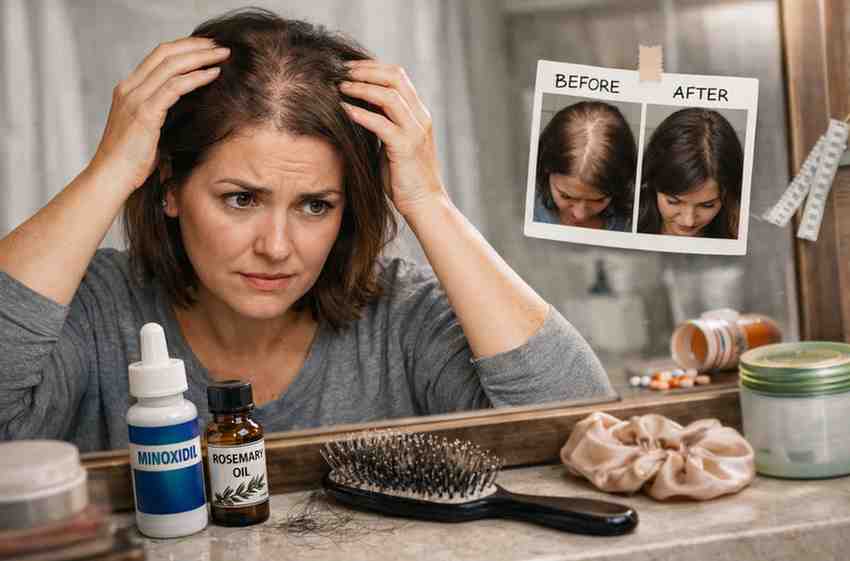
Honestly, I didn’t think my hair loss was “that bad” at first. I kept telling myself it was just stress. Or a bad haircut. Or maybe my shampoo suddenly hated me. Then one morning, under my bathroom light (the most honest light on earth, I swear), I saw more scalp than I was ready for. I stood there in a towel, wet hair plastered to my head, thinking… okay, this is real.

That was the moment I started Googling ways to beat female pattern baldness like it was my second job. Not in a cute, organized way either. More like 1 a.m., blurry eyes, doom scrolling, convincing myself rosemary oil would save my life.

Not gonna lie… this journey messed with my head way more than I expected. I tried things that worked a little. Things that didn’t work at all. A few that actually made it worse. And some stuff that helped, but not in the dramatic “before and after” way Instagram promised.

This is the messy version. The honest one. No miracle cures. Just what it felt like to live through it and figure things out the slow way.


The part nobody tells you: the emotional hit is worse than the hair loss

I thought losing hair would be a vanity thing. Like, annoying but manageable. Nope. It hit something deeper.

It felt like:

  • Losing control of my body

  • Feeling older overnight

  • Avoiding mirrors on bad days

  • Obsessing over lighting in public bathrooms (why are they so cruel?)

I didn’t expect that at all. I’d catch myself touching the top of my head in public. Like anyone noticed. No one did. But I noticed. Constantly.

And yeah, I spiraled a bit at first. Bought random serums. Watched TikToks of girls with perfect hairlines talking about “just massage your scalp.” Cool. Thanks.

From what I’ve seen, at least, the mental part is half the battle. If you’re beating yourself up every day, nothing you try will feel like enough.


What I misunderstood at first (and paid for)

I went in thinking there had to be one thing. One product. One oil. One pill. That’s… not how this works.

Here’s what I messed up early:

  • I expected fast results

  • I changed routines too often

  • I trusted viral advice over consistency

  • I ignored the boring basics

I’d use something for two weeks, panic, switch. Two more weeks, panic, switch again. That’s not a routine. That’s chaos.

I also thought shedding meant failure. Sometimes shedding is part of the process. Sometimes it means nothing. My brain made every hair fall feel like a personal attack.

If I could go back, I’d tell myself: slow down. Pick a few things. Stick to them. Stop doom-scrolling.


The stuff I actually tried (and how it really went)

I’m just gonna lay this out plainly. No hype.

1. Minoxidil (the scary one I avoided at first)

This one freaked me out. The idea of “you have to use it forever” sounded like a trap. But after months of pretending oils alone would fix it, I tried it.

What happened:

  • First 6–8 weeks: more shedding

  • Panic level: high

  • Month 3: tiny baby hairs

  • Month 5: less scalp showing in harsh light

I didn’t expect that at all. The shed phase almost made me quit. I’m glad I didn’t. Would I say it changed my life? No. But it slowed things down. And slowing down felt like winning.

2. Supplements (aka expensive pee for a while)

I threw money at biotin, collagen, and random hair gummies.

Here’s my honest take:

  • Biotin broke me out

  • Collagen did nothing noticeable

  • A basic multivitamin helped my energy, not my hair

I’m not anti-supplements. I just think most of them didn’t move the needle for me. If you’re low on iron or vitamin D, that’s different. Get labs if you can. Guessing is expensive.

3. Scalp massages (I rolled my eyes… then did it anyway)

I didn’t believe in this. It sounded like self-care fluff. Then I noticed my scalp always felt tight.

So I tried:

  • 5 minutes at night

  • Gentle pressure

  • No fancy tools at first

What changed?

  • Less tension

  • Less itching

  • Slightly less shedding over time

Was it magic? No. But it became this weird calming ritual. And honestly, feeling calmer made everything feel easier to handle.

4. Oils (rosemary, castor, all the TikTok stuff)

I went hard on oils at first. Like, marinating my scalp. Bad idea.

What I learned the messy way:

  • Too much oil = clogged scalp

  • My hair got greasy fast

  • My shedding didn’t stop

Then I switched to:

  • Light oil

  • Once or twice a week

  • Washing properly after

Did it regrow hair? Not really. Did it make my scalp healthier? Yeah. And healthy scalp = better environment for hair. That’s the boring truth.

5. Haircuts and styling (aka hiding in plain sight)

This one surprised me the most. I thought shorter hair would expose more scalp. It didn’t. It made my hair look fuller.

I learned to:

  • Add soft layers

  • Avoid super straight parts

  • Use a little root powder

This honestly surprised me. I felt less “bald” just by changing how my hair sat on my head. It didn’t fix the problem. It fixed my confidence on bad days.


The routines that stuck (because they were realistic)

Here’s what I ended up doing long-term. Not perfectly. Just… mostly.

Morning:

  • Gentle shampoo every other day

  • Light conditioner, mid-length only

  • No tight ponytails

Night:

  • 5-minute scalp massage

  • Minoxidil foam

  • Loose braid to sleep

Weekly:

  • Clarifying wash

  • Oil massage (light)

  • Trim split ends

That’s it. No 12-step ritual. No 2-hour spa night. If it’s too complicated, I won’t do it. That’s just me being honest.


How long did it take to see anything?

This part sucked.

Real talk timeline for me:

  • Month 1: nothing

  • Month 2: shedding, panic

  • Month 3: tiny changes

  • Month 6: visible improvement in photos

  • Month 9: friends noticed

So yeah. It was slow. Painfully slow. If you’re looking for fast ways to beat female pattern baldness, I hate to break it to you… fast isn’t really part of the deal. Slow progress is still progress, though.


The stuff that straight-up didn’t work for me

I tried:

  • Onion juice (smelled like regret)

  • DIY masks from Pinterest

  • Expensive salon serums

Results:

  • No regrowth

  • Messy bathroom

  • Lighter wallet

That said, I’ve seen people swear by some of this. Bodies are weird. Hair is weirder. What failed for me might help someone else. I just wish I hadn’t expected miracles.


The mental shift that helped more than any product

At some point, I stopped chasing “full hair” and started aiming for:

  • Slower loss

  • Healthier scalp

  • Feeling okay on most days

That shift changed everything. I wasn’t constantly disappointed anymore. I could notice small wins.

Like:

  • Less hair in the drain

  • Baby hairs at my temples

  • Not panicking under bright lights

Still, some days I hate my hair. Then again, some days I love it. Both can exist.


Things I’d tell my past self (don’t make my mistake)

If you’re deep in the spiral right now, here’s what I wish someone told me:

  • Stop changing products every two weeks

  • Take progress photos monthly, not daily

  • Be gentle with your hair and your thoughts

  • Don’t compare your scalp to filtered photos

  • Pick boring consistency over exciting chaos

Also… talk to a doctor if you can. I avoided it out of embarrassment. That was silly. They’ve seen this a thousand times.


Practical takeaways (the no-BS version)

Here’s the short list I wish I had early on:

  • Pick 2–3 things and commit for 6 months

  • Expect shedding before improvement

  • Focus on scalp health, not just hair strands

  • Change your haircut before changing 10 products

  • Track progress monthly, not daily

  • Don’t go broke chasing miracles

None of this is magic. It’s just… manageable. And manageable is huge when you feel stuck.


So yeah. That’s my messy truth about finding ways to beat female pattern baldness without losing my mind. I’m not cured. My hair isn’t “perfect.” Some days I still tilt my head under the light and sigh.

But it doesn’t own me anymore.

And honestly? That alone feels like progress.

Ways to Beat Male Pattern Baldness: 11 Brutally Honest Wins (and a Few Ls)

Ways To Beat Male Pattern Baldness 1
Ways to Beat Male Pattern Baldness

Honestly, I didn’t think this would be my life at 29—standing under bathroom lights, tilting my head, pretending I didn’t see more scalp than last month. Not gonna lie… I spiraled. I Googled. I doom-scrolled. I bought stuff at 2 a.m. that I later returned. And somewhere in that mess, I started piecing together Ways to Beat Male Pattern Baldness that felt… human. Not miracle-y. Not influencer-perfect. Just stuff I tried, messed up, fixed, and tried again.

This is not a victory lap. It’s a journal of what actually happened to my hair, my headspace, and my routine. Some of it worked. Some of it flopped hard. A few things surprised me in a good way. A few surprised me by how much money they ate.


The first mistake I made: expecting fast wins

I thought I’d do one “hair thing” and boom—thick hair again. That’s not how this works. Hair is slow. Like, painfully slow. The shed keeps going even when the right stuff starts helping. That lag messed with my head.

What helped me not quit:

  • Taking monthly photos in the same light

  • Tracking shed days vs. calmer days

  • Setting a boring rule: don’t change three things at once

I broke that rule once. I paid for it with confusion. I had no clue what was helping and what wasn’t.


1) I started with meds (and I was scared)

Not proud of the fear spiral here. I read every horror story. Then I read people who said, “It’s fine.” I waited. I stalled. I lost more hair while stalling. Classic me.

I tried finasteride. Low dose at first. I messed this up at first by skipping days when I felt anxious. That made side effects harder to read. Once I took it daily and stopped doom-reading forums, things leveled out.

What I noticed:

  • Shedding increased early

  • Then it slowed

  • My crown stopped looking worse

  • My hairline didn’t “come back,” but it stopped racing me

Would I do it again? Yeah. With better consistency from day one.

What I wish someone told me:

  • Side effects are real, but rare for most

  • Anxiety can mimic side effects

  • You won’t “feel” results for months

Still, meds aren’t for everyone. If you try and hate how you feel, listen to your body.


2) Topical minoxidil: the greasy phase is humbling

I hated this at first. The foam felt weird. The liquid felt worse. My pillowcase looked like a crime scene for a week.

Then… tiny hairs. Like baby fuzz. This honestly surprised me.

What worked for me:

  • Night application only

  • Blow-drying on cool after (game-changer)

  • Switching to foam when liquid got annoying

What failed:

  • Applying twice daily (I never stuck to it)

  • Using too much

  • Skipping days and expecting progress

Timeline I saw:

  • Month 1–2: more shed

  • Month 3: baby hairs

  • Month 6: areas looked less sad

  • Month 9+: steadier look

It’s boring. It’s repetitive. It helps when you don’t quit.


3) Microneedling: I thought this was fake

I laughed at this. Then I tried it. Then I stopped laughing.

I used a 1.0 mm roller once a week. I messed up the first time by going too hard. My scalp was mad at me. Red. Tender. Lesson learned.

My rhythm now:

  • Clean roller

  • Light pressure

  • One pass per direction

  • No minoxidil that night

  • Aloe the next morning

From what I’ve seen, at least, this combo made minoxidil “wake up.” The baby hairs got braver. That’s the only way I can describe it.


4) The shampoo switch I didn’t believe in

I rolled my eyes at “DHT-blocking shampoo.” Still do a bit. But switching away from harsh stuff helped my scalp calm down. Less itch. Less flakes. Less random shedding when I scratched.

What helped:

  • Ketoconazole 1–2x a week

  • Gentle shampoo the other days

  • Not scrubbing like I’m sanding wood

This won’t save your hair alone. But a calm scalp seems to hold onto hair better. Shocking, I know.


5) Stress was quietly wrecking me

I didn’t want this to matter. It did.

My worst sheds lined up with:

  • Bad sleep months

  • Work stress

  • Breakups

  • Too much caffeine, not enough food

No, “just relax” doesn’t fix hair loss. But chronic stress made mine worse. When I fixed sleep and ate actual meals, the shed chilled out. Not magic. Just… less chaos.

Tiny changes I kept:

  • Walking after dinner

  • Cutting late-night caffeine

  • Lifting 3x a week

  • Five minutes of breathing when I spiral


6) Nutrition: I was under-eating without noticing

I thought I ate fine. Turns out, “fine” was protein-light and veggie-optional. My nails were weak too. That was the hint.

What I changed:

  • More eggs, chicken, beans

  • Added iron-rich foods

  • Took vitamin D in winter

  • Stopped skipping breakfast

Did this regrow hair? No. Did it make what I had look healthier? Yeah. My hair felt less brittle. That mattered more than I expected.


7) Haircuts matter more than products (annoying truth)

I clung to length. It clung back by making thinning obvious.

When I went shorter on the sides and textured on top, my hair looked thicker. My barber showed me how to style forward, not straight up. Small change. Big difference.

What helped visually:

  • Matte clay, tiny amount

  • Blow-dry forward, then slight lift

  • Avoid shiny products

  • Keep sides tight

This won’t change follicles. It will change how you feel in mirrors.


8) I flirted with “natural cures” (mixed bag)

Not gonna lie… I wanted oils and massages to save me. I tried rosemary oil. Peppermint. Scalp massage tools. Some nights felt relaxing. My hair? Hard to tell.

What I’ll say:

  • Massage helped my scalp feel alive

  • Oils made my hair softer

  • I didn’t see regrowth from this alone

  • It didn’t hurt to add, lightly

If it makes you more consistent with your routine, cool. If you’re using this instead of proven stuff, I’d rethink it.


9) The day I stopped comparing myself to 19-year-olds

This one stung. I’d compare my head to dudes with full hairlines and feel like trash. Then I realized… I don’t need to “win” hair genetics. I just need to not lose the game.

Once I reframed it, I stuck to my routine better. Less panic. More patience.


10) Hair transplants: I’m not there yet (and that’s okay)

I researched clinics. I booked a consult. I canceled. Twice.

Not because it’s bad. Because I wasn’t ready. It’s surgery. It’s money. It’s maintenance after. I might do it later. I’m not against it. I just wanted to stabilize loss first.

If you’re thinking about it:

  • Stabilize shedding first

  • Budget for aftercare

  • Avoid “too good to be true” deals

  • Look for consistent results, not hype


11) The mindset shift that kept me consistent

Here’s the weird part: once I accepted that this is maintenance, not a cure, I stopped burning out.

My simple weekly routine now:

  • Fin daily

  • Minoxidil nightly

  • Microneedle weekly

  • Ketoconazole twice weekly

  • Normal shampoo other days

  • Decent food

  • Decent sleep

That’s it. Boring. Sustainable.

When I skip a week, I don’t spiral. I reset.


The stuff that failed me (so you don’t waste time)

Let me save you some money and hope:

  • Laser caps I never wore

  • Biotin gummies that tasted good and did nothing

  • Changing products every two weeks

  • Hiding under hats instead of fixing routines

  • Reading horror stories at midnight

Don’t make my mistake. Pick a plan. Stick to it long enough to judge it.


The slow answers to the questions I obsessed over

How long did it take to see anything?
Three months for baby hairs. Six months to feel calmer about shedding. Nine months to feel like, “Okay, this is working.”

What if it doesn’t work for me?
Then you pivot. You don’t quit caring. You adjust the plan. There are still options.

Did I mess things up early?
Yep. I changed too much at once. I skipped days. I panicked. It still worked once I chilled out.

Would I do this again?
Yeah. With fewer late-night purchases and more patience.


Practical takeaways I wish someone handed me

  • Pick two proven tools. Use them for six months.

  • Take photos. Your memory lies.

  • Calm your scalp. Harsh products backfire.

  • Eat real food. Under-eating shows up on your head.

  • Shorter cuts hide thinning better.

  • Don’t chase every new trend.

  • Stress makes sheds louder.

  • Consistency beats intensity.

  • If meds scare you, start low and be honest with yourself.

  • You don’t have to fix everything at once.


I won’t pretend this journey made me Zen about my hair. Some days I still check the mirror twice. Then again, I also catch myself caring less. That part didn’t expect that at all.

There are real Ways to Beat Male Pattern Baldness that don’t involve pretending it’s not happening. They’re slow. They’re annoying. They work better when you stop chasing miracles and start building boring habits. So no—this isn’t magic. But for me? Yeah. It finally made things feel… manageable.