Congestive Heart Failure: 11 Hard Truths That Finally Give Families Relief

Congestive Heart Failure 11 Hard Truths That Finally Give Families Relief 1
Congestive Heart Failure 11 Hard Truths That Finally Give Families Relief

Honestly… the first time I watched a family deal with Congestive Heart Failure, nobody in the room really understood what was happening.

The doctor explained it clearly. Medical terms. Charts. Medication lists.

Everyone nodded.

Then two weeks later the same questions came back.

Why is he so tired all the time?
Why do his legs swell again even after medication?
Why does he feel fine one day and terrible the next?

And the quiet fear underneath all of it:

Is this getting worse?

I’ve seen this pattern repeat across so many people — patients, spouses, adult children trying to help their parents.

At first everyone thinks congestive heart failure means “the heart stops.”

It doesn’t.

What’s actually happening is slower. Messier. More confusing.

And once people understand the real mechanics behind it, something interesting happens.

The panic drops.

The decisions get better.

And the day-to-day management becomes… manageable.

Not easy.

But manageable.


What Congestive Heart Failure Actually Means (In Real Life)

Doctors describe Congestive Heart Failure (CHF) as a condition where the heart cannot pump blood efficiently.

That’s technically correct.

But in real life, what people experience is something different.

From what I’ve seen across many cases, it usually shows up through a pattern like this:

• constant fatigue that doesn’t make sense
• shortness of breath from small activities
• swelling in the feet, ankles, or legs
• random weight gain from fluid buildup
• feeling okay one day, terrible the next

And this part surprises almost everyone.

The heart hasn’t “failed.”

It’s still working.

Just not strongly enough to keep fluid moving through the body efficiently.

So fluid starts backing up.

That’s where the word “congestive” comes from.

Fluid congestion.

It can build up in:

• lungs
• legs
• abdomen
• liver

Which is why symptoms can feel so scattered and confusing.

One person feels like they can’t breathe.

Another notices swelling.

Another just feels exhausted all the time.


Why So Many People Miss the Early Signs

This honestly surprised me after watching so many people go through diagnosis.

Most early symptoms look like normal aging.

People shrug them off.

I’ve heard these exact lines dozens of times:

“I’m just getting older.”

“I’m out of shape.”

“Maybe I need better sleep.”

But the patterns are different.

The fatigue from congestive heart failure has a specific feel to it.

People describe it like:

• heavy body exhaustion
• sudden energy crashes
• needing to sit down after basic tasks

Walking to the mailbox suddenly feels like a workout.

Climbing stairs becomes annoying.

Then gradually…

breathing starts getting harder.

Still subtle.

Still easy to ignore.

Until one moment something becomes obvious.

Swelling.

Rapid weight gain.

Or a scary shortness of breath episode.

That’s when most people finally get checked.


What Causes Congestive Heart Failure (Most Cases Follow These Paths)

From what I’ve seen repeatedly, congestive heart failure rarely appears out of nowhere.

It usually develops after years of stress on the heart.

The most common patterns include:

1. Long-Term High Blood Pressure

This is the biggest one.

When blood pressure stays high for years, the heart has to pump harder.

Eventually the muscle thickens and weakens.

Kind of like an overworked engine.

2. Previous Heart Attacks

Heart attacks damage heart muscle.

That damaged area can’t pump effectively anymore.

So the rest of the heart struggles to compensate.

3. Coronary Artery Disease

Blocked arteries reduce oxygen supply to heart tissue.

The heart slowly weakens over time.

4. Diabetes

This one surprises people.

Diabetes affects blood vessels and heart muscle function.

Over years, it increases heart failure risk significantly.

5. Valve Problems

If heart valves don’t open or close properly, blood flow becomes inefficient.

The heart works harder.

Eventually it struggles.


The Pattern I See With Families After Diagnosis

Almost everyone goes through the same emotional stages.

It’s oddly predictable.

First reaction:

Shock

Even if symptoms were building for years.

Then comes:

Information overload

Medication names
diet restrictions
doctor visits
weight monitoring
salt limits

Families suddenly feel like they’re managing a small medical system.

Then the frustration hits.

Because progress isn’t always linear.

One good week.

Then a bad one.

Fluid builds up again.

Medication adjustments happen.

People start wondering:

Are we doing something wrong?

Usually… they’re not.

This condition just behaves that way.


What Actually Helps People Manage Congestive Heart Failure

From watching many cases over time, the people who stabilize best follow a few consistent habits.

Nothing fancy.

Just disciplined routines.

Daily Weight Tracking

This sounds small but it’s incredibly powerful.

Fluid buildup shows up as sudden weight gain.

Often before symptoms appear.

Doctors often say:

If weight increases by 2–3 pounds overnight, fluid may be building up.

Catching it early helps adjust medication quickly.

Salt Control

This is where almost everyone I’ve seen struggles at first.

Sodium pulls water into the bloodstream.

Which increases fluid retention.

People think they’re avoiding salt…

But hidden sodium is everywhere:

• packaged soups
• frozen meals
• sauces
• restaurant food

Once people start reading labels, the difference becomes obvious.

Medication Consistency

Heart failure medications often include:

• diuretics (fluid removal)
• ACE inhibitors
• beta blockers
• ARNI medications

The mistake I see most often?

Skipping doses when symptoms improve.

Symptoms improving usually means the medication is working.

Stopping it often causes symptoms to return.

Activity — But Moderated

This part confuses people.

Rest is important.

But complete inactivity makes things worse.

Light movement helps circulation.

Walking.

Stretching.

Short daily activity.

Nothing extreme.

Just consistent.


Common Mistakes Almost Everyone Makes Early

I didn’t expect this to be such a common issue until I started noticing patterns.

Ignoring Early Weight Gain

People think:

“It’s just water.”

It often is.

But that’s exactly the point.

Fluid buildup signals heart strain.

Drinking Too Much Fluid

Some patients are advised to limit fluid intake.

But people often underestimate what counts as fluid.

Coffee
tea
soup
juice
even fruit with high water content

It adds up.

Waiting Too Long To Call the Doctor

Symptoms often creep up slowly.

People try to “wait it out.”

But early adjustments usually prevent hospital visits.

Overdoing “Healthy Lifestyle Changes”

This one sounds strange.

But it happens.

People suddenly attempt:

• intense exercise
• extreme diets
• aggressive fasting

The heart doesn’t always tolerate sudden changes well.

Gradual adjustments work better.


How Long Does It Take to See Improvement?

This question comes up constantly.

And the honest answer is:

It depends on the cause and severity.

But from what I’ve observed in many people:

• medication effects start within days to weeks
• breathing often improves within 2–6 weeks
• fatigue improves more slowly
• long-term stabilization can take months

The hardest part emotionally is the inconsistency.

Some weeks feel normal.

Then symptoms return briefly.

That doesn’t always mean things are worsening.

Sometimes it just means adjustments are needed.


FAQ: Questions People Always Ask About Congestive Heart Failure

Is congestive heart failure reversible?

In some cases, heart function can improve significantly with treatment.

Especially when caused by:

• uncontrolled blood pressure
• certain infections
• heart rhythm problems

But many cases require long-term management.

What is the life expectancy?

It varies widely.

Some people live many stable years with proper treatment and lifestyle management.

Severity, underlying causes, and treatment response all matter.

Can people still live normal lives?

Many do.

With medication, diet control, and monitoring, people often return to daily routines.

But pacing becomes important.

Energy management matters.

Is exercise safe?

Usually yes — light to moderate activity.

Doctors often recommend cardiac rehabilitation programs.

Those help patients build safe routines.


Objections I Hear From Patients (And What Usually Happens)

“Medication makes me feel worse.”

Sometimes medications cause fatigue initially.

But doses can often be adjusted.

Stopping them entirely usually makes symptoms worse long-term.

“I feel fine now, so maybe I don’t need treatment.”

This is risky.

Symptoms improving usually means the treatment is working.

Stopping it often reverses progress.

“Diet changes are too restrictive.”

This one’s real.

Salt reduction is frustrating.

But many people adjust over time once they notice swelling decreasing.

Taste buds adapt.


A Reality Check Most Doctors Don’t Always Explain Clearly

Congestive heart failure isn’t a quick fix condition.

It’s management.

Long-term management.

That doesn’t mean life stops.

But expectations need adjusting.

Some weeks will feel normal.

Others won’t.

Medication adjustments are common.

Energy levels fluctuate.

The people who cope best usually accept that rhythm early.

Instead of fighting it.


Practical Takeaways I’ve Seen Work Consistently

If someone close to you is dealing with congestive heart failure, these habits make the biggest difference.

1. Track daily weight

Same time each morning.

Same scale.

Write it down.

2. Learn hidden sodium sources

Packaged foods are often the biggest problem.

Cooking more at home helps.

3. Respect fatigue

Rest when needed.

But avoid total inactivity.

4. Take medication consistently

Even when symptoms improve.

5. Communicate early with doctors

Small symptom changes matter.

Early adjustments prevent bigger problems.

6. Stay patient with progress

Improvement often comes slowly.

Weeks. Months.

Not overnight.


And honestly… the biggest shift I see happen is psychological.

At first people feel like they’re fighting something unpredictable.

But over time patterns start making sense.

Weight changes signal fluid.

Fatigue signals strain.

Medication stabilizes things.

Routine brings control.

So no — congestive heart failure isn’t simple.

But it also isn’t the immediate catastrophe people often imagine when they first hear the diagnosis.

I’ve watched enough families move from panic to confidence once they understand what’s really happening.

Sometimes that shift alone makes the biggest difference.

High Fructose Syrup: 9 Hard Truths That Bring Relief (and Some Frustration)

High Fructose Syrup 9 Hard Truths That Bring Relief And Some Frustration 1
High Fructose Syrup 9 Hard Truths That Bring Relief and Some Frustration

Honestly, most people I’ve watched try to clean up their sugar habits hit a wall in the first two weeks. They swear they’re “not even eating sugar,” then a label catches their eye and the mood drops. High fructose syrup shows up where they didn’t expect it—ketchup, bread, flavored yogurt, iced tea. The frustration isn’t about willpower. It’s about feeling tricked by the food environment. From what I’ve seen, the moment people realize how quietly high fructose syrup sneaks into everyday food, the whole project stops feeling simple. And weirdly, that’s when the work actually begins.


What pulls people toward cutting back on high fructose syrup (and what they expect to happen)

The first reason I hear is weight. The second is “my energy is weird.” The third is usually something vague about inflammation or gut stuff. Rarely does anyone come in saying, “I’ve studied the metabolic pathways of fructose.” They come in tired, bloated, stuck in cravings, or scared because a doctor mentioned blood sugar.

Most people expect three things:

  • Fast results. Less sugar in, better body out.

  • Clear rules. A list of “good” foods and “bad” foods.

  • Immediate relief. Fewer crashes, less brain fog, cravings gone.

What actually happens (across a lot of real kitchens, grocery carts, and awkward label-reading moments):

  • The first week feels annoying.

  • The second week feels harder than expected.

  • The third week is where small wins start showing up… if they didn’t quit.

This honestly surprised me after watching so many people try it. The early phase is not motivating. It’s disorienting. People don’t fail because they don’t care. They fail because the rules they thought were clear turn out to be fuzzy in the real world.


What most people misunderstand about high fructose syrup

I didn’t expect this to be such a common issue, but almost everyone I’ve seen struggle with this does this one thing wrong: they think high fructose syrup is only in “junk food.”

Patterns I’ve seen repeat:

  • They fixate on soda.
    Yes, soda is a big source. But cutting soda and keeping sweetened sauces, flavored coffee creamers, and packaged snacks keeps the intake high.

  • They confuse “natural” with “low sugar.”
    Honey, agave, fruit juice concentrates, and “organic cane syrup” don’t magically behave differently in the body just because the label looks friendlier.

  • They expect their taste buds to change overnight.
    It takes time. The palate doesn’t recalibrate in days. It’s more like weeks of awkward blandness before sweetness starts tasting loud again.

  • They go all-or-nothing.
    The people who try to erase high fructose syrup from their lives in one shopping trip burn out fast. The ones who swap two items at a time stick around long enough to feel something shift.

There’s also this quiet misunderstanding: people think the issue is just calories. From what I’ve seen, the bigger friction is how easy it is to overconsume sweetness when it’s hidden in everyday foods. You don’t feel like you’re “having dessert,” so your guard is down. That’s where the pattern breaks people.


What consistently works vs. what looks good on paper

What looks good on paper:

  • A perfectly clean pantry.

  • A 30-day “no sugar” challenge.

  • Swapping everything for ultra-processed “sugar-free” alternatives.

What actually works in real kitchens:

  • Two swaps at a time.
    People who change breakfast and one snack do better than people who nuke their whole routine.

  • Keeping one sweet thing on purpose.
    This sounds backward, but when someone allows one intentional sweet per day, they stop mindlessly chasing sweetness all afternoon.

  • Reading the label on the foods you eat most.
    Not every label. The five items you buy every week. That’s where high fructose syrup usually hides.

  • Protein and fiber first.
    The cravings don’t calm down until meals feel filling. This is the boring advice that actually moves the needle.

Cause → effect → outcome shows up clearly here:

  • Cause: Less hidden sweetness in staples

  • Effect: Fewer spikes and crashes

  • Outcome: Cravings become less dramatic, not magically gone

It’s not a cleanse. It’s a slow dulling of the constant sugar “noise” in the background.


“Don’t repeat this mistake” moments I’ve seen too many times

  • Replacing sugar with artificial sweeteners for every craving.
    Some people feel fine doing this. Many don’t. I’ve watched folks trade one cycle of craving for another, just with different packaging.

  • Assuming fruit is the problem.
    This one hurts to watch. People cut whole fruit and keep sweetened yogurt and granola bars. The fiber in fruit changes how your body handles sugar. The syrup in processed foods doesn’t come with that buffer.

  • Believing one “clean” week means it’s solved.
    The second week is where habits push back. Most people I’ve worked with mess this up at first by celebrating too early and letting old defaults creep back in.

  • Turning it into a moral thing.
    Food choices aren’t character traits. Shame makes people hide their choices. Hiding makes patterns worse.


How long does it take before people notice anything?

Direct answer, from what I’ve seen across a lot of different bodies and schedules:

  • 3–7 days: Cravings may spike. Energy can dip. Mood gets weird.

  • 2–3 weeks: Taste buds start recalibrating. Some people notice fewer afternoon crashes.

  • 4–6 weeks: This is where people mention feeling “less out of control” around sweet stuff.

  • 2–3 months: The habit feels normal. Not easy. Just normal.

If someone tells you they felt amazing on day three, that can happen. But it’s not the common pattern. The more common pattern is quiet change you only notice when you look back.


When it doesn’t seem to work (and why that’s not always the approach’s fault)

Then again, not everyone feels a big difference. This is where expectations usually break.

Common reasons I’ve seen:

  • The swaps were still sugary.
    People cut high fructose syrup but keep other sweeteners high. The total sweetness stays the same. The body doesn’t care about the label.

  • Sleep and stress stayed chaotic.
    Cravings are louder when people are underslept or stressed. Food changes alone can’t outmuscle burnout.

  • Portions quietly increased.
    Removing sweetness sometimes leads to bigger portions of other foods. The net effect doesn’t change much.

  • Medical stuff is in the mix.
    Insulin resistance, certain medications, or gut issues can blunt the impact. This is where blanket advice fails.

This is also where bad advice shows up. People get told they “did it wrong” when the reality is more nuanced. The approach isn’t magic. It’s one lever among several.


Objections I hear (and the honest answers)

“Isn’t sugar just sugar?”
Mostly, yes. The body doesn’t read marketing claims. The practical difference with high fructose syrup is how easily it ends up in everyday foods in amounts people don’t notice. That’s the real problem I see.

“This feels extreme.”
If you try to be perfect, it will feel extreme. If you aim for fewer hidden sources, it feels like maintenance, not punishment.

“I don’t want to obsess over labels.”
Fair. Obsession backfires. The middle ground is learning your top five sources and not worrying about the rest.

“Is it worth it?”
For people who feel stuck in cycles of cravings and crashes, yes—often worth trying. For people who already eat mostly whole foods and feel fine? The payoff can be small.


A short FAQ (because these come up every time)

Is high fructose syrup worse than regular sugar?
In real life, the bigger issue is how much and how often it shows up in processed foods. The context matters more than the molecule debate.

Do I need to cut it 100%?
No. The people who stick with this long-term aim for “less often,” not “never again.”

Will cutting it help weight loss?
Sometimes. When it reduces mindless snacking and liquid calories, weight shifts follow. When it doesn’t change the overall pattern, weight often stays the same.

What if I can’t tell what foods have it?
Start with condiments, drinks, and packaged snacks. That’s where most people find surprises.

Is fruit the same thing?
No. Whole fruit comes with fiber and volume. The pattern of how people consume it is different.


Reality check (who this is not for, and what can go wrong)

This approach is not for:

  • People with a history of disordered eating who know restriction spirals them.

  • Anyone who turns food rules into self-punishment.

  • People looking for a quick fix.

What can go wrong:

  • Perfectionism. Leads to burnout.

  • Social isolation. If you make every meal out feel like a test, you’ll resent the process.

  • Substitution traps. Trading syrup for ultra-processed “diet” foods keeps the cycle alive.

Where results are slow:

  • When life is chaotic.

  • When meals aren’t satisfying.

  • When expectations are dramatic.

The honest limit: cutting back on high fructose syrup won’t fix everything. It can create space. What you do with that space matters more.


The routines I’ve seen work in real life (nothing fancy)

  • Breakfast: Protein-forward, not sweet-forward.
    This alone changes the day for a lot of people.

  • Drinks: Water, unsweetened tea, or coffee you actually enjoy without syrups.
    This is where hidden sugar drops fast.

  • Snacks: Something with chew and substance.
    Nuts, yogurt, leftovers. Boring. Effective.

  • Shopping rule: If the first three ingredients are sugars, it’s an occasional thing, not a staple.

  • One planned sweet: Keeps rebellion down. ????

Small routines beat dramatic rules. Every time.


Practical takeaways (what to do, what to avoid, what to expect emotionally)

What to do

  • Start with the foods you eat most.

  • Swap two items this week.

  • Build meals that actually fill you up.

  • Expect awkward taste buds for a bit.

What to avoid

  • Moralizing food choices.

  • Trying to be perfect.

  • Replacing sweetness with ultra-processed “fixes.”

What to expect emotionally

  • Mild irritation early on.

  • A weird sense of “is this even doing anything?”

  • Then, slowly, fewer dramatic swings around food.

What patience looks like in practice

  • Noticing one less crash per week.

  • Realizing you didn’t think about sweets for an afternoon.

  • Catching yourself reading a label out of habit, not fear.

No guarantees. No hype. Just patterns that keep showing up when people stick with small, realistic changes.


So no—this isn’t magic. High fructose syrup isn’t the villain of every health story, and cutting it out won’t fix a messy life. But I’ve watched enough people finally stop feeling trapped in constant cravings once they reduced the hidden sweetness in their daily foods. The shift is quiet. Sometimes boring. Still real. And for a lot of folks who feel stuck, that quiet shift is the first bit of relief they’ve felt in a while.

Healthy Breakfast Cereal for Diabetics: 9 Honest Picks That Bring Relief (Without the Sugar Spike)

Healthy Breakfast Cereal For Diabetics 9 Honest Picks That Bring Relief Without The Sugar Spike 1
Healthy Breakfast Cereal for Diabetics 9 Honest Picks That Bring Relief Without the Sugar Spike

I’ve watched more people get frustrated over breakfast than dinner.

Not because they don’t care. But because mornings feel rushed, hopeful… and then disappointing.

A lot of people I’ve worked with thought switching to a “healthy breakfast cereal for diabetics” would be the easy fix. Simple swap. Pour. Eat. Done.

Then two weeks later, their glucose numbers told a different story.

From what I’ve seen, breakfast is where good intentions quietly fall apart. And almost everyone I’ve seen struggle with this does the same one thing wrong at first: they trust the word “healthy” on the front of the box.

Let’s talk about what actually works — not on paper, not in marketing copy — but in real kitchens, with real blood sugar readings, in real lives across the U.S.


Why So Many People With Diabetes Start With Cereal Anyway

Honestly? Because it feels safe.

  • It’s familiar.

  • It’s fast.

  • It feels lighter than eggs and bacon.

  • It’s marketed as heart-healthy.

  • And it looks like the “responsible” choice.

I’ve seen people switch from pastries to bran flakes and feel proud. And they should. That’s progress.

But here’s the pattern I didn’t expect to be so common:

They improve quality… but not carb load.

And blood sugar doesn’t care about intentions.


What Most People Misunderstand About “Healthy Breakfast Cereal for Diabetics”

The issue usually isn’t sugar alone.

It’s total carbohydrates + fiber balance + protein pairing.

Most people I’ve worked with mess this up at first by focusing on:

  • “No added sugar”

  • “Whole grain”

  • “Organic”

  • “Low fat”

Meanwhile:

  • 40–50 grams of carbs per bowl.

  • 3–5 grams of fiber.

  • Almost no protein.

  • Eaten with regular milk.

That’s a spike waiting to happen.

From what I’ve seen across dozens of glucose logs, the cereals that consistently work better tend to have:

  • At least 8–10g fiber per serving

  • Under 25g total carbs

  • Minimal added sugar (under 5g)

  • A real protein strategy alongside it

Without that structure, it’s guesswork.


9 Types of Healthy Breakfast Cereal for Diabetics That Tend to Work Better

Not perfect. Just consistently better outcomes.

1. High-Fiber Bran Cereals (With Portion Control)

These surprised me.

When portioned correctly (and I mean actually measured), bran cereals with 10g+ fiber often blunt spikes significantly.

Where people mess up:

  • They double the serving.

  • They add sweetened almond milk.

  • They skip protein.

What works:

  • ¾ cup measured

  • Unsweetened almond milk

  • A scoop of Greek yogurt mixed in

Small tweak. Big difference.


2. Steel-Cut Oats (Not Instant)

I’ve watched side-by-side comparisons in glucose monitors.

Steel-cut oats digest slower. Period.

Instant oats? Different story.

What consistently works:

  • ½ cup dry steel-cut oats

  • Chia seeds

  • Cinnamon

  • Protein added (collagen or egg whites stirred in)

What fails:

  • Flavored packets

  • Honey drizzle “just a little”

  • No fat or protein balance


3. Low-Carb Seed-Based Cereals

These are newer to the U.S. market, and honestly, some taste like cardboard.

But glucose response? Often impressive.

Patterns I’ve seen:

  • 10–15g total carbs

  • 8g+ fiber

  • High fat from seeds

Who likes them:

  • People prioritizing numbers over nostalgia.

Who hates them:

  • Anyone emotionally attached to childhood cereal memories.


4. Plain Shredded Wheat (Minimal Ingredient Versions)

This one shocked me after watching so many logs.

Not the frosted kind.

The plain two-ingredient kind.

Paired with:

  • Peanut butter

  • Or cottage cheese on the side

Without protein, though? Still spikes.


5. Unsweetened Muesli (Portioned Carefully)

Works well when:

  • Limited to ½ cup

  • Mixed with nuts

  • Paired with high-protein yogurt

Fails when:

  • Eaten like granola

  • Treated as “healthy so unlimited”


6. Oat Bran (Not Oatmeal)

Different texture. Less trendy.

But I’ve seen steadier numbers compared to rolled oats.

Most people overlook this completely.


7. DIY Cereal Mix

This is where experienced users eventually land.

After frustration.

They mix:

  • 2 tbsp chia

  • 2 tbsp flax

  • Handful of high-fiber cereal

  • Unsweetened coconut flakes

Control beats branding every time.


8. Protein-Boosted Cereal Bowls

This changes the game.

Add:

Cereal becomes a topping, not the foundation.

Blood sugar response improves dramatically in many cases I’ve observed.


9. “Cereal Alternatives” That Feel Like Cereal

Not technically cereal, but emotionally similar:

  • Chia pudding

  • High-protein yogurt bowls

  • Low-carb granola sprinkle

For people who can’t tolerate carb-heavy mornings, this tends to bring relief.


What Consistently Fails (I’ve Seen This Pattern Too Many Times)

Almost everyone I’ve seen struggle with breakfast cereal does at least one of these:

  • Eyeballs portions

  • Uses regular milk

  • Eats cereal alone

  • Skips fiber reading

  • Assumes “multigrain” means low impact

  • Doesn’t test their response

And honestly? Many just never check glucose after breakfast.

That’s where the illusion survives.


How Long Does It Take to Know If a Cereal Works?

Usually 3–5 days.

Not weeks.

You’ll see the pattern quickly if:

  • You test 1 hour and 2 hours after eating

  • You keep portions consistent

  • You don’t change five variables at once

Most people overcomplicate this phase.

Simple testing. Simple observation.


Is Healthy Breakfast Cereal for Diabetics Actually Worth It?

Here’s the nuanced answer.

For some people? Yes.

For others? Breakfast cereal is just not their metabolic friend.

I’ve seen:

  • Type 2 diabetics tolerate 20–25g carbs in the morning.

  • Others spike above 180 mg/dL from 18g.

Morning insulin resistance is real.

So the better question is:

Is it worth testing carefully?

Yes.

Is it guaranteed to work?

No.


Common Mistakes That Slow Progress

From what I’ve observed repeatedly:

  1. Changing cereal daily

    • No consistency.

    • No pattern detection.

  2. Adding fruit too soon

    • Even berries can push borderline responses over the edge.

  3. Trusting “diabetic-friendly” marketing

    • I’ve seen labels mislead more than help.

  4. Ignoring sleep

    • Poor sleep = worse morning glucose tolerance.

That last one surprised me after watching so many people log data.

Bad sleep ruins breakfast numbers more than cereal choice sometimes.


Quick FAQ (Straight Answers)

What is the best healthy breakfast cereal for diabetics?

The best option is one with:

  • Under 25g carbs

  • 8–10g fiber

  • Minimal added sugar

  • Paired with protein

But “best” depends on your personal glucose response.


Can diabetics eat cereal every day?

Some can. Some can’t.

If numbers stay stable and A1C improves, it may work.

If spikes persist, it’s not worth forcing.


Should I avoid cereal completely?

Not automatically.

Test first. Observe. Then decide.

Blanket restriction isn’t always necessary.


Objections I Hear All the Time

“But cereal is convenient.”

Yes. That’s why people cling to it.

Solution: modify the structure, not necessarily eliminate it.


“Low-carb cereals are too expensive.”

True for many U.S. households.

That’s why oat bran and DIY mixes often win long term.


“I don’t want to test my glucose constantly.”

I get that.

But a few days of data can prevent months of frustration.


Reality Check: Who This Is NOT For

  • People unwilling to measure portions.

  • Anyone expecting cereal to act like a low-carb breakfast magically.

  • Those with very high morning insulin resistance.

  • People who emotionally overeat cereal.

And that’s okay.

Sometimes letting go of cereal is actually freeing.


What Emotionally Surprises Most People

This part matters.

I’ve seen:

  • Guilt when numbers spike.

  • Shame over “failing breakfast.”

  • Frustration when something labeled healthy doesn’t work.

  • Relief when a small tweak stabilizes things.

Small wins matter here.

Like:

  • 15-point lower spike.

  • Staying under 140 mg/dL.

  • Feeling steady instead of crashing.

Those moments build confidence.

Not perfection.


Practical Takeaways (What I’d Tell a Friend)

If you’re looking for a healthy breakfast cereal for diabetics, here’s what I’d actually suggest:

  1. Start with one option.

  2. Measure it exactly.

  3. Pair with 15–20g protein.

  4. Test 1 and 2 hours after.

  5. Repeat for 3 days.

  6. Adjust slowly.

Avoid:

  • Flavored varieties.

  • Large bowls.

  • Adding juice or sweet fruit immediately.

Expect:

  • Some trial and error.

  • A few disappointing readings.

  • Surprises — good and bad.

Patience looks like repetition, not perfection.


Still… cereal isn’t magic.

It’s just food.

I’ve watched enough people stop feeling stuck once they approached breakfast more strategically instead of emotionally. That shift — from guessing to observing — is usually where things improve.

So no, a healthy breakfast cereal for diabetics won’t fix everything.

But handled thoughtfully? It doesn’t have to be the enemy either.

Sometimes that small sense of control in the morning sets the tone for the entire day. And honestly, I’ve seen that mindset change matter just as much as the cereal itself.

Benefits of a Healthy Breakfast: 9 Honest Shifts That Bring Real Relief

Benefits Of A Healthy Breakfast 9 Honest Shifts That Bring Real Relief 1
Benefits of a Healthy Breakfast 9 Honest Shifts That Bring Real Relief

I can’t tell you how many mornings I’ve watched fall apart before 10:30 a.m.

Friends. Clients. Family members. People who swear they’re “just not breakfast people.” They skip it, grab coffee, maybe a pastry at 11, then wonder why their focus crashes, their mood dips, and their cravings spiral by mid-afternoon.

From what I’ve seen, most people don’t ignore the benefits of a healthy breakfast because they don’t care. They ignore it because they’ve tried it wrong before.

They ate “healthy” for three days.
They felt bloated.
Or hungrier.
Or annoyed.

So they quietly went back to skipping it.

And honestly? I don’t blame them.

Because what people think a healthy breakfast is… and what actually delivers results… are usually two different things.

Let’s unpack what I’ve observed over the years — through real routines, repeated patterns, and a lot of “okay, that didn’t work, let’s adjust” moments.


Why People Even Start Caring About Breakfast

Nobody wakes up thinking, “I need micronutrients.”

They start caring because:

  • They’re exhausted by 2 p.m.

  • They’re gaining weight despite “eating less.”

  • Their blood sugar feels unstable.

  • Their workouts feel flat.

  • They’re snapping at people for no reason.

Most people I’ve worked with mess this up at first. They assume the problem is willpower.

It usually isn’t.

It’s rhythm.

Your body runs on predictable inputs. When mornings are chaotic — caffeine-only, sugar spikes, or nothing at all — the entire day becomes reactive instead of stable.

And that’s where the real benefits of a healthy breakfast begin showing up.

Not in theory.
In rhythm.


The Real Benefits of a Healthy Breakfast (That I’ve Actually Seen)

Let’s keep this grounded.

Here’s what consistently happens when people get breakfast right for 3–4 weeks straight.

1. Energy Stabilizes (Not Spikes)

This honestly surprised me after watching so many people try it.

They expect fireworks.

What they get is… steadiness.

No dramatic 9 a.m. buzz.
No 11 a.m. crash.

Just smooth, usable energy.

When breakfast includes:

  • 20–30g protein

  • Fiber (fruit, oats, whole grains, or veggies)

  • Healthy fats

  • Low added sugar

Energy stabilizes because blood sugar stabilizes.

Cause → effect → outcome.

Protein slows digestion. Fiber moderates glucose release. Fats prevent rapid spikes.

The result? Less frantic snacking.


2. Cravings Drop — Dramatically

Almost everyone I’ve seen struggle with overeating at night does this one thing wrong:

They under-eat in the morning.

They tell themselves:
“I’m saving calories.”

By 8 p.m., they’re in the pantry negotiating with a bag of chips.

When someone eats a balanced breakfast, I’ve repeatedly seen:

  • Reduced sugar cravings

  • Smaller portion sizes at lunch

  • Less emotional eating at night

Not because of discipline.

Because the body isn’t panicking.


3. Mood Improves More Than Expected

This one’s subtle.

But it’s real.

Low blood sugar looks like:

  • Irritability

  • Anxiety spikes

  • Brain fog

  • Short patience

When someone consistently eats within 60–90 minutes of waking (especially with protein), emotional volatility often smooths out.

Not perfectly.
But noticeably.

I didn’t expect this to be such a common issue until I started tracking patterns.

People think they’re “just stressed.”

Sometimes they’re just under-fueled.


4. Better Focus and Cognitive Performance

For students, entrepreneurs, office workers — I’ve seen the same pattern.

Coffee alone sharpens you briefly.
Protein + fiber sustains you.

The brain runs heavily on glucose. But stable glucose.

When breakfast is balanced, mental clarity tends to last 3–5 hours instead of 90 minutes.

That’s not motivational talk.
It’s biology playing out consistently.


5. Weight Management Becomes Easier (But Not Automatically)

Let’s be clear.

A healthy breakfast does not magically cause weight loss.

What it does — from what I’ve seen — is reduce impulsive eating later.

That’s the difference.

People who eat balanced breakfasts often:

  • Snack less mindlessly

  • Feel full longer

  • Make better lunch decisions

  • Avoid evening binges

It’s not magic.

It’s prevention.


What Most People Get Wrong at First

This is where almost everyone stumbles.

Mistake #1: High-Carb, Low-Protein “Healthy” Meals

Granola + yogurt (with 12g protein total).
Toast + jam.
Smoothies with mostly fruit.

They think it’s healthy because it looks clean.

But without enough protein, hunger returns fast.


Mistake #2: Going Extreme

Keto overnight.
Huge breakfast platters.
Or forcing food when nauseous.

Most people I’ve worked with need gradual adjustments.

Start smaller.
Add protein first.
Then optimize.


Mistake #3: Expecting Immediate Transformation

“How long does it take to see benefits?”

From what I’ve seen:

  • Energy changes: 3–7 days

  • Cravings stabilize: 2–3 weeks

  • Weight pattern shifts: 4+ weeks

  • Habit comfort: about 30 days

It’s not overnight.

But it’s predictable.


What Consistently Works (Across Different People)

Here are breakfast formats I’ve repeatedly seen succeed:

Simple.
Repeatable.
Not trendy.

Protein anchor first.
Fiber second.
Fats for stability.


Quick FAQ (Straight Answers)

Is breakfast actually necessary?

Not universally. Some people do fine with structured intermittent fasting.

But most people who struggle with cravings, mood swings, or energy crashes benefit from a healthy breakfast.


Can skipping breakfast cause weight gain?

Indirectly, yes — if it leads to overeating later. I’ve seen this pattern often.


What if I’m not hungry in the morning?

Start small:

Appetite often adjusts over time.


Is coffee enough?

No. Coffee stimulates. It doesn’t nourish.


Objections I Hear All the Time

“I don’t have time.”

Most stable breakfasts take under 5 minutes.

The real issue is planning.

Overnight oats.
Pre-boiled eggs.
Pre-cut fruit.

Time isn’t usually the barrier. Friction is.


“I tried it and gained weight.”

Usually because:

  • Portions doubled

  • Liquid calories increased

  • Protein was low, carbs high

Breakfast adds structure. It shouldn’t add chaos.


“I feel fine skipping it.”

If energy is stable, mood is steady, and cravings aren’t an issue — you may genuinely be fine.

This isn’t religion.
It’s pattern recognition.


Reality Check: Who This Isn’t For

Let’s be honest.

A healthy breakfast might not be worth forcing if:

  • You practice structured fasting successfully

  • You wake up nauseous consistently

  • You already feel stable and focused

  • You eat balanced meals later without overeating

This isn’t universal.

It’s common. Not mandatory.


Emotional Side No One Talks About

Breakfast feels small.

But for many people, it becomes the first “kept promise” of the day.

I’ve seen confidence build from this alone.

One steady choice in the morning often influences:

  • Hydration

  • Lunch choices

  • Workout consistency

  • Evening discipline

Momentum matters.

Tiny wins stack.


Practical Takeaways (If You’re Actually Going to Try This)

If you’re stuck, here’s what I’d suggest:

  • Start with protein. Minimum 20g.

  • Add fiber naturally (fruit, oats, veggies).

  • Keep sugar under control.

  • Eat within 90 minutes of waking (if possible).

  • Track energy, not just weight.

What to avoid:

  • All-carb breakfasts

  • Liquid-only sugary smoothies

  • Huge calorie swings

  • Expecting dramatic results in 3 days

What to expect emotionally:

Week 1: Adjustment.
Week 2: Slight stability.
Week 3: Noticeable difference.
Week 4: It starts feeling automatic.

Patience looks boring.
But boring is powerful.


So no — the benefits of a healthy breakfast aren’t flashy.

They’re steady.

They show up quietly in better afternoons.
Fewer cravings.
More stable moods.
Clearer thinking.

From what I’ve seen, the biggest shift isn’t physical at first.

It’s psychological.

People stop feeling out of control.

And that alone?

That’s relief.

Not magic.

Just rhythm.

And sometimes rhythm is exactly what someone needs to stop feeling stuck.

How to Throw Up: 9 Hard Truths I’ve Seen (and What Actually Brings Relief)

How To Throw Up 9 Hard Truths Ive Seen And What Actually Brings Relief 1

How to Throw Up 9 Hard Truths Ive Seen and What Actually Brings Relief

I’ve sat next to enough bathroom floors to know this isn’t a casual search.

Most people don’t Google how to throw up because they’re curious. They’re nauseous. Panicked. Maybe they ate something bad. Maybe they drank too much. Maybe they feel poison-level sick and just want it out.

And what I’ve seen—over and over—is this: people assume vomiting will bring instant relief. Sometimes it does. Sometimes it makes things worse. And sometimes the smartest move is not forcing it at all.

So let’s talk about what actually happens in real life. Not internet myths. Not dramatic dares. Just grounded, practical guidance based on what I’ve watched play out across friends, college kids, parents, coworkers, and a few frantic late-night calls.


First: When People Try to Throw Up (and Why)

From what I’ve seen, there are usually three scenarios:

  • Food poisoning panic

  • Too much alcohol

  • Severe nausea that feels “stuck”

And the emotional pattern is always the same: “If I can just throw up, I’ll feel better.”

Sometimes that’s true.

But not always.


Important Reality Check (Read This Before Anything Else)

There are situations where you should not try to throw up:

  • If someone swallowed chemicals, cleaners, gasoline, or batteries

  • If someone swallowed something sharp

  • If someone is unconscious or barely responsive

  • If it involves medications or overdose

In the U.S., Poison Control is 1-800-222-1222. They’re calm. They don’t judge. I’ve seen people hesitate to call and regret it.

Trying to force vomiting in those cases can cause serious internal damage.

If you’re in that kind of situation, skip Google. Call.


Does Forcing Yourself to Throw Up Actually Help?

Here’s what consistently surprised me:

  • With alcohol, vomiting sometimes reduces nausea temporarily, but dehydration often makes people feel worse later.

  • With food poisoning, vomiting often happens naturally. Forcing it rarely speeds recovery.

  • With random nausea (flu, anxiety, motion sickness), forcing it sometimes triggers more irritation.

Almost everyone I’ve seen struggle with this does this one thing wrong:

They force it too aggressively.

Gag reflex tricks. Fingers down the throat. Drinking salt water (please don’t). Syrup myths that should’ve died decades ago.

And then they end up with:

  • Sore throat

  • Broken blood vessels in the eyes

  • Dry heaving

  • More irritation

Relief isn’t guaranteed. That part isn’t talked about enough.


If You Feel Like You’re Going to Throw Up Naturally

This is different.

When the body is already there—salivating, sweating, stomach contracting—that’s not the time to suppress it.

From what I’ve seen, the smoother experiences happen when people:

  • Sit upright (don’t lie flat)

  • Lean slightly forward

  • Take slow breaths through the nose

  • Don’t panic-breathe

  • Stay near a bathroom calmly instead of hovering in fear

The mental part matters more than people think.

Anxiety tightens everything. Calm lets the body do what it’s trying to do.

And weirdly? Fighting it often prolongs it.


Methods People Try (And What I’ve Observed About Each)

Let’s be honest about what people actually attempt.

1. Gag Reflex (Finger in Throat)

What happens in real life:

  • Works sometimes if nausea is already strong.

  • Fails often if stomach isn’t ready.

  • Leads to violent dry heaving if forced.

Most people I’ve worked with mess this up at first by pushing too hard. The throat swells. The stomach tightens defensively.

It’s not a guaranteed trigger.


2. Drinking Warm Water Quickly

This one is gentler.

Sometimes large amounts of lukewarm water create fullness that triggers vomiting naturally.

But if nausea isn’t already there?

You just feel bloated and miserable.


3. Smelling Strong Odors

I didn’t expect this to be such a common issue, but some people try strong smells (like alcohol pads) to trigger nausea.

That’s unpredictable.

Sometimes it makes nausea worse.
Sometimes nothing happens.
Sometimes it causes dizziness instead.

Not reliable.


4. Waiting It Out

Honestly?

This works more often than people want to hear.

With mild nausea, the body sometimes resets within 30–60 minutes if you:

  • Sit upright

  • Sip small amounts of water

  • Avoid sudden movement

  • Don’t chug anything

  • Don’t lie flat

It feels passive. I know.

But I’ve seen more relief from patience than from force.


How Long Does It Take to Feel Better After Throwing Up?

Short answer:

  • Immediate relief: sometimes

  • Full relief: not always

Patterns I’ve seen:

  • Alcohol-related vomiting: Relief for 15–30 minutes, then dehydration headache kicks in.

  • Food poisoning: Vomiting is usually phase one. Diarrhea may follow.

  • Viral stomach bug: Multiple waves over hours.

People expect one-and-done.

That’s rarely how it goes.


Common Mistakes I Keep Seeing

Almost everyone I’ve seen struggle with this does one of these:

  • Drinking too much water too fast afterward

  • Lying flat immediately

  • Eating solid food right away

  • Brushing teeth aggressively (acid-damaged enamel warning)

  • Ignoring dehydration

After vomiting, the stomach lining is irritated.

What tends to work better:

  • Wait 20–30 minutes before drinking

  • Take tiny sips of water or electrolyte solution

  • Eat bland foods later (toast, rice, crackers)

  • Avoid acidic or greasy food

This sounds basic. But most people rush it.


Who Should Avoid Trying to Throw Up

From what I’ve observed, this approach is NOT for:

  • Anyone with eating disorder history

  • Anyone pregnant without medical guidance

  • Anyone with GERD or acid reflux issues

  • Anyone with heart conditions

  • Children (call a pediatric provider instead)

And I’ll say this carefully:

If this search connects to body image or guilt around eating, that’s a completely different conversation. Forcing vomiting as a pattern can spiral fast.

I’ve seen that go dark quickly.


“Is It Worth Trying?”

Depends on why.

If your body is already about to vomit?
Let it happen naturally.

If you’re mildly nauseous and hoping to “get it over with”?
Forcing it may prolong discomfort.

If you suspect poisoning?
Call professionals.

Relief doesn’t always come from emptying your stomach.

Sometimes it comes from hydration, rest, and time.


Quick FAQ (Real Questions I’ve Heard Repeatedly)

Does throwing up remove alcohol from your system?

Only partially—and only if done very soon after drinking. Alcohol absorbs quickly. Vomiting later doesn’t reverse intoxication.

Can throwing up stop food poisoning?

Not really. If your body wants to vomit, it will. Forcing it doesn’t eliminate bacteria already moving through your system.

How do I know if I should go to the ER?

Go if you have:

  • Blood in vomit

  • Severe abdominal pain

  • High fever

  • Signs of dehydration (no urination, dizziness, confusion)

  • Persistent vomiting beyond 24 hours

Don’t try to power through those.


Objections I Usually Hear

“But I always feel better after I throw up.”

Maybe. Some people genuinely do. Especially with alcohol-related nausea.

But I’ve watched others think that, force it, and feel worse.

Your body gives signals. If they’re strong, it’ll happen.

“I just want this over with.”

I get it.

Still—forcing intensity into an irritated system isn’t always the shortcut it feels like.


What Consistently Works Better Than People Expect

Across dozens of real-life scenarios:

  • Small sips of fluids

  • Upright posture

  • Cool air

  • Calm breathing

  • Not obsessing over “making it happen”

  • Time

Time is the most hated answer.

But it’s the one I’ve seen work most.


The Emotional Side No One Mentions

There’s embarrassment.

Especially with alcohol. Especially in front of people.

There’s also anxiety:
“Is this serious?”
“Did I poison myself?”
“Why won’t it stop?”

That anxiety alone can worsen nausea.

Calm helps the body regulate.

I’ve literally watched someone stop dry heaving just by slowing their breathing and sitting quietly.

The body isn’t always the enemy here.


Practical Takeaways (No Hype)

If you feel like you need to throw up:

  1. Ask why.

  2. Don’t force it aggressively.

  3. Sit upright.

  4. Let nausea build naturally if it’s going to.

  5. Hydrate slowly afterward.

  6. Watch for red flags.

  7. Call professionals when unsure.

What to avoid:

  • Salt water tricks

  • Chemical irritants

  • Overhydrating

  • Immediate heavy meals

  • Ignoring dehydration

What patience looks like in practice:

  • 30–60 minutes of mild discomfort

  • Controlled breathing

  • Small sips

  • Minimal movement

It’s not dramatic. It’s steady.


So no—this isn’t magic.

I’ve just watched enough people handle nausea the hard way to know that forcing your body usually isn’t the winning move.

Sometimes vomiting happens and brings relief. Sometimes it doesn’t. Sometimes waiting is the smarter play.

If you’re in the middle of it right now, you’re probably uncomfortable and frustrated. I get that.

Still.

Slow down. Sit upright. Breathe through your nose. Let your body decide the pace.

More often than not, that’s what actually turns the corner.

7 Real Effects of Blue Light I Didn’t Take Seriously (Until I Had To)

7 Real Effects Of Blue Light I Didnt Take Seriously Until I Had To 1
7 Real Effects of Blue Light I Didnt Take Seriously Until I Had To

Not gonna lie — I used to roll my eyes whenever someone blamed screens for feeling tired.

Bad sleep? Phone.
Headaches? Laptop.
Mood off? “Too much blue light.”

Yeah… okay.

I thought it was one of those internet things people say when they don’t want to admit they stayed up too late scrolling. I’m on my computer all day. Always have been. If blue light was that bad, wouldn’t I be completely wrecked by now?

That was my logic. And honestly, it felt solid.

Then my sleep fell apart. Like… really fell apart.
And that’s when I started paying attention to the real effects of blue light, not the dramatic ones, not the fear-mongering ones — the subtle, annoying, slow-burn kind that sneak up on you.

This isn’t a scare piece.
This isn’t medical advice.
And it’s definitely not perfect.

It’s just what I noticed after messing this up for years.


How I Even Ended Up Testing This Stuff

I didn’t wake up one day and decide to “optimize my circadian rhythm.” That’s not how real life works.

What happened was messier.

I was tired all the time but couldn’t sleep.
I’d lie in bed exhausted, eyes burning, brain buzzing.
Then I’d grab my phone. Big mistake. Bigger than I knew.

At first, I blamed stress. Work. Coffee. Age. Anything but the screens.

But here’s what kept bugging me:

  • I slept better on weekends

  • My eyes hurt more on workdays

  • I felt weirdly alert at night, not calm

Same caffeine. Same food. Same bed.

Different screen exposure.

That’s when I stopped dismissing the real effects of blue light as hype and started watching my own habits.


What I Got Wrong at the Start (Important)

I messed this up early. Badly.

I thought blue light was only a “night thing.”
So I:

  • Used dark mode

  • Turned on Night Shift at 10 p.m.

  • Felt proud of myself

Still slept like trash.

What I didn’t understand yet is that the real effects of blue light aren’t just about when — they’re about how much, how close, and how long.

And yeah… intention doesn’t cancel biology.


The First Real Effect I Noticed: Sleep Delay (Not Insomnia)

This one hit me before anything else.

I wasn’t unable to sleep.
I just couldn’t fall asleep when I wanted to.

I’d go to bed at 11.
My body said, “Cool story. How about 1:30?”

That’s the part people don’t explain well.

Blue light doesn’t always cause insomnia.
Sometimes it just pushes sleep later.

From what I’ve seen, at least, the real effects of blue light show up as:

  • Delayed melatonin

  • Fake alertness

  • That wired-but-tired feeling

Once I stopped screens 90 minutes before bed (not 30, not “one last scroll”), my sleep timing slowly shifted back.

Not instantly.
Not magically.

But noticeably.


Eye Strain Was Sneakier Than I Expected

I thought eye strain meant pain.

It didn’t.

For me, it showed up as:

  • Heavy eyelids

  • Dryness that wouldn’t quit

  • Blinking a lot without realizing

And here’s the part that surprised me — my vision wasn’t blurry. It was just… tired. Like my eyes were done with the day before my brain was.

The real effects of blue light on my eyes weren’t dramatic. They were cumulative.

Eight hours on a screen didn’t hurt.
Eight hours every day for months? Yeah. That added up.

Blue light wasn’t the only factor.
Brightness. Distance. Breaks. All of it mattered.

But reducing blue exposure plus lowering brightness helped more than I expected.


Mood Changes Were the Weirdest Part

This is where it got uncomfortable.

I didn’t expect my mood to change.
I’m not talking depression or anxiety — nothing clinical.

Just… irritability.

Short fuse.
Restless evenings.
That low-grade tension you can’t explain.

Once I cut late-night screen use, my evenings got calmer. Not perfect. Just quieter.

From my experience, the real effects of blue light can mess with your wind-down phase. Your body thinks it’s still daytime. So emotionally? You don’t land.

You hover.

And hovering is exhausting.


Don’t Make My “Blue Light Glasses” Mistake

Okay, confession.

I bought cheap blue light glasses online.
Wore them nonstop.
Felt smug.

They did almost nothing.

Why?

Because I didn’t change my behavior. I just added an accessory.

The real effects of blue light don’t disappear if you:

  • Stare at a bright screen two inches from your face

  • Keep notifications buzzing

  • Scroll in a dark room

Glasses can help. Filters can help.

But they’re not a free pass.

I had to change habits, not just settings.


What Actually Helped (After Trial and Error)

Here’s what worked for me. Not theory. Just lived-in stuff.

1. Morning Light First

This was huge.

I started getting real daylight within an hour of waking up. Even five minutes.

That made me less sensitive to screens at night.

2. Screens Off Earlier Than Felt Reasonable

Not “when I’m sleepy.”
Before that.

Annoying? Yes.
Effective? Also yes.

3. Dim Screens, Always

Max brightness is the enemy.
I keep everything dim by default now.

4. One Device Rule at Night

No laptop + phone combo.
Just one screen. Or none.

Once I did all that, the real effects of blue light stopped feeling mysterious. They felt… predictable.


How Long It Took to Notice Changes

This matters, so I’ll be honest.

  • Eye comfort: 3–5 days

  • Sleep timing: 1–2 weeks

  • Mood shifts: subtle, gradual

Nothing overnight.

If someone says they fixed everything in one night, I don’t buy it. Bodies don’t work like that.


Would I Do It Again?

Yeah. No question.

Not because it fixed my life.
But because it removed friction I didn’t need.

The real effects of blue light aren’t dramatic enough to scare you — and that’s why people ignore them.

But stacked over time? They matter.


Practical Takeaways (No Fluff)

If you want the short version:

  • Blue light isn’t evil — timing is

  • Filters help, habits help more

  • Sleep delay is more common than insomnia

  • Mood changes can be subtle but real

  • Consistency beats gadgets

That’s it. No miracle hacks.


FAQ: What I’ve Learned Messing With This Myself

Does blue light affect everyone the same way?

Nope. Some people are way more sensitive than others. I’m somewhere in the middle.

Is daytime blue light bad?

No. It’s actually helpful. The real effects of blue light during the day can improve alertness.

Are night mode and dark mode enough?

Better than nothing. Not enough on their own.

Do kids get affected more?

From what I’ve seen and read, yeah. Their eyes absorb more light.

Can you undo damage from too much screen time?

You can reduce strain. “Undo” might be the wrong word, though.


So yeah… the real effects of blue light aren’t dramatic. They’re not scary. They’re just persistent.

And once you notice them, it’s hard to un-notice them.

No, it didn’t turn me into a monk. I still use screens. A lot.

But now?
I use them with my eyes open — literally and figuratively.

And honestly? That’s been enough.

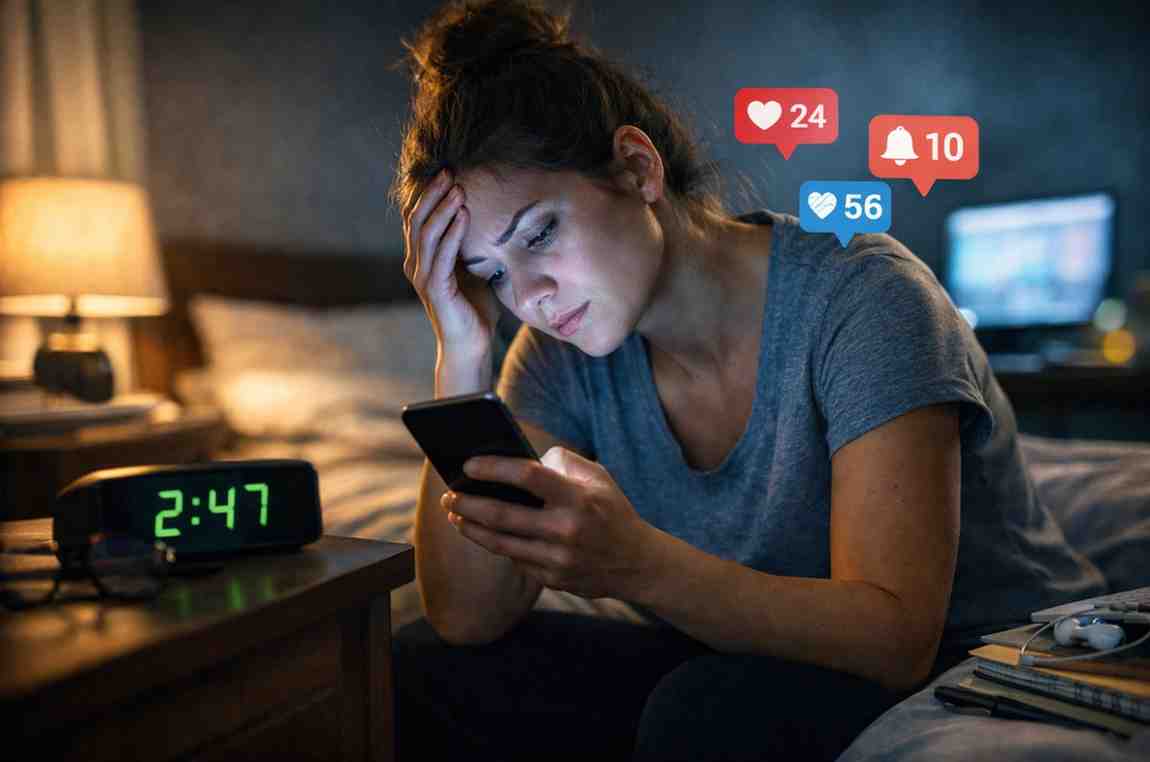
Smartphone Affects Mental Health: 9 Hard Truths I’ve Seen (and a Little Hope)

Smartphone Affects Mental Health 9 Hard Truths Ive Seen And A Little Hope 1
Smartphone Affects Mental Health 9 Hard Truths Ive Seen and a Little Hope

I’ve watched this pattern unfold more times than I can count.

A friend says they’re “just tired lately.”
A client mentions they can’t focus like they used to.
Someone’s teenager is suddenly anxious, irritable, snapping over nothing.

Then I look at their daily screen time.

Seven hours.
Nine hours.
Sometimes eleven.

Nobody sets out to damage their mental health. But the way a smartphone affects mental health isn’t loud at first. It’s quiet. Gradual. Almost polite. It shows up as low-grade anxiety, weird comparison spirals, shallow sleep, constant mental noise.

From what I’ve seen, most people don’t even connect the dots until they’re already overwhelmed.

And honestly? Almost everyone I’ve worked with messes this up at first.

They think the issue is discipline. Or motivation. Or that they’re just “bad at managing time.”

It’s usually not that.

It’s the environment.


Why People Don’t Realize It’s Happening

Here’s what surprises people:

Smartphone impact doesn’t feel dramatic. It feels normal.

What I’ve consistently observed across dozens of real cases:

  • They wake up and check notifications before their brain is fully online.

  • They scroll during breakfast.

  • They multitask between apps while “working.”

  • They use their phone to unwind.

  • They fall asleep with it in their hand.

That’s not extreme behavior anymore. It’s average.

But the mental load compounds.

The 4 Patterns I Keep Seeing

  1. Constant Micro-Stimulation
    Every few minutes: vibration, ping, refresh, swipe.
    The brain never fully settles.

  2. Fragmented Attention
    People think they’re multitasking.
    They’re actually splitting cognitive energy into thin slices.

  3. Comparison Loops
    Especially on social media.
    Even confident adults fall into this.

  4. Sleep Disruption
    Blue light is part of it.
    But mental activation is the bigger issue.

I didn’t expect sleep to be such a common issue until I tracked it with people. Almost everyone with high anxiety also had nighttime scrolling habits.

Coincidence? I don’t think so.


So… How Exactly Does a Smartphone Affect Mental Health?

Let’s break it down in plain terms.

1. It Keeps the Nervous System Slightly Activated All Day

From what I’ve seen, the biggest shift happens when people reduce interruptions.

Before:

  • Slight restlessness

  • Harder to focus

  • More reactive emotionally

After reducing notifications:

  • More stable mood

  • Clearer thinking

  • Less “edge”

The brain wasn’t built for constant novelty.

And smartphones are novelty machines.


2. It Amplifies Social Comparison (Even in Adults)

Teenagers struggle here, yes.

But so do 35-year-olds with stable careers.

I’ve sat with people who:

  • Felt behind in life

  • Thought everyone else was succeeding

  • Questioned their worth

Then we audit their feeds.

Highly curated lives. Highlight reels. Unrealistic productivity standards.

Most people I’ve worked with don’t realize how much passive scrolling quietly erodes self-esteem.

It’s subtle.

But repeated exposure rewires perception.


3. It Destroys Deep Focus

Almost everyone I’ve seen struggle with productivity does this one thing wrong:

They keep their phone within arm’s reach.

Even face down. Even on silent.

It doesn’t matter.

Just knowing it’s there reduces cognitive depth.

This honestly surprised me after watching so many people try to “improve focus” without changing their phone habits.

They bought planners.
They downloaded productivity apps.
They blamed themselves.

But they never removed the trigger.


4. It Messes With Emotional Regulation

Here’s something I didn’t expect to see so often:

People using their phone to avoid emotions.

Bored? Scroll.
Sad? Scroll.
Lonely? Scroll.
Stressed? Scroll.

It works short-term.

But long-term?

Emotional tolerance decreases.

Discomfort feels bigger.

People become less resilient.

Not because they’re weak.

Because they’re constantly numbing.


“Is This Really That Serious?”

Short answer: It depends.

If you:

  • Sleep well

  • Focus easily

  • Feel emotionally stable

  • Don’t compare yourself excessively

  • Use your phone intentionally

You’re probably fine.

But if you:

  • Feel scattered

  • Can’t sit in silence

  • Wake up anxious

  • Scroll longer than intended daily

  • Feel mentally foggy

There’s likely a connection.

And no, this isn’t anti-technology advice.

It’s about usage patterns.


How Long Does It Take to Notice Improvement?

From what I’ve observed:

  • 3–5 days: Better sleep

  • 1–2 weeks: Improved focus

  • 2–4 weeks: Reduced anxiety baseline

  • 1–2 months: Significant emotional stability shift

But only if the changes are real.

Most people quit around Day 4.

That’s the rough patch.

Boredom spikes.
Restlessness increases.
They feel “itchy.”

That phase is temporary.


What Most People Get Wrong at First

Almost everyone I’ve seen struggle with this does one of these:

  • They try to delete every app at once.

  • They go extreme.

  • They rely on willpower alone.

  • They track screen time obsessively.

  • They shame themselves.

The all-or-nothing approach fails.

The people who succeed make boring, sustainable changes.


What Actually Works (From Real Observations)

Here’s what consistently works across different personalities:

1. Move the Phone Out of the Bedroom

This single change improves sleep more than any supplement.

People resist this one.

They say:
“I use it as an alarm.”

Buy a $15 alarm clock.

I’ve watched this change alone improve:

  • Morning anxiety

  • Sleep depth

  • Emotional reactivity

It’s small. But powerful.


2. Turn Off Non-Essential Notifications

Keep:

  • Calls

  • Important work alerts

Remove:

  • Social media

  • Shopping apps

  • Random updates

Within days, people feel calmer.

Not happier. Just calmer.

That matters.


3. Create “Friction”

Delete social apps from home screen.
Log out after each use.
Make access slightly inconvenient.

We’re not trying to rely on discipline.

We’re changing environment.

Environment wins every time.


4. Replace, Don’t Just Remove

This is huge.

If you remove scrolling but don’t replace it, boredom takes over.

What worked best for people I’ve guided:

  • Physical books

  • Short walks

  • Music without screen use

  • Journaling at night

  • Calling a friend instead of texting

The brain needs stimulation.

Just not constant digital stimulation.


Common Questions I Keep Getting

Does smartphone use cause anxiety?

Not directly for everyone.

But excessive, unintentional use correlates strongly with increased anxiety symptoms in most people I’ve observed.

Especially when tied to:

  • Late-night scrolling

  • Social comparison

  • News overconsumption


Can reducing screen time actually improve depression?

It can help, but it’s not a cure.

In mild cases, I’ve seen noticeable mood improvements within weeks.

In moderate to severe depression, it’s supportive — not standalone treatment.


Is social media the main problem?

Not always.

Messaging apps. News apps. Even productivity apps can create cognitive overload.

It’s not one app.

It’s constant access.


Objections I Hear (And My Honest Response)

“I need my phone for work.”

Fair.

Most professionals do.

But you likely don’t need:

  • Continuous notifications

  • Social scrolling between tasks

  • Late-night email checking

There’s a difference between use and overuse.


“I’ve tried cutting back. It didn’t work.”

From what I’ve seen, this usually means:

  • The change was too extreme.

  • There was no replacement activity.

  • Expectations were unrealistic.

  • They expected instant calm.

Behavior shifts take rhythm.

Not motivation spikes.


“This feels dramatic.”

It might.

Until you track:

  • Mood vs screen time

  • Sleep vs night scrolling

  • Focus vs phone proximity

Patterns don’t lie.


Reality Check: This Isn’t for Everyone

Who this might NOT help much:

  • People with already structured phone use

  • People using phones mostly for business tools

  • People with strong emotional regulation skills

Who will struggle most with this approach:

  • High-stimulation seekers

  • People avoiding difficult emotions

  • Anyone deeply attached to social validation loops

And honestly… teenagers.

That’s its own battle.


What Patience Actually Looks Like

Here’s what real progress looks like from what I’ve seen:

Week 1:

  • Irritated

  • Bored

  • Restless

Week 2:

  • Sleep improves

  • Less urgency to check

Week 3–4:

  • More presence

  • Clearer thinking

  • Lower background anxiety

Month 2:

  • It feels normal

  • You stop counting screen time

Not glamorous.

But stable.


Practical Takeaways

If you’re overwhelmed and don’t know where to start:

Start here:

  • Remove your phone from the bedroom.

  • Disable non-essential notifications.

  • Track mood instead of screen time.

  • Replace 30 minutes of scrolling with one offline habit.

  • Expect discomfort at first.

Avoid:

  • Extreme detox challenges

  • Shaming yourself

  • Comparing your progress to others

  • Expecting instant peace

Emotionally, expect:

  • Withdrawal-like restlessness

  • FOMO

  • Moments of doubt

That doesn’t mean it’s not working.

It means your brain is recalibrating.


I’ve watched enough people quietly regain control once they made small, boring changes.

Not because they became disciplined.

But because they stopped fighting their own environment.

Smartphones aren’t evil.

But unstructured use? It’s powerful.

And the way a smartphone affects mental health isn’t dramatic. It’s cumulative.

So no — this isn’t magic.

But I’ve seen people go from scattered and anxious to calm and clear just by adjusting how they use a device they already own.

Sometimes that shift alone is the real relief.

Top Foods Rich in Iron: 17 Real Fixes That Finally Bring Relief (Without the Guesswork)

Top Foods Rich In Iron 17 Real Fixes That Finally Bring Relief Without The Guesswork 1
Top Foods Rich in Iron 17 Real Fixes That Finally Bring Relief Without the Guesswork

Most people don’t start searching for Top Foods Rich in Iron because they’re casually curious.

They start because they’re exhausted.

I’ve watched it happen over and over. A friend says she’s “just tired lately.” A client can’t focus by 3 p.m. Someone’s workouts suddenly feel twice as hard. They assume it’s stress. Or sleep. Or aging. They tweak coffee intake. They download a productivity app.

Then the labs come back.

Low iron.

And here’s what surprised me after watching so many people try to fix it: almost everyone thinks it’ll be solved in two weeks with spinach and good intentions.

It usually isn’t.

From what I’ve seen, raising iron through food absolutely works — but only when people stop guessing and start understanding what actually makes iron absorb… and what quietly blocks it.

Let’s talk about what I’ve observed across real kitchens, real grocery carts, and real blood test results.

No hype. Just patterns.


Why So Many People End Up Low on Iron (Even When They “Eat Healthy”)

This part honestly frustrates people the most.

Because they’re not eating junk.

They’re eating salads. Oatmeal. Smoothies. Almond butter. Whole grains. Lentils.

And still — iron is low.

Here’s what I’ve repeatedly seen:

  • Plant-based eaters assuming “spinach is enough”

  • Women with heavy periods underestimating losses

  • Athletes not adjusting intake for training load

  • Coffee drinkers unknowingly blocking absorption

  • People pairing iron foods with the wrong things

Iron intake isn’t just about quantity.

It’s about type and absorption timing.

There are two forms:

  • Heme iron (from animal foods) – absorbed efficiently

  • Non-heme iron (from plants) – absorbed less predictably

Most people I’ve worked with mess this up at first. They focus only on milligrams. But absorption is where the real story is.


The Top Foods Rich in Iron (Ranked by What Actually Moves the Needle)

Below are the foods I’ve consistently seen make measurable differences when people include them correctly.

Not theoretically.
Not Instagram-healthy.
Actually effective.


1. Beef Liver (The Heavy Hitter Most People Avoid)


This one sparks strong reactions.

But I can’t ignore the pattern.

A few ounces of beef liver provide more absorbable iron than most full “healthy” meal plans combined.

From what I’ve seen:

  • 1–2 servings per week can significantly support low ferritin levels

  • People who tolerate the taste see faster improvements

  • Pairing with vitamin C helps even more

That said — not everyone can stomach it. Texture is a deal-breaker for many.

If someone refuses liver, I don’t push it. But I do tell them the truth: it’s one of the most efficient options.


2. Oysters (Quietly Powerful)

Oysters don’t show up often in “iron lists,” but when people include them?

Results improve.

They’re rich in heme iron and zinc — which supports overall recovery.

The hesitation is usually:

  • Cost

  • Accessibility

  • Taste preference

But nutritionally, they’re strong.


3. Lean Red Meat (The Consistent Fix)

This is the one I see work again and again.

3–4 servings per week of lean red meat:

  • Supports steady iron intake

  • Absorbs reliably

  • Easier compliance than liver

Most people who shift from “mostly chicken” to including red meat notice energy changes within 4–8 weeks.

Not overnight.

But steady.


4. Dark Turkey Meat

Often overlooked.

Dark meat contains more iron than white breast meat.

It’s not as dense as beef, but for people easing into higher heme intake, it’s a practical step.


5. Sardines

Affordable. Shelf-stable. Nutrient-dense.

People who actually eat them weekly tend to maintain iron better than those relying on plant sources alone.

The barrier?
Texture.

Still — they’re effective.


Best Plant-Based Iron Foods (When Done Correctly)

This is where I see the most trial-and-error.

Plant iron absolutely matters. But it needs strategy.


6. Lentils

Strong source of non-heme iron.

But here’s what people miss:

  • Pair with vitamin C (bell peppers, lemon)

  • Avoid coffee or tea within an hour

  • Soaking improves tolerance for some

When combined correctly, lentils work well.

Alone? Slower progress.


7. Spinach (Overestimated, But Still Useful)


Spinach looks impressive on paper.

In reality?

Oxalates reduce absorption.

I didn’t expect this to be such a common issue, but people relying heavily on spinach often see minimal lab change.

It’s supportive — not a primary fix.


8. Pumpkin Seeds


Easy snack upgrade.

Good addition — but rarely enough alone for deficiency.


9. Fortified Cereals

This one surprises people.

Some fortified cereals contain very high iron levels.

But absorption varies.
And sugar content can be high.

Helpful tool. Not a magic fix.


Common Mistakes That Slow Iron Recovery

Almost everyone I’ve seen struggle with this does one of these:

  • Drinking coffee with iron-rich meals

  • Pairing iron with calcium-heavy foods

  • Relying only on spinach

  • Under-eating overall calories

  • Expecting results in two weeks

Iron repletion takes time.

Usually:

  • 4–6 weeks to notice energy changes

  • 8–12 weeks for labs to reflect meaningful improvement

  • Longer if levels are severely low

And that timeline assumes consistency.


How Long Does It Take for Iron Levels to Improve?

Short answer:

It depends on:

  • Severity of deficiency

  • Menstrual losses

  • Diet consistency

  • Gut absorption

  • Whether supplements are used

From what I’ve seen in real cases:

  • Mild low ferritin improves with diet changes alone

  • Moderate deficiency often needs food + supplements

  • Severe anemia requires medical supervision

Food helps. But sometimes food alone isn’t enough.

That’s just reality.


Is It Worth Trying to Fix Iron Through Food First?

For many people — yes.

Especially if:

  • Levels are borderline low

  • You prefer natural adjustments

  • You tolerate red meat or seafood

It may not be enough if:

  • You have heavy ongoing losses

  • You have digestive absorption issues

  • Your ferritin is extremely low

I’m always honest about that.


Who This Approach Is Not For

Let’s be clear.

Food-first may not work quickly if:

  • You’re pregnant with diagnosed anemia

  • You have gastrointestinal bleeding

  • You have diagnosed malabsorption disorders

  • Your hemoglobin is critically low

In those cases, food supports recovery — but isn’t the primary intervention.


Quick FAQ (Straight Answers)

What food is highest in iron?
Beef liver is among the highest natural sources.

Are plant sources enough?
Sometimes — but absorption strategy matters.

Can you feel better in a week?
Rare. Most improvements take 4+ weeks.

Does cooking in cast iron help?
Yes, slightly. I’ve seen modest improvements with regular use.


Objections I Hear All the Time

“I don’t like red meat.”

Then we build around seafood and careful plant pairing.

“I eat spinach daily — why am I still low?”

Because spinach isn’t efficiently absorbed alone.

“I’m scared of eating too much red meat.”

Moderate inclusion isn’t extreme. Context matters.


The Reality Check No One Likes

Iron deficiency doesn’t correct itself casually.

It requires:

  • Intentional food choices

  • Consistency

  • Patience

  • Sometimes labs every few months

There’s usually a phase where people feel discouraged because nothing changes fast.

That phase is normal.


Practical Takeaways (What Actually Works)

If I were guiding someone starting today:

  1. Include heme iron 3–4 times per week.

  2. Pair plant iron with vitamin C.

  3. Separate coffee/tea from iron meals.

  4. Recheck labs in 8–12 weeks.

  5. Expect gradual improvement, not a sudden burst.

Emotionally?

Expect:

  • Frustration early

  • Doubt around week 3

  • Subtle improvement before dramatic change

Small wins matter.

Better afternoon focus.
Less breathlessness.
Warmer hands.

Those signals usually show up before labs shift.


No — this isn’t magic.

But I’ve watched enough people stop blaming themselves once they understood what was actually happening.

Iron recovery isn’t about eating “healthier.”

It’s about eating strategically.

And once that clicks, things usually start moving.

Slowly.
Then steadily.

Sometimes that shift alone is the real relief.

Chronic recurrent multifocal osteomyelitis: 9 hard lessons that brought relief (after years of frustration)

Chronic Recurrent Multifocal Osteomyelitis 9 Hard Lessons That Brought Relief After Years Of Frustration 1
Chronic recurrent multifocal osteomyelitis 9 hard lessons that brought relief after years of frustration

Not gonna lie… the first time I heard chronic recurrent multifocal osteomyelitis, I stared at the doctor like they’d just made up a word to buy time. My kid was in pain again. Another flare. Another “everything looks fine” scan that didn’t match what I was seeing at home. I nodded like I understood. I didn’t. I went home, Googled, panicked, closed the laptop, opened it again, and then cried in the kitchen because nothing I read felt grounded in real life.

CRMO (people shorten it, because that full name is a mouthful) doesn’t just mess with bones. It messes with your head. The uncertainty. The whiplash between “it’s not dangerous” and “it can be chronic.” The way pain comes and goes without asking permission. The way everyone expects you to be relieved because it’s “nonbacterial,” but you’re still watching someone you love limp through their day.

This is what I wish someone had told me back then. Not the textbook stuff. The lived stuff. The messy, try-this-fail-that, second-guess-everything reality of figuring out how to live with CRMO without letting it run the whole show.


What I got wrong at first (and it cost us months)

I assumed there would be a clean, linear plan.
Diagnosis → treatment → improvement → done.

Yeah… no.

Here’s what I misunderstood early on:

  • I thought one medication would “fix” it.
    We tried NSAIDs first. Some relief. Then nothing. Then flares again. I kept waiting for the “right” drug to end the story. CRMO doesn’t work like that for a lot of people.

  • I believed flares meant we were failing.
    Every new pain felt like proof that we’d messed up. Diet. Stress. Sleep. Something. Sometimes a flare is just a flare. That realization took the edge off the guilt.

  • I expected clear rules.
    What triggers flares? What prevents them? I wanted a checklist. What we got was pattern-spotting, guessing, and adjusting.

  • I underestimated how emotional this would be.
    The medical part was heavy. The mental load was heavier. Watching pain you can’t “fix” is brutal.

What surprised me? How much of this journey is about learning to tolerate uncertainty without freezing up.


What actually helped (and what didn’t)

I’m going to be blunt. Some things worked. Some things were a waste of energy. Some helped emotionally but didn’t touch the disease. All of it mattered.

The stuff that moved the needle (even a little)

1. Finding the right specialist
Not just any rheumatologist. Someone who had actually seen chronic recurrent multifocal osteomyelitis before. The shift was obvious:

  • Fewer “let’s wait and see” loops

  • More concrete monitoring plans

  • Better explanations for why we were trying each step

2. Tracking patterns without obsessing
I kept a simple log:

  • Where the pain was

  • How intense

  • What was happening that week (school stress, poor sleep, illness)

It didn’t give me magic answers.
It did help us notice that lack of sleep + growth spurts = higher flare risk (for us, at least).

3. Movement (carefully, imperfectly)
We went too hard at first. Big mistake. Pushing through pain just created rebound flares.

What worked better:

  • Gentle daily movement

  • Short walks on low-pain days

  • Physical therapy focused on range of motion, not “toughening up”

Honestly, the win here wasn’t physical at first. It was psychological. Feeling less fragile changed everything.

4. Pain management that wasn’t just meds
NSAIDs had a role. But so did:

  • Heat packs

  • Distraction (movies, games, stupid jokes)

  • Letting rest be rest without guilt

Not glamorous. Still real.

5. Adjusting expectations (this one hurt)
Letting go of “back to normal” and aiming for “more good days than bad” changed how every flare felt. Less panic. More problem-solving.

The stuff that didn’t help (for us)

  • Chasing miracle fixes
    If something promises to “cure inflammation in 7 days,” I side-eye it hard now.

  • Overhauling everything at once
    Diet, supplements, routines, school schedule… we tried to change too much too fast. It created chaos and made it impossible to tell what was helping.

  • Comparing timelines
    “This kid went into remission in 6 months.”
    Cool. That wasn’t our story. Comparison made me reckless and impatient.


The parts nobody prepares you for

This is the emotional stuff. The stuff that doesn’t show up in medical pamphlets.

  • The weird loneliness of having a rare condition

  • The way people minimize it because it’s not “life-threatening”

  • The exhaustion of explaining the same thing over and over

  • The guilt when you snap because you’re tired of being strong

Not proud of this, but I had moments of resentment. Toward healthy families. Toward doctors. Toward the randomness of it all. That didn’t make me a bad person. It made me human.

This honestly surprised me:
Once I stopped pretending I was “handling it fine,” things got lighter. Naming the frustration didn’t make it worse. It made it manageable.


Short FAQ (the stuff everyone asks)

What is chronic recurrent multifocal osteomyelitis, really?
It’s an inflammatory bone condition that causes recurring pain in different areas. No infection. No simple cause. It can come and go.

Is it worth pursuing treatment even if symptoms come and go?
Yeah. Consistent management made flares shorter and less intense for us. Not gone. But better.

How long does it take to see improvement?
From what I’ve seen, at least: months, not weeks. Sometimes longer. Progress isn’t linear.

Can it go into remission?
Sometimes, yes. Not guaranteed. Planning for both possibilities kept us steadier emotionally.

Will this ruin normal life?
It changes life. It doesn’t automatically ruin it. The adjustment is real, though.


Common mistakes that slow progress

I made most of these. Learn from my chaos:

  • Treating every flare like an emergency

  • Ignoring small improvements because they felt “not enough”

  • Stopping routines the moment things improved

  • Switching treatments too fast without giving them time

  • Letting fear make every decision

Patience isn’t passive here. It’s an active choice to stay consistent when nothing dramatic is happening.


Objections I had (and how they played out)

“This sounds like a lot of work for uncertain results.”
True. It is. The payoff wasn’t a cure. It was fewer crisis days. That felt worth it.

“What if we try all this and nothing changes?”
That scared me. Still does sometimes. But doing nothing felt worse. Even small gains stacked over time.

“I don’t want this to define our life.”
Same. The balance was letting it shape some choices without letting it run everything.


Reality check (the part I wish I’d heard sooner)

This isn’t a straight road.

  • Some weeks you’ll feel hopeful.

  • Some weeks you’ll feel tricked into thinking things were improving.

  • Flares can happen even when you’re “doing everything right.”

  • Progress can look like fewer bad days, not perfect days.

Who this is not for:

  • People looking for instant fixes

  • Anyone who wants guaranteed outcomes

  • Anyone unwilling to adjust expectations

When results may be slow:

  • During growth spurts

  • After long periods of unmanaged pain

  • When stress and sleep are out of whack

What can go wrong:

  • Overmedicating out of fear

  • Under-treating out of denial

  • Burning out emotionally

None of this means you’re failing. It means this condition is stubborn.


What I’d do differently if I could rewind

  • I’d ask better questions earlier.

  • I’d stop hiding how overwhelmed I felt.

  • I’d track patterns sooner (without turning it into my full-time job).

  • I’d celebrate small wins instead of waiting for the “big fix.”

I messed this up at first by chasing certainty instead of stability.


Practical takeaways (no hype, just real)

What to do

  • Find a specialist who knows CRMO

  • Track flares lightly

  • Stick to routines long enough to judge them

  • Build a simple pain toolkit (meds + comfort + rest)

What to avoid

  • All-or-nothing thinking

  • Comparing timelines

  • Overreacting to every bad day

  • Ignoring emotional burnout

What to expect emotionally

  • Frustration

  • Doubt

  • Weird grief for the “easy version” of life

  • Relief when things stabilize (even a little)

What patience actually looks like

  • Staying consistent when nothing dramatic is happening

  • Not quitting on a plan because results are slow

  • Letting “good enough” count as progress

No guarantees here. Just steadier ground.


I won’t pretend chronic recurrent multifocal osteomyelitis suddenly became easy. It didn’t. But it stopped feeling like a constant emergency. That shift mattered more than any single treatment change.

So no — this isn’t magic.
But for me? It turned chaos into something we could live with. And on the days when everything still feels heavy, that’s enough to keep going.

Inflammation Poop: 7 Strange Truths That Finally Made My Gut Make Sense

Inflammation Poop 7 Strange Truths That Finally Made My Gut Make Sense 1
Inflammation Poop 7 Strange Truths That Finally Made My Gut Make Sense

Not gonna lie… the whole inflammation poop thing freaked me out the first time I even heard those two words together.
It sounded like something a doctor would whisper in a dark hallway or something only ultra-healthy people talk about after their 6 a.m. yoga class.

But the truth?
I ended up going down this weird rabbit hole because my own gut was acting like a dramatic toddler. Some days it was bloated. Some days it was… fast. Some days it was slow. Some days I felt like I swallowed a brick.

And somewhere in that mess, this phrase kept popping up: “inflammation poop.”

I didn’t expect it to make sense.
But I also didn’t expect poop to be such a loud storyteller about what the body’s going through.
Turns out… it really is.

What follows is me trying to make sense of that whole journey — the mistakes, the embarrassing moments, the “wait, THAT’s connected?” discoveries — and how I eventually learned to read my gut’s drama without spiraling.


Why I Even Looked Into This (The Embarrassing Beginning)

So here’s the honest start:
I didn’t dive into the world of inflammation poop because I felt curious or scientific.

Nope.

I was having one of those weeks where my stomach felt like it hated me.
You ever get that tight, hot, swollen feeling inside your belly?
Like someone inflated a balloon behind your ribs?

Well… that was me. For days.

And my poop?
Let’s just say it was not cute. I’m talking:

  • weird colors

  • mushy but not exactly diarrhea

  • random constipation the next morning (??)

  • that “I’m not done but my body is done” feeling

  • and sometimes — sorry — mucus

Not fun. Not dignified. Absolutely confusing.

At first, I did the worst thing:
I Googled.
(I know… rookie mistake.)

Every result acted like I was either dying or needed a lifetime supply of supplements.

But the phrase I kept seeing was: gut inflammation.
And then: inflammation poop — basically, what your body dumps out when things are irritated inside.

And honestly?
Once I understood that, things finally clicked.


1. “Inflammation Poop” Isn’t a Diagnosis — It’s Basically Your Gut Raising Its Hand Like “Uh, hey?”

This honestly surprised me.

I always thought inflammation was this dramatic disease-level emergency.
But gut inflammation is more like your intestines going: “Hey, uh… something irritated me and now everything’s a little pissed off down here.”

It can be triggered by:

  • stress

  • food sensitivities

  • too much sugar

  • lack of fiber

  • random infections

  • spicy food (my enemy, not gonna lie)

  • even poor sleep

You don’t feel inflammation.
But your poop shows it.

The body literally pushes out weird stuff because the lining is irritated.

I didn’t expect that at all.


2. The Poop Signs I Kept Ignoring (Don’t Be Me)

If you’re squeamish, sorry… but this part is important.

Here’s what I noticed when my gut was inflamed — even before I realized it:

1. Mucus

I thought this only happened during a cold.
Nope.
Your intestines make mucus when they’re irritated.

2. Soft, unformed poop

Almost like baby food.
Not exactly diarrhea — just… offended.

3. Floating stools

That one freaked me out.
Sometimes it’s fat not getting absorbed. Sometimes it’s gas.

4. Sudden constipation

Inflammation can slow everything down.

5. Strong odor

Like… “I should open a window” level.

6. That “unfinished” feeling

The technical word is tenesmus, but it feels like your gut is confused about its job.

I ignored these for months because I figured it was “just one of those things,”
but I wish I hadn’t.

Not because it’s dangerous — but because it’s a super early warning sign.


3. The Dumb Mistakes I Made (You Can Laugh)

I messed this up at first.

When I found out inflammation was a thing, I tried fixing everything all at once:

  • I cut carbs

  • I took random supplements

  • I drank lemon water like it was a religion

  • I tried intermittent fasting but ended up rage-eating at 1:17 p.m.

  • I googled “anti-inflammatory diets” until my brain melted

None of it worked.

My stomach was still doing its own chaotic dance.
My poop still looked weird.

Then again, I wasn’t giving my gut any consistency.
It was like switching WiFi networks every 10 minutes and expecting smooth Netflix streaming.


4. What Finally Helped (It Wasn’t What I Expected)

I wish I had some magical solution, but honestly?
The turning point was when I stopped trying to do 47 things a day and focused on simple stuff.

Here’s what finally calmed my gut enough that my inflammation poop stopped showing up:

(1) Fiber — but not too much

At first I dumped fiber powder into everything.
Bad idea.
My stomach revolted.

The sweet spot was adding just:

  • one fruit

  • one veggie

  • one whole grain

per day.
That’s it.

(2) Removing ONE food at a time

Not five.
Not “no dairy, no gluten, no joy.”

Just one.

For me it was fried food.
(My heart is still broken.)

(3) Water

I know… boring.
But when I don’t drink enough, my poop tells me immediately.

(4) Sleep

When I sleep badly, my gut behaves like it stayed up doomscrolling too.

(5) Probiotics — slowly

Not a giant pill.
Just yogurt at first.
Then kefir.

My body handled it way better that way.

(6) Not eating while stressed

If I eat angry?
My stomach becomes angry too.

(7) The “absolutely no thinking about my stomach” rule

Stress is inflammation’s best friend.
When I stopped obsessing, my gut actually chilled.


5. The Timeline (Because I Hate When Nobody Tells You This)

“How long did it take?”
Good question. Nobody tells you this stuff.

Here’s how it played out for me:

  • Week 1: poop still weird, bloating still annoying

  • Week 2: mucous reduced

  • Week 3: bowel movements got more normal

  • Week 4: bloating decreased

  • Week 5: consistently normal poop

  • Week 6: no more inflammation signs

  • Week 8: I honestly forgot I used to have gut issues

Small changes. Big payoff.


6. The Weird Stuff That Actually Helped (I Swear I’m Not Making This Up)

Okay, these sound ridiculous but they worked for me:

1. Walking after every meal

Not a workout. Not “steps goals.”
Just walking around my kitchen like a confused NPC.

2. Drinking warm water in the morning

I thought this was fake.
But it jumpstarts things… gently.

3. Sitting properly on the toilet

Look, humans weren’t designed for 90-degree angles.
I’m just saying.

4. Ginger

I never liked ginger.
Then it turned out to be my gut’s emotional support spice.

5. Slowing down while chewing

I didn’t expect this to matter at all.
But it did.


7. What “Inflammation Poop” Means For You (And When to Chill Out)

Here’s my honest take:

If you see inflammation-like poop once?
Whatever. Bodies are dramatic.

If you see it for a week or two?
Your gut’s trying to tell you something.

If it comes with:

  • fever

  • blood

  • intense cramps

  • weight loss

  • dehydration

Then yeah, that’s when doctors actually matter.

But if it’s just a few weird days?
You’re probably fine.
Your gut just needs a reset — not a crisis.


The Real Takeaways (The Stuff I Wish Someone Told Me)

Here’s what I learned after months of overthinking my intestines:

1. Poop is a communication tool

Gross but true.

2. Inflammation isn’t always a big deal

Sometimes your gut is just… annoyed.

3. Consistency beats extremes

Small changes > big dramatic ones.

4. Stress hits your stomach first

Every single time.

5. You’re not “broken”

Your gut responds to habits, not your worth.

6. Nothing changes overnight

Give it at least 3–6 weeks.

7. Your body wants to heal

It’s on your side, even when it feels annoying.

I don’t have a perfect bow to wrap this up with.
But I will say this:

If you’re dealing with weird inflammation poop moments right now, you’re not alone.
Our guts are loud, dramatic, emotional creatures — kind of like overworked customer service agents.

But once you figure out what calms them down?
Life gets easier.
You feel lighter.
Your brain chills out.
And suddenly… your bathroom routine actually makes sense again.

So no — this isn’t magic.
But for me? Yeah. It finally made things feel manageable.