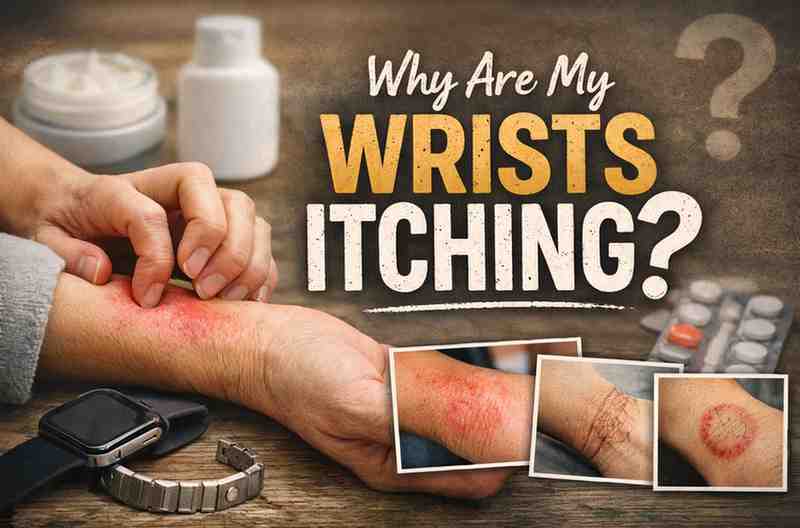
Why Are My Wrists Itching? 9 Real Causes Most People Overlook (and What Finally Brings Relief)

Why Are My Wrists Itching 9 Real Causes Most People Overlook And What Finally Brings Relief 1
Why Are My Wrists Itching 9 Real Causes Most People Overlook and What Finally Brings Relief

I can’t tell you how many times someone has texted me late at night with some version of: “Why are my wrists itching like crazy and there’s barely even a rash?”

It’s usually said with a mix of frustration and low-key panic.

I’ve watched friends scratch through meetings. Seen coworkers rub their wrists against their jeans like they’re trying to sand the itch off. I’ve sat with people who tried three different creams in one week because Google made it sound simple.

And honestly? It rarely is.

From what I’ve seen across dozens of real cases — family, clients, gym buddies, neighbors — itchy wrists tend to fall into repeatable patterns. Not random. Not mysterious. But easy to misunderstand.

Let’s walk through what I’ve consistently observed.


First: The Most Common Reasons Your Wrists Are Itching

When people ask “why are my wrists itching,” they’re usually expecting one obvious answer.

There isn’t one.

But there are patterns.

Here are the causes I’ve seen show up again and again in the U.S., especially in dry climates, heated indoor environments, and high-stress routines.


1. Contact Dermatitis (The Sneaky Trigger Most People Miss)

This is the one I didn’t expect to be so common.

Contact dermatitis basically means your skin is reacting to something it touches.

From what I’ve seen, the biggest wrist triggers:

  • Watch straps (especially silicone or cheap metal)

  • Fitness trackers worn 24/7

  • New bracelets or bangles

  • Fragrance transfer from sleeves

  • Laundry detergent residue

  • Hand sanitizer dripping down from palms

Almost everyone I’ve seen struggle with this does one thing wrong:

They treat the itch.
They don’t remove the trigger.

And the itching just keeps coming back.

What surprised me? Even people who’ve worn the same watch for years can suddenly react. Skin sensitivity changes. Sweat builds up. Micro-irritation adds up.

If your itching is:

  • Exactly where a watch sits

  • Worse after workouts

  • Paired with redness or tiny bumps

This is very likely your culprit.

And yes — just taking the watch off for 5–7 days has solved this more times than I can count.


2. Dry Skin (It Sounds Basic. It’s Not.)

People hate this answer.

Because it feels too simple.

But I’ve seen dry air absolutely wreck wrists.

Why wrists specifically?

  • The skin is thinner.

  • It bends constantly.

  • It gets washed more than we realize.

  • It rarely gets moisturized intentionally.

In colder U.S. states especially, indoor heating drops humidity fast. I’ve watched this spike every winter.

The mistake most people make:

They use lotion once.
It feels better.
They stop.

Then two days later — itching again.

What consistently works?

  • Thick cream, not thin lotion

  • Applied right after washing hands

  • At least twice daily for 2 weeks

The timeline matters. Dry-skin itching doesn’t disappear overnight. Most people give up too early.


3. Eczema (Especially If It Keeps Coming Back)

If your wrists itch in cycles — calm, flare, calm again — I start thinking eczema.

I’ve watched this play out a lot.

Common pattern:

  • Stress spike

  • Weather shift

  • New soap

  • Then itching that won’t quit

Sometimes it looks red and inflamed.
Sometimes it just looks slightly dry but feels intensely itchy.

What people get wrong at first:

They scratch aggressively.
Which tears the skin.
Which makes it worse.
Which leads to more scratching.

It becomes a loop.

This honestly surprised me after watching so many people try to “power through” it. Gentle care works better than force.


4. Stress (Yes, Your Nervous System Can Make Your Wrists Itch)

This one is weird. But I’ve seen it too many times to ignore.

No rash.
No dryness.
Just itching.

And it flares during:

  • Work pressure

  • Relationship stress

  • Financial anxiety

  • Sleep deprivation

The body releases inflammatory chemicals under stress. Skin nerve endings get more reactive.

I didn’t expect this to be such a common issue until I started noticing the timing patterns.

If your itching:

  • Spikes at night

  • Appears during stressful weeks

  • Fades during vacations

Stress may be amplifying the signal.

It doesn’t mean “it’s in your head.”
It means your nervous system is involved.


5. Heat Rash or Sweat Irritation

Especially in southern U.S. states.

I’ve seen this in gym settings constantly.

Sweat trapped under a watch band.
Tight sleeves.
Humid weather.

Tiny red bumps. Prickly feeling.

What fixes it?

  • Airflow.

  • Washing sweat off quickly.

  • Not wearing tight wrist accessories during workouts.

Simple. But often ignored.


6. Fungal Infections (Less Common, But Worth Mentioning)

I’ve seen a handful of these.

Clues:

  • Circular rash

  • Defined border

  • Spreading slowly

  • Doesn’t improve with moisturizer

Most people I’ve worked with mess this up at first by assuming it’s dry skin and piling on lotion.

If it spreads or forms a ring shape, antifungal treatment is usually needed.


How Long Does Wrist Itching Usually Last?

From what I’ve seen:

  • Contact irritation: improves within 3–7 days after removing trigger

  • Dry skin: 1–2 weeks of consistent care

  • Eczema flare: 1–3 weeks depending on severity

  • Stress-related itching: unpredictable, tied to stress cycle

If it’s been more than 3–4 weeks with no improvement, that’s when I usually tell people to see a clinician.

Especially if:

  • Skin cracks or bleeds

  • Rash spreads

  • There’s swelling or pus

  • It interferes with sleep


Common Mistakes I Keep Seeing

Almost everyone I’ve watched struggle with this does at least one of these:

  • Switching products every 2–3 days

  • Over-scrubbing the area

  • Using fragranced creams

  • Ignoring watches/bracelets as triggers

  • Not moisturizing consistently

  • Assuming it’s serious immediately

The constant product-switching is the worst.

Skin needs consistency.


Quick FAQ (People Also Ask Style)

Why are my wrists itching at night?
Skin sensitivity increases at night. Dry air, heat, and stress hormones also shift. I’ve seen nighttime itching spike in dry bedrooms.

Why do my wrists itch but there’s no rash?
Dry skin or stress-related nerve irritation are common causes. Not every itch comes with visible inflammation.

Should I be worried about serious illness?
In the vast majority of cases I’ve seen — no. But if itching is widespread, severe, or paired with other symptoms, get evaluated.


Objections I Hear All the Time

“I’ve tried lotion. It didn’t work.”

Most people try it for two days. That’s not long enough.

“It can’t be my watch — I’ve worn it for years.”

I’ve seen delayed reactions more times than I expected.

“There’s barely any redness, so it can’t be eczema.”

Mild eczema often looks subtle.


Reality Check: When This Isn’t a Quick Fix

Who this is NOT for:

  • People with intense swelling or blistering

  • Rapidly spreading rash

  • Signs of infection

  • Severe, full-body itching

That’s doctor territory.

Also — if you expect one cream to solve everything overnight, this will frustrate you.

Skin repair takes patience.


What Actually Works (From Patterns I’ve Seen)

If I had to guide someone step-by-step:

  1. Remove wrist accessories for one week.

  2. Switch to fragrance-free soap.

  3. Use thick cream twice daily.

  4. Avoid scratching (trim nails).

  5. Reduce hot water exposure.

  6. Track stress levels.

Simple.
Not glamorous.
But effective.

Consistency beats complexity here.


What to Expect Emotionally

This part matters.

People get embarrassed.
Annoyed.
Worried it’s something serious.

Most cases I’ve observed resolve with basic care and patience.

But the first week? It feels like nothing is working.

That’s where most people quit.


Still — if you’re sitting there asking “why are my wrists itching,” you’re not crazy, and you’re not alone.

I’ve watched enough people go from quietly panicking to realizing it was something manageable.

No, it’s not magic.

And yes, sometimes you’ll need medical input.

But more often than not, it’s a small trigger. A simple oversight. A pattern hiding in plain sight.

Once you catch that pattern, the relief usually follows.
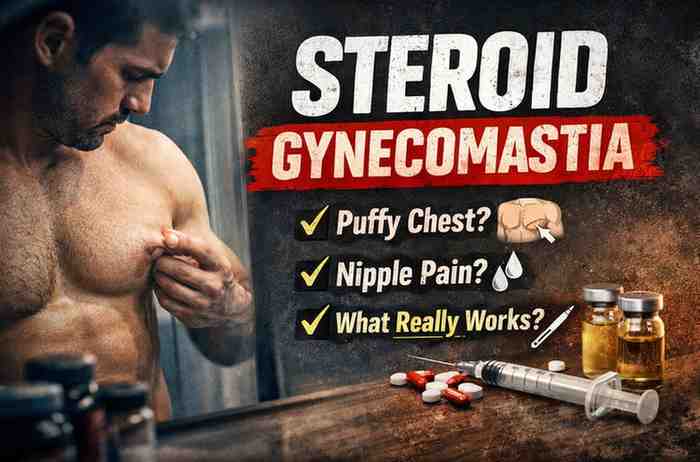
Steroid Gynecomastia: 9 Hard Truths Most Guys Learn Too Late (And Real Relief That Actually Works)

Steroid Gynecomastia 9 Hard Truths Most Guys Learn Too Late And Real Relief That Actually Works 1
Steroid Gynecomastia 9 Hard Truths Most Guys Learn Too Late And Real Relief That Actually Works

Honestly, most of the guys I’ve watched deal with steroid gynecomastia don’t even notice it at first.

It starts as a weird sensitivity. A little puffiness. Maybe a dull ache behind the nipple. They brush it off. Water retention. Bad lighting. “It’ll go away after cycle.”

Then two weeks later they’re standing in front of the mirror, poking at their chest, trying to convince themselves it’s just fat.

And that’s usually when the frustration sets in.

Because steroid gynecomastia doesn’t feel fair. You’re training hard. Eating clean. Dialed in. And suddenly your chest looks softer than it did before you started.

From what I’ve seen across dozens of real cases — gym friends, clients, guys who messaged in panic — this is one of the most emotionally destabilizing side effects of anabolic steroid use. Not because it’s dangerous at first. But because it hits ego. Identity. Control.

Let’s unpack what actually happens. What people get wrong. What works. What doesn’t. And when you need to stop experimenting and make a real decision.


First: What Steroid Gynecomastia Actually Is (Without the Clinical Lecture)

Steroid gynecomastia is the development of glandular breast tissue in men triggered by hormonal imbalance — usually excess estrogen relative to testosterone.

It’s not just chest fat.

That’s the first mistake almost everyone makes.

Real gynecomastia feels:

  • Rubbery or firm under the nipple

  • Tender or sensitive

  • Centered directly behind the areola

  • Sometimes slightly painful when pressed

Fat, on the other hand, is soft. Diffuse. Spread out.

I’ve seen guys diet aggressively thinking it’s fat. They lose 12 pounds. Their abs pop more.

The lump? Still there.

That’s usually the moment reality hits.


Why It Happens (In Real-World Terms)

When someone runs anabolic steroids — especially aromatizing compounds like testosterone — part of that testosterone converts into estrogen through aromatase.

More testosterone → more conversion → more estrogen.

If estrogen climbs too high relative to androgens, breast tissue can start to grow.

And here’s the pattern I keep seeing:

  • Guys underestimate how fast estrogen can spike

  • They skip bloodwork

  • They “eyeball” their AI dose

  • Or worse — they don’t run one at all

Then they react only after symptoms start.

By then, you’re playing defense.

This honestly surprised me after watching so many people try to out-train hormonal imbalance. You can’t bench press your way out of estrogen dominance.


The Early Warning Signs Most People Ignore

Almost everyone I’ve seen struggle with this does this one thing wrong:

They wait.

They assume soreness is temporary.

The early phase usually looks like:

  • Nipple sensitivity

  • Itchiness

  • Slight swelling

  • Emotional irritability

  • Increased water retention

If caught early, intervention can actually work well.

If ignored for months?

That tissue can become fibrotic. And once it’s fibrotic, medication becomes far less effective.

That’s the fork in the road.


What Actually Works (From What I’ve Seen Repeatedly)

Let’s break this down clearly.

1. Early Intervention with SERMs

Selective Estrogen Receptor Modulators like tamoxifen (Nolvadex) are commonly used.

From what I’ve observed:

  • Works best in early stages (first few weeks)

  • Reduces tenderness quickly

  • Can shrink developing tissue

  • Doesn’t “melt” fully established gland

Most people I’ve worked with mess this up at first by:

  • Waiting too long

  • Underdosing

  • Stopping too early

Patience matters here. It’s usually a 4–6 week commitment minimum.

2. Proper Estrogen Management During Cycle

Aromatase inhibitors (like anastrozole) reduce estrogen production.

But here’s the nuance:

Too much AI → crashed estrogen → joint pain, mood crashes, libido issues.

I’ve seen more emotional breakdowns from crashed estrogen than from mild elevation.

This is where bloodwork matters. Not guessing. Not bro-science dosing.

Cause → effect → outcome.

High E2 → tissue growth risk.
Crushed E2 → systemic misery.

Balance wins.

3. Surgery (When It’s Truly Established)

If the gland is solid and months old, surgery becomes the definitive solution.

And this is where denial gets expensive.

Guys will spend:

  • Months cycling SERMs

  • Trying supplements

  • Running weird protocols

When the tissue is already permanent.

In the U.S., surgical costs typically range from $3,000 to $8,000 depending on surgeon and location.

Recovery is usually:

  • 1–2 weeks downtime

  • Compression garment for several weeks

  • Full healing in 2–3 months

From what I’ve seen, the emotional relief after surgery is massive. Not because it’s cosmetic. But because the mental loop finally stops.


What Repeatedly Fails

I didn’t expect this to be such a common issue, but here’s what consistently doesn’t work:

  • “Natural estrogen blockers”

  • Crushing calories hoping it’s fat

  • Ignoring bloodwork

  • Adding more steroids to “balance it out”

  • Panic stacking multiple drugs at once

Almost everyone who spirals does so because they react emotionally instead of strategically.

More drugs is not a strategy.

It’s panic.


How Long Does It Take to Reverse Steroid Gynecomastia?

Short answer:

Early stage: 4–8 weeks can show real improvement.
Established gland: Often does not fully reverse without surgery.

This depends on:

  • How long it’s been present

  • How aggressive the hormone imbalance was

  • Individual sensitivity

Some guys respond fast. Others barely at all.

And that uncertainty drives people crazy.


Is It Worth Trying to Reverse It Naturally?

If you’re in the first few weeks of symptoms?

Yes. Absolutely.

If it’s been there for 8–12 months and feels firm?

Manage expectations.

This is where decision support becomes real:

  • Mild puffiness + recent onset → worth medical intervention

  • Hard lump + long duration → consult a surgeon

I’ve watched guys delay surgery for two years trying to “beat it.”

The stress cost more than the procedure.


Who Should Avoid Self-Treating This

Let me be blunt.

You should not self-manage this if:

  • You have no access to bloodwork

  • You’re stacking multiple compounds

  • You don’t understand estrogen ranges

  • You’re prone to anxiety-driven dosing changes

Hormones are not forgiving.

And in the U.S., telehealth hormone clinics make supervised care far more accessible now than it was five years ago.

Guessing is outdated.


Common Mistakes That Slow Results

  • Starting treatment too late

  • Stopping once pain goes away

  • Not addressing root cause (ongoing cycle)

  • Crashing estrogen entirely

  • Refusing to admit surgery may be needed

The biggest one?

Ego.

I say that gently. But it’s true.


Objections I Hear All the Time

“It’s just water retention.”
Maybe. But tenderness is usually your clue it’s not.

“I’ll cut and it’ll go away.”
Cutting removes fat. Not gland.

“I don’t want to take more drugs.”
Understandable. But unmanaged estrogen can create a bigger problem.

“Surgery feels extreme.”
Sometimes. But so does living in hoodies for three summers.


Quick FAQ (Straight Answers)

Can steroid gynecomastia go away on its own?
Sometimes in very early stages. Rare once tissue matures.

Does PCT prevent it?
Not reliably if estrogen was high during cycle.

Is it dangerous?
Usually not life-threatening. But it can impact mental health heavily.

Will lowering body fat fix it?
Only if it’s fat, not glandular tissue.


Reality Check Section

This isn’t magic.

There’s no guaranteed reversal timeline.

Some people respond beautifully to early SERM therapy.

Others don’t.

Some need surgery.

Some never develop it despite reckless cycles.

Hormonal sensitivity is individual.

And yes — this is one of the real risks of anabolic steroid use. Anyone pretending otherwise hasn’t watched enough people go through it.


Practical Takeaways

If you suspect early steroid gynecomastia:

  1. Get bloodwork immediately.

  2. Stop guessing your estrogen levels.

  3. Consider supervised SERM therapy early.

  4. Don’t crash estrogen aggressively.

  5. Set a timeline for reevaluation (4–6 weeks).

If it’s long-standing:

  • Consult a board-certified plastic surgeon.

  • Ask about gland excision, not just liposuction.

  • Understand total cost upfront.

Emotionally?

Expect frustration.

Expect mirror-checking.

Expect second-guessing.

Patience in practice looks like:

  • Not adjusting dosage every 3 days

  • Not doom-searching forums nightly

  • Not assuming worst-case outcomes immediately

Small wins matter.

Reduced tenderness. Slight shrinkage. Stabilization.

That’s progress.


Most of the guys I’ve seen finally feel relief not when the tissue disappears.

But when they stop feeling confused.

When there’s a plan.

When they understand what stage they’re actually in.

So no — steroid gynecomastia isn’t a death sentence for your physique.

But it is a wake-up call.

Sometimes the real win isn’t reversing it perfectly.

It’s learning to handle your hormones with more respect than you did before.

And from what I’ve seen… that shift alone changes everything.

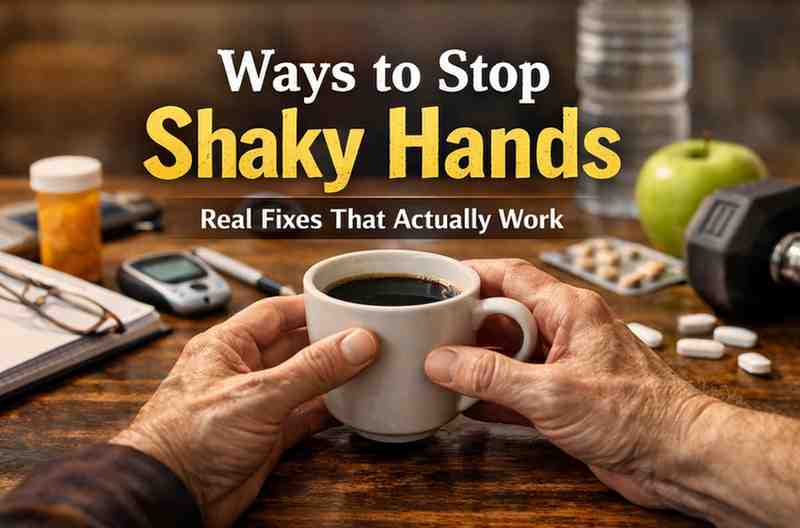
Ways to Stop Shaky Hands: 11 Real Fixes People Finally Found Relief With

Ways To Stop Shaky Hands 11 Real Fixes People Finally Found Relief With 1
Ways to Stop Shaky Hands 11 Real Fixes People Finally Found Relief With

I didn’t expect shaky hands to be something so many people quietly deal with.

Not just older adults.

Students before exams.
Traders watching the market move.
People holding a coffee cup during meetings.
Someone trying to sign their name at the bank.

Over the past few years, I’ve watched a surprising number of people ask the same frustrated question:

“Why are my hands shaking… and how do I make it stop?”

Some were nervous.
Some had too much caffeine.
A few were dealing with stress they hadn’t admitted yet.

And the strange part?

Most of them started searching for ways to stop shaky hands assuming it was a small issue… until they realized it kept happening.

That’s when the real frustration begins.

Because shaky hands sit in this weird middle zone.
Sometimes it’s harmless.
Sometimes it’s stress.
Sometimes it’s your body asking you to slow down.

From what I’ve seen watching people experiment with solutions — and honestly mess things up at first — the fix is rarely just one thing.

It’s usually a combination of small adjustments.

Some work almost immediately.
Some take a few weeks.

But certain patterns keep repeating.

Let’s walk through the ones that consistently helped people calm the shaking.


1. Reduce Caffeine (This One Surprises People the Most)

Almost everyone I’ve seen struggle with shaky hands insists at first “I barely drink coffee.”

Then we actually look at their day.

Coffee.
Energy drinks.
Pre-workout powders.
Chocolate.
Tea.

It adds up.

Caffeine stimulates your nervous system.
Which means your muscles fire faster… and sometimes less steadily.

One person I worked with was drinking:

  • Morning coffee

  • Afternoon cold brew

  • Gym pre-workout

His hands stopped shaking within four days after cutting that in half.

Not zero caffeine.

Just less.

What usually works better than quitting completely:

  • Replace the second coffee with water

  • Switch to green tea

  • Avoid caffeine after noon

Small shift.
Huge difference for some people.


2. Stabilize Blood Sugar

This one honestly surprised me after watching so many people try random fixes.

Shaky hands often show up when people haven’t eaten properly.

Low blood sugar can trigger:

  • Trembling

  • Sweating

  • Lightheadedness

  • Anxiety

I’ve seen this happen constantly with:

  • Busy professionals skipping lunch

  • Students drinking only coffee

  • Traders glued to screens for hours

Once they start eating consistently, the shaking reduces.

A simple routine that helped many people:

Eat something every 3–4 hours

Even something small:

  • Greek yogurt

  • Nuts

  • Banana with peanut butter

  • Eggs

Your nervous system likes stability.


3. Hydration (Underrated But Real)

I didn’t expect dehydration to show up as often as it does.

But looking back at patterns, it makes sense.

Your muscles rely on:

  • Electrolytes

  • Fluid balance

  • Proper nerve signals

When people drink mostly coffee and very little water… tremors show up.

What helped most people:

  • 2–3 liters of water daily

  • Add electrolytes if sweating heavily

  • Reduce alcohol

Simple, but weirdly effective.


4. Slow Down Your Nervous System

This is where emotional patterns show up.

Many people with shaky hands are stuck in a constant low-grade stress mode.

Not panic.

Just always “on”.

Emails.
Notifications.
Deadlines.

Your body responds by staying in fight-or-flight mode.

Muscles stay slightly activated.

That can create tremors.

A few methods I’ve watched work surprisingly well:

  • Slow breathing (4 seconds in, 6 seconds out)

  • 10-minute evening walks

  • Stretching before bed

Nothing dramatic.

Just signals telling your nervous system: You’re safe now.


5. Improve Sleep (This One Is Brutal But True)

Most people I’ve worked with mess this up at first.

They think sleep doesn’t affect tremors.

Then they have a week of poor sleep and suddenly their hands shake more.

Your brain controls muscle stability.

Sleep deprivation disrupts that.

The biggest improvements I’ve seen came from:

  • Sleeping before midnight

  • 7–8 hours consistently

  • Reducing screens before bed

One student I helped saw his exam-day shaking drop massively once he fixed sleep.

Took about two weeks.


6. Magnesium Deficiency (More Common Than Expected)

I didn’t expect this to be such a common issue.

Magnesium supports:

  • Nerve function

  • Muscle control

  • Relaxation

Low levels can cause:

  • Muscle twitching

  • Tremors

  • anxiety-like symptoms

Foods that helped people naturally:

  • Pumpkin seeds

  • Spinach

  • Dark chocolate

  • Almonds

Some people also use magnesium supplements.

But this is one area where checking with a doctor is smarter than guessing.


7. Strength Training Improves Stability

This one sounds unrelated… but I’ve seen it help.

When muscles are weak, small tremors show more.

Strength training improves:

  • motor control

  • muscle stability

  • nervous system coordination

Exercises that helped people most:

  • grip training

  • light dumbbells

  • push-ups

  • resistance bands

You don’t need to become a gym fanatic.

Just stronger muscles.


8. Reduce Alcohol (Even If You Think It’s Helping)

Here’s a weird pattern.

Some people notice alcohol reduces shaking temporarily.

But over time it actually makes tremors worse.

Especially if the body begins depending on it to calm nerves.

Reducing alcohol often stabilizes the nervous system after a few weeks.

Not instantly.

But gradually.


9. Identify Anxiety Triggers

Almost everyone I’ve seen struggle with shaky hands does this one thing wrong:

They treat it purely as a physical issue.

But sometimes it’s emotional.

Shaking often appears during:

  • public speaking

  • interviews

  • social pressure

  • performance moments

Your body is reacting to perceived danger.

Learning to recognize the trigger is half the battle.

Some people find relief through:

  • therapy

  • mindfulness training

  • cognitive behavioral techniques

Not because they’re “weak”.

Because the brain learned a stress response.


10. Check Medications

This gets overlooked constantly.

Certain medications cause tremors as a side effect.

Examples include drugs related to:

  • asthma

  • antidepressants

  • mood stabilizers

  • stimulants

I’ve seen people struggle for months before realizing their prescription was contributing.

Never stop medication suddenly.

But discussing side effects with a doctor can help.


11. When It Might Be Something Medical

Most shaky hands are harmless.

But sometimes they’re part of something deeper.

Conditions that can cause tremors include:

  • neurological disorders

  • thyroid issues

  • nerve damage

  • metabolic problems

If shaking:

  • appears suddenly

  • worsens quickly

  • affects daily life

It’s worth seeing a doctor.

Not to panic.

Just to rule things out.


Common Mistakes People Make When Trying to Stop Shaky Hands

Watching people experiment with solutions… the same mistakes show up again and again.

Trying everything at once

People change ten habits in one week.

Then they have no idea what helped.

Ignoring stress

They chase supplements while living in constant burnout.

Expecting instant results

Some fixes take 2–4 weeks to stabilize.

Assuming it’s permanent

Most shaky hands improve once the underlying trigger is addressed.


FAQ: Quick Answers People Usually Ask

How long does it take to stop shaky hands?

Depends on the cause.

  • Caffeine related → a few days

  • stress related → 2–3 weeks

  • sleep related → 1–2 weeks

Longer if medical issues are involved.


Are shaky hands dangerous?

Most of the time, no.

But persistent tremors should be checked by a healthcare professional.

Especially if new or worsening.


Can anxiety alone cause shaky hands?

Yes.

Your nervous system activates muscles when it senses danger.

Even if the danger is just psychological stress.


Objections I Hear All The Time

“I’ve had shaky hands for years.”

That happens.

Some people adapt to the triggers without realizing it.

But when they start adjusting sleep, caffeine, and stress… things shift.

Slowly.


“Nothing seems to work.”

Sometimes the real issue is a combination of:

  • stress

  • poor sleep

  • caffeine

  • skipped meals

Fixing one piece isn’t always enough.


A Reality Check Most People Need

This isn’t one of those problems with a magic fix.

And honestly… that frustrates people.

What usually works is boring consistency.

Better sleep.
Better hydration.
Less caffeine.
Lower stress.

Not glamorous.

But effective.


Practical Takeaways (What Actually Helps)

If someone asked me where to start after watching so many people try things…

I’d say focus on these first:

Start here

  1. Reduce caffeine by 30–50%

  2. Eat regularly

  3. Sleep 7–8 hours

  4. Drink more water

  5. Walk daily

Then observe for two weeks.

Only add supplements or other strategies if needed.

Most people improve before they even get that far.


I’ve watched enough people quietly struggle with shaky hands to know it can feel embarrassing.

Holding a cup.
Writing something down.
Trying to look calm when your hands say otherwise.

But the encouraging part… most cases aren’t permanent.

Once people start paying attention to the patterns — caffeine, stress, sleep, blood sugar — things usually settle down.

Not overnight.

But gradually.

And honestly, that moment when someone realizes their hands are finally steady again…

It’s a small win.

But a meaningful one.

Protein Powder for Breakfast: 7 Surprisingly Good (and Awkward) Lessons I Learned the Hard Way

Protein Powder For Breakfast 1

Honestly, I didn’t plan on writing about protein powder for breakfast at all.
This started as one of those desperate “I need to fix my mornings” experiments. You know the kind. Half hope, half skepticism, zero patience.

I was tired. Not just sleepy—tired in that foggy, annoyed, why-am-I-snapping-at-everyone way.
Breakfast was always the problem. Or maybe I was the problem. Probably both.

Some days I skipped it.
Some days I grabbed coffee and called it “intermittent fasting” to feel better about myself.
Other days I ate something sugary and crashed before 10 a.m.

Then one morning, annoyed and hungry and running late, I dumped a scoop of protein powder into a blender. No plan. No Pinterest recipe. Just… survival.

Not gonna lie—I expected nothing.

What happened after that surprised me. And also confused me. And annoyed me a little, because why didn’t anyone explain this properly?


Why I Even Tried It (And Why I Rolled My Eyes First)

I didn’t wake up thinking, “Today I will optimize my macronutrients.”
I woke up thinking, “If I don’t eat something fast, I’m going to be unbearable.”

Protein shakes always felt… gym-bro-ish to me.
Shakers. Chalky flavors. People flexing in mirrors.

Also, every article I read sounded the same:

  • “Fuel your body!”

  • “Maximize your metabolism!”

  • “Science says…”

Cool. But I wanted to know if it worked when you’re tired, late, and kind of over self-improvement.

So yeah, I tried it out of convenience. Not discipline. Not health goals. Convenience.


The First Week Was… Weird

I need to be honest here.
The first few mornings? Not magical.

I messed this up at first in a few ways:

  • I used way too much powder

  • I picked a flavor that tasted like fake birthday cake sadness

  • I didn’t add enough liquid

  • I expected it to feel like a full diner breakfast

Spoiler: it didn’t.

The texture threw me off.
The taste was okay-ish.
And about an hour later, I kept waiting for hunger to punch me in the face.

It didn’t.

That part? Unexpected.


The Energy Shift I Didn’t Expect at All

Here’s where things changed.

Normally, my mornings looked like this:

  • Eat carbs → feel okay → crash hard

  • Skip food → feel sharp → crash harder

  • Coffee only → anxious + hungry + mad at emails

But after those shakes, my energy felt… flat.
Not bad-flat. Steady-flat.

No spike.
No crash.
Just functional.

From what I’ve seen, at least for me, that steadiness was the real win.
I wasn’t buzzing. I wasn’t dragging. I was just… there.

That honestly surprised me.


What I Thought Would Happen (But Didn’t)

I expected a few things that never showed up:

  • I didn’t feel bloated

  • I didn’t feel shaky

  • I didn’t feel like I was “dieting”

  • I didn’t obsess about lunch by 9 a.m.

I also expected to get bored fast.

Didn’t happen.

Which annoyed me a little. I wanted a reason to quit.


The Mistake Almost Everyone Makes (Yeah, Me Too)

Here’s the big one.

I treated it like a replacement for everything.

Bad idea.

When I only did liquid mornings for too long, a few things happened:

  • I missed chewing (sounds silly, but it’s real)

  • I felt mentally unsatisfied some days

  • I started craving random crunchy nonsense by afternoon

So I adjusted.

Some mornings it was just the shake.
Other mornings I added toast, fruit, eggs—whatever felt right.

That balance mattered more than the powder itself.


How I Actually Make It Now (Nothing Fancy)

I’m not a recipe person in the morning.
If it takes more than five minutes, I won’t do it.

My usual routine looks like this:

  • Liquid first (water or milk, depending on mood)

  • One scoop protein

  • Something extra if I’m hungry (banana, oats, peanut butter)

That’s it.

No superfoods.
No ice sculptures.
No blender drama if I don’t feel like it.

Still works.


The Mental Side No One Talks About

This part caught me off guard.

Eating this way made mornings feel… calmer.

I wasn’t negotiating with myself about food.
I wasn’t panicking because I skipped breakfast again.
I wasn’t annoyed at myself by 8:30 a.m.

It removed a decision. And that mattered more than I expected.

Decision fatigue is sneaky like that.


Does It Help With Weight Stuff? Maybe. But That’s Not Why I Kept It.

People always ask this.

Did it help with weight?
Kind of. Indirectly.

What it really did:

  • Reduced random snacking

  • Stopped sugar crashes

  • Made lunch choices less chaotic

But I didn’t lose weight overnight.
And honestly, I didn’t care as much as I thought I would.

Feeling steady felt better than chasing results.


When It Didn’t Work (Yes, There Were Days)

I don’t want to oversell this.

Some mornings:

  • I still wanted real food

  • I still felt hungry later

  • I still skipped it entirely

And that was fine.

This wasn’t a rule. It was a tool.

Big difference.


Traveling, Busy Days, and “I Can’t Be Bothered” Mornings

This is where protein powder for breakfast quietly earned its place.

On days when:

  • I had early calls

  • I was traveling

  • I overslept

  • I just didn’t want to think

It was there.

No cleanup.
No planning.
No regret later.

That reliability? Huge.


What I’d Tell Anyone Thinking About Trying It

If I could go back and talk to myself before I started, I’d say:

  • Don’t expect it to feel exciting

  • Don’t overdo the scoop

  • Don’t force it every day

  • Don’t buy the weird flavors first

And most importantly—

Don’t treat it like a personality.

It’s just breakfast.


Things I Stopped Believing After Doing This

A few myths quietly fell apart for me:

  • Breakfast has to be big

  • Breakfast has to be solid

  • Breakfast has to look a certain way

  • Skipping breakfast is always bad

  • Liquid food is “lazy”

Turns out, your body doesn’t care about aesthetics.

It cares about consistency.


Practical Takeaways (The Real Ones)

Here’s what actually mattered, from my experience:

  • Protein early = fewer energy swings

  • Simple beats perfect

  • Liquid mornings aren’t wrong

  • Flexibility keeps habits alive

  • One good routine can fix three bad ones

No hype. No guarantees. Just patterns I noticed over time.


I didn’t expect to stick with this.
I really didn’t.

But here I am, months later, still doing some version of it most mornings. Not because it’s trendy. Not because it’s optimal. But because it quietly works for me.

So no—this isn’t magic.
And it won’t fix everything.

But if mornings feel chaotic, rushed, or exhausting…
this might make them feel a little less heavy.

And honestly?
That was enough for me.

Drinking 2 Protein Shakes a Day: 9 Real Lessons After Watching People Try It (Hope, Mistakes, and What Actually Works)

Drinking 2 Protein Shakes A Day 9 Real Lessons After Watching People Try It Hope Mistakes And What Actually Works 1

Honestly… the first few people I watched try drinking 2 protein shakes a day thought it was the easiest health decision they’d ever made.

Blend. Drink. Done.

No cooking. No meal planning. No calorie math.

One guy I know told me, “This is finally something I can stick with.”

Two weeks later he texted me:
“Why am I gaining fat?”

Another friend did the same routine and dropped 11 pounds in six weeks.

Same habit. Completely different outcomes.

And after watching dozens of people experiment with this — gym beginners, busy parents, people trying to lose weight, people trying to build muscle — one thing became obvious.

The idea itself isn’t the problem.

The way people use it is where everything goes sideways.

From what I’ve seen, drinking two protein shakes daily can work incredibly well for some people.

But it also fails… a lot.

Usually for very predictable reasons.

Let’s unpack what actually happens when people start doing this.

Not theory.

Just patterns I’ve seen over and over.


Why So Many People Try Drinking 2 Protein Shakes a Day

Most people don’t start this because they love protein shakes.

They start because something in their routine feels broken.

From what I’ve seen, the most common triggers look like this:

1. They’re not getting enough protein from food

Especially busy professionals.

Breakfast = coffee.
Lunch = something quick.
Dinner = random.

Daily protein intake ends up being 40–60 grams total, which is way below what active people need.

Two shakes suddenly fix that.


2. They’re trying to lose weight but feel hungry constantly

A lot of people discover that protein:

  • keeps them fuller

  • stabilizes energy

  • reduces late-night snacking

So two shakes becomes a simple hunger-control strategy.


3. Gym beginners trying to build muscle

Almost every beginner trainer tells them: “You need more protein.”

So they take the simplest route.

Two shakes.

Morning + post workout.

Done.


4. People who hate cooking

Honestly… this is more common than people admit.

Protein shakes feel like a shortcut to discipline.

No grocery stress.
No recipes.
No decision fatigue.

Just drink it.


The First Thing That Usually Surprises People

This honestly surprised me after watching so many people try it.

Two protein shakes a day doesn’t automatically mean you’re eating healthier.

Sometimes it actually pushes people into worse habits.

Here’s how that usually happens.

They add shakes on top of their normal meals.

So their day becomes:

Breakfast
Protein shake
Lunch
Protein shake
Dinner
Snacks

That quietly adds 400–600 extra calories daily.

Which explains why some people gain weight doing this.

Not because protein shakes are bad.

Because they weren’t replacing anything.

They were adding.

Small detail.

Huge difference.


What Drinking 2 Protein Shakes a Day Actually Looks Like When It Works

From what I’ve seen, people who succeed with this approach almost always use the shakes in a specific role.

Not randomly.

Here are the patterns that consistently work.


Pattern #1: Shake replaces a chaotic meal

A lot of people replace breakfast.

Instead of:

Donut + coffee
or
Skipping breakfast entirely

They do:

Protein shake
Fruit
Maybe oats blended in

That one swap alone improves:

  • protein intake

  • blood sugar stability

  • energy levels

And it takes 90 seconds.


Pattern #2: Shake after workouts

This one’s pretty straightforward.

People who lift regularly often struggle to eat enough protein immediately after training.

A shake solves that.

Easy digestion.

Fast protein.

And no cooking when you’re tired.


Pattern #3: Evening hunger control

This one surprised me.

Some people use a protein shake late evening instead of:

  • ice cream

  • chips

  • random snacking

Because protein actually suppresses hunger hormones.

So they end the day feeling satisfied instead of grazing.


The Most Common Mistakes I See

Almost everyone I’ve seen struggle with this does one of these things wrong.

Sometimes two.

Sometimes all of them.


Mistake #1: Treating protein shakes like magic

Protein shakes are just protein delivery.

Nothing more.

They don’t automatically cause:

  • muscle gain

  • fat loss

  • metabolism boosts

Those things happen when the overall routine works.

Shakes just make that routine easier.


Mistake #2: Choosing terrible protein powders

This one… wow.

I didn’t expect this to be such a common issue.

Some protein powders are basically:

  • sugar bombs

  • artificial flavor chemicals

  • cheap fillers

People drink them twice daily and then wonder why they feel bloated.

Quality matters more than people think.


Mistake #3: Ignoring total calories

Protein shakes still contain calories.

Usually 120–200 each.

Two per day could add 300–400 calories.

If someone is trying to lose weight, those calories need to replace something else.

Not stack on top.


Mistake #4: Forgetting real food

A few people I’ve worked with took this idea way too far.

Three shakes.

Sometimes four.

Meals disappeared.

That’s where problems show up:

  • digestive issues

  • nutrient gaps

  • boredom with diet

Shakes work best as supplements, not replacements for everything.


How Long Does It Take to See Results?

This depends heavily on why someone started drinking two shakes daily.

But here’s the general pattern I’ve seen.

Energy improvements

Often within 3–7 days.

Especially for people who were severely under-eating protein.


Appetite control

Usually within 1–2 weeks.

Protein has a strong effect on satiety hormones.

Many people report fewer cravings pretty quickly.


Weight loss (if used correctly)

Around 3–6 weeks before noticeable changes.

Mostly because calorie patterns stabilize.


Muscle gain

This takes longer.

Think 8–12 weeks minimum with proper strength training.

Protein alone doesn’t build muscle.

Training stimulus matters.


Quick FAQ (Based on Questions People Always Ask)

Is drinking 2 protein shakes a day safe?

For most healthy adults, yes.

Especially if total daily protein intake stays within reasonable limits (roughly 0.7–1 gram per pound of body weight for active people).

Still, anyone with kidney issues should talk with a doctor first.


Can two protein shakes a day help with weight loss?

Yes — if they replace higher-calorie meals or snacks.

No — if they’re added on top of an already full diet.


Can you build muscle with two shakes daily?

Yes, but only if:

  • total daily protein is adequate

  • strength training is consistent

  • calorie intake supports muscle growth

Protein alone doesn’t create muscle.


Do protein shakes damage kidneys?

For healthy individuals, research hasn’t shown protein shakes at normal intake levels cause kidney damage.

But extremely high protein diets over long periods may not be appropriate for everyone.


Objections I Hear All the Time

People are understandably skeptical.

Some concerns are valid.

Others are based on outdated ideas.


“Protein shakes are unnatural.”

Technically… yes.

But so are protein bars, multivitamins, and meal replacements.

What matters is nutritional quality, not whether something came from a blender.


“Real food is always better.”

Usually true.

But life gets messy.

Busy schedules, long commutes, family obligations.

Shakes are tools.

Not replacements for real nutrition.


“Won’t I get tired of them?”

Some people do.

Flavor fatigue is real.

That’s why variety matters:

  • chocolate

  • vanilla

  • fruit smoothies

  • coffee blends

Small changes help people stick with the routine.


Reality Check: Who This Approach Is NOT For

From what I’ve seen, some people simply hate this strategy.

And forcing it usually backfires.

Drinking 2 protein shakes a day may not work well if:

  • you love cooking and whole foods

  • you dislike liquid meals

  • you already hit protein targets through food

  • you prefer larger, satisfying meals

There’s nothing magical about shakes.

They’re just convenient.

If convenience isn’t your problem… they may not help.


Practical Takeaways (From Watching People Do This Right and Wrong)

If someone asked me today whether they should try drinking two protein shakes a day, I’d probably give them these simple guidelines.


Use shakes to replace something, not add to everything

Think swap, not stack.


Choose high-quality protein

Look for powders with:

  • 20–30g protein

  • minimal sugar

  • simple ingredients


Keep real meals in your routine

Protein shakes should support meals, not erase them.


Expect adjustment time

Some people feel digestive changes during the first week.

Usually temporary.


Track how you feel

Energy
Hunger
Workout performance

Those signals matter more than rigid rules.


The funny thing is… drinking two protein shakes a day isn’t really about protein shakes.

It’s about removing friction from good habits.

Some people finally get enough protein for the first time in years.

Others realize they were already eating fine and didn’t need them at all.

Both outcomes are useful.

So no — this isn’t magic.

But I’ve watched enough people quietly fix stubborn nutrition problems with this one small adjustment.

Sometimes the biggest shift isn’t the shake itself.

It’s finally having a routine simple enough to repeat tomorrow. ????

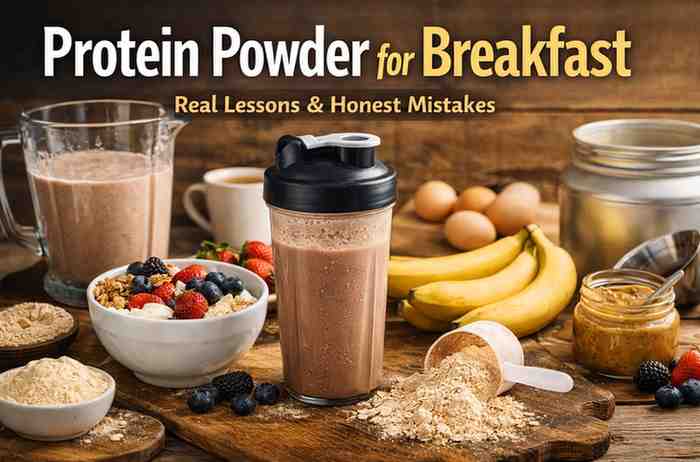
Protein Powder for Breakfast: 9 Real Lessons That Finally Bring Relief to the Morning Nutrition Struggle

Protein Powder For Breakfast 9 Real Lessons That Finally Bring Relief To The Morning Nutrition Struggle 1
Protein Powder for Breakfast 9 Real Lessons That Finally Bring Relief to the Morning Nutrition Struggle

Honestly… most people I’ve watched try protein powder for breakfast don’t fail because of the protein powder.

They fail because mornings are chaos.

Kids running around.
Emails already piling up.
Coffee replacing food.
Or someone trying to “eat healthier” while rushing out the door.

I’ve seen this pattern over and over with people around me — coworkers, friends from the gym, people asking me what they should do because they’re always hungry by 10:30 a.m.

They try something quick.

Usually a smoothie.

Maybe just a scoop of powder and almond milk.

For about a week they feel like they finally figured out mornings.

Then something weird happens.

They’re starving by mid-morning.
Energy crashes.
Or they get bored of it and quietly go back to skipping breakfast.

And almost everyone assumes the same thing:

“Protein powder just doesn’t work for me.”

But after watching dozens of people experiment with this over the years… the issue usually isn’t the protein powder.

It’s how people use it.

Small choices.
Tiny habits.

And honestly… most of the mistakes are incredibly predictable once you’ve seen them enough times.


Why So Many People Start Using Protein Powder for Breakfast

From what I’ve seen, the motivation is almost always the same.

People want something simple that doesn’t ruin their entire morning routine.

The typical situations look like this:

• Someone trying to lose weight but constantly snacking before lunch
• Someone lifting weights who realizes they barely eat protein in the morning
• Busy professionals who don’t want to cook at 7 a.m.
• Parents juggling too much already

And protein powder sounds like the obvious solution.

It promises:

  • Quick nutrition

  • No cooking

  • High protein

  • Easy calories control

On paper it’s perfect.

In real life… things get messy.

Because breakfast isn’t just about protein numbers.

It’s about satiety, routine, psychology, and habit friction.

That’s the part most advice online completely ignores.


What Most People Get Wrong at First

I didn’t expect this to be such a common issue until I started noticing the same pattern everywhere.

Almost everyone I’ve seen struggle with protein powder breakfasts makes one of these mistakes.

1. They Drink It Like a Shot

This is the biggest one.

People mix:

• 1 scoop protein
• water or almond milk

And drink it in about 20 seconds.

Then they wonder why they’re hungry an hour later.

Protein alone doesn’t always create fullness.

Especially liquid protein.

The people who actually stick with this long-term almost always add:

  • fiber

  • fat

  • or volume

Example routine I’ve seen work repeatedly:

• protein powder
• frozen berries
• oats or chia seeds
• milk or yogurt

Now it becomes a meal, not a supplement.


2. They Choose the Wrong Type of Protein

Another pattern I keep seeing.

People grab the cheapest tub they find.

Then complain about:

• stomach issues
• weird aftertaste
• bloating

From what I’ve seen, people tend to tolerate these best for breakfast:

  • Whey isolate (lighter digestion)

  • Plant protein blends (for dairy sensitivity)

  • Casein (more filling but thicker)

What people often hate in the morning:

  • overly sweet powders

  • chalky textures

  • heavy mass gainers

Morning tolerance matters more than macro numbers.

If it feels unpleasant at 7 a.m., the habit dies fast.


3. They Expect It to Replace Real Food Forever

This one is subtle.

A lot of people start using protein powder thinking:

“This will be my breakfast forever.”

But the people I’ve watched succeed with it treat it differently.

They use it as a tool, not a permanent rule.

Typical pattern:

  • protein shake on busy mornings

  • eggs or oatmeal on slower mornings

That flexibility seems to help people stick with the habit longer.

Rigid systems break.

Adaptable routines survive.


What Consistently Works (Across the People I’ve Watched)

After seeing enough people experiment with protein powder breakfasts, some patterns became very obvious.

These approaches tend to work again and again.

1. Turning the Shake Into a Real Meal

The most successful routines almost always include texture and volume.

A few combinations I’ve seen repeated a lot:

The filling smoothie

  • protein powder

  • frozen banana

  • peanut butter

  • oats

  • milk

The quick yogurt bowl

  • Greek yogurt

  • protein powder mixed in

  • berries

  • granola

The thick breakfast shake

  • protein powder

  • frozen berries

  • chia seeds

  • almond milk

Once people do this, the complaints about hunger usually disappear.


2. Keeping It Extremely Simple

Ironically, the more complicated someone makes the shake…

…the faster they quit.

The routines that survive usually look like this:

Two minute rule

  • scoop protein

  • frozen fruit

  • milk

Blend.

Done.

That’s it.

No elaborate “superfood” ingredients.

No measuring ten things.

Just something repeatable.


3. Treating It Like a Habit Anchor

This surprised me after watching so many people try it.

Protein powder works best when it’s tied to an existing morning habit.

For example:

• right after morning coffee
• after gym workouts
• before commuting

People who attach it to a routine rarely forget it.

People who rely on motivation usually stop within weeks.


How Long Does It Take to Notice Benefits?

From what I’ve seen, the timeline is actually pretty predictable.

Week 1

People mostly notice:

• convenience
• slightly better morning energy
• feeling “healthier”

But hunger patterns haven’t changed yet.


Week 2–3

This is where the real feedback appears.

People start noticing:

  • fewer mid-morning cravings

  • steadier energy

  • less random snacking

If those things aren’t happening…

something in the shake composition is usually off.


Around 1 Month

This is where habits either stick or disappear.

If the routine still feels easy at this point, most people keep it long term.

If it feels like a chore…

it fades away quietly.


Common Mistakes That Slow Results

Almost everyone I’ve seen struggle with protein powder breakfasts does at least one of these.

Drinking It Too Fast

Liquid calories go down easy.

Satiety signals need time.

People who sip slowly or eat a thicker smoothie feel fuller.


Not Enough Fiber

Protein without fiber often leads to hunger later.

Adding things like:

  • oats

  • chia seeds

  • berries

makes a big difference.


Using It for the Wrong Goal

Some people try to use protein powder breakfasts for extreme calorie restriction.

That backfires.

By lunchtime they’re ravenous.

Then the entire day’s eating goes off track.


Reality Check: When Protein Powder for Breakfast Isn’t Ideal

This part doesn’t get talked about enough.

Because protein powder isn’t automatically the right solution for everyone.

From what I’ve seen, people who struggle most with it are:

People Who Need Warm Food

Some people just don’t feel satisfied without warm meals.

Cold shakes leave them mentally unsatisfied.

Those people usually prefer:

  • eggs

  • oatmeal

  • breakfast sandwiches


People Who Love Variety

If someone gets bored easily with food…

a daily shake becomes unbearable fast.

These people usually succeed with alternating breakfast types.


People With Sensitive Digestion

Certain powders trigger:

  • bloating

  • gas

  • stomach discomfort

Testing different protein sources helps, but some people simply tolerate real foods better.


Objections I Hear All the Time

“Isn’t protein powder processed?”

Technically yes.

But context matters.

For someone skipping breakfast entirely…

a protein shake is usually a major improvement.


“Won’t this make me gain weight?”

Protein powder itself doesn’t cause weight gain.

Total calories do.

Used as a structured breakfast, many people actually snack less later.


“Is real food better?”

Sometimes, yes.

But perfect meals don’t help if someone never actually eats breakfast.

Convenience often wins.


Quick FAQ (People Also Ask Style)

Is protein powder for breakfast healthy?

It can be — especially when combined with fiber and whole foods like fruit or oats.

Used alone with just water, it may not be very filling.


Can you drink protein powder every morning?

Many people do.

But most successful routines include variety across the week.


Does protein powder help with weight loss?

Indirectly, yes.

Higher protein breakfasts often reduce hunger later in the day.

But it still depends on total daily calories.


What protein powder works best for breakfast?

From what I’ve seen people tolerate best:

  • whey isolate

  • blended plant protein

  • casein for longer fullness

Taste and digestion matter more than brand hype.


Practical Takeaways (From Watching Real People Try This)

If someone asked me how to start using protein powder for breakfast without the usual frustrations… this is what I’d tell them.

1. Make it a meal, not just a shake

Add fiber or fat.

Examples:

  • berries

  • oats

  • yogurt

  • nut butter


2. Keep the recipe ridiculously simple

If it takes more than two minutes, it probably won’t last.


3. Test a few protein types

Digestion varies a lot between people.

What works for one person may feel awful for another.


4. Expect a small adjustment period

Hunger signals take a couple weeks to stabilize.

Early feedback isn’t always accurate.


5. Don’t force it every day

Flexible routines last longer.

Rigid breakfast rules burn people out.


And honestly…

after watching so many people try this, fail, tweak things, and eventually settle into something that works…

protein powder for breakfast isn’t magic.

It won’t fix a chaotic lifestyle overnight.

But I’ve seen it quietly solve one annoying problem for a lot of people:

mornings where nutrition used to get skipped entirely.

Sometimes that small shift changes more than people expect.

Energy stabilizes.

Mid-morning cravings disappear.

People stop feeling like their day is already “off track” before noon.

Not everyone sticks with it.

Some people go back to eggs or oatmeal.

That’s fine too.

But the ones who make protein powder work usually discover the same thing eventually:

It wasn’t about the powder.

It was about finally building a breakfast routine that didn’t fight their real life. ????

Finger Clubbing: 9 Hard Truths I Learned the Uncomfortable Way

Finger Clubbing 9 Hard Truths I Learned The Uncomfortable Way
Finger Clubbing 9 Hard Truths I Learned the Uncomfortable Way

The moment I realized something was… off

Not gonna lie, I almost missed it.

I was trimming my nails late one night—bad lighting, half-asleep, scrolling my phone with my other hand. And something about my fingertips looked… swollen? Rounded? I remember pressing my thumb and index finger together and thinking, “Huh. That’s new.”

At first I laughed it off. I type a lot. Maybe it was just inflammation. Maybe I was dehydrated. Maybe I was overthinking things (my specialty).

But that tiny moment—that quiet, nagging “this doesn’t look like it used to”—was the first time finger clubbing crossed my radar. And once you see it, you can’t unsee it.

What followed was weeks of confusion, a lot of late-night reading, a few bad assumptions, and one very humbling doctor’s visit.

This isn’t a medical paper. This is what it actually felt like to notice it, misunderstand it, panic a little, and then slowly get clarity.

If you’re here because you’re staring at your own fingers right now… yeah. I get it.


I thought it was just “weird fingers” (spoiler: nope)

Here’s what I messed up early on: I assumed finger changes had to be dramatic to matter.

Like cartoon-level swelling. Or pain. Or bright red warning signs.

Mine were subtle. Almost polite.

What I noticed first:

  • Fingertips looked rounder from the side

  • Nails curved more than before

  • Pressing two nails together didn’t leave that little diamond-shaped gap anymore

Still, no pain. No color change. No obvious illness.

So I did what most of us do—I minimized it. “It’s probably genetics.”

“My hands have always been weird.”

“I’ll check again next month.”

That delay? Yeah. Don’t love that part of the story.

Because finger clubbing isn’t about how dramatic it looks. It’s about why it happens.

And I didn’t understand that yet.


The Google rabbit hole (and why it made things worse)

I’m going to be honest: Googling this at 1 a.m. was a terrible idea.

Search results jump fast—from “sometimes harmless” straight to “associated with serious disease.” No middle ground. No context. Just doom and confusion.

Some pages made it sound cosmetic. Others made it sound like a medical emergency. A few contradicted each other completely.

What didn’t help:

  • Stock photos that looked nothing like my hands

  • Medical jargon with zero explanation

  • Forums full of panic and no follow-up

I remember closing my laptop and thinking, “Okay, either this is nothing… or everything.”

That’s when I decided to stop guessing and start paying attention to my own body instead.


What finger clubbing actually felt like (for me)

This part surprised me.

There wasn’t pain. There wasn’t stiffness. There wasn’t even discomfort.

What there was:

  • A sense of fullness at the fingertips

  • Nails that felt thicker when trimmed

  • Skin that looked smoother, almost shiny

It was visual more than physical. Which is probably why it’s so easy to ignore.

From what I’ve seen (and lived), finger clubbing doesn’t announce itself loudly. It whispers. Slowly. Over time.

And because it’s gradual, your brain adapts. You normalize it.

That’s dangerous.


The doctor visit I kept putting off

I delayed booking the appointment for weeks. Part fear, part denial, part “I’m busy.”

Classic.

When I finally went in, I didn’t even lead with my fingers. I talked about fatigue. Sleep. Stress. Everything around the issue.

The doctor noticed my hands before I finished my sentence.

That moment—when a professional confirms the thing you’ve been trying not to name—hits hard.

He didn’t panic. That mattered.

Instead, he explained that finger clubbing is a sign, not a diagnosis. A clue. A signal that something else might be going on.

Might.

That word helped me breathe again.


The biggest misunderstanding people have (I did too)

Here’s the truth I wish I’d known earlier:

Finger clubbing itself isn’t the problem.
It’s the messenger.

It can be linked to lung issues, heart conditions, digestive diseases, or sometimes things that are manageable—or already known.

Sometimes it’s even idiopathic. Meaning… no clear cause.

What matters is context:

  • Other symptoms

  • Medical history

  • Timeline

  • Progression

Looking at your fingers alone won’t give answers. Looking at your whole body might.

This isn’t magic. It’s detective work.


Tests, waiting, and the mental spiral

Waiting for results is brutal.

Every day I inspected my hands like they were going to change overnight. They didn’t. But my anxiety did.

Here’s what I learned during that stretch:

  • Stress makes everything feel worse

  • Obsessive checking helps nothing

  • Writing symptoms down helps a lot

I kept a simple notes app log:

  • What changed

  • What didn’t

  • How I felt physically

That log ended up being more useful than my memory when follow-ups happened.

Also—important—nothing catastrophic happened. That’s worth saying out loud.


“Don’t make my mistake” moments

If you take nothing else from this, take these:

  • Don’t self-diagnose based on images. Hands vary wildly.

  • Don’t assume no pain = no issue.

  • Don’t wait for it to get “bad enough.”

  • Don’t let Google replace a real exam.

And maybe the biggest one: Don’t shame yourself for noticing something and being scared by it.

That fear is information. Use it. Don’t drown in it.


9. What actually helped me move forward

A few things made a real difference:

  • Seeing a clinician who explained things clearly

  • Asking dumb questions without apologizing

  • Accepting uncertainty without spiraling

  • Understanding that monitoring is sometimes the plan

Not everything needs an immediate fix. Some things need observation and context.

That took me a while to accept.


Practical things I’d tell a friend right now

If you’re worried about finger clubbing, here’s my real-world advice—not medical instructions, just human stuff:

  • Take clear photos of your hands over time

  • Compare both hands, not just one

  • Note any breathing, fatigue, or circulation changes

  • Bring it up directly with your doctor

  • Ask what they are watching for

And if your doctor brushes it off without explanation? Get a second opinion. Calmly. Respectfully. But firmly.

You deserve clarity.


FAQ: what I’ve learned messing with this myself

Is finger clubbing always serious?

No. Sometimes it’s linked to conditions that are already known or manageable. The key is finding out why, not panicking.

How fast does it develop?

Slowly. That’s part of the problem. Changes happen over months or years, not days.

Can it go away?

From what I’ve seen, it depends on the cause. In some cases, treating the underlying issue helps. In others, it stabilizes.

Should I see a doctor even if I feel fine?

Yes. Feeling fine doesn’t rule anything out. I felt fine too.

Is it painful?

For me, no. And that’s common. Lack of pain doesn’t mean lack of importance.


I didn’t expect my fingers to teach me anything about patience, fear, or paying attention to my body. But here we are.

Finger clubbing isn’t magic. It isn’t a verdict. It’s a signal.

And learning to listen—without freaking out or ignoring it—that’s the real work.

If you’re in that weird in-between space right now, staring at your hands and wondering what to do next… take a breath. Get information. Get help. You’re not wrong for noticing.

From where I’m standing? That awareness alone already puts you ahead.

Ways to Cure Snoring: 17 Honest Fixes I Tried (Some Worked, Some Didn’t)

Ways To Cure Snoring 17 Honest Fixes I Tried Some Worked Some Didnt 1
Ways to Cure Snoring 17 Honest Fixes I Tried Some Worked Some Didnt

I’m just going to say it: snoring wrecked my life for a while.

Not in a dramatic movie way. More like slow, annoying erosion. Bad sleep. Embarrassment. My partner elbowing me at 3 a.m. Google searches at midnight. Denial during the day. Panic at night.

I didn’t wake up one morning thinking, Wow, I should explore ways to cure snoring.
It was more like, Why am I so tired and why does everyone hate sleeping near me?

Not gonna lie — I assumed snoring was either “old man stuff” or something you just live with. I was wrong. And also… kinda stubborn about it at first.

This is everything I learned the hard way. The stuff I tried. What failed. What weirdly worked. And what I’d tell a friend if they texted me at 1 a.m. asking for help because their partner just moved to the couch.


How I Realized Snoring Was Actually My Problem

At first, I blamed everything else.

  • The mattress

  • Stress

  • A cold I “might” have

  • My partner being dramatic

Classic deflection.

Then I recorded myself one night. Huge mistake. Or maybe the best one.

It wasn’t cute snoring. It was loud. Broken. Almost aggressive. Like my throat was actively rebelling.

That’s when I stopped laughing it off and started looking for real ways to cure snoring — not miracle pills, just stuff that might help.


The Big Thing I Got Wrong at the Start

I thought snoring had one cause.

Turns out… nope.

From what I’ve seen, at least, snoring is more like a messy pile-up:

  • Airway shape

  • Sleep position

  • Weight changes

  • Alcohol

  • Nose issues

  • Jaw placement

So when the first thing I tried didn’t work, I assumed nothing would.

That was my first mistake.

Snoring fixes stack. One tiny improvement won’t do much. Three small ones together? That’s where things shifted.


1. Changing How I Slept (Annoying, But Effective)

I hated this suggestion. Still do.

But sleeping flat on my back was my worst enemy.

Every time I rolled onto my back, the snoring went nuclear. On my side? Way quieter.

What actually helped:

  • A firm body pillow

  • A slightly higher pillow for my head

  • Training myself not to roll over (this took weeks)

I didn’t expect this to matter as much as it did. Honestly surprised me.


2. Nasal Strips: Embarrassing but Legit

I laughed at these. Then I bought them anyway.

They look ridiculous. I felt ridiculous. But wow… airflow changed instantly.

Pros:

  • Cheap

  • Immediate difference

  • No learning curve

Cons:

  • Don’t fix throat-based snoring

  • Can irritate skin

Still, as far as simple ways to cure snoring go, this was one of the easiest wins.


3. Alcohol Was Quietly Making Everything Worse

This one hurt my feelings.

Even one drink made my snoring louder. Like, noticeably.

I didn’t quit drinking forever. I just stopped drinking within 3–4 hours of bed.

That alone cut the volume down more than I expected.

Did I want that to be true? Nope.
Was it? Unfortunately, yes.


4. Losing a Little Weight (Not What You Think)

I didn’t go on a big weight-loss journey.

But I did lose about 10 pounds without trying too hard. More walking. Less late-night junk.

That tiny shift changed how my neck and throat felt at night.

Not a magic fix. But part of the stack.


5. Humidifier: The Unexpected MVP

Dry air messed me up.

My throat felt tight at night. Nose clogged. Snoring louder.

Adding a humidifier next to the bed felt silly at first. Then my morning throat pain disappeared.

From there, the snoring eased.

This honestly surprised me.


6. Mouth Taping (Yes, Really)

Okay. This one sounds unhinged.

I tried gentle mouth tape to force nose breathing. Not duct tape. Calm down.

Results?

  • Less dry mouth

  • More consistent breathing

  • Slight snoring reduction

It didn’t solve everything, but it helped. Just don’t try this if you have serious nasal blockage.


7. Cleaning My Nose Before Bed (Gross But Helpful)

I used a saline rinse.

Not glamorous. Slightly uncomfortable. But it cleared things out.

When my nose was clear, my breathing stayed calmer. When it wasn’t, snoring came back.

Simple cause and effect.


8. Pillows Matter More Than Mattresses (For Snoring)

I obsessed over mattresses. Waste of time.

The pillow did way more.

What worked:

  • Medium firmness

  • Neck support

  • No pancake-flat nonsense

Too soft? Head sank. Snoring worsened.
Too high? Neck bent weirdly. Same issue.


9. Allergy Control Changed Everything Seasonally

I didn’t think allergies affected sleep much.

Wrong again.

Dust, pet dander, pollen — all of it swelled my nasal passages.

Things that helped:

  • Washing sheets weekly

  • Air purifier

  • Allergy meds during peak seasons

Snoring dropped during allergy control weeks. Came back when I got lazy.

Lesson learned.


10. Throat Exercises (I Was Skeptical)

I rolled my eyes at this.

Then I tried them.

Simple tongue and throat movements for 10 minutes a day. Felt dumb. Took weeks.

But slowly, the vibration reduced.

Not instant. Not dramatic. But real.


11. What Didn’t Work (So You Don’t Waste Time)

Let me save you some frustration.

  • Snoring sprays — useless

  • Herbal “cures” — nope

  • Random Amazon gadgets — mostly junk

  • One-size-fits-all solutions — misleading

If someone promises a guaranteed cure, be suspicious.


12. Sleep Schedule Consistency Helped More Than I Expected

When I went to bed exhausted and late, snoring spiked.

When I slept at consistent times, my breathing stayed calmer.

I didn’t expect that at all.


13. Jaw Position Is a Sneaky Factor

I clench my jaw.

Turns out, that affects airflow.

A basic mouth guard helped keep things aligned. Not perfect. But better.


14. Hydration Sounds Boring, But It Matters

Dry throat = more vibration.

Drinking water earlier in the evening helped. Chugging right before bed did not.

Balance matters.


15. Stress Makes Snoring Louder (Annoyingly)

High stress nights = worse snoring.

Breathing exercises before bed helped more than scrolling ever did.

I hated admitting that.


16. Tracking Progress Kept Me Sane

I used a snoring app.

Not to obsess. Just to notice patterns.

That’s how I figured out what actually worked.


17. Knowing When to See a Doctor (Important)

Here’s the serious part.

If snoring includes:

  • Gasping

  • Choking

  • Extreme fatigue

  • Morning headaches

Don’t tough it out. Sleep apnea is real.

No blog replaces medical help.


Practical Takeaways (What I’d Actually Tell a Friend)

If you’re overwhelmed, start here:

  • Change sleep position

  • Try nasal strips

  • Reduce alcohol before bed

  • Improve air quality

  • Fix pillow support

Stack small changes. Don’t chase miracles.

And give it time. Most things took weeks, not nights.


I wish I could say there’s one perfect answer.

There isn’t.

But learning real, human ways to cure snoring changed my sleep — and honestly, my mood, my relationship, my mornings.

So no — this isn’t magic.

But for me?

Yeah. It finally made things feel… manageable.

And that was enough.

Can You Die from Gum Disease? 7 Hard Truths Most People Learn Too Late (and Why There’s Still Hope)

Can You Die From Gum Disease 7 Hard Truths Most People Learn Too Late And Why Theres Still Hope 1
Can You Die from Gum Disease 7 Hard Truths Most People Learn Too Late and Why Theres Still Hope

I’ve watched this question land on people in a very specific way.

It usually starts small. Bleeding when brushing. A weird metallic taste. Gums that look a little darker than they used to. Most people shrug it off for months — sometimes years — until someone mentions gum disease and then the spiral starts.

And then the real fear shows up:

“Can you die from gum disease?”

I’ve sat across from enough anxious faces to tell you — this isn’t just curiosity. It’s fear mixed with regret. And a little shame.

Let’s walk through this honestly.

Not dramatic. Not dismissive.

Just what I’ve seen.


The Short Answer (Because I Know That’s What You Want First)

Yes — severe, untreated gum disease can contribute to life-threatening health problems.

Not in a horror-movie way.

But through long-term inflammation, infection, and its impact on the heart, blood sugar, and immune system.

That’s the real story.

And most people don’t hear it clearly enough, early enough.


What I’ve Seen Over and Over Again

Most people don’t think gum disease is serious.

They think:

  • It’s cosmetic

  • It’s about bad breath

  • It’s about losing teeth

  • It’s something older people deal with

Almost everyone I’ve seen struggle with this does this one thing wrong:

They treat bleeding gums like a brushing issue instead of a health issue.

And that delay? That’s where problems start compounding.


What Gum Disease Actually Does (Without the Medical Textbook Voice)

From what I’ve seen in real cases — gum disease isn’t just about your mouth.

It’s about chronic inflammation.

And chronic inflammation is not neutral.

Here’s the chain reaction I’ve watched play out:

  1. Plaque builds up.

  2. Gums get inflamed (gingivitis).

  3. People ignore it because it doesn’t hurt much.

  4. Infection deepens (periodontitis).

  5. Bacteria enter the bloodstream.

  6. Systemic inflammation increases.

That last part is what surprises people.

I didn’t expect this to be such a common issue until I saw how often dentists connected advanced gum disease with:

  • Heart disease

  • Stroke risk

  • Poor diabetes control

  • Complications after surgery

This honestly surprised me after watching so many people treat their gums as “separate” from the rest of their body.

They’re not separate.


Can You Die Directly from Gum Disease?

Let’s be precise.

You typically don’t die from gum disease itself.

You die from what chronic infection and inflammation contribute to over time.

That includes:

  • Cardiovascular disease

  • Sepsis (in rare advanced untreated cases)

  • Complications in medically fragile individuals

The connection between periodontal disease and heart conditions is one of the most consistent patterns I’ve seen discussed in serious dental and medical settings.

The risk isn’t dramatic and immediate.

It’s cumulative.

Quiet.

Slow.

That’s what makes it dangerous.


The Pattern I’ve Noticed in People Who Get Scared

There are two types of reactions when people learn gum disease can affect overall health.

1. Panic Spiral

They Google for three hours.
Convince themselves they’re dying.
Book three appointments.
Lose sleep.

2. Avoidance Mode

They get scared.
Feel ashamed.
Delay treatment longer.

Most people swing between both.

Neither helps.

What actually works is boring and steady.


How Long Does It Take for Gum Disease to Become Dangerous?

This is one of the most common questions I hear.

And the honest answer is: it depends on severity and underlying health.

From what I’ve observed:

  • Gingivitis can appear within weeks of poor hygiene.

  • Periodontitis often develops over months to years.

  • Systemic effects build slowly.

It’s rarely sudden.

It’s usually years of neglect.

That’s both scary and hopeful.

Scary because it builds quietly.

Hopeful because you usually have time to intervene.


What Most People Get Wrong at First

Almost everyone I’ve seen mess this up makes at least one of these mistakes:

  • Brushing harder instead of flossing properly

  • Avoiding the dentist because of embarrassment

  • Using mouthwash as a “fix”

  • Stopping treatment once bleeding decreases

  • Thinking no pain = no problem

Pain is not a reliable indicator here.

I’ve seen severe cases where people said, “It doesn’t even hurt.”

That’s not comfort.

That’s nerve adaptation.


Who Is Actually at Higher Risk?

From repeated case observations, these groups tend to struggle more:

  • People with uncontrolled diabetes

  • Smokers

  • Heavy alcohol users

  • People under chronic stress

  • Individuals with weakened immune systems

  • Those avoiding dental care for financial reasons

I didn’t expect stress to show up as often as it does.

But it does.

Stress changes hygiene routines.
Stress affects immunity.
Stress increases inflammation.

It stacks.


Is It Worth Treating Early-Stage Gum Disease Aggressively?

Short answer?

Yes.

Because early-stage gum disease (gingivitis) is reversible.

Once bone loss begins (periodontitis), you’re managing damage, not reversing it.

From what I’ve seen, the people who handle it early:

  • Spend less money

  • Feel less shame

  • Avoid complicated procedures

  • Sleep better

The ones who wait?

They end up needing deep cleanings, scaling, root planing, sometimes surgery.

Not because they’re irresponsible.

Because they underestimated it.


What Consistently Works (Across So Many People)

Here’s what I’ve seen actually stabilize gum disease:

  • Professional deep cleaning when needed

  • Daily flossing (correctly, not aggressively)

  • Electric toothbrush use

  • Routine dental visits every 3–6 months for moderate cases

  • Managing blood sugar if diabetic

  • Quitting smoking

It’s not glamorous.

It’s consistent.

That’s the part people resist.


What Repeatedly Fails

Let me save you some time.

These rarely work long term:

  • Oil pulling alone

  • Random Amazon gum gels

  • “Natural cures” without cleaning

  • Brushing three times a day but never flossing

  • Avoiding dental visits because bleeding feels embarrassing

Almost everyone I’ve seen try to self-manage advanced gum disease eventually circles back to professional care.

Not because natural methods are useless.

But because infection under the gumline isn’t reachable at home.


FAQ (Quick, Direct Answers)

Can gum disease kill you quickly?

No. It’s typically a slow-progressing condition. The danger comes from long-term systemic effects.

Can gum disease cause a heart attack?

It doesn’t directly cause one overnight, but chronic inflammation from periodontal disease is associated with increased cardiovascular risk.

Is gum disease reversible?

Gingivitis is reversible. Advanced periodontitis is manageable, not fully reversible.

How do I know if mine is severe?

Warning signs:

  • Gums pulling away from teeth

  • Persistent bad breath

  • Loose teeth

  • Deep gum pockets

  • Pus around gumline

If you’re unsure, you need an exam. Not a guess.


Objections I Hear All the Time

“I brush every day. That should be enough.”

Brushing alone doesn’t clean between teeth.

That’s where disease often starts.

“It doesn’t hurt.”

Gum disease often doesn’t hurt until late stages.

That’s the trap.

“Dentists just want money.”

I understand the skepticism.

But untreated infection costs far more long-term — financially and physically.


Reality Check (This Part Matters)

Here’s what I tell people gently but clearly:

If you’re already experiencing moderate to advanced periodontitis, this won’t be fixed in two weeks.

You might need:

  • Deep cleanings

  • Maintenance appointments

  • Long-term monitoring

And yes — it can feel discouraging.

Especially if you’re in your 30s or 40s and didn’t expect this.

Still.

Stability is possible.

I’ve seen people stop progression entirely once they committed.

Not perfect gums.

Stable gums.

That’s the real win.


Who This Is NOT For

If you’re looking for:

  • A magic rinse

  • A one-week cure

  • A way to avoid dental care entirely

This approach will frustrate you.

It requires consistency.

And some humility.


What Patience Actually Looks Like

This is something no one talks about.

Patience here looks like:

  • Bleeding reducing slowly over weeks

  • Gum inflammation calming gradually

  • Returning for follow-ups even when you feel “fine”

  • Tracking improvements quietly

It’s not dramatic.

It’s steady.

And honestly? That steadiness is what lowers long-term risk.


So… Can You Die from Gum Disease?

Here’s the grounded answer.

Untreated, severe gum disease can contribute to systemic inflammation and increase the risk of serious health complications that can be life-threatening.

But most people asking this question are not at immediate risk of death.

They’re at a crossroads.

That’s different.

From what I’ve seen, the real danger isn’t the bacteria alone.

It’s delay.

Delay fueled by embarrassment.
Delay fueled by fear.
Delay fueled by underestimating the impact.

If you catch it early, act consistently, and manage your overall health?

The trajectory changes.

I’ve watched people walk in terrified and walk out with a plan.

And that shift — from panic to action — is usually the moment things start stabilizing.

So no, this isn’t something to ignore.

But it’s also not a death sentence.

It’s a signal.

And signals, when respected early, tend to save a lot more than just your gums.

Nagano Tonic: 7 Surprising Reasons This Eastern Elixir Changed My Life

Leanbodytonic

Nagano TonicTonic: 7 Surprising Reasons This Eastern Elixir Changed My Life

Honestly? I used to roll my eyes at anything labeled “metabolism booster”. Been there, done that, peed neon yellow, saw zero results.

But Nagano Tonic? Yeah… that one hit different.


The Day I Hit Rock Bottom (a.k.a. The Reunion That Broke Me)

It was my 10-year college reunion.

I remember standing in front of my closet, tugging on jeans that used to fit, sweating bullets, and whispering every curse word known to mankind. Nothing zipped. My backup outfit? Too tight. My emergency black dress? Couldn’t even pull it past my thighs.

My mirror was unforgiving.

I ended up wearing leggings and an oversized hoodie. At a reunion. Everyone else looked great. Me? I looked like I just rolled out of a sad Netflix binge.

That night, something inside me cracked.

I wasn’t just tired of the weight. I was tired of feeling invisible. Sluggish. Bloated. Gross. I missed energy. Confidence. Sex drive. The ability to walk past a mirror and not wince.

So I did what I swore I’d never do again: Googled “natural metabolism booster that actually works.”

Guess what popped up?

Nagano Tonic.


Skeptical? Me Too.

I’ve tried everything.

  • Intermittent fasting (just made me hangry)
  • Keto (I love bread too much)
  • Green juice cleanses (gave me diarrhea… TMI?)
  • Apple cider vinegar shots (why did we ever think that was okay?)

So when I read about a “Japanese elixir that targets dormant metabolism,” I rolled my eyes so hard I saw my brain.

But something about the ingredients caught my attention. Camu Camu? Ashwagandha? Cinnamon Cassia? Stuff I recognized from my wellness nerd phase. And they weren’t promising overnight miracles.

So I said, “What the hell,” and ordered the 3-bottle bundle.


Week 1: Meh… But Something Was Happening

I started mixing one scoop of Nagano Tonic into cold water every morning.

Taste? Surprisingly good. Kind of fruity-earthy. Not medicine-y.

Day 2: I didn’t need my 2 p.m. nap. Weird.

Day 4: Noticed I wasn’t inhaling snacks while working. My usual 3 p.m. “why am I eating crackers out of the box like a goblin” moment? Didn’t happen.

No weight loss yet. But I felt… steadier? Like my body wasn’t in chaos mode 24/7.


Week 3: Something Shifted (and My Pants Agreed)

Alright. THIS was when I started to believe the hype.

  • I woke up energized. Like, actually woke up before my alarm.
  • My cravings were gone. Like, poof. I walked past donuts and didn’t blink.
  • And… I lost 4 pounds without changing anything else.

I was shooketh.

Also, my digestion? Not gonna lie, I was going more regularly than ever before. ???? (Sorry, but that matters!)


So What Is This Stuff, Really?

Here’s the deal (from someone who now keeps this stuff next to her toothpaste):

Nagano Tonic is a mix of ancient Eastern herbs and modern metabolism science.

What’s In It:

  • Camu Camu: Superfruit with vitamin C. Boosts metabolism + energy.
  • Ashwagandha: Helps manage stress cravings. (This SAVED me.)
  • Ginger: Revved my digestion like a smooth engine.
  • Cinnamon Cassia: Kept my blood sugar balanced – no more crashes.
  • EGCG from green tea: The MVP for metabolism.
  • Mangosteen, Panax, Eleuthero Root, Alfalfa Leaf – and more stuff I can barely pronounce but now swear by.

These aren’t trendy ingredients. They’ve been used in Japan and East Asia for generations. They’re just finally in one blend.


FAQs (Because I Had All These Questions Too)

“How fast will it work?”

For me, energy boosted in 3 days, cravings dropped in 1 week, and fat started melting by week 3.

“Any weird side effects?”

Nope. No jitters. No weird bathroom emergencies. Just smooth, consistent results.

“Do I have to diet?”

Nope. I didn’t change my food. But I wanted to eat better because I felt better.

“What if it doesn’t work?”

They have a 180-day money-back guarantee. Like, no joke.

“Can I take it with other stuff?”

I did. I still take vitamins and the occasional collagen. No issues.


The Real Changes I Didn’t Expect

Not gonna lie, the weight loss was amazing. But that wasn’t even the best part.

  • I started liking myself again.
  • I had more mental clarity. Like, my brain fog lifted.
  • My libido came back. (My partner noticed. ????)
  • I started saying YES to plans again instead of hiding at home.
  • My skin? Glowing.

Nagano Tonic didn’t just help me lose fat. It gave me me back.


7 Surprising Reasons I Swear By Nagano Tonic:

  1. It actually works without crazy diets or workouts
  2. Tastes good (yes, really)
  3. No jitters or crashes
  4. Less emotional eating (bye stress snacks)
  5. Real energy, not fake caffeine buzz
  6. Visible fat loss (my love handles? Shrinking!)
  7. Mental + emotional glow-up

Final Verdict (a.k.a. Would I Recommend This to My Best Friend?)

Hell yes.

I bought the 3-bottle bundle and just upgraded to the 6-bottle deal – because honestly? I don’t want to go a day without it.

This isn’t some magic potion. It’s not a shortcut. But for me, Nagano Tonic was the nudge my body desperately needed. The metabolism switch-flipper. The craving-eraser. The energy restorer.

So if you’re where I was – bloated, exhausted, and stuck in a body that doesn’t feel like yours anymore?

Just try it.

Worst case? You get your money back.

Best case? You get your life back.


P.S. If you do try it, give it a full month. You deserve that much. And maybe, just maybe, you’ll be writing your own Nagano glow-up story soon.

Order Nagano Tonic Here →