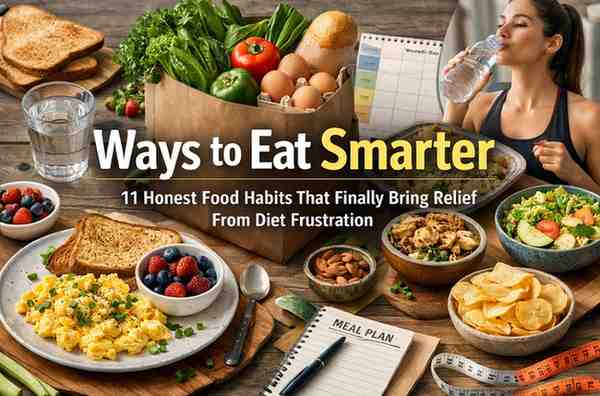
I’ve watched a lot of people try to “fix their eating.”
Friends. Clients. Family members. Coworkers who quietly ask questions over lunch.
And honestly… most of them start in the exact same place.
They’re frustrated.
Not lazy. Not careless. Just overwhelmed.
They’ve tried diets that sounded convincing at first — keto, intermittent fasting, calorie tracking apps, detox plans. Some even worked for a few weeks.
Then life happened.
Schedules changed. Stress hit. Motivation dropped.
And suddenly the plan that looked so perfect on paper stopped working.
After seeing this play out again and again, one thing became obvious to me: the people who actually stabilize their eating habits don’t chase complicated diets.
They learn ways to eat smarter.
Not stricter.
Not extreme.
Just… smarter.
Small decisions that quietly shift how food fits into everyday life.
And the funny thing? A lot of these habits look almost too simple at first.
But once you see the patterns behind them… you start realizing why they work.
Why Most People Start Searching for Ways to Eat Smarter
Usually something pushes them.
Not curiosity.
More like a quiet moment of realization.
Maybe it’s:
-
Energy crashes every afternoon
-
Weight slowly creeping up
-
Constant hunger even after meals
-
Feeling tired all the time
-
Or just realizing food has become stressful
One thing I hear constantly:
“I know what healthy food is… I just can’t seem to eat that way consistently.”
That sentence shows up in almost every conversation.
And honestly, they’re right.
The issue usually isn’t knowledge.
It’s decision friction.
When eating feels complicated, people revert to convenience.
That’s where smarter eating habits start helping.
They remove friction.
11 Ways to Eat Smarter (Patterns I’ve Seen Actually Work)
These are habits I’ve watched real people adopt successfully.
Not overnight.
But gradually.
1. Stop Starting the Day With Pure Sugar
This one surprised me how common it is.
Breakfasts like:
-
sweet cereal
-
pastries
-
flavored coffee drinks
-
fruit-only smoothies
They feel light and healthy.
But I’ve watched so many people experience the same cycle:
1 hour later → hungry again
2 hours later → craving snacks
3 hours later → energy crash
When people shift breakfast slightly — adding protein or fat — the difference is noticeable.
Examples that work better:
-
eggs + toast
-
yogurt + nuts
-
oatmeal + peanut butter
-
smoothie with protein + fiber
Nothing extreme.
Just slowing the sugar spike.
2. Most People Undereat Real Meals — Then Overeat Snacks
I didn’t expect this to be such a common issue.
People trying to “be healthy” often eat meals that are too small.
Example:
Lunch = salad with almost nothing in it.
Two hours later?
They’re starving.
Then come the snacks.
Crackers. Chips. Energy bars.
When people start eating more balanced meals, snacking naturally drops.
A balanced meal usually includes:
-
protein
-
fiber
-
healthy fat
-
carbs
Not tiny portions.
Actual meals.
3. Smart Eating Usually Means Planning One Thing Ahead
Not full meal prep.
Most people fail when they try that.
What I’ve seen work much better:
Plan just one meal ahead.
Usually lunch.
Because lunch is where people panic-order fast food.
Simple options people keep repeating successfully:
-
leftover dinner
-
grain bowls
-
wraps
-
prepped sandwiches
-
protein + fruit + nuts
That tiny bit of planning prevents a lot of impulsive eating.
4. Drink Water Before Deciding You’re Hungry
This sounds obvious.
But almost nobody does it consistently.
And I’ve watched people misinterpret dehydration as hunger all the time.
A simple habit:
Drink a glass of water first.
Wait 10 minutes.
Then decide if you’re still hungry.
You’d be surprised how often the craving fades.
5. The “Add Before You Remove” Rule
This one works incredibly well psychologically.
Instead of banning foods, people add nutrients.
Examples:
Add:
-
vegetables
-
protein
-
fiber
-
healthy fats
When meals become more satisfying, junk food cravings naturally decrease.
Restriction alone usually backfires.
6. Grocery Store Strategy Matters More Than Willpower
Almost everyone I’ve seen struggle with eating habits makes the same mistake:
They rely on discipline after food is already in the house.
That rarely works.
Smarter shoppers do something different:
They design their environment.
Things I’ve watched people do successfully:
-
keep fruit visible
-
store snacks out of sight
-
buy smaller quantities of junk food
-
keep easy protein options ready
Once food is home, decisions get emotional.
Shopping decisions are calmer.
7. Eat Slower Than You Think You Need To
This one sounds boring.
But it works.
People who eat quickly almost always overeat.
Why?
Your body takes time to register fullness.
A small change I’ve seen help people:
Put utensils down occasionally.
Pause between bites.
Drink water during meals.
It feels awkward at first.
But fullness cues start showing up earlier.
8. “Weekend Eating” Is Where Many Habits Collapse
People eat well Monday–Friday.
Then weekends undo everything.
Not intentionally.
Just social meals, drinks, late-night snacks.
I’ve watched people stabilize this by using one rule:
Weekend moderation, not restriction.
Instead of strict diets followed by chaos.
They simply aim for:
-
one indulgent meal
-
balanced meals the rest of the day
That flexibility keeps habits stable.
9. Learn Your Personal Trigger Foods
Almost everyone has them.
Foods that make stopping difficult.
For some people:
-
chips
-
ice cream
-
sugary drinks
-
certain snack foods
I’ve watched people struggle until they finally accept:
These foods are easier to limit access to.
Not eliminate forever.
Just avoid constant exposure.
10. Protein Quietly Solves Many Eating Problems
This honestly surprised me after watching so many people change their meals.
When people increase protein slightly:
-
hunger stabilizes
-
cravings drop
-
energy improves
Not massive bodybuilder levels.
Just enough protein per meal.
Examples:
-
eggs
-
chicken
-
beans
-
tofu
-
Greek yogurt
-
fish
A lot of people accidentally eat far less protein than they realize.
11. Smart Eating Usually Feels Boring at First
This might be the most honest thing to say.
When habits stabilize, eating becomes less dramatic.
Less emotional.
Less chaotic.
That calmness feels strange initially.
But it’s often a sign things are working.
How Long Does It Take to See Results?
From what I’ve seen:
Energy improvements:
Often within 1–2 weeks.
Hunger stabilization:
About 2–3 weeks.
Weight or body changes:
Usually 4–8 weeks.
But this depends heavily on consistency.
Most people underestimate how much small decisions accumulate.
Common Mistakes People Make When Trying to Eat Smarter
These show up constantly.
1. Trying to change everything at once
Too many new habits.
Overwhelming.
Then quitting.
2. Following extreme diets
They work temporarily.
But sustainability collapses.
3. Ignoring emotional eating
Stress eating is real.
Habits need flexibility.
4. Expecting motivation to stay high
Motivation fades.
Systems matter more.
Quick FAQ: Ways to Eat Smarter
What does eating smarter actually mean?
It means making food decisions that support energy, hunger control, and long-term health — without extreme dieting.
Is eating smarter the same as dieting?
No.
Diets usually focus on restriction.
Smart eating focuses on better patterns.
Can eating smarter help with weight loss?
Often yes — but it’s usually gradual.
The biggest change people notice first is stable hunger.
Do you have to give up favorite foods?
No.
Most people succeed when they reduce frequency, not eliminate foods.
Objections I Hear All the Time
“Healthy food is too expensive.”
Sometimes true.
But a lot of effective options are simple:
-
beans
-
eggs
-
oats
-
frozen vegetables
-
rice
-
potatoes
Smart eating doesn’t require expensive superfoods.
“I don’t have time to cook.”
Many people solve this by repeating very simple meals.
Examples:
-
yogurt + fruit + nuts
-
eggs + toast
-
chicken wraps
-
grain bowls
Consistency beats variety.
“I always fail diets.”
That’s incredibly common.
Smarter eating habits are smaller.
More forgiving.
They leave room for real life.
Reality Check: Who This Approach Might Not Work For
Some people honestly hate flexible eating strategies.
People who prefer very strict rules sometimes do better with structured programs.
Also:
If someone struggles with serious medical or eating disorders, professional guidance is important.
Food habits can be complex.
Practical Takeaways (If You Want to Start Simple)
If someone asked me where to begin, I’d usually suggest:
Start with three things:
-
Add protein to breakfast
-
Drink water before snacks
-
Plan tomorrow’s lunch
That’s it.
Not ten habits.
Not a complete diet overhaul.
Just three decisions repeated daily.
After a few weeks, most people naturally start adjusting other meals.
And honestly… that’s usually when the shift happens.
Not when someone finally finds the perfect diet.
But when eating stops feeling like a constant fight.
Food becomes predictable again.
Energy stabilizes.
Hunger makes sense.
I’ve watched enough people go through that transition to know something simple but important:
No, smarter eating isn’t magic.
But when people quietly change a few daily patterns… the frustration they’ve been carrying around food starts fading.
Sometimes slowly.
Sometimes faster than expected.
Either way — that moment when someone says “wait… this actually feels manageable now”?
That’s usually when they realize they were never the problem.