I can’t tell you how many times I’ve watched someone sit in a consultation chair, touch their cheeks or jawline, and say some version of, “I just look tired. And I don’t know why.”
They’ve tried creams. Supplements. New lighting. Different makeup. Even changing their hair.
Then someone mentions Restylane Lyft, and suddenly it feels like maybe this is the thing that fixes it.
From what I’ve seen, this is usually the turning point — either toward relief… or toward quiet disappointment.
And most of that comes down to expectations.
I’ve sat in on consultations. I’ve watched before-and-afters unfold over months. I’ve seen people thrilled. I’ve seen people confused. I’ve seen people blame themselves when the real issue was bad guidance.
So let’s talk about this honestly.
Not the brochure version.
The real version.
What Restylane Lyft Actually Is (Without the Sales Language)
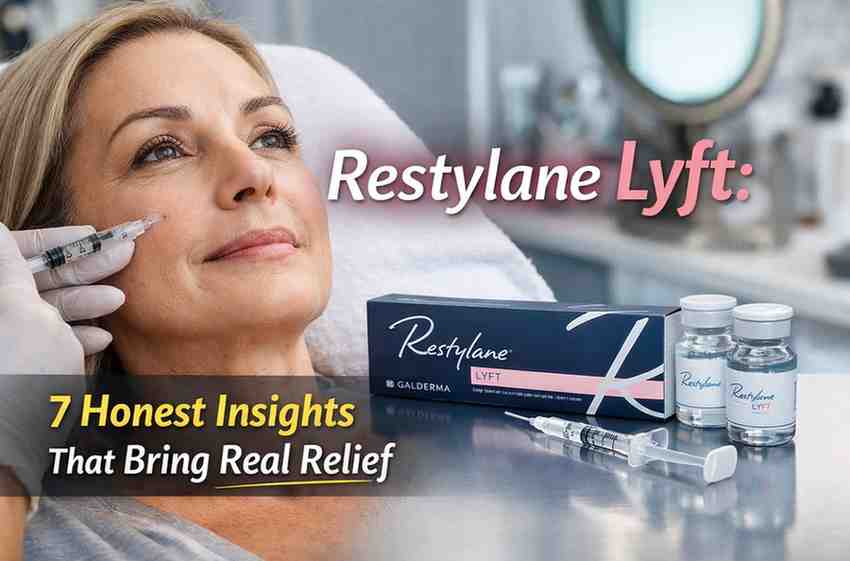
At its core, Restylane Lyft is a hyaluronic acid dermal filler designed to restore volume — mostly in the cheeks, midface, and sometimes hands.
It’s FDA-approved in the United States for:
-
Cheek augmentation
-
Correction of age-related midface volume loss
-
Treatment of moderate to severe facial wrinkles and folds (like nasolabial folds)
It’s thicker and more supportive than some lighter fillers. Think structure, not subtle hydration.
Most people who ask about it aren’t chasing dramatic change.
They’re chasing:
-
Looking less exhausted
-
Getting their cheekbones back
-
Softening deep smile lines
-
Feeling “like themselves” again
And that emotional part? That’s real.
Why People Try Restylane Lyft in the First Place
Almost everyone I’ve seen consider it falls into one of three camps:
-
They’ve noticed sudden volume loss
Usually early 30s to mid-40s. One day photos look different. The face looks flatter. -
They’ve tried lighter fillers and weren’t impressed
Subtle change. No lift. Money spent. Mild frustration. -
They’re tired of looking tired
This one is more emotional than aesthetic.
What surprises people is this:
Volume loss isn’t just about skin. It’s about structural support under the skin.
When cheek volume drops, everything below it starts to descend slightly. Smile lines deepen. Shadows form. The jawline softens.
Restylane Lyft works because it supports from underneath.
But — and this is important — it only works well when placed correctly.
What Most People Get Wrong About Restylane Lyft
This honestly surprised me after watching so many people try it.
Most people think:
“If I just add filler where the wrinkle is, the wrinkle disappears.”
That’s rarely how it works.
From what I’ve seen, the best results happen when:
-
Volume is restored higher in the cheek
-
The injector thinks structurally, not superficially
-
Less product is used strategically rather than more used randomly
Almost everyone I’ve seen struggle with this does this one thing wrong:
They chase lines instead of restoring support.
And then they end up puffy.
Not lifted. Puffy.
That difference matters.
What Consistently Works (Across Real Cases)
After watching dozens of cases over time, a few patterns stand out:
1. Conservative First Sessions
The happiest patients almost always:
-
Start with 1–2 syringes
-
Reassess at 2 weeks
-
Add only if needed
The overfilled faces? Usually rushed decisions.
2. Strategic Placement in the Midface
Lift the cheek → nasolabial folds soften naturally.
Fill the fold directly → sometimes looks heavy.
Cause → effect → outcome.
3. Clear Expectations About Texture
Restylane Lyft is firm.
It’s meant to hold structure.
People who expect it to feel invisible on day one panic unnecessarily.
Mild firmness early on is normal.
4. Patience With Swelling
Swelling can distort perception for 3–10 days.
I’ve seen people spiral emotionally on day three.
Then by week two, they love it.
Timing matters.
How Long Does Restylane Lyft Last?
Short answer for most people in the U.S.:
6 to 12 months in the cheeks. Sometimes longer.
But here’s what I’ve observed:
-
First-time filler users metabolize faster.
-
People who exercise intensely sometimes break it down faster.
-
People who maintain regularly often need less product over time.
What no one likes hearing:
It’s maintenance.
Not permanent.
That emotional adjustment is harder than people admit.
How Long Does It Take to See Results?
Immediately visible volume.
But:
-
Swelling masks final shape for about 1–2 weeks.
-
Bruising (if it happens) resolves within 7–10 days.
-
Final settled look = around 14 days.
If someone tells you it’s fully “perfect” on day one, they’re overselling.
Common Mistakes That Slow or Ruin Results
Most people I’ve worked with mess this up at first:
❌ Choosing Based on Price Alone
Cheap filler often means:
-
Less experienced injector
-
Overuse to compensate
-
Poor aesthetic judgment
❌ Demanding “More”
More filler doesn’t equal more lift.
It often equals distortion.
❌ Ignoring Facial Balance
You can’t fix cheeks without considering:
-
Jawline
-
Chin projection
-
Skin quality
Faces are systems.
Treating one piece blindly rarely works long-term.
Who Should Avoid Restylane Lyft
This isn’t for everyone.
From what I’ve seen, it’s not ideal for:
-
People wanting dramatic reshaping
-
People uncomfortable with maintenance
-
People with severe skin laxity (may need surgical consult)
-
Anyone expecting emotional transformation from a syringe
It enhances.
It doesn’t fix life.
Objections I Hear All the Time
“Isn’t filler obvious?”
Bad filler is obvious.
Good filler is structural.
You notice that someone looks refreshed — not filled.
“Will I look fake?”
Usually only if:
-
Too much is injected
-
Placement is poor
-
There’s pressure to “maximize” the syringe
Conservative placement rarely looks fake.
“Is it worth the money?”
This is personal.
For many I’ve seen:
-
The confidence boost was real.
-
The regret came only when expectations were unrealistic.
If you expect subtle improvement? Often worth it.
If you expect transformation? Probably not.
Quick FAQ (SERP-Friendly, Straight Answers)
What is Restylane Lyft used for?
Cheek augmentation and correction of midface volume loss in adults.
How long does Restylane Lyft last?
Typically 6–12 months in the U.S., depending on metabolism and placement.
Is Restylane Lyft painful?
Mild discomfort. It contains lidocaine, which helps. Most describe it as tolerable.
Can it be reversed?
Yes. It’s hyaluronic acid–based and can be dissolved with hyaluronidase.
Reality Check: What No One Says Out Loud
This is the part people don’t advertise.
Even when it works beautifully:
-
You may still see other things you want to tweak.
-
Aging doesn’t stop.
-
Maintenance becomes part of your calendar.
And emotionally?
Some people feel empowered.
Some feel neutral.
A few feel strangely underwhelmed because they expected a bigger shift.
That doesn’t mean it failed.
It just means expectations need calibration.
What I’d Tell Someone Close to Me
If you’re considering Restylane Lyft:
-
Choose injector skill over discount pricing.
-
Start conservative.
-
Give it 2 full weeks before judging.
-
Treat this as refinement, not reinvention.
-
Budget for maintenance if you love the result.
And emotionally?
Prepare for:
-
Pre-appointment nerves
-
Day-three swelling doubts
-
Week-two relief (usually)
Small wins are common.
Overnight miracles are not.
So… Is Restylane Lyft Worth It?
From what I’ve seen?
For the right person, yes.
For someone chasing validation or dramatic change?
No.
The people happiest long-term are the ones who:
-
Wanted subtle lift
-
Understood maintenance
-
Trusted structural placement
-
Didn’t chase perfection
And honestly, that mindset matters more than the product itself.
Because no filler replaces perspective.
Still — I’ve watched enough people soften when they see their cheek contour return. I’ve seen that quiet relief in the mirror. The kind that says, “Okay. That feels like me again.”
So no — this isn’t magic.
But approached carefully, patiently, and realistically?
It can absolutely bring relief →.
Sometimes that shift alone is the real win.