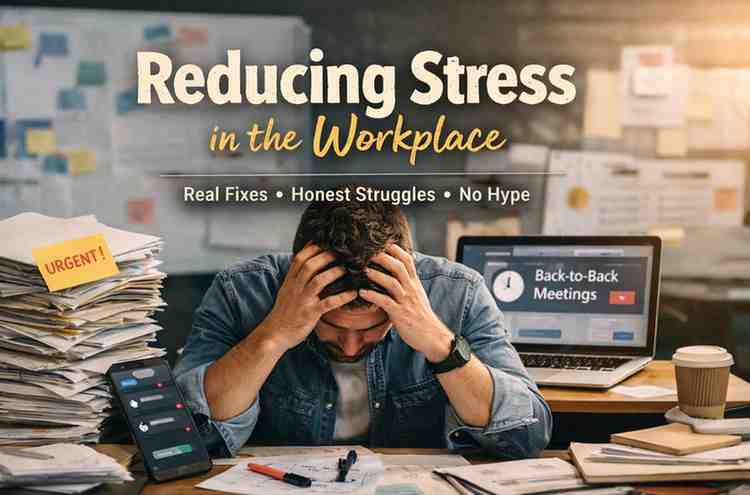
Honestly, I didn’t think this would work. I’d already tried three other “stress hacks” and felt kind of stupid for hoping again. I was tired of hearing about breathing apps and morning routines when my calendar looked like a parking ticket—back-to-back meetings, Slack pings at midnight, and that constant low-grade panic that I was dropping balls everywhere.
So yeah. Reducing stress in the workplace sounded like a nice idea people talked about on podcasts. I didn’t believe it would touch my actual day.
Then I hit a wall. Not dramatic-burnout-collapse, but the quiet version: waking up already annoyed, snapping at coworkers, rereading the same email three times and still missing the point. The scary part? I thought this was just… adulthood.
It wasn’t. At least, it didn’t have to be this bad.
What follows isn’t a perfect system. It’s a messy, lived-in set of things I tried while screwing up along the way. Some worked. Some backfired. A few surprised me. And a couple only worked when I stopped trying to be “productive” about them.
Why I even bothered trying to fix this
I didn’t wake up one day thinking, “Time to optimize my stress.” I started because:
-
I was making dumb mistakes I never used to make
-
My patience was gone by 10 a.m.
-
Sundays felt heavy. Like a pre-monday hangover
-
My body started joining the protest (tight jaw, headaches, shallow breathing)
Not gonna lie… part of me thought the answer was to just “toughen up.”
That belief cost me about six months of unnecessary misery.
Here’s what I misunderstood at first: Stress at work isn’t just about workload.
It’s about how much control, clarity, and recovery you have between the load.
When those three are low, even a normal week feels unbearable.
What I tried first (and why it mostly failed)
1. I downloaded a meditation app and felt worse
Everyone said meditation. So I tried meditating for 10 minutes before work.
What actually happened:
-
I got restless
-
My mind raced about my inbox
-
I felt behind before the day even started
The problem wasn’t meditation.
It was timing and expectations.
Trying to “be calm” right before walking into chaos felt like putting perfume on smoke. It didn’t address the source.
2. I said “yes” to everything because I didn’t want to seem difficult
This one hurt to admit.
I thought being flexible would reduce stress.
It did the opposite.
-
My scope ballooned
-
My priorities blurred
-
I resented people who didn’t even realize they were overwhelming me
Lesson I learned late: Saying yes to everything is a fast way to make stress personal.
3. I worked longer hours to “catch up”
This one’s obvious in hindsight.
But when you’re behind, staying late feels responsible.
What it actually did:
-
Shortened my recovery time
-
Made me slower the next day
-
Turned small tasks into emotional events
I wasn’t behind because I wasn’t working enough.
I was behind because my workday had no shape.
The stuff that actually started to reduce my stress (slowly, imperfectly)
This wasn’t one big fix. It was a bunch of small, slightly annoying changes that added up.
1. I stopped starting my day in my inbox
This honestly surprised me.
I used to open email first thing.
Instant stress spike.
Instantly reactive mode.
Now I do this instead:
My 12-minute “buffer start”
-
5 minutes: write the 3 things that matter today
-
5 minutes: start one of them (even badly)
-
2 minutes: scan calendar for landmines
No email. No Slack.
Just momentum.
It didn’t make me calm.
It made me less scattered. Huge difference.
2. I made my workload visible (even when it felt awkward)
I used to carry everything in my head.
That’s… not a flex. It’s a stress multiplier.
So I started:
-
Keeping a visible task list
-
Sharing rough capacity with my manager
-
Saying things like: “If I take this on, this other thing slips. Which one matters more?”
At first, I felt annoying.
Then I noticed people were actually relieved to have clarity.
This is one of those reducing stress in the workplace moves that feels risky socially… but pays off emotionally.
3. I created fake “ends” to my workday
My workday didn’t end. It just faded into dinner.
So I built a ritual:
-
Close laptop
-
Write tomorrow’s first task
-
Change rooms (even just from desk to couch)
It’s dumb-simple.
But without a clear “end,” my brain stayed half-on.
This helped my nervous system more than any breathing exercise.
4. I stopped multitasking in meetings (and owned it)
I used to half-listen while typing.
Thought I was efficient.
What actually happened:
-
I missed context
-
Follow-ups increased
-
I felt constantly behind
So I tried something uncomfortable: Camera on. Notes on paper. No Slack during meetings.
Yes, I slipped sometimes.
But when I was present, meetings ended faster because I didn’t need clarifications later.
Less rework = less stress.
Boring truth.
5. I learned the difference between “urgent” and “anxious”
This one took time.
Some messages feel urgent because the sender is anxious.
Not because the task is time-sensitive.
I started asking:
-
“What’s the actual deadline?”
-
“What breaks if this waits until tomorrow?”
Half the time, nothing broke.
Reducing stress in the workplace isn’t about being slower.
It’s about being less hijacked.
6. I took micro-breaks that didn’t look productive
I used to power through.
Now I take:
-
2 minutes to stand up
-
One slow walk to refill water
-
30 seconds of shoulder rolls
Not glamorous.
But my body stopped yelling at me by 3 p.m.
From what I’ve seen, at least, physical tension and mental stress feed each other.
Ignore one, the other gets louder.
7. I made one boundary and protected it
Just one. Not ten.
Mine was: No work messages after 8 p.m. unless something is actually on fire.
I didn’t announce it dramatically.
I just stopped replying at night.
The world didn’t end.
People adjusted.
This was a turning point for me emotionally.
It taught me that boundaries don’t require permission. They require consistency.
The part nobody likes: this takes longer than you want
How long does reducing stress in the workplace take to show results?
Short answer:
-
Small relief in 1–2 weeks
-
Habit shift in 3–6 months
Not because you’re slow.
Because stress patterns are sticky.
What changed first for me:
-
Less dread on Sunday nights
-
Fewer “I’m behind” spirals
-
Better sleep on work nights
What changed later:
-
Fewer emotional blowups
-
Clearer thinking under pressure
-
Less need to escape work mentally
If you’re looking for instant calm… this will annoy you.
If you’re okay with gradual relief… this works.
Common mistakes that kept my stress high longer than necessary
-
Trying to fix everything at once
Burned me out more. -
Treating stress like a personal failure
It’s often structural. Not just mindset. -
Copying routines that don’t fit my job
What works for a creator may fail in ops, healthcare, or service roles. -
Waiting to feel motivated
Action first. Feelings later. I hate this advice. It’s still true. -
Not asking for help because “everyone’s busy”
Everyone is busy. Some still help.
Don’t repeat my mistake of thinking stress management has to be aesthetic.
Messy systems beat perfect plans.
Objections I had (and what actually happened)
“This sounds like a lot of effort.”
It is. At first.
Then it becomes background noise. Like brushing your teeth.
“My workplace culture won’t allow boundaries.”
Some won’t.
That’s a harder conversation. You can still reduce stress internally, but environment matters more than people admit.
“I don’t have control over my workload.”
You might not control volume.
You often control visibility, framing, and how early you flag overload.
“This feels like victim-blaming.”
Yeah, that crossed my mind too.
The line is this:
You’re not responsible for the system.
You are responsible for how you navigate it until you can change it.
Quick FAQ (the stuff people actually ask)
Is reducing stress in the workplace worth trying if I plan to leave my job soon?
Honestly, yes. You’ll carry these habits to the next job. Stress patterns follow you if you don’t change them.
What if none of this works for me?
Then your stress might be less about habits and more about fit, leadership, or role mismatch. That’s data, not failure.
Can I do this without my manager’s support?
Some of it, yes.
Boundaries, buffer starts, task visibility—those are personal.
Systemic fixes are harder without support.
Will this hurt my performance?
Short-term, you might feel slower.
Medium-term, performance usually improves because you’re not fried.
Reality check (no sugarcoating)
Reducing stress in the workplace will not:
-
Fix toxic leadership
-
Make impossible workloads fair
-
Turn a misaligned job into a dream role
It will:
-
Lower the daily emotional tax
-
Give you more control over your energy
-
Help you think clearly enough to make better career decisions
If your job is actively harming your mental health, stress reduction isn’t a cure.
It’s a stabilizer. Sometimes a stepping stone to leaving.
Who this is NOT for:
-
People who want a one-week fix
-
Workplaces where boundaries are punished
-
Situations involving abuse or harassment (that needs structural action, not personal hacks)
What can go wrong:
-
You might get pushback
-
You might relapse into old habits
-
You might realize your job isn’t sustainable
That last one stings.
It’s also clarity.
Practical takeaways (what I’d actually tell a friend to do)
Do this:
-
Start your day without inbox for 10 minutes
-
Make your workload visible
-
Pick one boundary and hold it
-
Add tiny physical breaks
-
Ask “what actually breaks if this waits?”
Avoid this:
-
Trying to overhaul your life in one week
-
Copying routines that don’t fit your job
-
Treating stress like a personal flaw
-
Powering through chronic overwhelm
Expect emotionally:
-
Early awkwardness
-
Guilt when you set boundaries
-
Relief mixed with fear
-
A weird identity shift (“who am I without constant stress?”)
What patience looks like:
-
Doing the same small thing even when it feels pointless
-
Letting people adjust to your new pace
-
Not quitting the process because one week was bad
No guarantees.
No miracle claims.
Just steady pressure in a better direction.
I’m not gonna lie… there are still weeks where work gets heavy and I feel that old tightness in my chest. This didn’t turn me into a zen monk.
But reducing stress in the workplace stopped my days from feeling like a slow emotional leak. It gave me enough space to think again. Enough calm to notice when something wasn’t okay.
So no — this isn’t magic.
But for me? It stopped feeling impossible.
And that was enough to keep going.