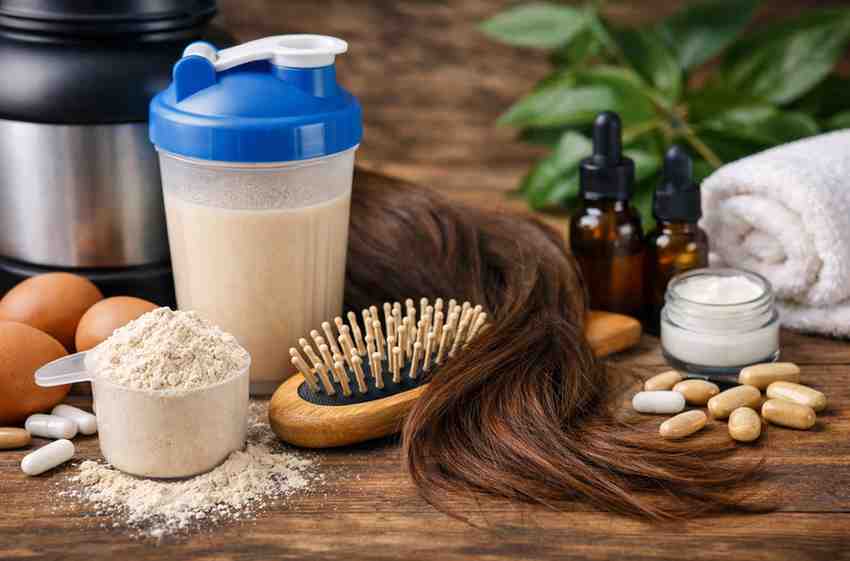
Honestly, the first time someone asked me about protein powder for hair growth, I thought they were joking.
Protein shakes? For hair?
But over the past few years, this question kept coming up. Friends. Gym people. A few readers. Even someone who had just come out of a stressful year where their hair started thinning fast.
And what I noticed was interesting.
Almost everyone who tries protein powder for hair growth starts with the same feeling:
A mix of hope and quiet frustration.
They've tried oils. Biotin gummies. Expensive shampoos. Supplements that promise miracles in shiny bottles.
Then someone says:
“Maybe you're just low on protein.”
And suddenly protein powder looks like a simple fix.
But after watching a lot of people try this… the reality is more complicated. Not bad. Not magical either.
Just… human biology doing what it does.
Why People Start Looking at Protein Powder for Hair Growth
From what I’ve seen, people usually arrive here after something shifts.
Hair shedding more than usual. Thinning at the temples. A widening part line.
Sometimes it’s obvious what triggered it.
Other times… not really.
But when you start tracing patterns across different people, a few themes show up again and again.
The situations where this question comes up most
People I’ve seen explore protein powder for hair growth usually fall into one of these:
-
Low-protein diets (very common in plant-heavy diets)
-
Post weight-loss phases
-
After illness or stress
-
Postpartum hair shedding
-
Heavy gym training without enough protein intake
-
People who skip meals regularly
And here's something that honestly surprised me after seeing it repeatedly:
Most of them weren't actually tracking protein intake at all.
They just assumed they were getting enough.
But when someone finally calculated it… sometimes they were getting half of what their body needed.
Hair follicles notice that kind of shortage pretty quickly.
The Part Most People Don't Realize About Hair
Hair is one of the least essential systems in your body.
Your body prioritizes survival.
So when nutrients are limited, the body starts reallocating resources.
Here's the basic pattern I’ve seen explained by dermatologists and nutritionists:
-
Nutrients go to organs first
-
Then muscles and metabolic systems
-
Then skin repair
-
Hair comes… pretty much last
Which means if your body senses protein scarcity, hair growth quietly slows down.
Not overnight.
But gradually.
And that's when shedding starts to feel noticeable.
Where Protein Powder Fits Into the Picture
Protein powder isn't magic.
It's just concentrated dietary protein.
But for some people, that alone fixes the bottleneck.
The key idea is simple:
Hair is made mostly of keratin, a structural protein.
To build keratin, your body needs:
-
Amino acids
-
Adequate calories
-
Minerals like zinc and iron
-
Hormonal balance
Protein powder helps with one part of that system.
And sometimes that one missing piece makes a visible difference.
The Pattern I Keep Seeing With People Who Actually Improve
After watching a lot of people experiment with this, a pattern shows up.
The people who see improvement usually combine protein powder with consistent routines.
Not random shakes.
Something more structured.
Typical example:
Morning routine someone stuck with for months:
• Protein smoothie (20–25g protein)
• Eggs or Greek yogurt breakfast →
• Lunch with real protein (chicken, tofu, lentils)
• Normal dinner with protein source
Total daily intake ends up around:
70–100g protein per day
And that’s when people start saying things like:
“My hair shedding slowed down after a few months.”
Not instantly.
Almost never instantly.
Hair cycles simply move too slowly for that.
How Long Does Protein Powder for Hair Growth Usually Take?
This is one of the biggest misunderstandings.
Hair growth is slow by design.
Hair follicles move through cycles:
-
Growth phase (anagen)
-
Rest phase (telogen)
-
Shedding phase
So when someone improves their nutrition, the follicle cycle still needs time to reset.
From what I’ve seen across multiple cases:
Early signs (shedding stabilization):
6–8 weeks
Baby hairs appearing:
3–4 months
Noticeable density changes:
6–9 months
Which is honestly longer than most people expect.
And that’s where many people quit too early.
The Mistake Almost Everyone Makes at First
Most people treat protein powder like a quick supplement.
Not a dietary shift.
They do something like this:
Drink one shake for a week.
Then stop.
Then restart.
Then forget.
Hair biology doesn’t respond well to that.
Consistency matters.
Another mistake I keep seeing:
They ignore their total daily protein intake
Protein powder alone won’t fix much if the rest of the diet stays low.
Example I’ve seen several times:
-
Protein shake: 20g
-
Rest of the day: maybe 30g
Total daily protein: 50g
For many adults, that's still below optimal levels.
So the hair system still runs in “resource conservation” mode.
What Actually Works Better (From What I've Observed)
People who see better results tend to follow a few simple patterns.
Nothing fancy.
Just consistent habits.
Things that help the most
• Hitting daily protein targets consistently
• Eating protein across meals
• Using protein powder as support, not replacement
• Keeping calorie intake stable
• Reducing crash dieting
And honestly…
People who stop obsessing over hair every day tend to stick with the routine longer.
Which indirectly helps results.
Funny how that works.
Types of Protein Powder People Usually Try
From what I've seen across different routines:
Whey Protein
Very common.
Fast absorption.
Rich in essential amino acids.
People who tolerate dairy often find this easiest.
Plant Protein
Used by:
-
vegans
-
dairy-sensitive individuals
Pea protein, rice protein blends, soy protein.
Sometimes slightly lower in certain amino acids, but still useful when total intake improves.
Collagen Protein
This one gets hyped a lot.
But here's the nuance people often miss.
Collagen lacks complete amino acid balance needed for full protein replacement.
So it works better alongside other protein sources, not alone.
Common Objections I Hear
“But I already eat normal food.”
Yes, but “normal food” can still be low in protein.
A lot of diets accidentally drift toward:
-
carbs
-
snacks
-
convenience meals
Protein quietly drops.
Until someone actually calculates intake.
“My friend took protein and their hair didn’t change.”
That happens too.
Because protein deficiency isn't the only cause of hair thinning.
Other causes include:
-
iron deficiency
-
thyroid issues
-
androgenic hair loss
-
stress-related shedding
-
hormonal shifts
Protein helps when protein is the limiting factor.
Not when something else is driving the problem.
Reality Check: When Protein Powder Won’t Help
This is important.
Protein powder is not a cure for all hair problems.
It usually won't fix:
• genetic male pattern baldness
• hormonal hair loss
• autoimmune conditions
• scalp disorders
In those situations, nutrition alone rarely solves it.
People often feel disappointed when they expect protein to do too much.
Who Might Actually Benefit Most
Based on patterns I’ve seen, protein powder for hair growth tends to help people who:
• Eat low-protein diets
• Recently lost weight
• Skip meals frequently
• Follow plant-heavy diets without protein planning
• Exercise heavily but eat lightly
For them, protein powder is simply a convenient correction.
FAQ: Quick Answers People Usually Want
Does protein powder make hair grow faster?
Not exactly.
It helps restore normal growth conditions if protein intake was too low.
Can too much protein cause hair loss?
Excess protein itself usually doesn't.
But extreme high-protein crash diets sometimes disrupt other nutrients.
Balance matters.
How much protein helps hair growth?
Most adults do well around:
0.8–1.2 grams of protein per kg body weight
Athletes may need slightly more.
Is whey or plant protein better for hair?
Both work if total protein intake is adequate.
The key is consistent daily intake.
A Small Reality Most People Don’t Expect
Hair growth improvements often show up subtly first.
Not dramatic transformations.
People start noticing things like:
-
less hair in the shower drain
-
shorter baby hairs near the hairline
-
slightly thicker ponytails
Small signals.
But those small signals usually mean follicles are stabilizing again.
Practical Takeaways
If someone asked me what actually matters most here, I’d say this.
What to do
• Track protein intake for a week
• Aim for consistent daily targets
• Use protein powder to fill gaps
• Give the process 3–6 months
What to avoid
• Expecting instant hair regrowth
• Relying on protein powder alone
• Ignoring other nutrient deficiencies
• Starting and stopping routines constantly
What patience actually looks like
Hair improvements are slow.
Almost boringly slow.
But steady habits quietly compound.
And the people who stick with it long enough often say the same thing later:
“I wish I had just started earlier and stopped overthinking it.”
Most people searching for protein powder for hair growth aren’t chasing vanity.
They're trying to fix something that suddenly feels out of their control.
And I get that.
Hair loss has a strange emotional weight →.
Even small changes can affect confidence more than people admit.
Protein powder isn't a miracle.
But I’ve seen enough people stabilize their hair shedding simply by correcting basic nutrition that I can’t dismiss it either.
Sometimes the body just needs consistent building blocks again.
And once it gets them…
Things slowly start working the way they were supposed to all along.