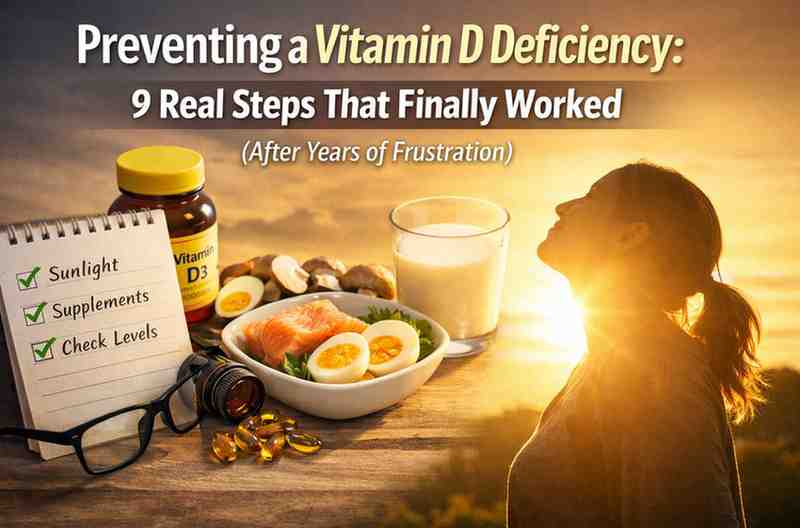
Not gonna lie, I didn’t even think vitamin D was my problem. I just felt… off. Low energy. Weird muscle aches. Mood swings that didn’t make sense. I kept blaming sleep, stress, work, everything except the quiet little deficiency my bloodwork eventually called out. The doctor said, “You’re low. You should probably get more sun and take a supplement.” That sounded simple. It wasn’t.
I tried to prevent a Vitamin D deficiency the way → most people do: half-hearted sun exposure, random supplements I’d forget to take, and then getting annoyed when nothing changed fast. I messed this up at first. A lot. I overdid things. Then I underdid them. I expected quick results and got discouraged when my body didn’t play along.
This is the messy version of what I learned the hard way. The small wins. The stuff that didn’t work. The moments I almost quit because it felt pointless. And the part that surprised me the most: once I stopped treating vitamin D like a checkbox and started treating it like a habit, things slowly shifted. Not overnight. Not magically. But enough to feel like I wasn’t stuck anymore.
What I Thought Would Work (and Why It Didn’t)
I assumed two things:
-
Sun = problem solved
-
Supplements = instant fix
Both were wrong in the way “technically true but practically useless” can be.
Sunlight, but not the way I did it
-
I’d step outside for five minutes, fully clothed, sunscreen on, early morning or late evening.
-
Then I’d think, “Cool, got my vitamin D,” and go back inside.
-
Turns out, that’s not how it works. Timing, skin exposure, and consistency matter. A lot.
Supplements, but not the way I took them
-
I grabbed the cheapest bottle I could find.
-
Took it randomly. Sometimes on an empty stomach.
-
Forgot half the time.
-
Then I blamed the supplement when I didn’t feel better.
I didn’t expect this at all, but vitamin D behaves more like a slow-burn habit than a quick fix. You don’t “fix” it. You build a routine that prevents a Vitamin D deficiency from creeping back in.
The Stuff That Actually Started Working (Slowly, Annoyingly, But for Real)
1. I treated sunlight like a small daily appointment
Not dramatic. Not shirtless sunbathing. Just intentional.
What worked for me:
-
Midday sun, when it actually does something
-
10–20 minutes, a few times a week
-
Forearms exposed, sometimes legs
-
No sunscreen during those short windows (then sunscreen later—skin safety still matters)
From what I’ve seen, at least, consistency beats intensity. One long sun session once a month didn’t move the needle. Regular short sessions did.
Reality check:
If you live in the northern U.S., winter sun is weak. This is where I kept getting frustrated. I’d “do everything right” and still feel low. Turns out geography and seasons matter. A lot.
2. I stopped treating food like a bonus and started using it strategically
Food alone didn’t fix my deficiency. But it made everything else work better.
Things I added on purpose:
-
Fatty fish (salmon, sardines) a couple times a week
-
Fortified milk or plant milk
-
Egg yolks (even though I used to avoid them)
-
Mushrooms exposed to UV light (weirdly effective)
This honestly surprised me: pairing vitamin D supplements with a meal that had fat made a noticeable difference in how I felt over time. I didn’t believe the “fat helps absorption” thing at first. Then I tested it. It worked better.
3. I took one supplement and actually stuck with it
This was the hardest part. Not because it was complicated. Because I’m inconsistent by nature.
What helped:
-
Picking one form (D3 worked better for me than D2)
-
Taking it with the same meal every day
-
Setting a phone reminder for the first month
Common mistake I made:
I kept changing brands and doses too fast. I wanted results in two weeks. Vitamin D doesn’t care about my impatience. Blood levels take time to move.
How long did it take to feel different?
For me, subtle changes showed up around 4–6 weeks. Less bone ache. Slightly steadier mood. Not dramatic. Just… better.
4. I stopped guessing and got my levels checked
This part felt annoying. I didn’t want to deal with labs. But guessing led me to underdo it at first, then overdo it later.
Getting actual numbers helped me:
-
Know if what I was doing worked
-
Adjust without panic
-
Avoid megadosing out of frustration
This is not for people who hate data.
If blood tests stress you out, this approach might feel heavy. But for me, seeing progress (even small) kept me going.
5. I fixed the stuff that quietly messes with absorption
This was a “wow, that explains a lot” moment.
Things that slowed my progress:
-
Gut issues (I had ongoing digestion problems)
-
Skipping meals with my supplement
-
Taking vitamin D at night (made my sleep weird)
Once I paired my supplement with lunch and paid attention to my gut health, things stabilized. Not perfect. Better.
Mini Stories I Wish Someone Had Told Me
The “I thought I was doing enough” phase
I’d brag about going outside more. Then I’d sit in the shade scrolling my phone. Technically outdoors. Practically useless.
The “I overcorrected” phase
I read one scary article and doubled my dose without checking levels. Bad idea. I felt off. Headaches. Weird tension. Backed off and got labs. Lesson learned →.
The “this feels pointless” phase
Week three. No big changes. Almost quit. Then week five rolled around and my afternoon crashes were less brutal. Tiny win. But it mattered.
Short FAQ (The Stuff People Always Ask)
Is it worth trying to prevent a Vitamin D deficiency if I feel fine?
Honestly, yes. Feeling “fine” doesn’t mean your levels are fine. I didn’t feel broken—just off. Subtle deficits still wear you down over time.
How long does it take to see results?
Usually weeks, not days. I noticed changes around 4–6 weeks. Blood levels took a few months → to really move.
Can I just use food and skip supplements?
Some people can. I couldn’t. Food helped, but it wasn’t enough on its own for me.
What if nothing changes?
Then something else might be going on. Low vitamin D isn’t the only reason people feel tired or low. It’s a piece, not the whole puzzle.
Objections I Had (and What Changed My Mind)
“This feels like overthinking.”
Yeah. It does. Until you realize small habits beat random effort.
“I don’t want to take pills forever.”
Same. The goal for me wasn’t forever. It was stabilizing my levels, then seeing if lifestyle → could maintain them.
“Sun exposure scares me because of skin cancer.”
Totally valid. Short, intentional exposure is different from baking in the sun. And sunscreen after that window is still smart.
“I tried this before and it didn’t work.”
Same. The difference this time was consistency + checking levels + not quitting early.
Reality Check (Because This Isn’t a Miracle Fix)
Let’s be real for a second.
-
This won’t fix burnout.
-
This won’t fix depression by itself.
-
This won’t suddenly give you superhero energy.
What it can do is remove one silent drain on your system. For me, preventing a Vitamin D deficiency didn’t change my life → overnight. It made my bad days slightly less heavy. And sometimes that’s the difference between giving up and trying again.
Who this is NOT for:
-
People who want instant results
-
People who hate routines
-
People unwilling to check levels or adjust
What can go wrong:
-
Over-supplementing
-
Ignoring other health issues
-
Expecting vitamin D to fix everything
Practical Takeaways (No Hype, Just Realistic Stuff)
What to do
-
Get short, intentional sun exposure when possible
-
Take vitamin D with a meal that has fat
-
Pick one routine and stick with it
-
Check your levels at least once
What to avoid
-
Random megadoses
-
Inconsistent supplement timing
-
Assuming food alone will fix a real deficiency
-
Quitting after two weeks
What to expect emotionally
-
Mild frustration at first
-
Doubt when results are slow
-
Small wins that sneak up on you
What patience actually looks like
-
Doing the boring thing again tomorrow
-
Not changing plans every week
-
Letting your body catch up at its own pace
No guarantees. No miracle promises. Just slow, boring consistency.
I’m not going to pretend this was some dramatic transformation story. It wasn’t. It was quieter than that. Preventing a Vitamin D deficiency didn’t fix everything in my life. But it removed one invisible weight I didn’t realize I was carrying.
So no — this isn’t magic. But for me? It stopped feeling impossible. And that was enough to keep going.