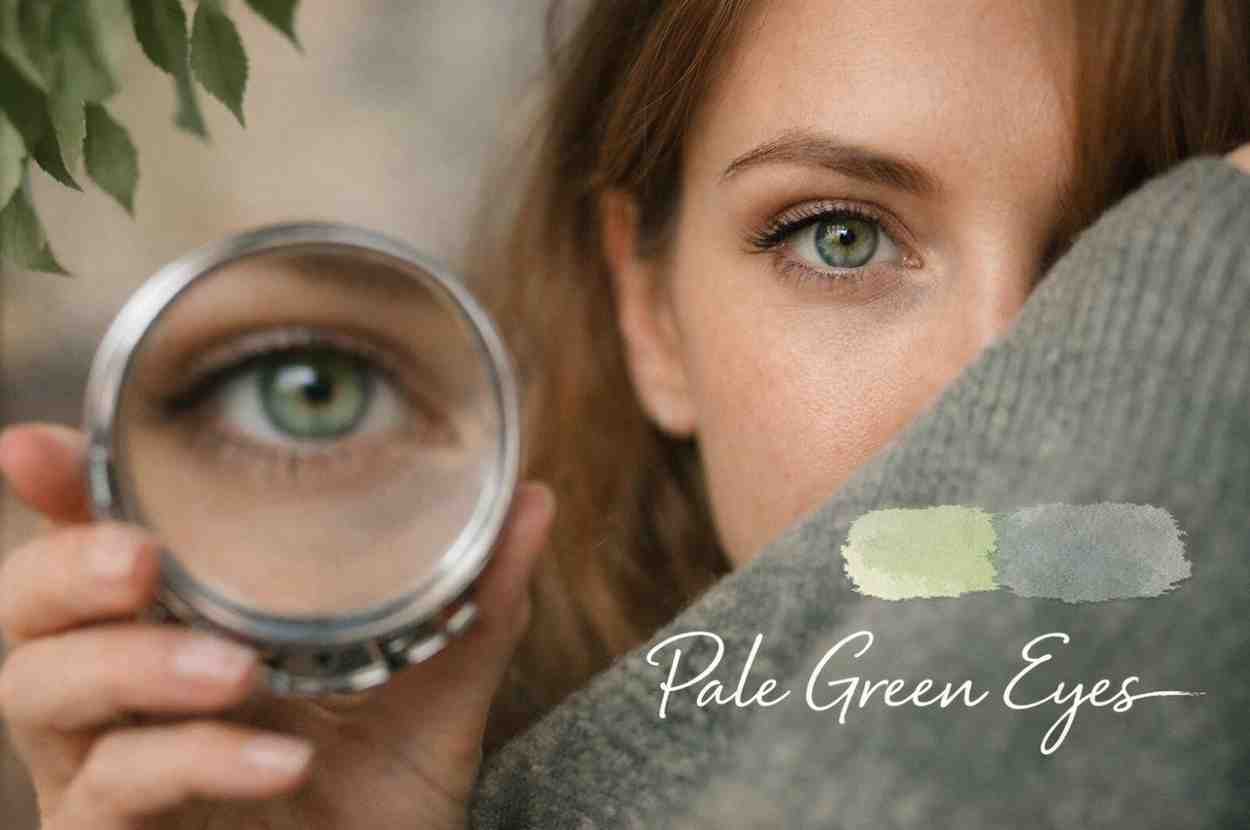

I can’t tell you how many times I’ve watched someone with pale green eyes sit in front of a mirror, tilting their face toward the light like they’re trying to decode a secret.
They’re not sure if their eyes are green. Or gray. Or “just weird.”
They’ve Googled it three times already.
Someone once told them it was “rare.” Another said it was “just hazel.”
And somehow, that small uncertainty turns into something bigger.
From what I’ve seen →, people don’t search for pale green eyes just because they’re curious about color theory. They’re looking for reassurance. Identity. Maybe even validation.
And honestly? Most of the confusion around pale green eyes comes from bad explanations, recycled myths, and advice that sounds confident but doesn’t match real-life experience.
Let me walk you through what I’ve actually seen — across dozens of conversations, photos in different lighting, frustrated DMs, and people who just wanted a straight answer.
First: What Pale Green Eyes Actually Are (Without the Textbook Voice)
Most people assume eye color works like paint.
It doesn’t.
From what I’ve seen in real-world cases, pale green eyes usually happen when:
-
There’s low melanin in the iris
-
Light scatters in a way that softens the green
-
There’s sometimes a faint gray or yellow undertone
They’re rarely a bold emerald.
They’re rarely neon.
They’re subtle. Muted. Sometimes almost silvery.
And here’s what surprises people:
Pale green eyes change. A lot.
Lighting shifts them. Clothing shifts them. Even mood (well, not literally mood — but pupil size does).
Most people I’ve worked with mess this up at first:
They judge their eye color in one bathroom mirror under warm yellow light.
That’s not how you assess it.
If you’ve got pale green eyes, they’ll usually look:
-
More gray in low light
-
More green in natural daylight
-
Slightly brighter when wearing cool tones
-
Almost hazel if there’s gold in the iris
It’s dynamic. That’s the point.
Why So Many People Are Confused About Their Eye Color
I didn’t expect this to be such a common issue. But it is.
Here’s what keeps happening:
Someone grows up thinking their eyes are “just light brown.”
Later, someone says, “Wait… are your eyes green?”
They start paying attention. Now they can’t unsee it.
From what I’ve observed, pale green eyes sit in a weird middle zone between:
-
Green
-
Gray
-
Hazel
And because most online charts oversimplify eye color, people feel like they don’t fit → anywhere.
Almost everyone I’ve seen struggle with this does this one thing wrong:
They try to label their eyes instead of observing patterns.
Look for consistency across settings. That’s how you know.
Are Pale Green Eyes Rare in the United States?
Short answer: Yes. But not mythical.
Green eyes overall are uncommon in the U.S. population. Pale green is even more specific — especially the softer, gray-leaning versions.
From what I’ve seen in group settings → and client circles:
-
Bold green is rare.
-
Muted pale green is rarer.
-
True pale green without brown flecks? Even rarer.
But here’s the thing people get wrong:
Rarity doesn’t automatically mean “more attractive.”
That narrative creates unnecessary pressure.
The people I’ve watched feel most confident weren’t the ones chasing rarity — they were the ones who understood how to work with what they had.
What People With Pale Green Eyes Usually Try First (And Why It Backfires)
There’s a pattern here.
When someone realizes they have pale green eyes, they often try to:
-
Wear extremely bright green clothing
-
Use heavy green eye makeup
-
Buy colored contacts to “enhance” it
And almost every time… it overwhelms the eye.
Pale green is subtle. It doesn’t compete well with neon.
Most people I’ve worked → with mess this up at first because they assume “more green = better.”
What actually works (from repeated observation):
-
Soft plum tones
-
Dusty rose
-
Cool taupe
-
Muted navy
-
Charcoal instead of black
These shades make pale green eyes glow without shouting.
This honestly surprised me after watching so many people try it. The quieter approach wins.
The Emotional Side No One Talks About
Let’s address something real.
People with pale green eyes often feel overlooked.
It’s not as instantly recognizable as bright blue.
Not as widely talked about as dark brown.
It’s subtle.
And subtle sometimes feels invisible.
I’ve watched people:
-
Over-edit photos trying to “bring out” their eye color
-
Doubt compliments
-
Compare themselves constantly
But once they understand that pale green eyes shift and soften with context, something changes.
They stop trying to force attention.
They start letting it happen naturally.
And that shift? That’s where confidence actually grows.
How Long Does It Take to Figure Out What Works?
If you’re experimenting with style, makeup, or lighting — most people settle into what works within 2–4 weeks of intentional testing.
What that usually looks like:
Week 1: Trying bold colors. Regret.
Week 2: Testing softer neutrals. Notice improvement.
Week 3: Realizing lighting matters more than product.
Week 4: Settling into 2–3 go-to shades that consistently flatter.
It’s not complicated. But it does require observation.
Common Mistakes I Keep Seeing
Let me save you time.
Here’s what repeatedly slows people down:
-
Judging eye color under artificial yellow light
-
Using jet black eyeliner daily (it can flatten pale green)
-
Wearing bright green thinking it enhances
-
Ignoring wardrobe contrast
-
Comparing to heavily filtered Instagram photos
Almost everyone I’ve seen struggle with this is comparing themselves to edited images.
That’s a losing game.
FAQ: Straight Answers People Actually Want
Are pale green eyes genetic?
Yes. They’re influenced by melanin levels and light scattering. Usually show up in families with lighter eye traits.
Can pale green eyes change color over time?
Slightly. Lighting, aging, and pupil size can shift perception — but not dramatically.
Do pale green eyes look better with certain hair colors?
From what I’ve seen: cool brown, ash blonde, soft copper, and deep brunette tend to enhance them best.
Are pale green eyes the same as hazel?
Not always. Hazel usually contains noticeable brown or gold. Pale green is more muted and often lacks strong brown tones.
Objections I Hear All the Time
“It’s just eye color. Why does this matter?”
Fair. It doesn’t have to.
But identity details matter more than we admit. Small features shape how we feel about ourselves.
“I tried everything and nothing makes them pop.”
Usually when I hear this, the person is trying too hard. Subtle contrast beats dramatic enhancement almost every time.
“Is it even worth adjusting my style for this?”
If you care about presentation or confidence? Yes.
If you don’t? Then no. And that’s fine too.
Reality Check: Who This Isn’t For
If you’re looking for a dramatic transformation…
If you expect eye color to completely change your appearance…
If you’re hoping pale green eyes will automatically attract attention…
You’ll probably be disappointed.
This is about refinement. Not reinvention.
What Actually Consistently Works
Across different people, different cities, different lighting:
-
Soft contrast instead of harsh contrast
-
Natural daylight photos
-
Muted cool tones in clothing
-
Less shimmer, more matte
-
Confidence that doesn’t chase validation
That last one matters more than the rest.
Practical Takeaways
If you think you have pale green eyes:
-
Check them in natural daylight.
-
Compare with gray clothing vs. warm yellow clothing.
-
Avoid neon greens.
-
Test plum or soft mauve once.
-
Stop over-editing photos.
Emotionally?
Expect a small identity adjustment period.
Expect second-guessing.
Expect subtle wins.
Patience here looks like observation, not obsession.
I’ve watched enough people go from confused to quietly confident once they stopped trying to force their pale green → eyes into someone else’s definition.
It’s not magic. It’s not life-changing.
But there’s something grounding about finally understanding a part of yourself that always felt undefined.
And honestly, sometimes that clarity alone feels like relief →.