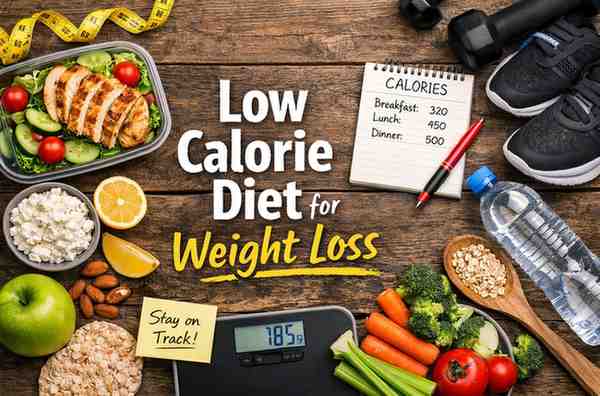
Honestly, most people I’ve watched try this hit a wall in the first two weeks. They go in hopeful. They download an app, promise themselves “this time I’ll be disciplined,” and then quietly start wondering if something is wrong with them when the scale doesn’t move. Or worse, it moves and then snaps back. That pattern shows up again and again when people try a Low Calorie Diet for Weight Loss. Not because they’re lazy. Not because they “don’t want it enough.” But because what looks simple on paper gets messy in real life.
From what I’ve seen sitting beside friends during late-night takeout debates, listening to coworkers vent about hunger at 3 p.m., and helping family members tweak routines after yet another stalled week… this approach works for some people. It burns others out. And the difference usually isn’t willpower. It’s how the plan collides with real habits, real emotions, real schedules.
Let me walk you through what actually happens when people try this. The stuff nobody puts on the infographic.
Why people try it (and what they expect vs. what happens)
Most folks don’t wake up wanting to count calories. They get here after:
-
Clothes fitting tighter
-
A doctor hinting “you might want to watch your weight”
-
Seeing a before/after online and thinking, maybe I can do that too
What they expect:
-
Quick progress
-
Clear rules
-
A feeling of control
What usually happens:
-
The first week feels powerful
-
The second week feels uncomfortable
-
By week three, doubt creeps in
This honestly surprised me after watching so many people try it. The emotional drop-off is predictable. The body adapts faster than the motivation does.
The misunderstandings I keep seeing (over and over)
Most people I’ve worked with mess this up at first in the same few ways:
-
They slash calories too hard.
They go from “normal eating” to something extreme. It works for a few days. Then hunger gets loud. Energy dips. Cravings spike at night. The rebound isn’t a moral failure. It’s biology pushing back. -
They treat calories like the only variable.
Same number of calories, different foods. One leaves them steady. The other leaves them hunting snacks an hour later. The difference matters more than people think. -
They expect linear results.
Down, down, down… that’s the fantasy. Real life is down, flat, up a little, down again. Almost everyone I’ve seen struggle with this does this one thing wrong: they panic at the first stall and change everything at once. -
They underestimate social friction.
Birthdays. Office lunches. Family dinners. This is where plans quietly fall apart. Not because of “weakness,” but because food is social glue in the US. Saying no repeatedly takes energy.
What consistently works (in real routines, not theory)
From what I’ve seen across different people, a few patterns keep → showing up when this actually sticks:
-
Smaller cuts beat dramatic cuts.
People who reduce calories modestly tend to last longer. They complain less. They adjust more smoothly. -
Protein early in the day.
Not a magic trick. Just practical. Folks who start with more protein report fewer late-night raids on the fridge. -
Boring consistency beats perfect days.
The people who quietly succeed don’t have amazing weeks. They have okay weeks, stacked. -
One anchor habit.
A simple routine: same breakfast most days. Same lunch template. It removes decision fatigue.
Mini story:
One friend kept “failing” every weekend. We noticed she ate great Mon–Fri and then went wild socially. The fix wasn’t stricter rules. It was planning one flexible meal she could enjoy without blowing the whole weekend. Her progress slowed. Then stabilized. Then continued. That’s how this usually looks.
What repeatedly fails (even when it sounds smart)
These look good on paper. They break people in practice:
-
Liquid calories as “hacks.”
Smoothies can be helpful. They can also be sneaky calorie bombs that don’t feel filling. -
Punishment workouts.
Using exercise to “earn” food builds resentment. People burn out faster. -
All-or-nothing tracking.
Logging perfectly or not at all. The middle ground—imperfect tracking—lasts longer. -
Ignoring sleep.
I didn’t expect this to be such a common issue. But people who sleep badly struggle way more with hunger and impulse. It’s not willpower. It’s fatigue.
How long does it take (for most people)?
Direct answer, based on patterns I’ve seen:
-
First 7–10 days: water weight shifts, small scale changes, big mood swings
-
Weeks 2–4: slower visible change, mental fatigue kicks in
-
Weeks 4–8: routines start to feel normal, progress becomes steadier
-
After 2 months: this stops feeling “new” and starts feeling like life
If nothing changes by 3–4 weeks, something is off. Usually intake is higher than assumed, or consistency isn’t as consistent as it feels.
Still, some bodies move slower. That’s real. It messes with motivation. It doesn’t mean it’s pointless.
Is this worth trying… for you?
Here’s the honest version I wish more people → heard:
This is worth trying if you:
-
Want structure
-
Like simple numbers
-
Can tolerate tracking (even loosely)
-
Are okay with slow, boring progress
This will feel awful if you:
-
Get obsessive about numbers
-
Have a history of restrictive eating
-
Hate planning food
-
Need high energy for demanding physical work
No hype here. Some people thrive on this. Some people spiral. Both outcomes are common.
People Also Ask (quick, straight answers)
Does a low calorie diet work for weight loss?
Yes, it can. When people maintain a calorie deficit long enough, weight usually drops. The challenge isn’t the concept. It’s sustaining the behavior without burning out.
Is it safe?
For most healthy adults, moderate calorie reduction is generally tolerated. Extreme cuts or long-term restriction can backfire physically and mentally. If someone has medical conditions, they should check with a professional.
What if I’m hungry all the time?
That’s usually a sign the plan is too aggressive or food choices aren’t filling enough. More protein, fiber, and volume foods help. Sometimes the answer is… eat slightly more and stick to it longer.
Can I do this without counting calories?
Some people can approximate through habits (portion control, consistent meals). Others need numbers to learn what “normal” looks like. Both paths show up in real success stories.
Objections I hear (and what tends to be true)
“I tried this and it didn’t work.”
Usually it worked briefly. Then life intervened. The fix isn’t trying harder. It’s simplifying the plan so it survives bad weeks.
“It’s too restrictive.”
It can be. When people loosen rules slightly, adherence improves. Progress slows. Outcomes improve.
“I don’t have time to track.”
Totally fair. The people who last often track loosely or only for a short learning phase.
“I gain it back.”
This is common. The diet ends. Old patterns return. Maintenance habits weren’t built. That’s the missing piece most plans ignore.
Reality check (stuff that can go wrong)
No sugarcoating:
-
Your mood might dip at first
-
Social life can feel awkward
-
Progress can stall without warning
-
You might compare yourself to faster results online
-
Old comfort-eating habits may surface
Who this is not for:
-
Anyone with a history of disordered eating
-
People needing high-calorie intake for medical reasons
-
Those who spiral into anxiety around numbers
When results may be slow:
-
High stress periods
-
Poor sleep
-
Inconsistent routines
-
Hormonal shifts
Where expectations usually break:
-
Expecting motivation to stay high
-
Expecting visible change every week
-
Expecting perfection from yourself
Practical takeaways (what actually helps in daily life)
What to do:
-
Start with a small calorie reduction
-
Build one boring, repeatable meal
-
Eat protein and fiber early
-
Track loosely if tracking stresses you
-
Plan one flexible social meal weekly
What to avoid:
-
Drastic cuts
-
“Earning” food through workouts
-
Restarting every Monday
-
Comparing your pace to influencers
What to expect emotionally:
-
The first week feels powerful
-
The second feels annoying
-
The third tests your patience
-
Then it settles into… normal
What patience looks like in practice:
-
Staying steady through flat weeks
-
Not changing five things at once
-
Letting boring routines carry you
No guarantees. No miracle curves. Just patterns that, from what I’ve seen, give people a better shot at not quitting.
Still… this isn’t magic. It’s not a personality fix. It’s a tool. Some people finally stop feeling stuck when they stop trying to be perfect at it and start being consistent in a boring, human way. I’ve watched enough quiet wins stack up that way to trust the pattern. And sometimes that shift alone is the real relief.