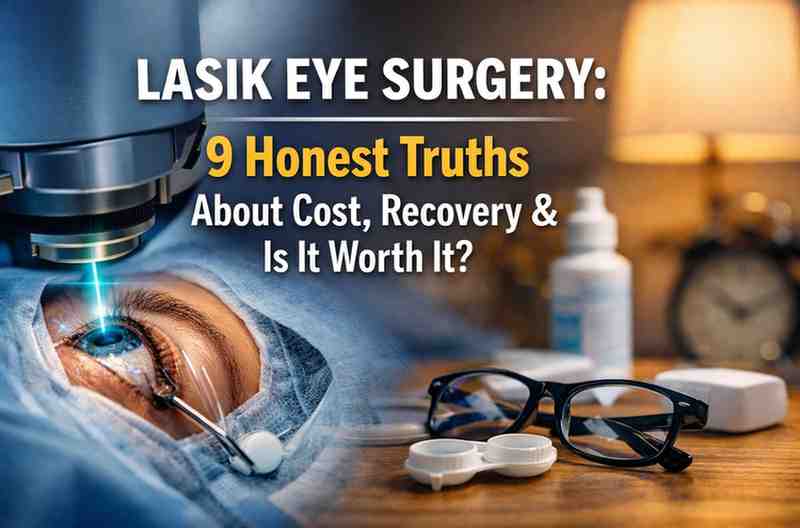
I can’t tell you how many times I’ve watched someone take their glasses off, rub the bridge of their nose, and say, “I’m just tired of this.”
Tired of fogged lenses.
Tired of dry contacts.
Tired of waking up blind to the world until they find their frames.
And then they start Googling LASIK eye surgery at 11:47 PM. Usually after a bad contact lens day.
From what I’ve seen — sitting across from friends, clients, coworkers, even my cousin who waited 8 years before finally doing it — the frustration builds slowly. It’s not dramatic. It’s repetitive. Small annoyances stacking up.
And LASIK starts to feel like a clean exit.
But here’s the part most people don’t admit out loud:
They’re excited.
And nervous.
And secretly afraid of messing up their eyes forever.
That mix? Completely normal.
Let’s walk through what actually happens — not the brochure version. The real-world pattern version.
Why People Actually Decide to Get LASIK (It’s Not Just About Vision)
On paper, LASIK eye surgery corrects refractive errors like nearsightedness, farsightedness, and astigmatism.
In real life?
People choose it because:
-
They hate contacts.
-
They travel and don’t want lens solution drama.
-
They play sports and are done with glasses flying off.
-
They work long hours and their eyes are always irritated.
-
They’re just tired of feeling dependent on something.
Almost everyone I’ve worked with who went through it had a breaking point moment.
A wedding coming up.
A scuba trip booked.
A promotion where they felt self-conscious in meetings.
It’s rarely “I woke up rationally and calculated cost-per-wear of glasses.”
It’s emotional.
And that matters.
Because emotional decisions need grounded expectations.
What Most People Misunderstand About LASIK Eye Surgery
Here’s what I didn’t expect to be such a common issue:
People think LASIK is instant perfection.
Technically? The procedure is fast. Around 15 minutes for both eyes.
Recovery? Often quick.
But perfection? Not guaranteed.
From what I’ve seen across multiple cases:
-
Vision improves fast — sometimes within 24 hours.
-
But stabilization can take weeks.
-
Dryness is common early on.
-
Night glare can surprise people.
-
Healing feels uneven for some.
Most people I’ve worked with mess this up at first:
They expect zero side effects.
Then panic when their eyes feel dry on day three.
It’s not failure. It’s biology.
What LASIK Eye Surgery Actually Involves (Simple Breakdown)
Short version:
-
Numbing drops.
-
A thin corneal flap is created.
-
A laser reshapes underlying tissue.
-
Flap repositioned.
-
You go home the same day.
No stitches.
No hospital stay.
Usually mild discomfort.
The weirdest thing almost everyone mentions?
The pressure sensation during the procedure. Not pain — just pressure.
That surprises people.
How Long Does LASIK Eye Surgery Take to “Work”?
This question comes up constantly.
Immediate Phase (24–48 Hours)
-
Blurry but improved vision
-
Light sensitivity
-
Watery eyes
-
Mild scratchy feeling
Week 1
-
Vision sharpening
-
Dryness noticeable
-
Follow-up check
1–3 Months
-
Stabilization
-
Night glare usually improves
-
Brain adjusts to new visual clarity
From what I’ve seen, most people feel “wow” within 48 hours.
But full confidence? That takes a few weeks.
And here’s the honest part:
If you’re the anxious type, that adjustment period feels longer than it is.
What Consistently Works (Across Real Cases)
Patterns I’ve noticed in people who are happiest with their LASIK results:
1. They Choose the Surgeon Carefully
Not the cheapest.
Not the flashiest ads.
They ask:
-
How many procedures have you done?
-
What technology are you using?
-
What are my specific risk factors?
People who skip this step regret it.
2. They Follow Aftercare Religiously
Eye drops.
Rest.
No rubbing.
Almost everyone I’ve seen struggle with recovery did one of these:
-
Used screens too long too soon.
-
Forgot artificial tears.
-
Went back to intense workouts immediately.
3. They Had Realistic Expectations
This is huge.
LASIK eye surgery improves vision dramatically for most eligible candidates.
But:
-
You may still need reading glasses later in life.
-
Tiny residual prescriptions can happen.
-
Night halos may exist temporarily.
The happiest patients? They knew this going in.
What Repeatedly Fails (Or Causes Regret)
Let me be blunt.
Regret almost always comes from:
❌ Rushing the Decision
People who booked within days of consultation sometimes felt unsure afterward.
❌ Ignoring Dry Eye Risk
Pre-existing dry eye makes recovery tougher.
❌ Expecting Superhuman Vision
LASIK corrects refractive error. It doesn’t give you eagle vision.
❌ Financial Stress
If someone stretches their budget too thin, stress taints the experience.
I’ve watched that happen. It changes the emotional tone of recovery.
Is LASIK Eye Surgery Worth It?
This is the real question, right?
From what I’ve seen:
For the right candidate? Yes. Often life-changing.
But “worth it” depends on:
-
Your prescription strength
-
Your eye health
-
Your tolerance for risk
-
Your lifestyle
-
Your budget
Most people I’ve seen say:
“I wish I did this sooner.”
A small minority say:
“I didn’t realize dryness would last this long.”
Almost none say:
“This ruined my life.”
Serious complications are rare. But rare doesn’t mean impossible.
That nuance matters.
Who Should Avoid LASIK Eye Surgery?
Blunt list:
-
People with unstable prescriptions
-
Severe dry eye sufferers
-
Thin corneas
-
Certain autoimmune conditions
-
Unrealistic perfection expectations
-
Anyone uncomfortable with elective surgery risk
If you lose sleep over “what if,” this might not be emotionally right for you.
And that’s okay.
Common Questions (Quick Answers)
Does LASIK hurt?
Not during. Mild discomfort after. Usually manageable.
How long is recovery?
Functional in 1–3 days. Full stabilization weeks to months.
Is it permanent?
Corneal reshaping is permanent. But aging eyes still change.
Can vision regress?
Sometimes slightly. Enhancements may be possible.
What’s the biggest surprise?
Dryness. Almost everyone mentions it.
Objections I Hear All the Time
“What if I go blind?”
Severe complications are extremely rare with modern screening and experienced surgeons.
“It’s too expensive.”
Long-term glasses and contact costs add up. But yes — upfront cost is real.
“What if I regret it?”
This fear usually means you need more consultation time.
“I’m scared.”
Totally valid. Fear means you understand it’s important.
The Reality Check No One Loves
LASIK eye surgery is not magic.
It’s precise medical technology applied to a living organ.
Healing varies.
Some people feel incredible immediately.
Some feel off for a few weeks.
Patience is part of the deal.
If you expect zero discomfort and zero adjustment — you’ll be frustrated.
If you expect a healing curve — you’ll handle it fine.
What Emotional Patience Actually Looks Like
It looks like:
-
Not panicking on day two.
-
Using drops even when you feel “fine.”
-
Avoiding Reddit horror spirals.
-
Trusting your follow-up appointments.
I’ve watched people spiral because they Googled too much mid-recovery.
Don’t do that.
Practical Takeaways
If you’re seriously considering LASIK eye surgery:
Do this:
-
Schedule two consultations.
-
Ask uncomfortable questions.
-
Get a dry eye evaluation.
-
Budget calmly.
-
Plan 3–5 recovery days.
Avoid this:
-
Bargain hunting your eyesight.
-
Booking impulsively.
-
Comparing your recovery to someone else’s.
Expect this emotionally:
-
Excitement.
-
Nervousness.
-
A weird first look in the mirror without glasses.
-
A moment of “wow.”
And maybe one small panic moment. Totally normal.
I’ll be honest.
Watching people go through this has changed how I think about elective procedures. It’s less about courage and more about clarity.
When someone walks into it informed — truly informed — they almost always walk out relieved.
When someone walks in hoping for magic? That’s where disappointment creeps in.
So no — LASIK eye surgery isn’t perfect.
But from what I’ve seen, when done thoughtfully, with the right expectations and the right surgeon, it removes a daily friction most people don’t realize has been draining them for years.
Sometimes that quiet relief is the real → win.
And sometimes… that’s enough.