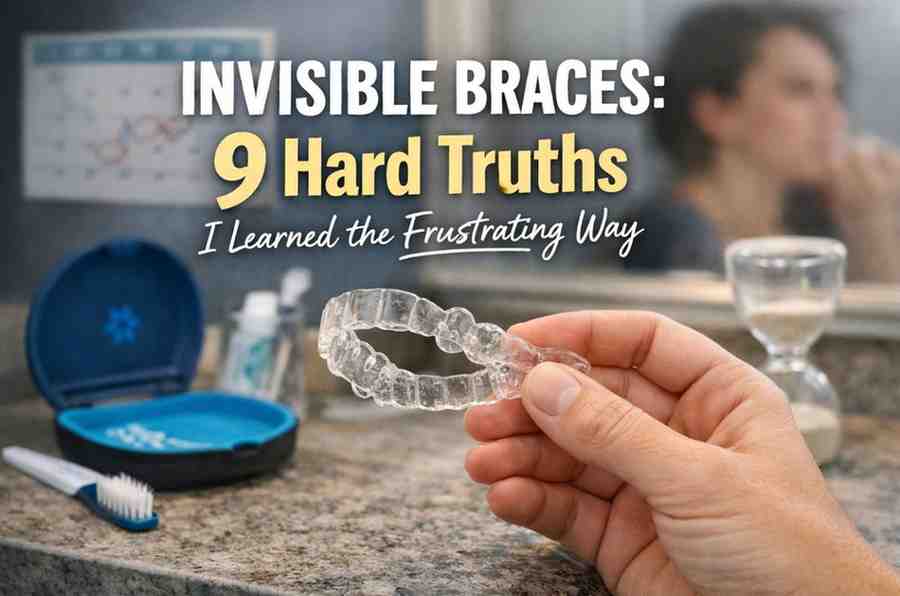
Honestly, I didn’t think invisible braces would work for me.
Not gonna lie… I’d already tried to “fix” my teeth twice before this. Once with those mail-order trays (bad idea for me), and once with a half-hearted attempt at saving for metal braces that I bailed on when life got messy. By the time I finally booked a real → orthodontist consult, I felt dumb for hoping again.
I wanted straighter teeth.
But more than that? I wanted to stop thinking about my teeth all the time.
Every photo.
Every video call.
Every time I laughed and did that tiny mouth-cover thing like I wasn’t insecure (spoiler: I was).
So yeah. I tried invisible braces.
And the version of this story I wish I’d read back then… is not the glossy Instagram one.
This is the lived-in version. The annoying parts. The parts that surprised me. The parts I messed up. The parts that actually worked.
Why I even tried this (and what I misunderstood at first)
Here’s the honest starting point:
-
I didn’t want metal in my mouth.
-
I didn’t want people asking questions.
-
I didn’t want to feel like a teenager at 30.
-
I wanted a “low-drama” fix.
So invisible braces felt like the adult, quiet option.
Pop them in. Live your life. Teeth magically shift. Done.
That was the fantasy.
What I misunderstood:
-
I thought I could wear them “most of the day” and still get results.
(Nope. That’s how you stall progress and extend your treatment.) -
I thought discomfort would be mild.
(Some trays were fine. Others? Felt like my teeth were being personally offended.) -
I assumed the timeline was fixed.
(It’s not. Your habits matter more than the marketing.)
From what I’ve seen →, at least, the people who hate invisible braces the most are the ones who expected them to be passive.
They’re not passive.
They’re a commitment disguised as convenience.
The first few weeks: excitement, then mild regret
Week 1:
I was weirdly excited. I kept checking my reflection like something dramatic would happen overnight. It didn’t. Shocking, I know.
Week 2:
The soreness kicked in. Not unbearable. Just… constant pressure.
Talking felt slightly off.
Smiling felt tight.
Week 3:
This honestly surprised me: I started forgetting to put them back in after snacks.
Not because I didn’t care.
Because life is chaotic and your brain doesn’t love routines at first.
I messed this up at first. A lot.
Little mistakes that slowed me down early:
-
Leaving them out “just for a bit” after coffee
-
Taking them out at social events and forgetting
-
Thinking one day of sloppy wear wouldn’t matter
It adds up.
Invisible braces are forgiving in theory.
In practice, they quietly punish inconsistency by stretching your timeline.
What actually worked (and what quietly failed)
Let’s break this into the real patterns I noticed.
What worked for me
1. Treating wear time like rent
Not optional. Not flexible. Just… paid daily.
Once I mentally reframed it as non-negotiable (like brushing teeth), things clicked.
2. Carrying a tiny kit
This sounds small, but it changed everything:
-
Case
-
Travel toothbrush
-
Mini toothpaste
-
Floss picks
No excuses. No “I’ll deal with it later.”
3. Swapping trays at night
Switching to a new aligner before bed saved me from feeling the worst pressure while awake.
You sleep through the first wave of discomfort.
Highly recommend.
4. Accepting that some days suck
There were trays that felt fine.
There were trays that made me grumpy.
Both were normal. That helped me not spiral.
What failed (or at least slowed things down)
1. Being casual about timing
If you wear them less than prescribed, you’re basically asking for:
-
slower movement
-
more discomfort later
-
possible refinements (aka extra trays)
2. Not tracking progress emotionally
Weird one, but true:
When you don’t see daily changes, your brain decides nothing is happening.
That’s when motivation dips.
Taking monthly photos helped me stay sane.
3. Expecting “perfect” results without tweaks
Most people need refinements.
I didn’t expect that at all.
I thought it meant failure. It didn’t. It meant my teeth were being… teeth.
How long does it take (really)?
Short answer: longer than you want.
Longer answer: it depends on how honest you are with the wear time.
From what I’ve seen (and lived):
-
Minor crowding: 4–8 months
-
Moderate issues: 9–18 months
-
More complex stuff: could be longer, or not ideal for invisible braces at all
My timeline stretched because I was sloppy early on.
That part’s on me.
If you want the fastest possible outcome:
-
Wear them as prescribed
-
Don’t “cheat” days
-
Don’t skip follow-ups
-
Don’t pretend discomfort means something’s wrong
Patience here isn’t passive.
It’s active, boring consistency.
Is it worth it? (The question everyone actually cares about)
This is where I won’t hype you.
For me?
Yeah. It was worth it.
Not because my teeth became “perfect.”
But because:
-
I stopped thinking about my smile all the time
-
Photos stopped being a mental negotiation
-
I felt more relaxed in conversations
-
The background insecurity quieted down
That’s the win people don’t advertise.
It’s not the before/after smile.
It’s the mental space you get back.
That said…
It’s NOT worth it if:
-
You hate routines
-
You forget things easily and won’t build systems
-
You want instant results
-
You’re hoping for pain-free, zero-effort progress
Invisible braces reward people who can tolerate boring consistency.
If that’s not you, that’s not a moral failure.
It’s just a mismatch.
Common mistakes that slow results (don’t copy me here)
Quick list. Learn from my dumb moments:
-
“Just this once” leaving them out for hours
-
Drinking anything but water with them in
-
Skipping cleaning and dealing with funky trays
-
Not reporting discomfort that felt wrong
-
Assuming aligners fit issues would fix themselves
-
Comparing your progress to influencers (please don’t)
Small habits compound here.
In both directions.
Who should avoid invisible braces (real talk)
This part doesn’t get said enough.
You might want to rethink this if:
-
You grind your teeth heavily
-
You lose things constantly
-
You can’t wear something 20+ hours a day
-
Your bite issues are complex
-
You already struggle with follow-through
-
You’re doing this only for external validation
Not because invisible braces are bad.
But because the friction will feel unbearable.
And resentment grows fast when expectations and reality don’t match.
Objections I had (and what I learned the hard way)
“They’re too expensive.”
They can be.
For me, the mental relief was the ROI.
But that’s personal math.
“They’ll mess up my eating.”
They change it, yeah.
Snacking becomes annoying.
You adapt. Or you resent it. Both are possible.
“People will notice.”
Some did. Most didn’t.
The ones who noticed didn’t care.
This one was mostly in my head.
“I’ll probably quit halfway.”
This fear was real.
Systems saved me.
Not motivation.
Reality check (no hype, just the truth)
This isn’t magic.
-
Your teeth move slowly
-
Some days hurt
-
Some trays feel wrong
-
Progress isn’t linear
-
You might need refinements
-
You can follow every rule and still need more time
Invisible braces are more like physical therapy than a cosmetic hack.
They work when you show up.
They stall when you drift.
They don’t care about your mood.
That’s not romantic.
It’s just honest.
Quick FAQ (stuff people ask before committing)
Do invisible braces hurt?
Sometimes. Mostly pressure. Occasionally annoying pain. Usually temporary.
Can I take them out for events?
Yes. But you pay for it later in timeline. Choose intentionally.
What if I fall behind on wear time?
It happens. Reset fast. Don’t spiral into “I ruined everything” mode.
Will my teeth shift back after?
Yes, if you skip retainers. Retainers are not optional.
Ask me how I know. (I learned this one the hard way too.)
Are they better than metal braces?
Different tool for different problems. Neither is “better” universally.
Practical takeaways (the stuff I’d tell a close friend)
If you’re going to do this:
-
Build systems, not willpower
-
Track progress visually
-
Expect discomfort sometimes
-
Expect refinements
-
Expect emotional ups and downs
-
Budget time and mental energy, not just money
Avoid:
-
Casual wear time
-
Ignoring fit issues
-
Comparing timelines
-
Pretending consistency is optional
Expect emotionally:
-
Early excitement
-
Midway frustration
-
“Is this even working?” moments
-
Quiet confidence near the end
-
A weird identity shift when your smile changes
Patience here looks boring.
But boring is what works.
So no — invisible braces aren’t some soft, effortless glow-up hack.
They’re annoying.
They test your follow-through.
They mess with your routines.
But for me?
They made my smile stop being a background stressor in my life.
And honestly… that relief was worth more than the aesthetic change itself.
Not magic.
Just progress you earn slowly.