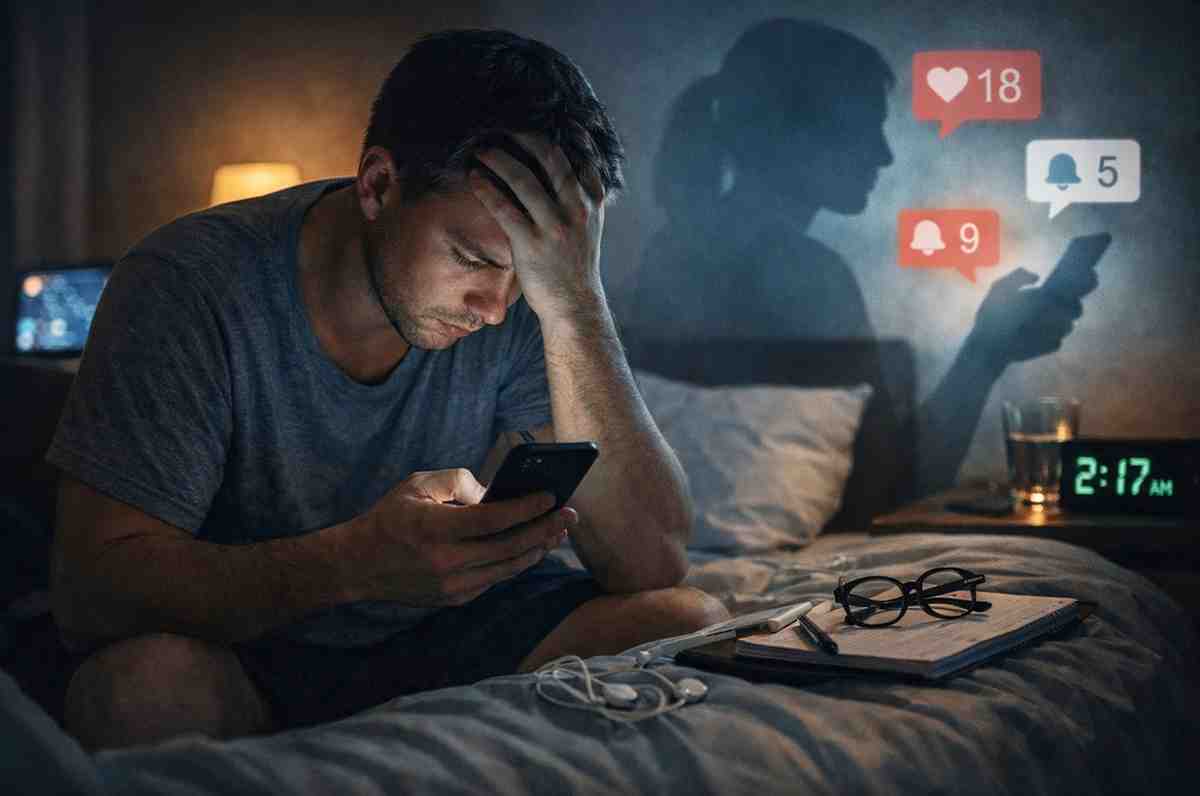
Honestly, I didn’t think this would be my problem. I’m not “addicted” to my phone, right? I work online. My friends live in my phone. My life is in there.
Then I caught myself unlocking my screen for the fifth time in a minute and feeling… weirdly empty. Like I’d just eaten junk food for my brain. Again.
That’s when the impact of smartphone addiction stopped being an abstract thing people complain about on podcasts and turned into something personal.
Not dramatic. Just quietly exhausting.
I didn’t wake up one day and say, “I am addicted.”
I woke up tired. Irritable. Distracted. Behind on things I actually cared about.
And somehow still scrolling.
Not gonna lie… that messed with me.
The part no one warns you about: it’s not the phone, it’s the loop
Here’s what I misunderstood at first:
I thought the problem was screen time.
Like, “Oh, I just need to use my phone less.”
That framing made me feel dumb every time I failed.
Because I’d delete an app.
Then reinstall it two days later.
Then hate myself for having “no discipline.”
What actually hooked me wasn’t the phone.
It was the loop:
-
micro-boredom
-
reach for phone
-
quick hit of novelty
-
mild relief
-
immediate emptiness
-
repeat
I kept trying to break the behavior without touching the why.
From what I’ve seen →, at least, this is where most people get stuck.
You don’t crave your phone.
You crave relief.
And your phone is just the fastest relief machine you own.
That honestly surprised me.
What the impact of smartphone addiction looked like in my real life
Not textbook symptoms.
Messy, annoying stuff:
-
I couldn’t read more than 3 pages without checking something.
-
My sleep got lighter and shorter. Not dramatic insomnia. Just… trash rest.
-
Conversations felt harder. I’d zone out mid-sentence.
-
My mood dipped for no obvious reason.
-
I felt “busy” all day and still got nothing meaningful done.
The scariest part?
Nothing felt broken enough to fix urgently.
Just slowly worse.
That’s the impact of smartphone addiction that sneaks up on you.
It doesn’t ruin your life overnight.
It thins it out.
What I tried first (and how I messed this up)
1. Cold turkey digital detox
Yeah. Big mistake.
I told myself I’d do a full “dopamine reset.” No social apps. No scrolling. Just discipline.
It lasted 36 hours.
Then I binged harder than before.
Felt like I failed.
Labeled myself “weak.”
Super helpful, right?
What I learned:
Extreme rules create rebound behavior.
2. App blockers and screen time limits
This helped… technically.
I’d hit the limit.
Override it.
Then feel sneaky with myself.
It created friction, which is good.
But it didn’t change the habit loop underneath.
3. Shaming myself
I thought if I felt bad enough, I’d stop.
Nope.
It just made me scroll to avoid feeling bad.
Yeah. That one hurt to admit.
What actually started to work (slowly, annoyingly)
Not a miracle.
More like small wins stacked awkwardly.
I changed when I reached for my phone
Instead of “don’t use phone,” I tried:
-
no phone during the first 30 minutes after waking up
-
no phone during meals
-
no phone in the bathroom (this one was humbling)
This wasn’t about productivity.
It was about breaking automatic reach patterns.
I replaced the relief, not the phone
This part felt silly at first:
When I wanted to scroll, I tried one of these instead:
-
stand up and stretch
-
drink water
-
step outside for 2 minutes
-
write one messy sentence about what I was avoiding
Not all of these worked every time.
But sometimes… the urge passed.
That didn’t expect that at all.
I made scrolling slightly annoying
Small friction changes:
-
grayscale mode (this works more than I want to admit)
-
logging out of my most addictive app
-
moving the apps off my home screen
-
turning off almost all notifications
Nothing dramatic.
Just enough resistance to make the habit less smooth.
The brain is lazy.
If you make the habit less convenient, it weakens.
How long did it take to feel different?
Short answer:
A few days to notice changes. A few weeks to trust them. Months to stabilize.
Timeline (roughly):
-
Week 1:
Restless. Irritated. Felt like something was missing.
I almost quit here. -
Week 2–3:
Slightly better focus.
Less phantom phone-checking.
Still slipped a lot. -
1–2 months:
Sleep improved.
My attention span felt… thicker?
Hard to explain. But things stopped slipping through my mind so fast.
Results weren’t linear.
Some weeks felt like nothing changed.
Then suddenly I’d realize I read for 20 minutes without checking my phone.
That was a quiet win.
Common mistakes that slowed everything down
If I could go back, I’d avoid these:
-
Trying to be perfect
(you don’t need 0 scrolling to reduce the impact of smartphone addiction) -
Treating relapses like failure
(they’re data) -
Only removing apps without adding better relief options
(your brain will find another distraction) -
Expecting motivation to appear first
(behavior comes before motivation, annoyingly) -
Changing too many habits at once
(this just burned me out)
Who this approach will NOT work for
Let’s be honest:
This won’t help much if:
-
your phone is required for constant on-call work
-
you’re dealing with untreated anxiety/depression (this needs extra support)
-
you’re looking for a 7-day transformation
-
you don’t want to feel uncomfortable at all
Reducing the impact of smartphone addiction involves sitting with boredom sometimes.
That’s not for everyone.
And that’s okay.
Objections I had (and maybe you do too)
“My phone is my job.”
Yeah. Same.
The goal isn’t less phone use overall.
It’s less mindless phone use.
“This sounds restrictive.”
It is. A little.
But so is constantly feeling scattered and tired.
“I’ve tried this stuff before.”
Same.
What changed for me was focusing on relief, not discipline.
“Is this even worth it?”
For me? Yes.
Not because life became magical.
But because it became quieter.
And I didn’t realize how much noise I was carrying.
Reality check (no hype)
Here’s the part influencers skip:
-
Some days you’ll still scroll for an hour and feel annoyed at yourself.
-
Some habits will take longer to change than you want.
-
You might get bored. Like, genuinely bored.
-
You may realize you were using your phone to avoid certain feelings.
That part is uncomfortable.
This isn’t about becoming a monk.
It’s about reducing the impact of smartphone addiction on your attention, mood, and energy.
That’s it.
Quick FAQ (People Also Ask–style)
Does smartphone addiction really affect mental health?
From what I’ve experienced and noticed in others, yeah.
Not always dramatically.
But it quietly worsens anxiety, focus, sleep, and mood over time.
How many hours a day is “too much”?
I don’t think hours alone tell the truth →.
Mindless use matters more than total time.
Is quitting social media necessary?
No.
Reducing automatic use mattered more for me than quitting entirely.
What if nothing changes after trying?
Then you may need a different lever:
sleep, mental health support, routine changes.
Phones are often a symptom amplifier, not the root cause.
Practical takeaways (no magic, just real stuff)
What to do:
-
Break automatic reach patterns (morning, meals, bathroom)
-
Add small friction to addictive apps
-
Replace scrolling with tiny relief actions
-
Track patterns instead of judging yourself
What to avoid:
-
All-or-nothing detoxes
-
Self-shaming
-
Changing everything at once
-
Expecting fast emotional results
What to expect emotionally:
-
Boredom
-
Mild irritation
-
A weird sense of emptiness at first
-
Then… small pockets of calm
What patience looks like:
-
Measuring progress in weeks, not days
-
Letting some days be messy
-
Not needing perfection to continue
I’m not cured.
I still scroll more than I want some days.
Then again, I also notice it now. And that alone changes the relationship.
So no — this isn’t magic.
But for me?
It stopped feeling impossible.
And that was enough to keep going.