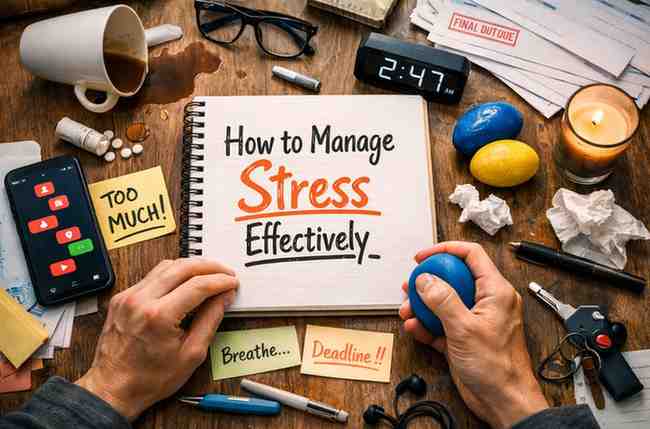
Honestly, I didn’t think learning how to manage stress effectively would change → much. I’d already tried the usual stuff. Breathing apps. Journaling for three days and quitting. Long walks I half-resented because I felt “too busy” to be walking. I kept telling myself I was just wired this way—always on edge, always tired, always one bad email away from spiraling.
Not gonna lie… I felt stupid for hoping again.
But stress has a way of cornering you. Mine showed up in dumb ways at first—tight jaw, snapping at people I like, lying awake replaying conversations I didn’t even care about. Then it got louder. Headaches. Random chest tightness. That low-level dread that hums in the background while you’re trying to work. So yeah, I finally stopped pretending this was “just my personality” and started taking stress seriously.
This isn’t a neat system. It’s what actually helped me, after messing it up a bunch of times.
The stuff I tried first (and why it didn’t work)
I went in hot with “fix my life” energy. Bad move.
Here’s what I tried early on:
-
Meditation marathons.
I’d sit for 20 minutes, get bored at minute three, then feel like a failure.
Result: more stress. Cool. -
Productivity hacks.
Color-coded to-do lists. Pomodoro timers. Fancy planners.
I was organized… and still stressed. Turns out being efficient at chaos is still chaos. -
Motivational content binges.
Podcasts. YouTube. Quotes about hustle.
This honestly made it worse. I felt like everyone else had it figured out and I was behind.
What I misunderstood: I thought stress was a mindset problem. Like if I just thought differently, I’d feel different.
From what I’ve seen, at least, stress is a body + environment + habit loop. You can’t “out-think” a nervous system that’s been in fight-or-flight for years.
The shift that surprised me (and changed the game)
This honestly surprised me: stress went down when I made my life smaller.
Not smaller goals. Smaller daily load.
I stopped trying to optimize everything and focused on reducing friction. Tiny changes:
-
Fewer tabs open (both on my browser and in my head)
-
Saying no to one extra thing per week
-
Letting some days be “good enough” instead of perfect
It felt lazy at first. Then it felt… calm. I didn’t expect that at all.
What actually helped me manage stress (messy, real version)
I’ll break this down the way it happened, not the way self-help books organize it.
1. I stopped treating stress like an emergency
Every time I felt stressed, I used to react like: “Oh no, I’m stressed. I need to fix this NOW.”
That panic added another layer of stress.
What worked better:
-
Noticing stress
-
Naming it quietly: “Okay, I’m tense right now.”
-
Doing one small regulating thing instead of ten dramatic fixes
Sometimes that regulating thing was literally standing up and stretching my shoulders. That’s it.
2. I picked boring routines (and stuck with them)
No aesthetic morning routine here. Just stuff that didn’t require motivation:
-
Same wake-up window most days
-
Water before caffeine (I hated this at first)
-
10-minute walk outside even when I didn’t feel like it
This took about 2–3 weeks before I noticed my baseline stress drop. Not vanish. Drop.
How long does it take to manage stress effectively?
From my experience, you’ll feel tiny shifts in days, real shifts in weeks, and deeper stability in months. The early phase is annoying because progress is quiet.
3. I learned my personal stress triggers (not the generic ones)
Generic advice says: avoid stressors. Cool. But mine were sneaky.
My biggest triggers:
-
Skipping meals
-
Too much screen time late at night
-
Overcommitting socially when I was already tired
-
Certain people (yeah, I said it)
Once I saw patterns, stress stopped feeling random. It felt… predictable. Predictable is manageable.
4. I messed up breathing exercises (until I didn’t)
Breathing techniques annoyed me. Counting breaths felt fake.
What worked:
-
Inhale through nose, long exhale through mouth
-
No counting. No timer. Just longer exhales.
Why this works (in real life terms): long exhales tell your nervous system to chill. That’s not theory. I felt it in my chest. My jaw unclenched.
I messed this up at first by trying to “do it right.”
Turns out “good enough breathing” still works.
5. I reduced stress by subtracting, not adding
This was the biggest mindset flip.
Instead of adding:
-
Another app
-
Another routine
-
Another technique
I asked:
-
What can I remove this week?
Things I removed:
-
Doomscrolling before bed
-
One optional weekly obligation
-
News alerts
My stress dropped without adding anything new. Wild.
Real routines that didn’t make me roll my eyes
Here’s what stuck. Not every day. Just often enough.
Morning (5–10 minutes total):
-
Drink water
-
Stand by a window and breathe
-
Look at the day’s top 1–2 priorities only
Midday reset (2 minutes):
-
Stand up
-
Roll shoulders
-
Long exhale x5
Evening wind-down:
-
Phone out of bed area
-
Low light
-
Same-ish bedtime window
This isn’t sexy. But it’s sustainable. And that matters more.
Common mistakes that slowed everything down
If you’re trying to manage stress effectively and it’s not clicking, check these:
-
Trying to fix everything at once
Overhauls spike stress before they lower it. -
Waiting to feel motivated
Motivation follows action, not the other way around. -
Judging yourself for being stressed
That shame loop is brutal. -
Copy-pasting someone else’s routine
What calms one person might annoy you. -
Using stress tools only when you’re already overwhelmed
They work better as maintenance, not emergency brakes.
Is it worth it? (The honest version)
Short answer: yeah, but not in a cinematic way.
This didn’t turn me into a calm monk. I still get stressed. Deadlines still exist. Life still life-s.
But the difference is:
-
Stress doesn’t hijack my whole day anymore
-
I recover faster
-
I catch spirals earlier
-
I’m less mean to myself about it
If you’re expecting zero stress forever, you’ll be disappointed. If you’re okay with “less intense, less constant,” this is worth trying.
Objections I had (and what changed my mind)
“I don’t have time for stress management.”
I said this while spending 45 minutes scrolling at night. Time was there. Energy was misallocated.
“This stuff won’t work for my kind of stress.”
I thought my stress was special. It wasn’t. It was human stress with a dramatic storyline.
“I’ve tried this already.”
Same. But I hadn’t tried it consistently, or gently, or without turning it into a performance.
Quick FAQ (People Also Ask vibes)
How long does it take to manage stress effectively?
Small relief can show up in days. Real baseline change usually takes a few weeks. Stability builds over months.
What if nothing works for me?
If you’ve tried small, consistent changes for 4–6 weeks with no shift at all, that’s a sign to get outside support. Therapy, coaching, or medical checkups can uncover stuff habits can’t.
What are the fastest ways to calm stress right now?
-
Long exhales
-
Standing up and moving your body
-
Cold water on your face
-
Naming what you’re feeling out loud
Is this just mindset work?
No. Body stuff matters. Sleep, food, movement, light exposure. Stress lives in your nervous system, not just your thoughts.
Reality check (who this is NOT for)
This approach might frustrate you if:
-
You want instant, dramatic transformation
-
You hate routines with a passion
-
You’re dealing with severe anxiety or trauma and refuse outside support
-
You’re not willing to change small daily habits
Also, some seasons of life are just objectively stressful. This won’t erase grief, financial pressure, or real-world problems. It helps you carry them with less damage.
Practical takeaways (no hype, just real)
What to do:
-
Start smaller than you think you should
-
Build 1–2 boring, repeatable habits
-
Focus on reducing friction in your day
-
Use body-based calming tools, not just mindset shifts
What to avoid:
-
All-or-nothing overhauls
-
Comparing your calm to someone else’s highlight reel
-
Shaming yourself for still feeling stressed
What to expect emotionally:
-
Early awkwardness
-
Mild frustration
-
Small wins that don’t feel dramatic
-
Occasional backslides (normal)
What patience looks like:
-
Doing the same simple thing on days it doesn’t feel helpful
-
Letting progress be quiet
-
Not quitting after one bad week
So yeah. This isn’t magic. I still have days where my chest tightens and my brain goes into “everything is urgent” mode. But learning how to manage stress effectively made those days feel… survivable. Manageable.
And honestly? That shift—from “I’m drowning” to “I’m staying afloat”—was enough to keep me trying.