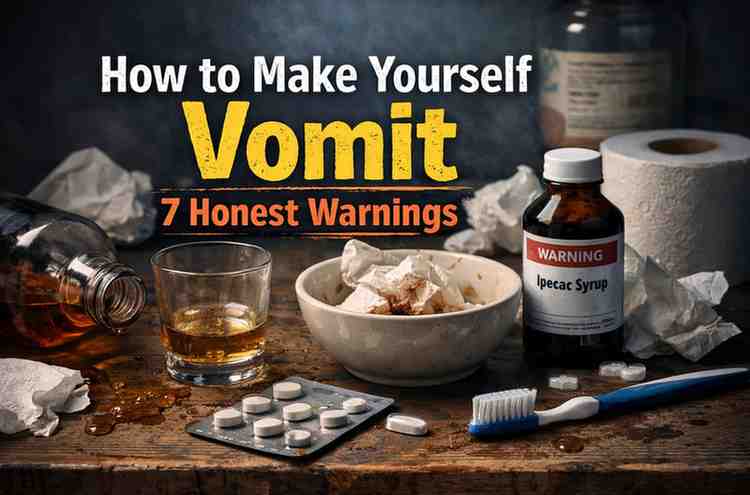
I’m going to say this plainly because I’ve watched too many people → panic and Google how to make yourself vomit at 2 a.m.
It’s usually not curiosity.
It’s anxiety.
Food poisoning fear.
Drank too much.
A kid swallowed something weird.
Or someone ate and immediately regrets it.
From what I’ve seen, the urgency is emotional. People want relief. Fast. They assume vomiting will “fix” whatever just happened.
And almost every time, the first instinct is wrong.
Before I walk you through what actually happens when people try to force themselves to throw up, let me say something important:
Inducing vomiting at home is rarely recommended. In many cases, it makes things worse.
That surprises people. It surprised me too, the first few times I saw how it played out.
Let’s unpack this the right way.
Why People Try to Make Themselves Vomit
Across the situations I’ve seen, it usually falls into one of these:
-
Ate spoiled food and feel nauseous
-
Drank too much alcohol
-
Think they swallowed something toxic
-
Ate something they’re allergic to
-
Feel “too full” and uncomfortable
-
Regret eating (this one is more complicated emotionally)
Different scenarios. Same impulse: “If I just throw up, I’ll feel better.”
Sometimes nausea is already happening and the body is deciding on its own.
Other times, people try to force it.
And this is where things get messy.
The Hard Truth: Most Doctors Do NOT Recommend Forcing Vomiting
If you’re in the United States, guidance from poison control and emergency medicine is clear:
Do not induce vomiting unless a medical professional specifically tells you to.
Why?
Because:
-
Some substances burn more coming back up (bleach, gasoline, chemicals)
-
Sharp objects can cause tears
-
Repeated gagging can damage your throat
-
You can inhale vomit into your lungs (aspiration)
-
It doesn’t reliably remove what you think it removes
I’ve seen people assume, “If I just get it out fast, I’m safe.”
That logic feels right emotionally.
It’s not always right medically.
What Actually Happens When People Try
Let me walk you through patterns I’ve witnessed.
Scenario 1: The “Food Poisoning Panic”
Someone feels nauseous after eating questionable leftovers.
They:
-
Drink salt water
-
Stick fingers down throat
-
Use a toothbrush to trigger gag reflex
Sometimes they vomit.
Sometimes they don’t.
Here’s what surprised me after watching this so many times:
If the body is going to vomit due to food poisoning, it usually does so on its own. Forcing it rarely changes the overall illness timeline.
And in several cases, people irritated their throat so badly that they felt worse afterward.
Raw. Shaky. Dehydrated.
The relief they expected? Temporary at best.
Scenario 2: Alcohol Regret
This one is common.
Someone drank too much. They feel awful. Dizzy. Nauseous. Embarrassed.
They Google how to make yourself vomit.
Here’s the pattern I’ve seen:
-
They force vomiting
-
They feel slightly clearer for 20–30 minutes
-
Then dehydration hits harder
Alcohol absorbs into the bloodstream quickly. By the time someone decides to vomit, most of it is already absorbed.
So the idea that vomiting “undoes” drinking? Mostly a myth.
What consistently works better:
-
Hydration
-
Electrolytes
-
Rest
-
Time
Not dramatic. Not instant. But safer.
Scenario 3: Suspected Poisoning
This is where things get serious.
If someone swallowed something toxic, the instinct to vomit is strong.
But here’s what poison specialists consistently advise in the U.S.:
Call Poison Control (1-800-222-1222) immediately.
Do not induce vomiting unless instructed.
I’ve watched people hesitate to call because they felt silly.
Every time they did call, the specialists were calm, practical, zero judgment.
And in several cases, vomiting would have made it worse.
That stuck with me.
“But What If I Already Feel Like I’m Going to Throw Up?”
If your body is naturally nauseous and on the edge:
From what I’ve seen, the safest approach is usually:
-
Sit upright
-
Lean forward (not flat on your back)
-
Stay near a bathroom
-
Sip small amounts of water
If vomiting happens naturally, that’s different from aggressively triggering it.
Still — repeated vomiting = dehydration risk.
Watch for:
-
Dizziness
-
Dry mouth
-
No urination
-
Confusion
That’s when medical care matters.
Common Mistakes Almost Everyone Makes
I didn’t expect this to be such a common issue, but here we are.
1. Using Salt Water
People think concentrated salt water forces vomiting safely.
Reality:
-
It can cause dangerous sodium imbalance
-
It has led to hospitalizations
This one worries me most.
2. Thinking “The More I Get Out, The Safer I Am”
Not how digestion works.
Absorption begins quickly. Vomiting hours later doesn’t rewind the clock.
3. Ignoring Emotional Triggers
I have to say this gently.
Sometimes the urge to vomit isn’t about toxins or illness.
It’s about guilt after eating.
If someone repeatedly searches how to make yourself vomit after meals — that’s not a stomach issue.
That’s something deeper. And it deserves support, not shame.
FAQ-Style Quick Answers
Is it safe to make yourself vomit?
Usually no, unless directed by a medical professional.
Does vomiting remove toxins?
Not reliably. Many substances are absorbed quickly.
How long does it take to feel better after vomiting?
If it’s food-related nausea, relief may be temporary. True recovery depends on hydration and time.
Who should absolutely NOT try this?
-
Anyone who swallowed chemicals
-
Anyone who swallowed sharp objects
-
Children (always call Poison Control first)
-
Anyone with heart conditions
-
Anyone struggling with disordered eating
Objections I Hear All the Time
“But I feel so full and sick.”
That doesn’t automatically mean vomiting will help.
Often:
-
Slow sips of water
-
Gentle walking
-
Time
Works better.
“I just need immediate relief.”
I get that. I’ve seen the desperation.
Still — short-term relief can create longer-term problems.
“Everyone does it after drinking too much.”
No. A lot of people say they do. Fewer actually should.
Reality Check Section
This is not a magic reset button.
It’s not a safe detox method.
It’s not a weight control strategy.
It’s not a reliable poisoning solution.
Most people who try to force vomiting regret how rough it feels afterward.
Dry throat. Headache. Weakness. Sometimes worse anxiety than before.
That pattern shows up again and again.
What Actually Helps in Most Situations
Depending on context:
Food-Related Nausea
-
Rest
-
Hydration
-
Bland foods later (toast, rice)
-
Electrolytes
Alcohol
-
Water
-
Electrolytes
-
Sleep
-
Avoid repeat drinking
Suspected Poison
-
Call Poison Control immediately
Emotional Eating Regret
-
Pause
-
Breathe
-
No punishment behavior
-
Consider talking to someone safe
That last one matters more than people think.
Who This Article Is NOT For
If someone is repeatedly trying to vomit as a weight control method, this isn’t a DIY situation.
That’s eating disorder territory.
And I’ve seen how quietly that can spiral.
If that resonates even slightly — reaching out for professional support is the bravest move available. Not weakness.
Practical Takeaways
If you’re here because you feel awful right now:
-
Stop. Breathe.
-
Don’t reach for salt water.
-
Don’t aggressively trigger gag reflex.
-
Assess what actually happened.
-
Call Poison Control if there’s any toxin involved.
-
Hydrate slowly.
-
Give your body time.
Most discomfort passes.
Most panic fades.
Almost everyone I’ve seen rush into forced vomiting later said, “I wish I’d waited.”
Still.
If your body naturally vomits due to illness, that’s different. Let it happen safely. Stay upright. Rehydrate afterward.
But forcing it? Rarely worth it.
I know the urge for quick relief can feel overwhelming.
I’ve watched smart, rational people make rushed calls because discomfort feels urgent. Because anxiety screams.
But your body isn’t a machine with a reset button.
It’s slower than that. Smarter than that too.
So no — this isn’t magic. And honestly, that’s a good thing.
Most of the time, patience and safer steps work better than panic-driven ones.
And sometimes, not acting impulsively is the real win.