

Honestly, I didn’t think this would work.
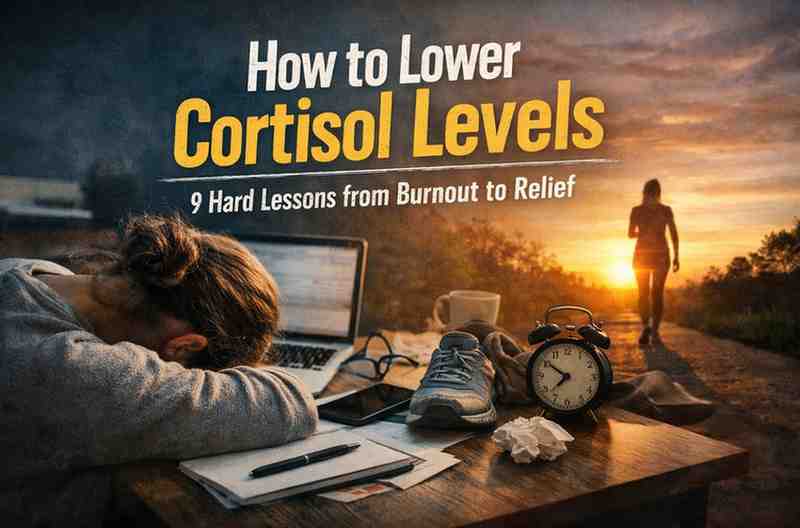
I’d already tried three other “stress fixes,” spent money I didn’t have, and still woke up every morning with that wired-but-tired feeling. You know the one. Jittery. Brain foggy. Heart doing tiny panic sprints over nothing.
When I finally started looking into how to lower cortisol levels, it wasn’t because I was curious. It was because I was desperate. I was snapping at people I liked. Sleeping but not resting. Working hard and somehow getting dumber. Not my finest era.
Not gonna lie… I assumed cortisol was just another wellness buzzword. Turns out, ignoring it was one of my bigger mistakes.
Why I even cared about cortisol (aka my “I’m fine” lie)
For a long time, I told myself I was just “busy.”
Busy people are tired. Busy people feel anxious. Busy people live on caffeine and vibes.
Except my body wasn’t buying it.
Here’s what finally pushed me to take this seriously:
-
I’d wake up tired, then crash at 3–4 PM.
-
My workouts felt harder, but my results went backwards.
-
Small problems felt huge. Everything felt urgent.
-
My stomach was constantly off. Stress poops are a real thing. ????
I thought I needed better discipline.
What I actually needed was to stop living like my nervous system was in a constant emergency.
The stuff I tried first (and why most of it failed)
I messed this up at first by going full try-everything mode.
What I tried (and expected to fix me overnight)
-
Supplements I didn’t understand
-
Cold showers because some podcast guy swore by them
-
Meditating 20 minutes once, then quitting
-
“Just breathe” advice that made me want to scream
-
Cutting caffeine completely (bad idea for my sanity at that moment)
Why this failed
-
I treated cortisol like a switch. It’s not.
-
I expected calm to feel instant. It didn’t.
-
I ignored how my lifestyle was literally designed to keep me stressed.
-
I kept looking for one magic habit instead of changing patterns.
This honestly surprised me:
Lowering cortisol wasn’t about adding one heroic habit.
It was about removing tiny stressors that stacked up all day.
Death by a thousand pings. Emails. Skipped meals. Late nights. Doomscrolling in bed.
What actually helped lower my cortisol (slowly, annoyingly, but for real)
No miracle here. Just boring stuff that worked when I stopped half-doing it.
1. Sleep timing > sleep hacks
I used to chase “perfect sleep routines.”
Weighted blankets. Blue light glasses. Magnesium gummies.
Cool, but…
The real game-changer was this unsexy move:
Going to bed at the same time.
Even when I wasn’t tired.
Even on weekends (mostly).
What changed:
-
I stopped waking up already stressed.
-
Mornings felt less like an emergency.
-
My cravings chilled out. Didn’t expect that at all.
Why this works (from what I’ve seen, at least):
Cortisol has a rhythm. When you sleep randomly, your body stays in alert mode because it doesn’t know when it’s safe to power down.
2. Walking > killing myself at the gym
This one hurt my ego.
I thought hard workouts would “burn off stress.”
Sometimes they did.
Often they just stressed me more.
What worked better:
-
20–40 minute walks
-
Sunlight on my face
-
No headphones sometimes (just brain noise settling down)
Not glamorous.
But my body calmed down in a way HIIT never gave me when I was already burnt out.
Don’t repeat my mistake:
If you’re fried, more intensity can backfire.
Your nervous system doesn’t care about your grindset.
3. Eating earlier (I fought this one)
I used to delay food until late afternoon.
Because productivity.
Because “fasting discipline.”
Because coffee.
Big mistake for me.
When I started eating earlier in the day:
-
My afternoon crashes eased up
-
My anxiety spikes softened
-
I stopped feeling like I was constantly running on fumes
Not saying everyone needs breakfast.
I’m saying my stressed body needed fuel sooner.
4. Cutting information overload (this was sneaky)
This one took me way too long to notice.
My stress wasn’t just from life.
It was from input:
-
News first thing in the morning
-
Work messages before I was awake
-
TikTok at night
-
Podcasts in every quiet moment
I tried:
-
No news before noon
-
No work messages before I got dressed
-
One quiet block per day (even 10 minutes)
My baseline stress dropped.
Not dramatically.
But enough to notice my shoulders weren’t living in my ears anymore.
5. Letting myself be bad at calming down
I used to think meditation meant “clear mind.”
LOL. No.
What helped:
-
Sitting for 5 minutes
-
Letting my brain rant
-
Not fixing it
-
Just noticing how loud it was
Some days this made me feel calmer.
Some days it just showed me how stressed I already was.
Both were useful.
How long did it take to notice real changes?
Short answer:
Not as fast as I wanted.
Faster than I expected.
Timeline (roughly):
-
3–5 days: sleep felt slightly better
-
1–2 weeks: fewer random anxiety spikes
-
3–4 weeks: energy steadier
-
6+ weeks: baseline stress noticeably lower
It wasn’t linear.
Some days I felt like I was back at square one.
Then I’d realize… the bad days were less intense than before.
Progress, just not cinematic.
Common mistakes that slowed my progress
If I could go back and slap a sticky note on my forehead:
-
Expecting one habit to fix everything
-
Being perfect for 3 days, then quitting
-
Comparing my results to calm people on the internet
-
Using “self-care” to avoid hard life boundaries
-
Trying to lower cortisol without lowering my workload (lol)
Lowering cortisol levels while living the exact same life that stressed you out?
That’s like trying to dry off in the rain.
People Also Ask (short, real answers)
How can I lower cortisol levels quickly?
You can feel calmer fast with sleep, walking, breathing slower, and eating regularly. Actual cortisol shifts take days to weeks.
What foods help lower cortisol?
Regular meals with protein + carbs helped me more than any superfood. Skipping meals made my stress worse.
Does exercise lower cortisol?
Yes, but the wrong kind at the wrong time can spike it. Gentle movement worked better for me when burned out.
Is high cortisol always bad?
No. You need cortisol. The problem is living in “emergency mode” all the time.
Can supplements lower cortisol?
Maybe. Some helped a little. None fixed my lifestyle.
Objections I had (and what I learned)
“This feels too slow.”
Yeah. It is. Fast fixes got me here.
“I don’t have time for this.”
Then you probably have time for burnout recovery later. Pick your pain.
“This won’t work for my situation.”
Some of it won’t. You’re not me. That’s fine. But stress basics are weirdly universal.
“I need results now.”
Totally fair. Still doesn’t change biology.
Reality check: who this might NOT work for
Being honest here:
-
If your stress comes from trauma, this is support, not a solution.
-
If you’re in survival mode financially, emotionally, or medically, cortisol isn’t your main enemy — your environment is.
-
If you’re dealing with a health condition affecting hormones, get actual medical help. Don’t DIY this.
This approach helped me stabilize.
It didn’t fix my life.
The parts nobody really warns you about
-
Lowering cortisol can feel boring.
-
Calm can feel unfamiliar (almost uncomfortable).
-
You might miss your old chaos energy.
-
Some relationships change when you’re less reactive.
-
Rest can bring up feelings you’ve been outrunning.
That part caught me off guard.
Practical takeaways (no hype, just what worked)
What to do:
-
Pick 2 habits you can repeat when tired
-
Prioritize sleep timing over hacks
-
Walk more than you think you need
-
Eat earlier if you’re constantly wired
-
Reduce noise before adding techniques
What to avoid:
-
All-or-nothing routines
-
Expecting calm to feel dramatic
-
Treating stress like a personal failure
-
Fixing cortisol without fixing your schedule
What to expect emotionally:
-
Relief, then impatience
-
Small wins that feel too small
-
Setbacks that feel bigger than they are
-
Quiet improvement you almost miss
What patience actually looks like:
-
Doing the boring thing again
-
Noticing 5% changes
-
Letting progress be unsexy
-
Not quitting when it’s “just okay”
So yeah.
This isn’t a miracle reset.
Lowering cortisol didn’t make me a monk. It just made my life feel… less hostile.
I still get stressed.
I still mess up my sleep sometimes.
I still drink too much coffee on rough days.
But it stopped feeling impossible.
And that shift alone gave me room to breathe.