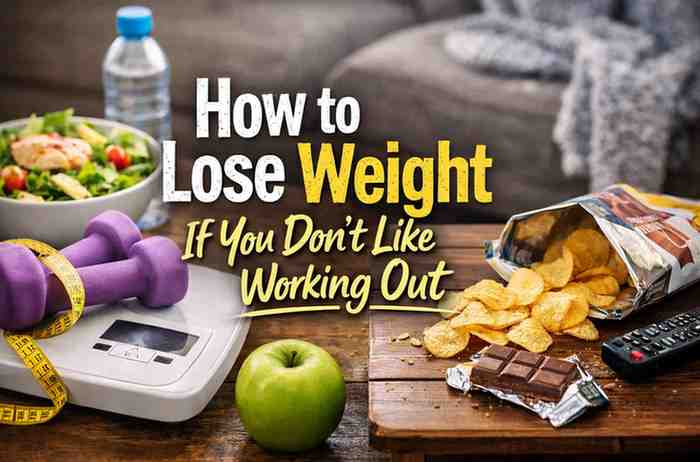
Not gonna lie… I used to think weight loss meant signing my soul over to a gym. Bright lights. Mirrors everywhere. People who look like they were born knowing how to squat. I’d hype myself up, go twice in a week, wake up sore in places I didn’t know existed, and then ghost the whole plan. Again.
So when I started searching for how to lose weight if you don’t like working out, it wasn’t because I wanted shortcuts. I just wanted something I wouldn’t quit on by week two. I was tired of the all-or-nothing cycle. Tired of feeling like my options were “become a gym person” or “stay stuck.”
This is the messy, lived-in version of what actually moved the needle for me. The stuff I messed up. The tiny changes that stuck. The parts that surprised me. The parts that bored me (and still worked anyway). No hype. No miracles. Just what helped me stop feeling trapped.
Experience-Driven Core Body
Why I even tried this approach (and what I misunderstood)
I didn’t hate movement. I hated structured workouts. The countdown timers. The feeling of being behind. The weird pressure to enjoy it. I thought the only “real” way to lose weight was through intense workouts and sweat sessions that made you feel accomplished but also kind of wrecked.
Here’s what I misunderstood at first:
-
I thought workouts = weight loss
-
I ignored how much I was actually eating
-
I underestimated how exhausting “trying to be perfect” is
I kept trying to force myself into routines I didn’t enjoy, then blaming myself when I quit. That loop alone probably stalled me more than my diet ever did.
The shift came when I stopped asking, “What’s the best workout plan?” and started asking, “What can I do that I won’t bail on?”
That changed everything.
What actually worked (and felt doable)
This wasn’t one big hack. It was a handful of boring-sounding changes that added up. Some felt too small to matter. They mattered.
1) I stopped “dieting” and started editing my food
I didn’t overhaul my whole diet. That always backfired. I picked one meal I ate most days (lunch) and tweaked that first.
What that looked like for me:
-
Same meals I liked
-
Slightly smaller portions
-
More protein on the plate
-
One less ultra-processed snack per day
No food rules. No demonizing carbs. Just… editing.
What surprised me:
I didn’t feel deprived. I felt less chaotic. My hunger stopped swinging wildly. That alone reduced late-night “whatever’s in the pantry” eating.
2) I walked, but not like a fitness influencer
I didn’t “go for walks” in a mindful, sunrise, podcast kind of way. I walked while doing life.
-
Parking farther away
-
Taking phone calls while pacing
-
Walking after dinner instead of collapsing on the couch
It didn’t feel like exercise. It felt like motion. From what I’ve seen, at least, consistency beats intensity when you’re allergic to workouts.
3) I made my environment work for me
This part felt sneaky. I changed what was easiest.
-
Fruit on the counter
-
Chips on the top shelf
-
Water bottle on my desk
-
Smaller plates (yes, this worked on my brain)
I didn’t rely on motivation. I relied on convenience. Motivation shows up late and leaves early.
4) I stopped drinking my calories (mostly)
This one stung a little. I didn’t expect it to matter as much as it did.
I didn’t quit everything. I just:
-
Cut daily sugary drinks
-
Kept alcohol to weekends
-
Drank water first when I thought I was hungry
The scale responded more to this than any workout plan I ever tried.
What failed (so you don’t repeat my mistakes)
I messed this up at first by trying to “stack” too many changes at once. New food rules, step goals, sleep routines, no sugar, no late nights. It lasted maybe five days.
Here’s what consistently failed for me:
-
Extreme restrictions
They made me rebel. Hard. -
All-or-nothing rules
One “bad” meal and I’d mentally quit the week. -
Tracking everything perfectly
Helpful for awareness. Terrible for my sanity long-term. -
Waiting to feel motivated
Motivation is unreliable. Systems are boring. Systems work.
If you’ve tried to white-knuckle your way through weight loss before and felt like a failure… yeah. Same. It wasn’t a character flaw. It was a strategy problem.
The routine that finally stuck (simple, not sexy)
This is what an average day looked like when things started to click:
-
Morning:
Coffee + breakfast with protein → (even if it was basic) -
Midday:
Normal lunch, slightly edited portion -
Afternoon:
Walk during a call or errands -
Evening:
Dinner I actually liked
10–15 minute walk after (not always, but often) -
Late night:
If I wanted something sweet, I had it. Just smaller.
No gym. No classes. No trackers yelling at me. Just repeatable behavior.
Is this optimal? Probably not.
Is this realistic for people who hate workouts? Honestly, yes.
How long did it take to see results?
This part is annoying to hear, but… slow.
-
First 2 weeks:
Mostly mental changes. Less bloat. Less chaos around food. -
3–6 weeks:
Subtle weight changes. Clothes fit a little better. -
2–3 months:
People noticed. I noticed. It felt real.
I didn’t wake up thinner. I woke up less stuck. That was the win.
If you’re looking for fast drops, this will probably disappoint you. If you’re looking for something you won’t quit on, this has a shot.
People Also Ask–style quick answers
Can you really lose weight → without working out?
Yes. Weight loss is mostly driven by how much you eat. Movement helps, but it’s not required to see progress.
Is walking enough?
For some people, yes—especially when paired with food changes. It’s not flashy, but it’s sustainable.
What if I hate all movement?
Start with daily life movement. Stairs. Chores. Short walks. Zero pressure to “work out.”
Do I need to count calories?
Not strictly. Awareness helps. Obsession usually hurts. There’s a middle ground.
Objections I had (and still kind of have)
“This feels too easy. Is it actually doing anything?”
I thought this for weeks. Then my jeans fit differently. Easy doesn’t mean ineffective. It just means boring.
“What if I’m just being lazy?”
I asked myself this a lot. Honestly? For me, forcing workouts I hated made me quit everything. Choosing something I’d stick to felt smarter, not lazier.
“Isn’t exercise important for health?”
Yes. For health. For mood. For strength. This approach isn’t anti-exercise. It’s anti-forcing-yourself-into-stuff-you-hate. Big difference.
Reality check (the stuff that doesn’t get hyped)
Let’s be real for a second.
This approach:
-
Won’t make you ripped
-
Won’t give you rapid transformations
-
Won’t fix emotional eating by itself
-
Won’t feel dramatic
What it will do:
-
Lower the barrier to starting
-
Reduce burnout
-
Make consistency possible
-
Create momentum you can build on later
Who this is not for:
-
People who love intense workouts
-
People training for performance goals
-
People who need structure to feel motivated
Who might actually benefit:
-
People who’ve quit the gym 5+ times
-
People who feel behind, embarrassed, or tired
-
People who want progress without turning life upside down
Common mistakes that slow everything down
From what I’ve seen (and lived), these drag progress way out:
-
Expecting visible changes in 7 days
-
Cutting food too aggressively
-
Ignoring sleep
-
Letting weekends undo the week
-
Treating small wins like they don’t count
The small wins are the whole thing. Seriously.
Short FAQ (the stuff people DM about)
Is it worth trying if I’ve failed before?
Yeah. Especially if what you tried before required you to become someone you’re not.
What if it stops working?
Then you adjust. Add more walking. Tweak portions. Nothing here is permanent or locked in.
Will I ever need to work out?
You don’t need to. You might eventually want to. That surprised me.
Practical Takeaways
If you’re trying to figure out how to lose weight if you don’t → like working out, here’s the grounded version:
What to do:
-
Edit your food instead of overhauling it
-
Walk in real-life ways, not “fitness” ways
-
Change your environment to make better choices easier
-
Focus on what you can repeat on your worst days
What to avoid:
-
Extreme restrictions
-
Waiting for motivation
-
Copying routines you secretly hate
-
Quitting after one off day
What to expect emotionally:
-
Boredom
-
Doubt
-
Impatience
-
Occasional “is this even working?” moments
What patience actually looks like:
-
Weeks of subtle changes
-
Progress you notice before the scale does
-
Feeling less trapped before you feel transformed
No guarantees. No hype. Just a path that doesn’t punish you for not loving workouts.
I’m not gonna pretend this turned me into some disciplined, fitness-loving person overnight. It didn’t. Some weeks I still felt behind. Some weeks I wanted faster results. Then again… I also stopped quitting. That was new.
So no — this isn’t magic.
But for me? It stopped feeling impossible.
And that was enough to keep going.