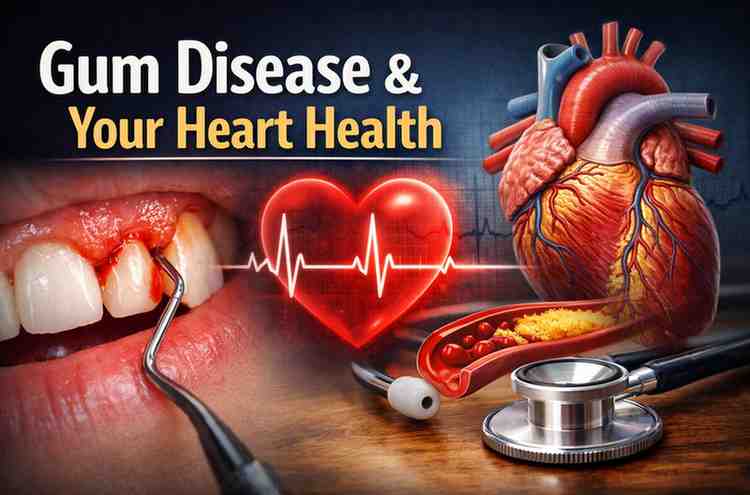
I can’t tell you how many times I’ve watched someone brush off bleeding gums like it’s nothing.
“It’s just my gums being sensitive.”
“They’ve always done that.”
“I’ll deal with it later.”
And then six months later, they’re sitting in a cardiologist’s office, stunned that their heart numbers are creeping in the wrong direction.
From what I’ve seen →, most people never connect the dots between their mouth and their heart. They treat dental issues like cosmetic annoyances. Meanwhile, they’re obsessing over cholesterol, steps, supplements, stress levels.
But how gum disease → may affect your heart health isn’t some fringe theory anymore. It’s a pattern I’ve seen play out again and again through real people — friends, family, clients I’ve guided toward better routines, and folks who thought they were doing “everything right.”
And honestly? The surprise isn’t that there’s a connection.
The surprise is how often it gets ignored.
The Pattern I Didn’t Expect to See So Often
Here’s something that genuinely surprised me after watching so many people try to improve their heart health:
Almost everyone focused on food and exercise first.
Very few looked at their gums.
I’ve seen people:
-
Hire trainers
-
Track macros obsessively
-
Take fish oil, CoQ10, magnesium
-
Cut sugar completely
But still walk around with:
-
Bleeding gums
-
Chronic inflammation in the mouth
-
Loose teeth
-
Bad breath they pretend not to notice
And then they wonder why inflammatory markers stay high.
I didn’t expect gum inflammation to be such a common blind spot. But it is.
And it makes sense once you understand what’s actually happening.
What’s Actually Going On (Without the Textbook Version)
Gum disease — especially periodontitis — isn’t just about your teeth.
It’s chronic inflammation.
And from what I’ve observed across multiple cases, the body doesn’t compartmentalize inflammation the way we do.
We think:
-
“This is dental.”
-
“That’s cardiovascular.”
-
“This is separate.”
The body thinks:
-
“Inflammation is inflammation.”
When gums are infected or inflamed long-term:
-
Bacteria enter the bloodstream.
-
The immune system stays on alert.
-
Inflammatory chemicals circulate.
Over time, this can contribute to:
-
Plaque buildup in arteries
-
Worsening atherosclerosis
-
Increased risk of heart attack or stroke
Now — and this matters — gum disease alone doesn’t “cause” heart disease in isolation.
But from what I’ve seen, it acts like fuel on an already smoldering fire.
Especially if someone also has:
-
High blood pressure
-
Diabetes
-
Obesity
-
Chronic stress
-
Smoking history
That’s where it gets serious.
Most People Miss the Early Signs
Here’s what I’ve noticed almost everyone I’ve worked with messes up at first:
They normalize bleeding gums.
They assume:
-
“It’s just brushing too hard.”
-
“It’ll go away.”
-
“Mouthwash will fix it.”
It doesn’t.
Bleeding gums are not normal. They’re a signal.
Other early signs I’ve seen ignored:
-
Gums pulling away from teeth
-
Persistent bad breath
-
Teeth shifting slightly
-
Tenderness when flossing
By the time pain shows up, it’s often progressed.
And that’s the frustrating part.
Because earlier intervention usually works better.
Why the Heart Connection Makes Biological Sense
Let’s walk through this logically.
Chronic gum disease means:
-
Persistent bacterial presence
-
Ongoing immune response
-
Systemic inflammation
Systemic inflammation contributes to:
-
Damage to blood vessel lining
-
Plaque instability
-
Increased clot risk
I’ve seen cardiologists quietly start asking about dental health more often. That didn’t used to happen.
And when someone finally gets deep periodontal cleaning and improves oral hygiene, I’ve watched inflammatory markers improve alongside lifestyle → changes.
Not magic.
Just cumulative reduction in inflammatory load.
How Long Does It Take to See Improvement?
People always ask this.
From what I’ve seen:
For gums:
Noticeable improvement in bleeding can happen in 2–4 weeks with consistent care.
For heart-related markers:
It’s slower. Think months. And only when combined with:
-
Diet adjustments
-
Blood sugar → control
-
Blood pressure management
-
Stress reduction
This is not a quick fix.
Anyone looking for a 7-day transformation will hate this.
But almost everyone who sticks with it sees stabilization.
And sometimes, that’s the real win.
What Consistently Works (Across Real People)
Patterns matter. Here’s what I’ve seen consistently help:
1. Professional Deep Cleaning (When Needed)
People resist this. They’re afraid of cost or discomfort.
But when periodontitis is advanced, brushing alone won’t reverse it.
Scaling and root planing changes the trajectory.
2. Daily Flossing (Yes, Actually Daily)
Almost everyone says they floss.
Very few actually do.
The people who turn things around? They commit. No drama. Just routine.
3. Electric Toothbrush
I didn’t think this would matter as much as it does.
It does.
Especially for people who brush too hard or inconsistently.
4. Diabetes Control
This is huge.
Uncontrolled blood sugar feeds gum disease.
And gum disease makes blood sugar harder to control.
It’s a loop.
Breaking that loop changes everything.
What Repeatedly Fails
This one’s important.
I’ve watched people waste months doing:
-
“Natural oil pulling only”
-
Herbal rinses instead of dental care
-
Ignoring deep pockets because there’s no pain
-
Stopping flossing when bleeding starts
That last one kills me.
If your gums bleed when you floss, it’s usually because they’re inflamed — not because flossing is bad.
Stopping makes it worse.
Is It Worth Addressing Gum Disease for Heart Health?
Short answer?
Yes.
But not in a dramatic, overnight way.
Here’s who it’s absolutely worth it for:
-
Anyone with existing heart disease
-
People with high cholesterol or high blood pressure
-
Diabetics
-
Smokers or former smokers
-
Anyone over 40 with chronic gum inflammation
Here’s who might feel less urgency:
-
Young adults with mild gingivitis and no other risk factors
Still important. Just lower immediate cardiovascular impact.
Who Will Struggle With This Approach
Let me be honest.
This is not for people who:
-
Avoid dentists out of fear and refuse to address it
-
Want “natural only” solutions for advanced disease
-
Expect visible results in a week
-
Don’t want to change daily habits
Because the improvement is gradual.
And subtle at first.
And a bit boring.
Quick FAQ (Straight Answers)
Can gum disease really cause heart attacks?
It doesn’t directly “cause” them alone, but it increases systemic inflammation and may raise risk.
If my gums don’t hurt, am I fine?
Not necessarily. Periodontitis can progress quietly.
Will treating gum disease lower cholesterol?
Not directly. But reducing inflammation can support overall cardiovascular stability.
Is mouthwash enough?
No. It’s supportive, not curative.
Can reversing gum disease reverse heart damage?
No. But it may reduce additional inflammatory burden.
Objections I Hear All the Time
“My dentist never mentioned my heart.”
Some still don’t emphasize it. That doesn’t mean the connection isn’t real.
“I brush twice a day. That’s enough.”
For some, yes. For many with deep pockets? Not even close.
“This sounds exaggerated.”
I get it. It did to me at first too.
Then I saw too many overlapping cases.
Reality Check (No Hype)
This is not:
-
A miracle heart cure
-
A substitute for statins if you need them
-
A replacement for cardiology care
It’s one lever.
One controllable lever.
But an important one.
And from what I’ve seen, stacking small improvements works better than chasing one big solution.
Practical Takeaways
If you’re worried about how gum disease may affect your heart health, here’s what I’d realistically suggest:
-
Get a proper periodontal evaluation.
-
Don’t ignore bleeding gums.
-
Floss daily — even if it bleeds at first.
-
Consider an electric toothbrush.
-
If you have diabetes, double down on control.
-
Re-check inflammatory markers after 3–6 months.
Emotionally, expect:
-
Mild frustration at first.
-
Some tenderness.
-
Slow progress.
Patience looks like consistency when results aren’t flashy.
It looks like doing the boring thing anyway.
I’ve watched enough people quietly improve their overall health once they stopped separating their mouth from the rest of their body.
No — fixing your gums won’t magically erase heart disease.
But ignoring them? That’s a mistake I’ve seen too often.
Sometimes the real shift isn’t dramatic.
It’s just finally paying attention to something small that’s been whispering for years.
And for a lot of people, that whisper starts in the gums.