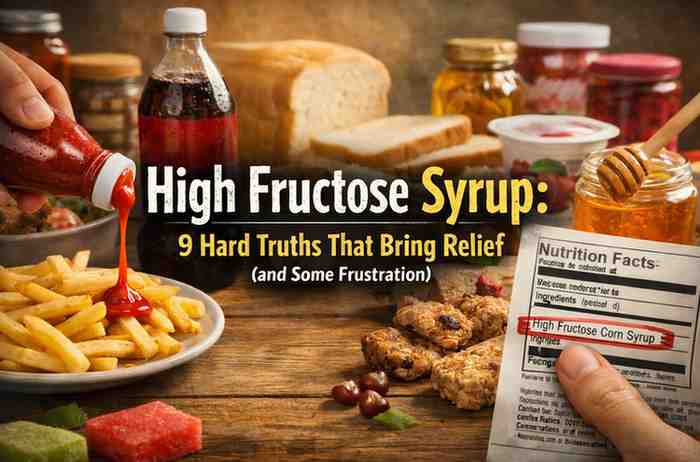
Honestly, most people I’ve watched try to clean up their sugar habits hit a wall in the first two weeks. They swear they’re “not even eating sugar,” then a label catches their eye and the mood drops. High fructose syrup shows up where they didn’t expect it—ketchup, bread, flavored yogurt, iced tea. The frustration isn’t about willpower. It’s about feeling tricked by the food environment. From what I’ve seen, the moment people realize how quietly high fructose syrup sneaks into everyday food, the whole project stops feeling simple. And weirdly, that’s when the work actually begins.
What pulls people toward cutting back on high fructose syrup (and what they expect to happen)
The first reason I hear is weight. The second is “my energy is weird.” The third is usually something vague about inflammation or gut stuff. Rarely does anyone come in saying, “I’ve studied the metabolic pathways of fructose.” They come in tired, bloated, stuck in cravings, or scared because a doctor mentioned blood sugar.
Most people expect three things:
-
Fast results. Less sugar in, better body out.
-
Clear rules. A list of “good” foods and “bad” foods.
-
Immediate relief. Fewer crashes, less brain fog, cravings gone.
What actually happens (across a lot of real kitchens, grocery carts, and awkward label-reading moments):
-
The first week feels annoying.
-
The second week feels harder than expected.
-
The third week is where small wins start showing up… if they didn’t quit.
This honestly surprised me after watching so many people try it. The early phase is not motivating. It’s disorienting. People don’t fail because they don’t care →. They fail because the rules they thought were clear turn out to be fuzzy in the real world.
What most people misunderstand about high fructose syrup
I didn’t expect this to be such a common issue, but almost everyone I’ve seen struggle with this does this one thing wrong: they think high fructose syrup is only in “junk food.”
Patterns I’ve seen repeat:
-
They fixate on soda.
Yes, soda is a big source. But cutting soda and keeping sweetened sauces, flavored coffee creamers, and packaged snacks keeps the intake high. -
They confuse “natural” with “low sugar.”
Honey, agave, fruit juice concentrates, and “organic cane syrup” don’t magically behave differently in the body just because the label looks friendlier. -
They expect their taste buds to change overnight.
It takes time. The palate doesn’t recalibrate in days. It’s more like weeks of awkward blandness before sweetness starts tasting loud again. -
They go all-or-nothing.
The people who try to erase high fructose syrup → from their lives in one shopping trip burn out fast. The ones who swap two items at a time stick around long enough to feel something shift.
There’s also this quiet misunderstanding: people think the issue is just calories. From what I’ve seen, the bigger friction is how easy it is to overconsume sweetness when it’s hidden in everyday foods. You don’t feel like you’re “having dessert,” so your guard is down. That’s where the pattern breaks people.
What consistently works vs. what looks good on paper
What looks good on paper:
-
A perfectly clean pantry.
-
A 30-day “no sugar” challenge.
-
Swapping everything for ultra-processed “sugar-free” alternatives.
What actually works in real kitchens:
-
Two swaps at a time.
People who change breakfast and one snack do better than people who nuke their whole routine. -
Keeping one sweet thing on purpose.
This sounds backward, but when someone allows one intentional sweet per day, they stop mindlessly chasing sweetness all afternoon. -
Reading the label on the foods you eat most.
Not every label. The five items you buy every week. That’s where high fructose syrup usually hides. -
Protein and fiber first.
The cravings don’t calm down until meals feel filling. This is the boring advice that actually moves the needle.
Cause → effect → outcome shows up clearly here:
-
Cause: Less hidden sweetness in staples
-
Effect: Fewer spikes and crashes
-
Outcome: Cravings become less dramatic, not magically gone
It’s not a cleanse. It’s a slow dulling of the constant sugar “noise” in the background.
“Don’t repeat this mistake” moments I’ve seen too many times
-
Replacing sugar with artificial sweeteners for every craving.
Some people feel fine doing this. Many don’t. I’ve watched folks trade one cycle of craving for another, just with different packaging. -
Assuming fruit is the problem.
This one hurts to watch. People cut whole fruit and keep sweetened yogurt and granola bars. The fiber in fruit changes how your body handles sugar →. The syrup in processed foods doesn’t come with that buffer. -
Believing one “clean” week means it’s solved.
The second week is where habits push back. Most people I’ve worked with mess this up at first by celebrating too early and letting old defaults creep back in. -
Turning it into a moral thing.
Food choices aren’t character traits. Shame makes people hide their choices. Hiding makes patterns worse.
How long does it take before people notice anything?
Direct answer, from what I’ve seen across a lot of different bodies and schedules:
-
3–7 days: Cravings may spike. Energy can dip. Mood gets weird.
-
2–3 weeks: Taste buds start recalibrating. Some people notice fewer afternoon crashes.
-
4–6 weeks: This is where people mention feeling “less out of control” around sweet stuff.
-
2–3 months: The habit feels normal. Not easy. Just normal.
If someone tells you they felt amazing on day three, that can happen. But it’s not the common pattern. The more common pattern is quiet change you only notice when you look back.
When it doesn’t seem to work (and why that’s not always the approach’s fault)
Then again, not everyone feels a big difference. This is where expectations usually break.
Common reasons I’ve seen:
-
The swaps were still sugary.
People cut high fructose syrup but keep other sweeteners high. The total sweetness stays the same. The body doesn’t care about the label. -
Sleep and stress stayed chaotic.
Cravings are louder when people are underslept or stressed. Food changes alone can’t outmuscle burnout. -
Portions quietly increased.
Removing sweetness sometimes leads to bigger portions of other foods. The net effect doesn’t change much. -
Medical stuff is in the mix.
Insulin resistance, certain medications, or gut issues can blunt the impact. This is where blanket advice fails.
This is also where bad advice shows up. People get told they “did it wrong” when the reality is more nuanced. The approach isn’t magic. It’s one lever among several.
Objections I hear (and the honest answers)
“Isn’t sugar just sugar?”
Mostly, yes. The body doesn’t read marketing claims. The practical difference with high fructose syrup is how easily it ends up in everyday foods in amounts people don’t notice. That’s the real problem I see.
“This feels extreme.”
If you try to be perfect, it will feel extreme. If you aim for fewer hidden sources, it feels like maintenance, not punishment.
“I don’t want to obsess over labels.”
Fair. Obsession backfires. The middle ground is learning your top five sources and not worrying about the rest.
“Is it worth it?”
For people who feel stuck in cycles of cravings and crashes, yes—often worth trying. For people who already eat mostly whole foods and feel fine? The payoff can be small.
A short FAQ (because these come up every time)
Is high fructose syrup worse than regular sugar?
In real life, the bigger issue is how much and how often it shows up in processed foods. The context matters more than the molecule debate.
Do I need to cut it 100%?
No. The people who stick with this long-term aim for “less often,” not “never again.”
Will cutting it help weight loss?
Sometimes. When it reduces mindless snacking and liquid calories, weight shifts follow. When it doesn’t change the overall pattern, weight often stays the same.
What if I can’t tell what foods have it?
Start with condiments, drinks, and packaged snacks. That’s where most people find surprises.
Is fruit the same thing?
No. Whole fruit comes with fiber and volume. The pattern of how people consume it is different.
Reality check (who this is not for, and what can go wrong)
This approach is not for:
-
People with a history of disordered eating who know restriction spirals them.
-
Anyone who turns food rules into self-punishment.
-
People looking for a quick fix.
What can go wrong:
-
Perfectionism. Leads to burnout.
-
Social isolation. If you make every meal out feel like a test, you’ll resent the process.
-
Substitution traps. Trading syrup for ultra-processed “diet” foods keeps the cycle alive.
Where results are slow:
-
When life is chaotic.
-
When meals aren’t satisfying.
-
When expectations are dramatic.
The honest limit: cutting back on high fructose syrup won’t fix everything. It can create space. What you do with that space matters more.
The routines I’ve seen work in real life (nothing fancy)
-
Breakfast: Protein-forward, not sweet-forward.
This alone changes the day for a lot of people. -
Drinks: Water, unsweetened tea, or coffee you actually enjoy without syrups.
This is where hidden sugar drops fast. -
Snacks: Something with chew and substance.
Nuts, yogurt, leftovers. Boring. Effective. -
Shopping rule: If the first three ingredients are sugars, it’s an occasional thing, not a staple.
-
One planned sweet: Keeps rebellion down. ????
Small routines beat dramatic rules. Every time.
Practical takeaways (what to do, what to avoid, what to expect emotionally)
What to do
-
Start with the foods you eat most.
-
Swap two items this week.
-
Build meals that actually fill you up.
-
Expect awkward taste buds for a bit.
What to avoid
-
Moralizing food choices.
-
Trying to be perfect.
-
Replacing sweetness with ultra-processed “fixes.”
What to expect emotionally
-
Mild irritation early on.
-
A weird sense of “is this even doing anything?”
-
Then, slowly, fewer dramatic swings around food.
What patience looks like in practice
-
Noticing one less crash per week.
-
Realizing you didn’t think about sweets for an afternoon.
-
Catching yourself reading a label out of habit, not fear.
No guarantees. No hype. Just patterns that keep → showing up when people stick with small, realistic changes.
So no—this isn’t magic. High fructose syrup isn’t the villain of every health story, and cutting it out won’t fix a messy life. But I’ve watched enough people finally stop feeling trapped in constant cravings once they reduced the hidden sweetness in their daily foods. The shift is quiet. Sometimes boring. Still real. And for a lot of folks who feel stuck, that quiet shift is the first bit of relief they’ve felt in a while.