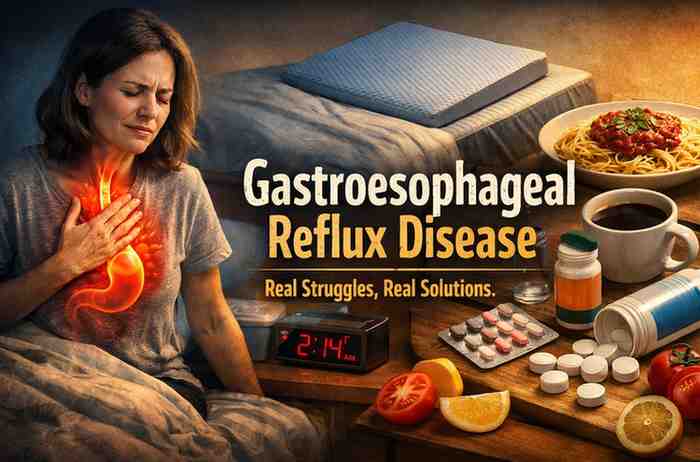
Honestly, most people I’ve watched deal with Gastroesophageal Reflux Disease → hit the same wall early on. They try one thing, then another, then quietly decide their body is “just broken” when the burning keeps showing up at 2 a.m. I’ve sat next to friends who can’t finish a normal dinner without pain. I’ve listened to coworkers whisper about chest tightness because they’re scared it’s something worse. The pattern is familiar: frustration first, confusion next, then a cycle of half-fixes that look good on paper and don’t change much in real life →.
From what I’ve seen, GERD isn’t hard because people → are lazy. It’s hard because the advice most people get is scattered, oversimplified, or flat-out mismatched to how their symptoms actually show up. So this is me, writing field notes. The stuff that repeats across real people. The small wins. The dumb mistakes almost everyone makes at first. The parts that surprised me after watching so many people try to “fix their reflux.”
What people are actually trying to fix (and what they misunderstand)
Most folks don’t wake up thinking, I have GERD.
They think:
-
“Why does my throat burn after pasta?”
-
“Why do I feel chest pressure when I lie down?”
-
“Why does coffee suddenly hate me?”
They chase the symptom. Not the pattern.
From what I’ve seen, Gastroesophageal Reflux Disease is less about one bad meal and more about a rhythm your body fell into. Reflux keeps happening because something in the system keeps making it easy for acid to come up. Pressure patterns. Timing. Habits that stack on top of each other.
What people usually misunderstand at first:
-
They treat it like an on/off switch.
One pill, one diet change, done. Then they get discouraged when it doesn’t vanish. -
They assume more restriction = more healing.
Cutting everything “bad” feels disciplined. It often backfires. -
They chase triggers without noticing patterns.
Tomatoes get blamed. Chocolate gets blamed. But the real pattern might be late meals + lying flat + stress.
This honestly surprised me after watching so many people try it. The folks who improved weren’t the most strict. They were the most observant.
Why people try to “fix GERD” (and why they’re exhausted)
Common reasons I hear:
-
The pain is scary. Chest pain always is.
-
Sleep gets wrecked.
-
Food becomes stressful.
-
They’re tired of feeling fragile in social settings.
One friend stopped going out to dinner because the embarrassment of coughing and burning was worse than staying home. Another kept popping antacids like candy because they worked… until they didn’t.
There’s also this quiet shame loop: “Everyone else eats normally. Why can’t I?”
That emotional layer matters. People push too hard or give up too fast because they’re frustrated with themselves, not just the symptoms.
What consistently works (from real-world patterns)
I’m going to say this plainly:
No single trick “cures” Gastroesophageal Reflux Disease. The people who got relief → stacked small, boring changes. Over time.
Here’s what I’ve seen actually move the needle for most people:
1. Timing beats perfection
Most people I’ve worked → with mess this up at first. They focus on what they eat and ignore when.
Patterns that help:
-
Last meal 3 hours before lying down
-
If reflux hits at night, an earlier dinner matters more than a “perfect” dinner
-
Smaller evening meals, even if daytime meals stay normal
Cause → effect → outcome:
Late meals → more pressure when lying flat → acid travels up → night symptoms
2. Elevation helps more than people expect
This one gets rolled eyes. Then it works.
-
Raising the head of the bed (not just extra pillows)
-
Gravity reduces nighttime reflux for a lot of people
-
It doesn’t fix daytime symptoms, but it often fixes sleep
I didn’t expect this to be such a common issue. People assume posture doesn’t matter. It does. A lot.
3. Fewer “stacked triggers” beats eliminating one food
Almost everyone I’ve seen struggle with this does this one thing wrong:
They eat a trigger food
+ late
+ under stress
+ lie down right after
Then blame the food.
What works better:
-
Notice combinations
-
Coffee alone might be fine
-
Coffee + empty stomach + rushing + lying down? Disaster
4. Medication helps… but timing and expectations matter
Some people get real relief → from meds.
Some don’t.
Both experiences are normal.
What I’ve seen work:
-
Taking meds consistently (not randomly)
-
Giving it a few weeks, not a few days
-
Using meds as a stability window to change habits, not as the only plan
What fails:
-
Taking meds and changing nothing else
-
Stopping the moment symptoms dip
5. Weight changes can help, but it’s not a moral project
This part is sensitive. And messy.
From what I’ve seen:
-
Even small weight changes can reduce abdominal pressure and reflux for some people
-
For others, weight isn’t the main driver at all
What consistently fails:
-
Shame-driven dieting
-
Crash diets that increase reflux because of hunger, stress, or binge cycles
This is about pressure and mechanics. Not worth.
What repeatedly fails (even though it sounds good online)
Some of this advice looks smart. In real life, it often burns people out.
-
“Just cut everything acidic forever.”
People last two weeks, feel deprived →, then rebound harder. -
“Drink this one magic tea.”
If it helps, great. It rarely fixes the pattern alone. -
“Ignore it unless it’s severe.”
Mild GERD becomes not-mild when ignored. -
Extreme elimination diets with no reintroduction plan
Creates food fear. Not healing.
This is where experienced users would do things differently. They’d test small changes. Keep what helps. Drop what doesn’t.
How long does it usually take to feel relief?
Short answer, from what I’ve seen:
Some people feel small changes in 1–2 weeks. Real stability takes 4–8 weeks.
What actually happens:
-
Week 1–2:
You notice patterns. Fewer nighttime flares. Some days still suck. -
Week 3–4:
Symptoms become less dramatic. Flares feel less scary. -
Month 2+:
People stop thinking about reflux every hour. That’s the win.
When it doesn’t work fast, people assume failure. It’s usually just early.
People Also Ask (quick, real answers)
Is Gastroesophageal Reflux Disease the same as heartburn?
Not exactly. Heartburn is a symptom. GERD is the pattern of reflux happening often enough to cause ongoing problems.
Is it worth changing your routine for this?
If reflux is messing with your sleep, food, or mood—yeah. From what I’ve seen, the mental relief alone is worth it.
Can GERD go away on its own?
Sometimes symptoms calm down. Patterns tend to come back if nothing changes.
Do natural remedies work?
Some people get relief →. Most need more than one tool.
When should I worry?
If symptoms are severe, worsening, or include trouble swallowing, weight loss, or constant pain—get medical input. Don’t tough it out.
Objections I hear all the time (and the honest answer)
“I don’t want to change how I eat.”
Totally fair. Then focus on timing, portions, posture first. Food changes aren’t the only lever.
“This feels like too much work.”
It is, at first. Then it becomes background. Like brushing your teeth.
“I tried once and it didn’t work.”
Most people I’ve worked with mess this up at first because they try one change in isolation. Stacking small changes is what usually works.
“Medication should fix this. Why isn’t it?”
Meds reduce acid. They don’t fix pressure, timing, or habits. Different problem layers.
Reality check (the stuff people don’t like hearing)
-
Results aren’t linear
-
You’ll think it’s “gone,” then it’ll flare
-
Stress makes reflux worse even when food is perfect
-
Some days you’ll do everything right and still feel it
-
That doesn’t mean you failed
Who this is not for:
-
People looking for a 3-day fix
-
People who want one hack and zero routine change
-
People unwilling to observe patterns
When expectations usually break:
-
Expecting perfection
-
Expecting food alone to fix it
-
Expecting medication to do 100% of the work
Practical takeaways (what to actually do)
Do this:
-
Track patterns for 1–2 weeks
-
Stop eating 3 hours before bed
-
Raise the head of your bed if nights are bad
-
Stack small changes
-
Use meds as support, not the whole plan
Avoid this:
-
Cutting everything at once
-
Ignoring timing
-
Lying down after heavy meals
-
Treating flares as personal failure
Expect emotionally:
-
Some frustration
-
Some relief sooner than expected
-
A learning curve
-
Small wins that feel boring but add up
What patience actually looks like:
-
Not panicking after one bad night
-
Keeping what works
-
Letting go of what doesn’t
-
Adjusting instead of quitting
So no — this isn’t magic. Gastroesophageal Reflux Disease doesn’t disappear because you tried one thing for a week. But I’ve watched enough people stop feeling trapped by their symptoms once they stopped hunting for a single fix and started paying attention to patterns. That shift alone?
It’s often the real relief.