Honestly, most people I’ve watched try this hit a wall in the first two weeks. They start hopeful. New playlist. New shoes. Then the mirror doesn’t change, the jeans still pinch, and the spiral starts: “Maybe my body is just broken.”
From what I’ve seen, the frustration isn’t about effort. It’s about chasing the wrong kind of effort. I’ve sat next to friends counting crunches like prayer beads. I’ve watched clients punish their sides with endless twists. I’ve heard the same quiet shame when nothing moves.
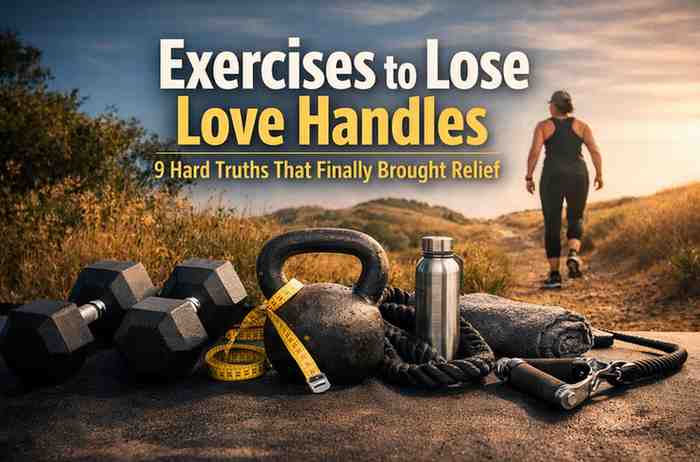
The phrase that keeps coming up in those moments is exercises to lose love handles—said with hope, then said again with doubt. The problem isn’t the wanting. It’s the map people are handed.
This is the map I wish they’d had.
Why people chase this so hard (and why it hurts when it doesn’t work)
From what I’ve seen, love handles carry way more emotional weight than their size. They’re the spot people tug at in dressing rooms. The place shirts cling when you sit. The thing that makes someone feel “almost fit, but not quite.”
Most people I’ve worked with mess this up at first by treating that feeling like a technical problem: Do the right move → get the right shape. It sounds reasonable. It just doesn’t play out that way.
What I didn’t expect to be such a common issue: people blaming themselves when targeted exercises don’t change that area. They double the reps. They tighten the diet. They add another ab routine. The outcome stays stubborn. Morale drops. Then they quit.
Pattern I’ve seen across dozens of real attempts:
-
People don’t fail because they’re lazy.
-
They fail because the plan is built on a myth: spot reduction.
The myth that wastes the most time: spot reduction
This honestly surprised me after watching so many people try it. You can strengthen the muscles under love handles. You can’t command your body to burn fat from that exact spot on schedule.
What consistently works vs. what looks good on paper:
-
Looks good on paper: 300 side crunches a day.
-
Consistently works: full-body movement that pushes your system to burn fat overall, paired with core work that tightens what’s underneath.
Cause → effect → outcome, as I’ve observed it:
-
Cause: You create a steady calorie burn + build muscle across big muscle groups.
-
Effect: Your body has reason to tap into stored fat.
-
Outcome: Fat loss shows up unevenly, but it does show up. Love handles are often late to the party. Annoying. Normal.
Almost everyone I’ve seen struggle with this does this one thing wrong: they chase the burn in the sides and ignore the boring work that actually changes the body.
The exercises that quietly move the needle (when done right)
I’m not listing these because they’re trendy. I’m listing them because I’ve watched them work across very different bodies, schedules, and temperaments.
1) Brisk walking with incline (or hills)
Sounds too easy. It’s not flashy. It works.
-
Why it works: steady calorie burn, low injury risk, repeatable
-
What people get wrong: walking too casually or too inconsistently
-
Real pattern: people who did this 30–45 minutes, 4–5x/week stuck with it longer than any HIIT plan
2) Dumbbell or kettlebell deadlifts
This one surprised a lot of folks.
-
Why it works: big muscles (glutes, hamstrings, back) = big energy demand
-
Outcome I’ve seen: bodies lean out faster when this is in the mix
-
Common mistake: going too light forever or rushing the form
3) Farmer’s carries
Pick up heavy weights. Walk. Breathe.
-
Why it works: full-core engagement without crunching
-
What changes: people feel “tighter” around the waist before they look smaller
-
This is a quiet confidence-builder
4) Rowing (machine or band rows)
-
Why it works: pulls engage the core as a stabilizer
-
Pattern: people who row consistently tend to lose that soft “wrap” around the waist sooner than people who only crunch
5) Split squats or lunges
-
Why it works: legs burn a ton of fuel
-
What people mess up: rushing reps, skipping recovery
-
Outcome: slow, steady body recomposition
6) Planks (and variations)
Not because they “burn side fat.”
Because they teach your core to brace.
-
Why it works: better posture + stronger midsection = waist looks cleaner
-
Reality: boring. Effective. Stick with it.
7) Cable or band chops (diagonal patterns)
-
Why it works: trains rotation under control
-
What I’ve seen: fewer back tweaks, better carryover to daily movement
8) Swimming
If accessible, this is a cheat code.
-
Why it works: full-body + joint-friendly
-
Pattern: people who swim don’t burn out mentally as fast
9) Short, smart intervals (1–2x/week)
Not daily punishment.
-
Why it works: metabolic boost
-
What fails: doing HIIT every day and then hating movement
What most people misunderstand at first
From what I’ve seen…
-
They think soreness equals progress.
-
They think sweat equals fat loss.
-
They think doing more ab work fixes a fat-loss problem.
This is where expectations break:
-
You might feel stronger in 2–3 weeks.
-
You might look different in 6–10 weeks.
-
Love handles often lag behind everything else.
That delay is where people quit.
Real routines I’ve watched people actually keep
No perfect plans. Just patterns that stuck.
Simple 4-day template I’ve seen work:
-
Day 1: Deadlifts + rows + plank
-
Day 2: Brisk walk (30–45 min)
-
Day 3: Lunges + carries + chops
-
Day 4: Walk or swim
-
Optional: short intervals once per week
Why this works in real life:
-
Not exhausting
-
Repeatable
-
Leaves energy for work, kids, stress
What typically fails:
-
6 days of HIIT
-
90-minute gym sessions
-
Zero rest
How long does it take (for most people)?
Direct answer, from patterns I’ve seen:
-
2–3 weeks: you feel better
-
4–6 weeks: clothes fit a bit differently
-
8–12 weeks: visible change for most
-
3–6 months: the “love handle area” finally starts to cooperate
This isn’t a promise. It’s an average of messy, imperfect journeys.
What if it doesn’t work?
This is where judgment calls matter.
Things I’ve had to suggest, gently:
-
Reduce alcohol. This one stings. It matters.
-
Sleep more. Less sleep = worse fat loss.
-
Eat slightly more protein. Not extreme. Just enough.
-
Pull back on stress where possible. Cortisol is real.
What experienced users would do differently:
-
Track consistency, not perfection
-
Measure waist monthly, not daily
-
Adjust one variable at a time
Common mistakes that slow results
Most people I’ve worked with mess this up at first:
-
Doing only side-focused ab exercises
-
Training too hard, too often
-
Eating too little and then binging
-
Quitting right before results show
-
Comparing themselves to fitness influencers
I didn’t expect this to be such a common issue, but comparison wrecks patience faster than bad programming.
Is this worth it?
Short answer: yes, if you’re okay with boring consistency.
Longer answer:
-
Worth it if you want sustainable change
-
Not worth it if you want a two-week transformation
-
Worth it if you’re done punishing your body
-
Not worth it if you want one magic move
Still, I’ve watched people feel real relief → once they stopped chasing tricks and started stacking small, repeatable actions. That relief alone changes how they show up.
Objections I hear all the time (and what I’ve seen play out)
“I don’t have time.”
Then walking wins. It’s the lowest friction option I’ve seen work.
“I hate gyms.”
Cool. Most of these can be done at home or outside.
“My body holds fat here no matter what.”
From what I’ve seen, bodies do have stubborn zones. They still respond. Just slower.
“I’ve tried everything.”
Most people have tried many things briefly. Few have tried one thing consistently.
Reality check (read this before you go all-in)
This is not for:
-
People chasing a deadline body
-
Anyone who wants zero lifestyle change
-
Folks who can’t tolerate slow progress
-
People who hate walking, lifting, and repeating
What can go wrong:
-
Overuse injuries if you ramp too fast
-
Burnout if you treat every session like punishment
-
Discouragement if you measure daily
Where expectations usually break:
-
Week 2–3
-
Right before visible change
-
After one “bad” week
Still. This approach tends to keep people in the game.
Quick FAQ (for the search questions everyone asks)
Do exercises to lose love handles actually work?
They work when they’re part of a bigger fat-loss picture. The exercises help shape and support the area. Fat loss comes from the overall system you build.
Can I spot-reduce love handles with side crunches?
No. You can strengthen the muscles there. Fat loss happens more globally.
How often should I train?
From what I’ve seen: 3–5 days/week beats 7 days/week.
What if I only do cardio?
You’ll burn calories. Strength work tends to make the waist look firmer as fat comes off.
Is diet required?
You don’t need extremes. Small, sustainable adjustments matter more than perfection.
Practical takeaways (the stuff I’d DM a friend)
-
Do fewer things, more consistently
-
Walk more than you think you need to
-
Lift something heavy-ish twice a week
-
Brace your core; don’t just burn it
-
Measure monthly
-
Expect the sides to be stubborn
-
Don’t quit when you feel nothing happening
-
Rest like it matters (because it does)
Patience, in practice, looks like showing up when you’re bored. It looks like repeating what worked last week. It looks like not chasing novelty when boredom hits.
So no — this isn’t magic. But I’ve watched enough people finally stop feeling stuck once they approached it this way. The shift from “attack the problem spot” to “build a body that lets fat go” changes the whole experience.
Still messy. Still slow.
But quieter inside. And that relief? That’s usually the first real win.