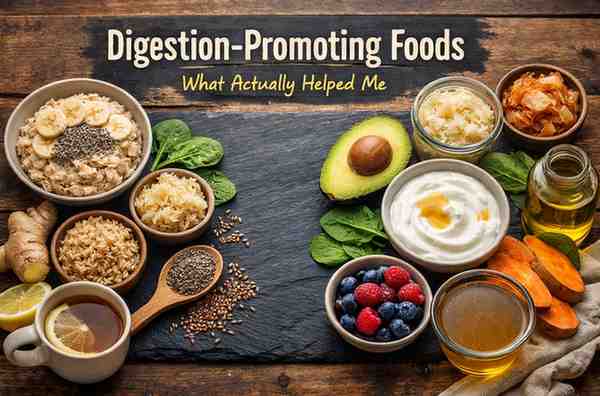
Honestly, I didn’t think this would work. I’d already tried cutting dairy, then caffeine, then “eating cleaner” (whatever that meant that week). My stomach still felt like it was holding grudges. Bloating by noon. That heavy, brick-in-the-gut feeling after dinner. Random cramps that showed up like they had beef with me personally. I was tired of hoping. Still, I started experimenting with digestion-promoting foods because I was out of other ideas—and because I was sick of pretending this wasn’t affecting my mood, my sleep, and my confidence.
Not gonna lie… I messed this up at first. I went in expecting fast relief. I wanted a food swap and a miracle. What I got instead was a slow, awkward learning curve. Some small wins. A few setbacks. A lot of “wait, why is this worse today?” moments. But over a few months, things shifted. Quietly. Not perfect. Just… better.
Below is what I learned the hard → way—what actually helped, what wasted my time, and what I’d tell a friend who’s stuck in the same loop I was in.
Why I even tried this (and what I misunderstood)
I didn’t start with some noble, holistic intention. I started because I was annoyed. I was tired of Googling symptoms at 2 a.m. and convincing myself I had something dramatic. I wanted my stomach to chill out so I could live my life without planning bathrooms like escape routes.
What I misunderstood:
-
I thought one “superfood” would fix digestion.
-
I thought more fiber = instant relief (lol, no).
-
I thought if it didn’t work in a week, it was pointless.
Turns out digestion-promoting foods work more like a system reset than a quick fix. Your gut doesn’t care about your timeline. It responds to consistency. And yeah… that part is annoying.
The first things I tried (that kinda backfired)
Let me save you some frustration.
I started by piling on:
-
Raw salads
-
Huge bowls of oats
-
Protein bars with “10g fiber!”
-
Kombucha every day
I figured more “healthy” stuff = better digestion. Instead, I got:
-
More bloating
-
Louder stomach noises
-
Random gas (embarrassing, honestly)
What surprised me was that some digestion-promoting foods can make symptoms worse at first. Especially if your gut is already irritated. My body needed a gentler ramp-up.
Don’t repeat my mistake:
If you’re sensitive or already bloated, start with smaller portions and cooked foods. Raw everything is not a flex. It’s a trap (for some of us).
What actually helped (slowly, imperfectly)
I stopped trying to “eat perfectly” and started paying attention to patterns. From what I’ve seen, at least, digestion-promoting foods work best when they’re:
-
Easy to digest
-
Consistent
-
Paired with habits that don’t sabotage them
Here’s what moved the needle for me:
1. Warm, simple foods first thing
Cold smoothies on an empty stomach? My gut hated that.
What worked better:
-
Warm oatmeal
-
Scrambled eggs with cooked spinach
-
Soup or broth on rough days
This honestly surprised me. Warm food felt like it told my stomach, “Hey, you’re safe. We’re not shocking you today.”
2. Fermented foods… but tiny amounts
Everyone said “eat fermented foods.” Nobody said don’t overdo it.
What worked:
-
1–2 tablespoons of sauerkraut with lunch
-
A few spoonfuls of yogurt (not sweetened)
What didn’t:
-
Drinking kombucha daily
-
Piling kimchi on everything
Too much fermentation too fast = chaos in my gut. Start small. Annoyingly small.
3. Fiber with context (and water, obviously)
Fiber helped, but only when I:
-
Increased it slowly
-
Drank more water than I thought I needed
-
Paired it with fats/protein
The combo mattered. Fiber alone made me feel like a balloon. Fiber with water and real meals? Way better.
Foods that were easier on me:
-
Oats
-
Chia seeds (soaked)
-
Berries
-
Cooked carrots
4. Timing mattered more than I expected
I didn’t expect this at all, but when I ate mattered almost as much as what I ate.
-
Late-night heavy meals = guaranteed regret
-
Eating too fast = instant bloating
-
Skipping meals then overeating = stomach rebellion
Simple changes:
-
I slowed down (painfully at first).
-
I stopped eating huge meals at night.
-
I tried to keep meals boringly regular.
It wasn’t glamorous. It worked.
The digestion-promoting foods that became my boring staples
I stopped chasing “superfoods” and leaned into foods I could eat on autopilot.
These didn’t cure me. They made things manageable:
-
Oats
-
Yogurt (plain)
-
Bananas (not overripe)
-
Sweet potatoes
-
Rice
-
Cooked greens
-
Bone broth / simple soups
-
Olive oil
-
Ginger tea
Not exciting. But my gut didn’t need exciting. It needed calm.
How long did it take to notice anything?
This part frustrated me the most.
-
First week: Nothing dramatic. Slightly less discomfort. Could’ve been placebo.
-
2–3 weeks: Fewer bad days. Still bloated sometimes.
-
1–2 months: I realized I wasn’t thinking about my stomach all day. That was the real win.
-
3+ months: Patterns were clear. Triggers were obvious. Recovery from bad meals was faster.
If you’re expecting overnight relief, this will feel pointless. If you’re okay with slow progress, it’s tolerable. Not magical. Just… doable.
Common mistakes that slowed my progress
I made all of these. Learn from my stubbornness:
-
Expecting fast results
-
Changing too many foods at once
-
Ignoring sleep and stress
-
Eating “gut-friendly” foods while doom-scrolling through meals
-
Quitting after one bad week
Your digestion doesn’t live in isolation. Stress wrecked my gut more than any single food ever did. That was a hard pill to swallow.
Objections I had (and how they shook out)
“This sounds like too much work.”
Yeah. It kind of is. At first. Then it becomes routine. Still annoying sometimes.
“Isn’t this just common sense?”
Sort of. But common sense didn’t help me when I was overwhelmed and desperate. Structure did.
“What if this doesn’t work for me?”
That’s possible. Not every gut issue is food-based. If your symptoms are intense, persistent, or scary, get checked. No shame in that.
“Is it worth trying digestion-promoting foods at all?”
For me? Yes. Not because it fixed everything. Because it gave me leverage. I felt less powerless.
Reality check (no hype, just honesty)
Here’s what this approach did not do:
-
It didn’t cure anything overnight
-
It didn’t erase stress-related symptoms
-
It didn’t make me immune to bad food choices
-
It didn’t mean I could eat anything forever
Here’s what it did do:
-
Reduced how often I felt awful
-
Made symptoms less intense
-
Helped me understand my body’s patterns
-
Gave me a sense of control again
Progress looked like fewer bad days. Not perfection.
Short FAQ (quick answers I wish I had earlier)
Do digestion-promoting foods work for everyone?
No. Some people need medical support or targeted protocols. Food alone isn’t always enough.
Can this backfire?
Yes. Too much fiber or fermented food too fast can make symptoms worse.
Is this expensive?
It doesn’t have to be. Oats, rice, potatoes, yogurt, and soups are cheap and effective.
Should I take supplements instead?
I tried that first. It didn’t replace food habits. It just made me feel productive.
How do I know if it’s working?
You’ll think about your stomach less. That’s the real signal.
Who this is NOT for (important)
This approach isn’t ideal if:
-
You have severe, unexplained symptoms (see a doctor first)
-
You’re looking for a fast fix
-
You hate routine and tracking patterns
-
You’re dealing with active eating disorder behaviors
Food changes can be helpful. They’re not a substitute for medical care or mental health support.
Practical takeaways (what I’d actually tell a friend)
What to do:
-
Start with gentle, cooked foods
-
Add fiber slowly
-
Use small amounts of fermented foods
-
Eat regularly
-
Drink more water than feels necessary
What to avoid:
-
Overhauling everything at once
-
Chasing “miracle” foods
-
Eating super fast
-
Ignoring sleep and stress
What to expect emotionally:
-
Impatience
-
Doubt
-
Occasional “why is this worse today?” spirals
-
Small, boring wins that add up
What patience looks like:
-
Tracking patterns over weeks, not days
-
Letting progress be uneven
-
Accepting that some foods will always be iffy for you
No guarantees. No hype. Just better odds.
I’m not cured. I still get bloated sometimes. I still mess up. I still eat stuff I know won’t love me back. But digestion-promoting foods stopped my stomach from feeling like an enemy. It became… manageable. And honestly? That shift in mindset mattered as much as any food swap.
So yeah—this isn’t magic. It’s slow. It’s imperfect. But if you’re stuck and frustrated, it might give you just enough traction to stop feeling helpless. And sometimes that’s all you need to keep going.